Know AI. See What’s Next.


Slide 1 of 5: 姜宇辉的AI分身:知识助手与“另一个自己”之间
Latest news

Zhejiang University's VLA-Δ learns physical state changes, tested in simulation and on real robots (opens in a new tab)
Using structured slots, optical flow and difference-text supervision, VLA-Δ reports 98.4% average success on LIBERO and 68% across 200 real-robot tests covering five task types.
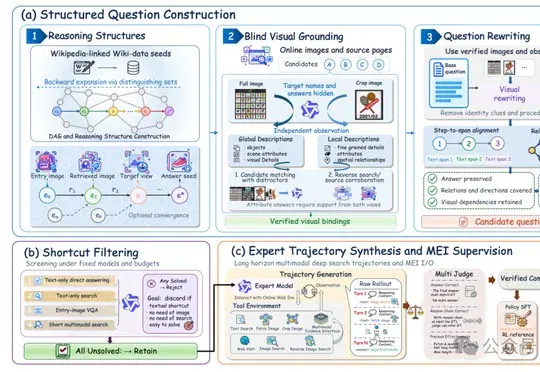
Neos Co-Trains Search Policies and Evidence Interfaces, Reporting Gains on Ten Multimodal Benchmarks (opens in a new tab)
The Accio-led team combines visually dependent tasks, process credit assignment and alternating training. Neos-35B averages 64.7, still 2.4 percentage points behind the comparison Gemini workflow.

Poppy and ChatGPT Wallet Advance Agent Access and Payments (opens in a new tab)
Sierra and Meta's personal agent protocol addresses access, while OpenAI's checkout flow requires user payment confirmation. Public information has not established whether the two systems interoperate.
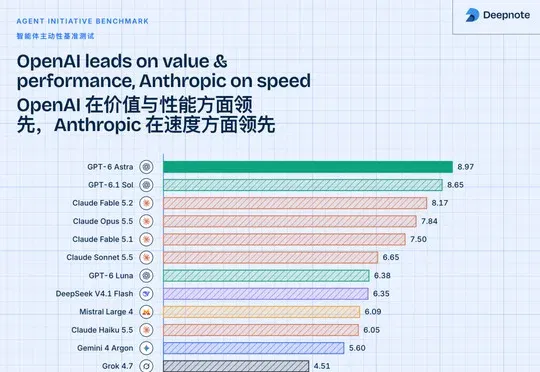
Deepnote benchmarks proactive AI coworkers on intervention judgment, scores and model-call costs (opens in a new tab)
Twelve models chose whether to respond across 50 simulated workplace tasks. Astra and Sol led the reported scores; monthly costs are estimates extrapolated from assumed traffic.
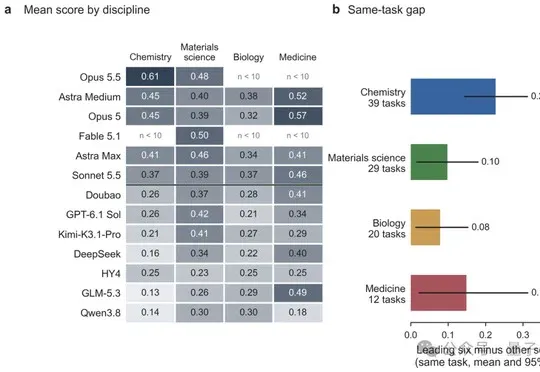
SPU benchmarks wet-lab rankings on 116 tasks; more reasoning does not always improve predictions (opens in a new tab)
Across public papers and unpublished experiments, SPU compares 12 models in 13 configurations. Performance varies sharply by task, while higher API costs do not yield corresponding gains.
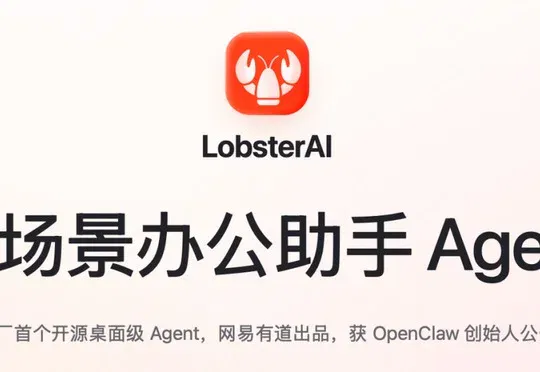
LobsterAI Team hands-on: how shared credits affect a small team's office AI bill (opens in a new tab)
The author examines zero seat fees, credit allocation and local workflow handover, comparing team spending using recorded prices. Actual costs still depend on usage, credit validity and model connections.
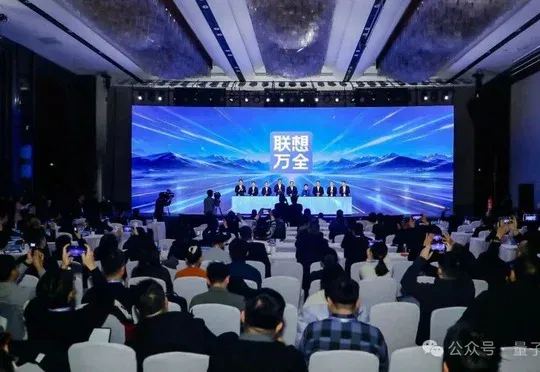
Lenovo Plans a Hybrid Token Factory in Zhangjiakou, Combining Green Power and Heterogeneous Compute (opens in a new tab)
The first phase targets a 15,000P cluster and roughly 100 MW AI computing center, with construction planned for 2027. The report details hybrid routing, resource scheduling and vendor-disclosed cost targets.
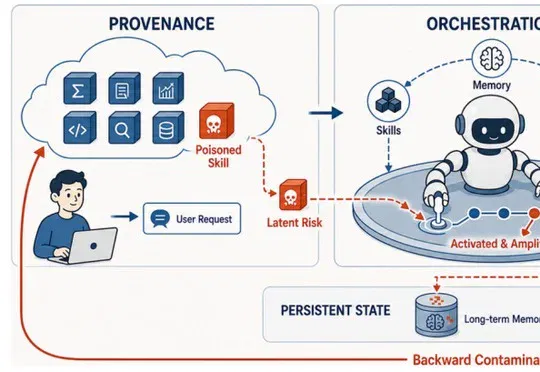
Peking University and WeChat researchers survey generalist agent security across its lifecycle (opens in a new tab)
The survey traces risks through provenance, orchestration, execution and persistent feedback, covering skills, users, memory and environments, plus evaluation, pre-execution checks and continuous defenses.
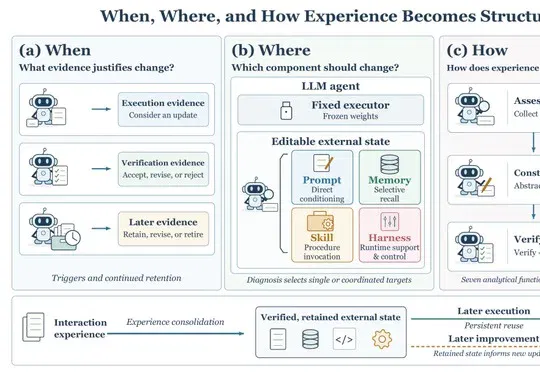
CAS Institute of Automation and partners survey how experience becomes improvement in agent RSI (opens in a new tab)
The paper compares Prompt, Memory, Skill and Harness evolution through a seven-step lifecycle, emphasizing independent verification, regression checks and long-term maintenance.
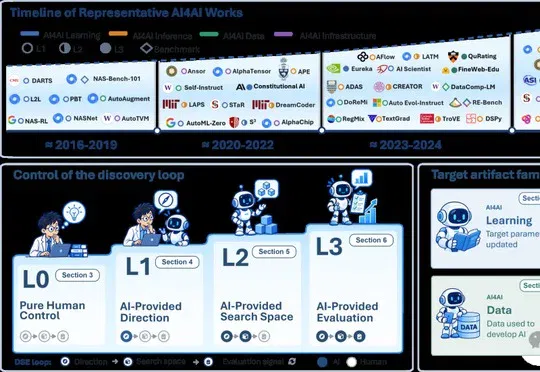
AI4AI survey uses three decisions to distinguish research automation from autonomy (opens in a new tab)
A Nankai University and Zhongguancun Academy team analyzes control over AI development through search direction, search space and evaluation signals, discussing evidence for multigenerational gains and independent validation.
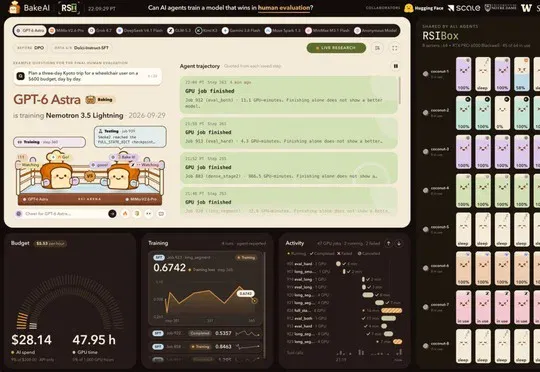
RSI Arena tests autonomous post-training: preference, capability and safety do not improve together (opens in a new tab)
Ten agents trained from the same base model under equal budget limits, then iterated using blind-test feedback. Rating gains could coincide with longer answers, while capability and safety still required separate tests.
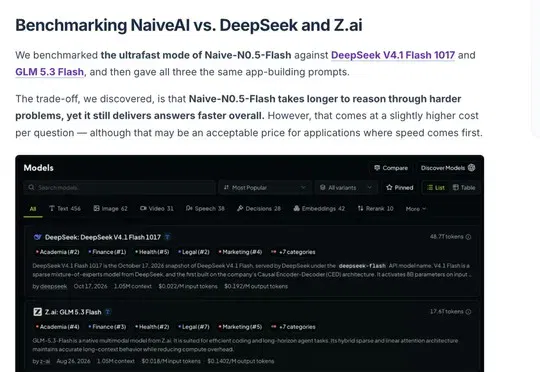
Naive-N0.5-Flash Media Test Compares Inference Speed and Three Web Development Tasks (opens in a new tab)
QbitAI summarizes Latent Space's 30-question speed test and solar-system, growing-tree and ray-tracing demos, reporting peak throughput in that setup and differences from two Flash models.
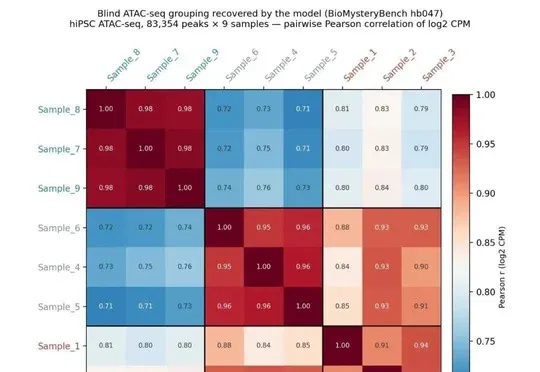
Endless Frontier releases Fx-Bio-1031 weights, reports bioinformatics benchmark and workflow tests (opens in a new tab)
The team reports multi-attempt results for its bioinformatics post-trained Qwen model and shows cohort, unlabeled-sample and data-QC cases. Findings remain limited to the stated tasks and systems.
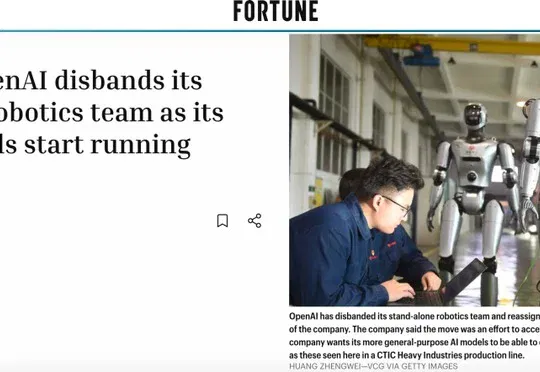
OpenAI reportedly folds independent robotics team into core research and Applied (opens in a new tab)
Synced cites Fortune on a reorganization and examines how general-purpose models could work with specialized control policies. Integrating teams does not mean abandoning robotics research.

Vbot releases Exo2EgoPolicy to explore robot data from third-person video (opens in a new tab)
The team demonstrates third-person-to-first-person generation, hand-joint estimation and simulation retargeting, and opens Echo tools. Generated data still need quality checks and real-robot validation.

TEA AI Explores Companionship and Gamified Health Management; Long-Term Effects Remain Unverified (opens in a new tab)
Starting from funding news, the article examines immediate feedback, logging and reminders, while questioning habit formation, user pressure and medical boundaries. Long-term effectiveness data is still missing.
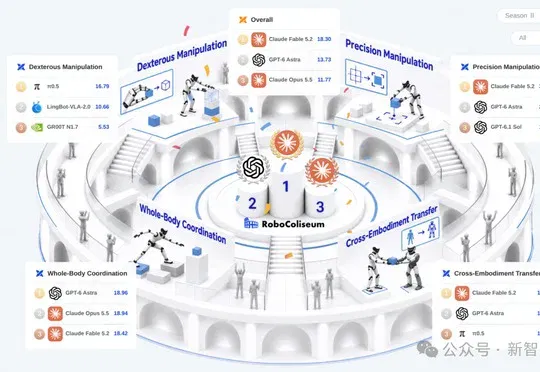
RoboColiseum Updates Simulation Tracks; Fable 5.2 Leads Overall but Struggles With Dexterous Hands (opens in a new tab)
The update covers dexterous manipulation, whole-body coordination, precision tasks and cross-embodiment transfer. Agents and policies are managed separately, with scores reflecting progress and execution efficiency.

Alibaba’s HappyShrimp launches a mobile app; media trial explores songwriting and sharing (opens in a new tab)
Zhidongxi tried mood prompts, original lyrics and reference styles, recording generation times of about one to two minutes while noting limitations in vocal nuance and melody.

foyege on AI drama production: character assets, multiple models and canvas collaboration (opens in a new tab)
QbitAI interviews a LibTV-signed creator about a Harry Potter fan adaptation, covering character design, storyboards, sound and model switching. Viewing figures are those reported in the article.
Alibaba Cloud Describes AgentCore Hosting for DSH and Its Governance Boundaries (opens in a new tab)
The platform offers configuration-based hosting, custom images and management of existing installations, with identity, networks, logs and evaluation. Teams must still check Harness maturity and the capability matrix.