TEA AI Explores Companionship and Gamified Health Management; Long-Term Effects Remain Unverified

Starting from funding news, the article examines immediate feedback, logging and reminders, while questioning habit formation, user pressure and medical boundaries. Long-term effectiveness data is still missing.
Editorial correction (November 16, 2026): Whether gamification can produce long-term health benefits still requires empirical evidence; funding or a design mechanism is not, in itself, proof of effectiveness.

No new drugs, no hardware, and no physician group. How did it manage to raise $10 million?
You could find many explanations for this funding, but the most straightforward is that investors have begun voting for the business of sticking with it.
The company is called TEA AI. What it wants to do can be explained in one sentence: reinvent everyday health management with AI companionship and gamification.
Funding, of course, does not equal success. But it brings a sharper question to the fore: when AI enters health management, are investors betting on technology, or on the weaknesses of human nature?
Health knowledge has long been abundant; action is what is scarce
Stay up late less, exercise more, and watch what you eat. You do not need an app to teach you these principles.
What has truly been scarce was never knowledge, but action. And action's biggest enemy is feedback that comes too slowly.
Start exercising, and your fitness changes over weeks. Take weight loss seriously, and the scale may still not do what you want every day. TEA AI founder Song Hang gave a figure in an interview: for many people losing weight, it takes two or three weeks before changes become visible to the eye.
The effort comes first, but the feedback takes its time arriving. That two- or three-week gap is where most people give up.
So we have reduced health management to a test of willpower: the plan is written, the alarms are set, and if you fail to stick with it, you simply lack self-discipline.
But here is a harsh question: if thousands upon thousands of people give up at the same point, is it the users who should be questioned, or the product?
TEA AI chooses the latter. It does not just ask what you should do, but presses on to ask why you did not do it: were you not feeling up to it? Was the goal too big? Or could you simply not see yourself making progress?

Bring positive feedback forward—in plain terms, give the treat first
Song Hang summarizes the product's core approach in four words: bring positive feedback forward.
Put more plainly: if changes in the body take weeks, feedback from the product should come in seconds. Complete an action, and the companion character responds immediately; reach an intermediate goal, and new content unlocks right away.
This is not about using virtual rewards to fool people about real health outcomes. It is about drawing the sense of achievement that originally belonged to the future into the present.
The games industry has used this logic for decades: break goals into smaller pieces, make progress visible, and give every step a response. You do not have to force yourself onward toward a distant goal; throughout the process, you repeatedly confirm that you are moving forward.
Song Hang offered an example: you order a bowl of hot-pot noodles in the evening, and the AI pulls up your past records to discuss how this time compares with last time. The focus is not the calories in that bowl, but helping you see your own habits.
Seeing is the beginning of change. But a controversy lies here too: bringing positive feedback forward essentially uses immediate dopamine to offset the delayed gratification of health.
This is the team's product hypothesis about immediate feedback. Whether it works, which users it works for, and what the long-term health outcomes are still require validation through real use and independent research.
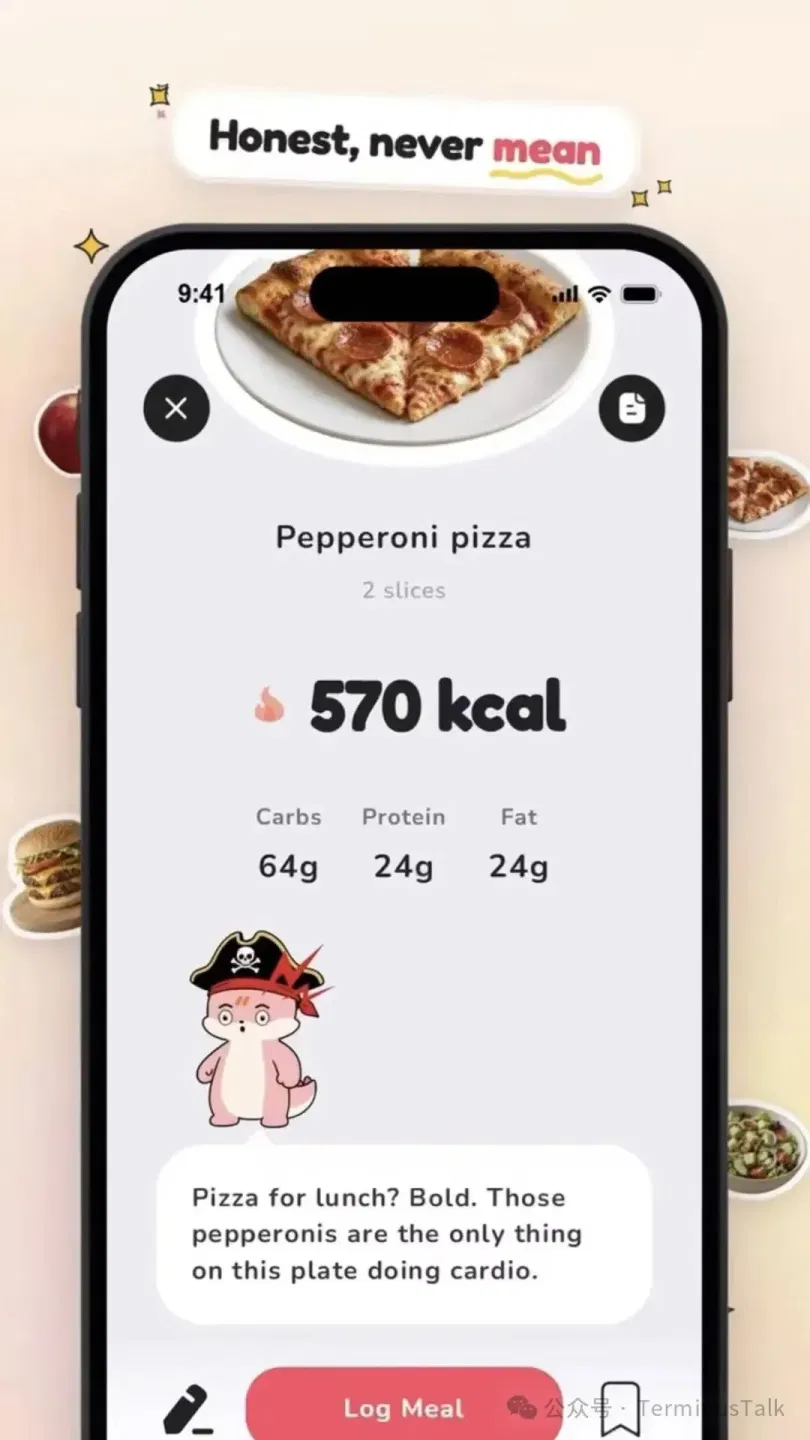
A Duolingo for health: a remedy or a new shackle?
This is also why TEA AI wants to build a personal-health version of Duolingo.
Duolingo uses streaks, immediate feedback and gamification to make language learning compelling. TEA AI wants to bring the same mechanisms into health: turn exercise, food logging and daily habits from cold, impersonal tasks into a process with companionship and a response.
But health is not Spanish.
Miss a day of language learning, and all you lose is a streak. Once health management treats an interruption as failure, what it creates is not merely regret, but anxiety.
If you did not exercise today, perhaps you were being lazy, or perhaps your body was calling for rest. If an app indiscriminately urges you to maintain your streak, is it helping you build a habit, or adding fuel to self-discipline as a form of coercion?
The real challenge, then, is not making a health app look like a game. It is making game mechanisms establish habits in real life without pushing users into a new cycle of inner conflict.
Without that, bringing positive feedback forward is just a beautifully wrapped piece of candy.
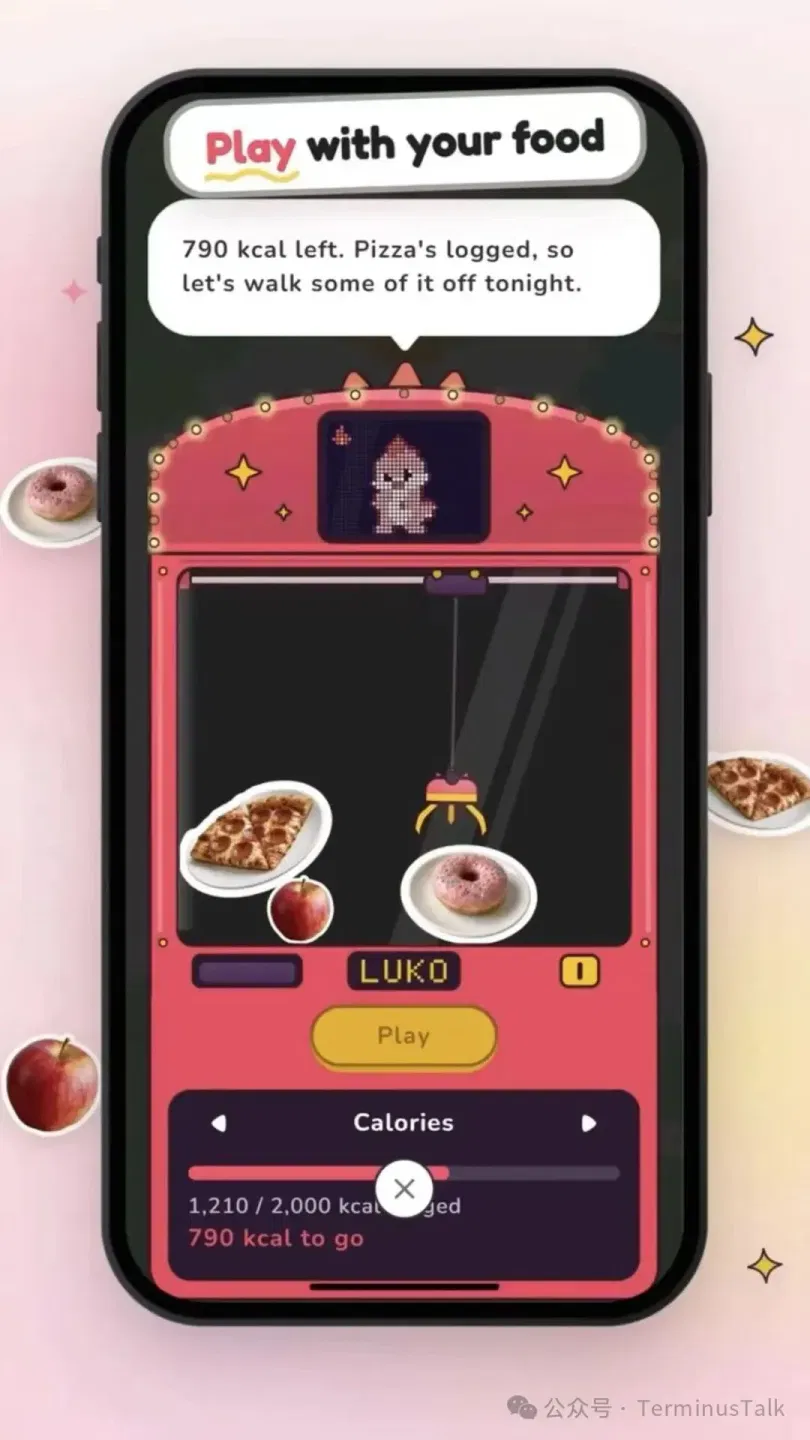
Often, AI's gentleness is just a way to avoid responsibility
Another judgment from TEA AI is more likely to offend: should a health assistant always be gentle and always praise you?
Song Hang said that during the team's user research, some users directly asked the AI not to be excessively agreeable, but to tell the truth. Their exact words were, 'Not too nice.'
Think of the AI health assistants you have seen: no matter how late you stay up or how much you eat, they tell you that you are already doing wonderfully.
That kind of gentleness is certainly safe. Praise does not go wrong, does not offend anyone, and does not require truly understanding you. But put plainly, most of the time it is not companionship; it is avoiding responsibility.
When you really need someone to point out a problem and tell you what to do next, how is a mass-produced dose of positivity any different from evasion?
Of course, telling the truth does not mean casually insulting people is acceptable. Health and body shape are already sensitive topics. Once AI turns directness into an attack, users will only uninstall it more quickly.
So the question has never been whether AI should have a sharp tongue, but whether it understands you: when to encourage and when to remind; when to speak plainly and when to listen to you finish first.
An AI that can only chat is not valuable. What is valuable is an AI that knows which words will genuinely help you.
From giving advice to accompanying you in action
Song Hang has also criticized a kind of AI answer that covers everything and is dense with knowledge, yet leaves you unsure what to do next after reading it.
The problem with such answers is not that they are wrong, but that they are not useful. They turn the health assistant into a search engine, when what users actually need is a training partner.
According to product materials, TEA AI plans to cover body scanning, personalized nutrition, real-time fitness guidance, emotional support and even discovery of local services. It wants to be more than another logging tool: a health assistant embedded in your everyday life.
AI's strength is continuous interaction and adjusting feedback to your circumstances; gamification's strength is making goals clear and progress visible. Combining the two is TEA AI's entire bet.
But health is a field that particularly needs boundaries. AI can help you log habits and give general advice, but must not lead you to mistake it for a doctor. When to give advice and when to suggest medical care; which reminders provide companionship and which have become a disturbance—these judgments determine whether it is an assistant or an interference.
What, exactly, does $10 million buy?
Back to the money.
Health is about the long term; human nature favors instant gratification. The two naturally clash, and TEA AI wants to stitch them together.
This may be the real reason investors are willing to bet: the issue is not how fashionable the concept of AI is, but that the old problem of helping people keep going has, for the first time, become open to being taken apart and reconsidered.
But funding cannot buy persistence. The questions it must answer next are increasingly concrete:
Will users keep logging their food, exercise and physical condition?
Can AI reminders help users act, rather than become another burden of notifications?
Can the short-term engagement produced by gamification turn into long-term habits?
Can AI tell the truth without making users feel blamed?
When users need professional help, can the product clearly recognize its own boundaries?
The answers to these questions ultimately have to be validated through real use.
So what kind of company can raise $10 million?
TEA AI's answer is to find a real problem that recurs and persists over the long term, then use new technology to solve it anew.
But funding is the beginning, not the conclusion. What it ultimately needs to prove is neither how many AI features it has nor how closely it resembles Duolingo, but whether it can make you willing to take one more small step at the moment you most want to give up.
The next time you want to uninstall a health app, do not rush to blame yourself for being lazy.
Ask: beyond telling you what you should do, what has it actually done for you?
That is both the question TEA AI must answer and the real hurdle for this business.
This article comes from the WeChat public account TerminusTalk and was written by TerminusTalk.
Related topics
After reading
Join the AINRK community
Read how to join the community and connect with people working in AI.
Related articles
Continue reading related topics and articles in this category.

两个被慢性病折磨多年的年轻人,做了个“记住你全部病史”的 AI,Juno8个月15万下载 (opens in a new tab)
Juno 2025年10月公开上线,上线前8个月,Juno 已经获得约15万次下载和1.5万个五星评价。Juno 官方现在明确把自己定义为一个面向慢性病患者的健康管理和陪伴工具。它不会提供诊断、治疗或替代专业医生的医疗建议。Juno 想解决的是另一个问题,比如你过去半年:

上线一年用户破百万,这个AI健康管理产品只靠一只海獭? | 对话OtterLife (opens in a new tab)
AI健康管理领域的产品层出不穷,功能设计结合大模型甚至Agent也成为当前发展方向。OtterLife,这款AI健康管理产品,将虚拟游戏宠物角色“海獭”融入用户健康习惯养成过程,却在动力略显不足的市场现状下,获得了上线一年用户破百万的亮眼成绩,且用户留存率超过行业平均水平。

直击外滩大会:帮全网减了500万斤的阿福 硬件厂商排队“找上门” (opens in a new tab)
在2026外滩大会期间,蚂蚁集团旗下健康AI应用"蚂蚁阿福"公布最新用户数达1.5亿,单日健康咨询近2000万人次,已接入华为、苹果健康、小米等18大主流品牌智能硬件,成为全球用户量最大的健康AI App。
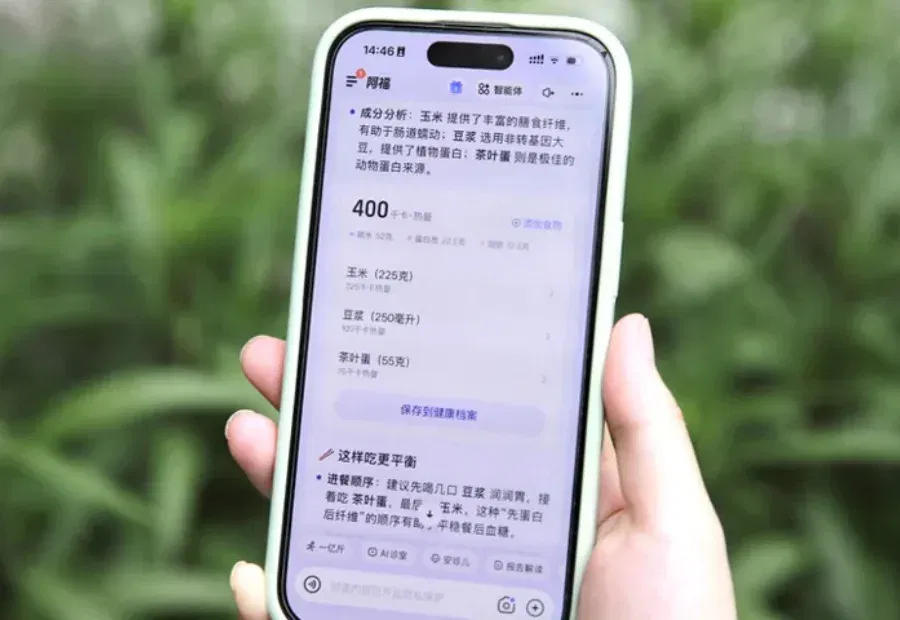
让AI先吃,这个国民级健康难题有解了 (opens in a new tab)
闯关科学减重1亿斤。 在科学减重这件事上,继战略投资薄荷健康之后,蚂蚁阿福又放了个大招。 7月29日,蚂蚁阿福宣布升级上线“AI拍饮食”功能,用户拍食物照片发给阿福,就能自动估算营养和热量信息,获得健康饮食搭配建议和运动消耗计划等,还支持一健存入个人健康档案,建立“热量账户”。吃得对不对,多不多,一目了然。 阿福此次推出“AI拍饮食”功能,并非是一项孤立动作。 一个月前,36氪曾报道,蚂蚁阿福发起“科学减重1亿斤”号召,推出“1分钱”低价供应体脂秤、升级AI功能,发起21天打卡挑战赛等三大行动,帮助大众科学管理体重,建立日常健康习惯。 这场“全民科学减重行动”带来的风潮超出预期。越来越多人加入

Verily获3亿美金融资从谷歌独立,AI健康助手赛道开始进入商业化验证期 (opens in a new tab)
Verily这家公司身上有太多漂亮标签。它从Google X走出来,是Alphabet孵化多年的生命科学资产,做过临床研究平台、慢病管理、人群疾病监测、可穿戴设备、研究数据环境、个人健康应用和人工智能助手。每一个方向单独拿出来,都足够讲一篇精准医疗的未来故事。