Momenta leads EvolonAI's nearly RMB 100M seed round; Qian Chen on inference optimization on Chinese chips

Waves reports a nearly RMB 100M seed round for EvolonAI, led by Momenta. Qian Chen wants Evolver to learn from inference optimization. Its workflow runs with existing models and in-house training has begun; repeatable results and cross-chip generalization remain goals.
The financing and product progress are recorded as reported in Waves' interview. EvolonAI says it has initially used existing models to get an end-to-end workflow running, and training of its in-house Evolver has begun. Delivering a version others can retest within six months, generalizing across combinations within a year, and completing the full loop within five years remain goals or estimates, rather than verified continuous self-improvement. BIS did announce an interim final rule on November 16 addressing remote access through data centers in third countries. Its scope, licensing requirements and effective conditions must be checked against the formal text; it cannot be summarized as prohibiting all overseas GPU rentals. CAICT's report supports daily usage of more than 500 trillion tokens in June. This article did not independently retest the comparisons with nearly four times the level six months earlier, or the fourfold software-related performance difference on eight H100s. The interview's statement that 30% more tokens means 30% more margin is a simplified business expression. Gross profit or gross margin does not automatically increase by 30% in the same proportion: pricing, costs and utilization also matter. BIS announcement (opens in a new tab), CAICT report on AI-native development (opens in a new tab).

"The ability to learn will be key to breakthroughs in AI."
People who left SenseTime to start companies could make up half of China's AI industry chain today.
There is Cao Xudong's Momenta, Yan Junjie's MiniMax, Liu Yu of Vivix AI, Wu Wei of Manifold Space, and others.
Most, however, focus on the most glamorous fields: large models, embodied intelligence, autonomous driving and video generation.
Qian Chen, formerly SenseTime's executive research director, has chosen a less-traveled path: teaching AI to improve AI itself.
He wants to train a model called Evolver to try things on real tasks, learn from the results and keep getting stronger, generation after generation, without stopping. "That is RSI: recursive self-improvement."
RSI used to be considered something only foundation-model companies could afford to pursue. You needed models, data and an existing system before the loop could run. Qian has chosen AI infrastructure as Evolver's first testing ground: having AI operate the compute that runs AI.
This September, he took the idea to Cao Xudong, a fellow alumnus of the same academic lineage. To his surprise, Cao immediately supported it: "The ability to learn will be key to breakthroughs in AI."
Cao asked Qian three questions: What do you want to do? Why your team? How certain are you about this?
To the last question, Qian answered: "If I could do only one thing over the next 30 years, I would want it to be this." Less than a month after saying that, he left SenseTime and founded EvolonAI.
Waves has learned exclusively that EvolonAI recently completed a seed round of nearly RMB 100 million. Momenta led the round, with participation from SenseTime, SenseTime Guoxiang Capital and Blue Lake Capital. Lighthouse Capital serves as its exclusive financial adviser for subsequent financing.
Qian graduated from Tsinghua University's Yao Class and earned a master's degree at the Chinese University of Hong Kong, studying under Tang Xiaoou and Sun Jian. He worked as a Google software engineer and has more than 20,000 academic citations. At SenseTime, he led teams bringing AI to phones and cars. The technologies and products he oversaw included the on-device large model SenseChat-Lite, phone facial recognition SenseID, intelligent phone photography BestMoment and smart cockpit SenseCabin. He was SenseTime's research and product lead for terminal intelligence.
EvolonAI's first testing ground is optimizing inference on Chinese-made chips.
That is because there is a problem here that cannot be solved by human effort alone.
Chinese AI chipmakers are caught in a small-horse-pulling-a-heavy-cart predicament. The small horses are the domestic GPU models steadily catching up and improving, while the cart carries ever-larger new models and ever-more inference requests. Having engineers adapt chips and large models to one another, one combination at a time, has become an impossible task.
The broader situation adds uncertainty. Although Jensen Huang has returned to NVIDIA, on November 16 the U.S. Commerce Department's BIS announced an interim final rule addressing remote access to advanced compute in data centers in third countries, intended to prevent remote arrangements from circumventing existing restrictions. Its specific scope, licensing requirements and effective conditions are governed by the formal text. It cannot be interpreted as a blanket prohibition on overseas GPU rentals by all Chinese companies.
Demand, meanwhile, keeps rising. According to CAICT data cited here, China's daily token consumption reached about 500 trillion this June, nearly four times the level six months earlier. With new GPUs unable to come in, more must be squeezed out of the existing stock. An inference service provider once tested eight H100s running the same model: changing the inference software could produce a fourfold speed difference.
Qian's solution is to have Evolver optimize this matching. It writes an operator, a program scores it immediately, and if the result is poor, it goes back to try another path, also learning which paths are not worth pursuing. This is why Qian thinks RSI should start in the data center: no matter how neatly the code is written, it fails if it does not run fast. Machines can grade it on the spot, and every optimization result becomes a training signal for the next round.
In today's AI startup landscape, this is a difficult but worthwhile undertaking, in the article's view.
AI infrastructure inherently sits between models and hardware. Compute companies buy down into software, chip companies build upward toward a full stack, and inference platforms move upward into models. Profit in the middle layer is disappearing. As one industry participant put it: "For a third party to survive, it must vertically integrate with either hardware or models."
How will EvolonAI break through?
The following is Waves' conversation with Qian Chen, edited for publication.
Part01
"AI infrastructure is an unspoiled testing ground for RSI"
Waves: What does EvolonAI do?
Qian Chen: We let AI operate the compute that runs AI. Give it a model and a batch of GPUs. Based on users' requests, it writes a software stack for that combination, deploys it to GPU servers and turns the model into a usable service. Change the model or GPU combination and it should still run, though the way it runs may differ. I call this a thousand models, a thousand approaches.
Waves: Engineers used to do that work. Do you want AI to replace engineers?
Qian Chen: Partly, you could say that. Engineers have limited capacity, and many things simply go unattended. Cheaper Chinese-made GPUs are available, but no one has adapted the particular model you want to run to them. Some model companies therefore have no choice but to rent NVIDIA GPUs and bear the high premium, while applications also depend on users' willingness to pay. People have not fully benefited from the progress of Chinese GPUs.
Waves: Why do you say that?
Qian Chen: Because NVIDIA has CUDA, a software layer NVIDIA developed for using GPUs, backed by an ecosystem built by millions of developers. Whoever releases a model, someone in that ecosystem will get it running on the GPUs.
But there are twenty or thirty Chinese chip models. You cannot ask every company to recreate the software system NVIDIA has accumulated over 20 years. Even if you build the software, where will you find all the developers willing to help adapt models for you?
So the best way to make good use of Chinese chips is to let large language models do this work. It can actually play to the strengths of the models themselves.
Waves: How?
Qian Chen: The most fundamental contradiction in AI today is between people's growing demand for AI and relatively limited supply.
From the workforce and technical perspective of AI infrastructure, looking downward means optimizing individual operators and, as far as possible, preventing chips from stopping halfway through a computation to wait for data. Looking upward means deciding which node should receive a user's request so it can reuse an already computed cache there. Low-level operator work and high-level scheduling each require expert knowledge, with completely different technology stacks.
Our in-house Evolver model is intended to replace much of the human effort in between. It needs to read logs, change code and run experiments on its own, choose its next step based on measured results, and ultimately deliver versions that can be retested and rolled back.
Besides, human preference is not what matters at the AI infrastructure layer. Machine evaluation is what matters. However neatly your code is written, it is no good if it cannot be used in AI infrastructure. A data center offers a rare condition: once you finish a program, machines can grade it immediately. That also makes AI infrastructure an unspoiled testing ground for RSI.
Part02
Real and supposed RSI
Waves: RSI has recently become a hot concept in AI. Many companies say they are working on it. Are there companies you benchmark yourselves against?
Qian Chen: Our problem right now is precisely that we cannot find one, haha.
You can divide RSI efforts into a few categories. One group wants to use RSI to build foundation models, benchmarking against OpenAI and Anthropic, which consumes enormous resources. Another works on RSI for science, creating a laboratory-like environment, using robotic arms to run experiments and collect feedback, then post-training models. Industry customers have to pay for that; it is still a large-enterprise business. We use RSI for AI infrastructure, letting models learn through repeated real inference-optimization work.
Waves: How do you tell whether Evolver is really improving itself, rather than just adjusting the harness?
Qian Chen: The key is not whether it has adjusted the harness, but whether the model itself is being continuously trained and becoming stronger. If you only adjust the harness without training the model, it is hard to call that real RSI. Nobody expects harness adjustments alone to take a model with a middle-school student's level of intelligence to PhD level.
The harness has limits of its own. First, it is hard to exceed the original model's technical ceiling. Second, a harness built for one chip often has to be rebuilt for another. Third, not all experience can be expressed through a harness.
Is each model generation better than the previous one? If this generation improves an inference engine by 20% or 30%, can the next generation raise that number? Or if this generation can only optimize operators, can the next one also deal with idle bubbles? It must keep moving upward until it really reaches the limit.
RSI has to keep improving itself. If it saturates after two or three iterations, that is only optimization, not RSI.
Waves: Is the technical path for RSI still rather unclear?
Qian Chen: That is why this requires a team with two kinds of experience at once: model training and large-scale deployment of end-to-end systems. Neither can be missing. We happen to have done both.
We have spent many years doing substantial model research and development at an AI company, and we have deployed industrial applications at scale on phones and in cars. We know what it takes to truly complete an automation task. A facial-unlock demo is very easy, but getting it into households everywhere is a completely different challenge. The same is true of AI infrastructure: building a harness to optimize a couple of operators is easy, but turning it into a service handling several hundred trillion tokens every day is another matter.
Waves: How many iterations can RSI currently go through?
Qian Chen: Based on existing experience in industry and academia, the improvement from the first generation to the second is particularly large. It then gets smaller and smaller, reaching its limit after roughly four or five rounds. We have run similar experiments ourselves. Even some simple methods can produce improvements for several rounds in succession, before further progress stops.
But new chips keep coming out, and large models keep being updated. We want to do better this month than last month. We think conventional supervised fine-tuning and adjusting parameters with LoRA both have limitations. Our job is to get past that barrier, systematically changing the ways models are adjusted from end to end.
Waves: What stage has Evolver reached?
Qian Chen: We have built the end-to-end system and initially used existing models to get the workflow running. Training of our in-house model has begun. We are building an evolution environment based on Chinese technology and will get the evolutionary iterations underway as soon as possible.
We hope to deliver a version within six months that others can take away and retest. Evolver would independently tune a specified model on a specified cluster, letting us see how far it can improve inference efficiency.
By the end of the first year, we want to test Evolver's ability to generalize to a different combination. We will give it GPUs and a model it has not seen, and see whether it can experiment on its own, learn from the results and work out how to optimize the next round.
What we most want to build is a mechanism for continued evolution. Today it learns in an AI infrastructure environment; later it could move to another environment. How it evolves and how it learns matter more than the model itself.
Part03
Inference efficiency is a matter of survival
Waves: What will your business model be?
Qian Chen: Our core capability is automated operation. Our business model is to work with compute owners, such as neoclouds, GPU owners and large cloud providers, helping them operate their GPUs better.
Take inference. At the inference stage, efficiency is margin, or gross profit. People now buy tokens by volume. With the same compute, if you can produce 30% more tokens, you get 30% more margin.
Waves: Surely inference efficiency means more than just gross profit to GPU owners or cloud providers?
Qian Chen: Inference efficiency is a matter of survival for them.
Token prices are determined by user spending. Look at DeepSeek: the token price is there for everyone to see. Compute costs are determined by chip prices. Assuming a five-year depreciation period for a GPU, you can calculate what a GPU-hour costs.
Suppose running a GPU for an hour costs RMB 2 and produces one million tokens, but those million tokens can be sold for only RMB 1. That chipmaker has no way to survive. Even if you have 100 million TOPS of compute, you will still be driven out, because people using your chips cannot recover their costs.
Conversely, people still buy NVIDIA's B200 and B300 despite their high prices, because they run inference efficiently. Ultimately, a chip's value depends on how much usable intelligence it can deliver.
Waves: Chipmakers have their own infrastructure teams. Might they see you as taking their jobs?
Qian Chen: Not necessarily. Many chipmakers now talk about Day 0 support: having the leading models supported as soon as a chip comes out. That is already a huge amount of work. But model migration, support for more models, after-sales assistance and ongoing operations are all headaches.
When we previously worked on on-device adaptation, chipmakers' after-sales teams were very supportive. But getting after-sales support to truly solve a problem end to end was still difficult.
Applications, models, compute centers, the mix of different chips and workloads create a combinatorial explosion. Chipmakers' own teams cannot support all of it continuously. However strong your infrastructure team is, it cannot fill every gap in what CUDA has accumulated over 20 years.
Throwing more people at it is the most traditional approach. A language model helping fill those gaps would be an enormous force multiplier for them.
Waves: Are any Chinese chipmakers already working with you?
Qian Chen: We reached a shared understanding with several manufacturers right at the start, and will soon move toward more formal cooperation. To understand a GPU, the model needs a real environment in which to try it. As for how they assess us, I will leave that for them to explain.
Part04
AI for AI first,
AI for everything else
Waves: Why not stay at SenseTime to do this?
Qian Chen: RSI needs an AI-native company and dedicated resources. It is also a completely new training approach, different from the old combination of pretraining and human-in-the-loop post-training. It optimizes the entire AI research and development process.
We think this is a key element of achieving AI automation. Raising market funding to pursue it makes more sense than spending SenseTime's large-model budget. Resources should still be concentrated into a single focused effort.
Waves: What was Momenta's investment rationale?
Qian Chen: My conversation with Xudong was quite direct and straightforward. Afterward, he brought in the investment director to discuss it with me. The investors' rationale was that Momenta works on Physical AI. Its current learning paradigm is collecting data, with humans in the loop, to learn from people's driving experience. With a method for continuous learning in the future, Physical AI could evolve better.
For the whole company, this is also an important new learning paradigm: moving from machines learning how humans drive to machines achieving goals on their own.
Waves: When you left SenseTime, had you already decided on AI for AI infrastructure?
Qian Chen: No. At the time, we had only decided to teach models how to learn. We had not agreed on what they would learn. We are insiders in AI, so we thought we might as well start where we know the most.
We looked at AI coding, but many people are doing it, and the value of coding is also difficult to pin down: software in different fields can differ enormously in value. In inference, however, tokens are money. We asked ourselves: why, when people say AI coding has been solved, can AI still not run AI infrastructure itself? Eventually we understood that AI coding solves the assistant problem. What is truly scarce is automation for AI infrastructure, especially once chips and applications from all these companies proliferate.
So our path is: AI for AI first, AI for everything else.
Waves: What is the endgame? Going public?
Qian Chen: I am thinking about AGI. Today's AI is still mostly an assistant. My understanding of AGI is that you can put it in different environments and it can finish the work itself in each one. Once the methodology works, we will first solve AI for AI, and then AI for everything else.
My own off-the-cuff estimate is this: if we can complete the AI-for-AI loop within five years, with AI handling AI training and inference, and even designing AI chips itself, many other fields could then move forward simultaneously. Going public would of course be a good trajectory for the company, but afterward we would keep working, all the way until AGI is achieved.
Image credit: Unsplash
This article is from Waves, by Guo Yingzi.
Related topics
After reading
Join the AINRK community
Read how to join the community and connect with people working in AI.
Related articles
Continue reading related topics and articles in this category.

Inside Peekie's Interactive Stories: Investigate a Virtual Phone and Chat with AI Characters (opens in a new tab)
Peekie offers two modes on fictional phones: Cases asks players to compare clues, while Lives allows free-text interaction with AI characters. The report also looks at the team's PopPark community and discusses agreeable characters, secrets revealed too soon, and choices about long-term memory.
How AI Is Changing Cyber Offense and Defense: Faster Discovery, but Cost and Process Still Slow Fixes (opens in a new tab)
LatePost interviews hackers and researchers on AI-assisted attacks and defense. Earnings and attack times remain interview claims; official disclosures qualify Binance and Fireworks timelines. Fixes still require human judgment and organizational support.
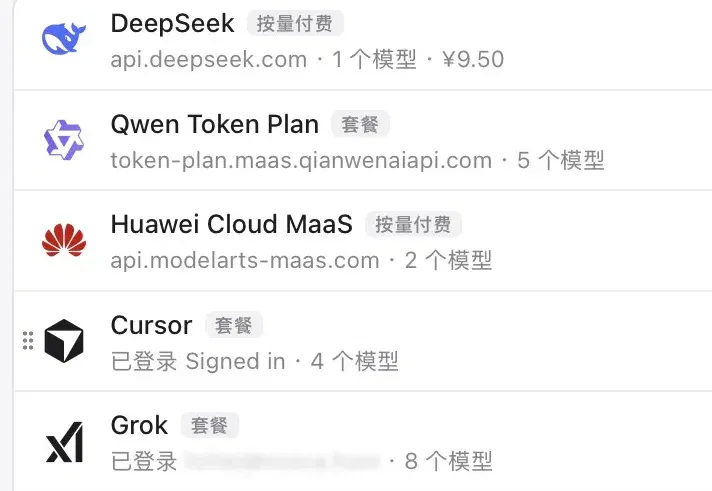
My Workflow Update: Magpie for Models, Cindy for Multiple Computers, T3 Code for Development (opens in a new tab)
The author revisits a workflow: Magpie brings together 7 channels and 23 models, Cindy links computers through group chats and remote desktop, and T3 Code handles development. Grok Bot and Alma are set aside; Orca stays. This does not mean every service works offline or all data stays local.

OpenAI Releases Nine Math Manuscripts on Matrix Multiplication and Strongly Polynomial Programming (opens in a new tab)
OpenAI added nine manuscripts in two families on November 24, claiming a 9/4 matrix multiplication exponent and strongly polynomial linear programming. Lean formalizes selected results; the repository treats the work as raw research data rather than completed academic review.
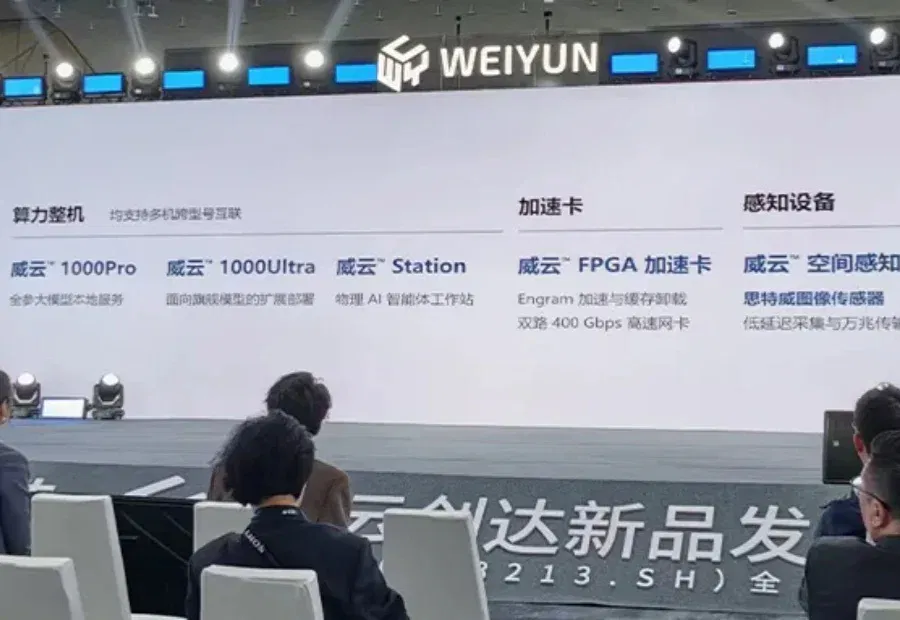
SmartSens Subsidiary Unveils WAAG AI Systems, Says Deliveries Since Incubation Exceed RMB 50 Million (opens in a new tab)
Weiyun Chuangda unveiled WAAG interconnects, local AI workstations and appliances, and creative and spatial software. It says deliveries since April incubation exceed RMB 50 million. FP4 peaks, capacity, and power claims depend on configuration and workload; these are not independent test results.