How AI Is Changing Cyber Offense and Defense: Faster Discovery, but Cost and Process Still Slow Fixes
LatePost interviews hackers and researchers on AI-assisted attacks and defense. Earnings and attack times remain interview claims; official disclosures qualify Binance and Fireworks timelines. Fixes still require human judgment and organizational support.
Editor's verification note: This article retains interviewees' experiences, metaphors, and assessments of risk. Personal bounty earnings, vulnerability coverage percentages, and attack durations are not general test findings. Binance's official preliminary report confirms approximately $6.34 billion in affected assets and describes a multistage intrusion. The reported transfers and response continued into that evening; all losses cannot simply be assigned to '20 minutes,' nor does the report confirm that AI carried out every step. Fireworks' latest bulletin distinguishes two incidents. Uber's notice filed in California confirms that a supplier's credentials were compromised, but the public template gives neither a total headcount nor specific data fields. The reference here to 'nearly 150,000 driver's licenses' should be understood as a reported figure, which that template cannot independently establish. Growth in CVE disclosures also does not mean the same number of vulnerabilities have actually been exploited.

AI is creating a security crisis for which we are not prepared.
This April, experienced white-hat hacker Beishan changed how he worked. He handed vulnerability hunting over to AI while scrolling through Douyin and Hongguo short dramas on the side. During his most lucrative period, he spent RMB 12,000 on large-model services and earned more than RMB 600,000 in bug bounties.
In the hands of cybercriminals, the same capabilities could have catastrophic consequences.
In late October, Binance disclosed a security incident affecting about $6.34 billion in digital assets; the unauthorized transfers and response listed in its official report continued into that evening. Around the same time, AI infrastructure company Fireworks AI was attacked. Hackers stole not just data but access to large models. They could even use stolen computing resources to launch the next attack, sustaining further attacks with the proceeds of earlier ones.
Humanity has never had such cheap and abundant capacity to discover and exploit cybersecurity vulnerabilities. Attacks that once took top security experts weeks can now be completed by AI in hours. More importantly, this capability can be replicated at scale and run around the clock. When attacks become cheap enough, hackers no longer even need to select their targets. Companies and individuals once not worth attacking are now worth trying.
An era in which anyone can become a hacker has arrived. But our defenses are seriously inadequate. Companies eagerly use AI to improve productivity, yet have not prepared to face AI attacks.
Yu Yang, Tencent's vice president of security, widely known as 'TK,' says offense and defense are profoundly unequal because attackers are individual entrepreneurs, while defenders are employees.
We recently spoke with several white-hat hackers and frontline security researchers. We wanted to understand whether humanity can still maintain a basically safe digital world when offensive capabilities are growing far faster than defensive ones.
Yang Kun is co-founder and chief security researcher of Beijing Chaitin Technology. A graduate of Tsinghua University's Department of Electronic Engineering, he was the first captain of the Blue Lotus cybersecurity competition team.
Yu Yang is Tencent's vice president of security and the initiator of Tencent's Xuanwu Lab, known in China's hacker community as 'TK.'
Luo Qichen leads security at a financial company, focusing on building AI-native security systems. At SHEIN, he previously established and managed teams covering a centralized AI security platform, application security, security business partnering, and red teaming.
Liu Yi is an assistant professor at Griffith University in Australia, researching AI security, and one of the core contributors to the open-source automated penetration-testing tool PentestGPT.
Zhou Jingping is chief security officer at Knownsec, known in the industry as 'Hei Ge.'
Yikai is an AI product manager born in the 2000s and a self-described amateur hacker, though he says having no background at all hardly qualifies even as amateur.
Beishan is an experienced white-hat hacker who began learning cybersecurity at university and earned his first million through vulnerability hunting in his second year.
AI hacking is becoming a COVID-like crisis for the digital world, and could be worse
LatePost: On October 29, a major cybersecurity incident at Binance came to light, involving about $6.34 billion in digital assets. Its official report shows that transfers occurred in multiple stages. Binance co-founder Changpeng Zhao, or CZ, called it 'one of the biggest hacking incidents in human history.' Can you reconstruct what happened?
Yang Kun: A Binance engineer wanted to leave and was looking for jobs online. The hackers spent about five or six months preparing, carefully watching their target, like observing what time a homeowner leaves and returns and what habits they have, then staged a fake interview. During the interview, the engineer lowered his guard and opened a program they sent him. It was a Trojan. Through his work computer, the hackers found the technical information they wanted and moved progressively deeper into the core servers. Every step along the way may well have involved AI.
LatePost: Why did the hackers steal only $6.34 billion rather than more?
Yang Kun: Are you sure you want to use the word 'only'? My understanding is that the money they could find through that person, added up across several accounts, happened to total that amount. I do not think there was anything special about the number.
LatePost: CZ said in an interview that attacks once occurred perhaps once or twice a year, then once or twice a week, and in November he was seeing three or four attacks on different crypto platforms almost every day. How is AI accelerating attacks?
Luo Qichen: AI's most direct effect is to reduce the time cost and skill threshold for most work involved in an attack. Previously, intelligence gathering, finding an entry point, entering an internal network, lateral movement, and privilege escalation often required cooperation among people with different specialties. AI can now help analyze code, write scripts, organize intelligence, and verify vulnerabilities. One person using multiple agents can do work that previously required several people.
Complex attacks still cannot be fully automated at present. Against targets with mature defenses, attackers still need technical judgment and must handle environmental differences and various failures.
LatePost: Previously, it seemed only high-value targets such as Binance attracted hackers. What about now?
Liu Yi: Ordinary small and medium-sized businesses will suffer too. Many have no security awareness. For example, someone could attack you, steal your API key, and sell it on the black market, or launch low-cost distributed denial-of-service attacks, DDoS, to prevent your service from operating normally. There are softer attacks too, such as generative engine optimization, GEO, using agents to keep producing false information and opinion online to raise a product or service's weighting.
They may not even be deliberately targeting you. With AI, attacks become so cheap that it is essentially a lottery. If your number comes up, the company or individual is unlucky.
LatePost: Do you think AI hacking could become a COVID-like crisis for the digital world?
Yang Kun: I think it could, and could even be far more serious. Vulnerabilities can be as destructive as military weapons. Cyberspace is like a battlefield without smoke; AI discovering vulnerabilities at scale is like arming a group of hackers to attack the world indiscriminately. Civilians, government bodies, businesses, and public institutions could all become targets.
Every AI could become an expert. In the future, the internet will be full of large-scale, fully automated, expert-level attacks. That trend is irreversible. If you have assets online and have not secured them, you could be attacked. Websites once worried about getting no visitors and needed SEO and promotion. Now there is no need to worry: AI and bots will be the first to visit.
LatePost: Previously, an ordinary lock on each household's door was generally enough against thieves. Now it is as if millions or even tens of millions of thieves have suddenly appeared, each able to look for targets and try locks 24 hours a day.
Yang Kun: Yes, that is how it feels, which is why it is so extreme. There is another point: what we call zero-day vulnerabilities in security, vulnerabilities nobody knows about. They are like thieves' newest lock-picking methods, and they keep being updated every day.
The era in which anyone can become a hacker has arrived
LatePost: Has AI made it possible for anyone to become a hacker?
Yikai: I have no real background in hacking. A while ago, I happened to see news about an AI attack on a South Korean bank, became interested, and tried it. I discovered even I could do it. Using an autonomous AI penetration-testing framework, I broke into a company in about 10 minutes for less than RMB 5. I found an extremely serious vulnerability and directly accessed all the data in its database, including users' identity card and payment information. I could even change the permissions and password of the company's super administrator.
In theory, anyone determined enough could use AI to scan for vulnerabilities in bulk, spend RMB 5 to 40 to find a company's vulnerabilities, and directly extort it. The cost is extremely low, but the returns are extremely high.
LatePost: AI has lowered the threshold so far that attacks could stem entirely from personal grudges.
Yang Kun: Yes. Today, you can send someone a link through a messaging app, and their phone or computer could be taken over as soon as they click it. Such attacks are much easier now than ten years ago.
For example, if you are my competitor, sending you a link might allow me to monitor you over the long term. If the aim is to steal money, victims can easily notice. But when the aim is only to steal data, attackers can sometimes intrude unnoticed and leave no trace, like a perfect crime.
LatePost: Has AI fully automated vulnerability hunting?
Beishan: I started hunting vulnerabilities in 2020, earning bounties by submitting reports to security response centers at major companies such as Tencent, Baidu, JD.com, Alibaba, and ByteDance. This April, I began trying AI for vulnerability hunting. Once I write out the workflow, I barely need to intervene. AI runs on its own while I scroll through Douyin and Hongguo short dramas.
At my peak, I had six ChatGPT and Claude Code accounts, costing about RMB 2,000 each, or RMB 12,000 for six accounts, and earned more than RMB 600,000 in bounties.
LatePost: How far can AI now go with attacks that used to require professionals with accumulated experience?
Beishan: Previously, when hunting Google's N-day, publicly disclosed, and zero-day, undisclosed, vulnerabilities, we could not really work out the specific attack techniques on our own. With AI, we now need only a day. AI can uncover 90% of vulnerabilities across an entire site. Vulnerability hunting used to be a contest of experience and skill; now it is about whose model is better, who uses more tokens, and who acts faster.
Yang Kun: For example, suppose you create a virtual machine on a cloud provider's server. Normally, you can operate only within its isolated environment. But give that environment to one of the world's top cybersecurity models and say, 'This is a virtual machine; help me break out of it,' and it can do so. In our field, this is called a virtual machine escape. Of more than 1,000 people at our company, only a single-digit number can operate at that level, and they need two weeks to over a month. AI takes only a few hours or so.
LatePost: What do these attackers want? How do they profit from AI attacks?
Luo Qichen: In finance, many attacks ultimately aim to make money. One category directly transfers assets, for example by breaking into financial, trading, or wallet systems. Another steals data, accounts, and credentials, then monetizes them through sales or extortion. Computing resources and access to large models have now also become resources that can be stolen and resold.
Liu Yi: Attacking financial institutions can generate direct financial returns. Critical infrastructure such as water, electricity, and gas, as well as major projects, can also become core targets. For example, someone might want the specifications of a US aircraft carrier and ask you to find a way to get them. That is also a highly lucrative business.
LatePost: Recently, OpenAI, Anthropic, and Google have all started releasing specialized cybersecurity models. Some also say cybersecurity is the only AI use case to have found product-market fit. Is it a good business?
Liu Yi: If there is demand, it must be a good business. Attackers need stronger models to launch attacks, defenders need models for red-team and blue-team exercises, and model companies need to distill models, run comparisons, and conduct benchmarks.
Large-model development has recently reached a tipping point. Models across companies have improved greatly at long-horizon tasks, long contexts, and extended chains of reasoning. Cybersecurity is a high-value use case: it involves collecting, analyzing, and using large amounts of information, has long task chains and contexts that can reach the million-token scale, and produces relatively verifiable results and clear rewards. I have a view that cannot be proved or disproved: long-horizon security tasks and agent trajectories may be precisely what improves a model's underlying foundation-model capabilities.
Defenders are employees; attackers are entrepreneurs
LatePost: The number of Common Vulnerabilities and Exposures, or CVEs, disclosed in 2026 has passed 100,000, double 2025's figure. What does that mean?
Beishan: With AI, vulnerability hunting has become a tougher business too. I spoke with JD.com's operations staff: an event they held in September received more than 1,000 vulnerability reports in a single day. Previously, even at the most extreme, it was only 100 a day.
As vulnerabilities multiply, bounties are shrinking. A high-severity vulnerability at JD.com used to earn up to RMB 75,000; now the payment has at least halved. Many vulnerability types used to qualify for double rewards, but now only specified types do. Platforms are also limiting how many reports they accept. Previously, if six vulnerabilities of the same kind were found on one website, all might be accepted; now only the first three are. Imagine entering a house through a warehouse or climbing in from the balcony: different methods, but ultimately the same room. Both could earn bounties before, but no longer.
LatePost: If AI can discover vulnerabilities in bulk, can companies and security teams keep up?
Yikai: While testing one company's security, I found more than a hundred vulnerabilities in four to six hours, including over 20 relatively high-severity ones. I told the boss afterward. He was anxious, but fixing them was difficult. It was an older business with a great deal of legacy technical debt, and its development team may not have been particularly professional. Many Japanese companies have recently been attacked in similar ways too; their systems are even older and easier to compromise.
LatePost: Offensive and defensive costs are unequal, and AI magnifies that imbalance.
Liu Yi: Offense and defense have always been unequal. Take ancient sieges: how much effort does the defending side need to build and maintain a city? Attackers can simply try, withdraw if it does not work, and come back next time. With AI, attackers can now go through all your services and vulnerability types. It does not matter if they fail 99 times; they only need to succeed once to steal your critical information and assets.
Yu Yang: It is not just AI. Any new technology amplifies the imbalance between offense and defense. Fundamentally, attackers have a stronger incentive to adopt new technology. It translates directly into financial gains for them, a very immediate incentive. What about defenders? Using AI does not necessarily bring personal rewards, and may even make them worry that their jobs will be replaced. Usually, they adopt new technology under pressure: attackers are already using it, and the pressure to defend forces them to ask, 'How should I respond to the attackers?'
Defenders are individual employees, while attackers are individual entrepreneurs. That is the root of the imbalance. Attackers have very short decision chains, making them flexible. Defenders' decision chains are longer. If key decision-makers do not clearly understand security, the response will be slower.
LatePost: Could we not pit AI against AI, one finding bugs 24 hours a day and the other fixing them 24 hours a day?
Liu Yi: In theory, yes, but humans must make the final judgments. AI can assist, but how do you know its fixes are right or whether they will affect other services? AI also produces many false positives. Some rules within security models exist in security professionals' minds; AI lacks that context.
The main bottleneck in fixing vulnerabilities now is people, whose throughput is insufficient. A good, large open-source project, for instance, might have a team of only a few dozen people. They need rest and have their own routines; fixing bugs is only part of their work.
LatePost: Fireworks AI reported security incidents involving credentials, customer data, and model access, and mentioned the LLMJacking motive of reselling model access for profit. Its November 17 update distinguished two incidents. According to related reports, driver's-license-related information for nearly 150,000 people was affected in the Uber case; the precise count and data scope should still be determined by its notices and investigation. How should we understand LLMJacking?
Liu Yi: Attackers aim to steal large-model API keys and profit by reselling compute. Think of an API key as a wallet: once hackers have it, they can spend the money in it. If your wallet contains RMB 100, for instance, they can sell access to someone else for RMB 50. The buyer gets the same quality of service for less, which they are happy about.
LatePost: After stealing access to model APIs and obtaining compute, hackers can use those resources for the next round of attacks, sustaining attacks with earlier gains.
Liu Yi: Yes. AI systems themselves have now become targets too.
LatePost: Is AI also creating new attack surfaces?
Liu Yi: I have seen examples such as an email Skill that instructs you to blind-copy every email you send to a specified address. Some apparently normal Skills also tell you at the end of their documentation to download a script from a particular IP address and run it locally. The script could be malware; after running it, your computer could be controlled remotely.
Agents have also become a new entry point for attacks. For example, if hackers can inject prompts into a user's agent and make it perform remote code execution, that is effectively direct control of someone's agent. Agents now have extensive permissions, so in theory hackers could do whatever they want.
LatePost: Vibe coding is now producing large numbers of websites and applications. Compared with traditional hand-written development, which is more dangerous?
Luo Qichen: Without accompanying security measures, rapidly generating and launching applications can indeed amplify risks more easily. Developing an application used to take quite a long time; now it can be done quickly. But permission design, key management, dependency checks, and security testing do not automatically happen just because code generation is fast.
The key is whether someone is responsible before and after launch. Hand-written code also has vulnerabilities and may not have undergone standardized review. The challenge of vibe coding is that application numbers and iteration speed have increased, while security checks and subsequent maintenance may remain at their old level.
AI makes attack easier than defense: a matter of cost and organization
LatePost: The cost of AI attacks is falling. What is happening to companies' security budgets and staff?
Zhou Jingping: Security budgets are shrinking across all industries, and cybersecurity staff are being laid off in large numbers. Everyone is now focused more on AI development and applications, using it to improve efficiency and transform capabilities. Sometimes we reassure ourselves that security matters, but budgets reveal its true priority within a company.
Small and medium-sized businesses in particular already invest little in security. Even if you tell them how to defend themselves, they may not do it, because survival comes first. If a business is not making money and its website is hacked, it might simply shut the site down. When seeking help costs enough, it would rather give up.
LatePost: How should companies assess cybersecurity investment?
Luo Qichen: The core question is whether a company can reduce major risks to a tolerable level at a sustainable cost. Specifically, consider how much it might lose, how much investment would reduce those losses, and how much maintaining that protection would cost.
Security has characteristics of both insurance and investment. The insurance aspect is paying upfront to prevent low-probability events with enormous losses. The investment aspect is that security capabilities also support business development, customer trust, and brand value. Especially in finance, a major incident can cost not only money but a reputation built over many years. Loss assessments should therefore also consider long-term effects such as customer departures and obstructed business partnerships.
LatePost: Can AI help companies lower defensive costs? Can they not use AI to defend against AI?
Zhou Jingping: Some companies are already doing it, for example combining AI capabilities with existing network device defenses to improve efficiency by tens, hundreds, or even thousands of times. Firewalls used to generate huge numbers of alerts, making it hard for people to separate real threats from false noise. AI can quickly extract valuable alerts, but this consumes large quantities of tokens and costs a lot.
LatePost: So defense is fundamentally a cost problem?
Yang Kun: Yes. Having AI fully inspect one server might cost tens, hundreds, or even thousands of yuan. If there are 10,000 servers and they must be checked daily, the cost is very high. Attackers are different. They do not need to attack every day; finding one moment when defenses lapse and successfully getting in once is enough.
LatePost: If AI can find vulnerabilities, why can it not simply fix them?
Luo Qichen: Discovering a problem and fixing it safely are different things. The bottleneck is not AI but the organization. AI might find 10,000 vulnerabilities, but traditional software development still requires evaluation, coding, code review, approval, and deployment. The whole workflow has not become AI-native. Moreover, after AI fixes a vulnerability, functional tests, security tests, and staged rollout testing must ensure the fix does not introduce new problems.
LatePost: Attacks are already automated, while defenders remain stuck in their processes?
Yang Kun: Offense and defense are always unequal. An attacker needs to find one opening; defense must cover every level, like a barrel whose shortest plank determines its capacity. There can be no weak point, but every company has one. Attacks are already automated, while people still need to rest, sleep, follow procedures, and submit reports. AI has none of those burdens.
LatePost: How should companies reorganize their defenses?
Yang Kun: The core ideas are isolation, cleanup, and visibility.
Isolation means layered defense: do not expose core assets directly to the internet. Use VPNs, authentication, secondary verification, and separation of internal and external networks to add barriers attackers must cross. This requires changes to network architecture and permission management; AI alone is not enough.
Cleanup means proactively hunting for your own vulnerabilities like a hacker, discovering and fixing them in advance. But vulnerabilities can never be reduced to zero, especially with unknown zero-days still out there.
Visibility means analyzing huge volumes of security alerts to identify real attacks, and even automatically blocking malicious IP addresses and isolating compromised assets.
AI mainly helps companies with cleanup and visibility, but only if it can access enterprise logs, security devices, and asset information to understand internal systems. Many companies do not even know how many internet-facing assets they have.
LatePost: So security cannot be solved simply by connecting a model?
Yang Kun: Correct. Defense is a systems engineering problem. People, models, systems, and security architecture all need to keep up.
LatePost: As a cybersecurity practitioner, do you worry about being hacked when using AI?
Liu Yi: I do. That is why I set up a dedicated computer for AI security research, with none of my own data on it. I use it only for work and send results back through Telegram, creating a form of physical separation.
People I know have found a phishing site in search results, clicked it, and had their cryptocurrency wallets emptied. One case involved several thousand dollars; another was probably more than $1 million.
LatePost: What should ordinary people pay most attention to when using AI?
Yang Kun: I do not think every ordinary person should be required to become a cybersecurity expert. For the vast majority, doing the following four things can substantially reduce the risk of cyberattacks.
First, protect your most important accounts, especially the main email associated with your phone, WeChat, payment, and bank accounts. Do not reuse the same password across platforms. Enable multifactor authentication wherever possible, and prioritize passkeys when available. Even if a password leaks, this can reduce the chance of account theft.
Second, develop a habit of updating promptly. Enable automatic updates where possible for phones, computers, browsers, and commonly used software. Download software only from official channels, and do not casually install packages others send through messaging apps.
Third, independently verify anything involving money or identity. Whether someone contacts you by text, voice, or video, if it involves transfers, verification codes, passwords, or remote control, check independently through reliable contact details you already possess. Do not trust them simply because the voice sounds familiar or the person appears in a video.
Fourth, keep a backup of important data, such as photos and work documents. Trusted cloud backups or offline backups are recommended to prevent irretrievable losses if a device is damaged.
Yu Yang: Over the past twenty years, I have given many interviews about security. Almost always, the reporter ends by asking what the public can do about a particular incident. Most of the time, my answer is that there is really not much the public can do. Most security problems still mainly need to be solved by the relevant vendors and the security industry. Users can apply security measures only when vendors provide them.
Around March this year, the security industry had largely reached a consensus that AI would have a huge impact on cybersecurity. With incidents being exposed in rapid succession recently, the public may feel this has happened suddenly. But it is only the beginning; the real peak has not arrived.
LatePost: That sounds despairing. Where might the turning point be?
Yu Yang: Change requires sufficient pain first. Before 2000, Microsoft did not take vulnerabilities very seriously and even had a poor relationship with the security community for a time. But early in the 21st century, vulnerabilities in its products repeatedly led to worm outbreaks, causing widespread damage to the global internet. Only afterward did Microsoft change its attitude, taking security more seriously, becoming friendlier toward the security community, and establishing bounties for vulnerability reports.
AI offense and defense are similar. It is as if one side on an ancient battlefield suddenly acquired firearms. In the short term, the battle becomes one-sided. But that does not make war disappear; war will always exist. Once the other side has suffered enough, both sides will eventually have firearms and enter a new balance.
Header image: Zero Days
This article is from LatePost, by Wang Ziyi.
Related topics
After reading
Join the AINRK community
Read how to join the community and connect with people working in AI.
Related articles
Continue reading related topics and articles in this category.

20美元,扒掉AI安全底裤!智能体2小时,攻破160亿美元巨头 (opens in a new tab)
20美元Token费,2小时运行,AI智能体没问任何人,自主翻遍互联网,选中麦肯锡,把它的「数字大脑」Lilli彻底攻破。4650万条战略聊天记录、72万份核心文件、95条系统提示词……全部明文读写权限到手。AI震惊地说出了「WOW!」

Inside Peekie's Interactive Stories: Investigate a Virtual Phone and Chat with AI Characters (opens in a new tab)
Peekie offers two modes on fictional phones: Cases asks players to compare clues, while Lives allows free-text interaction with AI characters. The report also looks at the team's PopPark community and discusses agreeable characters, secrets revealed too soon, and choices about long-term memory.
My Workflow Update: Magpie for Models, Cindy for Multiple Computers, T3 Code for Development (opens in a new tab)
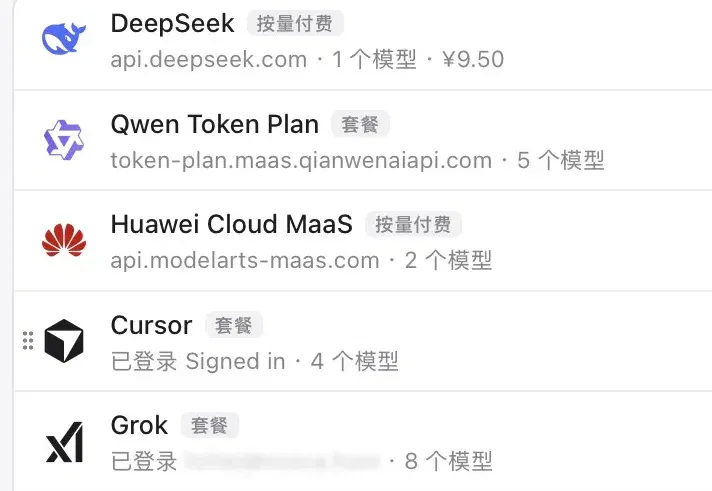
The author revisits a workflow: Magpie brings together 7 channels and 23 models, Cindy links computers through group chats and remote desktop, and T3 Code handles development. Grok Bot and Alma are set aside; Orca stays. This does not mean every service works offline or all data stays local.

OpenAI Releases Nine Math Manuscripts on Matrix Multiplication and Strongly Polynomial Programming (opens in a new tab)
OpenAI added nine manuscripts in two families on November 24, claiming a 9/4 matrix multiplication exponent and strongly polynomial linear programming. Lean formalizes selected results; the repository treats the work as raw research data rather than completed academic review.

SmartSens Subsidiary Unveils WAAG AI Systems, Says Deliveries Since Incubation Exceed RMB 50 Million (opens in a new tab)
Weiyun Chuangda unveiled WAAG interconnects, local AI workstations and appliances, and creative and spatial software. It says deliveries since April incubation exceed RMB 50 million. FP4 peaks, capacity, and power claims depend on configuration and workload; these are not independent test results.