Xiaguang and Singtel's 2026 AI-native global expansion report examines six sectors and five markets
The report maps three parallel paths for AI expansion abroad: standard tools, business solutions and native capabilities. It compares six sectors and five markets, discussing growth, compliance, delivery and Singtel CUBΣ. Case figures and forecasts do not establish universal returns or compliance.
This article introduces a joint report by Xiaguang Think Tank and Singtel, including the publishers' market judgments, company cases and product offering. Cost, efficiency, market-share and future-growth figures must be understood within their respective samples and time frames, rather than as independently verified universal returns. ASEAN's official statement (opens in a new tab) confirms that DEFA was signed on November 14, 2026. Signing differs from rules formally taking effect and being implemented domestically. Singtel's official CUBΣ description (opens in a new tab) supports its positioning as a networking and security service, but product features cannot automatically guarantee compliance in every jurisdiction or absolute uninterrupted operation. Applicability still depends on the business, data categories, local laws, deployment and service agreements.

As exports expand from goods and labor to AI capabilities, the form of value Chinese companies deliver abroad is undergoing a fundamental shift.
Jointly published by Xiaguang Media, Xiaguang Think Tank and Singtel, AI-Native Global Expansion—When 'Chinese Intelligence' Becomes a 'New Export' (2026) focuses on six AI-native sectors and five overseas markets. It systematically examines the stages of AI-native expansion, regulatory windows, regional choices, sector opportunities and delivery bottlenecks.
AI expansion abroad: from efficiency tools to native products
In 2026, leading AI companies expanding internationally often pursue three paths in parallel.
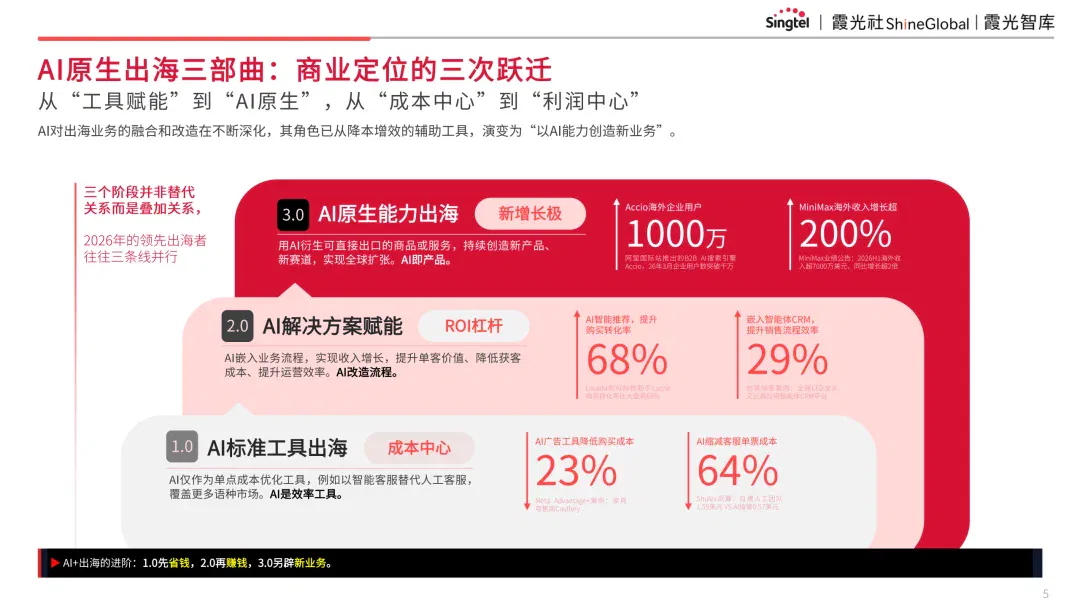
AI expansion 1.0—exporting standard tools: AI's value lies in lowering costs.
At this stage, AI is mainly used to replace human customer support and optimize advertising. Shulex estimates that an in-house human support team costs $1.59 per ticket, while AI handling can reduce that cost by 64%.
AI expansion 2.0—enabling solutions: AI becomes a lever for ROI.
At this stage, AI is embedded in business processes, affecting metrics such as conversion rates and sales efficiency. For example, Lazada's AI shopping assistant Lazee achieves purchase conversion 68% higher than the overall platform rate. Global LED leader Absen uses Fxiaoke's agent-powered CRM platform to improve sales efficiency by 29%.
AI expansion 3.0—exporting native capabilities: AI becomes the export product.
At this stage, AI capabilities become directly exportable goods or services. In March 2026, Alibaba.com's B2B AI search engine Accio surpassed ten million business users. MiniMax's overseas revenue exceeded $70 million in the first half of 2026.
The expansion of short dramas abroad is a representative example of AI's international growth.
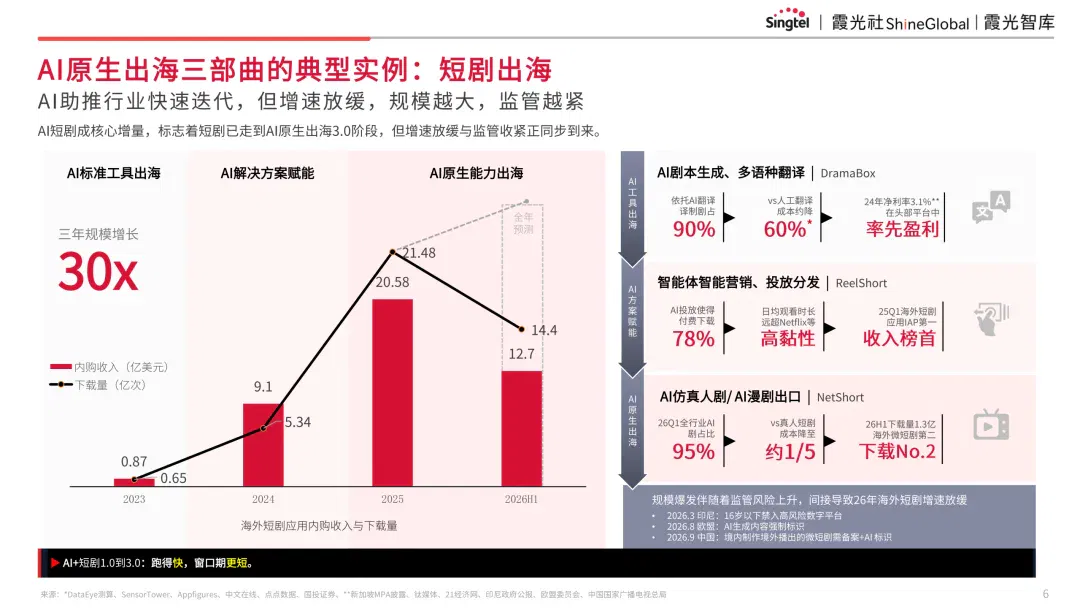
At stage 1.0, AI-translated dramas account for 90% of DramaBox's catalog, saving 60% compared with human translation. Its 2024 net margin was 3.1%, making it an early leader among major platforms in reaching profitability.
At stage 2.0, ReelShort uses agent-based marketing, with paid acquisition accounting for 78% of downloads. It topped the overseas short-drama app ranking for in-app-purchase revenue in the first quarter of 2025.
At stage 3.0, AI-generated live-action-style and animated dramas account for 95% of NetShort's output, at about one-fifth the cost of live-action short dramas. It recorded 130 million downloads in the first half of 2026, ranking second among overseas short-drama platforms.
The surge in short-drama scale, however, brings growing regulatory risks. Indonesia began phasing in high-risk digital-platform account restrictions for users under 16 on March 28, 2026. The report identifies tighter protections for minors as a risk to overseas short-drama growth, but this policy alone cannot establish why global overseas short-drama growth slowed in 2026.
2026–2027: a critical period before AI expansion rules tighten
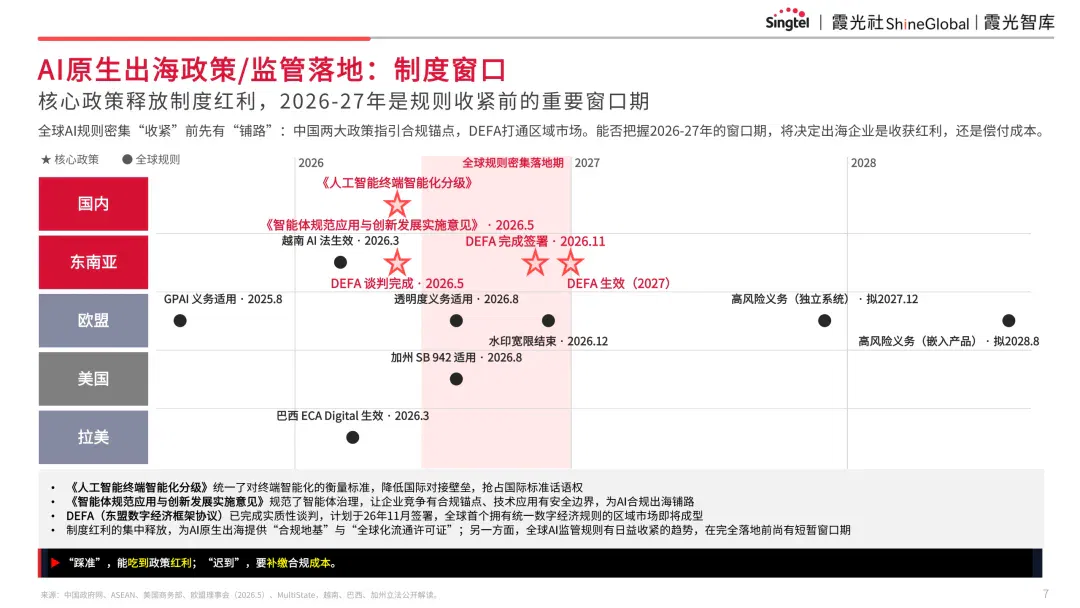
AI regulation globally is becoming stricter, but a brief window remains before all rules are fully implemented. Whether companies seize it will determine whether they benefit from regulatory opportunities or bear compliance costs.
Within China, the AI Terminal Intelligence Classification framework standardizes how terminal intelligence is measured, reducing the difficulty of aligning with international standards. The implementation guidelines for standardized agent applications and innovative development establish safety boundaries for agent development and use, giving companies rules to follow.
Abroad, ASEAN's Digital Economy Framework Agreement, DEFA, was signed on November 14, 2026, aiming to coordinate regional digital-economy rules. Signing does not mean all member states immediately adopted uniform rules; entry into force and domestic implementation must still be distinguished.
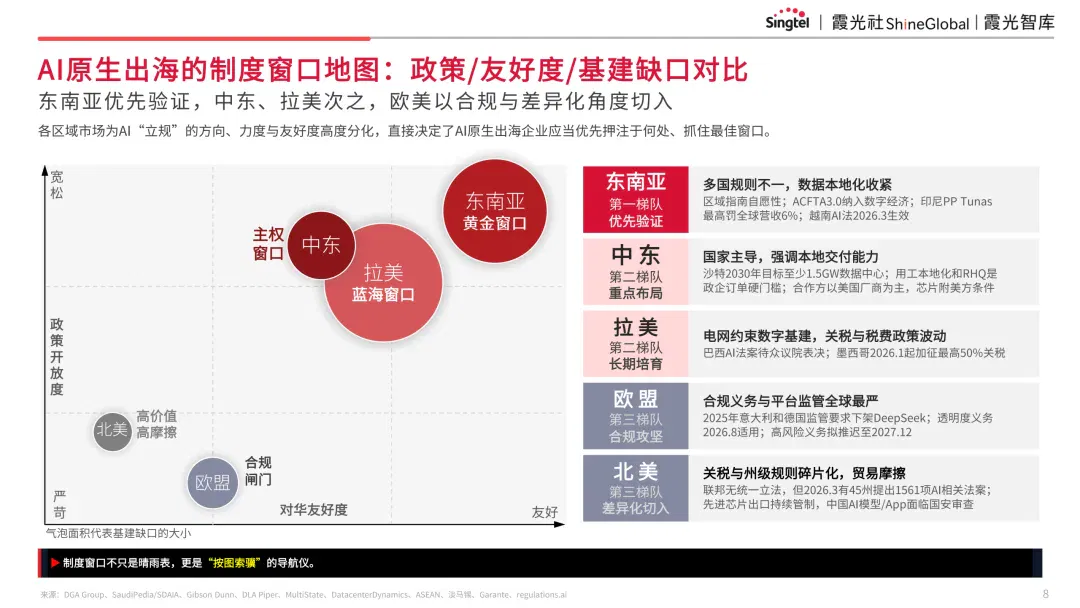
Rules in other major economies are also taking effect faster. In the EU, general-purpose AI model obligations have applied since August 2025, with transparency obligations applying from August 2026. California's SB 942 requires provenance disclosure for AI-generated content. Brazil's ECA Digital rules protecting children and adolescents online took effect in March 2026. Their differing schedules and stringency directly affect regional entry barriers and compliance costs.
AI-native companies should choose markets suited to their capabilities
There is no single best overseas market for AI-native expansion. Companies need to choose according to their own capabilities.
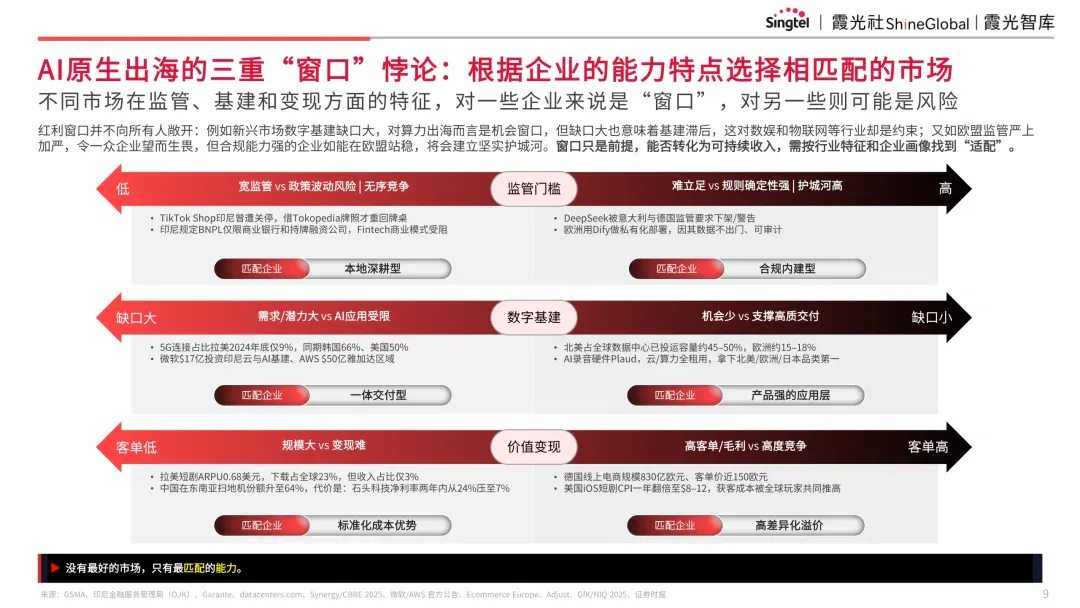
Regulatory barriers: Lightly regulated markets can bring policy volatility and disorderly competition. TikTok Shop was shut down in Indonesia before returning through Tokopedia's license, while fintech business models are constrained by buy-now-pay-later licensing. Such markets better suit companies with strong local capabilities. Strictly regulated markets offer greater certainty but higher entry costs. DeepSeek has faced warnings or removal demands in Italy and Germany. European businesses can use privately deployed Dify to keep data within their premises, making these markets more suitable for companies with compliance built in.
Digital infrastructure: Markets with large gaps offer substantial demand and potential, but constrain AI deployment. At the end of 2024, 5G represented only 9% of connections in Latin America, compared with 66% in South Korea and 50% in the US. Latin America therefore better suits companies offering integrated delivery. Markets with smaller gaps provide fewer openings but support high-quality delivery. North America accounts for nearly 50% of operational global data-center capacity and Europe about 15–18%, making them better suited to application companies with strong products.
Monetization: Markets with low spending per customer have large user bases but are difficult to monetize. Latin America accounts for 23% of global short-drama downloads but only 3% of revenue, suiting cost-advantaged companies. High-spending markets offer higher margins but intense competition. German e-commerce order values approach €150, favoring highly differentiated premium offerings.
Six sectors and five markets: the opportunity landscape and overcoming constraints
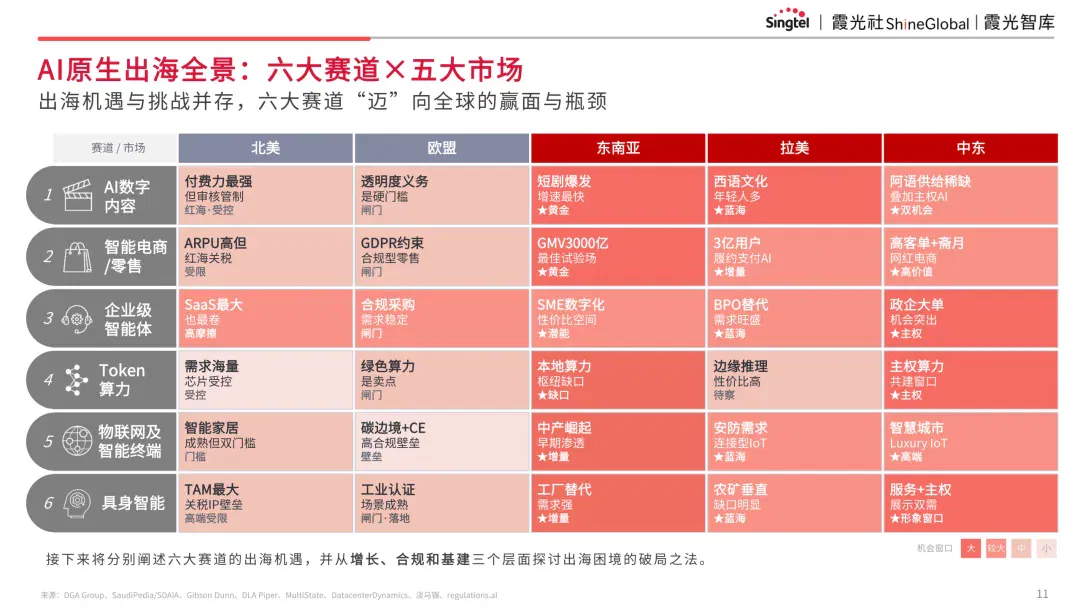
The six AI-native sectors—digital content, intelligent e-commerce and retail, enterprise agents, token-based computing, IoT and intelligent terminals, and embodied intelligence—have markedly different combinations of opportunities and bottlenecks.
1. Taking AI digital content abroad
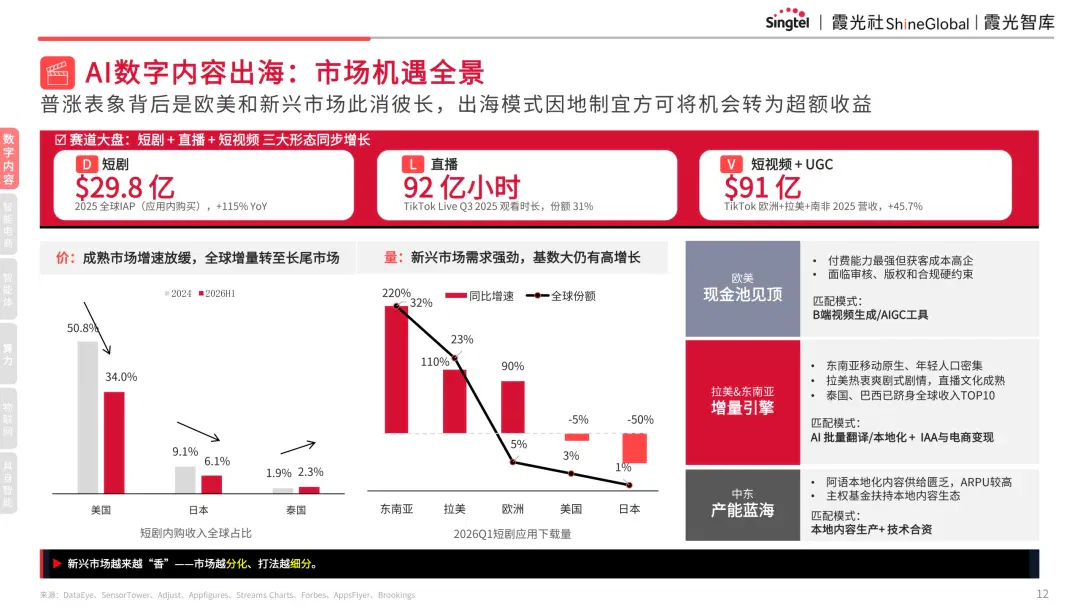
European and North American markets have the strongest willingness to pay, but high acquisition costs and strict copyright review. They therefore favor business-facing video-generation and AIGC tools that compete on efficiency rather than content volume. Latin America and Southeast Asia have predominantly mobile-native users, dense young populations and a preference for fast-paced stories. Thailand and Brazil are already among the top ten countries for short-drama revenue, favoring bulk AI translation to reduce costs and monetization through in-app advertising and e-commerce. The Middle East has limited Arabic-language content, higher average revenue per user and sovereign-fund support for local ecosystems, favoring local content production and technology joint ventures.
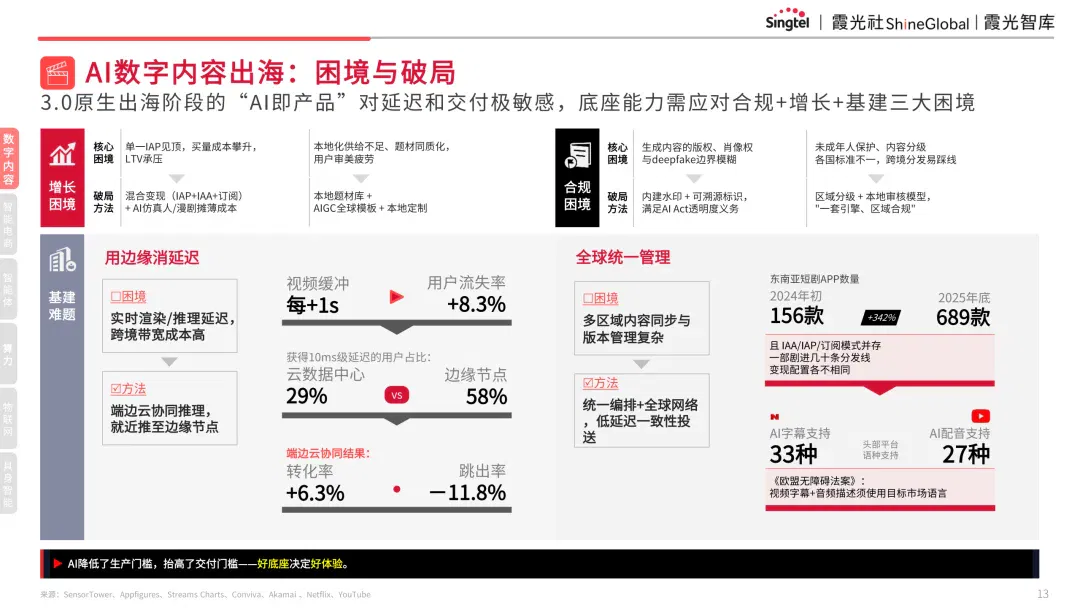
The main constraints on AI digital content abroad fall into growth, compliance and infrastructure. For growth, paid acquisition becomes more expensive under an in-app-purchase-only model, pressuring lifetime value; inadequate localization and repetitive themes fatigue users. Hybrid monetization—purchases, advertising and subscriptions—and AI live-action-style or animated dramas can spread costs. For compliance, copyright and likeness rights are unclear, while child-protection and content-rating standards vary. Built-in watermarks and traceable identifiers help meet transparency obligations, alongside regional ratings and local review models. For infrastructure, latency directly damages the experience. The report cites an estimate of an 8.3% rise in user loss for each extra second of video buffering, but does not provide the full sample or metric definition; this is not a fixed relationship applicable to every video service.
2. Taking intelligent e-commerce and retail abroad
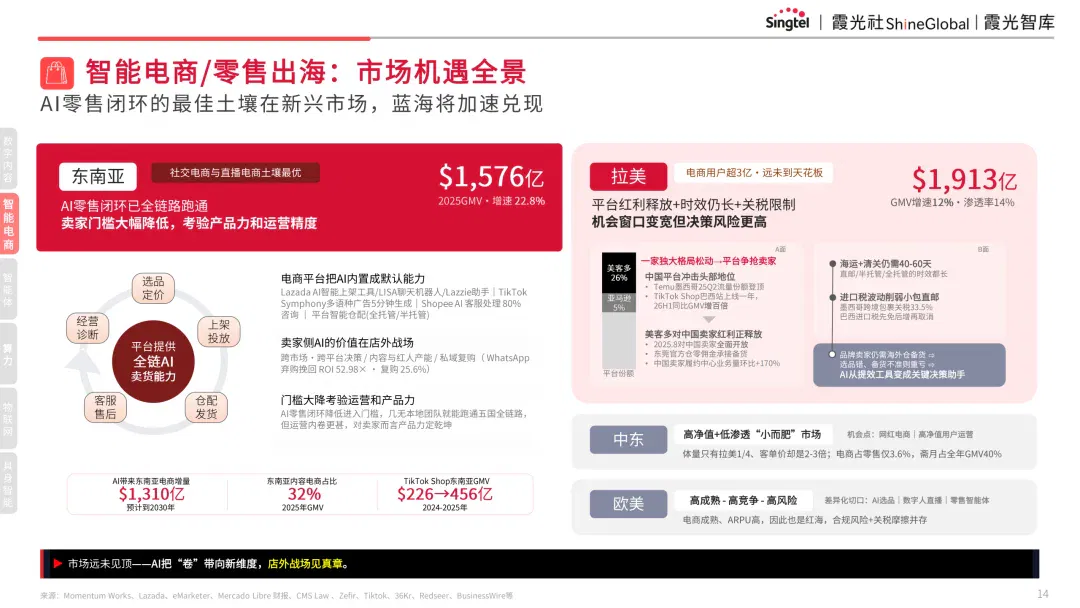
Emerging markets provide the strongest setting for the AI retail loop. Southeast Asian social and livestream commerce reached $157.6 billion in GMV in 2025, up 22.8%. Platforms embed AI throughout product selection, pricing, listings, advertising, warehousing and support, lowering operating barriers for sellers while raising accuracy requirements. AI also adds value off-platform through cross-market selection and repeat purchasing via private WhatsApp channels. By 2030, AI is projected to add $131 billion to Southeast Asian e-commerce, 32% from content commerce. Latin America has over 300 million e-commerce users and substantial headroom: 2025 GMV reached $191.3 billion, up 12%, with AI moving from efficiency tool to decision support. The Middle East is a smaller, high-spending market centered on influencer commerce and high-net-worth customer operations. Europe and North America combine intense competition, compliance risks and tariff friction, with differentiated opportunities in AI product selection, virtual-presenter livestreaming and retail agents.
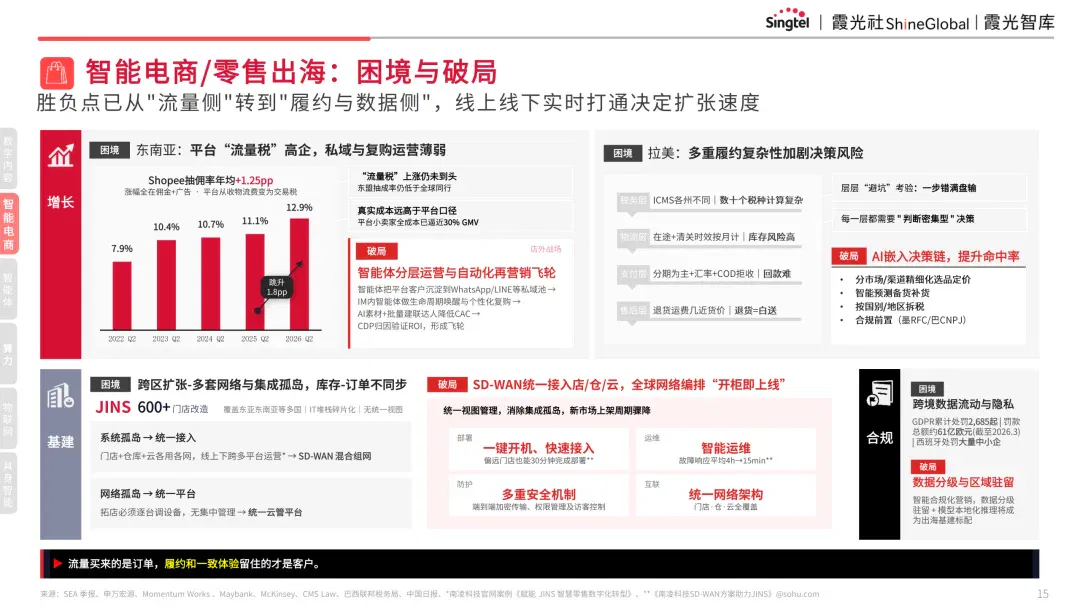
Intelligent e-commerce and retail face growth, compliance and infrastructure constraints too. Competition has shifted from traffic to fulfillment and data. Southeast Asian platforms' 'traffic taxes' keep rising—Shopee's commission reached 12.9% in Q2 2026—and weak direct customer operations bring small sellers' platform costs close to 30% of GMV. Tiered agent operations and automated remarketing can move customers into owned WhatsApp or LINE channels, lowering acquisition costs through AI materials and bulk outreach to build repeat purchasing. Infrastructure fragmentation creates separate networks and integration silos, making inventory and order synchronization difficult. JINS, operating over 600 stores across countries, faces fragmented IT stacks. SD-WAN can unify stores, warehouses and cloud through global network orchestration and rapid plug-and-play access. For compliance, cross-border data and privacy requirements are tightening, with cumulative GDPR fines exceeding €6.8 billion and large Spanish penalties. Data classification and regional residency are central responses.
Download the full report at the end to explore opportunities and challenges in the other AI sectors
The bottleneck is delivery, not the model
Capturing AI-native opportunities across the six sectors requires crossing three thresholds. Growth is constrained by acquisition costs and monetization; compliance by cross-border data and content ratings; infrastructure by delivery bottlenecks—markets that cannot be entered, data that cannot cross borders and agents that go offline.
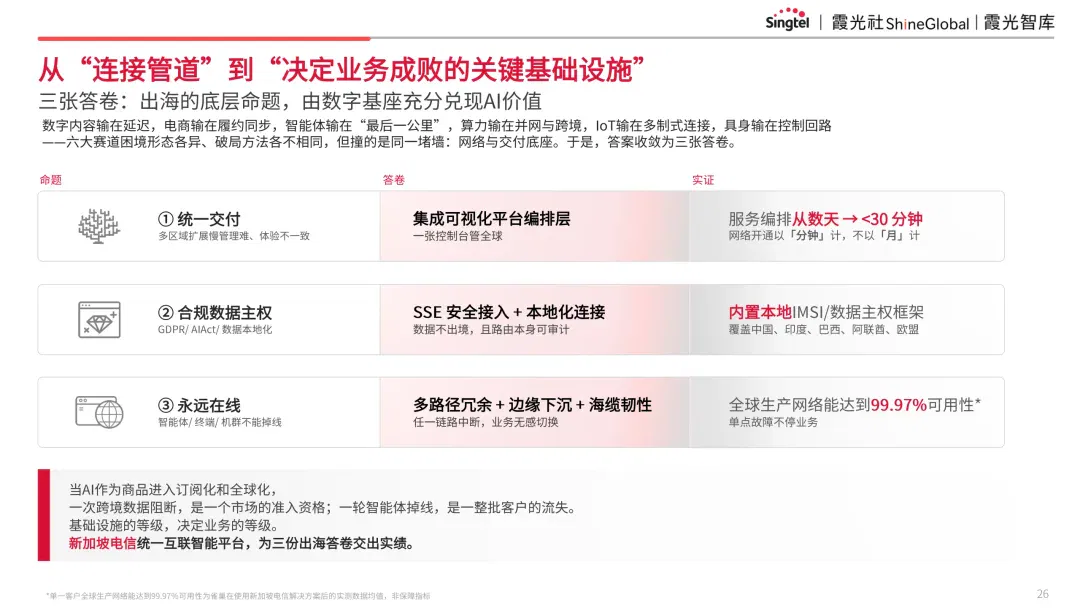
What AI-native companies expanding abroad often lack is not model capability or product ideas, but the infrastructure to deliver those capabilities reliably overseas. Singtel's approach addresses these three underlying issues.
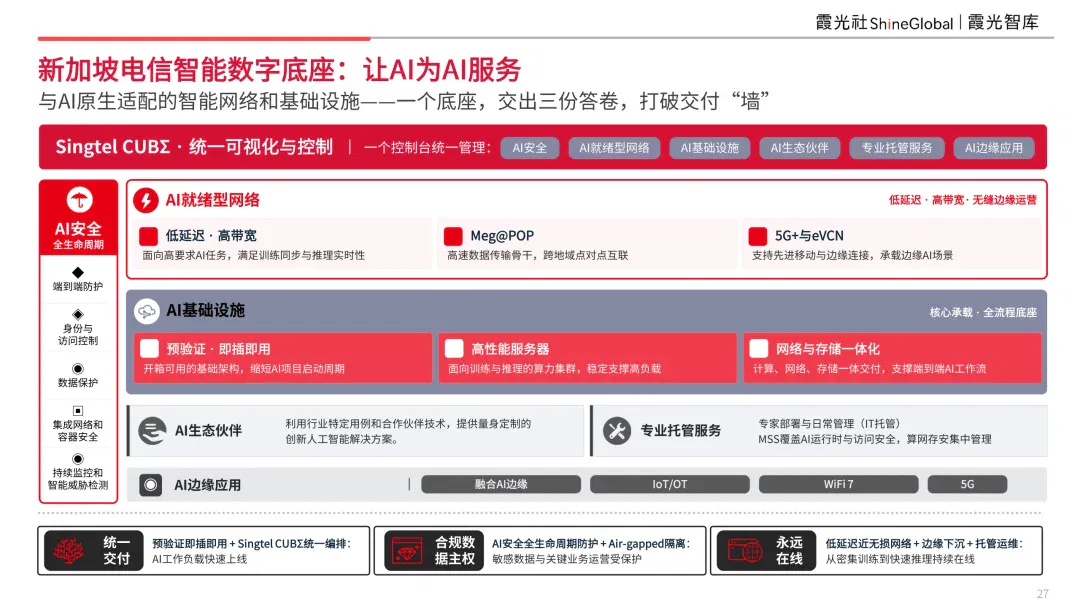
Singtel CUBΣ's intelligent digital foundation centers on a unified visual console, integrating six modules: AI infrastructure, networking, security, edge applications, ecosystem partners and managed services. Plug-and-play capabilities accelerate project launches; isolation and protection support data compliance; low-latency networks and edge nodes support continuity, adapting the network proactively to AI business needs.
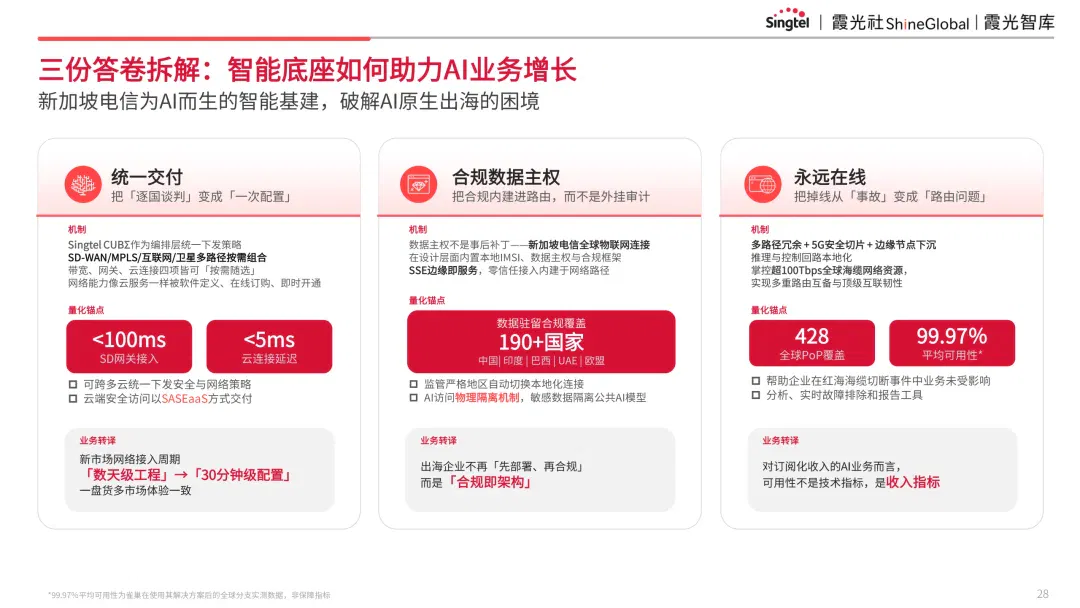
The foundation is implemented through unified delivery, compliant data sovereignty and always-on service. One configuration applies globally, cutting network activation from days to 30 minutes and supporting consistent experiences. Routing and regional configuration can help implement data residency, but cannot automatically guarantee compliance with every applicable rule in more than 190 countries; configuration and review still depend on the data, business and local laws. Subsea cables, redundant paths and global points of presence enable automatic rerouting and recovery from failures. For subscription AI businesses, network availability directly affects revenue.
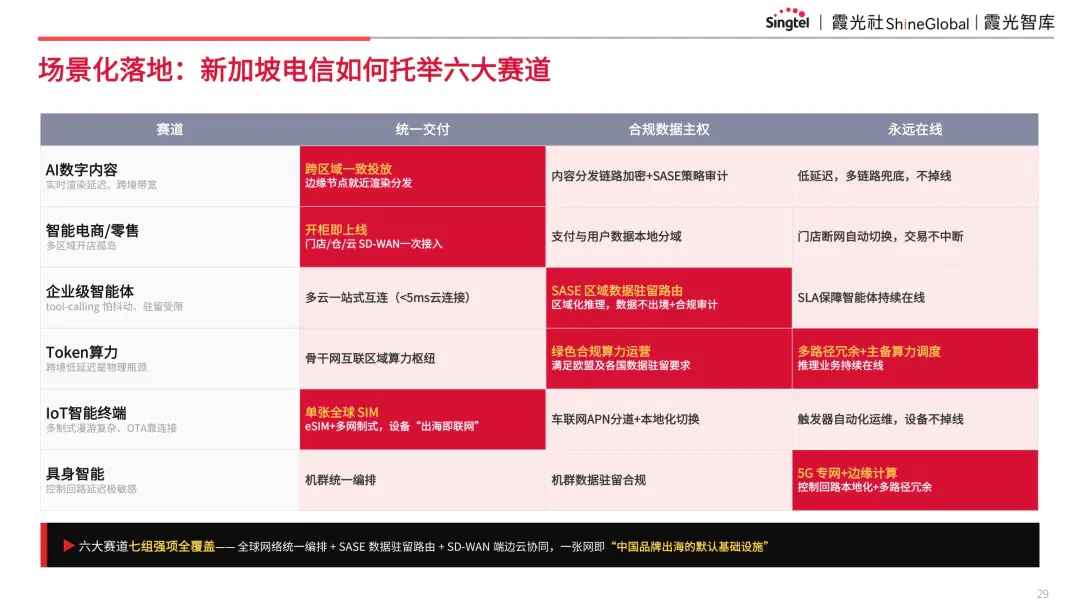
The foundation also serves all six sectors, addressing digital-content rendering and distribution, isolated retail locations, cross-cloud agent calls, cross-border computing interconnection, international device roaming and latency in embodied-intelligence control loops. Global orchestration, SASE and SD-WAN coordination across device, edge and cloud provide underlying support for Chinese companies expanding abroad.
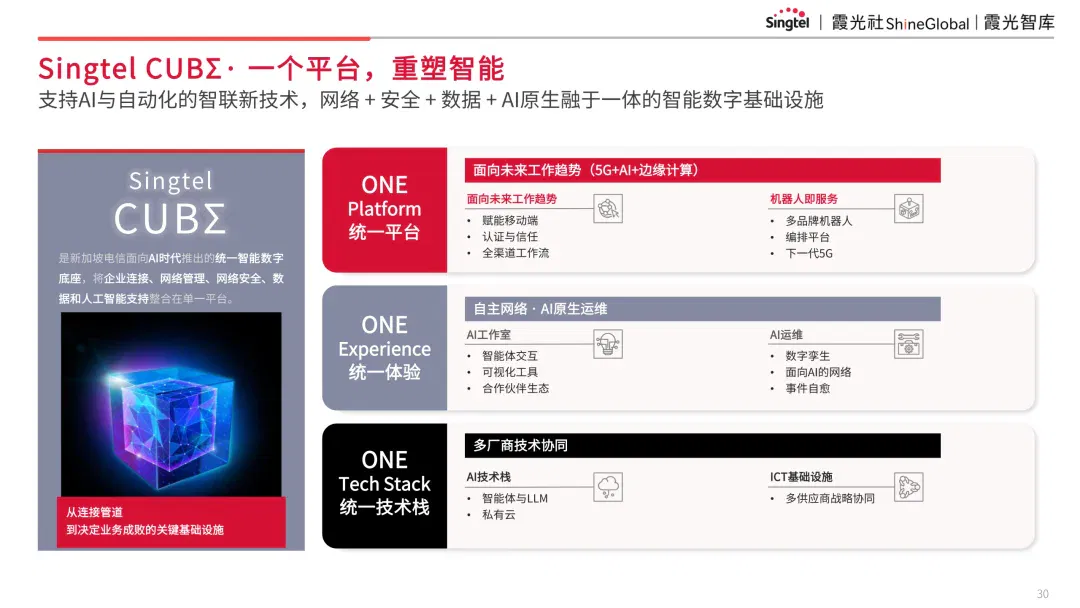
CUBΣ has three architectural layers—a unified platform, experience and technology stack—covering mobile access, robot services, agent interactions, self-healing, large models and 5G edge computing. This turns the network from a basic conduit into core business infrastructure.
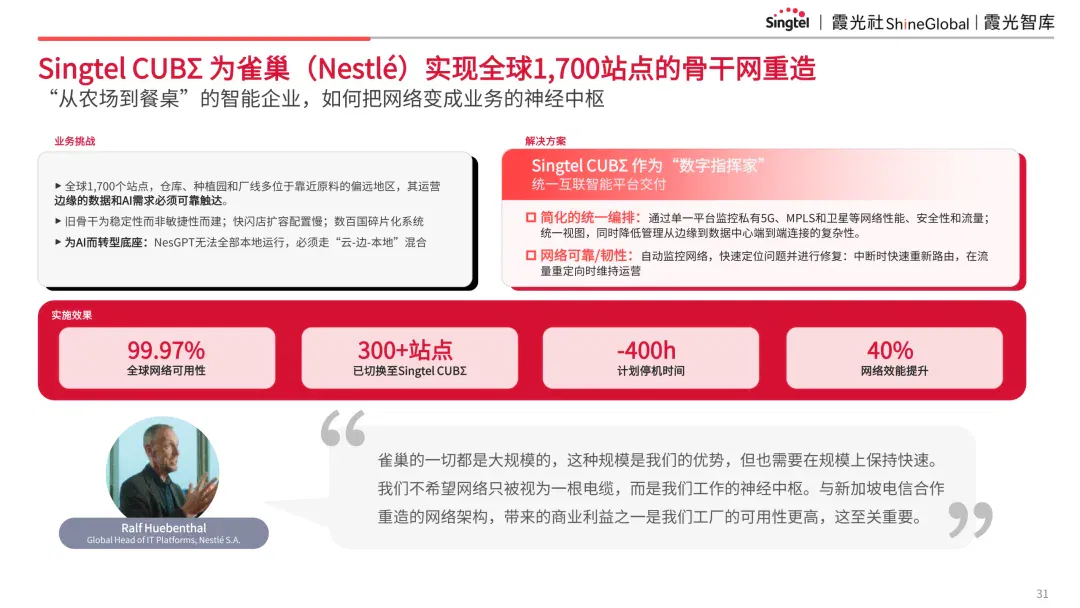
The Nestlé case illustrates CUBΣ's value. Many of Nestlé's 1,700 global sites are remote, its former network lacked flexibility, and AI required hybrid cloud, edge and local deployment. CUBΣ centralized heterogeneous network management and automatically switched routes on failures. After over 300 sites migrated, downtime fell and network efficiency improved, making networking the nervous system of the company's global AI operations.
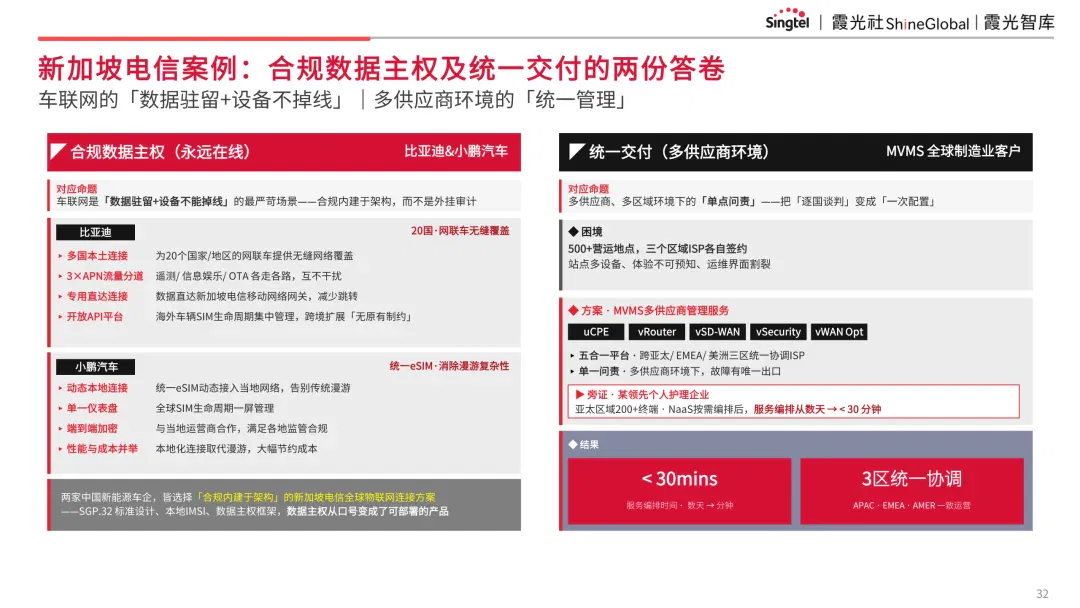
For Chinese new-energy vehicle companies expanding overseas, BYD and XPeng use local IMSIs, eSIMs and separated traffic flows to deploy connected-car services in 20 countries, incorporating compliance into the architecture and addressing roaming and regulatory challenges. Multi-vendor management services, MVMS, connect Asia-Pacific, Europe and Africa, and the Americas through unified incident handling, cutting service orchestration to 30 minutes and improving fragmented multinational, multi-operator management.
Assessing trends in AI-native global expansion
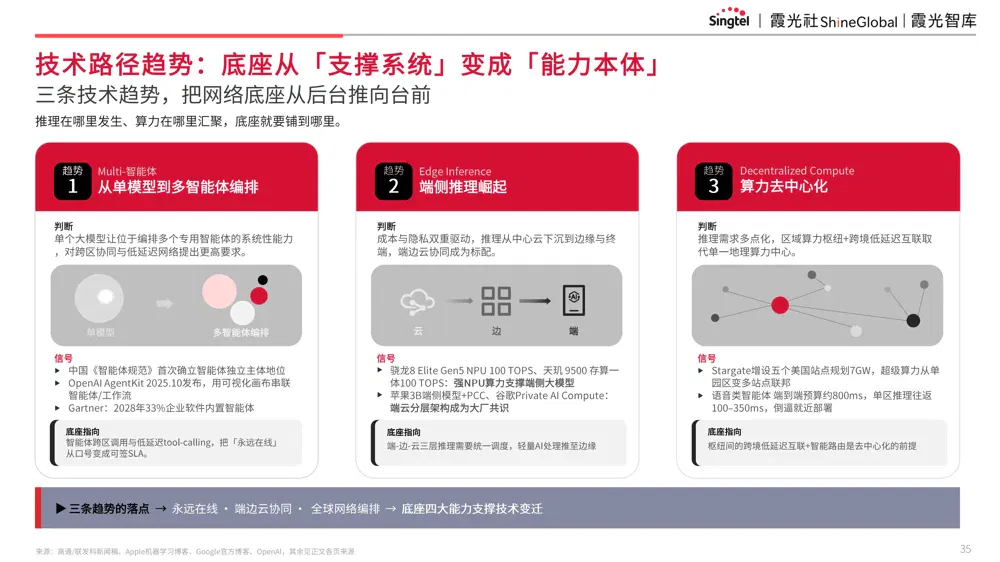
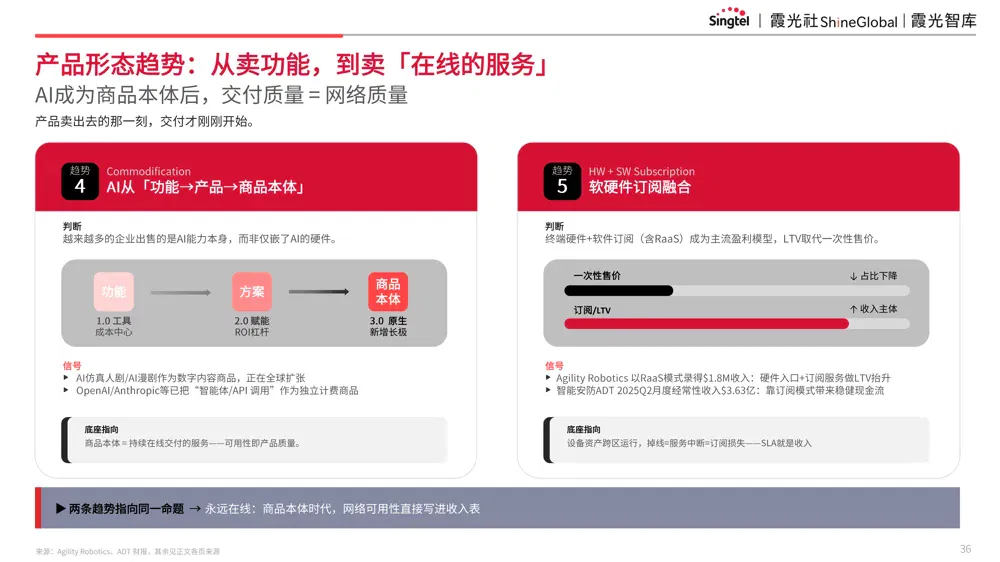
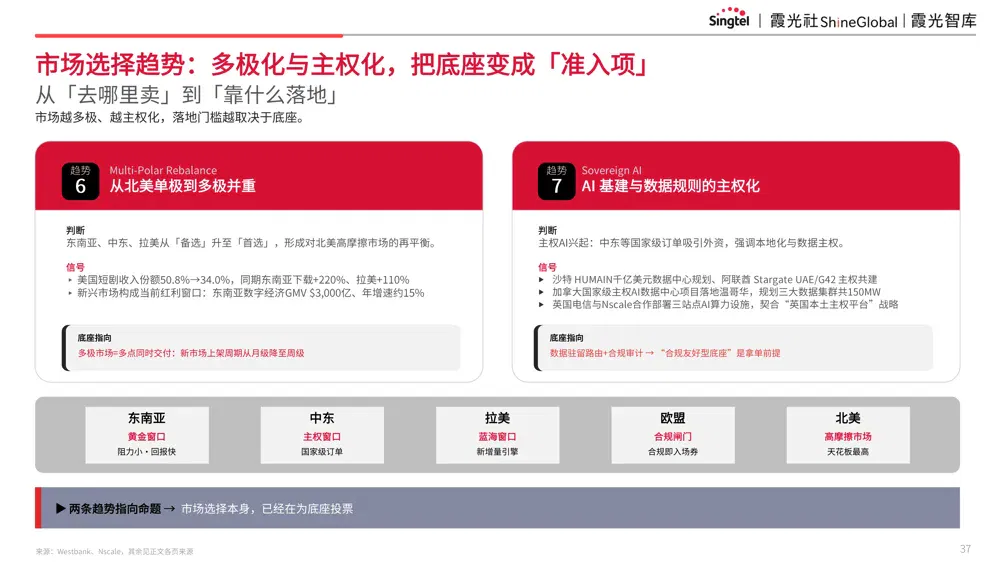
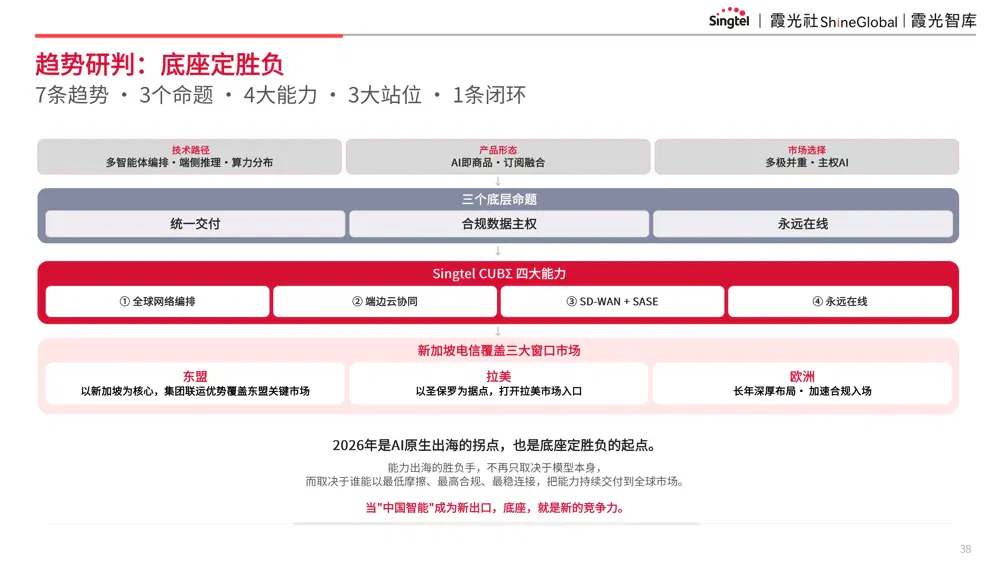
AI expansion is following several trends. Technology is moving toward multiple agents, on-device inference and distributed computing. Hardware and software subscriptions are becoming mainstream, with AI itself delivered as a product and network quality directly affecting revenue. Markets are becoming multipolar: Southeast Asia, the Middle East and Latin America offer growth, while sovereign AI makes compliant infrastructure an entry requirement.
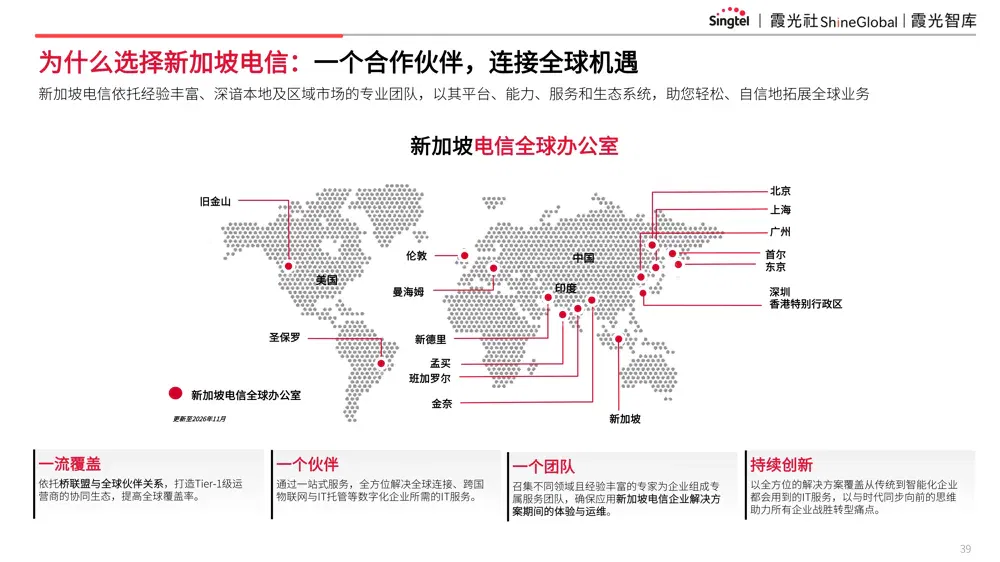
2026 marks an inflection point for AI-native global expansion, where competition extends beyond models. By positioning CUBΣ in ASEAN, Latin America and Europe, Singtel aims to support Chinese AI companies through a stable, compliant digital foundation with low friction.
AI-native expansion fundamentally changes AI's role in international business: from an efficiency tool that optimizes processes to directly exportable goods and services. This supplements, rather than simply replaces, stages 1.0 and 2.0. Leading companies in 2026 often combine standard tools, customized solutions and native capabilities.
The six sectors differ markedly across markets: Southeast Asia offers a golden window, the Middle East a sovereignty window, Latin America a largely untapped opportunity, the EU a compliance gate, and North America high value with high friction. The same market characteristic can be an opportunity for one company and a constraint for another.
Market choices and timing ultimately lead to one issue: delivery. If data cannot cross borders, agents cannot remain online or market entry fails, even strong capabilities struggle to become revenue. Unified delivery, compliant data sovereignty and always-on service are therefore three basic conditions for AI-native expansion. The report emphasizes a global digital foundation as important infrastructure supporting them.
The opportunities in AI-native expansion are real, but not evenly available. They reward companies that match capabilities to markets during the window and deliver reliably abroad. As 'Chinese intelligence' becomes a new export, the key competitive strength lies not in models alone, but in the digital foundation carrying them overseas.
This article comes from Xiaguang Think Tank; author: Xiaguang Think Tank.
Related topics
After reading
Join the AINRK community
Read how to join the community and connect with people working in AI.
Related articles
Continue reading related topics and articles in this category.

Inside Peekie's Interactive Stories: Investigate a Virtual Phone and Chat with AI Characters (opens in a new tab)
Peekie offers two modes on fictional phones: Cases asks players to compare clues, while Lives allows free-text interaction with AI characters. The report also looks at the team's PopPark community and discusses agreeable characters, secrets revealed too soon, and choices about long-term memory.

How AI Is Changing Cyber Offense and Defense: Faster Discovery, but Cost and Process Still Slow Fixes (opens in a new tab)
LatePost interviews hackers and researchers on AI-assisted attacks and defense. Earnings and attack times remain interview claims; official disclosures qualify Binance and Fireworks timelines. Fixes still require human judgment and organizational support.
My Workflow Update: Magpie for Models, Cindy for Multiple Computers, T3 Code for Development (opens in a new tab)
The author revisits a workflow: Magpie brings together 7 channels and 23 models, Cindy links computers through group chats and remote desktop, and T3 Code handles development. Grok Bot and Alma are set aside; Orca stays. This does not mean every service works offline or all data stays local.

OpenAI Releases Nine Math Manuscripts on Matrix Multiplication and Strongly Polynomial Programming (opens in a new tab)
OpenAI added nine manuscripts in two families on November 24, claiming a 9/4 matrix multiplication exponent and strongly polynomial linear programming. Lean formalizes selected results; the repository treats the work as raw research data rather than completed academic review.
SmartSens Subsidiary Unveils WAAG AI Systems, Says Deliveries Since Incubation Exceed RMB 50 Million (opens in a new tab)
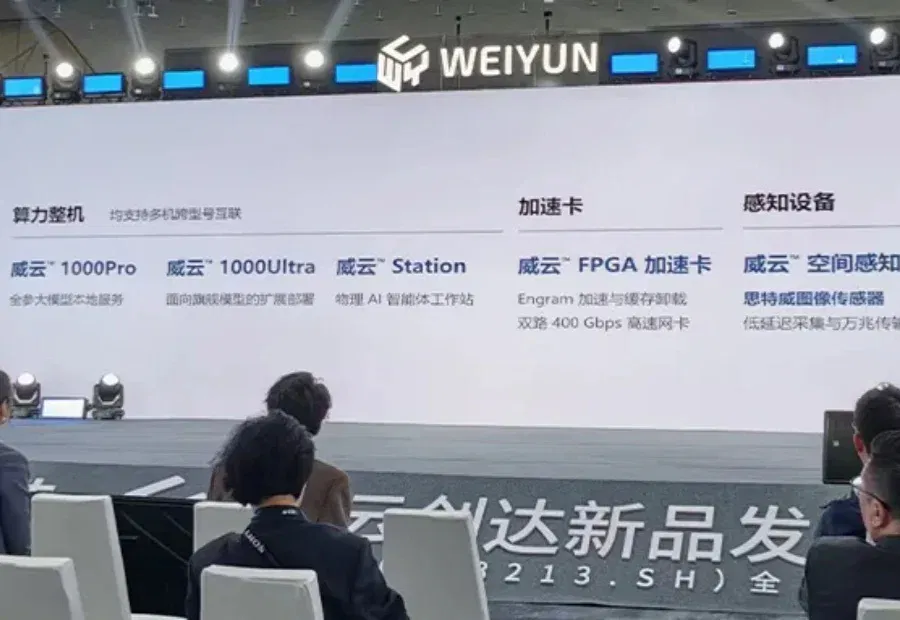
Weiyun Chuangda unveiled WAAG interconnects, local AI workstations and appliances, and creative and spatial software. It says deliveries since April incubation exceed RMB 50 million. FP4 peaks, capacity, and power claims depend on configuration and workload; these are not independent test results.