Long Quan co-founds Envision AI to unify spatial and physical information
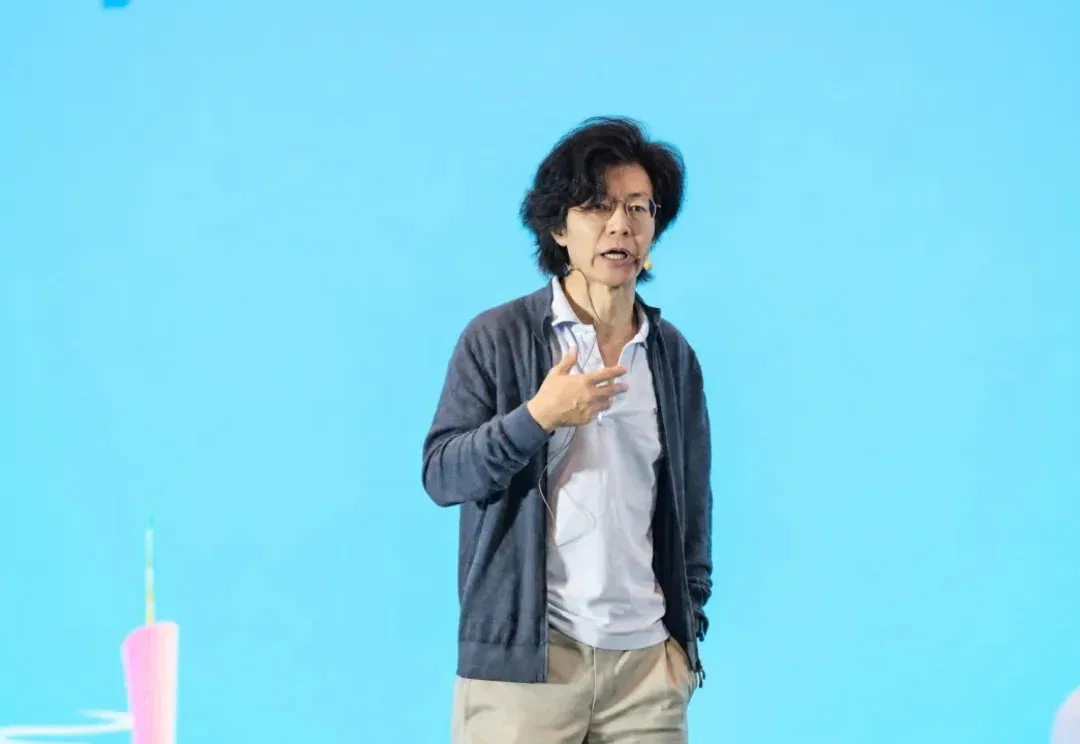
Long Quan, Feihu Zhang, Phil Torr and colleagues launch Envision AI to develop foundation models combining unified representations and spatial computing. It examines their approach, backgrounds and partnerships. Training gains and data holdings are team claims awaiting full public evaluation.
Editorial fact-check (2026-11-26): The claims in this article about Envision AI's training efficiency, leading performance, revenue-generating partnerships and data holdings were disclosed by the team to the media. They do not replace comprehensive public benchmarks or independent validation. The demonstrations are rendered 3D scenes. The 74.8% figure comes from NVIDIA's Agentic Policy simulation setting on RoboLab-120, with simulation paused during inference; it does not mean physical robots have achieved the same real-time control performance. Discussion of next-generation architectures, physical AGI and limitations of existing approaches reflects the interviewed team's technical judgments and objectives. The acquirer of 6D.ai, relevant career details and the description of projective reconstruction have also been corrected. HKUST: Long Quan's personal website; (opens in a new tab)HKUST School of Engineering: Long Quan's education and career timeline; (opens in a new tab)HKUST course notes: Three uncalibrated views and projective reconstruction; (opens in a new tab)Niantic: Announcement of the acquisition of 6D.ai; (opens in a new tab)NVIDIA: Original Astranomy research and experimental setup; (opens in a new tab)Lean FRO and Mathlib: Joint statement on formal verification of the Riemann Hypothesis. (opens in a new tab)
On November 20, Anthropic mathematician Levent Alpöge announced that he and Claude had found a proof of the Riemann Hypothesis, with verification by independent researchers. The trend this points to has become increasingly clear: over the past several years, general-purpose large models have made significant progress across symbolic and digital tasks, from programming and mathematical reasoning to autonomous tool use.
Yet back in the 1980s, roboticist Hans Moravec proposed his famous paradox: getting machines to solve calculus is easy, while getting them to perceive their surroundings and coordinate their bodies like a one-year-old infant is extraordinarily difficult. The more intuitive a physical skill is for humans, the more of a barrier it can present to machines.
Computing power has not dissolved this paradox. Instead, it becomes even more pronounced as AI tries to move beyond screens. Leading large models capable of tackling a century-old mathematical conjecture still resemble infants whose eyes have yet to open when confronted with real-world scale, gravity, collisions and spatial topology. From multimodal generation and world models to embodied intelligence, different technical approaches are trying to fill this gap. But the first step into the physical world has never been action; it is perception. Ultimately, every route returns to the same starting point: 3D vision.
Although large language models such as GPT-6 Astra have shown some potential for spatial and physical representation as their generalization improves, their technical shortcomings in entering real physical spaces remain substantial. These appear in computational efficiency, manipulation precision, real-time response and continuous error correction. Addressing them requires both underlying representations that accurately describe physical states and model architectures that efficiently compute spatial relationships and reason about physical changes.
How can these two elements be combined with large language models' existing reasoning and planning abilities?
That is the central starting point for former Apple chief scientist for spatial and physical intelligence and HKUST professor Long Quan's decision to launch his second venture, Envision AI, or Gezhi Technology. It is also the core capability Envision AI hopes to build into a next-generation native foundation model for spatial and physical intelligence.
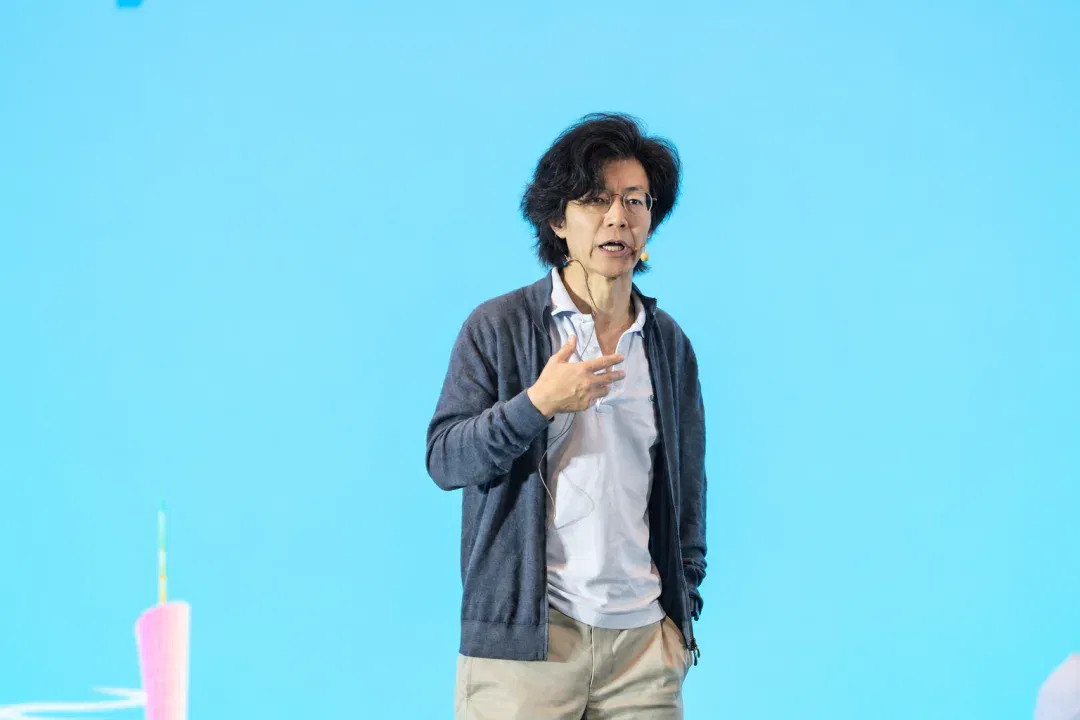
According to the information obtained for this report, Envision AI has already partnered with several leading technology companies in China and abroad and has begun generating revenue.
After enthusiasm for spatial and physical AI in China had cooled, where has this suddenly emerging contender come from?
1. Who is Long Quan?
To trace how 3D vision evolved from mathematical derivations in classical projective geometry through deep-learning reconstruction to today's spatial intelligence, the research career of HKUST professor Long Quan is almost a living chronicle of the discipline. Quan himself is undoubtedly a defining figure in both academic AI and industry, in China and globally.
The story begins in the formative era of uncalibrated geometry and multiview reconstruction.
In the 1990s, Europe was at the center of global 3D vision research. Having recently earned a computer science doctorate from France's National Polytechnic Institute of Lorraine, or INPL, Quan began working at the French National Institute for Research in Computer Science and Automation, INRIA, in 1990 as a researcher of the French National Center for Scientific Research, CNRS. He became a founding member of INRIA Grenoble's computer vision group. In fact, as early as 1988, during his doctorate, he had already published the first computer vision paper by a Chinese scholar at ICCV (「Matching Perspective Images Using Geometric Constraints and Perceptual Grouping」).
In 1995, Quan introduced a work that rewrote the textbooks on 3D reconstruction—the "six-point algorithm". This work studied multiview geometry from uncalibrated images, showing that under nondegenerate conditions, projective reconstruction can be obtained from six corresponding points in three uncalibrated images; recovering metric structure at real-world scale still requires additional constraints. The breakthrough established Quan's leading position in international 3D reconstruction, and he, Songde Ma and Zhengyou Zhang became known as the three Chinese vision musketeers in France.
The second stage moves from sparse geometry toward graphics representations and perception of dynamic environments.
In 2001, Quan returned to Hong Kong, China, to teach in HKUST's computer science department. He became the university's first computer vision researcher and founded its first computer vision laboratory, VisGraph. Its name combines vision and graphics: vision extracts information from images, while graphics builds, represents and manipulates three-dimensional spaces and worlds.
When visual SLAM was still a niche topic in the early 2000s, Quan's team was already among the first pioneering laboratories to enter the field worldwide. At SIGGRAPH, a leading graphics conference, it developed a series of image-based modeling, or IBM, works. Starting with the modeling of structurally complex hair at SIGGRAPH 2005, the work expanded to plants, buildings, streets and entire cities. Many technical foundations of today's high-definition autonomous-driving maps and 3D foundations for smart cities can be traced back to this research.
Meanwhile, Quan trained many outstanding AI vision researchers. Over more than two decades, VisGraph became a major source of talent in China's computer vision community. His students include Yichen Wei, former director of Megvii's Shanghai research institute; Ping Tan, former head of the XR laboratory at Alibaba's DAMO Academy; Jingdong Wang, chief architect of visual technology at Baidu; AutoX founder Jianxiong Xiao, who earned an MPhil; Peking University professor Gang Zeng; and Nanjing University associate professor Yao Yao.
During his time at HKUST, Quan's standing in Chinese and international computer vision continued to rise. Besides being named an IEEE Fellow, he served as general chair of ICCV 2011 and CVPR 2022—holding the general-chair role at two of the three leading computer vision conferences, a distinction shared by few Chinese scholars. Other past appointees include Harry Shum, Tieniu Tan, Xiaoou Tang and Fei-Fei Li, alongside whom Quan clearly belongs. His total Google Scholar citations have also exceeded 23,000.
The third decade spans deep learning for 3D reconstruction through industrial deployment of on-device spatial computing.
When deep learning swept through computer vision in 2012, Quan kept pace, recognizing the shift in technical paradigms. In 2018, he and students including Yao Yao proposed MVSNet, handing the core matching and regularization steps of multiview stereo reconstruction to neural networks end to end. It became an important paper in deep-learning-based 3D reconstruction.
Outside academia, Quan had an equally keen sense of how to industrialize technology.
In 2015, recognizing the growing adoption of consumer drones and smartphone cameras, he co-founded Altizure with students including Tian Fang and Yao Yao. The cloud platform transformed aerial and phone imagery into large-scale 3D reconstructions of real scenes, pioneering a crowdsourced version of Google Earth and quickly expanding into urban surveying and smart cities. In 2020, Apple quietly acquired Altizure.
During the three pandemic years described as an AI winter, Quan led his core team into Apple, becoming chief scientist for spatial intelligence. He led and played a major role in developing a series of algorithms for on-device 3D reconstruction and spatial intelligence, providing core underlying capabilities for strategic Apple products including ARKit, Vision Pro and Object Capture. The team's work appeared on the stage of Apple's Worldwide Developers Conference, WWDC, in both 2021 and 2023, representing Apple's frontier technology.

Long Quan's team presents its research at WWDC 2021
From geometric mathematics to deep learning and today's large-model era, and from university laboratories to the demanding front line of algorithm development at a global smartphone giant, Quan has traveled every loop connecting AI research with industry. This provides indispensable accumulated expertise and understanding across disciplines for bringing foundation models into the real physical world and unifying text, vision, spatial and physical information in the large-model era.
2. Founding Envision AI: Building a native foundation for spatial and physical intelligence
In academic achievement, talent development, wealth, international recognition and industrial influence, Quan has already reached heights that most people would struggle to match. Why, then, in a fiercely competitive large-model and physical AI field where hundreds of startups emerge each year and rivals surround him, would he voluntarily leave his comfort zone to start a second venture, Envision AI?
The core reason is actually embedded in Envision AI's name.
Envision AI takes its name from a classical concept in quantum mechanics, Dirac notation. It can be decomposed into <n|vision>, where n represents discrete, infinite linguistic symbols and vision represents continuous visual and physical perception. Unification lies at the heart of quantum mechanics, and Envision AI's founding mission is likewise to unify discrete and continuous symbols at a fundamental level.
More precisely, Envision hopes to unify the representation of and reasoning over text, images, spatial and physical information, building the next generation of native foundation models for spatial and physical intelligence and leading the way into an AI 3.0 era.
As large models break through reasoning in the symbolic world, whoever first gives machines a native sense of spatial scale and physical intuition will hold the next key to AI 3.0 and physical AGI.
GPT-6-Astra, released by OpenAI in September this year, sounded a technical warning for spatial and embodied intelligence. On NVIDIA's simulated RoboLab-120 benchmark, GPT-6 Astra achieved a manipulation success rate of 74.8% without any additional fine-tuning for robot policies, relying only on general spatial understanding and an agent workflow, and surpassing several specialized embodied systems.
This reveals a harsh reality for embodied intelligence: if the moat around an embodied brain consists merely of fine-tuning a previous-generation large model on local scenarios, then once general foundation models improve their generalization and pass a critical threshold, specialized embodied brains overfit to those scenarios could instantly be overtaken by GPT, Claude and similar models. That leaves little opportunity in competing on language models or applications trained on scenario-specific data.
Yet even as large models grow more capable, they still face numerous barriers on the way into the physical world. GPT-6 Astra, for example, exposes how far they remain from the ultimate ideal of a ChatGPT moment for physical AI: inefficient reasoning and fragile control of precise physical actions, real-time speed and dynamic error correction.
At the root of this phenomenon is a fundamental mismatch in underlying representations. Language consists of discrete, combinatorial symbols. Large models excel at learning the probability distribution of the next token but are particularly poor at expressing precise quantities, distances, geometric topology and mechanical evolution.
Conventional solutions, such as the forced combination of a visual encoder and an LLM in the style of LLaVA, essentially compress two-dimensional images into visual tokens and feed them to a language model. The projection inherently loses depth and geometric constraints. Multimodal models generating video purely in pixels can produce images that look physically plausible, but do not maintain a persistent three-dimensional world state internally. Their underlying representations lack an understanding of spatial construction and physical laws. Once tasks involve switching among viewpoints, long interactions or counterfactual action reasoning, they struggle to support precise manipulation.
In Quan's view, making local adjustments to Transformer positional-encoding formulas, such as extensions of RoPE or ALiBi, cannot fundamentally solve the problem of making models understand the physical world. Positional encoding can only tell a model where information lies in a sequence or grid; it cannot express spatial relationships and physical laws.
The next generation of foundation models for spatial and physical intelligence must therefore unify discrete linguistic symbols, continuous perception and function representations, multiscale visual structures, vector states and three-dimensional world states within one underlying representation. They must also build formal reasoning and verification systems for the real world.
Envision AI's architectural solution combines unified encoding of underlying representations with an architecture native to spatial computing. It explicitly requires native physical representations to possess four mathematical and computational properties simultaneously:
1) Programmability: agents can use code to construct objects and scenes and precisely modify their structures and behavior.
2) Computability: models can solve geometric and spatial relationships and express physical requirements such as collision avoidance and support as machine-checkable constraints.
3) Sampleability: models can generate multiple possible structures, layouts and motion trajectories under the same conditions.
4) Differentiability: the system can optimize geometry, materials and physical parameters backward from discrepancies between predictions and observations.
A real-world formal verification system can thus be built around native physical representations. The model's proposed solutions can be executed and tested, with the result of each check providing the basis for the next revision.
This is also why Envision AI emphasizes both spatial and physical intelligence. Spatial intelligence concerns where objects are and how they relate to one another. Physical intelligence further examines how those relationships change with time and action. A model must describe the current state and predict what may happen next.
According to what the Envision AI team disclosed to the media, its self-developed native foundation model for spatial and physical intelligence has made the following progress in computational efficiency and output quality. Detailed conditions still await comprehensive public evaluation:
Envision AI combines the team's sparse representations with a spatial sparse-attention mechanism, allowing the model to selectively compute relationships between spatial locations and reduce redundant computation. This design improves the foundation model's training efficiency by an order of magnitude, greatly reducing computing costs. On common spatial and physical perception, understanding and processing tasks, it can achieve results comparable to or better than state-of-the-art large language models at extremely low cost.
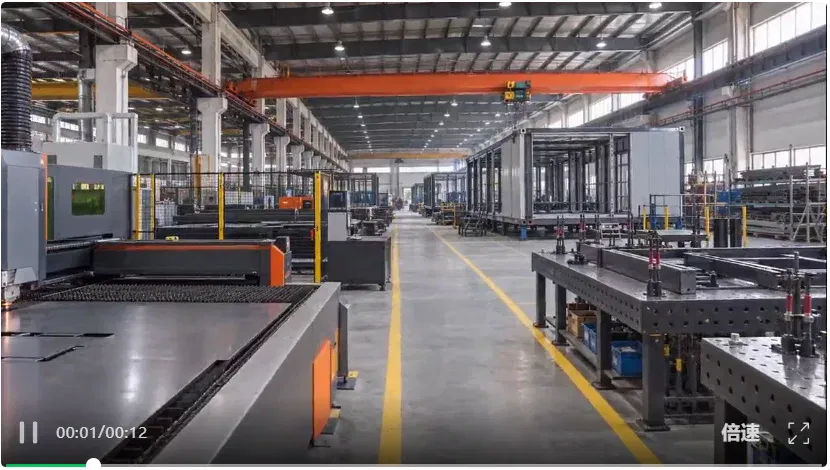
High-fidelity industrial digital twin
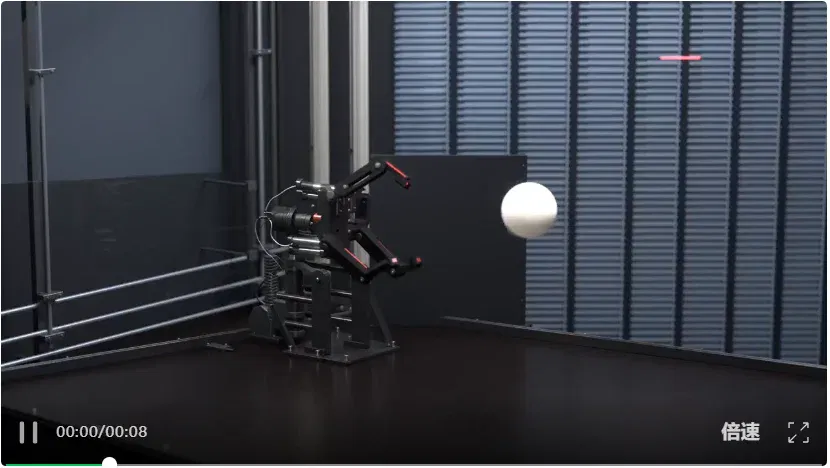
High-speed simulation of physics experiments
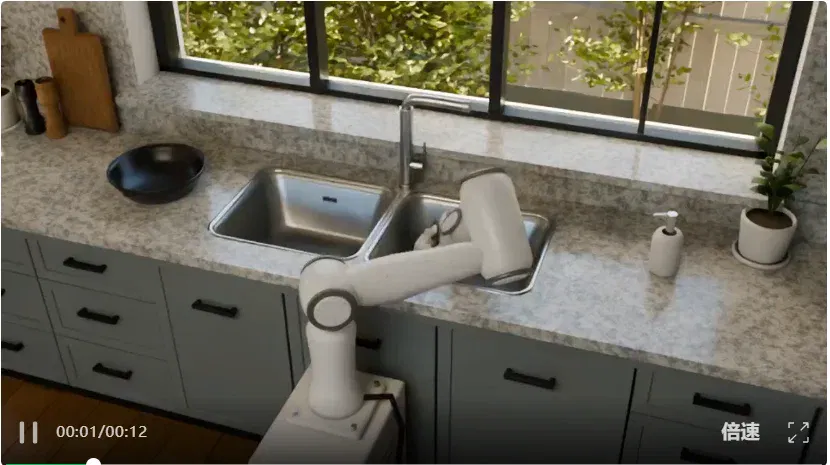
Simulation of household embodied intelligence
Please note that the videos above are not live-action recordings. All are directly output renderings of 3D scenes.
According to the information obtained for this report, Envision AI has already established commercial partnerships with several leading technology companies in China and abroad and has generated revenue. Potential applications of its native physical foundation model include synthetic data and model distillation, high-precision editable 3D content and Unreal Engine game construction, physical simulation, controllable video generation, real-time interaction and on-device intelligence.
3. A star-studded team with talent density to rival major companies
Why does Envision AI dare confront these difficulties? A closer look at the team helps explain its confidence in defying the odds:
Alongside chairman Long Quan, a Chinese pioneer in computer vision, Envision AI's founding team includes world-class vision researchers, several serial entrepreneurs, executives from major companies and dozens of doctoral students born after 2000 from leading universities in China and abroad. Drawing on laboratories at Oxford, HKUST and Nanjing University, it combines the two essential needs of frontier technology companies: research innovation and engineering deployment.
Co-founder and CEO Feihu Zhang earned his doctorate at Oxford under Phil Torr. He was among the early young researchers to bring deep learning into 3D vision and explore sim-to-real. He has been a CVPR Best Paper Finalist and has more than 4,000 Google Scholar citations.
Beyond his research training, he is also a successful serial entrepreneur with repeated experience bringing frontier algorithms through engineering into industry. The 6d.ai venture he previously helped found was acquired by Niantic in 2020. He subsequently founded DreamTech, which released Direct3D, the world's first public native 3D large model, and proposed the first end-to-end 3D Diffusion Transformer, or 3D-DiT, architecture. This pushed 3D generation into an era of scaling laws, with the work widely followed and cited by companies including Meta, Apple and Adobe.
Co-founder and chief scientist Phil Torr is an internationally prominent 3D vision researcher, a tenured professor of engineering science at Oxford, a Fellow of both the Royal Society and the Royal Academy of Engineering, and a recipient of computer vision's highest honor, the Marr Prize, for work specifically in 3D reconstruction. Torr's partnership with Quan not only guides Envision AI's long-term research direction, but also directly connects it to leading robotics and vision research networks in Europe and worldwide, greatly expanding its international perspective and prospects for successful international collaboration.
Co-founder and head of frontier exploration Yao Yao is currently an associate professor at Nanjing University. He earned his PhD under Quan at HKUST and is MVSNet's first author. A founding member of Altizure, he joined Apple as a senior researcher after the acquisition. He received China's Excellent Young Scientists Fund (Overseas), has more than 10,000 academic citations and is recognized within the industry as one of its most promising young researchers.
Yao is also a core author of Ant Group's LingBot model series. Both first authors of LingBot-Map were his students. After being open-sourced, the project accumulated more than 16,900 GitHub stars and became one of just ten ECCV 2026 Best Paper nominees selected from more than 10,000 submissions. LingBot-World, meanwhile, is the world's first hour-scale open-source world model.
Besides leading algorithm researchers, Envision AI's founders include former executives from major companies, supplying expertise in large training-cluster optimization and industrial-grade system delivery that academic founders often lack:
Co-founder and head of engineering Xu Jingxi earned his computer science doctorate at the Chinese University of Hong Kong under Benjamin Wah, the university's provost, an ACM Fellow and the IEEE Computer Society's first Chinese president. Xu was Wah's final student. He was a founding team member of Tencent Meeting and responsible for video-transmission algorithms, helping design and build products such as Tencent Meeting and WeCom from the ground up. Those products received Tencent's highest award. He now leads Envision AI's AI infrastructure work.
With two internationally renowned AI researchers, professors and laboratories from three major universities, and experience across several successful startups, Envision AI's team strength speaks for itself. From day one, it quickly attracted dozens of doctoral students born after 2000, raised in an AI-native era, from leading universities in China and abroad.
High-quality 3D and physical-interaction data are also widely recognized as the biggest bottleneck for physical AI. Drawing on core members' longstanding work in 3D reconstruction and world models, Envision AI already had, at its outset, more than 30 million high-quality spatial and physical data assets, over 40 million items of spatial and physical video data, and more than 5 million complex 3D scenes, creating a very high competitive barrier.
Taken together, China's spatial and physical AI field has clearly gained a significant new player.
This article comes from Synced and was written by Synced.
Related topics
After reading
Join the AINRK community
Read how to join the community and connect with people working in AI.
Related articles
Continue reading related topics and articles in this category.

Clients question lawyers with AI advice: trust and communication pressure in legal consultations (opens in a new tab)
New Weekly interviews lawyers about clients questioning mediation and repeatedly rewriting documents with AI, alongside its help with research and drafting. Accounts of lawyer Huang Qin's death come from her firm's obituary and colleagues; they do not establish medical causation involving AI.
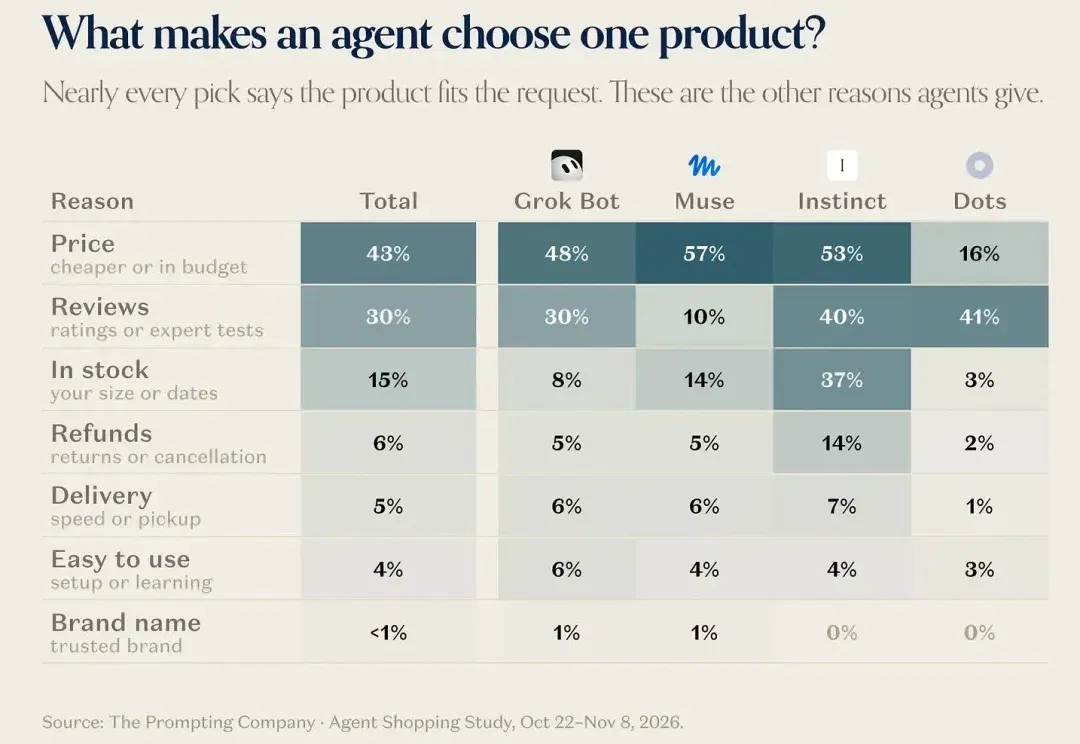
a16z Studies 11,307 AI Shopping Runs: Overlapping Picks, Channels and Checkout Barriers (opens in a new tab)
a16z and The Prompting Company test four agents across 1,270 prompts and 11,307 runs, alongside separate YipitData spending samples. Recommendations vary with use cases and merchant policies; 81% guest-checkout progress means reaching the form's end, not payment conversion.
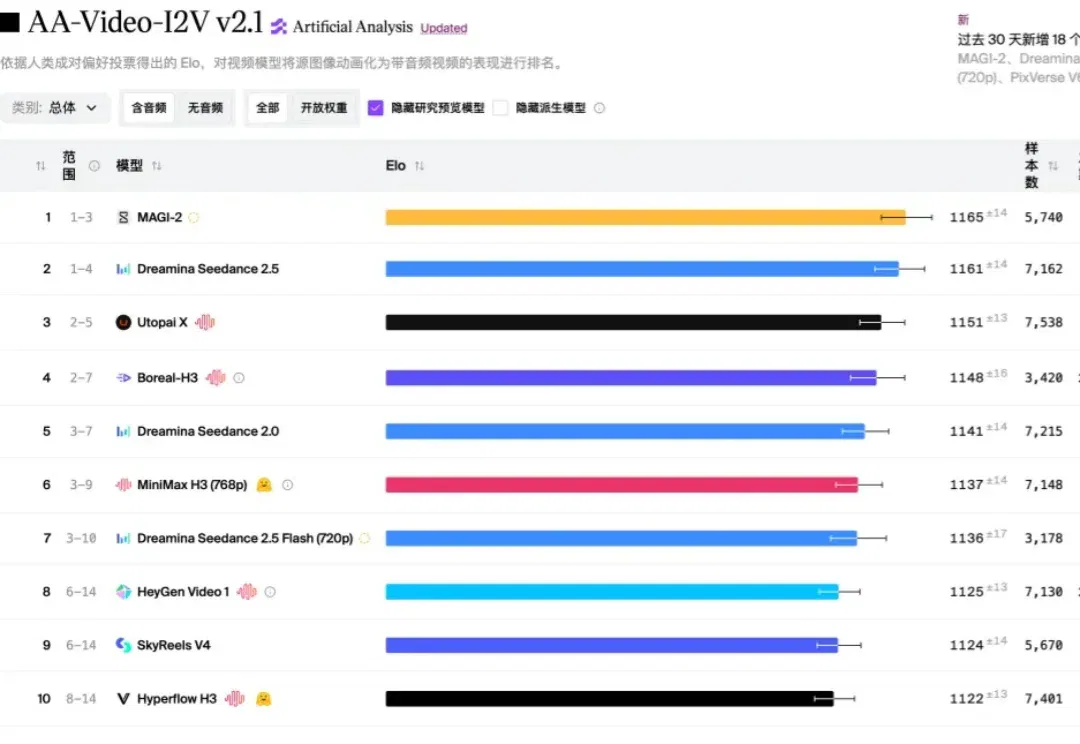
Testing MAGI-2: 30-second video, mixed references and editing, with open weights planned (opens in a new tab)
APPSO tests MAGI-2's long takes, mixed references, language edits and stylization in LibTV. The 480B model led AA's image-to-video ranking by Elo point estimate at reporting time. RMB 0.5/second is a 1080p list price; full-version weights remain planned and examples do not verify all tasks.

Paying for relationship AI: Meiren Zhizhao, persona, certainty and the limits of commercialization (opens in a new tab)
YuanChuan Research examines how Ququ's persona and decisive advice may encourage payment for Meiren Zhizhao. Its figures are company disclosures, not directly comparable with general AI payment rates, and do not establish long-term retention, profit or the effectiveness of relationship advice.
Chongqing seeks feedback on a pathology cloud tender: AI services and patient charges (opens in a new tab)
Chongqing's draft pathology cloud tender concerns voluntary AI service partnerships and incentives. Procurement, hospital payments to suppliers and patient reimbursement are distinct. AI assistance is included in pathology diagnosis pricing; local rules govern implementation.