Chongqing seeks feedback on a pathology cloud tender: AI services and patient charges
Chongqing's draft pathology cloud tender concerns voluntary AI service partnerships and incentives. Procurement, hospital payments to suppliers and patient reimbursement are distinct. AI assistance is included in pathology diagnosis pricing; local rules govern implementation.
Editorial fact-check (2026-11-26): This article concerns a draft for public consultation on Chongqing's procurement of digital pathology slide services for its medical insurance pathology cloud. The relevant partnership and incentive arrangements are subject to the final official document. Hospitals negotiating AI services with companies does not amount to creating a new nationwide patient reimbursement item. The National Healthcare Security Administration has explicitly designated AI-assisted diagnosis as an extension of pathology diagnosis and included it in the price components; specific charges and medical insurance payments must follow local policies. No corresponding primary document was found for the original claims about a nationwide Class B reimbursement catalogue, simultaneous implementation at 837 hospitals, or a world first. These have been replaced with verifiable policy information. The efficiency improvements cited in the article are test cases supplied by a company and cannot represent clinical effects across all hospitals or diseases. National Healthcare Security Administration: More detailed pricing items for pathology examinations and diagnosis; (opens in a new tab)Chongqing Healthcare Security Bureau: Consultation notice on centralized pathology cloud procurement documents (located, but access timed out); (opens in a new tab)National Healthcare Security Administration: Guidance on interpreting the medical service pricing item establishment guidelines, Issue 3. (opens in a new tab)
Recently, an industry source working in AI-assisted diagnosis told Jianwen Consulting: "Medical insurance authorities have formally and explicitly encouraged hospitals to use AI-assisted diagnosis. This is a first in China."
AI-assisted diagnosis, long praised but struggling to attract paying customers, has received a clear signal from medical insurance authorities.
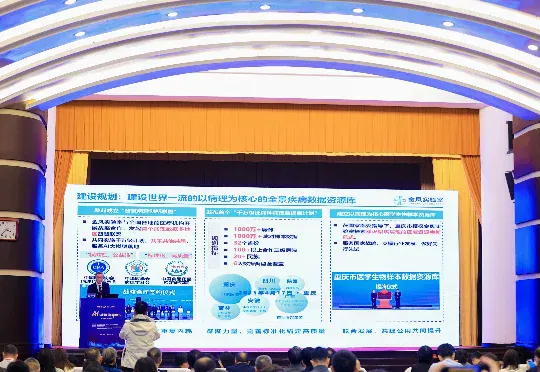
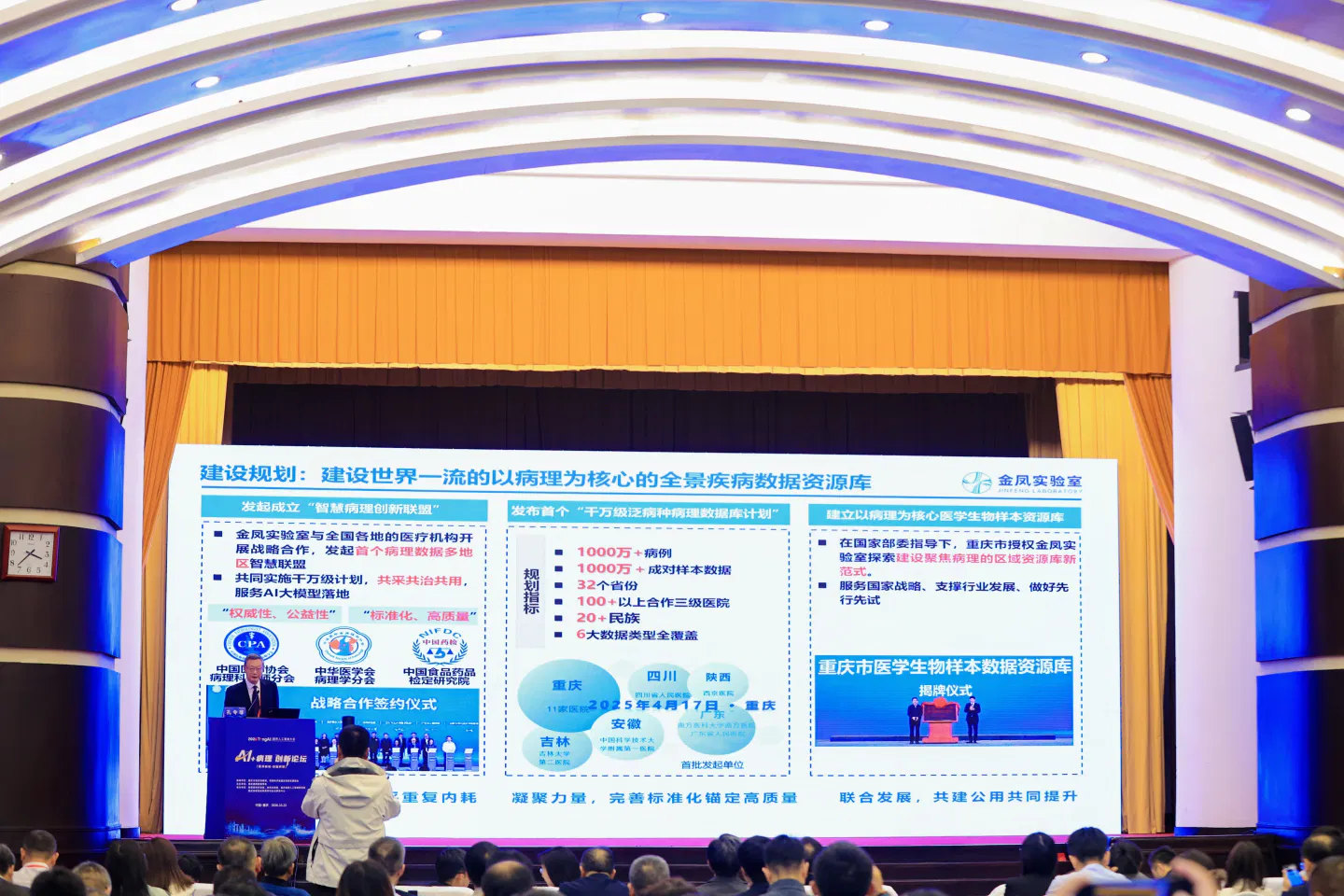
On October 22, the Chongqing Healthcare Security Bureau invited public comments on the Chongqing Medical Insurance Pathology Cloud (Digital Slides) Centralized Procurement Tender Document (Draft for Comments), hereafter the Tender Document, to advance its pathology cloud construction pilot.
More noteworthy are the details within the Tender Document: on an entirely voluntary basis, interested medical institutions may separately negotiate partnerships with bidders concerning the above AI-assisted diagnostic services and their prices. Medical institutions that use AI-assisted diagnostic services may receive bonus points in the annual assessment of compliance with their medical insurance service agreements.
Some industry participants believe Chongqing's pilot takes a major step toward a commercially sustainable model for AI-assisted diagnosis. "With the policy spelled out in this much detail, isn't actual charging just one final step away?" one asked.
The most direct value of AI-assisted pathology diagnosis is reducing pathologists' workloads. One company conducted tests and claimed its software could improve doctors' efficiency by about 40%. "At one Grade A tertiary hospital, an average of 800 slides were processed every day, and three doctors frequently worked overtime. After they started using our software, two doctors could finish on time."
The industry does not doubt the role or prospects of AI-assisted diagnosis. Until now, however, the question of whom to charge has remained unresolved, obstructing commercialization and preventing that value from becoming stable revenue.
To understand whether Chongqing's pilot can truly break the impasse, we need to start with the actual circumstances of the pathology sector.
The first step for pathology AI: Moving glass slides into the cloud
The deployment of AI-assisted pathology diagnosis has long faced two major barriers. One concerns the foundations of digitization: digital slides are not yet widely adopted, high-quality datasets still need to be brought together, and AI pathology products still need to mature. The other concerns a commercially sustainable model: hospitals have yet to take the final step toward sharing a slice of the business with AI companies.
Efforts are now being made to overcome the first barrier. Chongqing has released the Chongqing Medical Insurance Pathology Cloud (Digital Slides) Centralized Procurement Tender Document (Draft for Comments) to solicit views from the public.
The Tender Document states that the digital pathology slide services being centrally procured include scanning equipment used in collecting digital slides, data acquisition and governance, cloud storage, cloud computing, cloud security, cloud networking, viewing and sharing applications, and the development of standards and specifications. In other words, bidders must provide an integrated digital pathology slide solution encompassing hardware, software, operations and maintenance. This means Chongqing has taken the lead in China in launching a medical insurance pathology cloud construction pilot.
Digital pathology slides convert traditional glass slides into high-resolution digital images, allowing pathologists to move from viewing specimens through microscopes to making precise diagnoses on computer screens. This lays the foundations for subsequently moving digital pathology into the cloud and using AI-assisted diagnosis.
Li Yi, deputy director of the Chongqing Healthcare Security Bureau's Smart Medical Insurance Laboratory, explained: "We are driving a digital transformation in pathology, moving from observation through microscopes to digital images, and laying the foundations for AI-assisted diagnosis."
Digitization is crucial because training large pathology models depends heavily on high-quality datasets, which are not easy to obtain.
"Only a small number of hospitals in Chongqing currently have fully digitized pathology; the others are only partially digitized. Nationwide, fully digitized hospitals are also uncommon," Li said. Digitization, he emphasized, is a prerequisite and foundation for AI-assisted diagnosis.
"Many hospitals still use physical glass slides without converting them into digital images, so naturally they cannot be used to train large models," said Wang Zihan, co-founder of Shenzhen Shengqiang Technology.
The limited adoption of pathology digitization is reflected in the small number of AI pathology diagnosis products, a field that still needs to mature.
"Domestic AI pathology diagnosis products mainly target common, high-volume and less difficult disease areas, such as cervical cancer screening and gastrointestinal endoscopic pathology," Wang said. Both areas have large testing volumes and more digitized pathology material available for model training.
Alongside the low level of pathology digitization, data silos are widespread across hospitals. For security reasons, hospitals generally do not allow their data to leave their premises, so companies wanting to train large models can only take a local approach. "We work with hospitals locally, deploy a large model that is not yet fully developed inside the hospital, and train it there without taking the data out," Wang explained.
Hospitals also lack uniform digital pathology standards. Slide quality differs noticeably between large and small hospitals, with different standards for preparation, staining, scanning color, resolution and displays. All of these constrain the development of AI pathology diagnosis.
"If digital pathology can be connected across these barriers, it will greatly help AI research and development, and the entire industry will move to a new level," Wang said.
AI is not the only area paying the price for slow digitization. Traditional pathology's dependence on physical glass slides also constrains the discipline itself and affects patients' experience of care.
Judgments made under a microscope depend heavily on doctors' skills and experience. "A pathology department head told us their eyes were already struggling before they had finished the day's slides," Li said.
One set of figures illustrates this overloaded working situation: China has about 18,000 pathologists and produces nearly 1 billion slides annually, roughly equivalent to about 56,000 slides per doctor per year. The daily figure still depends on the actual number of working days. "Experience overseas suggests that reviewing 50 slides is already very tiring. It is a physiological kind of fatigue," Wang said.
Other data suggest that China's current number of pathologists is only one-fifth to one-tenth of actual demand. Their uneven distribution has an even greater impact than the shortfall itself. Many secondary hospitals and district or county medical institutions cannot independently perform pathology diagnoses and must send specimens elsewhere. Turnaround generally takes one to two weeks, at a cost of RMB 80–120 per case, potentially delaying patients' care. Data from West China Hospital's pathology department also show that, besides completing more than 400,000 diagnoses for its own hospital each year, it receives over 36,000 specimens for external consultations.
When patients seek further treatment or a pathology consultation at another hospital, they often need to borrow the physical glass slides from the original hospital and carry them to the destination hospital, which is highly inconvenient.
Chongqing's pilot targets precisely these problems. "The physical material first goes through whole-slide preparation, staining and scanning. After passing quality control, it is stored in the system, then brought together in the medical insurance pathology cloud and archived according to National Healthcare Security Administration standards," Li explained. The data are then annotated through a trusted data space for the medical insurance sector and refined into high-quality datasets for training models and advancing assisted diagnosis.
In Li's view, the industry is still in a nurturing phase. Government guidance is needed to connect the different parts of the industry into a healthy, self-reinforcing cycle.
On October 22, at the launch of the Tender Document, Jinfeng Laboratory, led by academician Bian Xiuwu, provided an early example by releasing three high-quality pathology diagnosis datasets for major diseases, hoping to encourage more companies and individuals to participate.
How far is pathology AI from actually charging for services?
Beyond digitization, AI-assisted diagnosis faces another, more practical challenge: establishing a commercially sustainable model.
The Tender Document sets out new arrangements: bidders must include an AI diagnosis service proposal in their bids. During the service period, interested medical institutions may, on an entirely voluntary basis, separately negotiate AI-assisted diagnostic services and prices with bidders. Institutions using AI-assisted diagnosis may receive bonus points in the annual assessment of compliance with their medical insurance service agreements.
"Medical insurance authorities are explicitly encouraging hospitals to use AI-assisted diagnosis. This is a first in China," one industry participant said excitedly. "It is a clear pricing signal."
The strong reaction stems from the fact that AI-assisted diagnosis has never resolved the question of whose pocket the money should come from. AI-assisted medical imaging may have encountered this dilemma earlier, but pathology and imaging face the same problem.
Yang Lei, who works at an AI-assisted medical imaging company, recalled that the industry was initially unable to charge because there were no applicable billing items. Five or six years ago, companies helped get such items approved at Grade A tertiary hospitals, but the hospitals did not actually begin using them. "We were puzzled at first. Later, we learned that leading tertiary hospitals already had many experts, so their need for AI-assisted diagnosis was not particularly urgent."
Primary-level institutions, where demand is more pressing, lack both a strong voice and the ability to secure approval for the relevant billing items. "This is the root of why everyone finds the commercialization of AI-assisted diagnosis so awkward," Yang said.
Because charging patients did not provide a viable commercial cycle, companies had to find other ways. Some partnered with medical device or pharmaceutical companies, entering hospitals as add-on software paid for by those companies. Others deployed software to support research, helping doctors compile statistics and manage slides, with hospitals making a one-off payment from a research project. "Essentially, everyone finds some category under which the money can be paid," said industry participant Yang Xin.
Medical insurance authorities have not been unaware of this situation. Since 2024, the National Healthcare Security Administration has successively issued guidelines establishing pricing items for radiological examinations and pathology services, explicitly listing AI-assisted diagnosis as an extension item.
There is a rationale for treating it as an extension item. AI outputs still require a doctor's review; AI currently cannot independently assume responsibility or deliver a standalone result without a doctor, and can only serve as an auxiliary tool. In other words, hospitals may use AI-assisted diagnosis to improve efficiency, but patients do not pay more as a result.
This also identifies hospitals as the parties companies should charge. "For a hospital, revenue is the same whether it uses AI or not," Yang Lei said. She worries that, without a mechanism to compensate for costs, hospitals have limited incentive to pay.
"AI companies lack an entry point to patient traffic, while hospitals hold the bargaining power," the industry participant said, identifying what he saw as the key issue. In his view, hospitals may be unwilling to pay without external incentives.
Medical insurance authorities are now continuing to send supportive signals to AI companies.
The National Healthcare Security Administration has already listed AI-assisted diagnosis as an extension within pathology diagnosis pricing items and included it in the price components. Medical institutions independently choose whether to use it and which company to work with. In October, Chongqing sought public comments on its pathology cloud procurement document. This local procurement initiative does not amount to creating a new nationwide AI diagnosis reimbursement item.
AI companies are delighted. "I think what the medical insurance authorities are now leading is moving AI-assisted pathology diagnosis from research equipment into clinical settings," Wang said. In his view, the industry's ceiling has been raised.
"The wording conveys the authorities' caution: they are leaving the choice to the market," said someone from another AI pathology company. "At the same time, they are offering explicit encouragement that was not there before. That amounts to a major step forward."
"With policy spelled out in this much detail, isn't actual charging just one final step away?" the company representative asked.
This article comes from the WeChat account Jianwen Consulting and was written by Jianwen Consulting.
Related topics
After reading
Join the AINRK community
Read how to join the community and connect with people working in AI.
Related articles
Continue reading related topics and articles in this category.
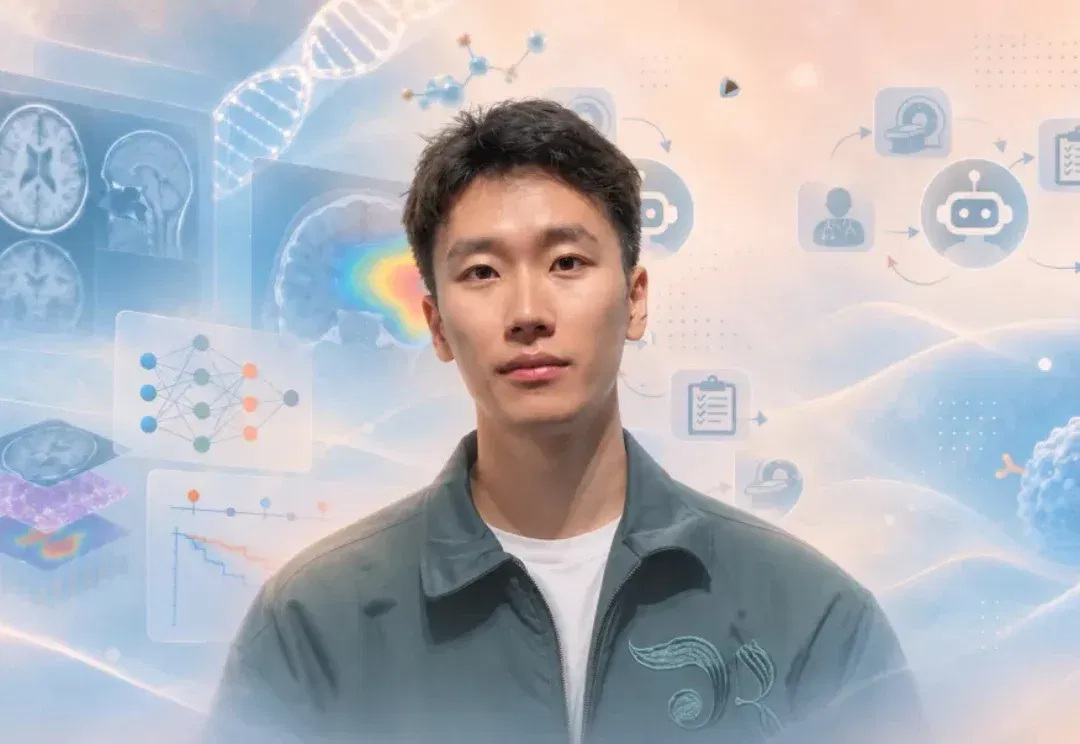
Sheng Liu: Why medical AI must look beyond prediction accuracy and patient throughput (opens in a new tab)
Stanford postdoctoral researcher Sheng Liu discusses dementia risk assessment and radiotherapy planning, from data bias and clinician collaboration to patients' needs. In his view, moving from prediction to intervention requires causal modeling and new evidence; efficiency is only one objective.

MedGPT lung cancer case study: higher plan scores for doctors using AI assistance (opens in a new tab)
The study evaluates diagnostic and treatment strategies for 40 unpublished complex cases. Scores improved when 250 doctors used the system, but the results do not establish real treatment outcomes.
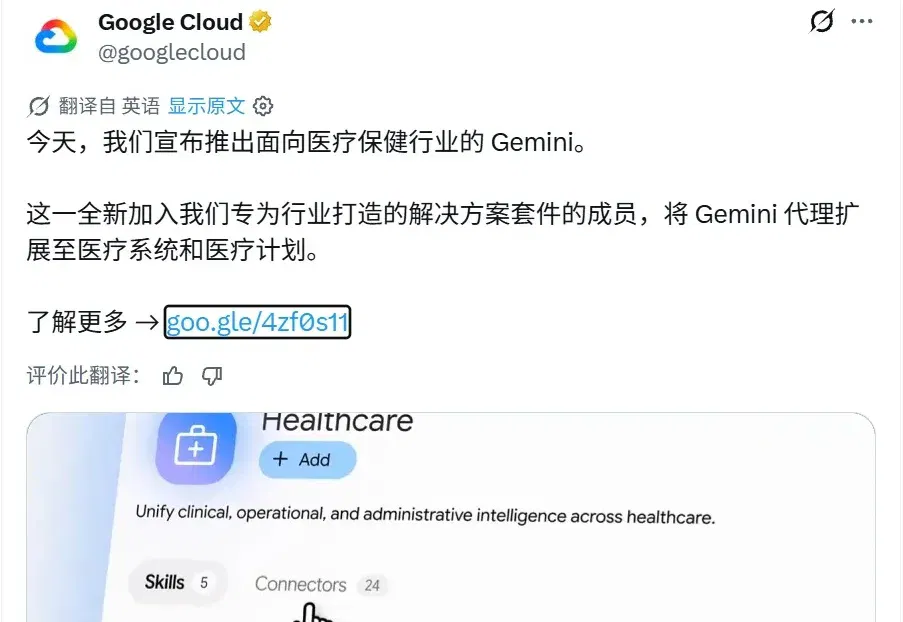
Google 推出 Gemini for healthcare 美国预览版,辅助医疗行政流程 (opens in a new tab)
这套方案面向医疗服务方和保险方,通过连接器整理病历、预授权与福利材料,并保留人工审核。部分连接器仍在有限测试阶段。

多智能体协同重构医疗AI!清华AIR孵化:医生AI分身“坐诊”医院 (opens in a new tab)
不会……只有我这样做吧? 现在每次去医院看病前,我都会让AI帮我跑一轮。 哪里不舒服、持续了多久,还包括既往病史,这些零零碎碎的信息,都在预问诊阶段准备妥帖。 等到和医生面对面,结果发现医生也在Vibe Working: Agent协助医生下判断,诊室之外的随访与健康信息管理也由AI跟上。 乍一听有点赛博朋克,但却是实实在在发生在现实的一幕。 张亚勤院士创办的清华AIR,最近又跑出来一家明星AI医疗企业—— 紫荆智康。 其研发的“紫荆AI医院”系统,已经在全国各地的医院陆续上线测试。 走进去更科幻更未来的是,这里的每个医生都能拥有辅助自己工作的专属AI分身,但这还远远不够。 单说咱去看病,一个

哈佛重磅研究:AI凭人脸照片,就能预测癌症患者死亡风险! (opens in a new tab)
就在今天,这个新闻上了各大热搜。 哈佛附属的马萨诸塞州总医院百瀚癌症研究所,在《柳叶刀·数字健康》上发布了一项突破性研究。 他们训练出了一个全球首创的AI模型——FAHR-Face。 只需输入一张普通的脸部照片,这个AI不仅能看穿你的「生物学真实年龄」,甚至能直接预测癌症患者的存活几率! 最高风险组的患者,有超过一半在拍照后90天内离世。 简直是科幻成真了。这个「看脸知生死」的AI,底层到底藏着什么技术? 链接:https://www.thelancet.com/journals/landig/article/PIIS2589-7500(26)00079-8/fulltext 喂给AI 400