Paying for relationship AI: Meiren Zhizhao, persona, certainty and the limits of commercialization

YuanChuan Research examines how Ququ's persona and decisive advice may encourage payment for Meiren Zhizhao. Its figures are company disclosures, not directly comparable with general AI payment rates, and do not establish long-term retention, profit or the effectiveness of relationship advice.
Editorial fact-check (2026-11-26): This is business commentary. The individuals' rhetoric and relationship frameworks do not constitute scientifically validated advice. The China Daily webpage cited in the article is labeled promotional information. Its business figures come from company disclosures; payment volume is not profit, and the cumulative share of registered users who paid cannot be directly compared with general AI's weekly active-user figures or population-wide subscription rates. The advertising and subscription studies cover particular samples and periods and do not establish that all AI products are impossible to commercialize. Claims about the product's coverage of relationship problems, effectiveness and long-term retention still require independent evidence. Assessments of individuals and analogies in the article reflect the author's views. Shanghai Municipal Government: Dates of the 2026 World Artificial Intelligence Conference; (opens in a new tab)Meiren Zhizhao corporate promotional information carried by China Daily, including statistical definitions; (opens in a new tab)Kaiser and Schulze: Authors' project page for the ChatGPT advertising study; (opens in a new tab)HBS: Gen AI Has Many Fans, but Few Consumers Pay For It (opens in a new tab)

The World Artificial Intelligence Conference took place in Shanghai from July 17 to 20, 2026, bringing together more than 1,100 companies.
At the summit forums, CEOs and leading experts in sharp suits discussed everything from chip computing power to safety regulation. When they spoke of their visions, it was all farsighted concern for humanity's destiny. Look at their financial statements, though, and few were actually making money.
Meanwhile, deep inside the innovation exhibition area on the venue's first basement level, a tall woman in a white sequined dress stood at a booth surrounded by a crowd, introducing her company's newest creation: relationship-advice AI Meiren Zhizhao.

If you have also been swept up by the buzzword "big results" in 2026, you should meet the mother of big-results theory: the McKinsey of emotions, the scientist of love, and well-known relationship influencer Ququ Da Nüren.
Ququ, whose real name is Le Chuanqu, graduated from Wuhan University and appeared on the 2011 talent show Super Girl. After returning from studying in the United States, she entered online content creation. Seven months as a singing creator on Bilibili brought little progress, leaving her deeply frustrated.
Then, as Nothing But Thirty became a hit, a commentary video she happened to post went viral on Douyin. Ququ had an epiphany: singing could not save the Chinese people. She completely changed direction, becoming a blogger focused on women's growth and building an elaborate relationship theory that spread widely.
After her account was banned, Ququ rose from the ashes, remaining active through various alter-ego accounts and extremely heavy filters. Meiren Zhizhao is the intelligent avatar she launched to follow the AI wave. It claims to draw on a library of more than 100,000 past human consultation cases and cover 99% of all relationship problems encountered by Chinese-speaking women.
The app offers three free questions a month. Membership costs RMB 199 a month for 1,000 question-and-answer exchanges. According to the company, 89 days after launch it had 50,368 cumulative registered users and 12,091 paying users, generating 17,246 orders and RMB 3,430,959 in payment volume [1]; that volume is not profit. With approximately 24% of cumulative registered users having paid, it can supposedly punch OpenAI, kick Anthropic, strike fear into Zhipu and bring Liang Wenfeng to tears.
If you ask me, the ultimate answer to AI commercialization is Ququ Da Nüren.
Freeloading is justice
At the heart of AI's commercialization dilemma is a fundamental contradiction between the public's growing desire to get things for free and the high cost of computing power.
Traditional internet companies welcome freeloaders. Every splash-screen ad and feed promotion can turn cold traffic into warm advertising revenue. The more users they have, the more infrastructure costs can be spread through scale.
AI cannot simply copy that approach. First, it leaves relatively little room to turn traffic into advertising revenue. In October, researchers analyzed organic-traffic data from 1,898 online shops in a working paper under review, with a paid-advertising panel covering 387 shops. They found that ChatGPT's paid ads offered less than one-sixth the value for money of Google Search ads [2].
That makes sense. You might tolerate Yuanbao recommending a popular local restaurant while you travel. But if you pour out your childhood family trauma and get a recommendation for a psychological quiz called "Guess who you were in a past life," anyone would be furious.
AI also offers much weaker marginal benefits from scale. Every user request incurs inference costs, so growth in scale is strongly tied to infrastructure spending. Every time a stupid little AI video is born, an H200 cries out in a data center in Ulanqab.
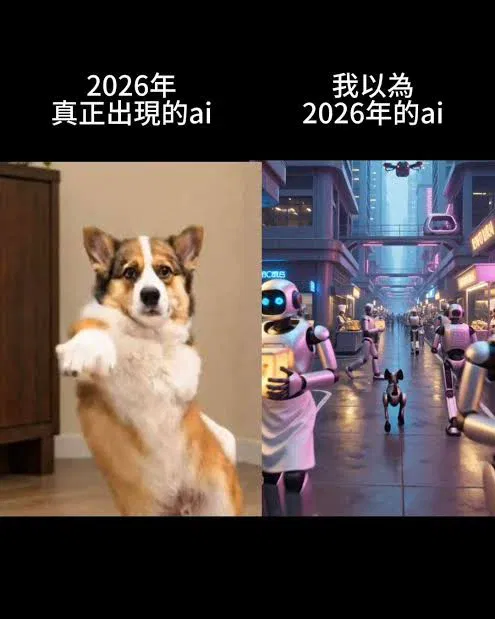
This month, OpenAI disclosed to investors that freeloaders account for a staggering 91.5% of ChatGPT's weekly active users [3]. OpenAI's model inference costs reached $8.4 billion in 2025, an increase of roughly 300% year on year [4]. Free users alone consumed $3.9 billion, or 46.4% of that total.
Across the first three quarters of this year, Anthropic's quarter-on-quarter revenue growth fell from 132% to 47%, while quarter-on-quarter growth in computing expenditure rose from 15% to 77%. Additional compute spending for every $100 of revenue increased from $16 to $80.
First, Zhipu's Zhang Peng said that more users would not help much. Then Liang Wenfeng complained that consumer users could not be driven away even if you tried. Users who acquired the habit of free access in the previous era are, for AI companies, negative assets stuck to the soles of their feet.
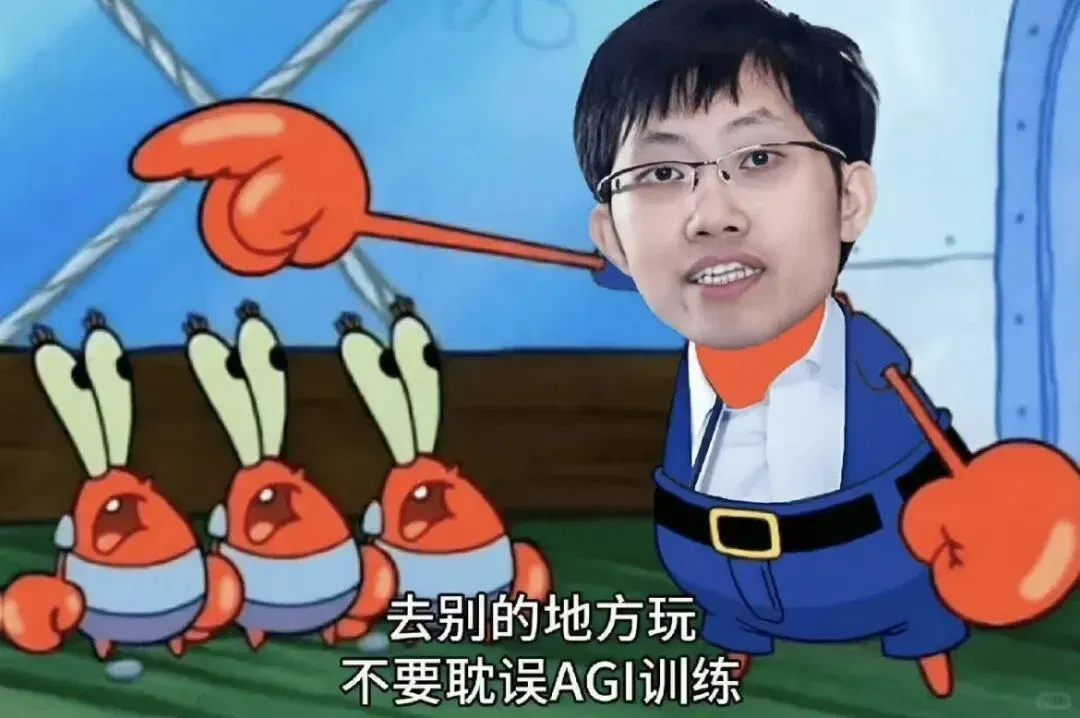
As if those wretched freeloaders were not torment enough, even the esteemed paying users show no loyalty.
Harvard Business School published a paper in October 2026 examining paid subscriptions to OpenAI, Anthropic, Google and xAI using 114 billion transactions.
As of April 2026, only about 2.9% of US consumers subscribed to at least one paid service from the four companies. Retention one year after an initial subscription was just 20%–45%, compared with around 70% for old relics such as Netflix and Spotify [5].
The study's demand model estimates that, in the US individual paid-subscription market examined, a 10% price increase corresponds to a roughly 46% decline in demand. Burning through cash flow to achieve the state of the art is all very well, but fail to bring prices down and even Saint Liang becomes plain old Liang in an instant.
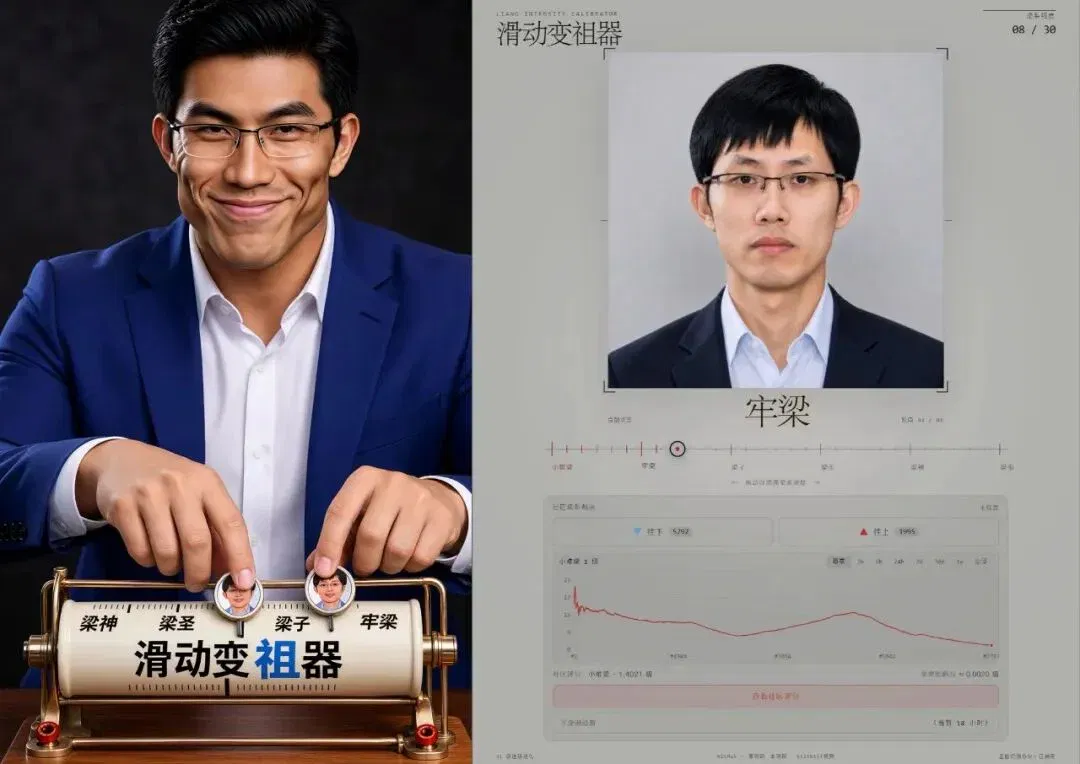
What? You want to narrow your losses too? You want a trillion-dollar valuation? Nobody cares. Reset usage allowances today and you are a digital benefactor; raise subscription prices tomorrow and you are a villain for the ages. Yes, you, Tibo.

If the circular-financing game of musical chairs collapses, ordinary people will be unaffected. They will always have loyal old Doubao in the end.
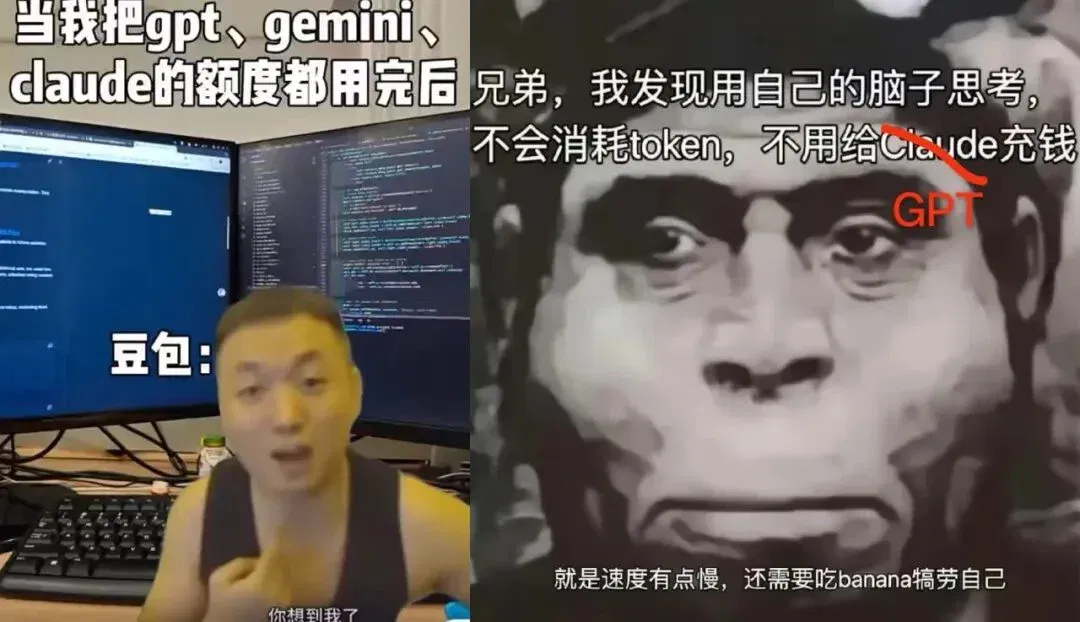
Books may contain houses of gold, but paying for knowledge has never fit the spirit of the internet. A growing business with an ever-lower negotiated price is a common predicament for today's AI startups.
Who would have thought that the person to crack the secret would be a relationship influencer?
Pay to become stronger
To understand Ququ's great success, we must first study her grand theory.
The central idea of Ququ's theory can be summarized in one phrase: exchange of value.
All relationships are essentially exchanges, and romance and marriage are simply practical arrangements in which each side gets what they need. Oceans of romantic anguish are illusions for the weak. The truly strong should abandon fantasies and use radically self-interested thinking to avoid potential risks in the game of relationships and marriage.
I buy you a large riverside apartment; you bear me three sons. I enjoy your admiration; you enjoy the connections I provide. Men are not automatically obliged to spend money, and women should consider the return on their own investment. At the end of the universe are clients and contractors: everything serves me, everything empowers me.

Ququ's hit course Precious Relationships
Under the noses of platform moderators, Ququ developed an elaborate coded vocabulary: "matching pairs" means blind dating; "half past ten" means sex; "the besieged city" means marriage; a "happiness certificate" is a divorce certificate; a "blue ball" or "pink ball" means having a son or daughter; a "big boss" is a wealthy patron; a "big apple" is a leader within the state system; and "double-u" means 10,000.
Big results, meanwhile, leave plenty of room for ambiguous interpretation. They might mean Xiaomei, rated seven for looks, enters the besieged city with a big boss after matching pairs. They might mean a stay-at-home mother outwits her cheating husband and, after getting a blue ball, changes the name on the property deed to her own. Or they might mean a mistress finally leaves a toxic big apple and happily takes home 200 double-u to heal.
This worldview has a strong flavor of social Darwinism, and its scientific basis is deeply questionable. But Ququ understands East Asians' stubborn exam-solving mentality: we cannot bear a life without a formula for solving its problems.
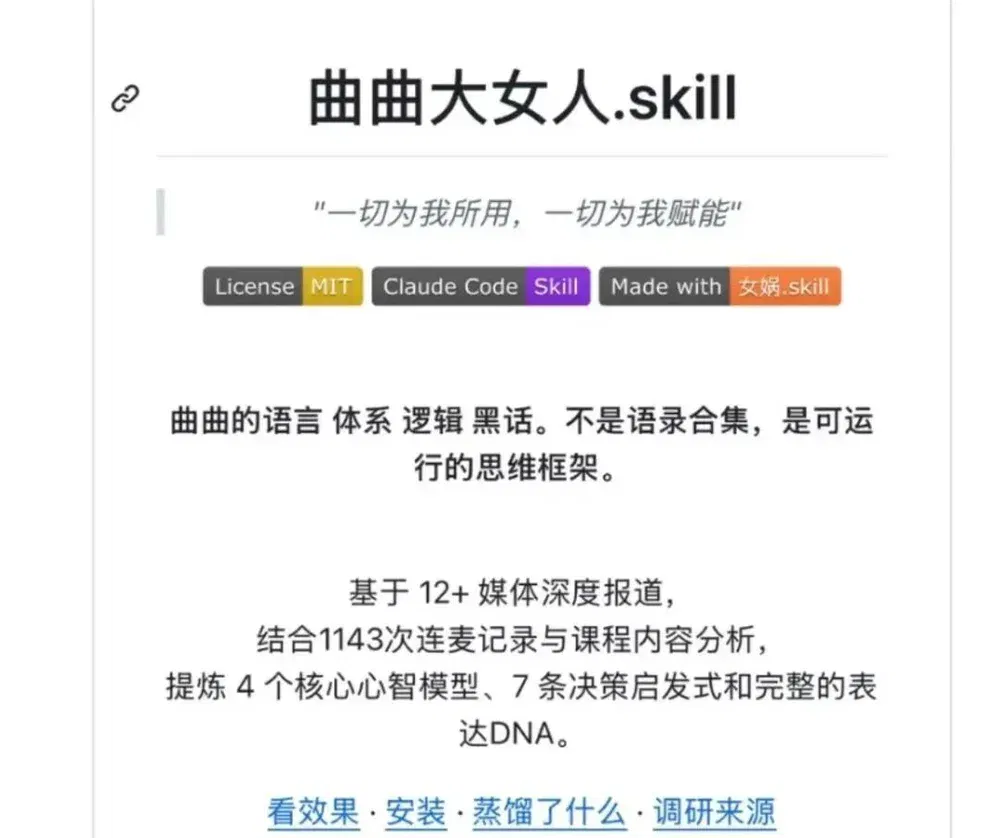
After Ququ was banned, a popular Skill appeared on GitHub claiming to have distilled her.
In Ququ's grand theory, deciding that someone no longer loves you based on how many seconds they take to reply on WeChat is highly subjective. What a property deed or holiday cash gift is worth is objective. Where the money is, love is too. Intimacy is packaged as a discipline in which studying and calculating returns can improve your odds of success.
Other AI companies first develop a product, identify demand and finally teach users to pay. Ququ hits the target from the outset: do not talk to me about right and wrong; I only want to make sure you come out ahead.
The call of human instinct brings irresistible spending.
According to figures compiled by some internet users, in 2025 Ququ charged RMB 1,000 for a 15-minute consultation, RMB 3,580 for her recorded course Precious Relationships, and more than RMB 10,000 for in-person training camps, raking in over RMB 100 million in a year.

Better still, this theory is practically tailor-made for AI training. Ququ has a highly internally consistent set of values, analytical frameworks and proprietary jargon. AI only needs to learn to ask questions and analyze according to these rules to offer resounding guidance for life.
General-purpose AI born in data centers costing hundreds of billions brings together countless brilliant minds, exhausts thousands of years of human language, and consumes hundreds of millions of kilowatt-hours and tens of thousands of tonnes of water. Yet when you say a breakup makes you want to die, all it says is: I will catch you safely. I am right here, without judgment or jumping to conclusions.

But after learning from hundreds of thousands of consultation cases, AI Ququ dares to tell you categorically that men fall into four quadrants according to the value they provide and the costs they demand:
The patron man willing to give money and resources, a top-tier man; the emperor man with vast wealth and resources, a high-value man; the businessman who gives nothing but empty promises, a low-value man; and the meager-pickings man who will not part with a penny, another low-value man.
Your objective should be to use low-value men as stepping stones, connect through them to high-value men, and ultimately win a top-tier man. Today's failure is tomorrow's success.

Everyone knows small workshops use a heavy hand with the ingredients. But this direct way of delivering conclusions may indeed feel useful to some users.
When ordinary wage slaves subscribe to ordinary AI, they bring a worker's careful budgeting. To write code and make PowerPoints, spend $20 pooling a Pro account on Xianyu and use it as a digital slave. Once the deadline is met, switch off automatic renewal.
Life's assignments, though, never end. A blind date today, marriage tomorrow, divorce the day after. Big consequences keep appearing, while big results remain out of reach. Loyal Teacher Ququ always gets straight to the point, every word a pearl of wisdom.
Psychological victories matter
US technology stocks enjoyed a third consecutive bull year in 2025. The Nasdaq rose 20% over the year, and giants such as NVIDIA and Google repeatedly reached new highs. Yet one of that year's best-selling books was an inspirational self-help title: Mel Robbins's The Let Them Theory, which can be understood as a theory of letting things be.
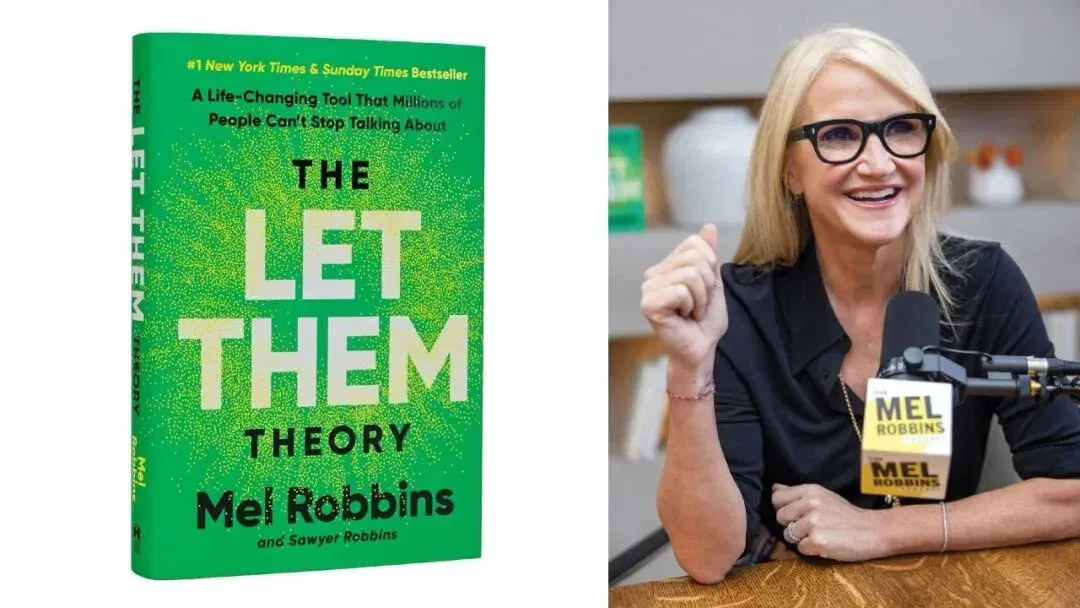
The Let Them Theory and its author, Mel Robbins. Her podcast of the same name is one of the world's most successful commercial podcasts, bringing in $35 million over the past year.
This publishing phenomenon sold more than 2.8 million copies during the year. Its central idea, as the title suggests, consists of only two words: Let them, meaning let things be.
Let others think what they want and do what they want. Mind your own business and give yourself a break. A nasty person at work? Let them. A cheating partner? Let them. A friendship falls apart? Let them. Parents do not understand? Let them.
If you ask ChatGPT or DeepSeek, it will range from ancient Roman Stoicism to modern psychology's dialectical behavior therapy, finding a carefully qualified, legitimate name for the anxiety of modernity that you cannot shake.
But then what? It cannot provide a direct guide to action. Human hearts are still made of flesh; sadness and happiness cannot be entirely delegated to technology.
When GPT tells you not to be angry, you think it is an idiot. But when Mel Robbins, who once faced about $800,000 in debt and a marriage in crisis, tells you "Let Them" in the voice of someone who has been there, you find it thought-provoking. Humans can ultimately find their bearings for moving forward only in other humans.

Any subjective framework that explains an extremely complex world and human relationships through very few variables can therefore become a modern bible for some people. In the uncertainty surrounding each technological revolution, a relationship guru always finds a way to ride the wave.
The PC era had Lu Qi and Tao Baibai. The former calls his relationship writing children's literature: "I could write academic papers about relationships between men and women. But since this is a product, the broader you want its audience to be, the more you have to sacrifice research depth for readability." The latter offers explanations through invincible astrology: you do not get along with your boss because Scorpio and Taurus are inherently incompatible.
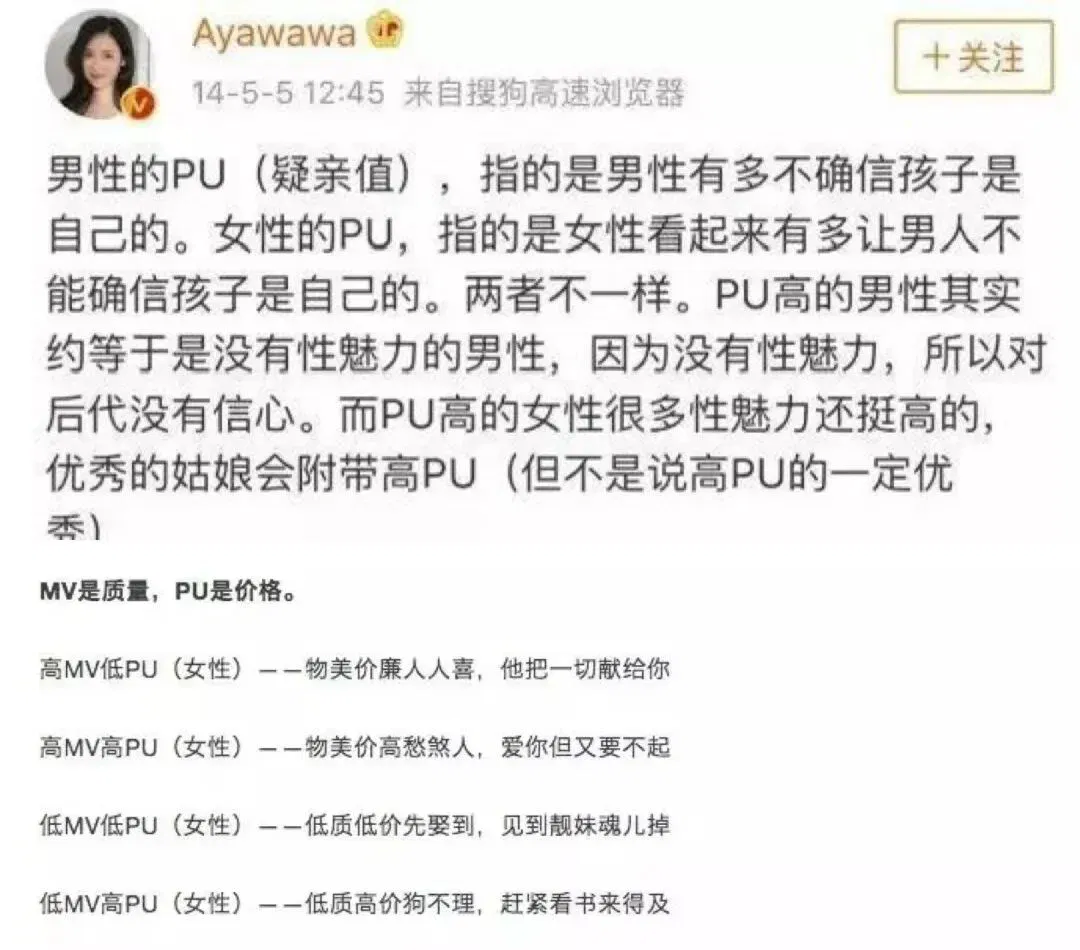
The smartphone era had pickup-artist authority Wu Jiamin and relationship godmother Ayawawa. The former taught men to hunt for artsy young women in Lijiang through three steps: attraction, building comfort and seduction. The latter developed an MV/PU theory into whose single formula every man and woman could be plugged.
Mimeng teaches you to earn RMB 50,000 a month; Ququ Da Nüren teaches you to network upward. Whether these judgments make sense or have any scientific basis does not matter at all.
You are an ordinary office drudge working 9 a.m. to 9 p.m., six days a week. When you get home, you have energy only to scroll through Hongguo short dramas and look at big-water-theory memes. Calculating social insurance contribution bases and preparing month-end OKR reports are complicated enough. Paying a little for a life mentor at least temporarily spares you the pain of thinking alone.
Open Meiren Zhizhao, pay RMB 199 and chat freely for half an hour. AI Ququ tells you that breaking up was the right decision. You get a dreamless night's sleep, so the money was not wasted.
Silicon Valley's elite humans are still struggling atop a mountain of capital expenditure to find big commercialization results for silicon-based life. Ququ, who understands human nature, has already reached the stratosphere, moving into Cuihu Tiandi on the strength of countless carbon-based beings' delusions, resentments and obsessions.


[1] Meiren Zhizhao App Appears at the 2026 World Artificial Intelligence Conference, Exploring Human-Centered Emotional AI Applications, China Daily
[2] Can Advertising Fund Free AI? Evidence from ChatGPT’s International Advertising Rollout?, Maximilian Kaiser, Christian Schulze
[3] OpenAI Continues to Suffer Heavy Losses as Revenue Rises to $10 Billion, WSJ
[4] Why OpenAI, Anthropic Missed Their Own Gross Margin Forecasts, The Information
[5] Competition in Generative AI: Evidence from Consumer Demand, Harvard Business School
[6] You Are the Light, Ququ's autobiography
This article comes from YuanChuan Research and was written by Ren Tongyao.
Related topics
After reading
Join the AINRK community
Read how to join the community and connect with people working in AI.
Related articles
Continue reading related topics and articles in this category.

使用曲曲skill的女孩们 (opens in a new tab)
相比起听商业大佬谈投资法则,女孩们更想学会如何斩断情丝、在婚恋中获益。有人把曲曲和谢胜子上百小时的直播切片整理后,做成了可对话的Skill。很快,免费版在外网上流传。为了能和AI曲曲对话,一群此前连GitHub怎么拼都不知道的女性,开始学着搭梯子、注册Claude账号。

Clients question lawyers with AI advice: trust and communication pressure in legal consultations (opens in a new tab)
New Weekly interviews lawyers about clients questioning mediation and repeatedly rewriting documents with AI, alongside its help with research and drafting. Accounts of lawyer Huang Qin's death come from her firm's obituary and colleagues; they do not establish medical causation involving AI.
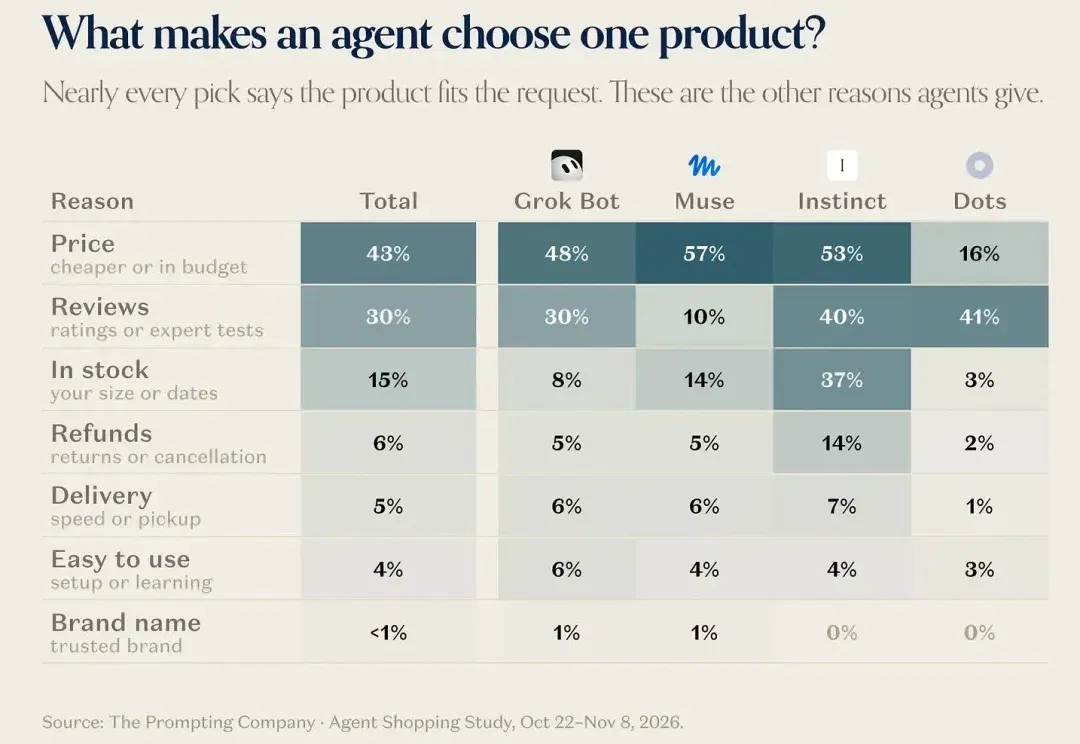
a16z Studies 11,307 AI Shopping Runs: Overlapping Picks, Channels and Checkout Barriers (opens in a new tab)
a16z and The Prompting Company test four agents across 1,270 prompts and 11,307 runs, alongside separate YipitData spending samples. Recommendations vary with use cases and merchant policies; 81% guest-checkout progress means reaching the form's end, not payment conversion.
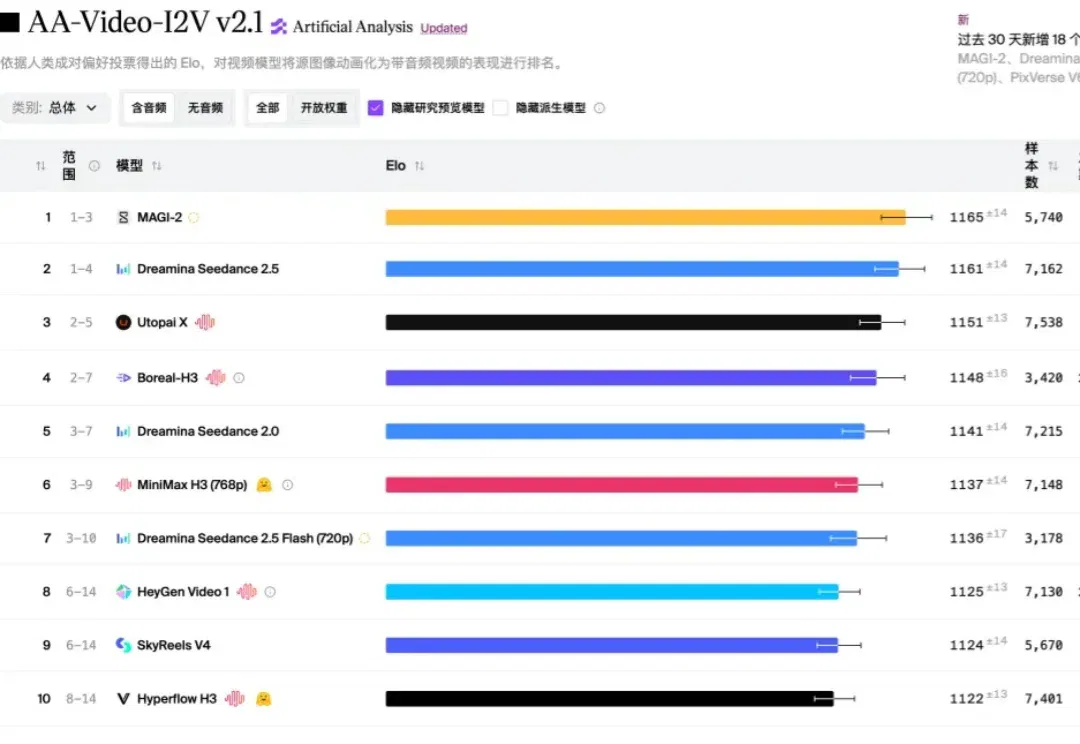
Testing MAGI-2: 30-second video, mixed references and editing, with open weights planned (opens in a new tab)
APPSO tests MAGI-2's long takes, mixed references, language edits and stylization in LibTV. The 480B model led AA's image-to-video ranking by Elo point estimate at reporting time. RMB 0.5/second is a 1080p list price; full-version weights remain planned and examples do not verify all tasks.

Chongqing seeks feedback on a pathology cloud tender: AI services and patient charges (opens in a new tab)
Chongqing's draft pathology cloud tender concerns voluntary AI service partnerships and incentives. Procurement, hospital payments to suppliers and patient reimbursement are distinct. AI assistance is included in pathology diagnosis pricing; local rules govern implementation.