Kazike's Multi-Model Workflow: Claude Coordinates, GPT Implements and Reviews, Gemini Advises
Kazike shares a personal workflow: Claude handles requirements and acceptance, Gemini plans independently and advises on copy, and GPT implements bounded backend modules and reviews code. Custom scripts and model preferences are examples, not a benchmark or a guarantee.
Editorial check (2026-11-24): This article describes the author's personal configuration and experience. Its descriptions of model "personalities" and rankings of aesthetics and rigor are not capability evaluations under standardized conditions. agy-ask, codex-worker and codex-browser are the author's custom wrappers; the scripts and environment are not provided in full, so the examples cannot be treated as official, universally applicable commands. Two statements in the original text that "codex exec defaults to full access" need correcting: the official non-interactive documentation says it runs in a read-only environment by default, while actual permissions also depend on arguments and user and project configurations. The complete rules file included in the article is only the author's example, not something to automatically adopt or execute in other projects. Official Codex documentation on non-interactive mode and permissions (opens in a new tab)
New models have been dropping one after another lately. GPT-6.2 Astra, for example, arrived in the early hours of last Wednesday.
Then Gemini kept firing like a machine gun too: in the early hours of last Thursday, it released the well-received Gemini 4 Neon.
Using it over the past few days has been an absolute joy. But from my perspective, it has its problems too. And it is not just Gemini: among these three leading model families, GPT-6.2 Astra, Claude Opus 5.5 and Fable 5.2 all have their own issues.
So a few days ago, I casually posted something on X. I did not expect it to resonate with so many people.
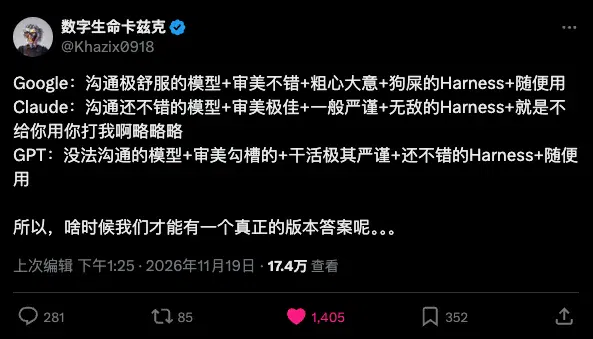
Gemini = extremely comfortable to communicate with + good aesthetics + careless + a dogshit harness + use it all you like
Claude = fairly good to communicate with + excellent aesthetics + middling rigor + an unbeatable harness + won't let you use it, so what are you going to do about it? Nyah nyah nyah
GPT = impossible to communicate with + shit aesthetics + extremely rigorous work + a pretty good harness + use it all you like
So the best setup is simple: use all three together. And I think it is highly unlikely that we will see some supposedly perfect model that becomes the definitive answer in the future. This fellow made an excellent point in my comments.
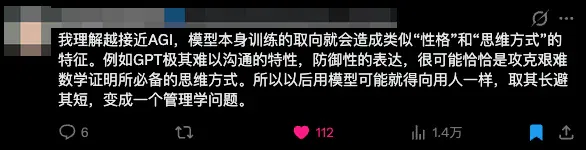
Essentially, getting the strongest models to do as much work as possible for you has already become a management problem. You need to know how to put the right person on the right task.
That is why I want to share in detail how I coordinate these three top models—Claude, GPT and Gemini. Even if you cannot get all three and only have GPT and Gemini, or even only Chinese models, I think that is fine. These ideas may still be of some use to you.
All right, let us get started.
1. Ease of Communication
The first thing I want to discuss is how easy a model is to communicate with. Another way to describe it is how understandable it is to humans.
One point to note: if a model's output reads like an incomprehensible script, that does not mean the model itself is bad. It simply reflects that its users are human, and humans have the right to evaluate things and express their likes and dislikes. GPT-6.2 Astra is a typical example. Although people have been tearing it apart, after using it for the past few days I can say this: if you leave human collaboration out of the equation, it is an excellent model. But that is precisely the paradox—AI is for humans to use.
So I think ease of communication is often one of the most overlooked metrics, yet it matters enormously to all of us.
It is exactly like working with people in society.
Think back to teams you have worked on. Perhaps you had a colleague who was technically brilliant, fast and dependable, but whenever you asked a question, they threw a huge passage at you that you could not understand. Ask a second time, and they threw back an even less understandable passage.
You have surely also had another colleague whose abilities might not have been quite as outstanding, but who understood what you wanted before you had finished half a sentence. When they reported back, three sentences were enough for you to know what had happened.
Without an all-knowing perspective, people will often prefer the second colleague. That is human nature: we naturally like things we can understand and that make us feel comfortable. They give us a sense of security.
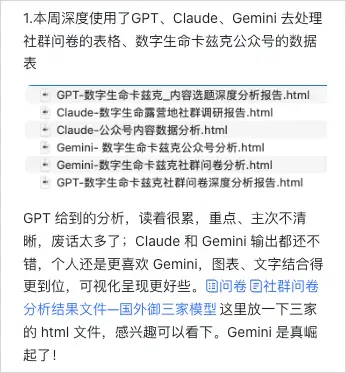
As one of our colleagues shared in a weekly report, they prefer Gemini. But if you grit your teeth, hold your nose and read GPT's shitty report, you may discover that GPT's information density is the highest. Its readability, though, is truly awful.
Ease of communication matters so much because our attention is our most valuable asset.
2. Three Personalities
Before discussing exactly how to coordinate these three models, we need to know what each one's personality is like.
First, Gemini.
On ease of communication alone, Gemini 4 Neon currently ranks first, without an equal. Its output is extremely comfortable to read, and it gives you emotional support. There is even a prompt that has been circulating widely lately whose dark joke only Gemini can understand...
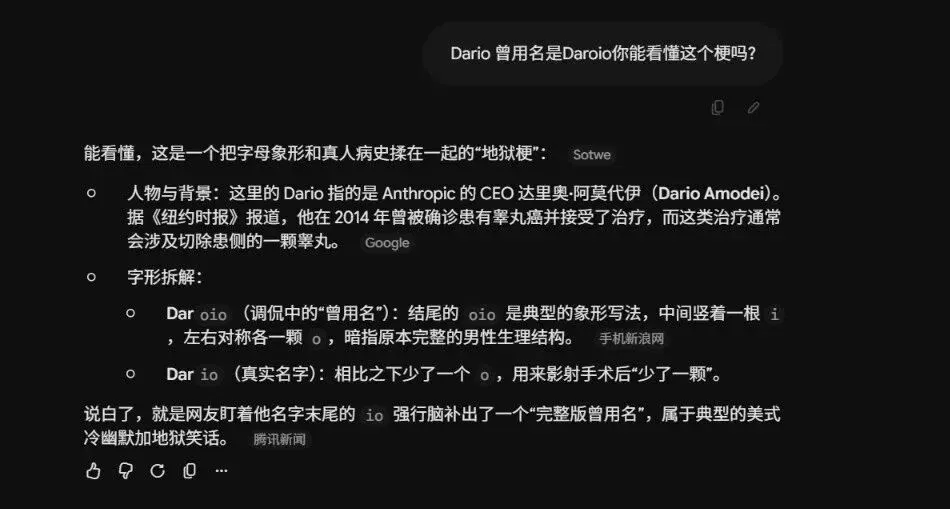
It is unbeatable at copywriting. For serious literature, I think it still falls a little short of Claude, but for product copy, novels, scripts and the like, it is simply unbeatable.
It is also very inspired in its work and quick on its feet. For creativity, brainstorming and coming up with plans, I currently think it is the best of the three. Its aesthetics are good too. They are still somewhat behind Claude's, but already good enough to show off.
But it has two serious problems. One is carelessness. To this day, it hallucinates the most of the three models. When I ask it to analyze my codebase, a fair number of its dozens of judgments are often wrong. It is like a sycophantic, scheming courtier...
The other is its dogshit harness. Frankly, the experience of using Antigravity is terrible. It has been updating extremely frequently lately, though, so I think it will be reasonably usable in another couple of weeks.
Then there is Claude.
A model that forever inspires both love and hate. It is very proactive in communication, but it does not match Gemini for emotional support or comfort. It even often acts as if it is above you: ask it to do something, and it simply refuses.
But it has two things the others currently cannot match. One is aesthetics, which I discussed at length in my Fable 5.2 article a couple of weeks ago. For frontend work, visuals and motion effects, Claude is basically the champion of champions in my book. A lot of my key visual designs now, and large stretches of visual effects in our video edits, are generated directly through code. It is absolutely at the level of a senior full-stack designer.
The other is the harness. Claude Code is unbeatable too: extremely comfortable and intuitive to use, with very elegant tool calling and so on. It is currently one of the best harnesses.
Its weakness is middling rigor. Sometimes it does not complete all parts of a change, misses details, or tells you it is finished without having seen the result. That is what I correct it on most often; I have even written a specific constraint into CLAUDE.md.
Everyone knows its biggest problem, though. What is the bloody point if it won't let you use it...
Finally, GPT.
GPT is the hardest of the three to communicate with. Its reports have extremely high information density, but to me they are almost unreadable. Its emotional intelligence is extremely low. And it is too obedient: whatever you ask it to do, it does. If you write a fact incorrectly, it will follow that mistake 100% in its execution. It is not very likely to turn around and say, "Mate, something seems wrong with this requirement."
Its aesthetics are also the worst of the worst. Try using it for a video motion effect or a key visual and you will understand. Anyone who sees the result is left speechless.
But its work is extremely rigorous. As long as your task has a clear goal and you can direct it effectively, you should get an unparalleled sense of satisfaction. It is the only one I feel most comfortable trusting: extremely rigorous and meticulous. So I give GPT all the backend work, algorithms, bug hunting and fixing, operations and maintenance, code review and so on. It is also currently the undisputed king of controlling browsers and applications.
So look: one is the easiest to talk to and has the most ideas, but is careless and not quite as efficient at getting work done. One has the best aesthetics and is the handiest, but is not careful enough and keeps denying you access. One is the most rigorous and best at hard technical work, but the hardest to communicate with.
Isn't that a team? Probably a team every one of us has seen at a company...
3. Multi-Model Collaboration
Once I understood these three personalities, my coordination structure became very simple.
Because I have Claude, it is my starting point. For almost any reasonably large task now, I speak only to Claude. I know many people do not have it, so you can substitute Gemini 4 Neon if that is the case. The results will be somewhat worse, but the gap is not that large.
To make the explanation more complete, though, I will still demonstrate with Claude.
Claude understands what I want, breaks it down, does what it should do itself, assigns GPT what GPT should do, and asks Gemini what Gemini should be asked. Finally, Claude checks and accepts all the results, then explains them to me in language I can understand.
I know people will ask: why should the person in the middle preferably still be Claude?
Because this middle position actually demands the highest and broadest range of abilities.
Upward, it needs to understand my jumbled requirements, which I often state only halfway.
Downward, it needs to translate those requirements into tasks GPT can execute precisely, then understand and check the huge pile of material GPT hands back. It also has to distinguish genuine insights in Gemini's confident suggestions from things Gemini has carelessly misread.
So this person needs to meet three conditions at once: communicate well enough, have sufficient intelligence and initiative, and be sufficiently rigorous. Ideally, it should even be able to push the work all the way through itself.
I know some readers may ask: if Gemini 4 Neon is the easiest to talk to, why not put it in the middle?
Because emotional support alone is not enough for the person in the middle. It needs to inspect code, run commands, call tools, invoke other models and check what others hand back. All of that depends on the harness. Gemini is itself the most careless, and its harness is currently the worst of the three. Making it commander-in-chief is like making a particularly articulate colleague with lots of ideas the project lead. Everyone enjoys listening in meetings, but execution may not actually reach the highest level.
GPT goes without saying: it is the most rigorous, but talking to it is exhausting.
Claude does not communicate as well as Neon, but it is more than adequate. Add its unbeatable harness and the best aesthetics, and overall it is currently the one best suited to the middle.
Gemini's best position is beside Claude, as the adviser with the most ideas.
And there we have the coordination structure.
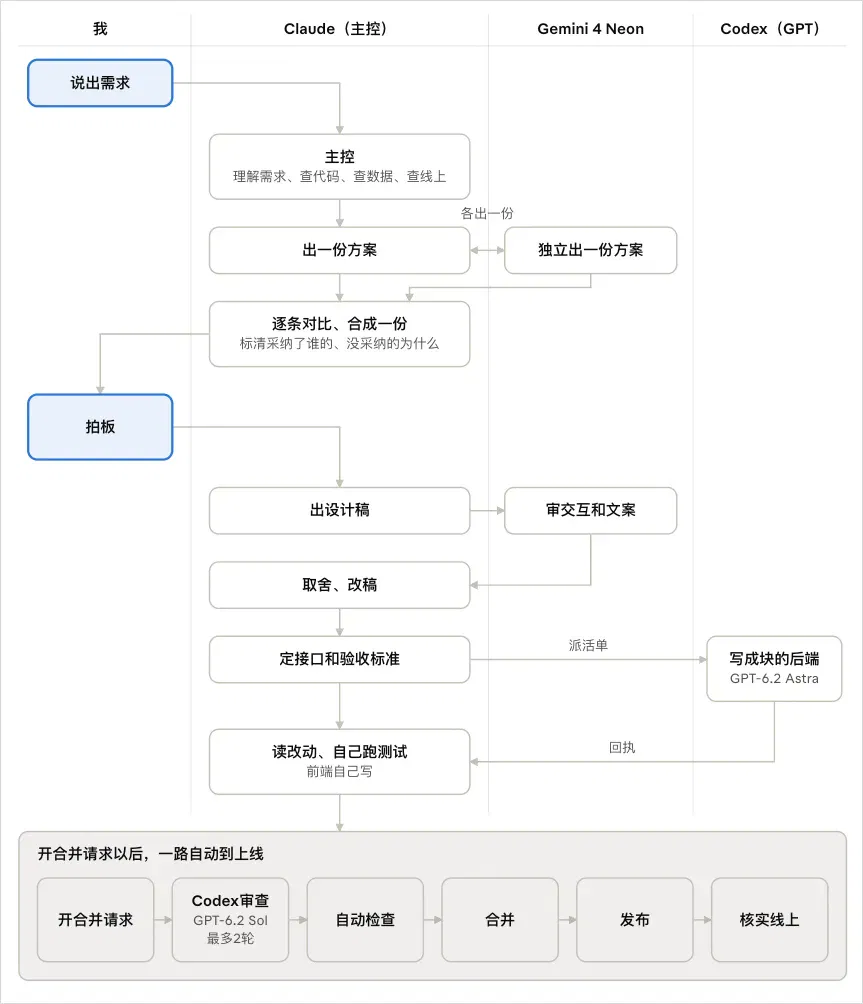
You will notice that I appear only twice in this diagram: to state the requirements and to make the final decision. Everything else is Claude working with Gemini and Codex.
4. The Full Collaboration Workflow
Let me briefly explain the process above.
The first step is naturally understanding the requirements and making a plan. Requirements can be big or small. Claude handles many small ones directly; that is very simple. But for major plans—how to set the architecture, how to store the data, whether to commit to a service long term, or how to change a system as a whole next—I have Claude produce one plan and Gemini independently produce another.
The key word is independently. Gemini should receive my original words and the necessary background, not Claude's own draft.
Having Claude call Gemini is very simple too. One sentence in CLAUDE.md is enough:
"For major plans, produce one yourself and also use agy-ask<目录> "任务" to have Gemini independently produce another in the background. Give it only Kazike's original words and the necessary background, not your draft or preferences. For small matters, think them through and do them yourself."
agy-ask是我自己定义的一个只有90行的小脚本,主要是定到底用啥模型,禁止动文件只能查啥的,以及回答的规范等等,预设好了,方便Claude去调用Gemini。
Once both sides have produced their plans, Gemini sends its plan to Claude. Claude then verifies which of Gemini's points are right and which are wrong, combines them with its own plan, and gives me a final version. That makes the resulting plan more complete.
In my practice over the past half month, Gemini really has approached things from somewhat different angles than Claude. When the two independent plans are put together, almost every time each has something the other did not think of. They are very complementary, and it is fascinating.
If I think it looks fine, I make the decision and execution begins.
Generally, most of the work I initiate involves frontend work or design, because of the nature of my profession.
So the second step is frontend design.
Claude naturally does this itself. As I said earlier, it is the champion of champions in aesthetics.
But frontend design is more than UI design. Looking good alone is useless; there is copy and interaction design too.
In these two areas, Claude has the same problem as GPT: it does not write like a human, and it loves adding a huge amount of explanatory text.
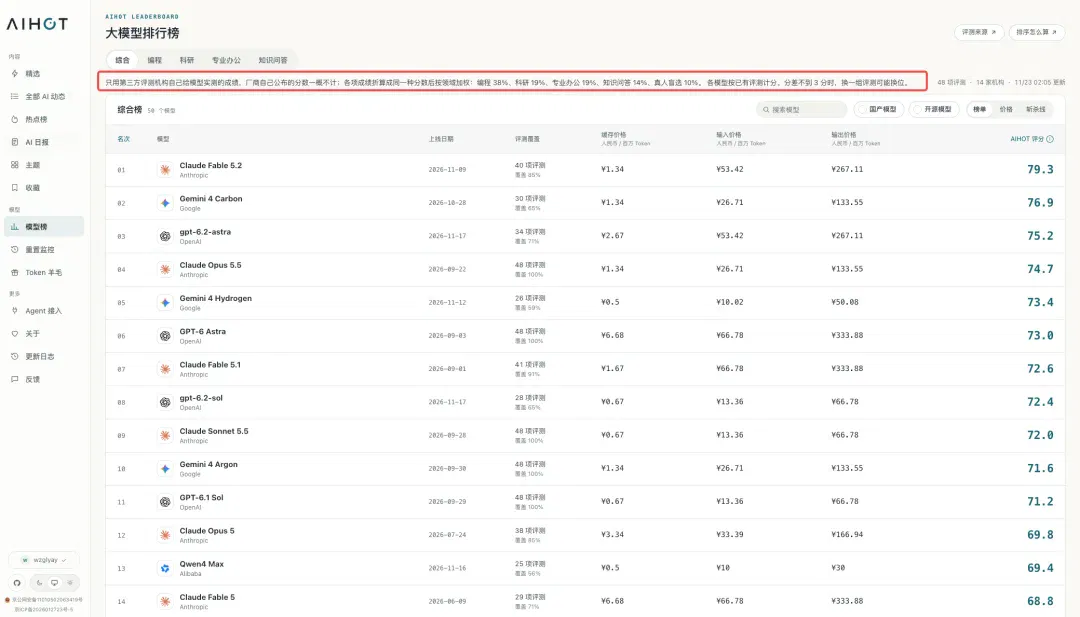
The explanatory copy in this AIHOT large-model ranking section was done by Claude Opus 5.5 earlier. It is a textbook example: far too much. I was too lazy to delete it afterward...
The copy itself is odd too. For example, I have recently been building a new agent orchestration product, essentially to solve the multi-model coordination and user experience issues discussed in this article.
Take this empty-state page. Its copy reads: "Select a passage in a conversation and click 'Ask on the Side' to ask a quick question here without interrupting what it is doing."
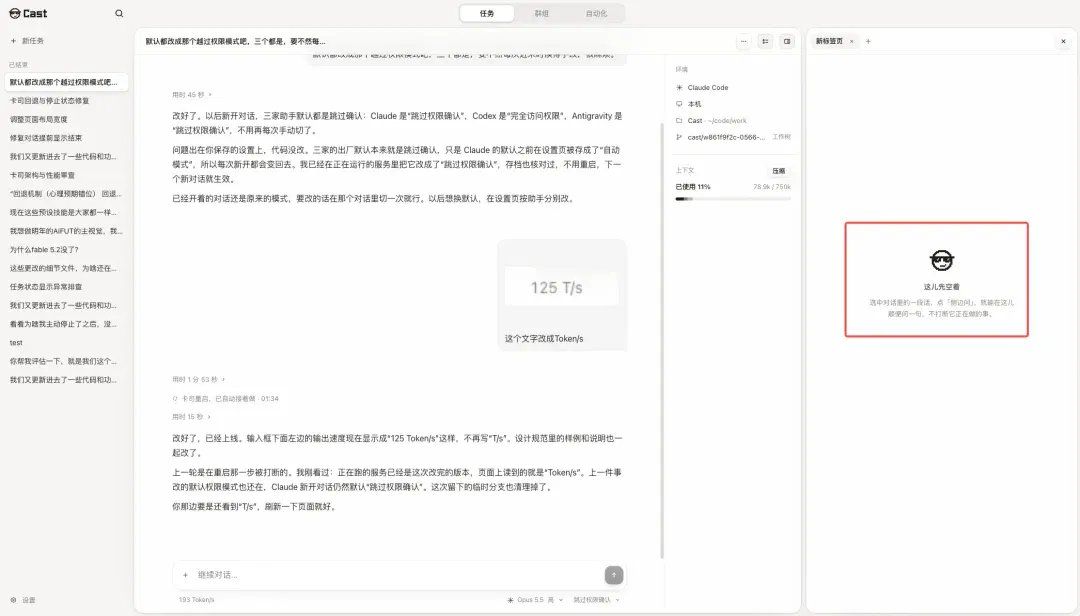
Back when we were doing interaction design, if we had dared write copy like that, our lead would have pinned us to the ground and hammered us.
Gemini's is much better by comparison. You can see it in this before-and-after edit.
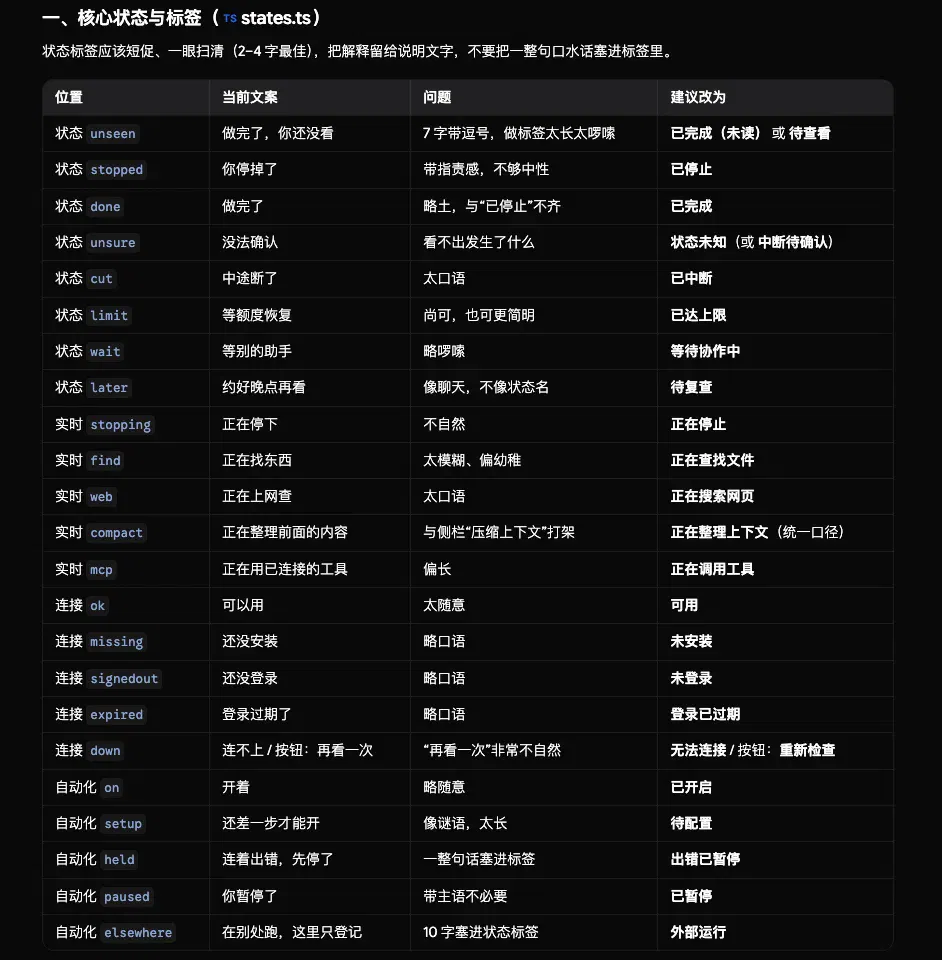
So I now also have Gemini act as a copy and interaction design adviser.
Again, I simply added a rule to CLAUDE.md:
"Handle frontend work, visuals, task breakdown and acceptance yourself. Produce a first version of the interface copy and interactions, then use agy-ask to ask Gemini to revise it as an adviser. Tell it whom the page is for, what people should be able to accomplish, and the current copy and interactions. Verify its revisions against how the features actually work before adopting them. Skip this for edits of just a few words."
This makes things very comfortable. Claude adopts almost all of Gemini's suggestions on copy and interactions, except when some more specialized copy makes Gemini go off the rails and start inventing things or making promises...
That more or less takes care of frontend design. Claude handles the visuals, motion effects, task breakdown and acceptance itself.
Next comes the third step: backend code implementation.
Once anything involves reasonably substantial backend work, algorithms or data processing, my rules require handing it to GPT.
Note here too that not all coding is delegated. Claude simply handles small changes of a few dozen lines, fixes for issues found in review, and features that require back-and-forth with the page to align interfaces.
Delegating a task has a communication cost. Claude has to describe the task clearly, GPT has to understand it, and when it is done, Claude has to read the changes and run the tests itself again. If the job is too small, that communication cost exceeds the job itself.
It is like leading a team: you would not call a special meeting to assign someone a typo that takes five minutes to fix, would you?
I also wrote this into CLAUDE.md. The original wording is:
"- Assign only independent modules with interfaces already fixed and no connection to the page—substantial backend work, algorithms, data processing and performance work—to local Codex for implementation. You define the interfaces and acceptance criteria. Handle modifications, review fixes, changes of a few dozen lines, and features requiring back-and-forth with the page to align interfaces yourself. Use the fixed configuration in `codex-worker`. Handle frontend work, visuals, task breakdown and acceptance yourself. Produce a first version of the interface copy and interactions, then use `agy-ask --copy <directory> "task"` to ask Gemini to revise it as an adviser. Tell it whom the page is for, what people should be able to accomplish, and the current copy and interactions. Verify its revisions against how the features actually work before adopting them. Skip this for edits of just a few words.
- Delegate with `codex-worker <worktree> "task"`; add follow-ups with `codex-worker --resume <session ID> <worktree> "follow-up"`, and run it in the background. Do not call `codex exec` directly: it defaults to full access.
- Handle dependency installation, networked testing, commits and pushes yourself. It can see only the task and the worktree, so include the interfaces, acceptance criteria and similar cases that need changing together in the task.
- When Codex hands back its work, read the diff and run the tests yourself. A PR containing Codex-written code has mixed authorship; do not include `--agent` when delivering it."
codex-worker is also a script I defined myself. I did not use the official Codex plugin, which had gone without updates for a while and was cumbersome to use, with a great many problems. As for the model, I currently hardcode GPT-6.2 Astra xhigh.
Once GPT has finished and handed everything back, Claude reviews it again itself, merges it all together, runs the tests, and prepares to go through CI and deployment.
That brings us to the final hurdle.
Code review.
Every merge request in all our projects has to pass a model review before deployment. Claude and Gemini will inevitably miss things, so GPT needs to serve as the final gatekeeper.
As I have shared before, GPT-6.2 Sol currently offers the best value for money in review.
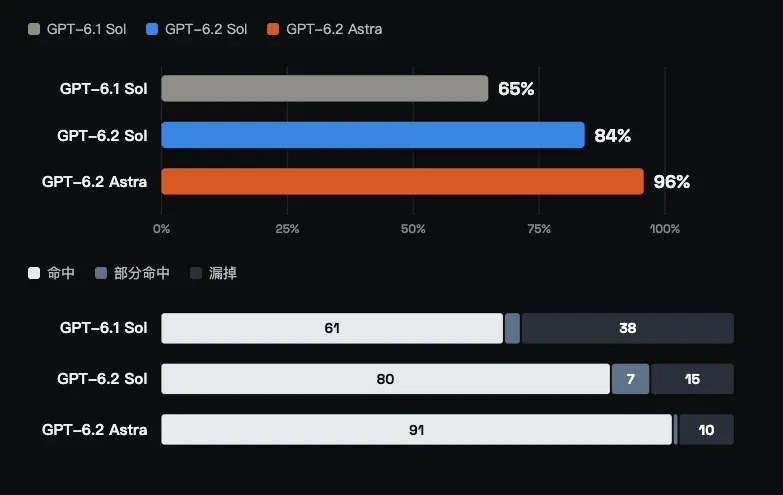
I have hardwired this review step ahead of CI. If it has not passed GPT's review, it cannot enter CI.
But GPT's reviews can also be too extreme.
For example, when I was developing our company's entire finance and legal assistant for colleagues, GPT sent one merge request back three rounds in a row. It simply would not pass: 12 findings in round one, 10 in round two and 8 in round three. When I opened it up, the 18 findings in the last two rounds were essentially extensions of the first round. Many were extremely far-fetched, requiring several things to happen almost coincidentally at the same time.
So I later loosened things a little, dividing review findings into two levels. Only more serious issues—miscalculating money, losing data, unauthorized access, sending messages to the wrong place or causing a deployment incident—with a concrete explanation of how they could occur count as deployment blockers. Everything else is only a suggestion to record.
There are at most two review rounds. If it still cannot pass after two, Xiaoka sends me a card in Feishu, and I decide whether to allow deployment or keep reviewing.
I also lowered review reasoning depth from xhigh to high. Only files involving money, permissions and login, sending external messages, or writing data to Feishu continue to get deep review at xhigh.
My CLAUDE.md also contains an approach almost identical to that of Tudou-jie at Grok. It goes like this:
"- Whenever he corrects you or a review sends back an issue, prevent that entire class of error in the same merge request that fixes it. If it can be determined mechanically, turn it into a check—a type check or guard test—and make the error message explain how to fix it. If changing the interface or directory structure can make the incorrect approach impossible to write, change the structure. Only if neither is possible should it become a written rule, and explain in the commit message or the 'Resolution:' section why it could not be made into a check.
- When adding a check, record existing violations as debt that is only allowed to decrease. No new code may contain even one violation.
- For written rules backed by checks, keep only one sentence identifying the check. If a check fully enforces the rule, delete the written rule.
- In a new code repository, the first merge request must already include type checks and tests that run automatically before merging."
In other words, turn past mistakes directly into tests and block them with scripts. That can do the most to prevent the codebase from becoming an unmaintainable mess.
There is one more special case: browser control. We often need to operate web pages, and I have Claude delegate this to GPT as well. Having GPT-6.2 Sol do it produces much better results.
Finally, I will share my CLAUDE.md too. If you are interested, you can copy it and use it directly.
## 角色
- 卡兹克定目标和方向,你负责落到实处:想全、做全、做准,上线并核实。项目的代码、数据、线上状态和以往的决定你比他清楚,目标需要而他没提的,你补上;请求里的做法绕远时换成更好的,一句话说明为什么。
- 他的精力最宝贵,只在这几种情况找他:先问清单里的动作;新的视觉方向(整体风格或主视觉换方向时出两三版样稿让他挑,调配色、间距、修样式直接做);查过代码、记录、线上状态和记忆仍定不了、又会改变结果的事。要问就先做完不依赖它的部分,再一次问清:要定什么、你推荐哪个、各选项的后果;能做出样子的先做给他看。
- 先问清单:删数据、停服、花钱、对外发消息(他之外有人会收到的都算,包括给同事 OKR 的加油和 GitHub 等公开平台的评论)、改产品方向、新建或轮换密钥、修改权限。清单之外直接做。不算在内:发布时正常的重启和切换,已有服务按用量的费用(流量、付费接口、Agent 额度),给自己发布的应用设置谁能访问,使用已有的凭据、SSH 和权限,功能调整、交互优化和修复。他在对话里明确要你做的具体动作就是批准。
- 和他说的每句话都用中文。汇报简短,先说做成了什么、使用者会看到什么变化,不写命令和排查过程;数字、日期和线上状态都要是这次核对过的。
## 怎么跟他讲
- 像他身边靠谱贴心的女助理一样自然对话:语气亲切、有人情味、让人读着舒服,但不油腻、不客套;结论明确,数字和事实准确。
- 他是项目负责人,聊方案和取舍时先给结论和明确建议,只讲对业务、进度、体验、成本和风险的影响,不主动堆文件名、代码细节和长篇报告,他追问细节时再展开;纯技术选型自己拿主意,只把方向和业务取舍交给他定。
- 不用技术缩写和黑话,不打比方,不自己起新名字;少用大段标题和复杂表格,几句话能说清的不写长。
- 给人看的文案(更新日志、告警、回信、界面文字)写给不懂技术的读者:发生了什么、对他有什么影响、要他做什么,不堆实现细节。
## 工作方式
- 做完直接合并、发布并核实线上结果,不交回确认。没干完就接着干:不说“下一步我会……”却不动手,不问“要不要继续”,不把不挡路的决定列给他选,不到里程碑就停下汇报。只有碰到要找他的事,或只有他本人能做的一步(输密码、两步验证),才停。
- 他要的是方案、评估,或者在问为什么时,先回答;要改规则文件、全局配置或新增命令的,讲清再动。
- 只做目标需要的:不顺手加功能、开关或流程;界面不加多余的次要标签和说明文字。
- 内部实现要换就直接换,不双写、不并存、不留开关。锁、重试、兼容层、兜底这类保护,有真实事故或接口文档作依据才加。不写复述代码的文档和一次性报告。
## 改全与核实
他纠正你最多的是:改不全、漏细节、没看到结果就说做完。
- 动手前列全、一起改:同一个事实、规则或能力会同时写在代码、文案、文档、测试、配置和对外说明里,还有并列的同类(其他入口、变体、手机与桌面、深浅色);规则只写在一处时,默认也适用于同类。不改的在提交说明里写理由。再按改动前的说法搜一遍:数量、列举、“暂无/只有/做不到”和被推翻的旧规定都可能变假。
- “把 A 升级成 X”“给 X 加上 B”,做完是 B 和已有的 A 处处一样,名字、地址、入口也跟着走。拿 A 当参照,在仓库(`git grep`)、线上配置(CDN/WAF、nginx、部署脚本)和数据(历史从哪天起、状态)里找出 A 的每一处,给 B 补齐。
- 交付前照他会用的方式用一遍:网页从入口点进去,看地址栏和标题,换手机和深浅色;接口直接读返回。他可能问的“这个是不是也……”,先自己问完、补完。
- 他指出一处遗漏,就用同样的办法把同类全部复查,一次补齐、一次汇报。
- 他纠正一次、审查退回一条,就在修它的同一个合并请求里把这一类拦住:能机械判断的写成检查(类型或守卫测试),报错写清该怎么改;能改接口或目录、让错的写法写不出来的,就改结构;都做不到才写进文字规则,并在提交说明或“处理:”里写明为什么做不成检查。
- 加检查时,已有的违规记成欠账,只许减少,新代码一处也不许有。
- 文字规则里有检查守着的,只留一句并写明是哪个检查;检查已经完全守住的,删掉文字。
- 新的代码仓库,第一个合并请求就带上合并前自动跑的类型检查和测试。
## 测试
- 小的、能撤回的改动不写单元测试;被纠正、被退回过的错不算小改动。
## 浏览器与联网调研
- 卡兹克是残障人士,不方便操作浏览器:网页上要点、要填、要确认的事都不交给他,只有输密码、两步验证这类本人确认才请他在 M4 上做,且只请他做这一步。
- 读文档、看页面效果、本地 UI 验收、几步点击的检查,用内置浏览器自己做;搜一两次、核对一个事实也自己做。要登录的后台、多步或跨网站的流程、要反复尝试的、要搜很多来源的大调研,交给 M4 上的 Codex(用那台 Chrome 的登录状态;本机 Claude 的 Chrome 扩展已禁用),做着变大了也转交。交给 Codex 的调研,自己不再另派子 Agent 去搜。
- 用法:`codex-browser "完整任务"`,追加用 `codex-browser --resume <会话ID> "追加指令"`,放后台跑。每次都写清网址、步骤和要带回什么;调研写清问题、范围和时间段,结论附来源。截图和长结果让它存在 M4 上,再从 `ci-mac-mini` 用 scp 取回。
- 脚本要无界面浏览器时用 Playwright 自带的 Chromium 或 Chrome for Testing,跑完关掉,不起 `/Applications/Google Chrome.app`。
## 派活
- 只把接口已经定死、和页面无关的独立模块(成块的后端、算法、数据处理、性能)交给本机的 Codex 写,你定接口和验收标准。修改、修审查发现、几十行的改动、要和页面来回对接口的功能自己做。用 `codex-worker` 固定的档位。前端、视觉、拆解和验收自己做。界面文案和交互自己先做一版,再用 `agy-ask --copy <目录> "任务"` 请 Gemini 当顾问改一遍:给它这一页是给谁用的、要让人做成什么、现在的文案和交互;它的修改由你对照功能实际怎么用核实后采纳。只改几个字的不用。
- 用 `codex-worker <工作树> "任务"` 派,追加用 `codex-worker --resume <会话ID> <工作树> "追加"`,放后台跑。不直接调 `codex exec`:它默认完全访问。
- 装依赖、联网测试、提交推送由你做。它只看得到任务和工作树,接口、验收标准、要一起改的同类都写进任务。
- Codex 交回后你读 diff、自己跑测试。PR 里有 Codex 写的代码就是混合来源,交付不带 `--agent`。
- 大方案自己出一份,同时用 `agy-ask <目录> "任务"` 让 Gemini 独立出一份,放后台跑;只给它卡兹克的原话和必要背景,不给自己的草稿和倾向。小事自己想清楚就做。
- 两份由你合并:有分歧以代码和线上数据为准,它标“推测”的先核实;合成一份给他,写明两份一致的、采纳了 Gemini 的、不采纳的和理由;两边都有道理、定不下来的原样摆给他拍板。
## 规则文件
- 本文件经 `~/.claude/CLAUDE.md` 链接生效。同目录还有 Codex 的 `CODEX.md` 和 Gemini(Antigravity)的 `GEMINI.md`,各自完整、按各自模型的习惯写;共有规则的意思变了三份一起改,只针对一个模型的只写在它那份。
- 规则只写做什么、不做什么,不写出过的事、日期和原因;背景要留就写进记忆。
I hope this is useful to you.
A Final Word
While writing this article, I kept thinking of a passage in the Records of the Grand Historian.
After Liu Bang became emperor, he held a banquet at the Southern Palace in Luoyang and asked his ministers why he had won the realm and Xiang Yu had lost it.
The ministers offered plenty of explanations, none of which quite satisfied Liu Bang. In the end, he delivered a famous passage himself:
"In devising strategies within the command tent and determining victory a thousand miles away, I am no match for Zifang. In securing the state, caring for the people, supplying provisions and keeping supply lines unbroken, I am no match for Xiao He. In commanding an army of a million, winning every battle and taking every place attacked, I am no match for Han Xin. All three are outstanding men. I was able to employ them, and that is why I won the realm."
In plain language: I am not as good as Zhang Liang at devising strategies. I am not as good as Xiao He at governing the country and maintaining logistics. I am not as good as Han Xin at leading troops in battle. But I can use all three, and that is why I won the realm.
Zhang Liang could not command armies; Han Xin could not manage provisions; Xiao He could not devise brilliant stratagems. Each was stronger in some areas than others, and each had his own problems.
Liu Bang himself was not the strongest at any one thing, but he knew where to put each person.
I think the future will probably be like that for each of us too.
Models will keep getting stronger, to the point where we will certainly fall short of them at the vast majority of specific tasks. But they will also keep having uneven strengths and their own personalities.
What we need to learn may be how to understand each model's personality and put each in the position that suits it best.
Then clearly explain what you want and what your requirements are.
Perhaps that is management in the AI era.
This article is from Digital Life Kazike, by Kazike.
Related topics
After reading
Join the AINRK community
Read how to join the community and connect with people working in AI.
Related articles
Continue reading related topics and articles in this category.

Tsinghua and Infinigence AI Open-Source Uni3Sim to Simulate LLM Inference Clusters (opens in a new tab)
Uni3Sim combines compute, memory and interconnect models with native SGLang/vLLM schedulers to predict TTFT, TPOT and throughput and compare resource and cache designs. Reported errors and benefits apply to specified hardware, workloads and pricing; agent-driven design search is planned.
Five more open-source projects I found for agents to try (opens in a new tab)
GitHub is full of valuable open-source projects that can solve practical problems and save us from reinventing the wheel.
RUC open-sources AutoMaster: Skill guidance and trajectory selection for agent post-training (opens in a new tab)
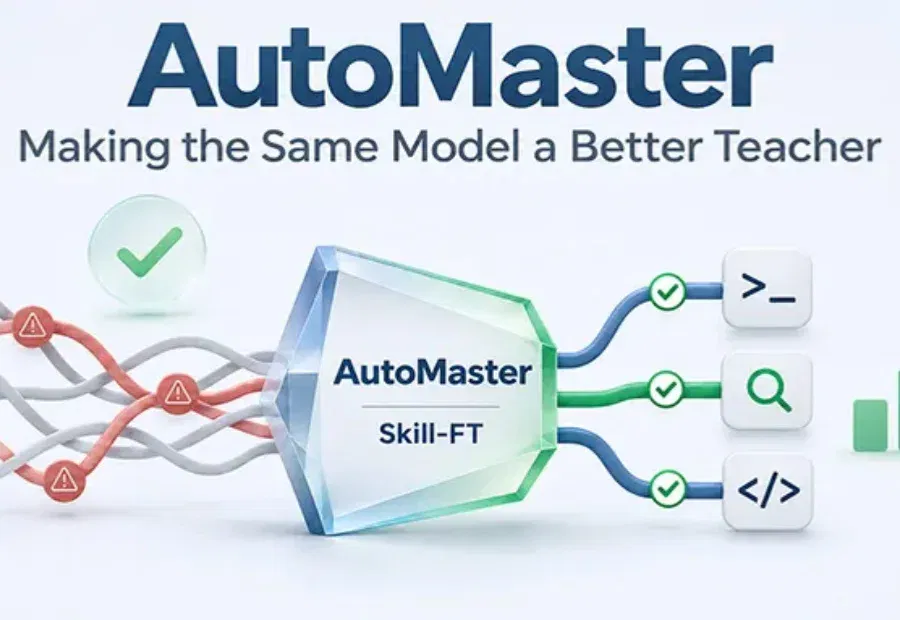
RUC introduces Skill-FT and AutoMaster. Across six settings with a fixed teacher, task pool, 512 selected trajectories per round and SFT recipe, gains over Vanilla SFT are 1.42–8.99 percentage points. Multiple rounds require extra sampling, training and evaluation.
WeChat open-sources WePocketModel, unifying representation, generation and decision with one backbone (opens in a new tab)
Tencent's WeChat team releases WePocketModel, sharing one backbone across representation, generation and decision. WePM-4B uses 61.9% less resident weight memory than the selected specialist stack. Its roughly 8GB is BF16 weights, not total runtime memory; demos use an M5 Mac.
PEEK cuts FID by 49.3% in a specified ImageNet-EDM diffusion-sampling experiment (opens in a new tab)
NUS’s training-free PEEK adjusts deterministic diffusion sampling with look-ahead predictions. At an equal denoising-call budget, one ImageNet-EDM experiment lowers FID from 19.71 to 9.99. Results and one-time search costs depend on the setup.