WeChat open-sources WePocketModel, unifying representation, generation and decision with one backbone
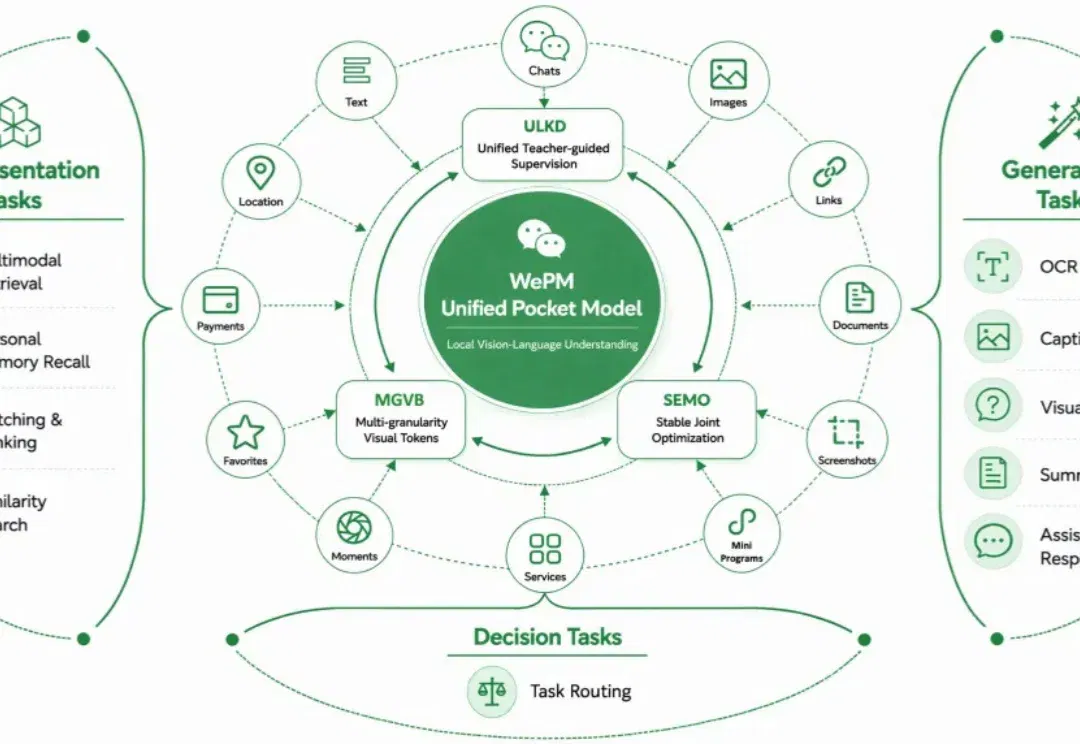
Tencent's WeChat team releases WePocketModel, sharing one backbone across representation, generation and decision. WePM-4B uses 61.9% less resident weight memory than the selected specialist stack. Its roughly 8GB is BF16 weights, not total runtime memory; demos use an M5 Mac.
Large models are growing more capable, but this has not made deploying and commercializing AI applications easier. On user devices in particular, products must deliver model quality while meeting constraints on memory usage, inference latency, and power consumption. One easily overlooked cost is model redundancy: when different tasks rely on separate specialist models, each model often includes its own backbone, creating additional parameter-storage, memory, and compute overhead.
- Paper title: WePM: Hierarchical Conflict Reconciliation for Unified MLLMs
- Paper: https://arxiv.org/abs/2611.27365
- Code repository: https://github.com/tencent/wepocketmodel
- Model collection: https://huggingface.co/collections/tencent/wepocketmodel
To address this problem, the WeChat research team recently proposed and open-sourced WePocketModel, or WePM, a unified model family exploring how to combine multiple on-device capabilities. WePM shares a single vision-language backbone across representation, generation, and decision tasks, supporting multiple capabilities with one core set of parameters. This reduces redundancy from deploying multiple models separately and lowers the deployment costs of on-device AI applications.
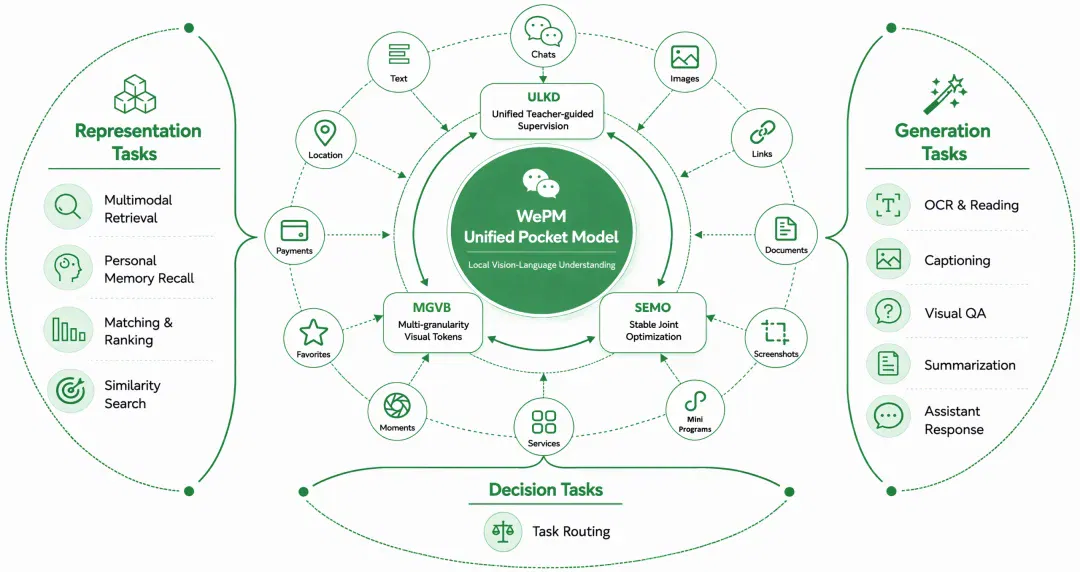
Figure 1 | WePM connects three capability pathways—representation, generation, and decision—through the same vision-language backbone.
From parameter count to capability density: How should a unified model's value be measured?
How much benefit can unified modeling actually deliver? Parameter count alone is not enough. For on-device applications, the more important question is how many useful, balanced capability families a limited amount of resident weight memory can support. With this in mind, the team proposes heterogeneous capability density, HCD:

A "capability family" is not the same as a benchmark count. For example, OCR and visual question answering both belong to generation and are not counted twice. Overall quality uses a harmonic mean to prevent strengths in one area from masking weaknesses elsewhere. A higher HCD means that the same resident weight memory can support more, stronger, and better-balanced capabilities.
From a shared backbone to coexisting capabilities: Reconciling three kinds of multitask conflict
HCD provides a measure for unified models, but simply combining multiple tasks in one model is not enough to improve it. Previous work has tried reusing a generative backbone to obtain retrieval embeddings through pooling or projection, unifying retrieval and generation. However, sharing parameters does not mean multiple capabilities will naturally coexist. The WeChat research team identifies three main conflicts in multitask unification:
- Different information granularities: Tasks focus on different scopes of information and levels of detail. Some depend on global semantics, while others require local attributes or fine-grained visual evidence.
- Different forms of supervision: Tasks have different learning objectives, and their supervision data is usually unpaired and difficult to translate directly from one form into another.
- Different optimization rhythms: Gradient magnitudes, loss weights, and training frequencies vary across tasks. One kind of task may dominate updates to shared parameters, squeezing out other capabilities.
The key to multitask unification is therefore more than sharing a backbone. It is reconciling different tasks' needs for representation, supervision, and optimization, so that improving one capability does not come at the expense of another.
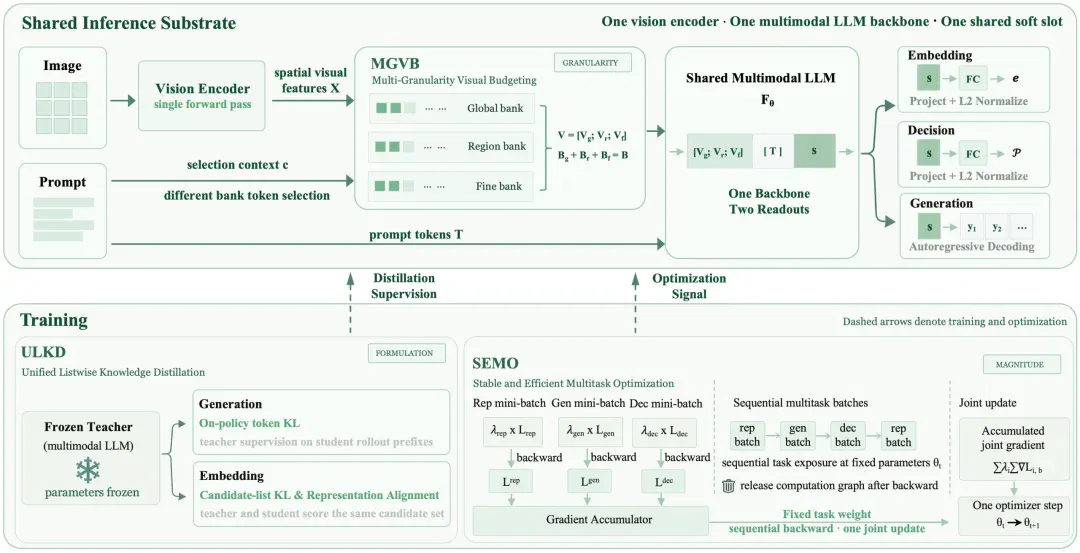
Figure 2 | WePM's technical architecture.
To address these three conflicts, WePM proposes MGVB, ULKD, and SEMO, respectively, coordinating multitask training at the levels of visual representation, supervised learning, and joint optimization.
- MGVB: Balancing global semantics and local detail. Within a fixed visual-token budget, it retains three types of visual information—global, regional, and fine-grained—and dynamically selects relevant evidence according to the question, description, or decision conditions.
- ULKD: Unifying preference distributions to connect heterogeneous supervision. Rather than forcing a single answer where annotations are missing, ULKD unifies token selection in generation and candidate ranking in retrieval as distribution-matching problems. The generation teacher provides next-token guidance along the student's own generated sequence trajectories, while the representation teacher conveys relative preferences among candidates and their vector representations. This lets the model absorb knowledge across tasks while retaining each task's original supervision, without constructing fully paired data.
- SEMO: Explicitly calibrating task contributions for efficient joint updates. SEMO separates task influence into two controllable factors, loss weight and exposure frequency, so that contributions to shared parameters follow a predefined capability trade-off rather than being dominated by loss scale or data volume. It also retains only one batch's computational graph at a time while keeping the gradient of the joint objective unchanged, substantially reducing training memory overhead.
One model, three uses: Evaluating WePM's overall performance
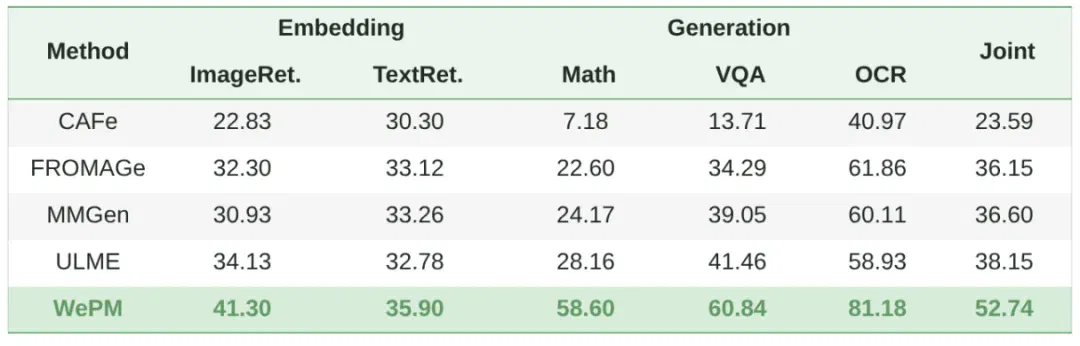
Table 1 | WePM substantially improves on previous state-of-the-art joint-training methods.
The team first uses the unified retrieval-generation benchmarks of prior work to enable direct comparisons. Evaluation covers five task groups: image retrieval, text retrieval, mathematical reasoning, visual question answering, and OCR. WePM leads the existing unified baselines in all five task groups, raising the Joint metric from 38.15 for the strongest previous baseline, ULME, to 52.74.
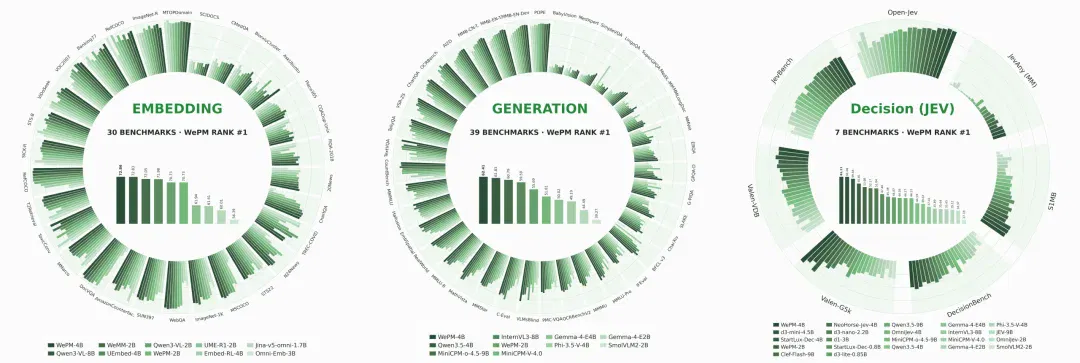
Figure 3 | Among the evaluated models of comparable size, WePM-4B ranks first in the average score for each of the three capability families.
The team further expands evaluation to all three capability families, covering 30 representation, 39 generation, and 7 decision benchmarks. Compared with models of a similar size, WePM-4B ranks first on the average score for each family, showing balanced and competitive overall performance. The results suggest that sharing parameters need not sacrifice a capability: the same model can support representation, generation, and decision together.
From multiple models to a unified model: The joint trade-off between capabilities and memory
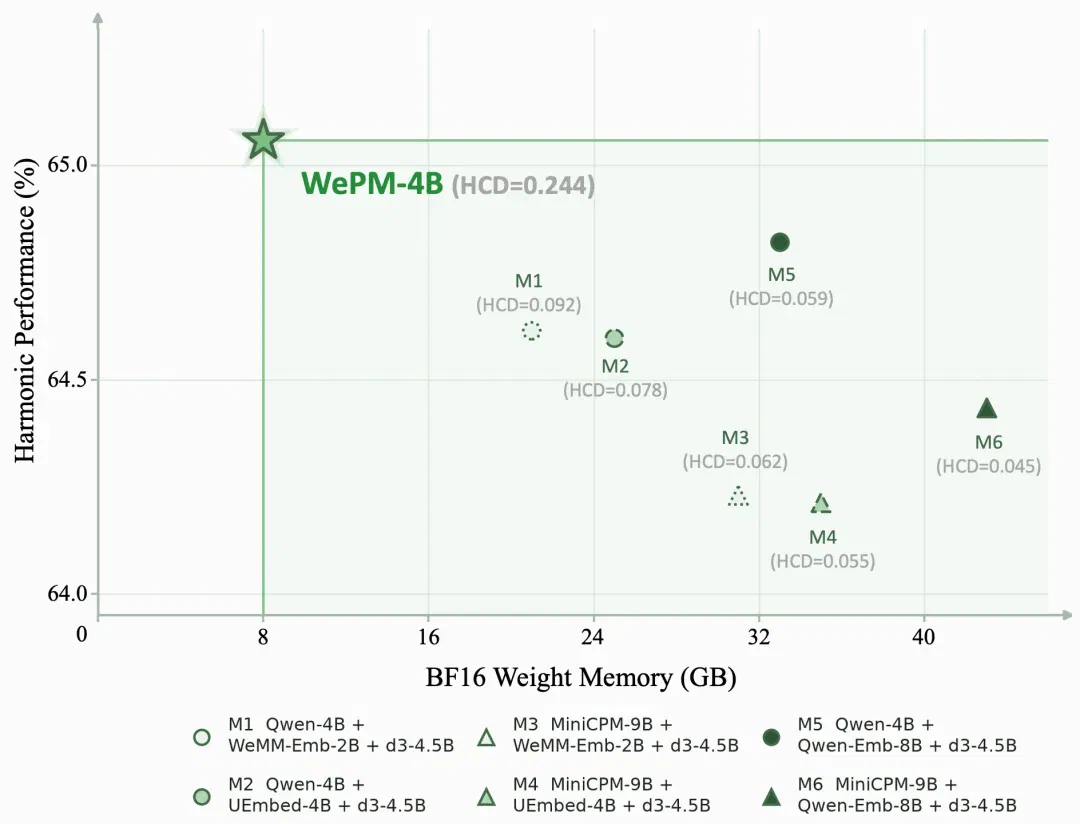
Figure 4 | Quality–memory trade-off for WePM-4B versus separate "generation + representation + decision" model combinations
Beyond capability performance, another key benefit of a unified model is reducing the memory overhead of deploying multiple models separately. To examine this, the team constructs six specialist-model combinations, each containing a generation model, a representation model, and a decision model. At BF16 precision, these combinations require 21–43 GB of resident weights, with harmonic-mean scores across the three capabilities of 64.21–64.82. By contrast, WePM-4B supports all three with a single set of weights of approximately 8 GB, achieving a harmonic-mean score of 65.06. Compared with the specialist combination with the highest HCD, WePM-4B reduces resident weight memory by 61.9% and raises HCD to 2.64 times that combination's level. This means WePM substantially lowers memory costs while retaining slightly higher overall quality across the three capabilities than the specialist-model combinations.
From experiments to real scenarios: Exploring local applications of a unified model
How do these capability and memory benefits translate into applications? The team built two entirely local demonstrations on a Mac with an M5 chip, showing how the same WePM-4B can jointly support retrieval, generation, and decision.
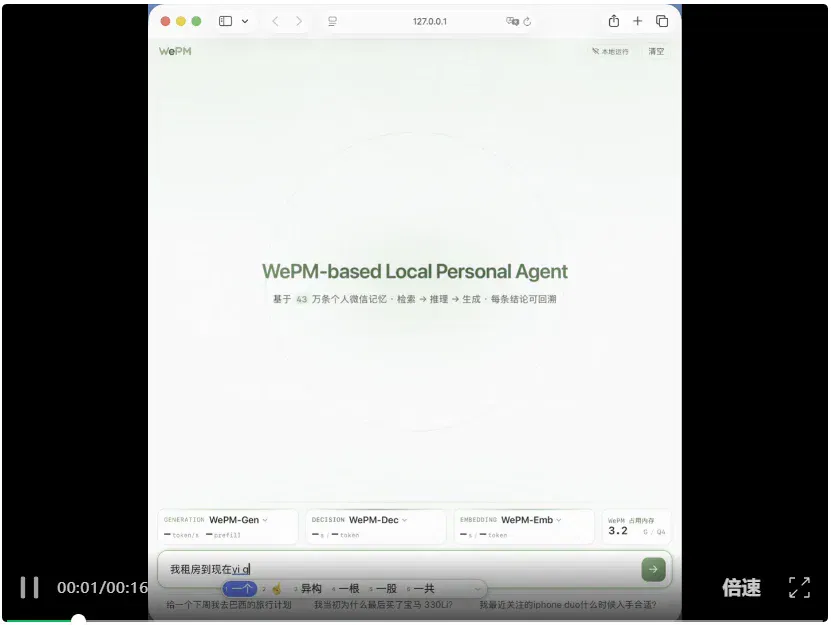
Video 1 | Personal Agent demonstration
Personal Agent: A local intelligent assistant for personal data. WePM retrieves local content, generates responses using personal information, and determines the subsequent workflow, completing the full "find–understand–respond–decide" chain on the device. Personal images, text, and interaction information do not need to be uploaded to the cloud.
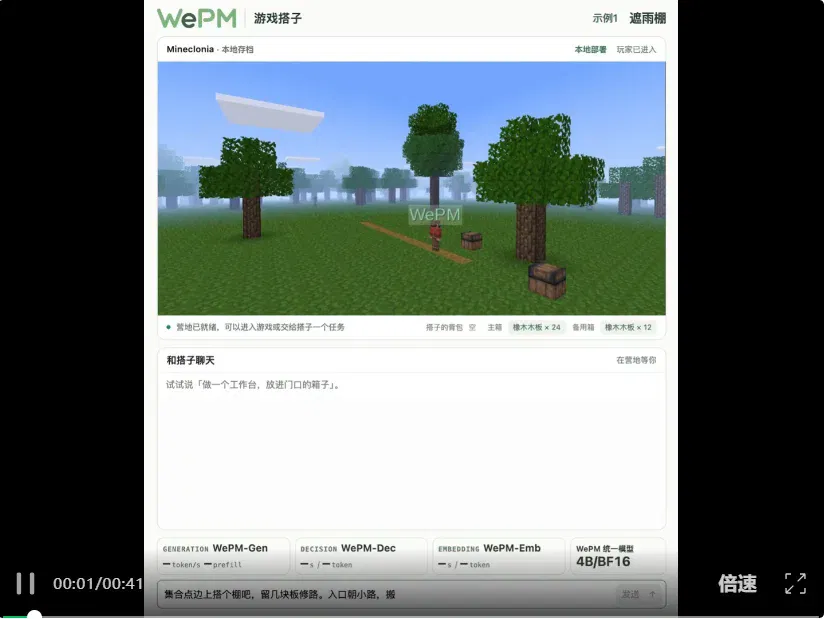
Video 2 | Game Assistant demonstration
Game Assistant: A context-aware intelligent assistant for game tasks. When a player asks it to "make a crafting table and put it in the chest by the entrance," the assistant must understand the current scene, check items in the inventory and chest to determine whether there are enough materials, and decide the next action. Information retrieval, conversational responses, and state-based decisions throughout are supported by the same WePM.
These two examples demonstrate more than one model's ability to perform different tasks: retrieval, generation, and decision can work together within the same application workflow. From a personal assistant to a game assistant, different scenarios can reuse the same core parameters without separately deploying specialist models for the three capability families.
Unifying capabilities, multiplying applications
WePM explores more than making models smaller: it seeks to support more useful capabilities within limited resident weight memory. Performance evaluations, capability-density comparisons, and local application examples together demonstrate the potential of unified on-device modeling. The team has released WePM models of different sizes, giving developers more flexible deployment options. These efforts share one goal: enabling on-device AI not merely to "fit," but to sustain genuinely useful applications with limited resources.
About the authors and team
The research comes from Tencent's WeChat Pattern Recognition Team. The team has long focused on in-app, on-device intelligence, working to transform AI from a cloud service into an application's own capability and reshape application interaction and user experience. Its research has appeared in leading venues including CVPR, ACL, and Nature portfolio journals, and it has received best paper awards at top conferences multiple times.
This article is from "Synced," by the "Tencent WeChat Pattern Recognition Team."
Related topics
After reading
Join the AINRK community
Read how to join the community and connect with people working in AI.
Related articles
Continue reading related topics and articles in this category.
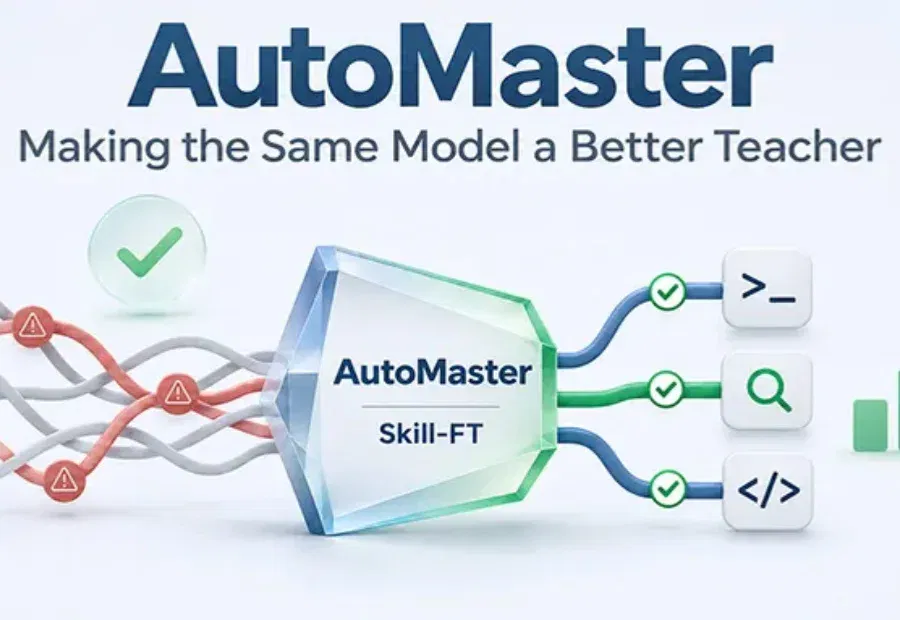
RUC open-sources AutoMaster: Skill guidance and trajectory selection for agent post-training (opens in a new tab)
RUC introduces Skill-FT and AutoMaster. Across six settings with a fixed teacher, task pool, 512 selected trajectories per round and SFT recipe, gains over Vanilla SFT are 1.42–8.99 percentage points. Multiple rounds require extra sampling, training and evaluation.
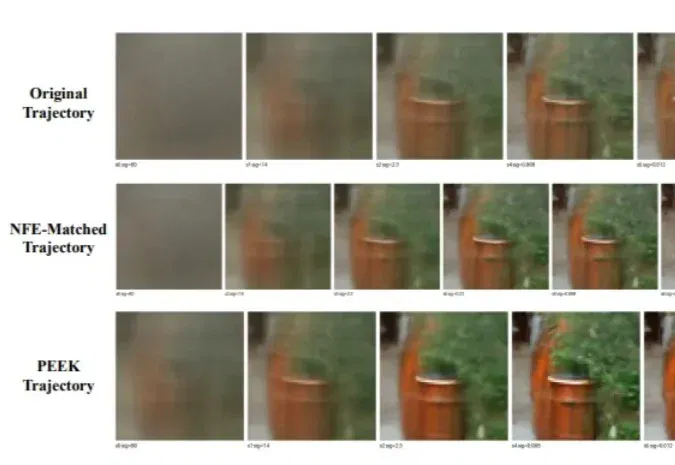
PEEK cuts FID by 49.3% in a specified ImageNet-EDM diffusion-sampling experiment (opens in a new tab)
NUS’s training-free PEEK adjusts deterministic diffusion sampling with look-ahead predictions. At an equal denoising-call budget, one ImageNet-EDM experiment lowers FID from 19.71 to 9.99. Results and one-time search costs depend on the setup.
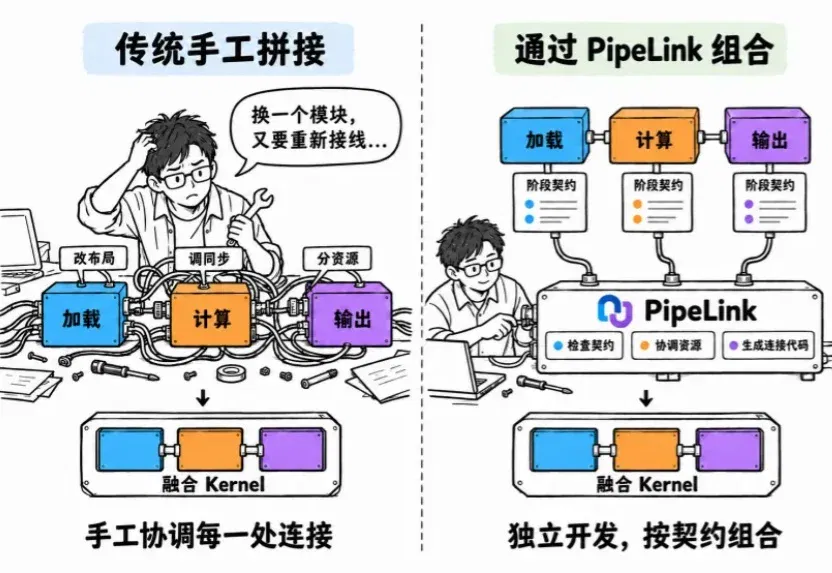
Peking University Open-Sources PipeLink to Make GPU Kernel Optimizations Reusable (opens in a new tab)
Peking University's PipeLink declares interfaces, synchronization and resource needs for GPU stages, checks contracts and links stages into fused kernels. Examples span toolchains, attention variants and communication-compute fusion; gains depend on components, workloads and hardware.
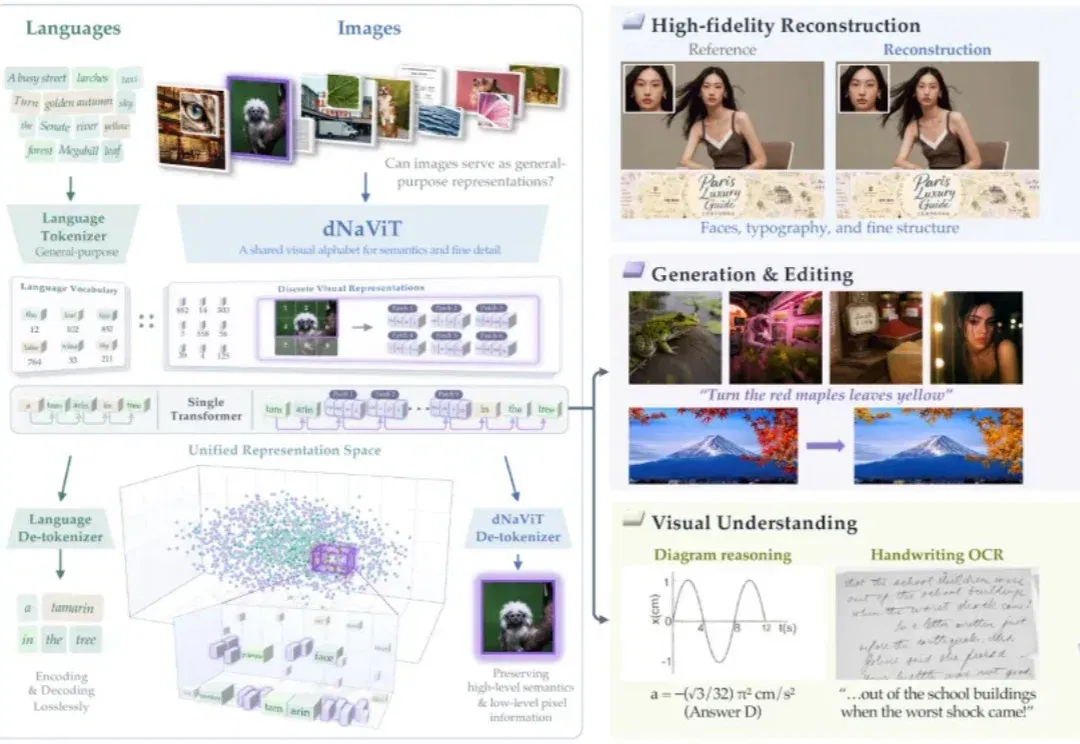
Can Discrete Codes Become a General Visual Representation? Meituan LongCat Open-Sources dNaViT (opens in a new tab)
Meituan LongCat's dNaViT combines a frozen visual encoder, residual modulation and grouped quantization to retain semantics and pixel detail. The team reports reconstruction, understanding, generation and editing through one encoding interface, with task-specific models and decoding branches.
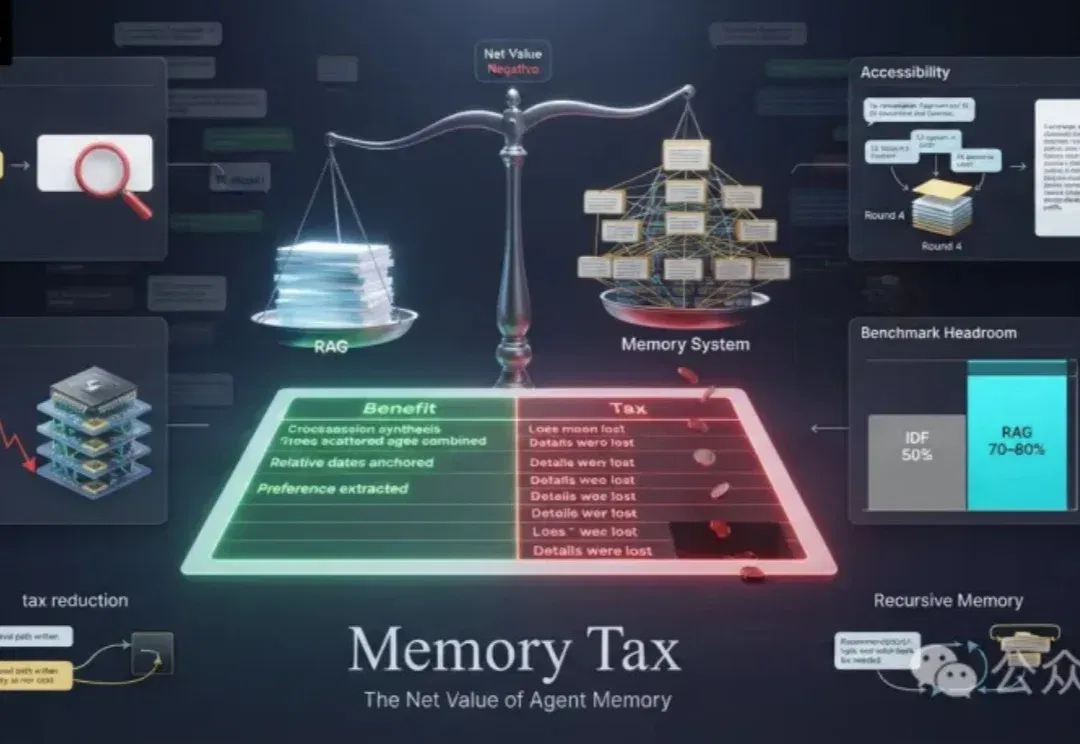
Memory Tax study compares 11 agent-memory systems with naive RAG on net value (opens in a new tab)
Researchers compare 11 memory systems with naive RAG across three main benchmarks and three backbone models. Benefits and memory tax depend on configuration, retrieval scope and tasks; the findings do not imply long-term memory is universally useless.