Nuance Labs unveils Nuplex audiovisual model; education involving minors is outside the Beta
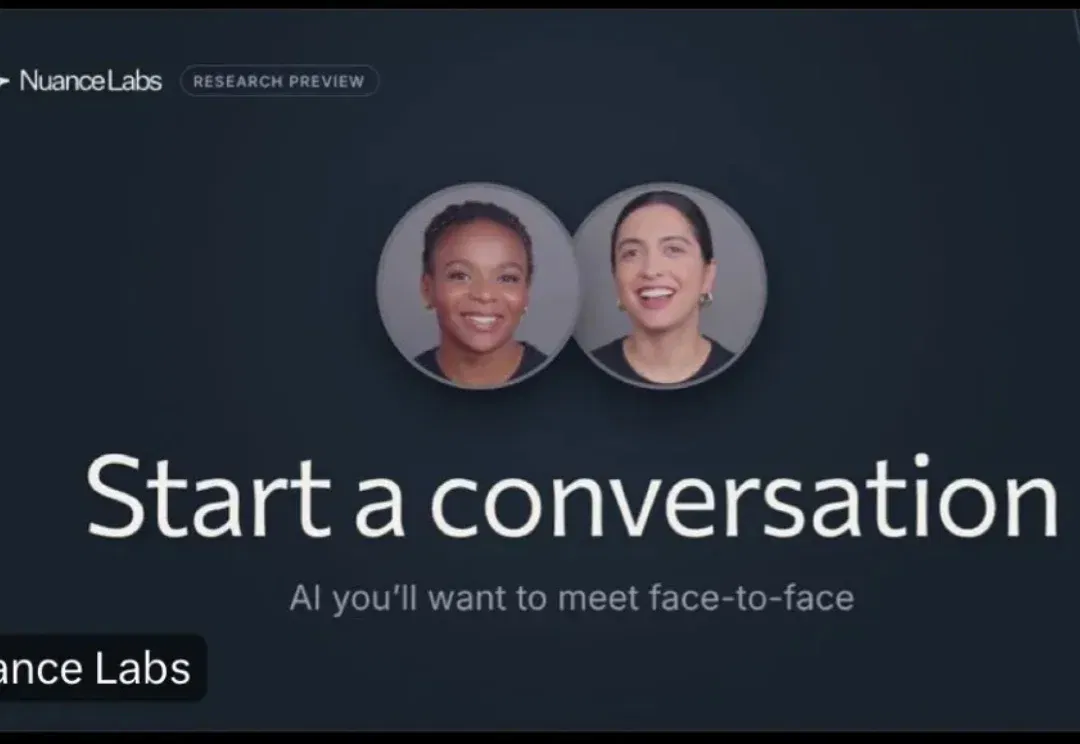
Nuance Labs, with $60 million raised, unveiled Nuplex 1.0, Emma and a Beta API on November 9. Duozhi tried its English conversations; educational uses remain prospective. The Beta is restricted to adults in supported regions and excludes minors' education and healthcare.
The educational, tutoring and classroom-observation scenarios in this article are potential applications. Natural expressions, conversation duration and the reported experience do not establish learning outcomes or accurate judgments of students' mental states. Nuance Labs' official November 9 explanation states that Emma and the Nuplex Beta API are currently for users aged 18 and over only. Healthcare and any uses involving minors, including education, are outside the Beta's scope, and regional restrictions also apply. These limits should be distinguished from possible future exploration of the education market. The 500-millisecond figure and two-week usage totals retain the original report's or company's framing; this article did not independently repeat them under a common test protocol. The official November 9 announcement names Emma as the first persona and does not confirm a same-day debut for Nora. The full-duplex audiovisual model still works with a language model; not every function is independently performed by the same network. Official announcement, usage restrictions and FAQ (opens in a new tab).
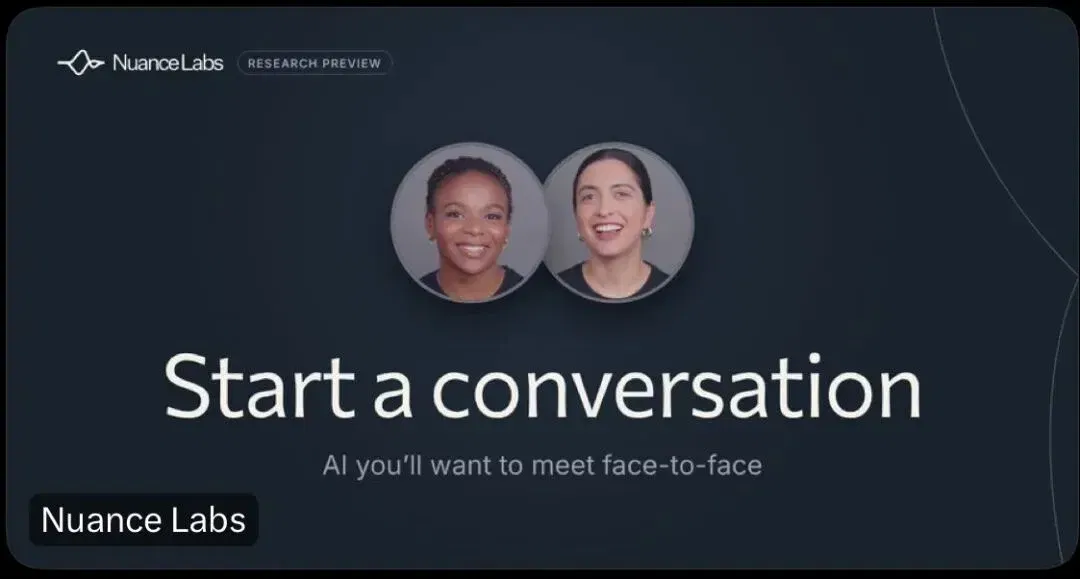
Letting AI listen, understand and respond at the same time.
In spring 2025, three engineers of Chinese heritage with doctoral backgrounds and years of research experience at Apple decided to leave and start a company called Nuance Labs. They set up their office in Seattle, in the United States. The team was small: by autumn 2026, it still numbered only twenty-something people. In less than two years after its founding, this small team raised a cumulative $60 million.
This September, Nuance Labs secured a $50 million Series A led by existing investor Lightspeed Venture Partners. Other investors included NVIDIA, Accel, South Park Commons and Define Ventures.
On November 9, Nuance Labs officially introduced its full-duplex audiovisual foundation model Nuplex 1.0 and its first persona, Emma, and opened a Beta API. This article also introduces Nora, but has not independently confirmed the date of her first public appearance, so it does not treat both personas as having debuted on the same day.
Nuplex 1.0 is positioned as giving AI underlying capabilities closer to how humans communicate. Rather than pursuing the fastest possible response, it seeks to time its responses to the rhythm of real conversation. For instance, when the AI talks to you, it is actually "looking" at you.
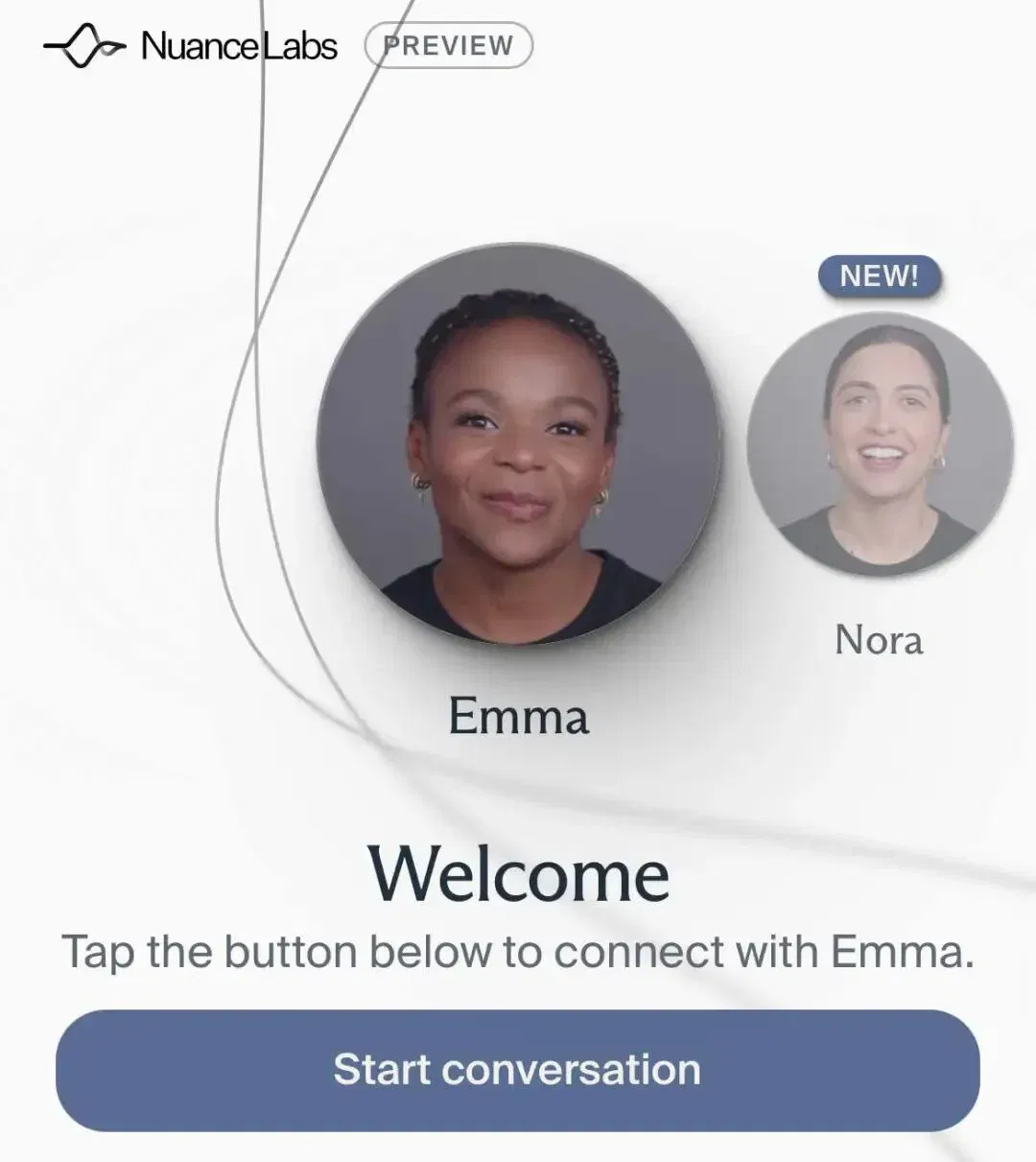
Emma and Nora are two personas made public in succession, with both their likenesses and voices licensed from real people. They currently support English only. More licensed personas are reportedly being added.
According to Nuance Labs, opening previews of Emma and Nora generated more than 100,000 hours of face-to-face conversation and over one million conversations in two weeks, "far exceeding expectations."
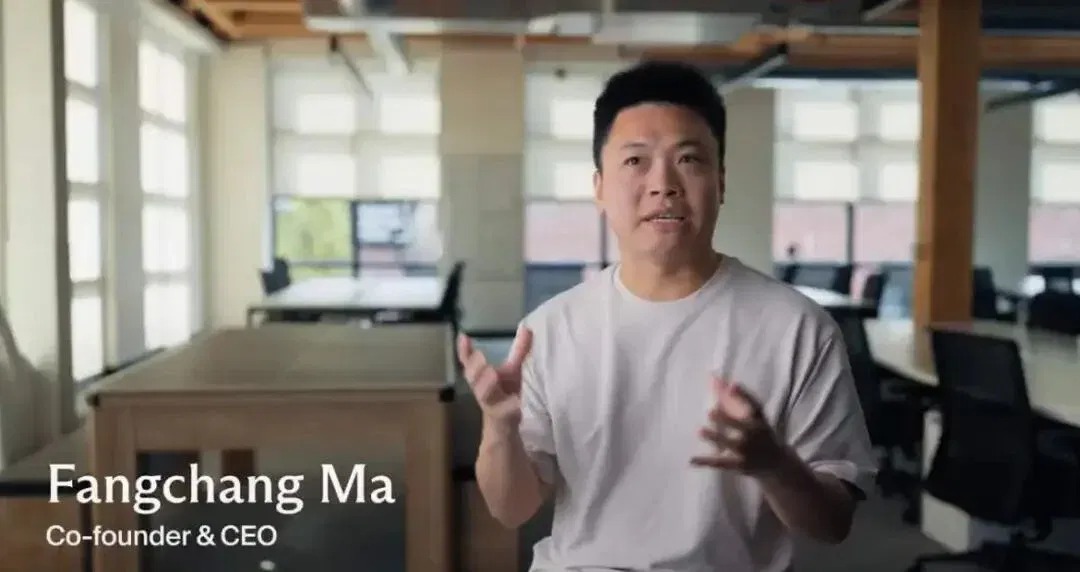
When announcing the Series A, Nuance Labs CEO Fangchang Ma listed use cases including sales and customer service, coaching, vocational training and education.
In education, it could potentially reproduce part of a real teacher's scarcest capability: sustained attention. By picking up on students' microexpressions and tone, it might perceive confusion or distraction and dynamically adjust the pace of teaching.
01 Three former Apple researchers target the human touch in AI communication
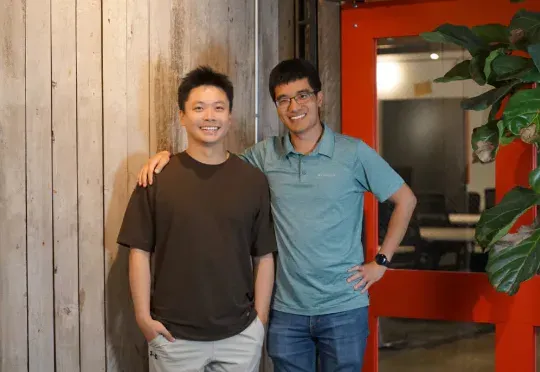
Nuance Labs' three co-founders all have doctoral research backgrounds and previously worked at Apple on areas including machine perception, graphics and audiovisual generation.
Co-founder and CEO Fangchang Ma holds a PhD in robotics and machine learning from MIT. He previously worked as an engineering manager at Apple, participating in research on neural rendering, 3D reconstruction and generative AI.
Co-founder and CTO Edward Zhang holds a PhD in computer graphics from the University of Washington. Previously a senior research scientist at Apple, he works on computer vision, graphics and digital humans.
Co-founder and Chief Scientist Karren Yang holds a PhD from MIT, focuses on audiovisual synthesis, and previously conducted related research at Apple.
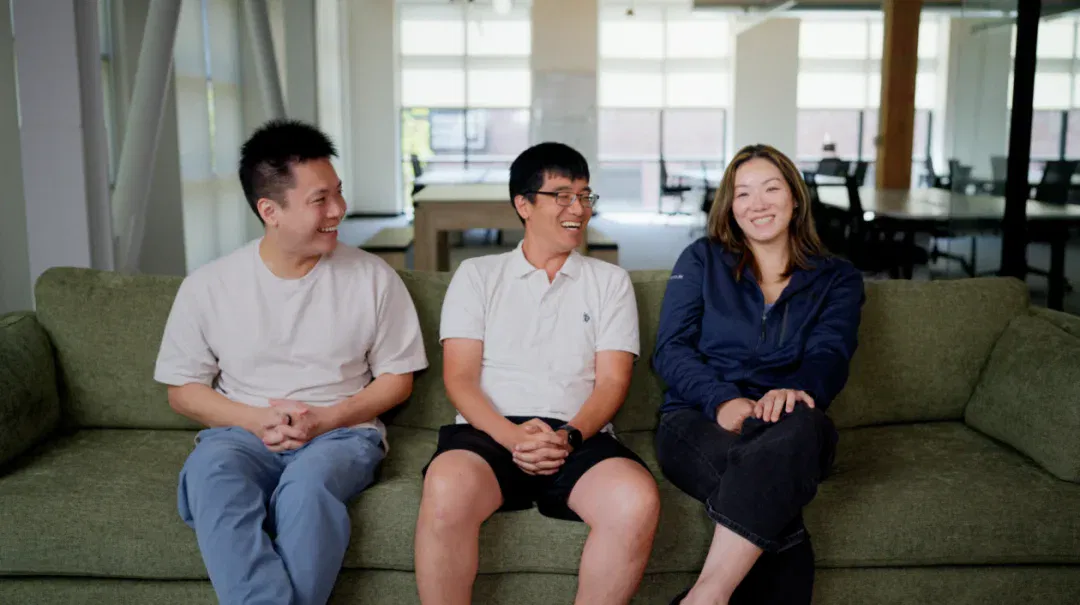
The three crossed paths at Apple. They had participated in research related to Apple Vision Pro, including technical areas such as the digital Persona.
That experience also shaped Nuance Labs' direction as a startup.
Apple Vision Pro's Persona feature seeks to reconstruct a user's face through cameras and related algorithms, giving the person at the other end of a remote conversation a digital representation resembling a real person. But a realistic digital appearance does not mean natural communication. A character can have lifelike facial features, skin and facial details while still displaying stiff expressions, slow reactions or an unnatural gaze.
This is precisely the problem Nuance Labs wants to address further.
In the founding team's view, existing AI digital-human products generally follow a modular pipeline: first convert the user's speech to text, then pass it to a large language model to generate an answer, produce audio through speech synthesis, and finally animate the virtual character's lip movements and expressions.
This pipeline can handle basic questions and answers, but each stage must process and transmit information, making delays more likely. More importantly, much of the information exchanged between people is not contained in words.
A speaker's tone, gaze, pauses and expressions, along with nods and responses while listening to the other person, all affect communication. Nuance Labs hopes to put these capabilities into one model.
02 Letting AI listen, understand and respond at the same time
According to its introduction, Nuance Labs' central technical direction is a Full-Duplex audiovisual interaction model.
When a user asks an AI virtual character a question, the system typically goes through multiple steps: speech recognition, language understanding, content generation, speech synthesis and character animation.
The problem with this architecture is that the AI often has to wait for the user to finish speaking before it can begin putting together a response. Even after generating speech, it may not simultaneously produce natural facial expressions and bodily reactions.
Nuance Labs wants to change this mode of interaction.
Nuance Labs uses Nuplex 1.0 to integrate real-time audiovisual perception and expression, working with a language model to handle conversation. The website's FAQ explicitly says Nuplex can work with language models; in the current Beta, the company supplies its language model. The company positions this direction as a Human Foundation Model for human communication and expression. That does not mean every function is independently performed by a single network.
According to the company's technical explanation, the model learns patterns of human behavior in real interactions and generates continuous interactive feedback by predicting subsequent audio and visual information. It aims to combine natural conversational rhythm, expression and voice, reducing the delays and lack of coordination that come from stitching several models together.
The company's website treats 500 milliseconds as an important latency target for real-time conversation, and lists active listening, natural expression and smooth interaction as core technical directions.
The significance of this approach is that AI interaction could move beyond its previous emphasis on text and voice toward multimodal interaction closer to face-to-face conversation with a real person.
03 Have AI teachers really arrived?
Education is among the potential applications Nuance Labs has announced.
In terms of technical capabilities, there are indeed some points of connection between the company and education, especially settings requiring sustained interaction, such as language learning, speaking practice, interview coaching, public-speaking practice and personalized tutoring.
First, language learning.
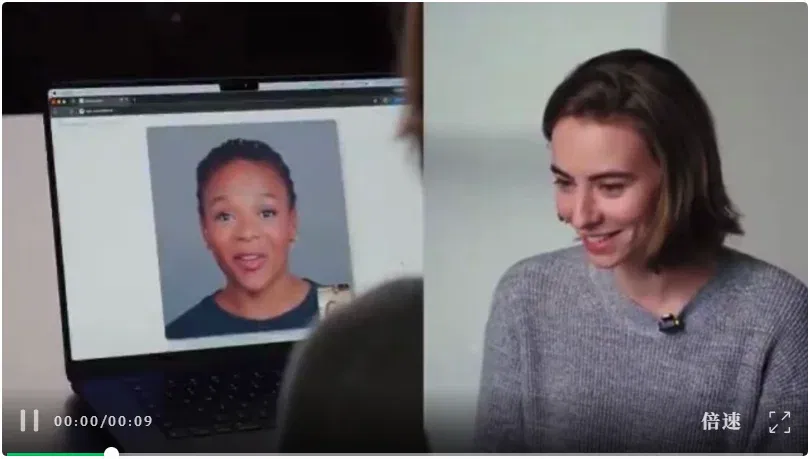
(Emma video)
If Nuance Labs' model can deliver real-time audiovisual interaction, language-learning products would have an opportunity to become more like conversations with real people.
Duozhi tried English conversation with Nuance Labs' persona Emma. The immediate impression was that it was better suited to learners with stronger language skills. Users can make video or voice calls with Emma, who can respond promptly to the pace of their speech. When users pause, hesitate or repeatedly use the same sentence pattern, the AI can ask a follow-up question, offer a prompt or adjust the conversation's difficulty at an appropriate moment.
During video calls, Emma nods and smiles, and also makes movements conveying confusion or surprise.
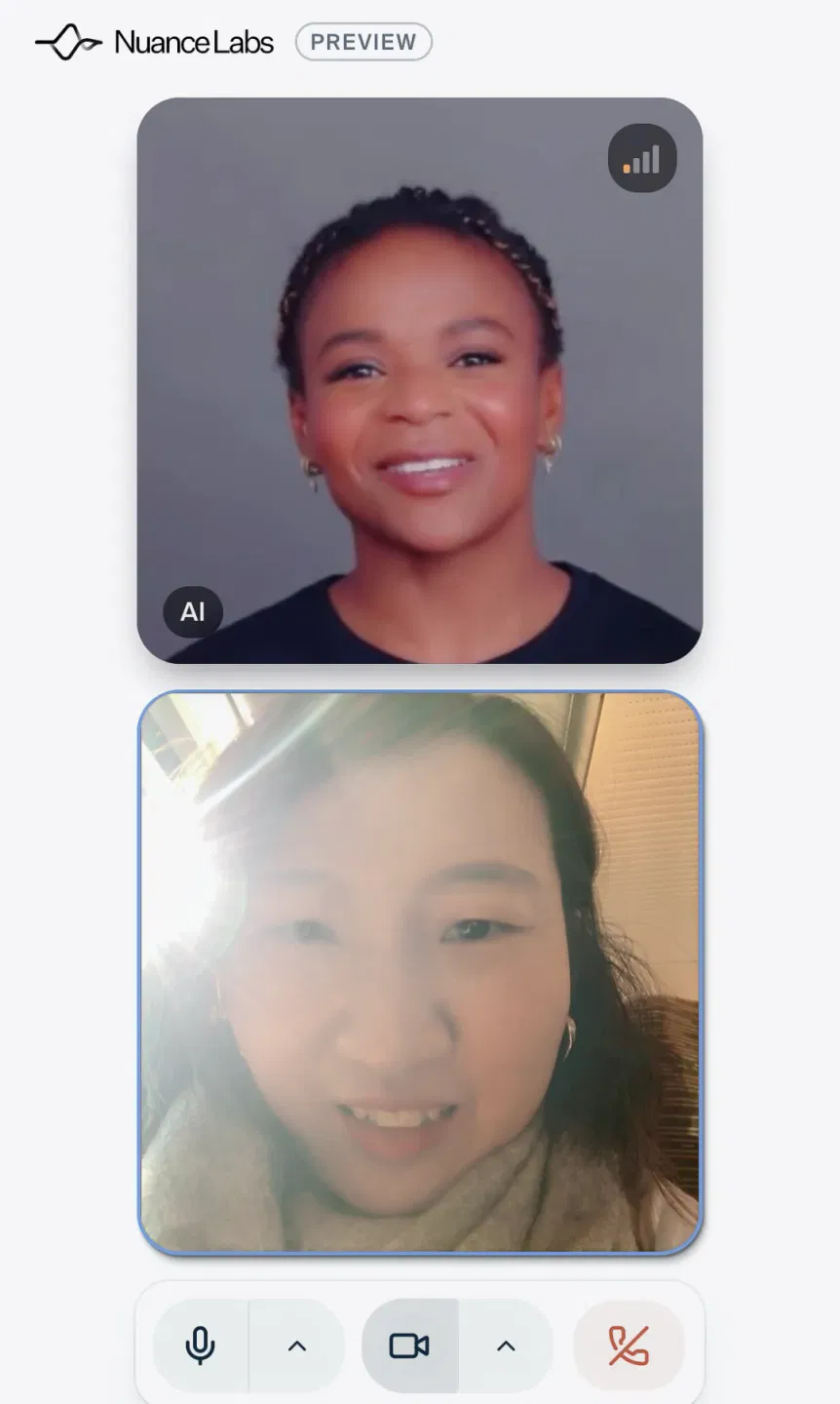
After the conversation, a short video can also be generated to help users review what was discussed.
Second, public-speaking and communication training.
For users, developing public-speaking skills is difficult through written feedback alone.
With audiovisual interaction, AI could act as an interviewer, a speech audience or someone asking questions in a classroom, allowing students to practice in simulations. As students answer questions, the AI could react in real time, then provide feedback drawing on both audio and video after the training ends.
Such applications could extend to vocational education and teacher training. For example, student teachers could use AI to simulate classroom teaching, practicing how to ask questions, respond to students and organize classroom interaction. People new to the workplace could use AI for interview and presentation practice.
AI teachers deserve even closer attention.
There is currently no clear definition of an AI teacher, and many products fall into this category. Many have a teacher-like or cartoon-character appearance, but their interactive experiences vary considerably.
One of a good teacher's most important capabilities is continuously reading students' states during a lesson: who understands, who is distracted, and who has a question but is afraid to speak. Large classes cannot provide this. Much of the expense of one-to-one tutoring pays for precisely this sustained attention.
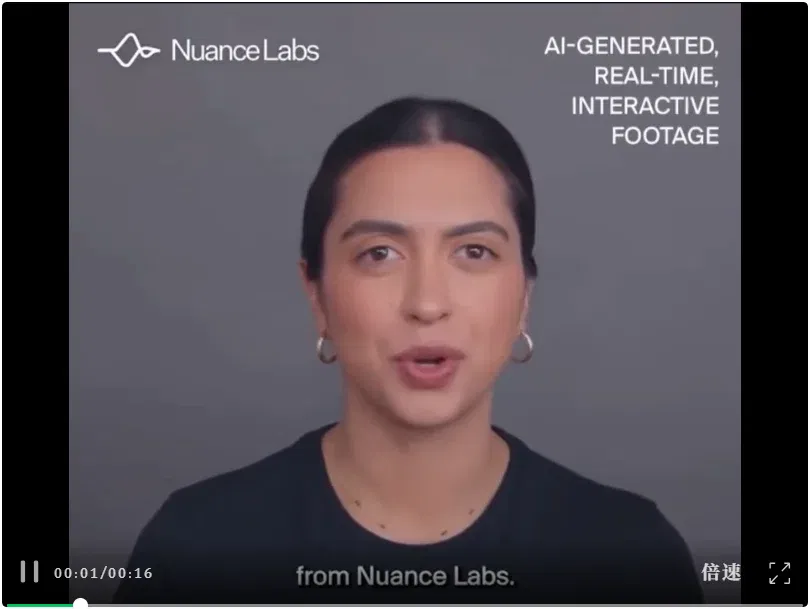
(Nora video)
If Nuance Labs' model can keep approaching human levels of real-time responsiveness, it could theoretically take on part of this observer role. While an AI teacher explains a topic, it could use speech or facial-expression feedback to maintain the conversational rhythm. When students struggle to express themselves clearly, it could also guide them to reorganize their wording.
Nuance Labs reportedly has a team of about 27 people. Its Series A funding is mainly being used for model research and development, expanding the research and engineering teams, and advancing the public research preview.
According to the website, Emma can be previewed without registration, but is currently available only to users aged 18 and over in officially supported regions. Educational uses involving minors and healthcare are outside the Beta's scope. In the original report's experience, each conversation lasted up to 15 minutes and the number of free calls was also limited. No registration does not mean there are no restrictions on use or region.
Nuance Labs is still at an early stage of commercializing its product. The company plans to make its capabilities available to outside developers through its models and API, enabling other businesses to integrate real-time audiovisual interaction into their own products.
This means its future competitors could include not only traditional digital-human companies, but also major technology companies working on voice interaction, AI agents and multimodal models.
If Nuance Labs can work toward further resolving the challenges of real-time perception, natural expression and sustained interaction, industries requiring frequent interpersonal communication, such as education, training and customer service, could all become potential markets.
But for education, as AI gains increasingly lifelike expressive abilities, can it actually help students learn better? That question remains unanswered.
Official website: https://home.nuancelabs.ai/
This article is from Duozhi, by Wang Shang.
Related topics
After reading
Join the AINRK community
Read how to join the community and connect with people working in AI.
Related articles
Continue reading related topics and articles in this category.
不只是聊天机器人:华人团队打造会"察言观色"的情感AI助手 (opens in a new tab)
你有没有想过,为什么即使今天的 AI 已经能写代码、分析数据、回答复杂问题,但当你和它们对话时,总感觉缺了点什么?那种微妙的不舒适感,就像看着一个技术完美但缺乏灵魂的机器人在表演人类。这不是像素质量的问题,也不是语言能力的缺陷,而是一个更根本的缺失:情感智能。
Inside Peekie's Interactive Stories: Investigate a Virtual Phone and Chat with AI Characters (opens in a new tab)
Peekie offers two modes on fictional phones: Cases asks players to compare clues, while Lives allows free-text interaction with AI characters. The report also looks at the team's PopPark community and discusses agreeable characters, secrets revealed too soon, and choices about long-term memory.
How AI Is Changing Cyber Offense and Defense: Faster Discovery, but Cost and Process Still Slow Fixes (opens in a new tab)
LatePost interviews hackers and researchers on AI-assisted attacks and defense. Earnings and attack times remain interview claims; official disclosures qualify Binance and Fireworks timelines. Fixes still require human judgment and organizational support.
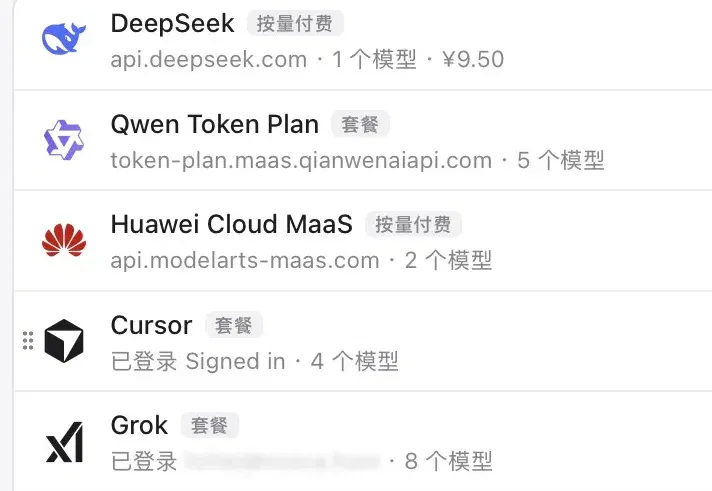
My Workflow Update: Magpie for Models, Cindy for Multiple Computers, T3 Code for Development (opens in a new tab)
The author revisits a workflow: Magpie brings together 7 channels and 23 models, Cindy links computers through group chats and remote desktop, and T3 Code handles development. Grok Bot and Alma are set aside; Orca stays. This does not mean every service works offline or all data stays local.

OpenAI Releases Nine Math Manuscripts on Matrix Multiplication and Strongly Polynomial Programming (opens in a new tab)
OpenAI added nine manuscripts in two families on November 24, claiming a 9/4 matrix multiplication exponent and strongly polynomial linear programming. Lean formalizes selected results; the repository treats the work as raw research data rather than completed academic review.