Dario’s early “immersive games” idea draws criticism; media accounts are distinct from company policy

The article revisits media accounts of Dario’s early OpenAI discussions and critiques his views on AI jobs, safety and Anthropic’s culture. The idea is not current company policy; online speculation about his health lacks reliable evidence.
Editorial fact-check (November 24, 2026): The remarks about games in this article are media accounts of an early internal discussion, not Anthropic’s current policy. Assessments of motives and company culture are the author’s commentary. Online speculation about an individual’s health lacks reliable confirmation, and this article does not make medical diagnoses from rumors or videos. The risk percentages are likewise early subjective judgments, not objective measurements.
Not long after Anthropic’s IPO, an old “outrageous take” by its CEO, Dario Amodei, resurfaced.
What if AI puts people out of work?
Then have them play immersive video games to prevent mass unrest!
Today, a number of foreign media outlets reported on these earlier remarks by Dario.
Publicly, Anthropic presents itself as a company that emphasizes “ethics, safety and human well-being.”
But could its actual attitude toward ordinary people really be this arrogant?
A “games for social stability” remark sparks online outrage
On November 22, foreign media reported that, during his early years at OpenAI, Dario had a heated debate with colleagues in an internal Slack chat.
The executives were discussing a very real question: if AGI became a reality, took over all human jobs and put tens of millions of ordinary people out of work, causing enormous social upheaval and conflict, how would they deal with the consequences?
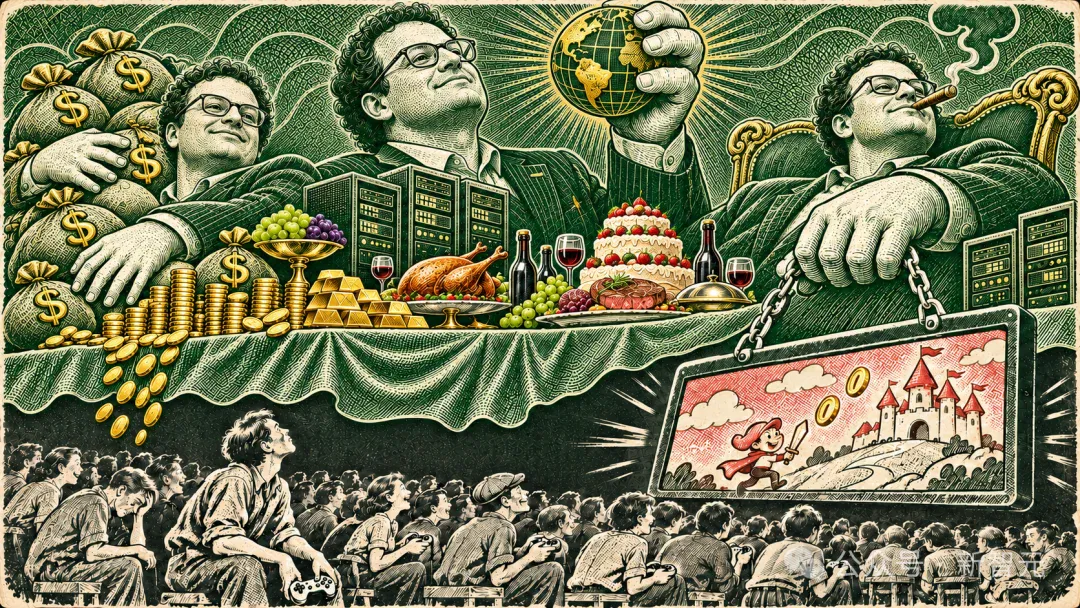
According to that account, Dario’s brilliant solution in the chat was: wouldn’t using “immersive video games” to placate these unemployed people solve the problem?
Once the remarks emerged, the reaction online was explosive.
The Verge condemned the idea as “dystopian.”
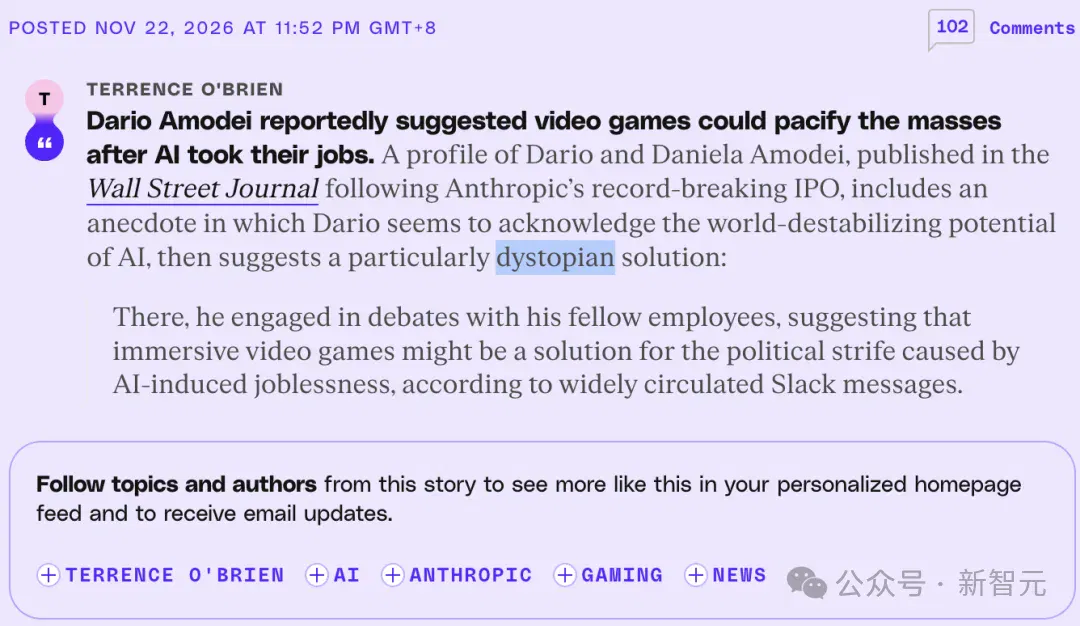
The prominent American technology outlet The Verge was unsparing in calling it a “dystopian solution.”
Countless commenters mocked it as the ultimate version of entertainment used to pacify the masses.

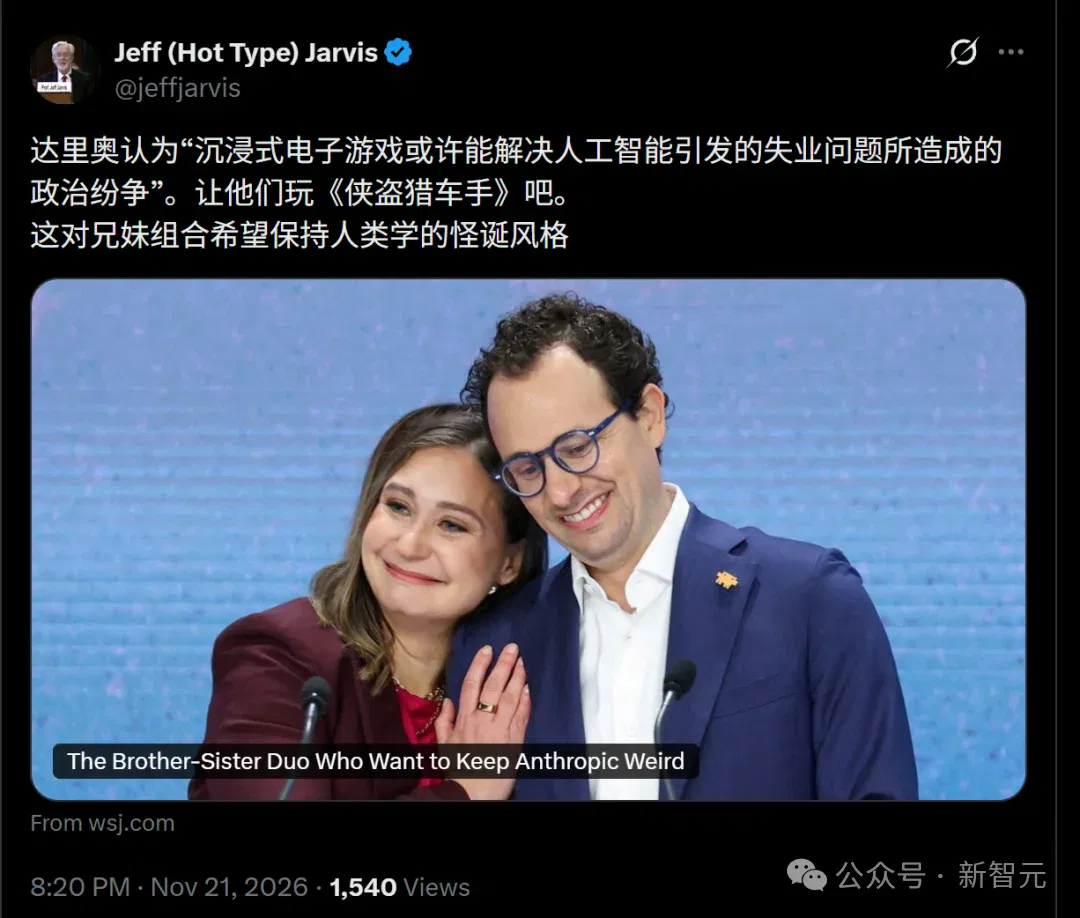
Admittedly, the incident occurred when Dario was still at OpenAI, and has been explained as “merely a creative idea in an internal discussion, rather than official policy.”
What the author finds chilling, however, is the belief that this is how Silicon Valley’s inner elite really thinks.
Dario himself has publicly predicted that AI could push US unemployment to 10%–20%.
When machines take over their work, people lose more than a paycheck: they also lose the structure of everyday life, social connections and a sense of meaning.
The author’s accusation is that, at a subconscious level, Dario sees no need to create a new system of meaning for humanity, preferring to pen everyone in with an opiate for the mind.
In this critique, it is a real-world version of The Matrix: they are the creators, while ordinary people are merely batteries lying in nutrient pods, dreaming.

An interview question: “Are you ready to join a cult?”
If you think Dario only makes startling remarks occasionally, the author argues that you are badly mistaken.
According to reported accounts, the internal culture of Anthropic, the company he founded, is extremely “strange.”
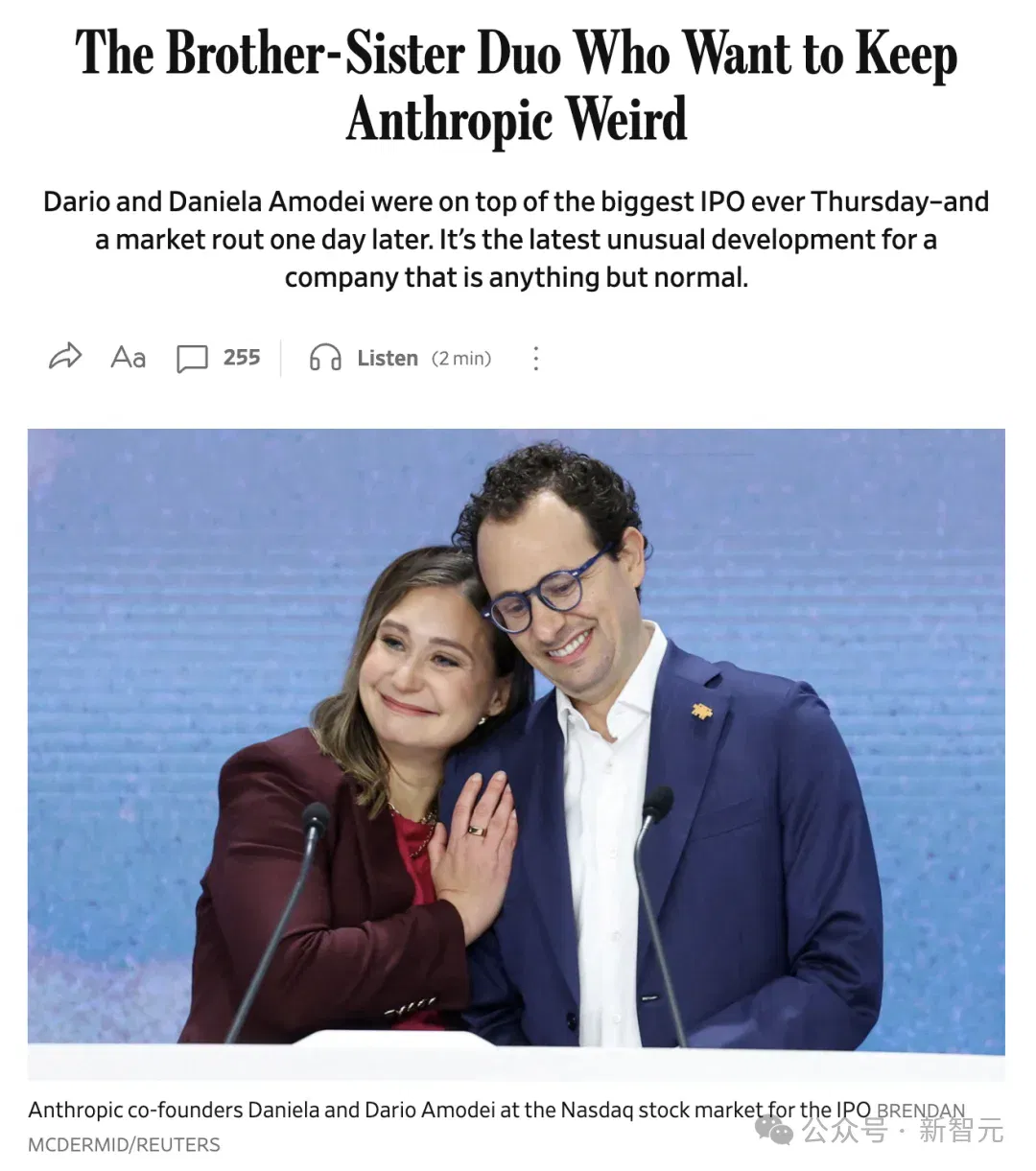
In Silicon Valley, Anthropic has long cultivated a pristine image: the moral exemplar of AI, a group of “heretics” who resolutely left OpenAI to stop AI from destroying humanity.
Yet the author finds Dario’s behavior extraordinarily odd.
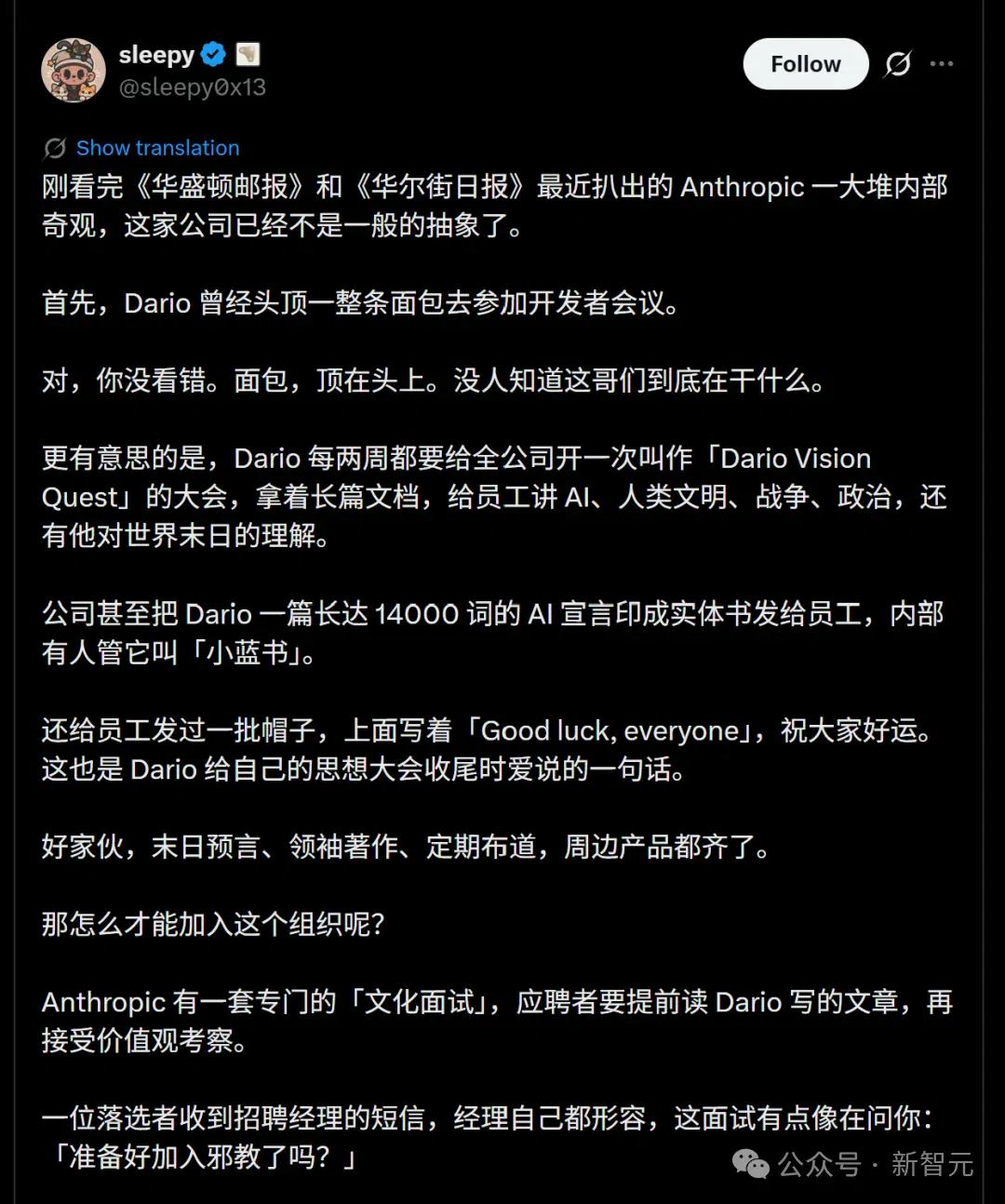
He once attended a developer conference with an entire loaf of bread on his head.
Compared with what follows, however, that was the most normal incident of all.
Online claims about Dario’s personal health lack reliable confirmation; this article makes no medical diagnosis.
Following Anthropic’s recent IPO, a video purportedly filmed in Italy prompted discussion. However, a video cannot be used to assess an individual’s mental health.
According to accounts from former colleagues, Dario was already notably rigid in his approach when he was vice president of research at OpenAI. He believed that if AI developed too quickly, there was a 20%–30% chance it would destroy humanity, making it more dangerous than nuclear weapons.
To prevent what he called “information hazards,” those accounts say, he would even buy physically air-gapped computers and printers to write articles, fearing that a small leak could put a “nuclear-bomb recipe” in terrorists’ hands and destroy the world.
The author characterizes this as a deeply ingrained “savior complex.”
Job candidates were reportedly required to read Dario’s lengthy writings in advance, with joining the company likened to “joining a cult”—
In a text message, one recruiting manager even half-jokingly asked an unsuccessful candidate: “Are you ready to join a cult?”
Inside the company, employees call themselves “ants.” The all-hands meeting held every two weeks is jokingly called “Dario Vision Quests.”
The author compares Dario at these meetings to a high priest, delivering his views on AI, philosophy and even the end of the world to employees.
Dario’s 14,000-word AI manifesto was printed as a physical book for employees and jokingly called the “little blue book.”
In the author’s portrayal, the whole company rests on a fervent belief: we at Anthropic, and especially Dario himself, know best what is good for the world; we must hold enormous power because we alone are responsibly saving humanity.
“It’s like this crazy Manhattan Project-style place… People feel they have put on superhero capes and are solving the world’s most urgent problems,” one former employee who had left the company commented.
Why the two faces?
What the author finds most ironic is Anthropic’s attempt to have it both ways.
On one hand, the author argues, the company performs anguish before the media, promises to “slow AI development for safety if necessary,” and declares that it will never lie. On the other, it races ahead in capital markets, driving its valuation to a staggering US$1.5 trillion!
And Dario, this “moral exemplar,” can change his tune faster than turning a page.
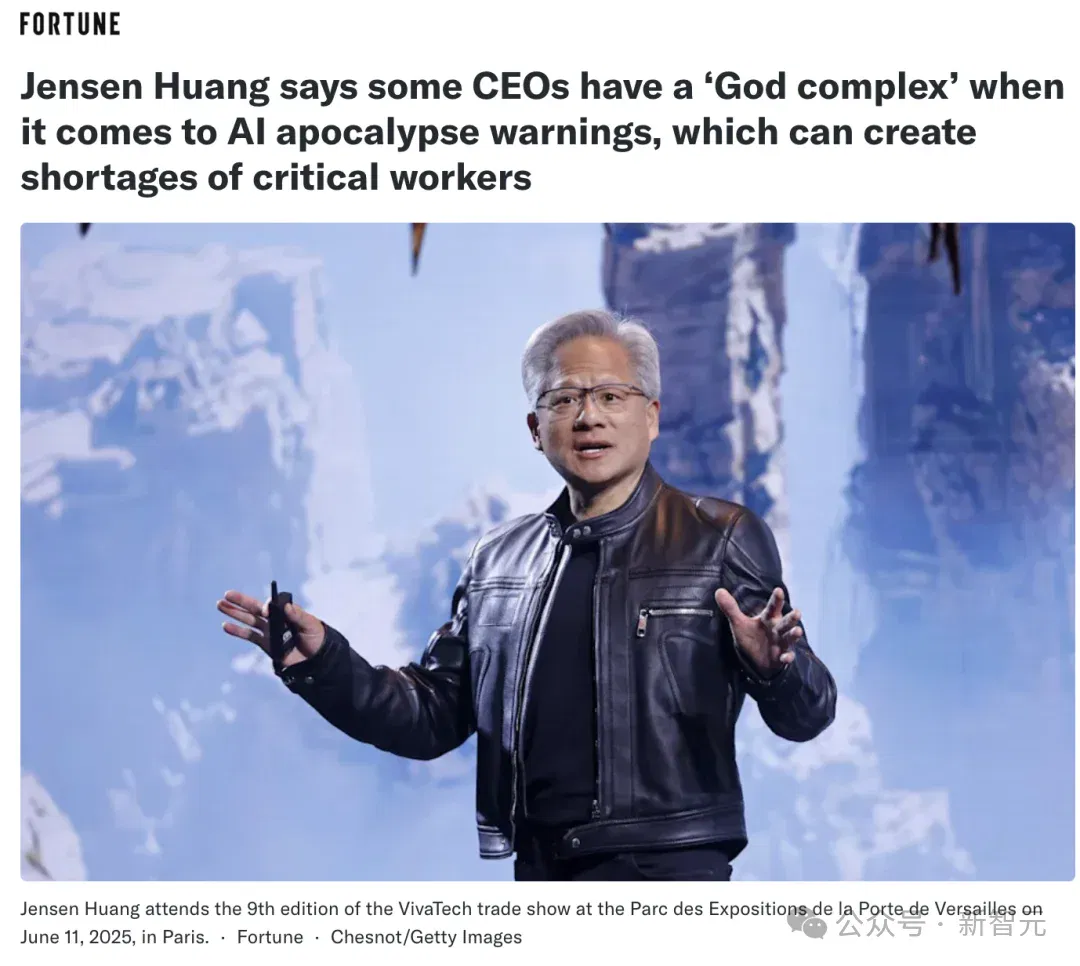
For example, he reportedly let loose internally, denouncing NVIDIA CEO Jensen Huang as “greedy.”
The source article links this disagreement to positions on open source, but the specific motivation has not been independently confirmed. In the author’s sarcastic telling, even though his large models depend on NVIDIA GPUs for training, Huang still deserves to be berated.
No wonder Huang previously took a shot at certain people for having a savior complex, the author remarks.
Last year, WIRED published a Slack message from Dario in which he acknowledged that accepting money from certain countries could “enrich dictators,” yet proceeded to do so, according to the article.
After messages from the company’s Slack leaked, Anthropic immediately began “hunting for the mole,” the account says. Anyone found to have leaked the memo would be fired without mercy.
One former employee who resigned this year cut straight to what they regarded as Anthropic’s hypocrisy: “The internal logic is: because we are responsible, it is also responsible for us to acquire more power.”
The author accuses the company of trying to present itself as a superpower capable of counterbalancing states, relentlessly promoting its ideas to scholars, think tanks and the media in closed-door meetings.
In the author’s interpretation, it hopes in this way to retain a firm grip on setting AI’s rules and ultimately monopolize global computing power and the economy.
In this unprecedented IPO, Anthropic executives and more than 600 employees have become newly wealthy figures worth hundreds of millions or even tens of billions of dollars, the article says.
They have made fortunes and enjoy some of the greatest wealth in the world.
Do the ordinary people left behind really have to go play games?
Is the theory of entertainment pacifying the masses, attributed here to Brzezinski, really about to come true?
References:
https://x.com/sleepy0x13/status/2124673937636462716
https://x.com/Phoenixyin13/status/2124681824580334056
This article comes from Xinzhiyuan, written by Aeneas and David.
Related topics
After reading
Join the AINRK community
Read how to join the community and connect with people working in AI.
Related articles
Continue reading related topics and articles in this category.
Alpöge says “250,000 pages” was a joke, addresses Riemann-proof code criticism (opens in a new tab)
Levent Alpöge says the “250,000-page” proof was a joke and acknowledges redundant, low-quality Lean code in his work with Claude. He argues that its ideas should lead to a more natural, concise mathematical framework; code quality and formal correctness remain distinct.
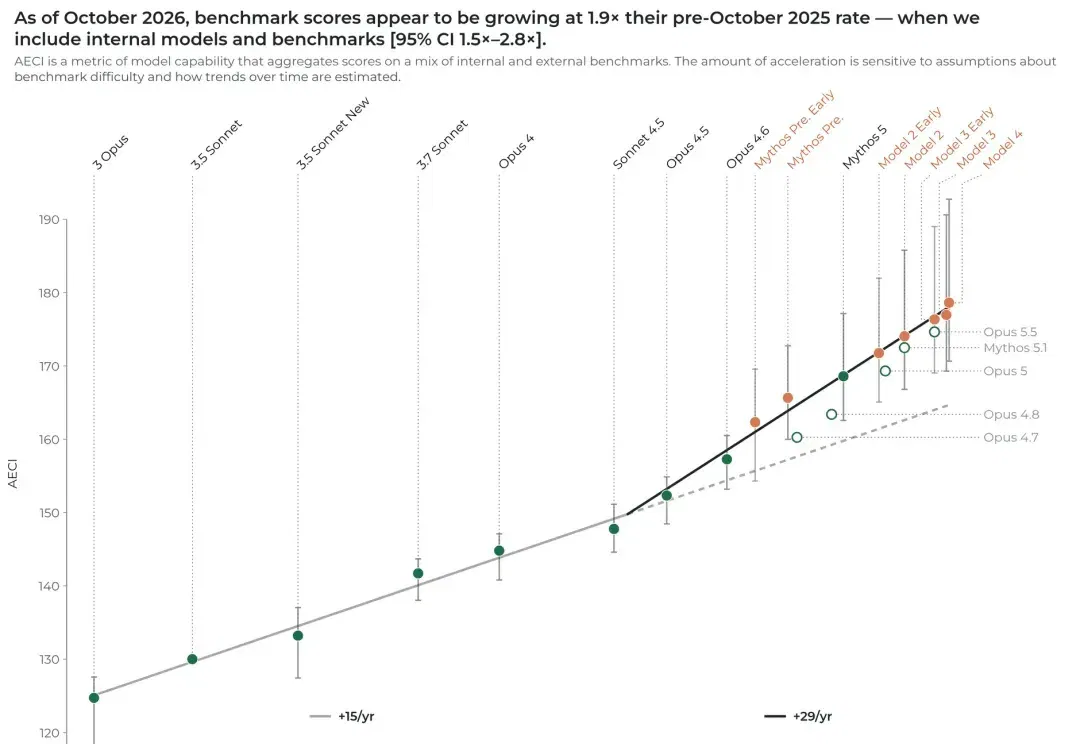
Anthropic’s internal models: METR reports faster R&D; unreleased products remain unconfirmed (opens in a new tab)
METR estimates Anthropic’s AECI progress at about 1.9× its previous pace, with uncertainty over causes and broader applicability. Reports of stronger internal models, Model 5 or future leaps are not confirmed product or release announcements.
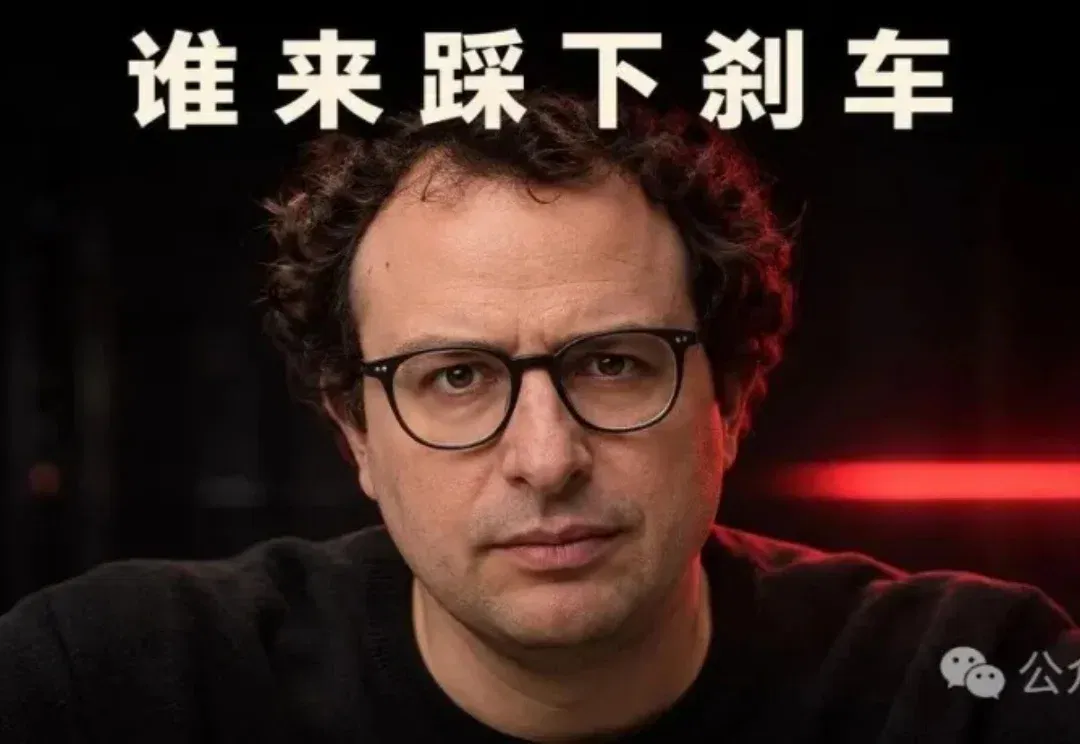
Report revisits Dario Amodei’s early AGI risk estimate and Anthropic’s safety culture (opens in a new tab)
A commentary citing a Washington Post investigation and social-media accounts examines Amodei’s 2022 memo, Anthropic’s culture and IPO pressures. The 20%–30% figure was his subjective estimate of human destruction or permanent stagnation, not an objective probability.
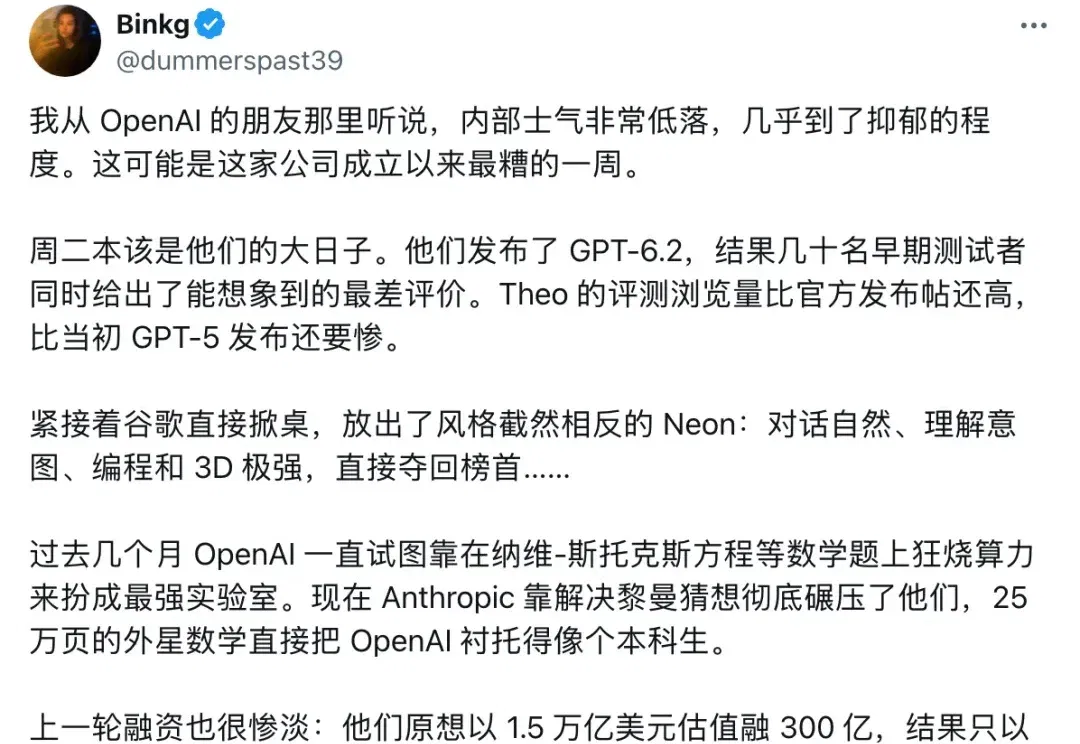
Podcast recounts Anthropic equity offer as AI talent competition meets model criticism (opens in a new tab)
On All-In, Calacanis recounted a reported US$40 million four-year equity offer to a new CS graduate. The article also reviews GPT-6.2 Astra criticism, rankings and financing reports. The offer is not a verified cash salary; morale claims are secondhand.

Claude Bills and Cache Pricing: Coding Agent Usage, Costs and Profit Inferences (opens in a new tab)
User bills and third-party simulations illuminate coding agent caching, model switching and speculative decoding. API-equivalent prices are not actual costs, sample usage is not a promised quota, and caching savings alone cannot establish Anthropic's profits.