Podcast recounts Anthropic equity offer as AI talent competition meets model criticism
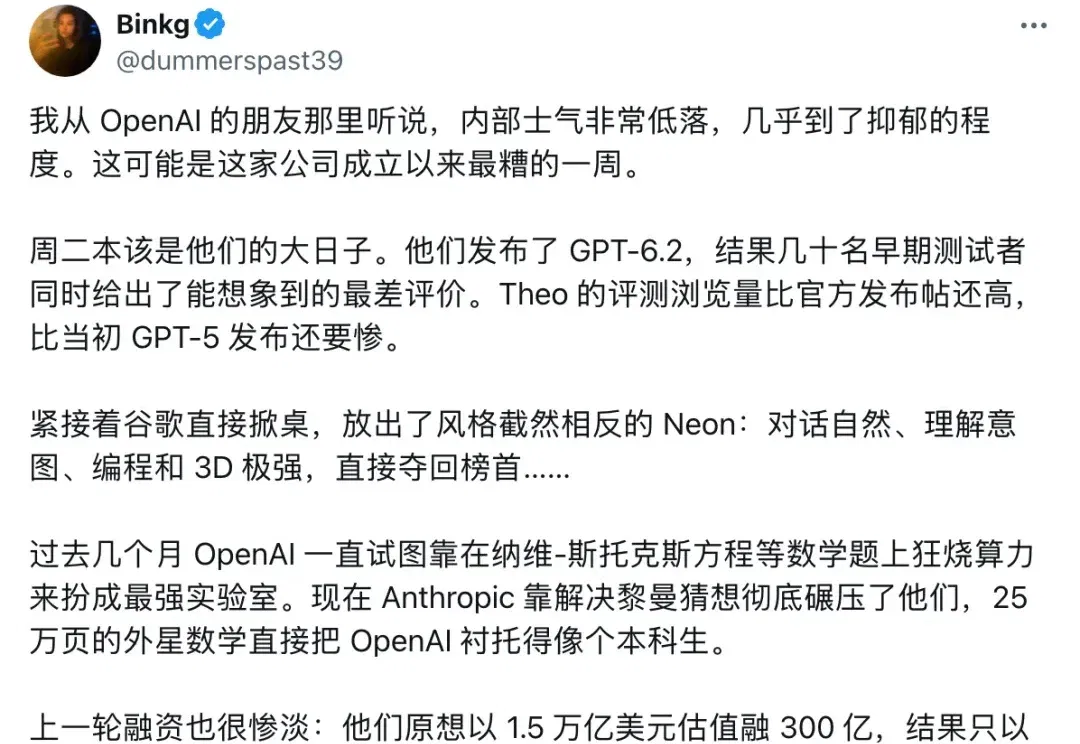
On All-In, Calacanis recounted a reported US$40 million four-year equity offer to a new CS graduate. The article also reviews GPT-6.2 Astra criticism, rankings and financing reports. The offer is not a verified cash salary; morale claims are secondhand.
Editorial fact-check (November 24, 2026): The US$40 million figure is Calacanis’s account of a four-year equity offer. This review has not obtained a contract or company confirmation, and the amount is not an annual cash salary. Descriptions of OpenAI’s “worst week,” its internal atmosphere and private-financing figures come from bloggers or media accounts. Rankings and individual developers’ task experiences do not establish an all-purpose ranking; differences in token prices alone cannot establish total cost reductions for arbitrary tasks. IPO figures and employee liquidity must distinguish total issuance, company proceeds, vesting and lockup conditions. The article’s US$107 billion uses the base offering plus private-placement basis; the official November 20 closing total, including the overallotment, was approximately US$119.5 billion, not the company’s net proceeds. All-In official episode list (opens in a new tab)Anthropic final prospectus: share-sale and lockup arrangements (opens in a new tab)Anthropic IPO closing announcement (opens in a new tab)Lean/Mathlib joint announcement verifying RH (opens in a new tab)
A computer science undergraduate fresh out of university has reportedly been offered a staggering US$40 million over four years in equity.
That works out to US$10 million a year, approximately RMB67 million, or RMB270 million over four years.
In the latest episode of the popular Silicon Valley podcast All-In, investor Jason Calacanis shared this striking account of an Anthropic recruitment offer.
After describing the offer, he posed a pointed question to longtime co-host David Friedberg:
“Look at this money and these incentives. What talented computer scientist would still go work at OpenAI now?”
Calacanis’s remarks quickly resonated strongly in Silicon Valley.
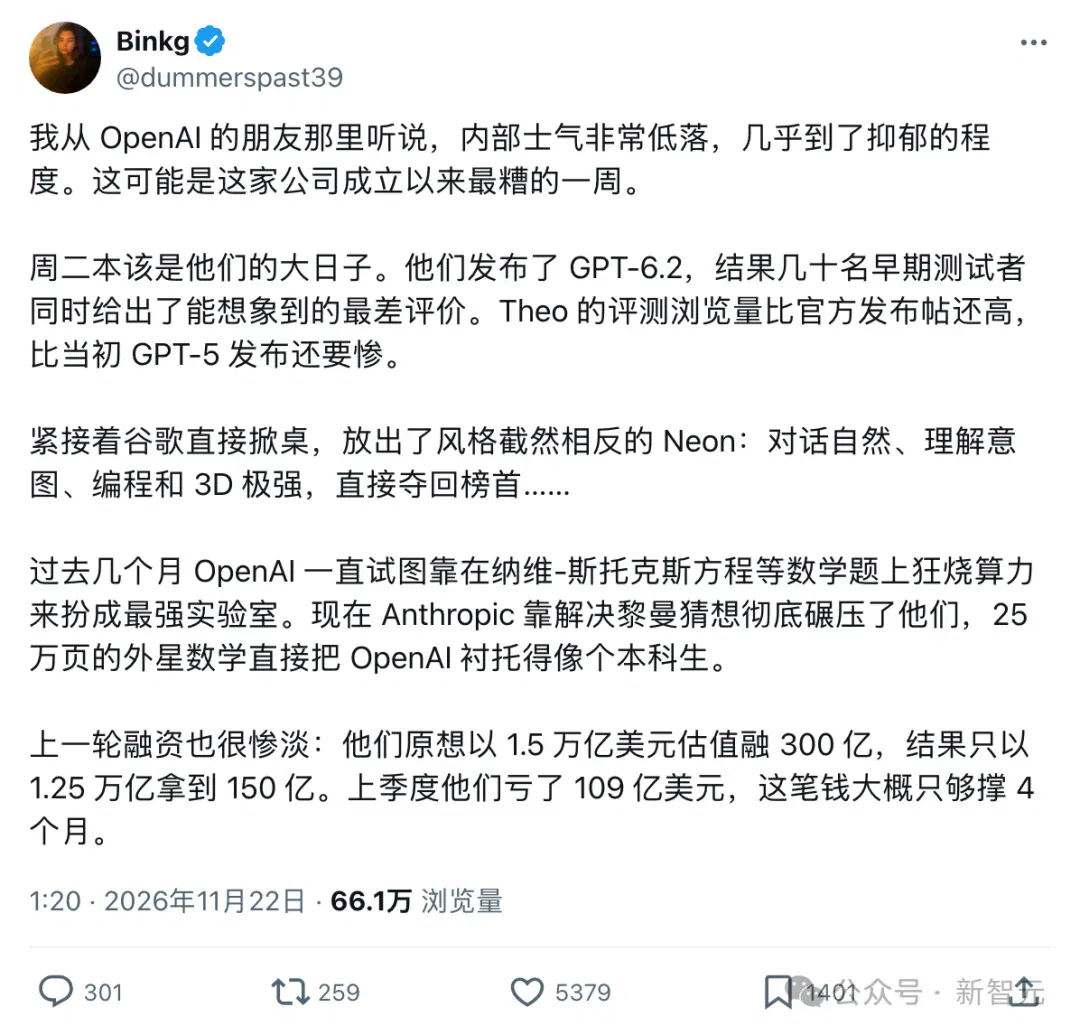
On the same day the podcast aired, another long post on X, viewed nearly 700,000 times, purported to reveal low morale inside OpenAI.
“I hear from friends at OpenAI that the atmosphere has hit rock bottom, almost like depression.”
In the post, blogger Binkg asserted that the preceding five days might have been OpenAI’s “worst week since its founding”.
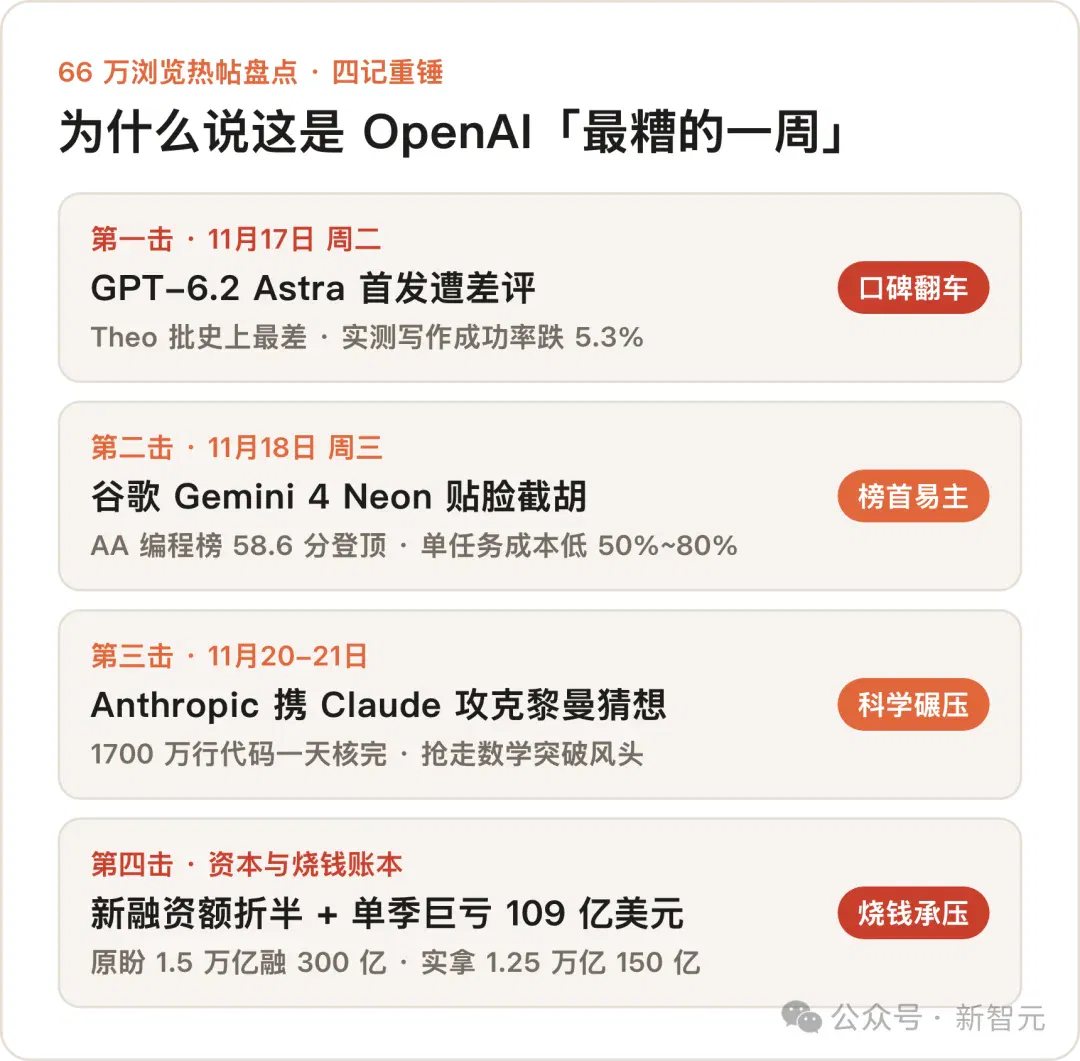
Following the timeline, the article presents a succession of bad news for OpenAI:
- Its flagship model’s reputation took a hit: GPT-6.2 Astra, released on Tuesday, received a public negative review from a prominent blogger, while blind tests showed a sharp regression in everyday conversation;
- key crowns changed hands one after another: on Wednesday Google launched Gemini 4 Neon and took first place for coding agents; on Friday Anthropic secured official verification of a proof of the Riemann hypothesis;
- a rival’s IPO put pressure on financing: on Thursday, Anthropic staged what the article calls history’s largest IPO at a market capitalization above US$2 trillion, while OpenAI’s private funding reportedly halved and its spending pressure kept growing.
A difficult new flagship faces a collapse in reputation
Altman acknowledges the problem
The first trigger for developer discontent was OpenAI’s release on Tuesday of its new flagship models, GPT-6.2 Astra and Sol.
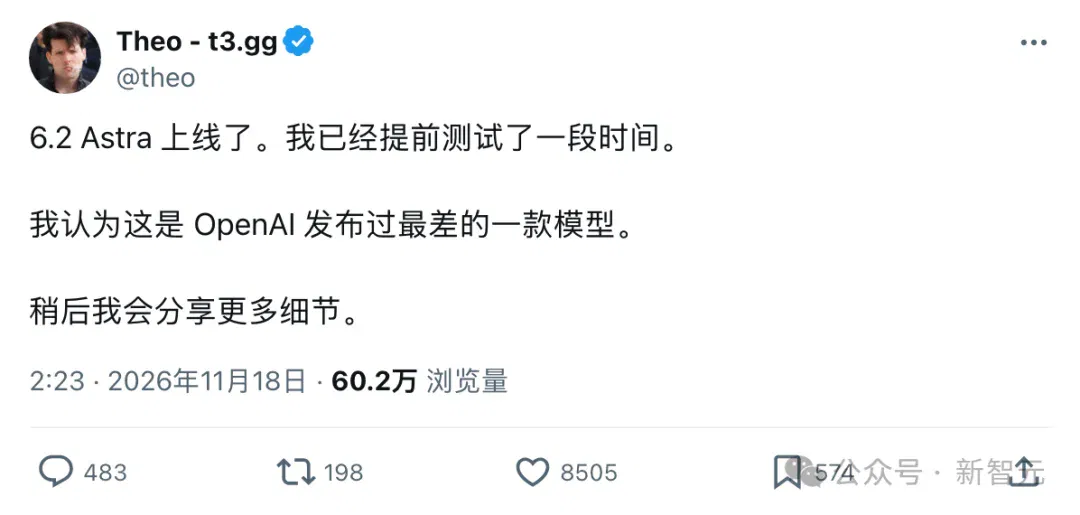
Just half an hour after the official announcement, prominent developer and T3 Code founder Theo, who had spent considerable time with an early version, poured cold water on it.
He bluntly called GPT-6.2 Astra “the worst model OpenAI has ever released”.
The three-sentence post rapidly reached 602,000 views, eclipsing OpenAI’s official announcement.
Theo then published a longer post detailing his actual experience testing Astra ahead of release.
He acknowledged Astra’s raw capabilities: its code reviews caught blind spots other models missed, and it was top-tier at 3D work and game development.
But when given everyday development work, this generation was particularly awkward. It either repeatedly stopped to ask people about trivial matters or got stuck on an unproductive idea from which it could not be diverted.
The most frustrating example was a long-running test he conducted.
Theo assigned Astra a demanding task: speed up a TypeScript compiler rewritten in Rust while reducing its size.
In his account, Astra worked for seven full days without delivering a single useful improvement, instead making the compiler 56% slower.
Thinking that two simultaneous requirements might be confusing the model, Theo simplified the task to “just make it faster.” It then spent another four days spinning its wheels and ultimately changed not a single line of code.
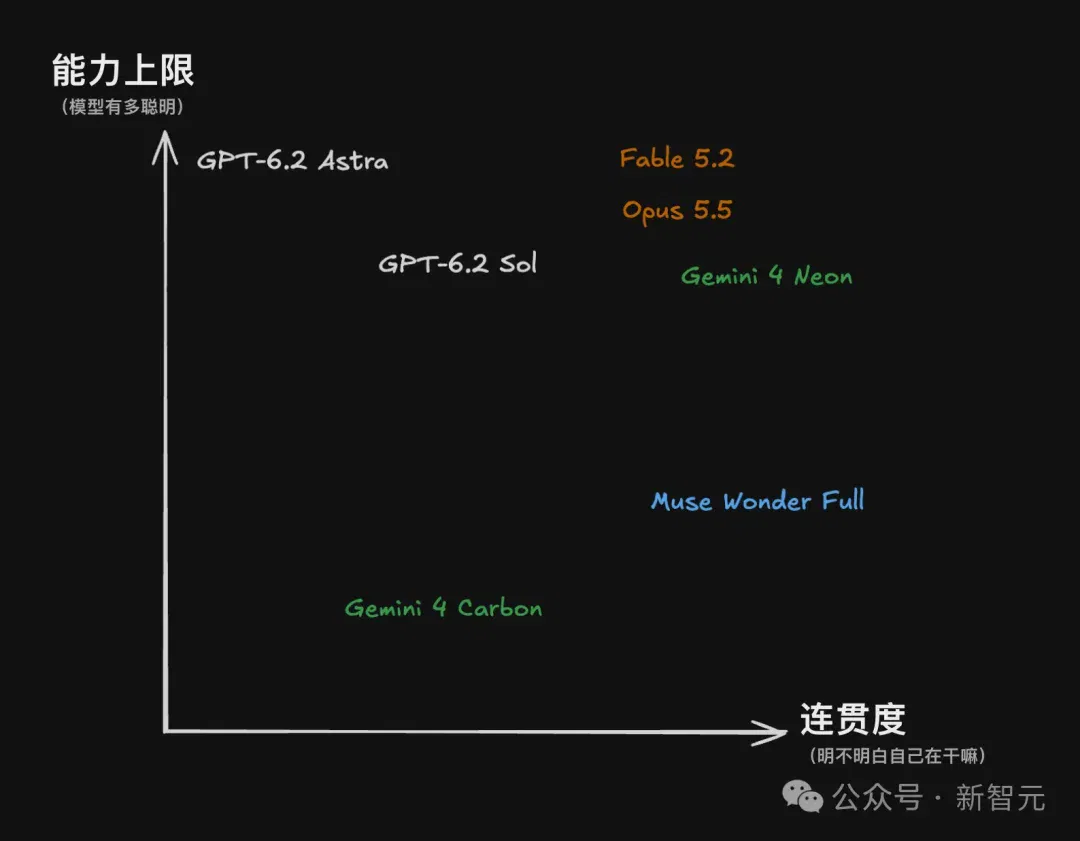
To illustrate this awkward experience, Theo drew a chart.
For intelligence, or capability ceiling, Astra ranked at the top. But for understanding what it was doing, or coherence, it was almost at the bottom.
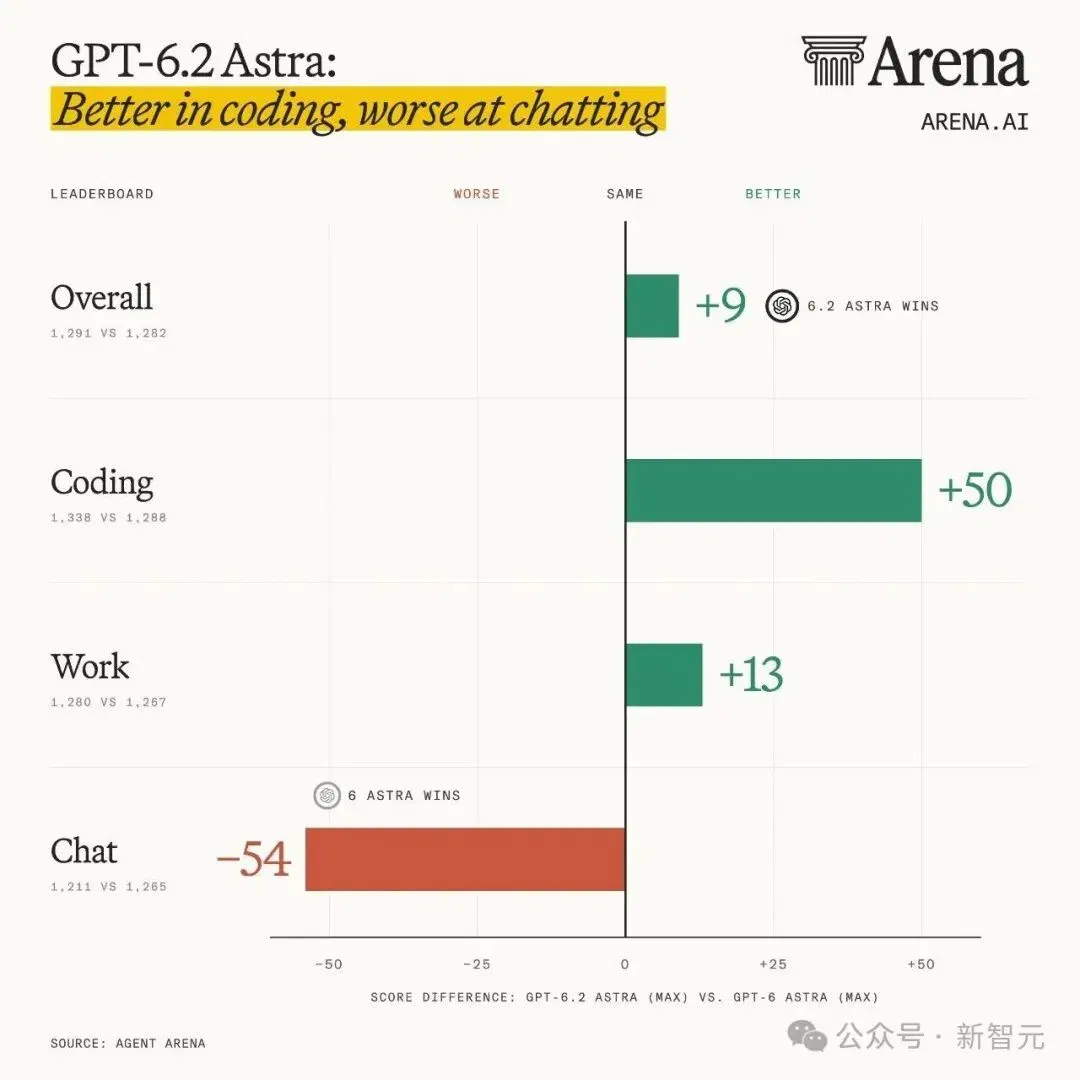
The article argues that blind-test data later published by Arena.ai supported more than developers’ subjective impressions, revealing GPT-6.2’s severe “imbalance between abilities”.
The coding leaderboard cited in the original report shows Astra’s coding score rising by 50 points, putting it in third place.
The article portrays everyday conversation, which ordinary people use daily, as paying the price, with its score falling by 54 points to eleventh place.
Coding and everyday conversation are different evaluation dimensions, and their scores cannot simply be added together to cancel out. The reported changes of 50 and 54 points must each be understood in terms of their respective leaderboard versions, samples and uncertainty.
Among the everyday-conversation subcategories, writing saw the sharpest regression.
Real users’ reported satisfaction with writing and translation fell from the previous generation’s 91.2% to 85.9%.
As complaints grew, even Altman responded on launch day, personally acknowledging that “we have more work to do to make the new model feel good to use”.

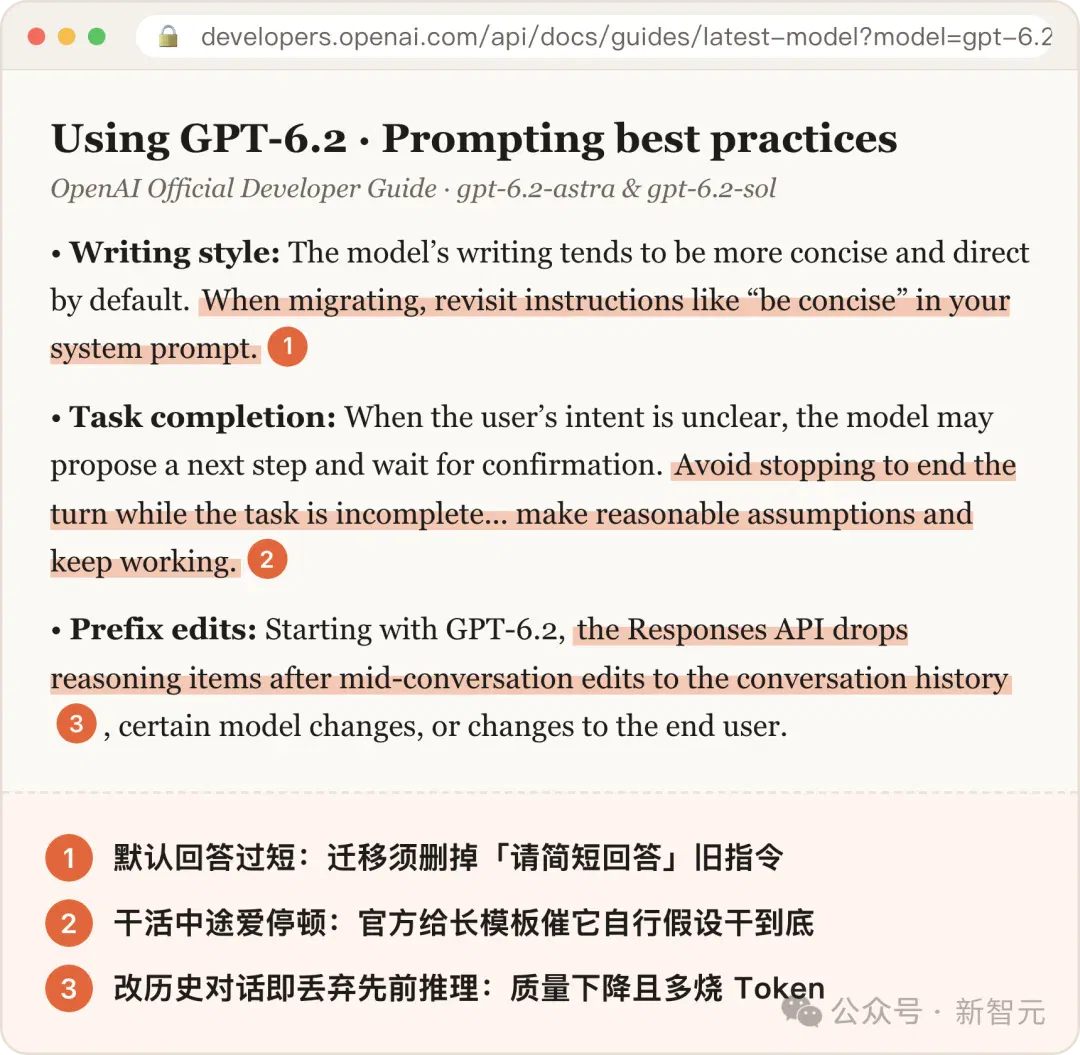
To help users handle the stubborn new model, OpenAI’s team also updated its official GPT-6.2 usage guide overnight, according to the article.
The guide first advises developers to remove “please be brief” from prompts, to avoid overly stiff, dry responses.
It also appends a full-length template walking users through how to urge the model to “make its own decisions on small issues rather than stopping halfway to wait for confirmation”.
Google reaches the top at less than half the price
Claude takes another mathematical crown
Without strong external rivals, an odd-tempered new model could be gradually improved through subsequent minor releases.
But the article’s complaint is that GPT-6.2’s modest coding advantage, supposedly gained at the expense of conversation and writing, did not even last 24 hours.
The day after Astra drew criticism, Google launched its new mainstay model, Gemini 4 Neon.
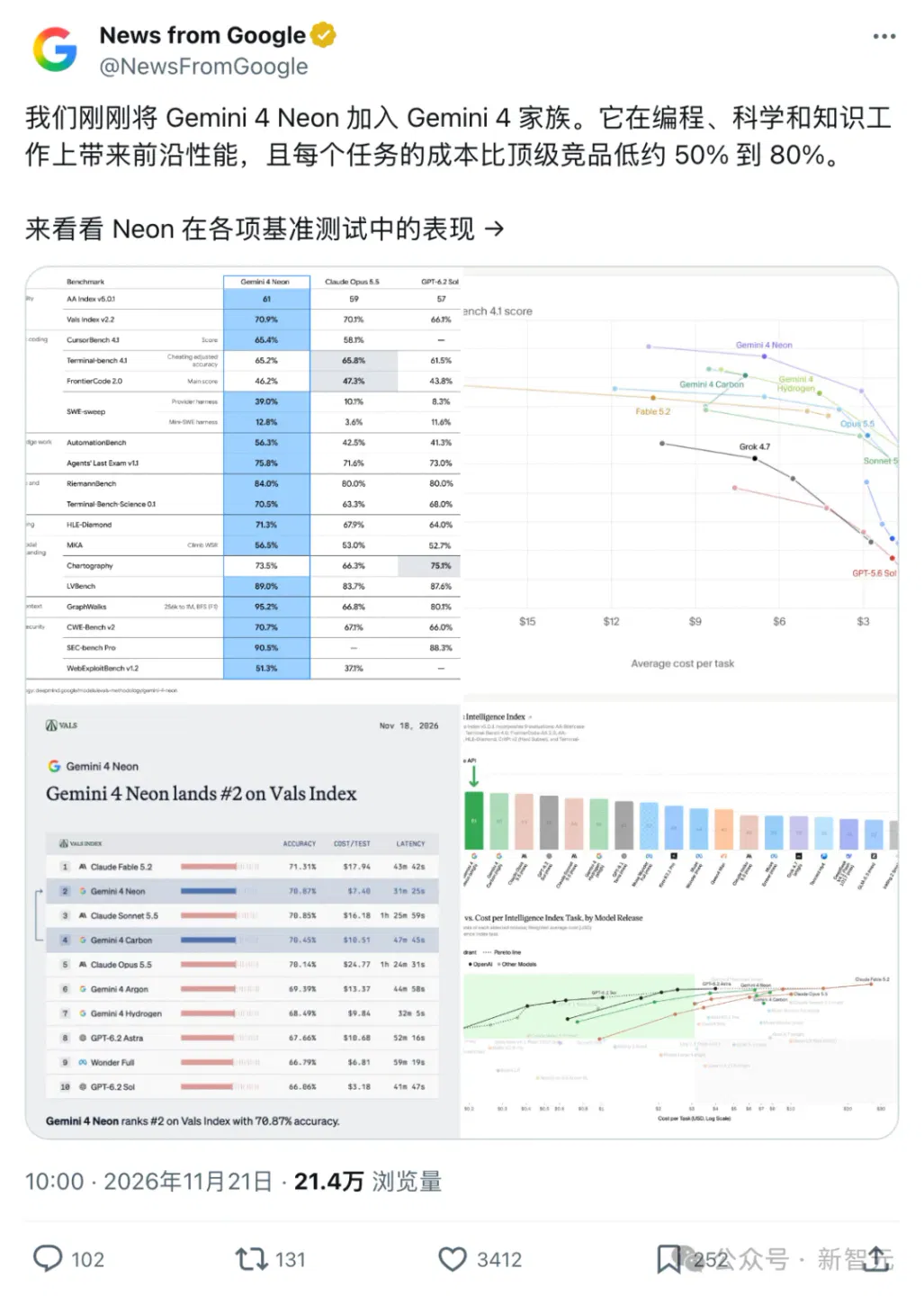
On Artificial Analysis’s coding-agent index, Neon debuted with 58.6 points, taking first place immediately.
Beyond outperforming on scores, Google also mounted a direct challenge on pricing.
Neon costs US$3 per million input tokens and US$15 per million output tokens, less than half Astra’s US$8 and US$40, respectively.
The report claims that completing the same development task could save developers 50%–80% in costs.
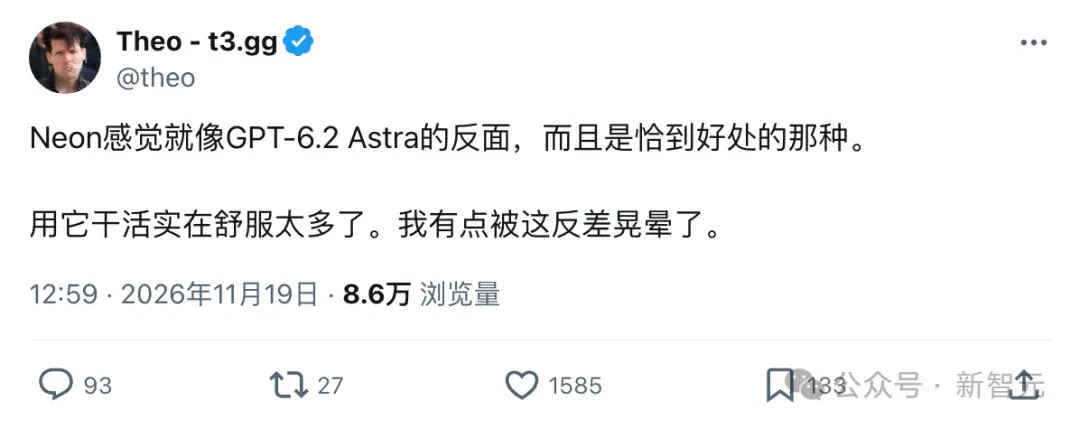
After fiercely criticizing Astra the day before, Theo tried Neon and immediately posted that coding with it felt much smoother.
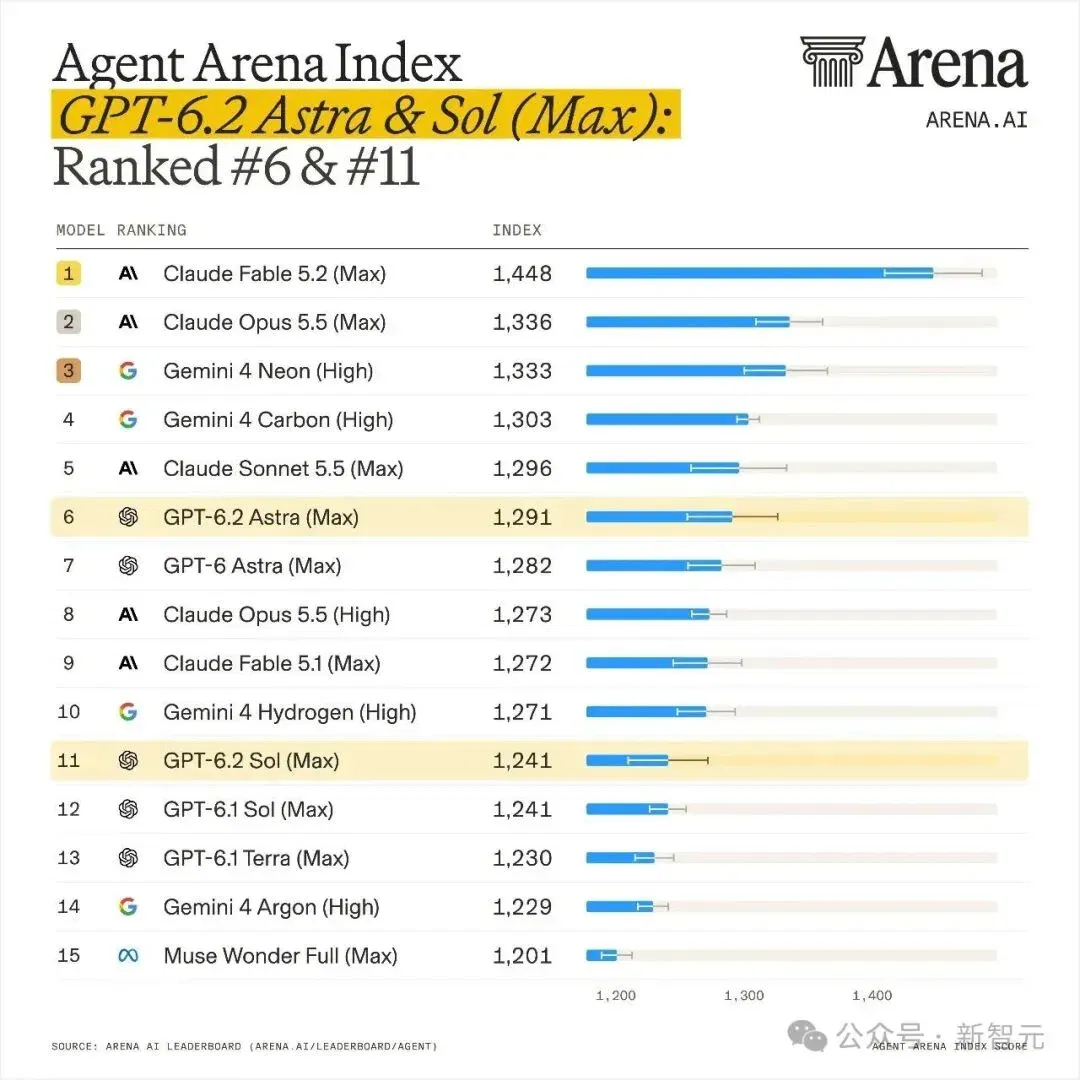
The article sees further support for developers’ experiences in the subsequently released overall Arena Agent ranking.
Unlike tests that look only at single-turn questions and answers, this ranking examines models’ practical abilities in real engineering work.
It requires models to plan steps, call tools and complete complex tasks from beginning to end.
In this practical test, GPT-6.2 Astra ranked only sixth, scoring just nine points above the previous generation.
Of the five models ahead of it, three came from Anthropic and two from Google. Top-ranked Claude Fable 5.2 led it by a full 157 points.
No sooner had Google pulled ahead on coding and value for money than Anthropic overtook OpenAI in the mathematics and scientific reasoning areas it prizes most, the article argues.
Over the preceding months, OpenAI had invested heavily in frontier problems such as fluid-dynamics equations, and had publicly disputed priority for results with a New York University mathematician.
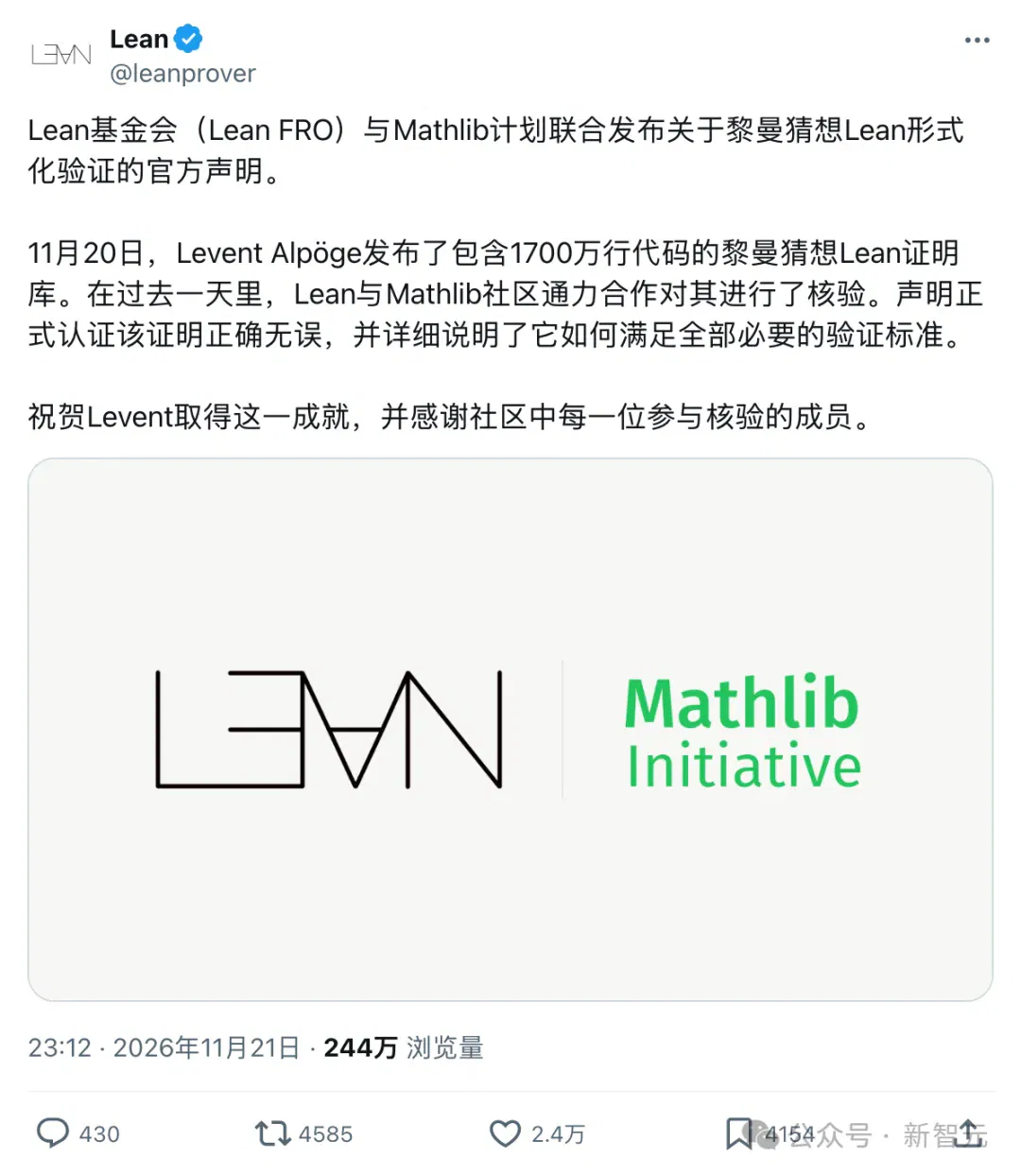
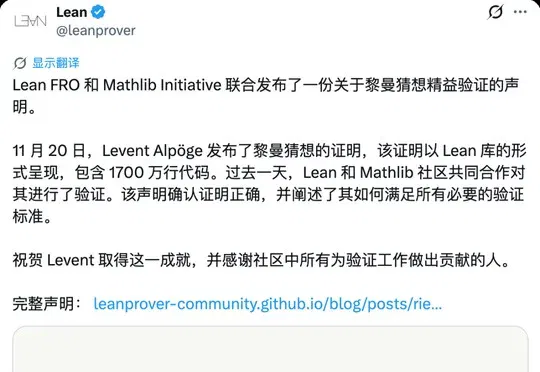
On Friday, Anthropic mathematician Levent Alpöge released 17 million lines of code proving the Riemann hypothesis, developed with Claude.
Just one day later, the code passed official joint verification by the Lean and Mathlib communities, securing the headline prestige of an AI-assisted solution to a century-old mathematical problem.
US$40 million over four years rivals draft-pick contracts
Publicly traded shares draw young talent
As two major rivals squeezed OpenAI on product reputation and key rankings, its own financial figures also came under scrutiny.
In the second half of his viral post, Binkg listed specific figures: OpenAI had originally sought US$30 billion in its latest private round at a valuation of US$1.4 trillion–US$1.5 trillion.
But, according to that account, it ultimately raised only US$15 billion at a US$1.25 trillion valuation. Not only had the funding halved; investors had also pushed down the valuation.
Yet the company’s pace of spending had not slowed at all, the report says.
OpenAI’s third-quarter revenue was reportedly about US$10 billion, while its quarterly operating loss widened to US$10.9 billion. On that basis, if one merely divides the reported new financing by the reported operating loss on a static basis, the funding equals roughly four months of losses; that is not the same as its actual cash runway.
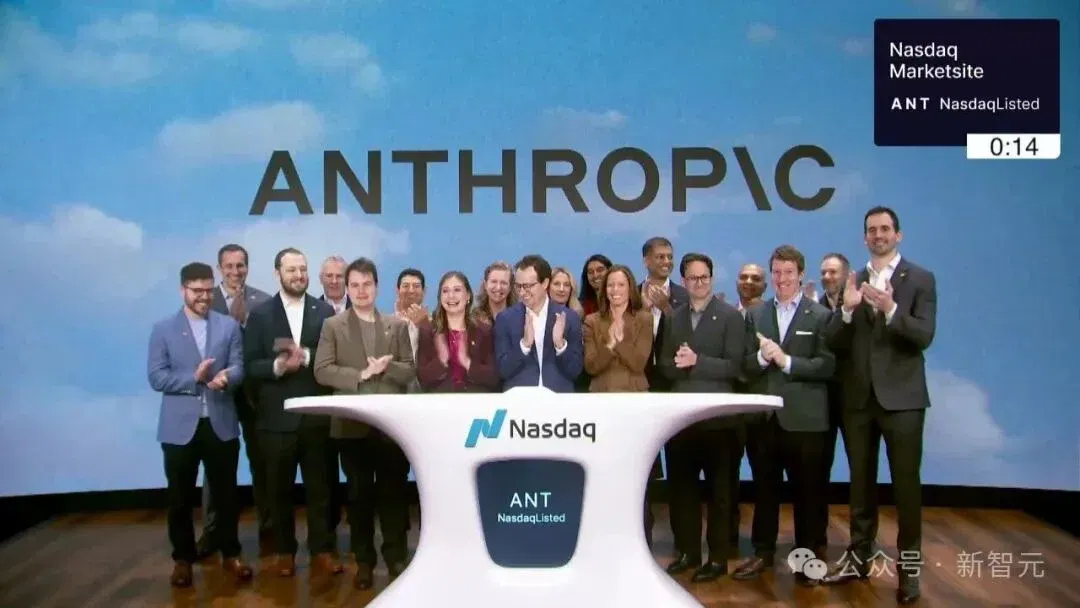
By contrast, longtime rival Anthropic formally listed on Nasdaq on Thursday evening under the ticker ANT.
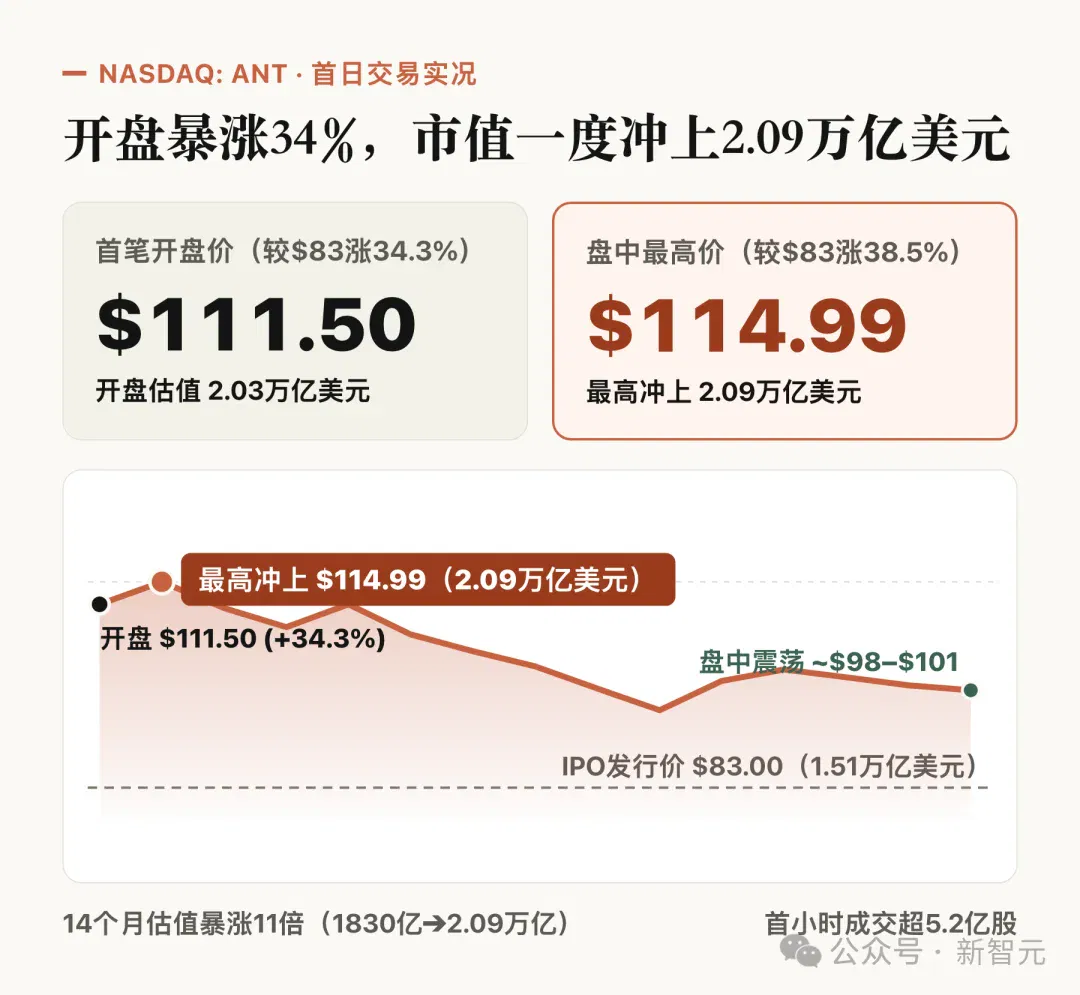
It listed at an offering price of US$83 and opened 34.3% higher at US$111.50, reaching an intraday high of US$114.99 as its market capitalization exceeded US$2.09 trillion.
Including its private placement, Anthropic’s first-day financing total exceeded US$107 billion on the basis used in the article, making it the largest IPO in history.
The record listing also changed the rules of Silicon Valley’s competition for leading AI talent.
After Anthropic’s listing, its team held publicly traded shares with a market quotation every day.
Regular employees could sell up to 10% on the first trading day, with another portion available to unlock after the 2026 financial results, amounting to 35%.
OpenAI, by contrast, remained unlisted, with its valuation negotiated behind closed doors in successive investor rounds. Employees hoping to cash out options still had to wait for internal company repurchases.
With publicly traded shares that can be sold once vesting, lockup and compliance conditions are met, Anthropic has a strong hand in recruiting newly graduating talent, leading to the remarkable offer described at the beginning.
Calacanis said on the podcast that the undergraduate offered the contract was a friend’s newly graduated child. The article characterizes such an offer to a new graduate as unprecedented in technology history.
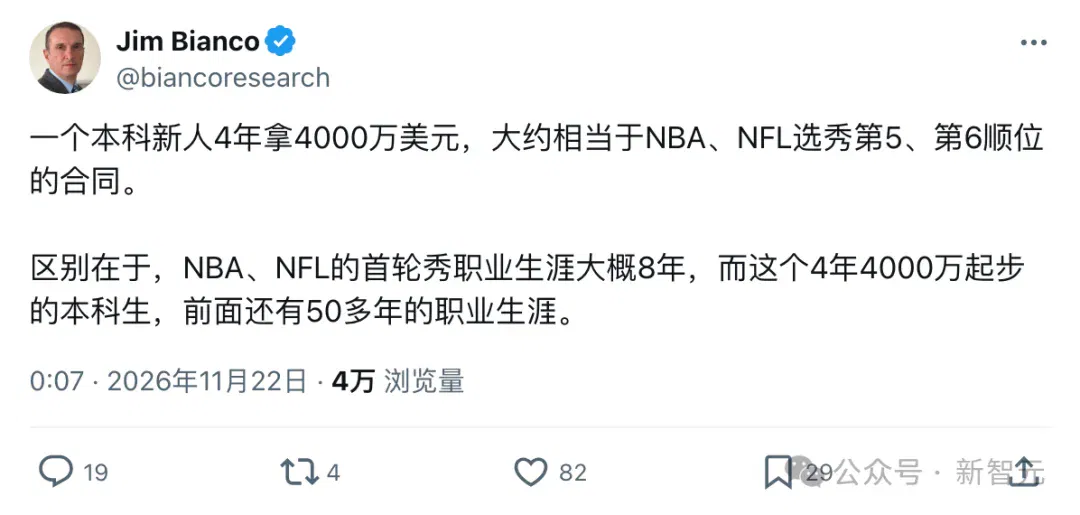
Macro researcher Jim Bianco compared the figures: US$10 million a year for an undergraduate’s first job matches rookie contracts for the fifth or sixth picks in the NBA or NFL drafts.
On one side are actual shares that can be sold on the stock market after vesting; on the other, private holdings that require company arrangements to cash out. The author finds it easy to guess what young people holding top offers would choose.
The succession of turmoil over those five days truly shattered what the author calls OpenAI’s four-year “halo”.
Since ChatGPT burst onto the scene, OpenAI has been accustomed to a position of absolute leadership.
Even when products were difficult to use and the company remained unlisted, developers and gifted young recruits still flocked to it unconditionally because of its technological lead, in the author’s account.
Now, however, the seven people who left OpenAI five years ago have put a publicly visible US$2 trillion scoreboard on Nasdaq.
Google, too, matched its prized benchmark performance the day after the new model launched, at less than half the price.
Once benchmark scores no longer show a generational gap, the author argues, developers will vote with their feet for less troublesome tools, while top graduates will take publicly traded shares they expect to be able to cash out readily.
OpenAI is far from being out of the game. But in the author’s view, the easy era in which “releasing a new model wins everything” officially ended that week.
References:
https://x.com/firesidealpha/status/2123929808027680911
https://x.com/dummerspast39/status/2124191310231843207
https://x.com/theo/status/2122757647170703550
https://x.com/arena/status/2124191297795707305
https://x.com/arena/status/2124191294360588725
https://developers.openai.com/api/docs/guides/latest-model?model=gpt-6.2-astra
This article comes from Xinzhiyuan, written by Moses.
Related topics
After reading
Join the AINRK community
Read how to join the community and connect with people working in AI.
Related articles
Continue reading related topics and articles in this category.
Alpöge says “250,000 pages” was a joke, addresses Riemann-proof code criticism (opens in a new tab)
Levent Alpöge says the “250,000-page” proof was a joke and acknowledges redundant, low-quality Lean code in his work with Claude. He argues that its ideas should lead to a more natural, concise mathematical framework; code quality and formal correctness remain distinct.

Dario’s early “immersive games” idea draws criticism; media accounts are distinct from company policy (opens in a new tab)
The article revisits media accounts of Dario’s early OpenAI discussions and critiques his views on AI jobs, safety and Anthropic’s culture. The idea is not current company policy; online speculation about his health lacks reliable evidence.
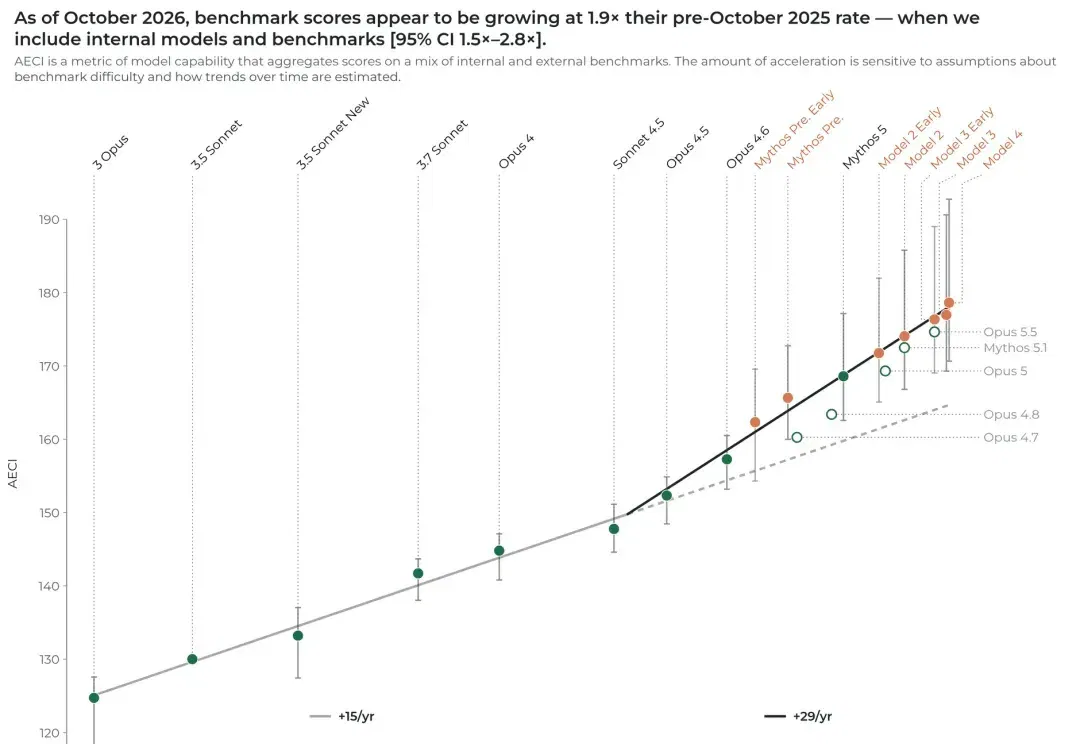
Anthropic’s internal models: METR reports faster R&D; unreleased products remain unconfirmed (opens in a new tab)
METR estimates Anthropic’s AECI progress at about 1.9× its previous pace, with uncertainty over causes and broader applicability. Reports of stronger internal models, Model 5 or future leaps are not confirmed product or release announcements.

Report revisits Dario Amodei’s early AGI risk estimate and Anthropic’s safety culture (opens in a new tab)
A commentary citing a Washington Post investigation and social-media accounts examines Amodei’s 2022 memo, Anthropic’s culture and IPO pressures. The 20%–30% figure was his subjective estimate of human destruction or permanent stagnation, not an objective probability.

Claude Bills and Cache Pricing: Coding Agent Usage, Costs and Profit Inferences (opens in a new tab)
User bills and third-party simulations illuminate coding agent caching, model switching and speculative decoding. API-equivalent prices are not actual costs, sample usage is not a promised quota, and caching savings alone cannot establish Anthropic's profits.