Claude Bills and Cache Pricing: Coding Agent Usage, Costs and Profit Inferences

User bills and third-party simulations illuminate coding agent caching, model switching and speculative decoding. API-equivalent prices are not actual costs, sample usage is not a promised quota, and caching savings alone cannot establish Anthropic's profits.
Editorial check (2026-11-24): The terms "cache tax" and "excessive profits" in this article are the author's commentary on pricing, not profit conclusions disclosed by the vendor. User bills, weekly equivalent token figures, and third-party replays and simulations all depend on the model, cache hits, the input/output mix and conditions of use; they are not platform-guaranteed quotas. API-equivalent dollar amounts also do not equal service costs or subsidies. Caching reduces repeated prefilling, but storage, routing, data movement and subsequent decoding still require resources. Actual gains from speculative decoding vary with the workload and implementation; the explanation in this article cannot establish that the marginal cost of Anthropic's particular systems is zero. Anthropic's caching mechanisms and billing (opens in a new tab) | Anthropic's various rate limits (opens in a new tab) | OpenAI's official prompt caching documentation (opens in a new tab) | The inference engineering article cited in this report (opens in a new tab)
Over the past couple of days, a rather surreal post has caused an uproar among AI developers.
The person behind it is Vlad Mihalcea, a renowned figure in the Java world and a Java Champion.
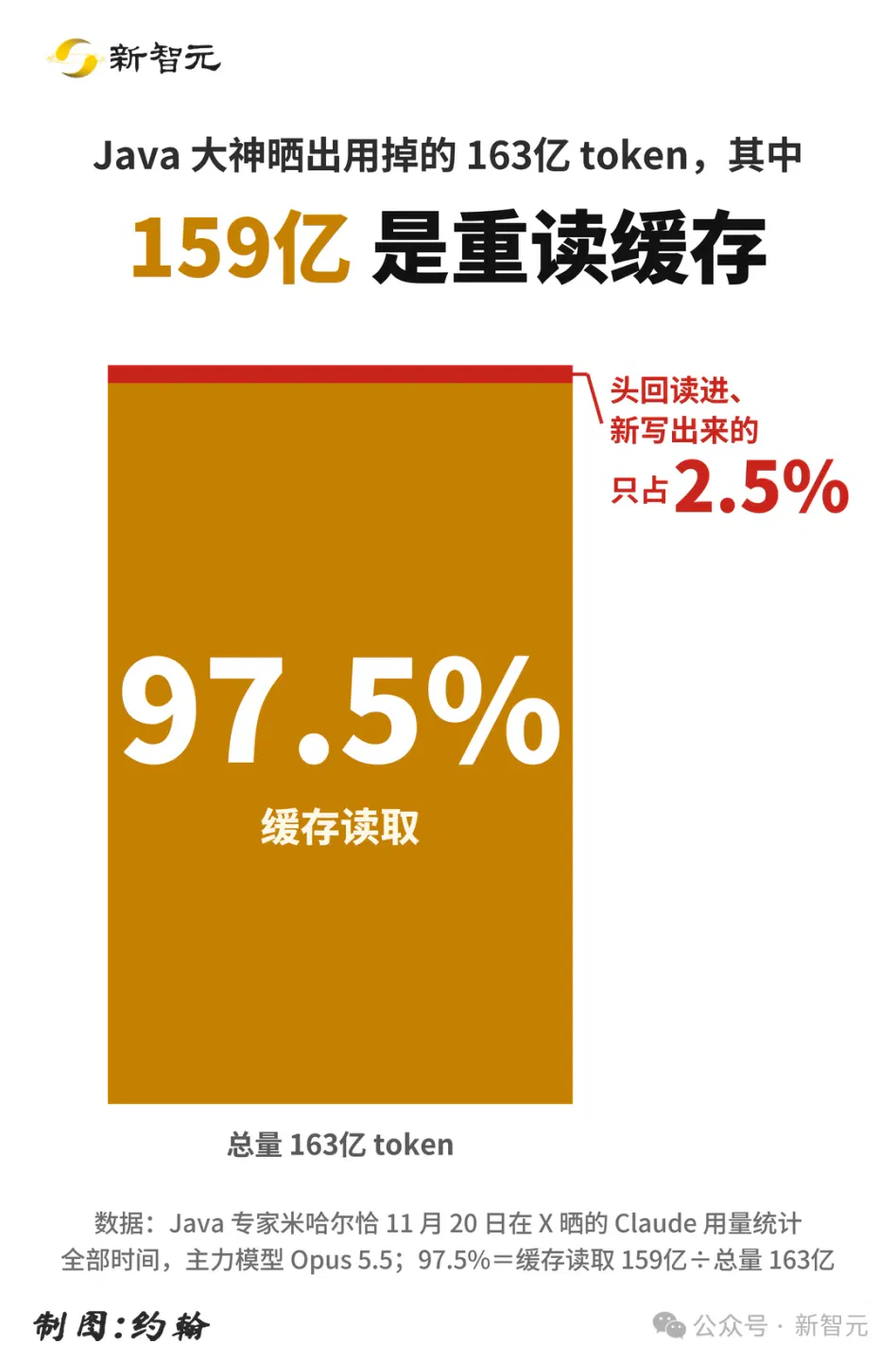
Looking at his Claude bills for the past year, he posed a question that cut to the heart of the matter: "I completely fail to understand Anthropic's business model. My Pro plan costs just $200 a year, yet I managed to use 16 billion tokens. At pay-as-you-go API prices, that would come to a staggering $100,000!"
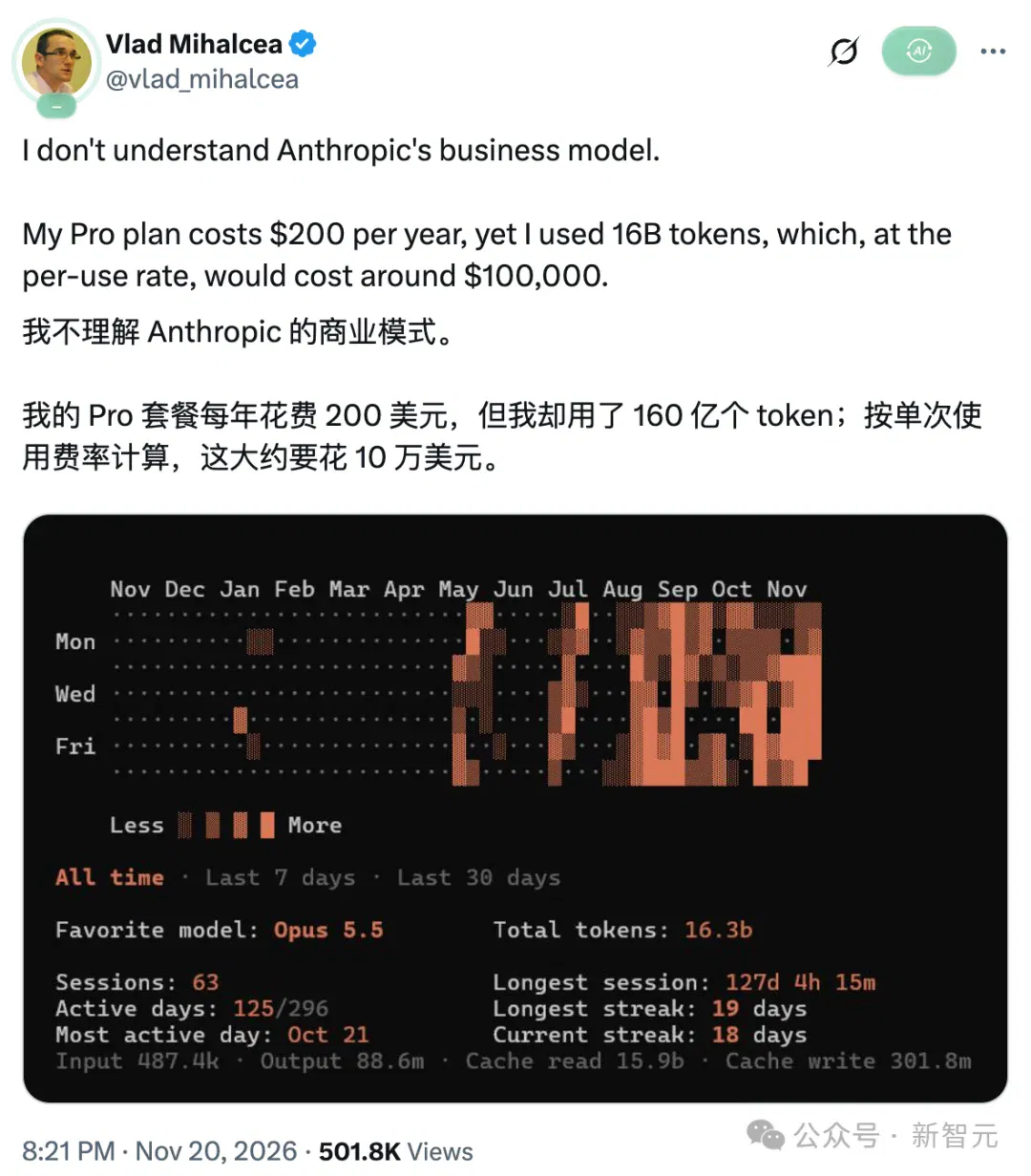
Selling you something worth $100,000 for $200? This hardly sounds like a tech company; it sounds like a Silicon Valley saint handing out investors' money as charity.
If you think this is merely an extreme case involving a programmer who works around the clock, a newly released set of usage measurements will only make you question things further.
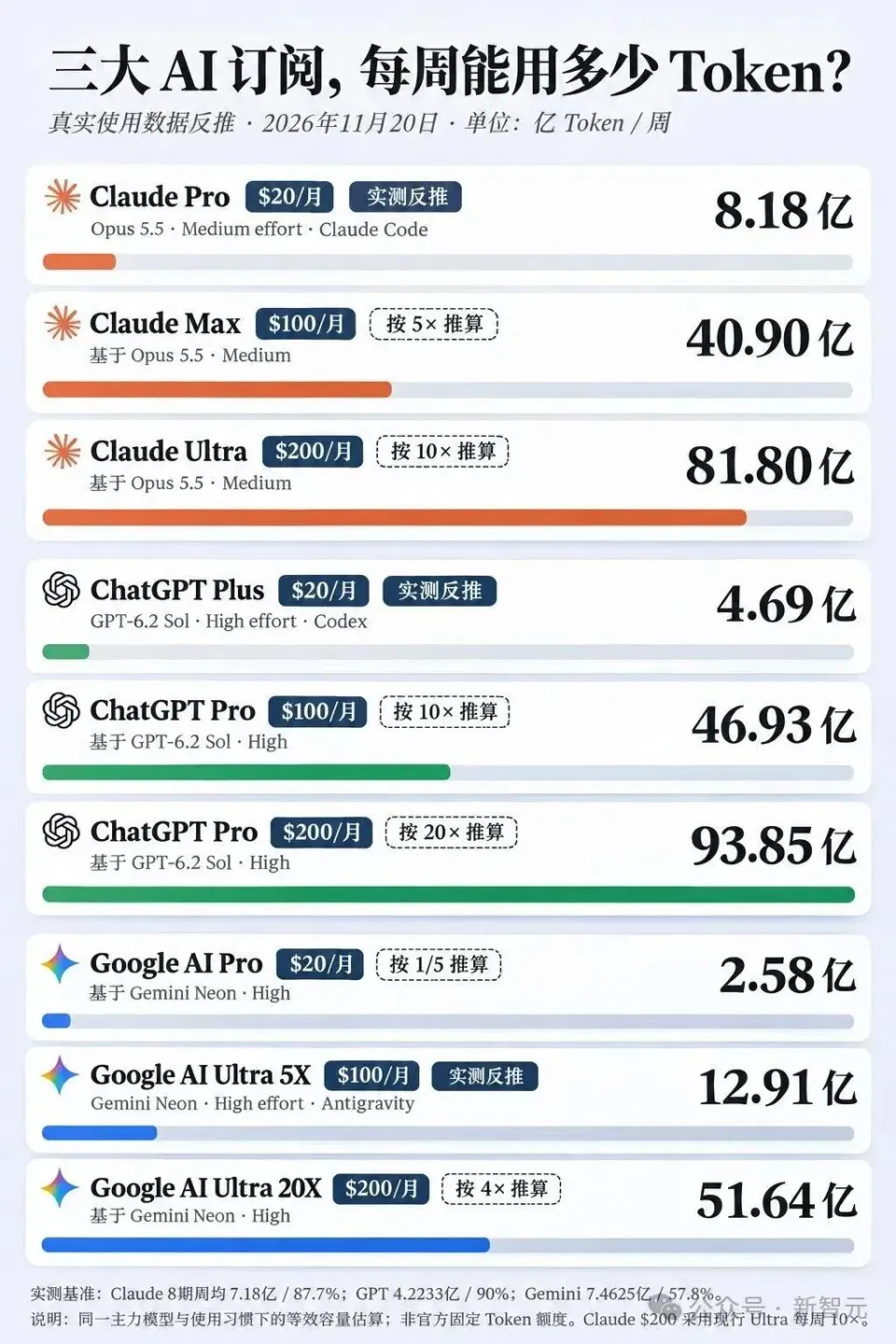
On November 20, 2026, a dedicated user worked backward from actual usage data to estimate the weekly equivalent allowances of three major AI subscriptions:
The $20-a-month Claude Pro plan, running Opus 5.5 + Claude Code, could consume about 818 million tokens a week. Upgrade to the $200-a-month Claude Ultra or ChatGPT Pro, and weekly token consumption shot up to 8.18 billion and 9.385 billion, respectively. Even the comparatively restrained Google AI Ultra 20X could deliver 5.164 billion.
Semiconductor research firm SemiAnalysis even calculated the bigger picture: a $200-a-month top-tier Claude subscription could yield up to $8,000 a month in equivalent API usage, while OpenAI's figure reached $14,000 a month. On paper, the vendors appeared to be subsidizing the service at a whopping 40 to 70 times the subscription price.
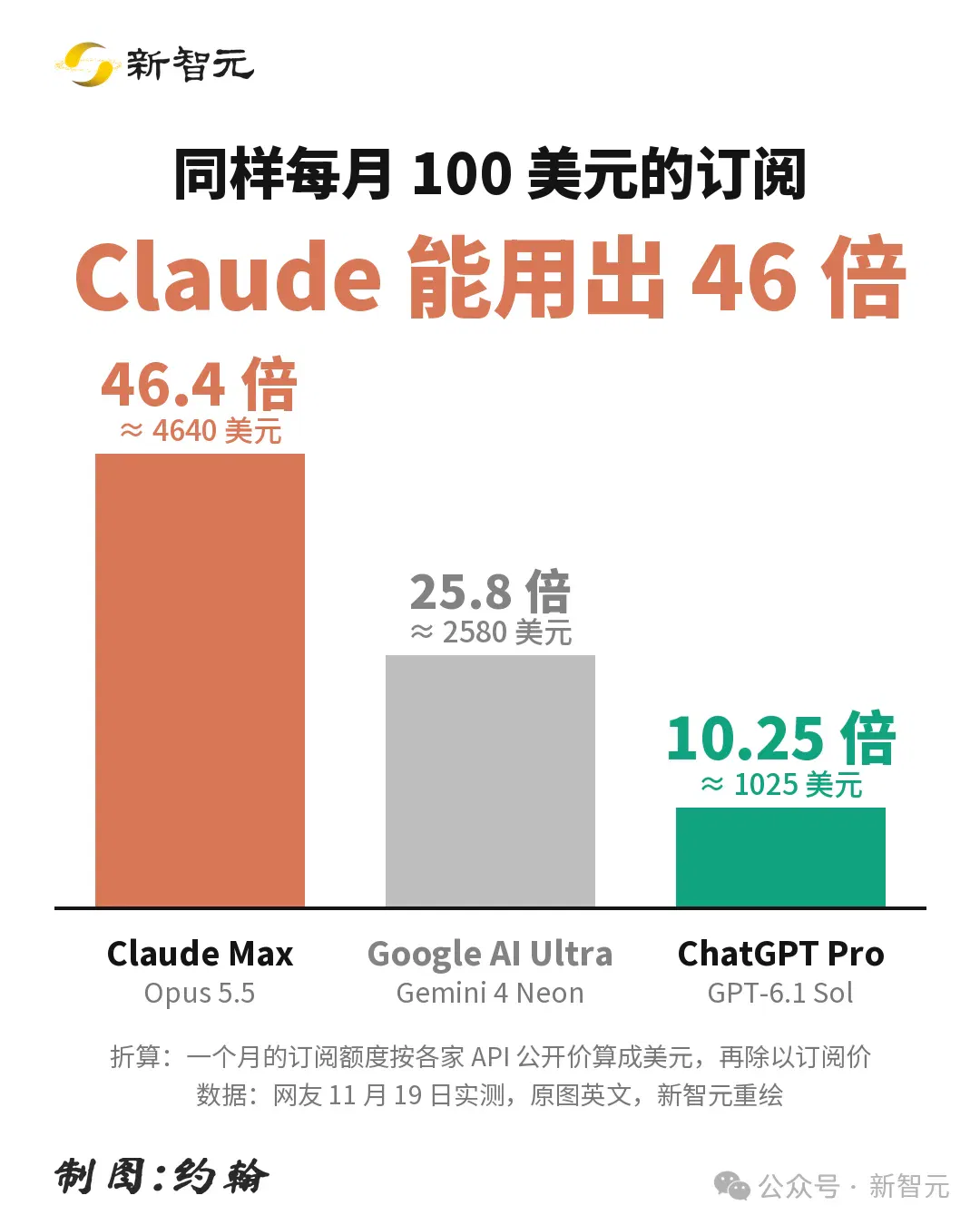
By this point, plenty of onlookers were starting to worry for Anthropic: how could this business possibly work? Was its compute capacity going to collapse tomorrow, followed by an immediate delisting?
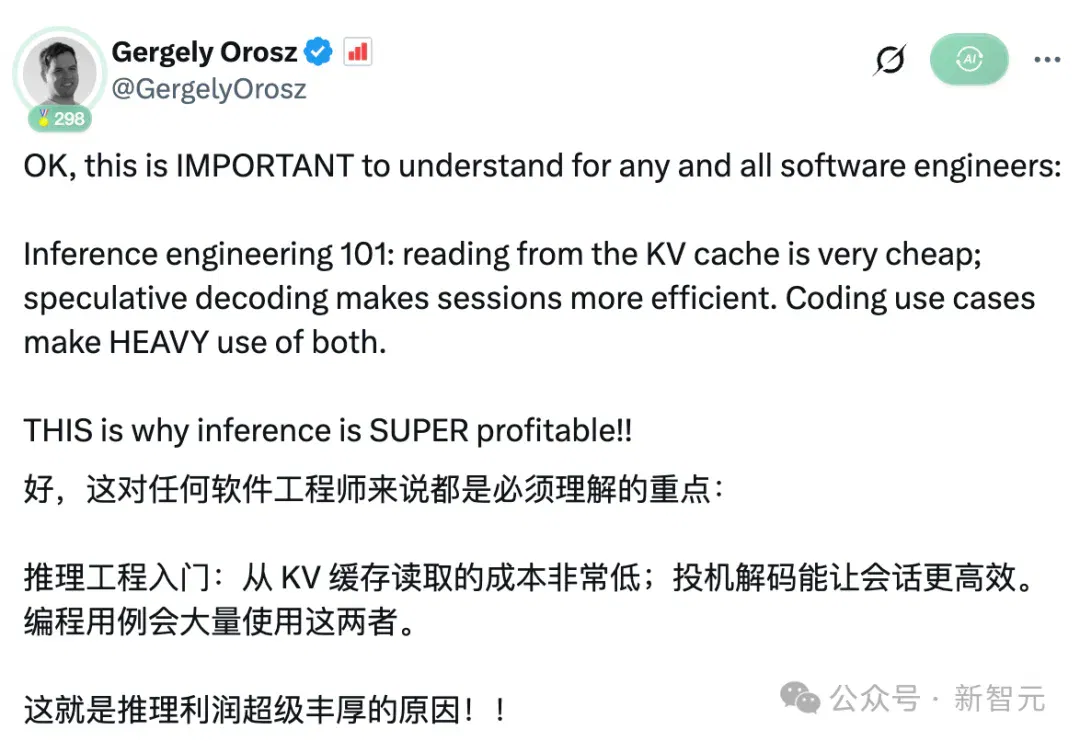
As the discussion gathered steam, Gergely Orosz, founder of the well-known technology newsletter The Pragmatic Engineer, stepped in with an explanation:
"Every software engineer needs to understand one thing: the first lesson in inference engineering is that reading the KV cache is so cheap it is practically free, while speculative decoding makes long sessions vastly more efficient. Coding happens to push both technologies to their limits. That is why AI inference is actually extremely profitable!"
Well, then. We thought we were milking these subscriptions for all they were worth, while the companies were apparently counting money behind the scenes until their hands cramped.
How does this arithmetic work? Today, let us get to the bottom of the profit-making logic behind Anthropic's business model.
The Illusion of 16 Billion Tokens
A Coding Agent Is a Compulsive Repeater
To solve the mystery, we first need to answer a question: were the 16 billion tokens Vlad burned through really all "original content" that Claude painstakingly thought up and typed out one word at a time?
Absolutely not.
In the early chatbot era, you asked a question and the AI answered; token consumption grew linearly. But now we are in the era of coding agents, and the rules of the game have completely changed.
At its core, a coding agent at work is a "repeater" trapped in a frantic loop:
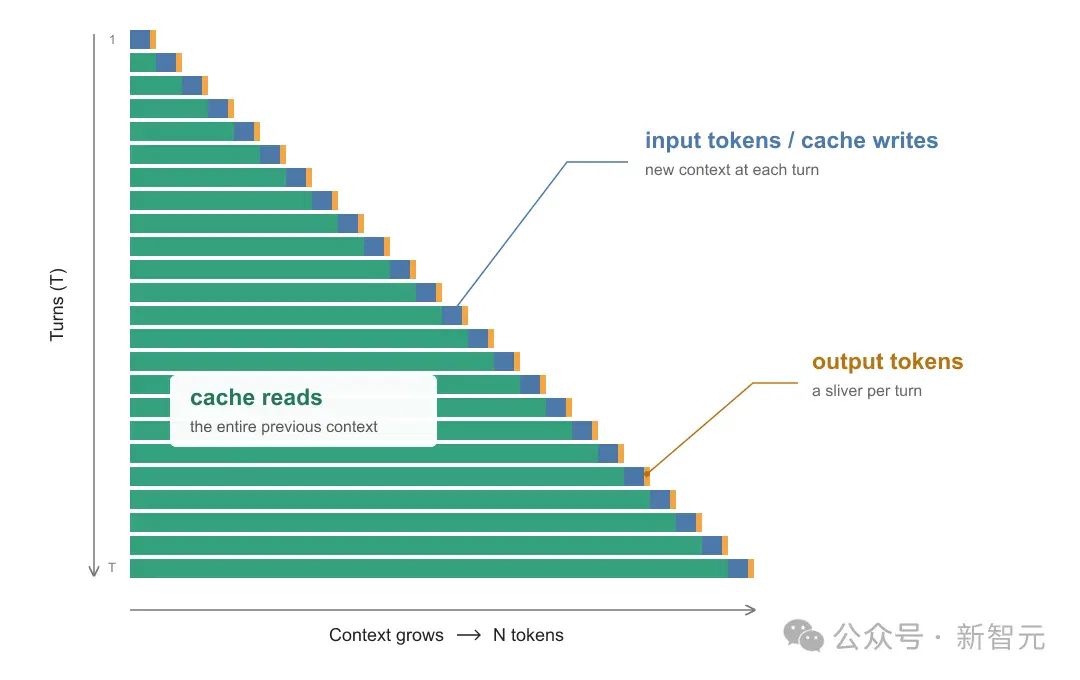
It first reads the context of your entire codebase—say, N tokens—thinks for a second, and decides to call a tool to search for files. The tool returns a few lines of results; the agent appends those new results and rereads all the previous context from beginning to end. Then it calls the next tool to run unit tests, gets an error back, and reads everything from the beginning again.
If the input prefix stays approximately fixed at N, the cumulative counted input across T tool calls is roughly N×T. Only under conditions such as context continually growing across turns and the full history being counted again at every turn might the cumulative count grow approximately quadratically. That does not mean actual computation grows in the same proportion.
Many developers have always assumed that the most expensive part of their bill is the high-priced output tokens.
Diogo Almieda, co-founder and CEO of Typesafe, wrote a simulator specifically to replay NVIDIA's real Open-SWE-Traces coding trajectories using Fable 5 pricing. He found that output tokens actually used to generate code and replies accounted for just 9% to 18% of the total bill!
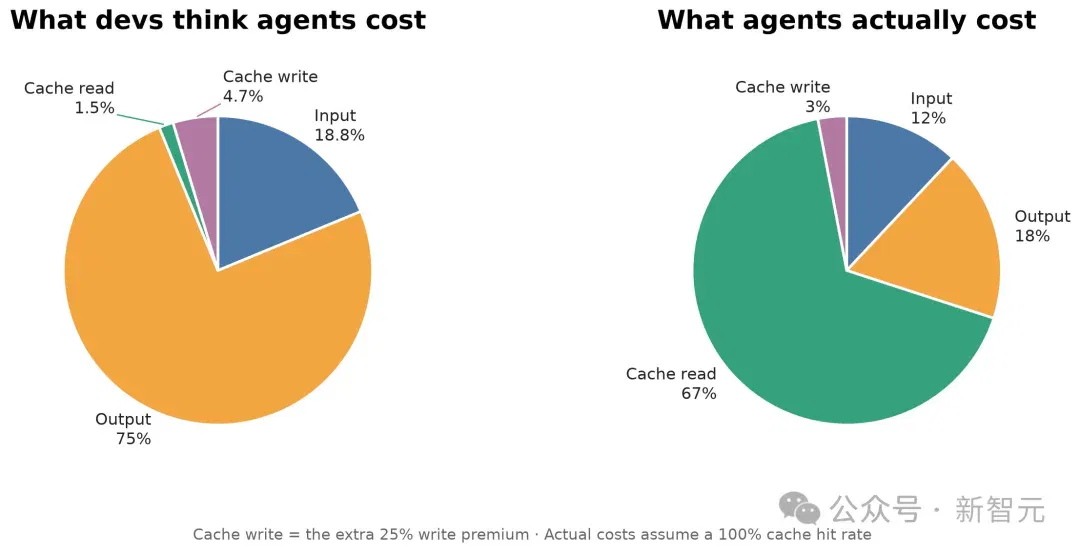
Another developer, Martin Alderson, simulated an Opus 5 session with a 60,000-token context and 100 conversation turns. The results showed that about 76% of the bill went entirely to "cache reads".
In other words, in real coding agent scenarios, more than 90% of token consumption actually consists of the model repeatedly reading history it saw just seconds earlier.
At this point you might ask: even if it is "rereading," that is still 16 billion tokens. Doesn't the GPU use electricity? How could that let Anthropic make money hand over fist?
This is where we reveal the first real ace up its sleeve.
Ace One: The KV Cache
AI Vendors' "Zero-Marginal-Cost Money Printer"
Do not be intimidated by terms like "KV cache." To understand the physical costs of large-model inference, you only need to remember three things:
- Step one: prefill—compute-intensive. The first time the model reads your codebase, the GPU has to work flat out on a large number of matrix operations, converting the text into intermediate states the machine can understand—activations—and storing them in GPU memory. These saved "reading notes" are the KV cache. Once the cache has been written, the next time the same content is read, existing KV states can be reused when the cache hits and the prefix is compatible, avoiding repeated prefilling, although subsequent decoding still involves computation and memory access.
- Step two: decode—GPU-memory-bandwidth-intensive. When the model starts producing text—generating output tokens—every token it emits requires another look through the entire KV cache in high-bandwidth memory (HBM). This step involves little computation but a huge amount of data movement. It is also why vendors' API prices for output tokens are often five times their input prices: GPU memory bandwidth during decoding is the real physical bottleneck of large-model inference.
- Step three: tool calls—just pressing "pause." When a coding agent stops to run
grepor execute a script, the server may retain the existing KV cache for later reuse. Whether the cache is retained, hits, and resides on a particular device depends on the implementation. Storing and moving the data still costs resources; it cannot be treated as entirely resource-free.
Now comes the most absurd—and most profitable—part.
When the model generates output continuously, it reads the entire KV cache for every token it produces. The vendor does not charge you an additional "cache read fee," because that expense is already bundled into the expensive output price.
But once the agent pauses to call a tool and then resumes, the API suddenly gets strict. It charges you a token-based "cache read fee" for that same KV cache, sitting motionless in memory with almost no computation cost.
Diogo Almieda offered a particularly biting summary: there is no profound technical necessity behind making you pay for the KV cache again after a tool call. It is simply that "this is how the vendor prices it—take it or leave it."
Anthropic itself inadvertently let the secret slip long ago.
If you look through the Claude API documentation, you will find a particularly revealing detail: cache-read tokens do not count toward the default input tokens per minute (ITPM) limit; requests per minute (RPM) and output tokens per minute (OTPM) remain subject to their respective limits.
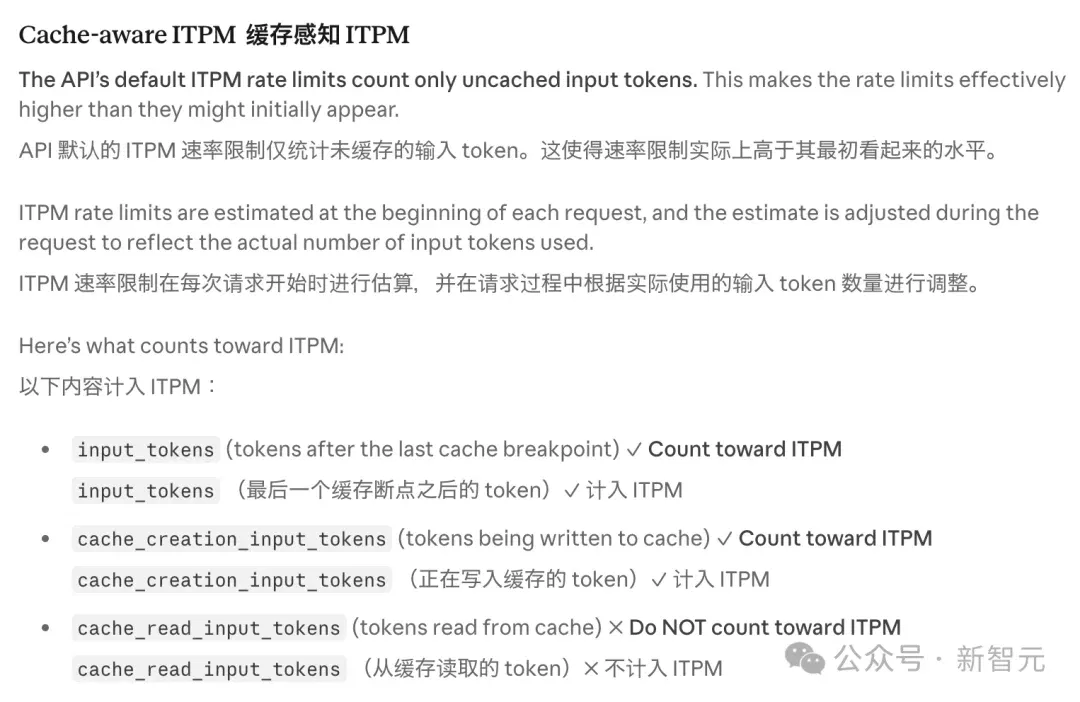
Think about it: what are rate limits for? Protecting servers from being overwhelmed by traffic.
By daring to exclude cache reads from rate limiting, Anthropic is effectively announcing to the world through a megaphone: "This barely consumes any of my real compute. Read all you like!"
As for OpenAI, it offered automatic prefix caching free for more than a year in the early days. Only with GPT-5.6 did it follow Anthropic's example and add a 1.25× premium for cache writes.
Once that thin veil is pierced, the mystery of Vlad's $100,000 is instantly solved.
That $100,000 was not Anthropic's actual cost. It was calculated from an API price list built on "marking up practically free cache reads."
For enterprise customers paying by usage, every extra tool call a coding agent makes earns the vendor another "cache tax." Cache charges and actual resource costs are different things. The price list and these examples alone cannot establish inference profit margins or how they change.
For subscribers paying $20 or $200 a month, meanwhile, Anthropic waives that "cache tax," letting them burn through billions or even tens of billions of tokens. On paper, it looks like the vendor is subsidizing usage dozens of times over. In reality, its actual hardware costs may well be only a fraction of the listed price.
Still, a fraction is money too. SemiAnalysis estimated in October that subscriptions contributed only about a tenth of Anthropic's revenue but consumed over 40% of its inference compute. Heavy users who max out their plans probably still require a subsidy.
Ace Two: Speculative Decoding—Squeezing Out the GPU's "Idle Time"
If KV caching pushes the cost of "reading input" down to rock bottom, how does Anthropic save money and accelerate the real physical bottleneck mentioned earlier—the decoding stage of "producing output"?
This is where the second ace highlighted by Gergely Orosz comes into play: speculative decoding.
As mentioned earlier, when a model decodes text, it is mainly constrained by GPU memory bandwidth. That leaves the GPU's extremely expensive compute cores essentially "idling" much of the time. It is like a Michelin-starred chef standing at the stove, spending 90% of the time waiting for a prep cook to bring over ingredients.
Speculative decoding squeezes every last drop out of that chef's idle time.
The vendor puts an extremely fast small model, or a dedicated predictor, beside the large model as a "stenographer." It first guesses several upcoming tokens in one go, then sends them to the large model as a batch. Using its idle compute, the large model can verify whether all those guesses are correct in a single forward pass. If they are right, they all pass through immediately; if they are wrong, they are sent back to be rewritten.
Which situation do you think is best suited to "guessing ahead"? Not poetry, because a poet's next line could take off in any direction. But coding is a match made in heaven!
Code is full of highly predictable structures: fixed syntactic brackets, recurring variable names, function signatures copied from the context, small refactoring changes to existing code, and so on. Small models guess code correctly time after time, with astonishingly high acceptance rates.
The result is that code that once required moving data through GPU memory five or six times can now be produced with a single round of data movement.
Put these two aces together, and a business picture so perfect it deserves applause emerges:
- On the input side, KV caching: the agent rereads context like crazy? Almost no compute cost; the API still charges cache fees, while subscriptions can easily offer extremely high allowances.
- On the output side, speculative decoding: code is highly predictable, so idle compute is used to maximize generation speed and throughput, further reducing the actual cost of each session.
Even as large models become increasingly commoditized and open-source models close in, frontier labs keep raising their inference gross margins. This is where the secret lies.
Once the Cards Are Revealed, Who Wins and Who Pays to Learn?
After unpacking this "economics of inference," let us look again at today's AI landscape. Many seemingly contradictory phenomena immediately make sense, and the strategies adopted by different players are already clearly distinct.
First, if you are an ordinary individual developer, stop agonizing over it. Continuing to get the most out of a subscription is the best deal.
Whether it is Pro at $200 a year or a top-tier plan at $200 a month, the vendor trades extremely low marginal costs for your long-term retention and attachment to its ecosystem. It is a rare win-win. The next time you see billions of tokens in your usage dashboard, you can smile knowingly.
If you are a technical team building AI agents, do not fall into the "smart routing" trap!
To save money, many teams like to put a router inside their agent: send the hard problems to Opus and switch simple steps to the cheaper Sonnet. Sounds clever? In fact, it can cost you dearly.
Because KV caches cannot be shared between different models!
One usage-based calculation considered an Opus 5 session with a 100,000-token context. Even if the next step only needs to generate 1,000 tokens, switching to a cheaper model midway forces you to write all 100,000 tokens of context into the new model's cache from scratch. The result is that this "money-saving move" makes the step almost three times as expensive, while leaving you with a less capable model.
There is a counterintuitive conclusion here: for long-context coding agents, the cheapest model does not necessarily complete a task at the lowest cost. What really determines cost is not just the model's unit price, but also how much cache each switch wastes.
An architecture that genuinely saves money lets subagents handle the dirty work that "does not inherit the main context"—for example, searching through 50,000 tokens of logs in a codebase and distilling the findings into just 200 characters to report to the main agent. That controls the growth of the main context at its source.
Finally, for enterprises running agents at scale, the move toward self-hosting open-source models is already unstoppable.
As Diogo Almieda points out, if an enterprise runs huge numbers of agents through APIs every day, it is essentially handing closed-source vendors the enormous cost benefits of KV caching.
This is also why, over the past year, many tech giants have decisively begun "leaving" closed-source APIs. Uber cut its per-token cost by 50% through architectural optimization; AT&T cut it by 56%; Pinterest slashed it by 90%. Fintech giant Revolut went as far as buying 56 NVIDIA B200 bare-metal servers to run inference itself.
More and more teams are also using specialized inference clouds such as Modal, Fireworks and Baseten to run open-weight models including DeepSeek 4.1 Flash, GLM 5.3 and Kimi K3.1 Pro. Only by controlling the inference stack themselves can they keep the real savings from KV caching in their own pockets.
The good news is that cracks have already begun to appear in the hefty "cache tax." Recently, Fable 5.1 cut its cache-read price in half and then in half again, from $1 per million tokens to $0.25.
That was not the end of it. Fable 5.2 launched on November 9, cutting the cache-read price again to $0.20.
In just over two months, cache-read prices became a full 80% cheaper than in the Fable 5 era.

More revealing still, Anthropic itself acknowledges that lowering cache-read prices alone could reduce the overall cost of complex coding and agent tasks by as much as about 45%.
This shows that for coding agents that call tools incessantly and repeatedly read context, caching has long since ceased to be an optional optimization. It is a key variable determining the entire bill.
As inference engineering fully transforms from "black-box magic" into essential knowledge for software engineers, the window for earning excessive profits from information gaps will gradually narrow.
References:
https://x.com/GergelyOrosz/status/2123795984002232634
https://x.com/vlad_mihalcea/status/2123753559191617993
https://x.com/CompleteSkeptic/article/2097738214589215173
https://newsletter.pragmaticengineer.com/p/inference-engineering-for-software-engineers
https://newsletter.pragmaticengineer.com/p/what-is-inference-engineering
This article is from Xinzhiyuan, by Solomon.
Related topics
After reading
Join the AINRK community
Read how to join the community and connect with people working in AI.
Related articles
Continue reading related topics and articles in this category.
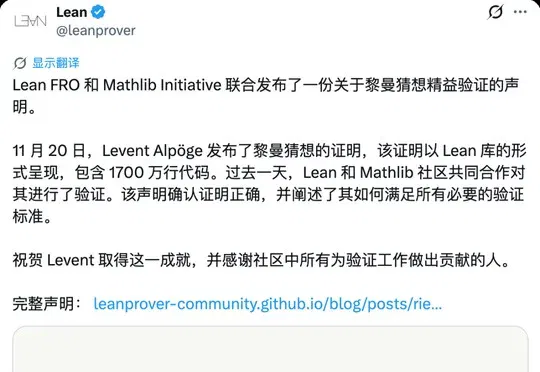
Alpöge says “250,000 pages” was a joke, addresses Riemann-proof code criticism (opens in a new tab)
Levent Alpöge says the “250,000-page” proof was a joke and acknowledges redundant, low-quality Lean code in his work with Claude. He argues that its ideas should lead to a more natural, concise mathematical framework; code quality and formal correctness remain distinct.

Dario’s early “immersive games” idea draws criticism; media accounts are distinct from company policy (opens in a new tab)
The article revisits media accounts of Dario’s early OpenAI discussions and critiques his views on AI jobs, safety and Anthropic’s culture. The idea is not current company policy; online speculation about his health lacks reliable evidence.
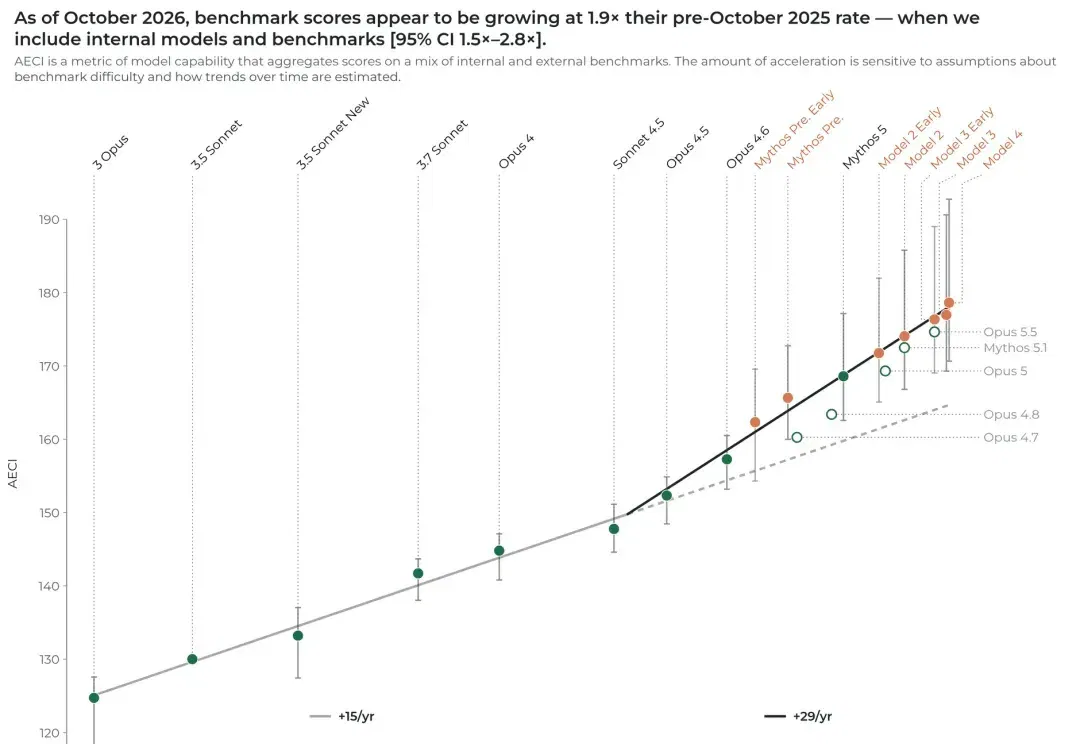
Anthropic’s internal models: METR reports faster R&D; unreleased products remain unconfirmed (opens in a new tab)
METR estimates Anthropic’s AECI progress at about 1.9× its previous pace, with uncertainty over causes and broader applicability. Reports of stronger internal models, Model 5 or future leaps are not confirmed product or release announcements.

Report revisits Dario Amodei’s early AGI risk estimate and Anthropic’s safety culture (opens in a new tab)
A commentary citing a Washington Post investigation and social-media accounts examines Amodei’s 2022 memo, Anthropic’s culture and IPO pressures. The 20%–30% figure was his subjective estimate of human destruction or permanent stagnation, not an objective probability.
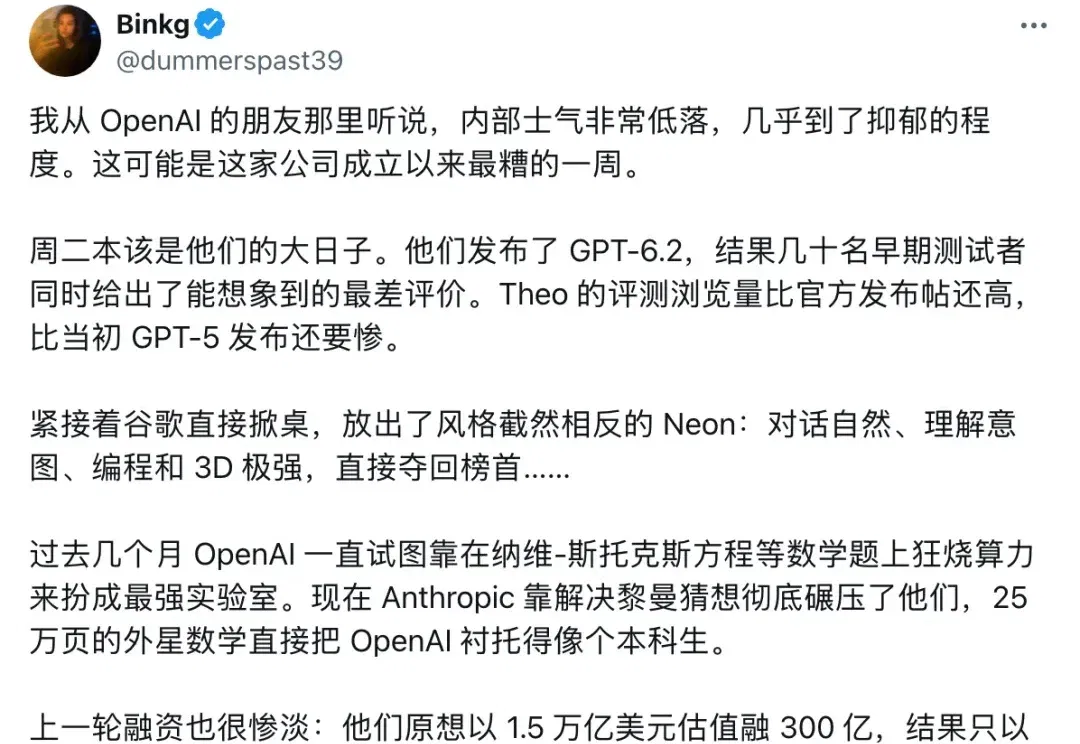
Podcast recounts Anthropic equity offer as AI talent competition meets model criticism (opens in a new tab)
On All-In, Calacanis recounted a reported US$40 million four-year equity offer to a new CS graduate. The article also reviews GPT-6.2 Astra criticism, rankings and financing reports. The offer is not a verified cash salary; morale claims are secondhand.