Syncere raises $11M for Lume, a household robot shaped like a floor lamp
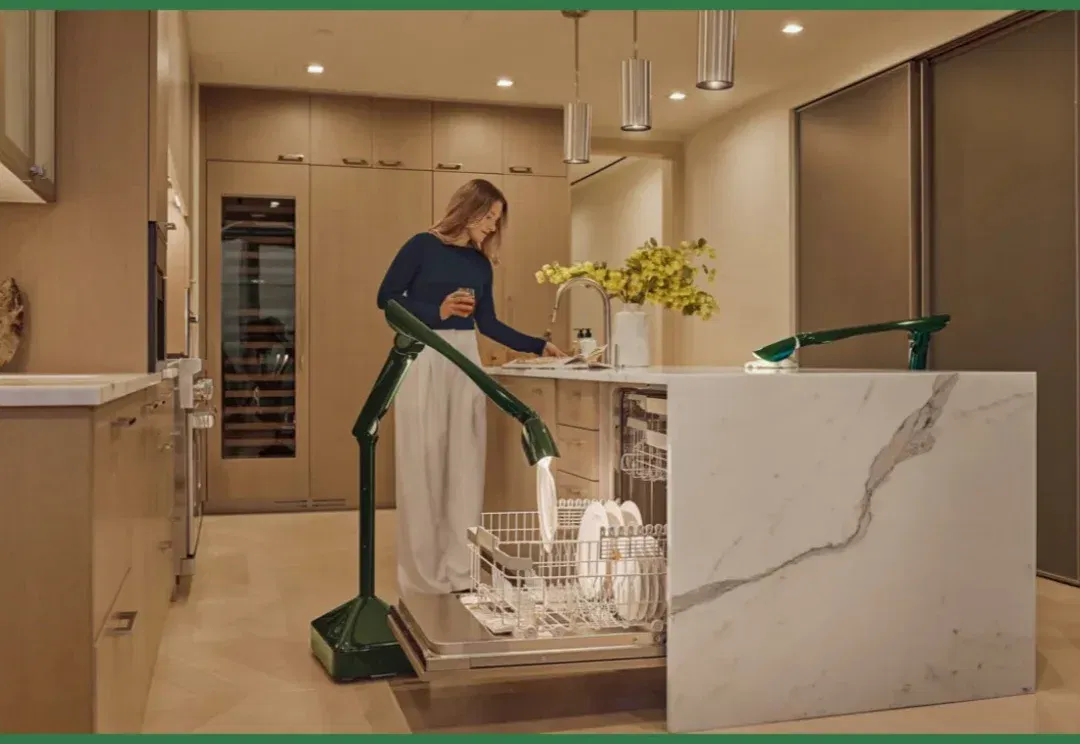
Syncere uses a floor-lamp form for Lume: one robot handles some pick-and-place tasks, while two work together in Duet mode on tasks such as folding clothes. Demos are edited; pricing and delivery reflect the source date, and home reliability remains unproven.
A household robot starts with a familiar piece of furniture.

The lamp in your home may be the least busy piece of furniture you own.
You do the laundry; it stays lit. You fold the clothes; it stays lit. You finish tidying the room and collapse onto the bed, exhausted; its only job is still to stay lit.
A startup called Syncere wants to give lamps something else to do.
It has made a robot called Lume. More precisely, it looks like a floor lamp, but unfolds into a robotic arm that can do housework. When idle, it stays beside the bed to provide light. When busy, it reaches out to pick up clothes and tidy things away.
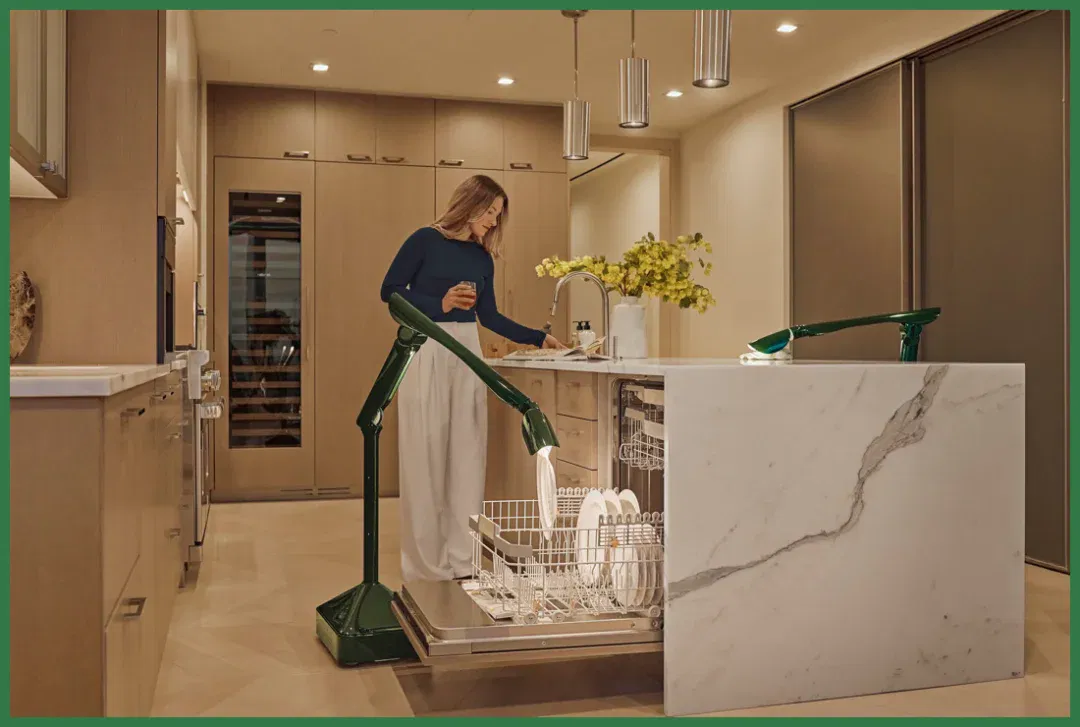
Lume unfolds its robotic arm to take a plate out of the dishwasher: the lamp head also serves as the end that manipulates objects.
This somewhat unexpected product has already won venture-capital backing. On November 3, 2026, Syncere announced $11 million in pre-seed funding led by a16z Speedrun, with participation from Draper Associates, Physical World, SeaX Ventures, Sequel and others.
Why would a lamp merit an investment like that?
Looking at its product design reveals that the question actually points to something else: what exactly should robots look like if they are to enter our homes?
A hand hidden beneath the lampshade
First, watch it move.
In the official demonstration, two lamps beside a bed extend their robotic arms, grip clothing at the ends and work together to fold it. At that moment, what looked like a lamp stand becomes an arm, while the position of the lamp head becomes the end that handles objects.
An excerpt from the official website's promotional video, shown at the original playback speed. The clip contains edits and is not a continuous real-world test of one complete task.
That contrast is what makes Lume so memorable. One second it is part of the bedroom background; the next, it starts handling clothes on the bed.
The official website also shows it placing and removing dishes in a dishwasher and tidying scattered objects. The latest feature description says it can move autonomously between rooms and return to the home setting when its work is done.
To understand the product, however, one key distinction matters: one lamp has only one robotic arm.
The website's explanation of single- and dual-unit use classifies fetching, moving objects and tidying toys as single-unit tasks. Jobs requiring two hands, such as folding clothes and making beds, are the main purpose of the two-lamp Lume Duet system. The lamps can also be placed in different parts of the home and coordinate when a task requires cooperation.
So when you see two lamps pulling a bedsheet open together in a demonstration, do not assume that buying one will produce exactly the same result.
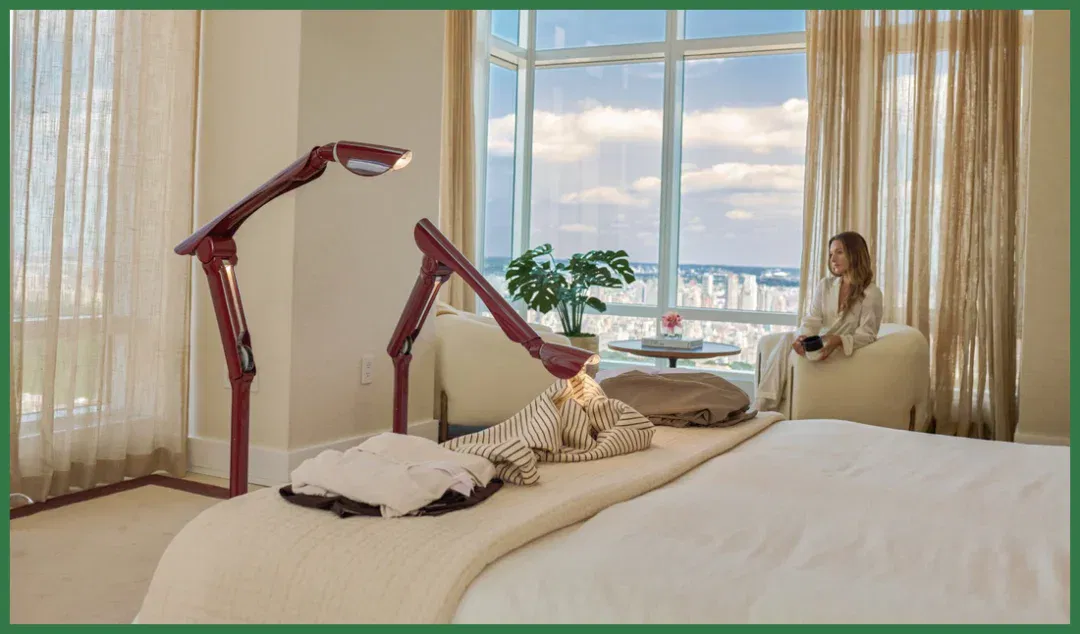
An official image of two units working together. Duet's two lamps are also the two hands needed for two-handed housework.
Why a lamp, specifically?
If the goal is simply to fold clothes, there seems little need to go to the trouble of making a robot look like a lamp.
But imagine this: the robot you buy will spend most of its time not working. As it sits in the room, it takes up space and becomes something you see every day.
Lume gives that idle time a purpose: lighting.
Seen this way, the lamp form addresses two problems at once. It finds a natural place for the robot in the home and gives its still-developing housekeeping capabilities another source of everyday value. Even if you do not ask it to fold clothes today, it can still be a bedside lamp.
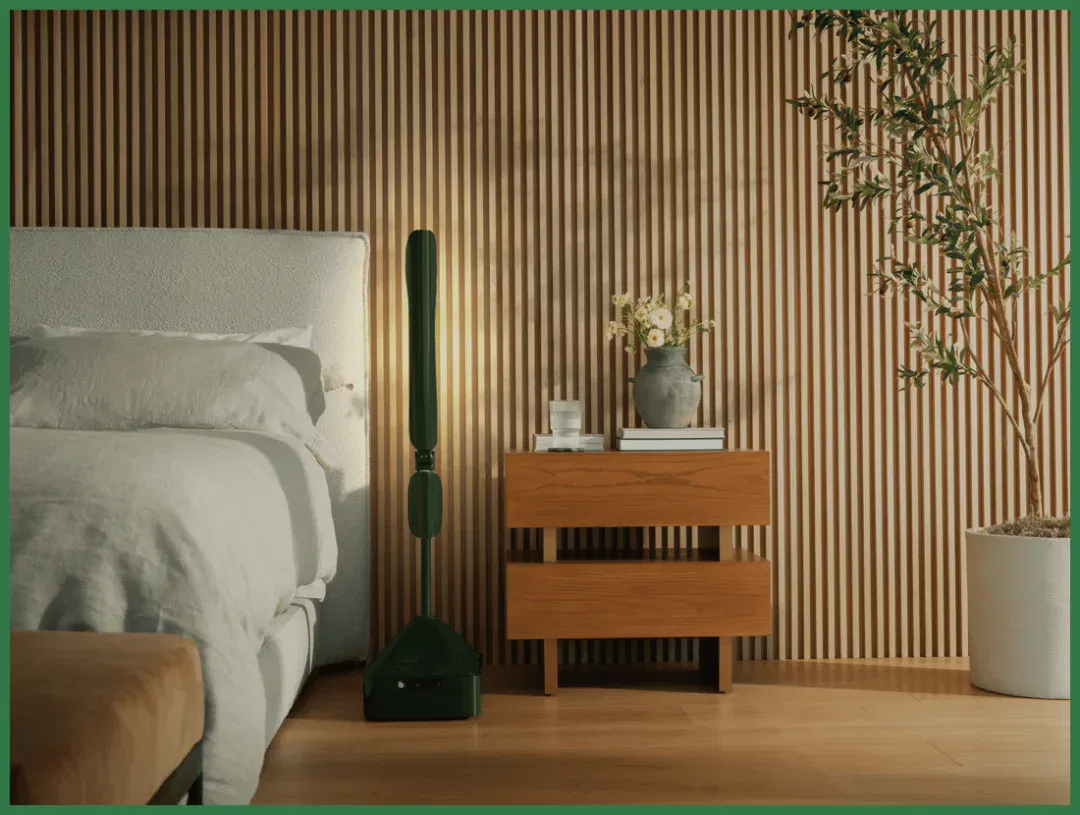
With its robotic arm folded away, Lume becomes a bedside lamp again.
Syncere explicitly explained this product thinking in its funding announcement: first make people willing to bring the product home, then keep improving the robot's capabilities through experience in real households.
A home robot must answer not only "What can I do?" but also "Why would you want me to stay here all the time?"
That makes Lume's promotional imagery interesting. It often appears in fully furnished bedrooms, kitchens and living rooms, alongside beds, sofas and countertops. The company clearly wants consumers to first picture it as part of their homes.
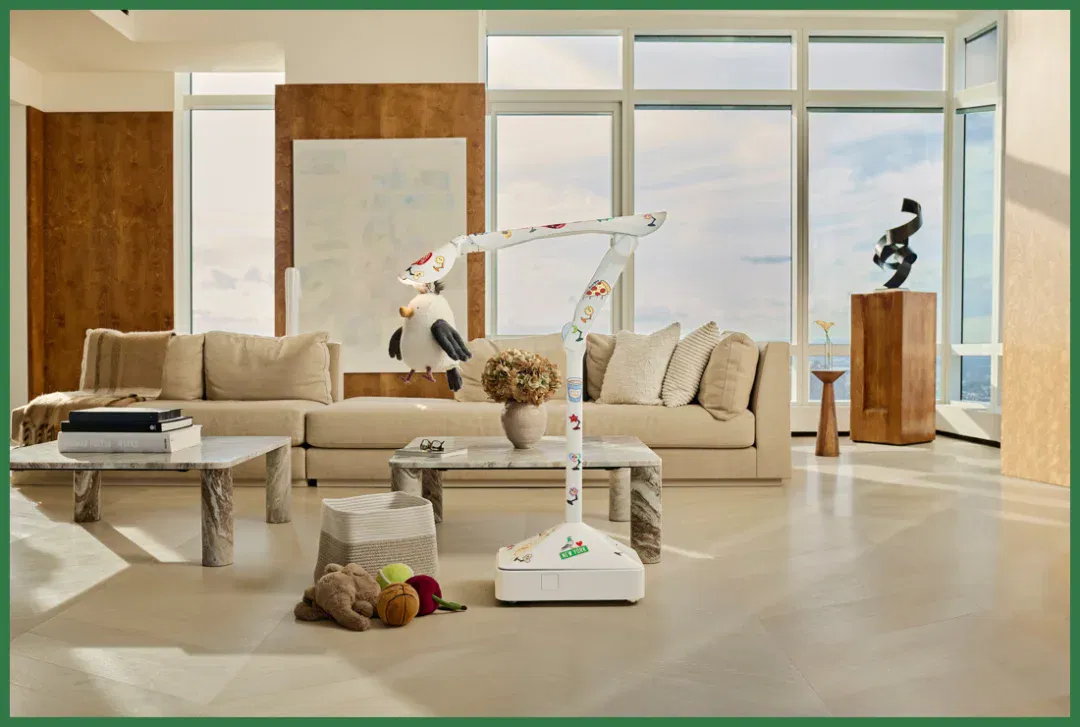
Tidying a living room: Lume lifts a toy with the gripper beneath its lamp head.
This choice also brings new tests. As a robot, it must do its job well; as furniture, it must be something people want to look at every day; as a lamp, it must provide good lighting. Those three requirements add up, and none disappears simply because the product looks attractive.
Getting robots into homes gives them a chance to keep learning
Syncere's funding announcement describes a dilemma for household robots: they need experience in real homes to become useful, but they must first be useful enough for people to want to buy them.
It is a chicken-and-egg problem.
The company's answer is to use the lamp's own value to encourage early purchases, then gradually add capabilities to the same hardware through software updates. The announcement also draws a comparison with Tesla: first sell a product people want to buy, then use experience after deployment to improve more difficult automation capabilities.
This helps explain the investment's appeal. The lamp is the first product, but behind it is a path to exposing household robots to real use sooner. Of course, this remains the company's commercial and technical judgment. Whether it can lead to sustained improvement will depend on performance after delivery.
An excerpt from the official promotional video. Moving objects from one place to another is among the household tasks it demonstrates.
Real homes present another problem that experimental demonstrations struggle to fully capture: everyone has their own way of doing the same chore.
How small should the clothes be folded? Where should things go? How should the cushions on the bed be arranged? There is still a gap between completing a task and completing it the way I prefer.
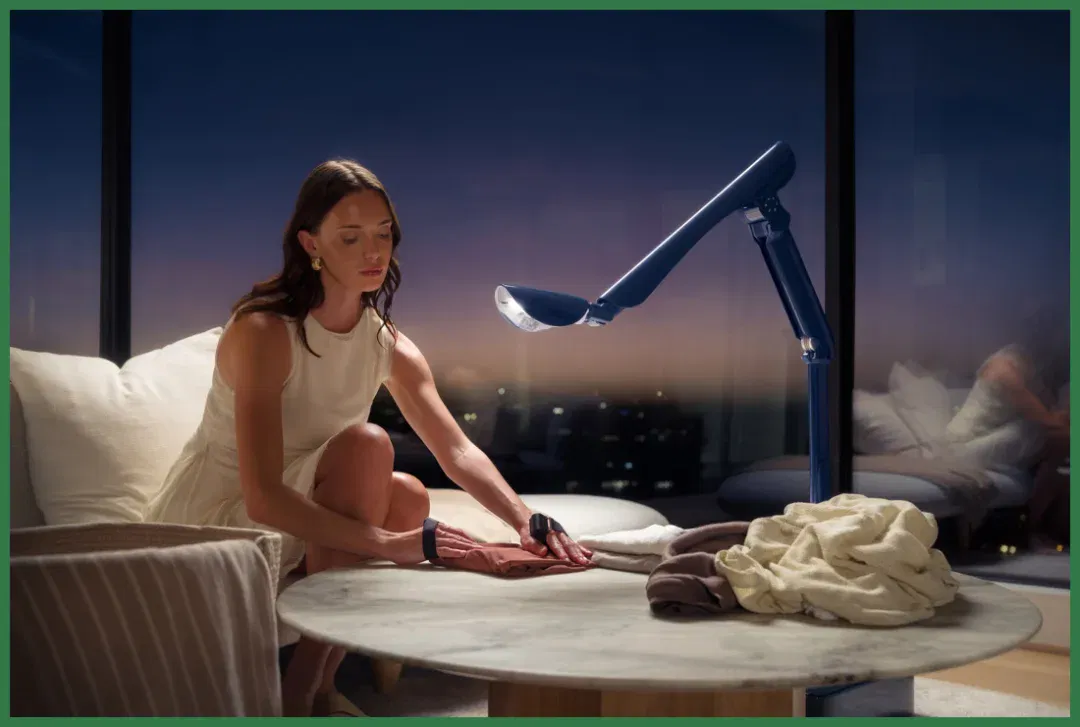
A user demonstrates arranging clothes beside Lume, illustrating a personalization setup scenario.
For this, Syncere has designed an accessory called the Personalization Band. According to the official description, it learns the user's preferences during initial setup. Images on the website show a user wearing the accessory while arranging clothes.
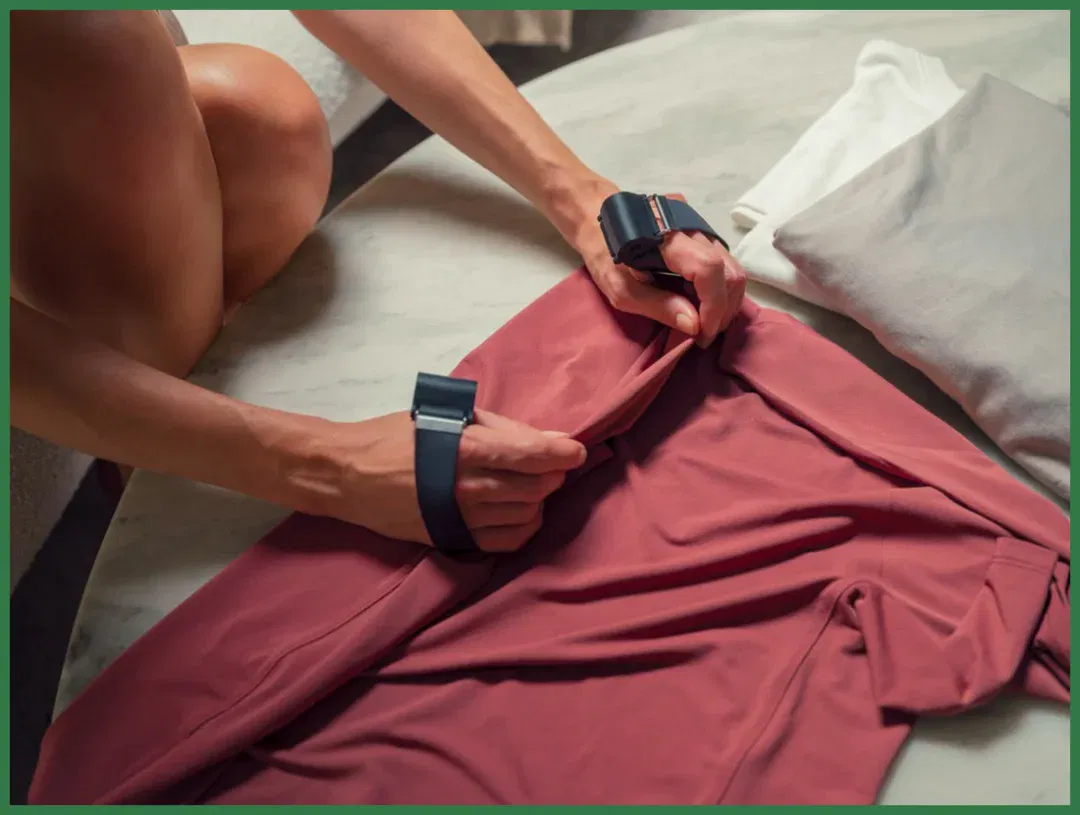
An official illustration of the Personalization Band. More concrete usage evidence is still needed to establish how many demonstrations it requires and how much variation it can accommodate.
This is also what makes household robots more complicated than ordinary appliances. A washing machine has standard programs, while "help me tidy up" often has no single standard answer.
People on X have already ordered, but discussion is not yet a record of user experience
Lume's attention does not come solely from its funding news. As of November 9, 2026, Aaron Tan's product post from April [1] showed about 1.35 million views and 444 replies. A lamp suddenly starting to fold clothes is certainly a striking enough contrast to make people stop and look.
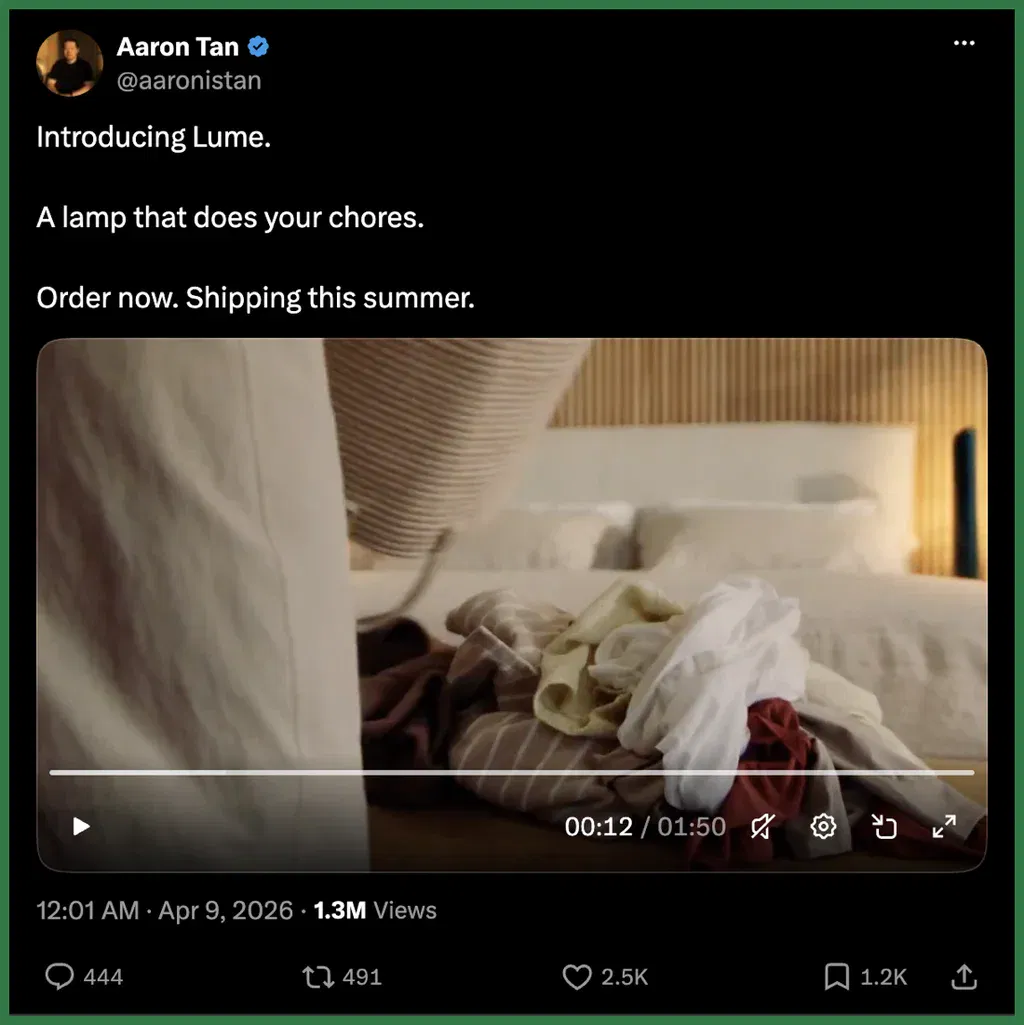
Aaron Tan's early launch post, captured on November 9, 2026. The post's "shipping this summer" statement was the plan in April; see below for the more recent delivery status.
More interesting than the attention, however, is what people actually find appealing. In sharing the post, Chris Paxton [2] said he liked the idea of multiple robots cooperating to form a two-arm system, because many household tasks become much easier with two or even more hands. That corresponds closely to Lume Duet's design: units stay in separate locations normally and work together when needed.
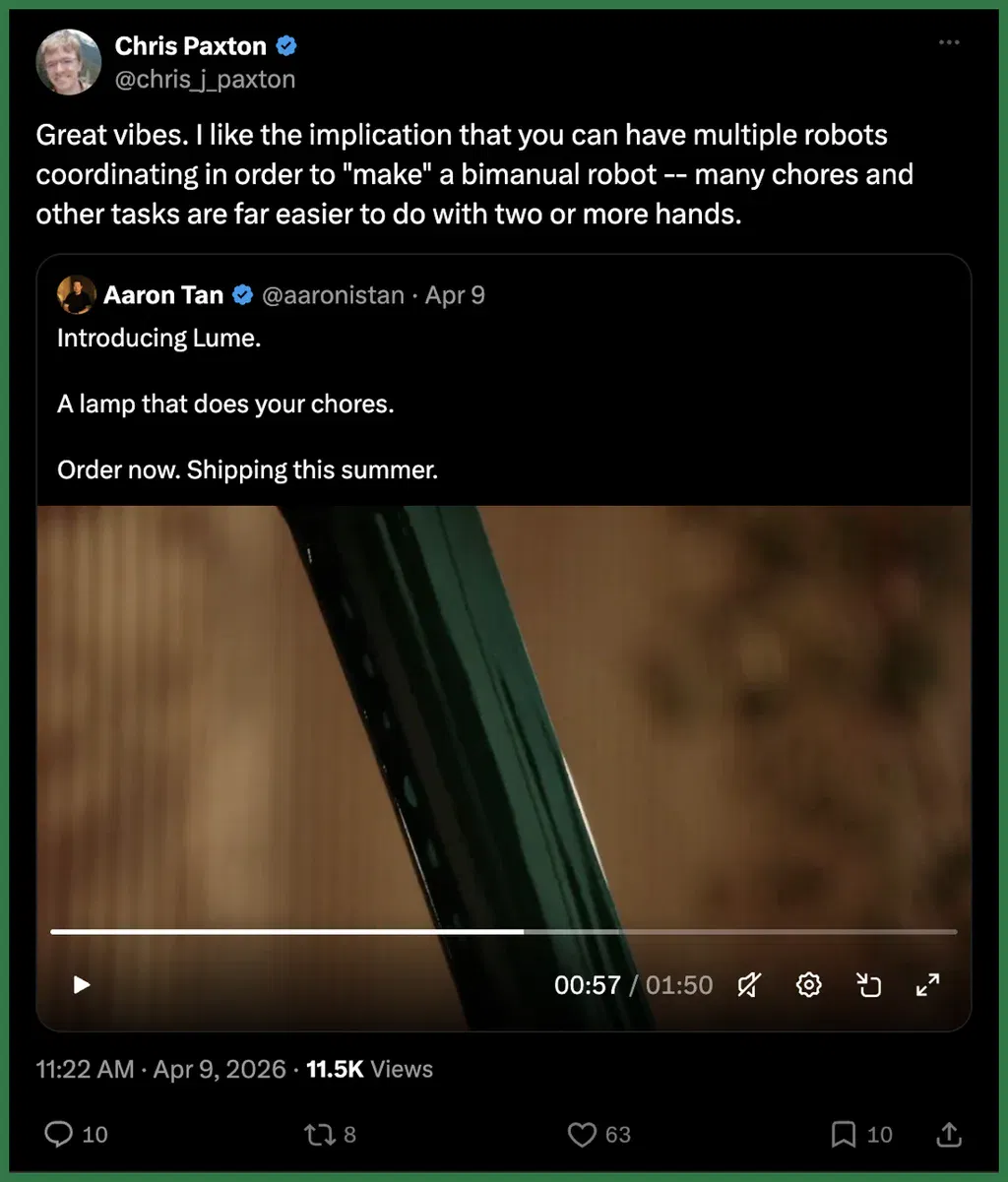
In the April discussion, Chris Paxton was positive about multiple robots cooperating on two-handed tasks.
Price and capabilities
As of November 9, 2026, the official website listed a starting price for one Lume of $2,699, and for the two-unit Lume Duet of $5,199.
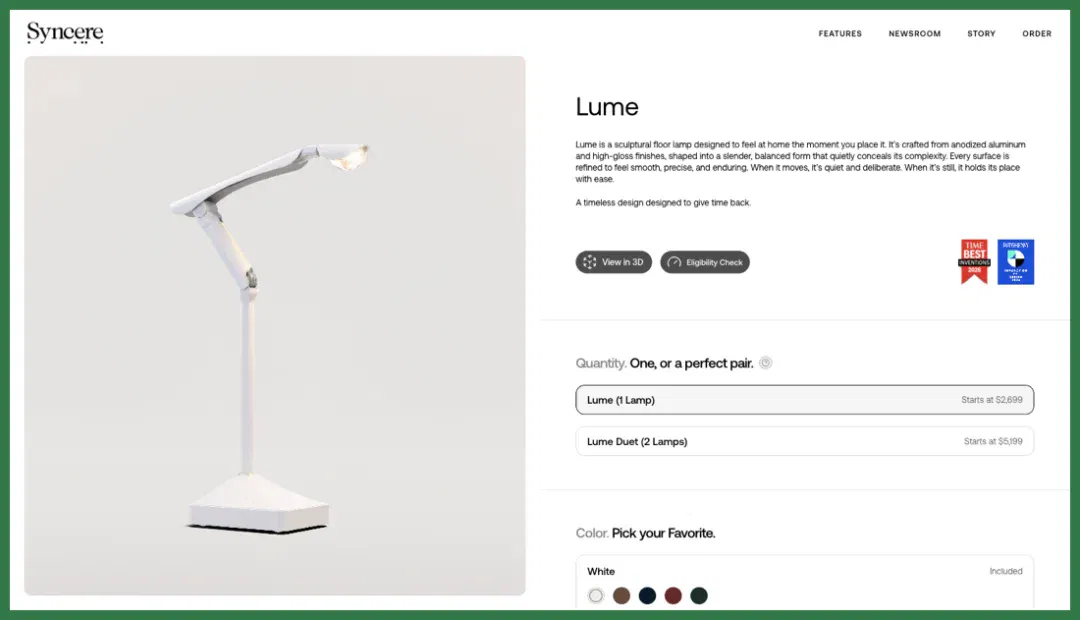
The official purchase page on November 9, 2026: from $2,699 for one unit and $5,199 for two.
Automation software carries an additional charge: the purchase page lists $679 for lifetime Autonomy access; without that option, the listed charge per unit is $79 per month starting in the second quarter of 2027. The page also lists a $489 LumeCare service option.
In answer to "What can it do now?", the website's FAQ lists making beds, folding clothes, straightening cushions and helping tidy up. Its feature page and promotional videos show additional scenarios such as handling dishes and fetching objects.
What will really determine whether it saves trouble are the less photogenic moments outside the promotional video: what happens when it misses the corner of a garment, when an object slips, when it gets obstructed halfway through a task, and how often the owner has to come over to help.
If someone has to stand beside it waiting to take over, the physical effort saved may become a new burden on their attention. What a household robot should truly deliver is time during which you can confidently walk away.
Can you buy it now? First, distinguish preorders from deliveries
As of November 9, 2026, orders could still be placed on the official website [3].
According to the company's November announcement [4], Lume had begun shipping to early customers and had attracted millions of dollars in preorder demand, but the company did not disclose how many units had been delivered.
Being able to place an order does not mean stock is available everywhere. Availability by region and arrival dates depend on the order confirmation.
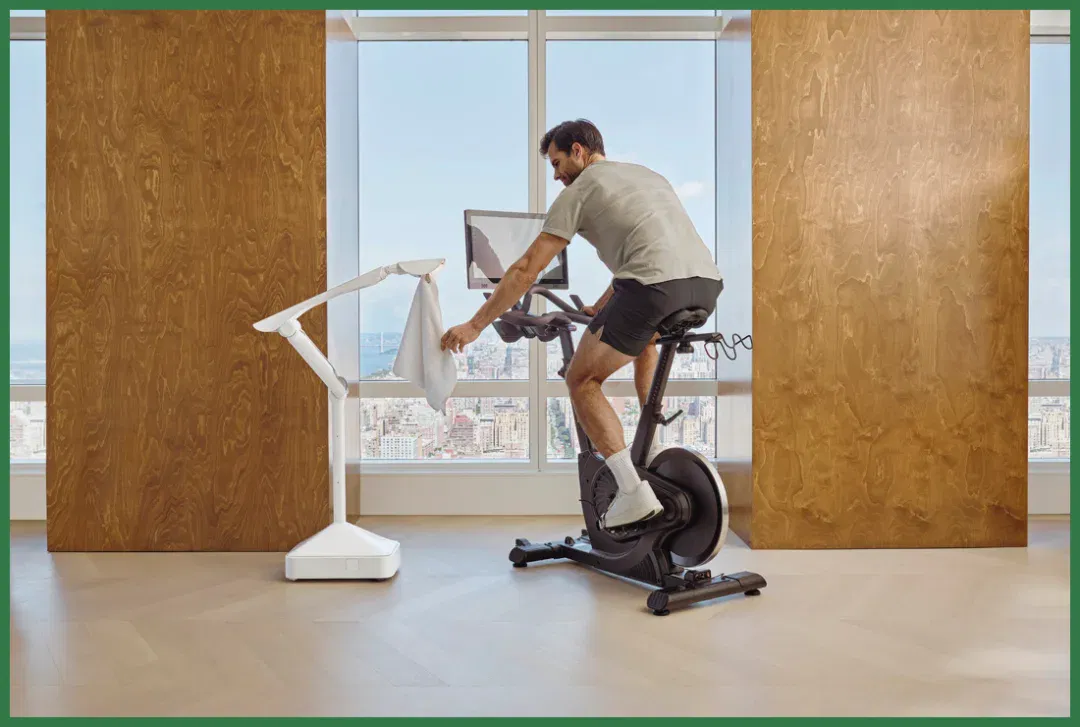
Passing someone a towel during exercise is one home-assistance scenario shown on the website.
The next generation of appliances may reach out on their own
Lume is worth watching because it offers another concrete way to imagine robots entering the home.
The appliances we know usually wait for us to put things inside: clothes into the washing machine, dishes into the dishwasher and food into the refrigerator.
Lume tries to take on the actions between these steps: pick something up, move it over, fold it and put it back. Whether it can do so reliably still requires long-term testing in real homes. But by starting with a familiar piece of furniture, it has already brought the question closer to everyday life.
Perhaps one day, the most satisfying technology in the home will be coming back to your bedroom to find the bed made and the clothes folded.
The bedside lamp glows quietly.
You never even saw it work.
References
[1]Product post published in April: https://x.com/aaronistan/status/2041909335220220252
[2]Chris Paxton: https://x.com/chris_j_paxton/status/2042080713084686784
[3]Official website: https://syncere.com/product
[4]Company's November announcement: https://syncere.com/newsroom/funding
This article was originally published by Crossing. Author: Kovana.
Related topics
After reading
Join the AINRK community
Read how to join the community and connect with people working in AI.
Related articles
Continue reading related topics and articles in this category.
智动未来据报完成亿元级Pre-A+融资,资金用于产线与服务机器人部署 (opens in a new tab)
机甲觉醒报道,智动未来宣布完成亿元级Pre-A+轮融资,由中美绿色基金领投、南曦创投联合领投,资金拟用于广州产线、服务场景部署和世界模型研发。“智子世界”仍属技术预览,商业化效果待更多应用数据检验。

Genesis AI raises $500M Series A to advance its full-stack robotics and Eno (opens in a new tab)
Genesis AI announces funding at a $3.5B post-money valuation, outlining a stack of data gloves, simulation, models and the Eno robot. Production and customer deployments are planned; demonstrations and correlation experiments do not establish delivery at scale.
Oxford researcher proposes cognitive symbionts for wearable AI augmentation and governance (opens in a new tab)
Hao Fei's perspective paper proposes cognitive symbionts and AI-Augmented Human Intelligence, covering long-term memory, wearables, proactive help and governance. Privacy, low latency and lifelong companionship are design goals, not verified product guarantees.
Huawei Cloud unveils CloudRobo-WM1.2, plans November 30 release of weights and code (opens in a new tab)
Huawei Cloud presents its Ascend-native embodied world model CloudRobo-WM1.2 and development platform, with two benchmark results and industrial demonstrations. Model weights, inference and post-training code, and pretraining practices are scheduled for November 30.
PaXini's Xu Jincheng on tactile sensing, embodied data and robotic execution (opens in a new tab)
In an ALIGNMENT conference talk, PaXini founder Xu Jincheng describes tactile sensors, data collection, VTLA models and execution hardware, discussing how perception, intelligence and execution work together. Product capabilities are claims disclosed in the talk.