PaXini's Xu Jincheng on tactile sensing, embodied data and robotic execution
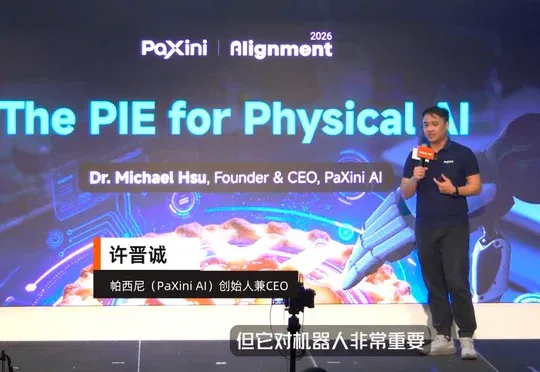
In an ALIGNMENT conference talk, PaXini founder Xu Jincheng describes tactile sensors, data collection, VTLA models and execution hardware, discussing how perception, intelligence and execution work together. Product capabilities are claims disclosed in the talk.
Robot brains have become increasingly intelligent in recent years, but entering the real world still requires something important: a human-like sense of touch that perceives objects and understands changes in force during contact.
How can robots truly perceive and understand the physical world? Let's return to ALIGNMENT 2026 and hear how PaXini AI founder and CEO Dr. Xu Jincheng sees physical AI's development and the technical bottlenecks robots still face.

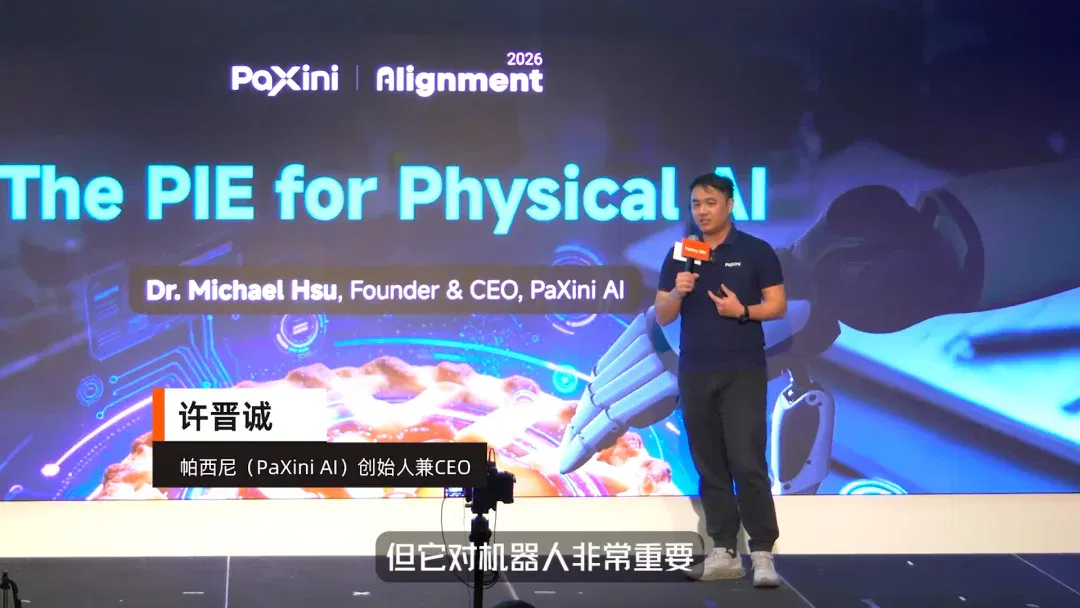
Xu Jincheng: Today's topic is PIE for physical AI. PIE may sound like food, but here it represents several important abilities robots need.
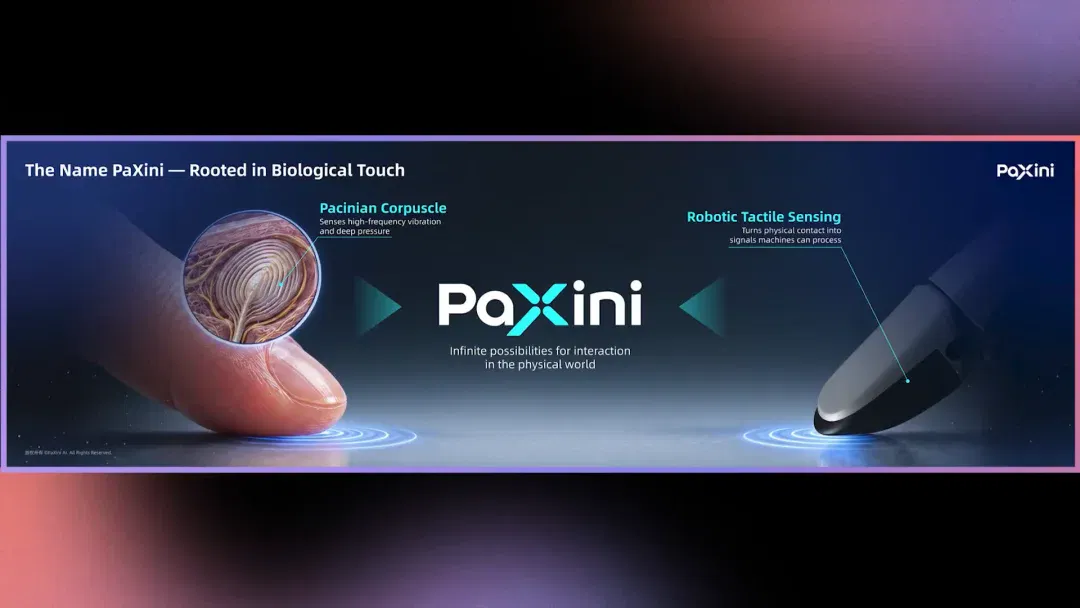
Many people find our company name interesting and ask why we are called PaXini. Human skin has four different types of tactile receptor. One senses texture and high-frequency vibration: the Pacinian corpuscle. We want to develop sensing skin like Pacinian corpuscles, which is why we chose the name.
Fingertip touch matters enormously. Holding a full glass of water in one hand and an egg in the other, we can judge our grip through touch. The brain processes abundant tactile information from our fingers, controlling force so the egg neither slips nor gets crushed. Tactile perception is therefore an important part of how humans interact with the physical world.
We are a globally leading company pursuing general intelligence driven by embodied perception. Our products serve robots, cars and other fields, and we help large enterprises build their own robots or automated equipment. We see major companies paying close attention to physical AI for future robots and recognizing how important tactile information is.

Xu Jincheng: When we consider interaction with the physical world, we also ask how intelligence exists within it. That raises further questions: if AI can think, can it understand the physical world?
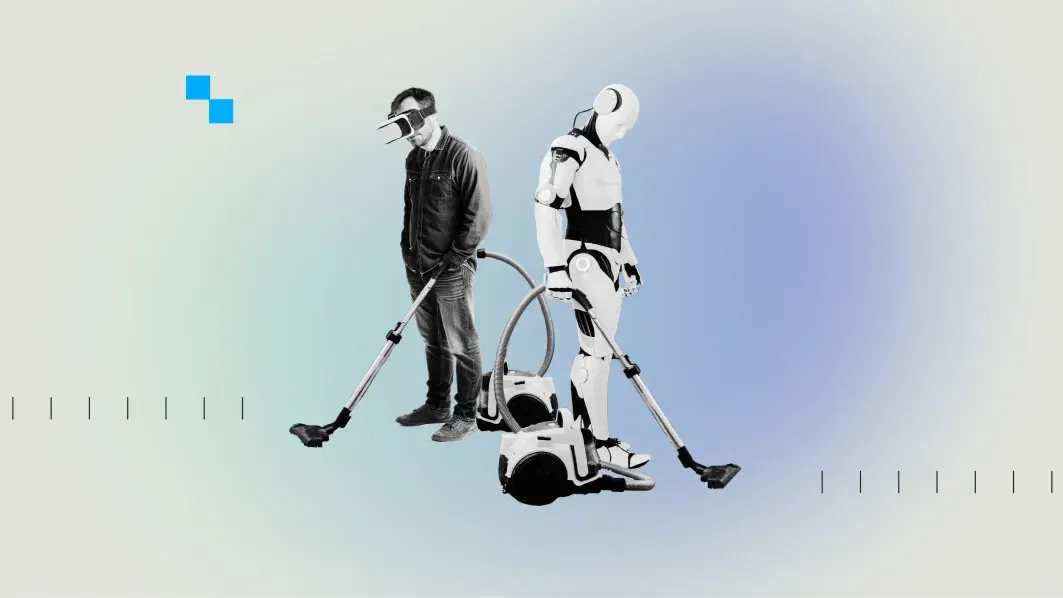
In this image, a person and a robot are both cleaning a floor. When the robot makes exactly the same movement, does it truly understand what it is doing? When we clean, force feedback helps us sense whether the vacuum nozzle fully contacts the floor and adjust downward pressure for effective cleaning. Whether the robot really understands that action remains questionable.
Intelligence without physical understanding is therefore incomplete. There remains a wide gap between a robot knowing what to do, actually doing it and accomplishing it reliably.
So what should next-generation AI look like? It should not merely understand instructions or react to prompts. It must interact with the world, make things happen and bring about change.
The world is not made only of pixels, and we do not observe everything only through cameras. Reality includes not just what we see but what we touch, feel and change. Our company wants to advance AI further so it truly understands the physical world.
This animation shows how a robot using tactile sensors can sense its grasp of a nozzle, a light bulb and other objects.
We believe AI must move beyond observation, responding or interacting after seeing. To move from observation to interaction, we have carried out many experiments like this, hoping to move robots from passive perception toward actively understanding the physical world. Only in this way can robots learn from reality.

Xu Jincheng: Intelligence needs far more than textual knowledge; it needs experience. What is experience? Essentially, human data. A robot may know what a cup is and that it is cylindrical, but does it know how to grasp or interact with it? Perhaps not. Experience teaches us, and robots, how to act and manipulate objects.
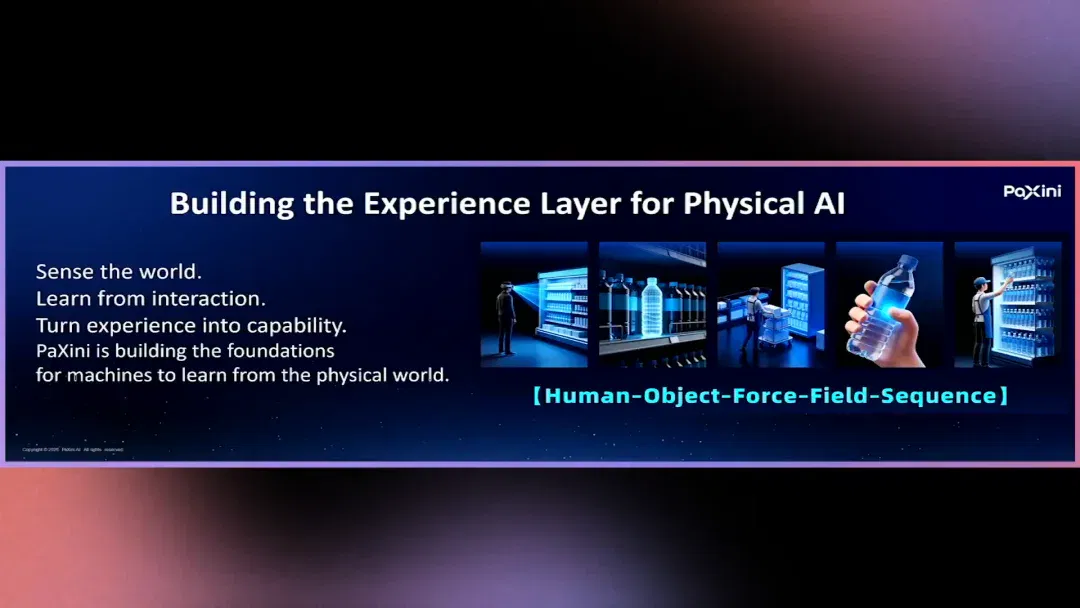
To gain more experience, we need an experience layer supplying robots or physical AI with it, because we need to perceive the world. This image shows a process in our data factory: a person observes and interacts with an object, then picks up a bottle, generating data about that interaction. Building this AI or robot data foundation lets machines learn from the physical world. It is a very important layer.
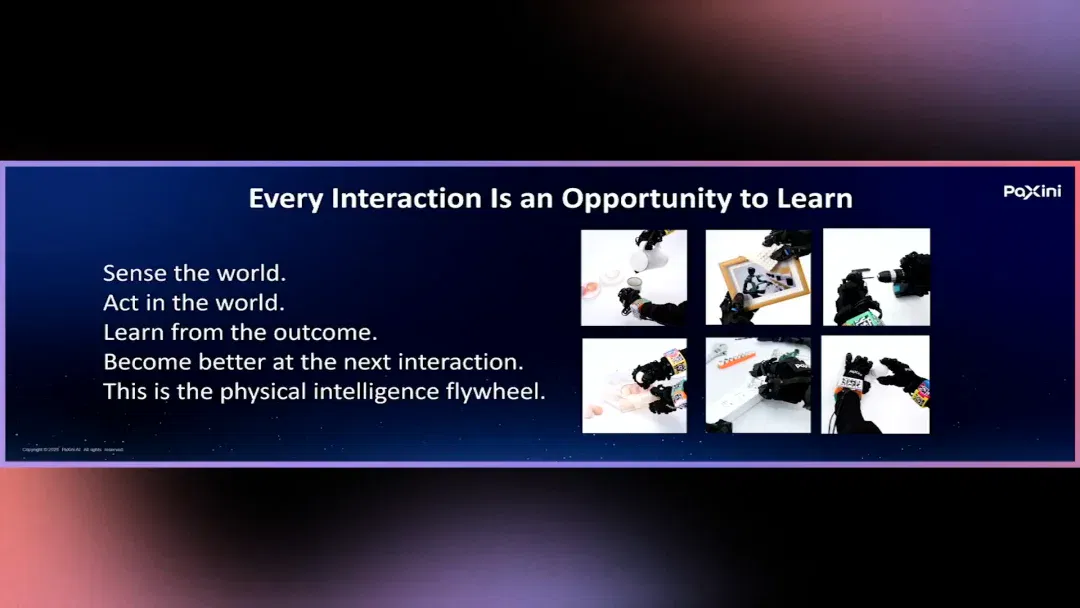
Every interaction is an opportunity to learn from the physical world. We do not want data collection to be limited to data factories in fixed locations; we also want robots to be able to learn anywhere. That is why we provide equipment like this, so people can teach robots in their own homes. We hope to seize every opportunity to teach robots, and this creates a data-driven flywheel for physical intelligence.
Turning physical interactions into intelligence is another key.
The animation shows one of our gloves, used to teach robots. This is not teleoperation. We train a small model on these data, enabling highly precise actions.
So perception is extremely important, whether that means perceiving tactile signals themselves or interacting with all kinds of objects. Through learning, success rates can improve substantially, and this applies to the various tasks that robots perform.
Once we have conducted experiments like these and let robots learn from them, how should we establish evaluation benchmarks? Or, to put it another way, how should we assess whether the tasks completed by robots meet human needs? One very simple method is to see whether a robot can handle things it has never encountered before, such as objects it has never seen or never manipulated.
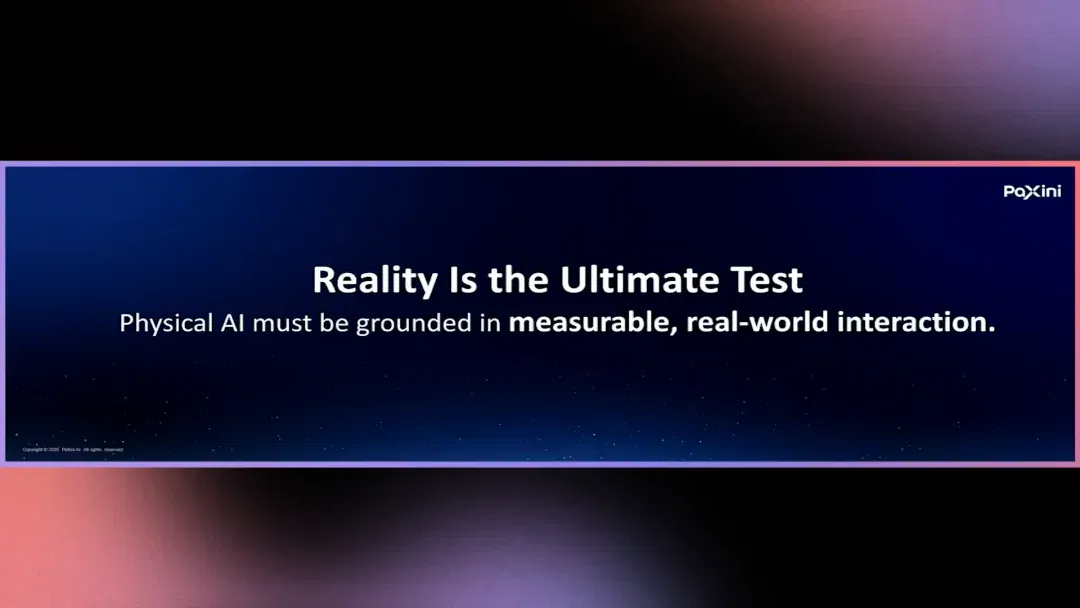
If robots can handle those objects, they demonstrate intelligence in reality. The real world is their ultimate test. What matters most is grounding robots and physical AI in measurable real-world interaction. That brings us back to PIE: connecting intelligence with reality.

Xu Jincheng: Next, I want to explain our PIE further. People often ask: what is PIE? Apple pie or pineapple pie?
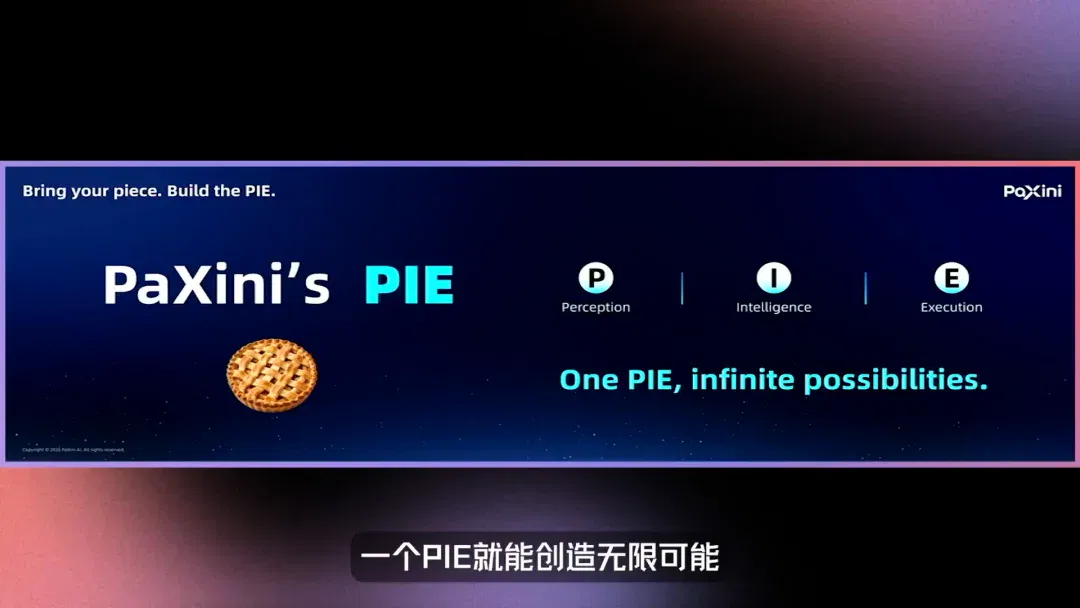
P is perception, I is intelligence and E is execution. Every robot needs all three. PaXini's PIE lets us create more possibilities for robots.
First, I would like to introduce the perception component. The image shows a dexterous hand equipped with tactile sensors, pinching a fine needle between its fingertips. When a person lightly touches the needle, the tactile sensors at the fingertips can quickly detect the external contact and changes in force, prompting the dexterous hand to withdraw. If a robot has the ability to perceive, it will do more than simply perform a pinching action: it will be able to sense external contact and interact safely with people.
Our perception capabilities use in-house sensor chips. The GEN FUSE architecture lets us develop products such as robotic fingertip sensors, tactile sensors and sensors for vehicles and other applications.
At present, we have various products for robots, such as torque sensors at the joints, six-axis force/torque sensors on end effectors, and tactile sensors for fingertips, palms, robot skin and even the soles of the feet. With these technologies, we can give every robot the ability to physically perceive with its entire body.
This technology has considerable potential to meet needs we do not yet know. Many customers recently approached us about installing different sensors on robots. Some applications were entirely new to us, and these demands from robotics companies have been exciting.
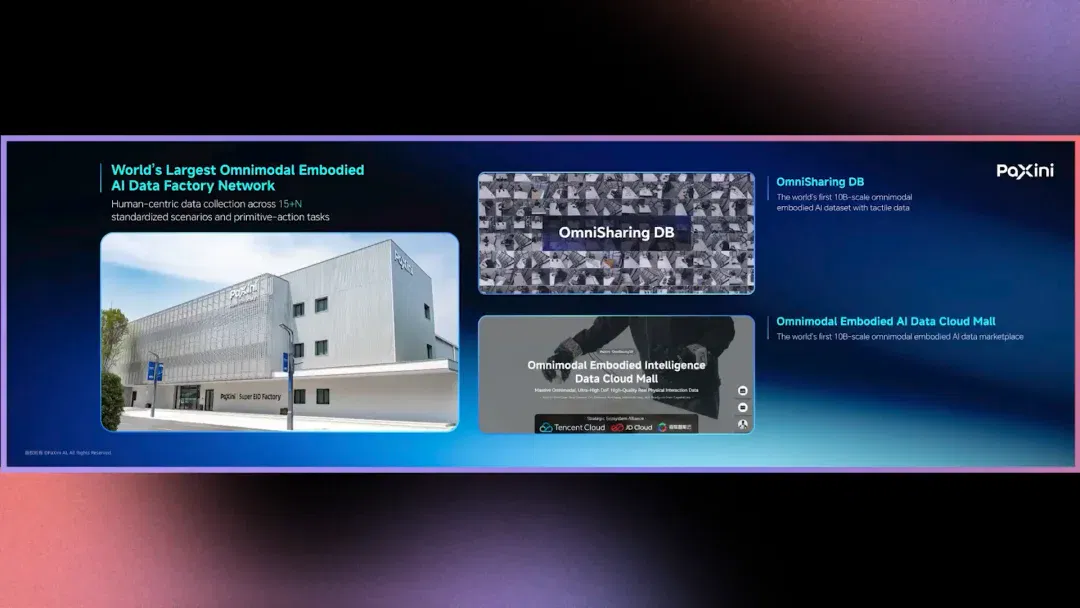
Now, intelligence. Our data factories are an important PaXini project. We can now obtain more than one million hours of high-precision human data, including tactile information. The database is called OmniSharing DB; interested people can view it on our website. These data support applications in warehouses, homes, factories and other settings.
Based on this technology, we have established a five-factory data operation. The data can support pretraining, post-training and even lifelong learning, making them very important for robots.
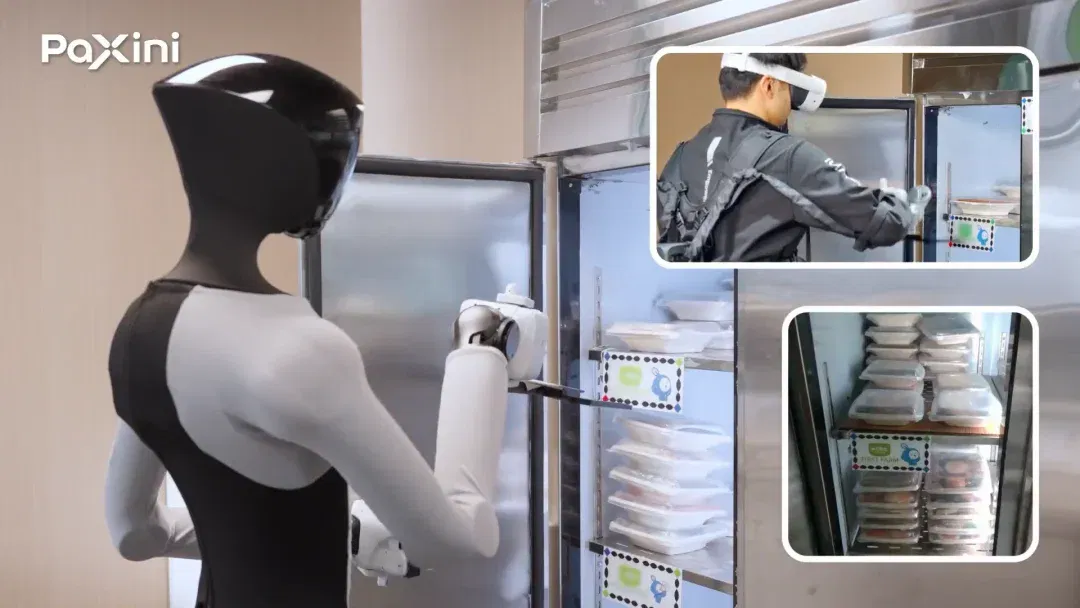
But once we have these data, how do we get robots to learn from them? To validate this, we developed a flywheel algorithm model for robots. This model is called Omni VTLA 2.0. With it, we can use data produced by data factories as well as data generated by the robots themselves. When robots generate their own data, they can still use those data for lifelong learning.
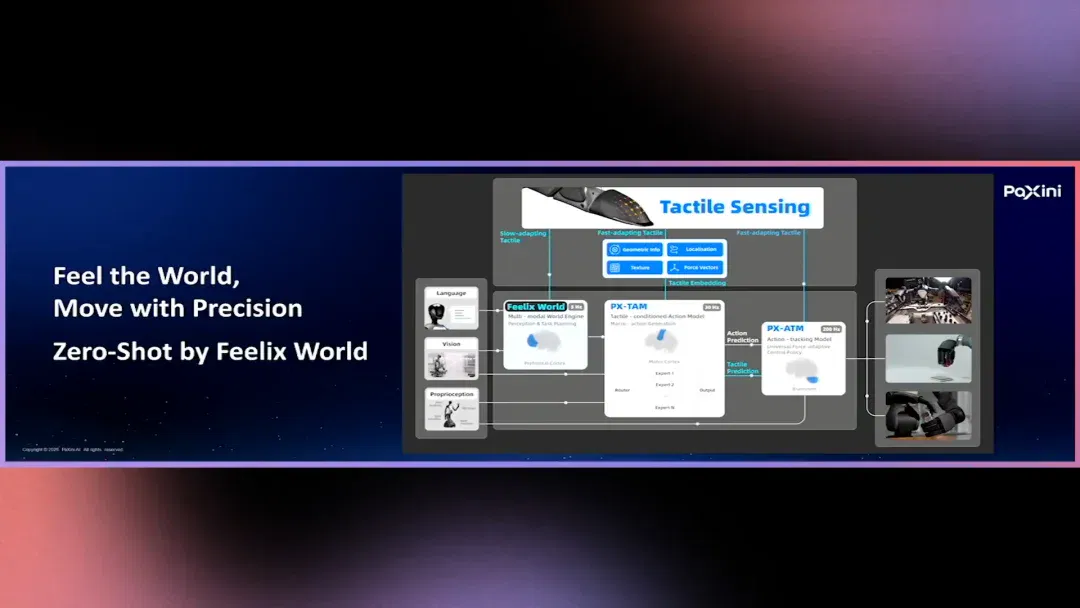
Models themselves can also play an important role, potentially helping robots achieve zero-shot generalization. We therefore developed Feelix World to encode tactile information and let robots perceive the world, enabling few-shot or even zero-shot generalization.
We will continue to use language information, as well as visual information and information from robots' own interactions. Beyond these, tactile perception is even more important. We will use slowly adapting and rapidly adapting tactile information, enabling robots to embed this tactile information into models and algorithms. We are also applying these models in a variety of scenarios.
Next is PIE's final part, execution, one of a robot's most important abilities. Even with perfect perception and an excellent brain, robots need a sufficiently good execution layer: a complete robot body and end effectors such as hands. These make a closed loop possible so robots can accomplish real-world tasks.
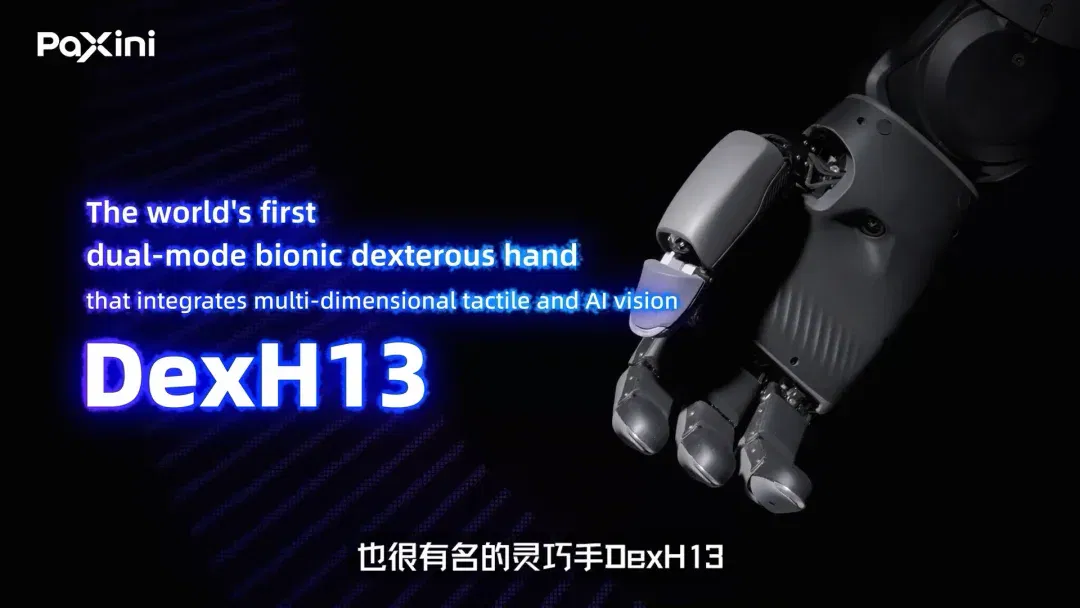
So we need to build this execution layer and design different types of robot hands. For many robotics companies, the design of robot hands is very important. At PaXini, we can open-source our dexterous-hand designs and make them available to robotics companies that need them. In our design work, we have also made many improvements to reliability. For example, one of our flagship products, the DexH13 dexterous hand, has undergone extensive testing, with more than 20,000 hours of use testing. After these tests, we believe it is still a dexterous hand with a great deal of potential.

Xu Jincheng: Finally, beyond PIE as perception, intelligence and execution, we also hope to build Platform, Integration and Ecosystem.
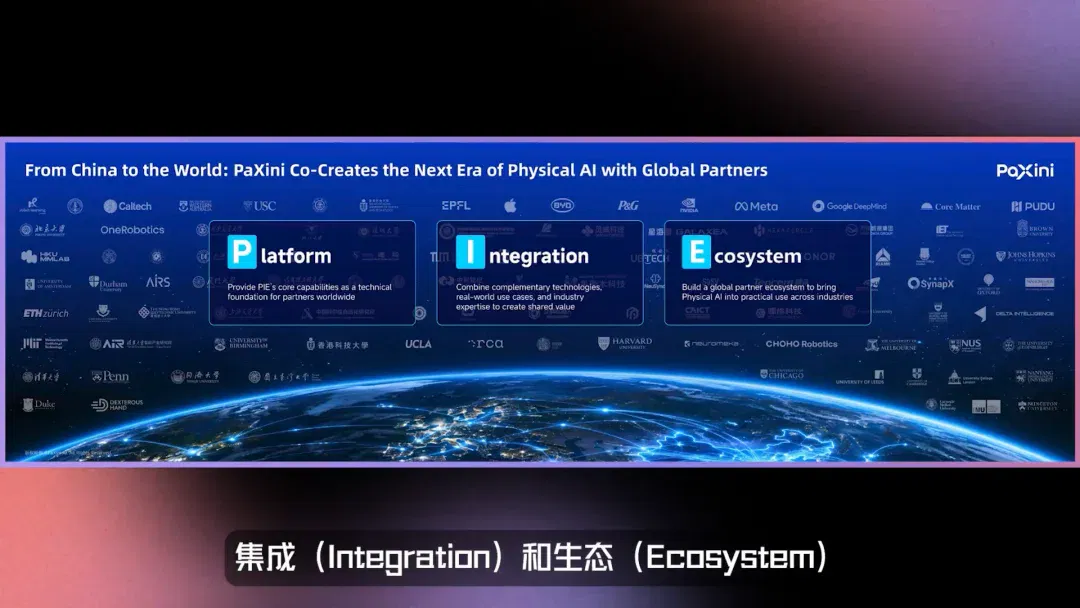
So we have two kinds of PIE. One gives robots the ability to interact with the physical world. The other creates a strong open ecosystem, letting everyone own a robot and successfully develop robots with their own technology.
We hope to use a PIE to create limitless possibilities for the future. We also hope everyone can contribute their part by building their own PIE or helping to build ours. From a technological perspective, we want everyone to have their own robot, thereby freeing people from labor and letting them have more fun in the physical world. Those tiring jobs and tasks can be left to robots.
I hope you enjoyed today's talk. Thank you very much.
The above is the content of Dr. Xu Jincheng's onstage speech at ALIGNMENT 2026. From perceiving contact and forces, to enabling models to learn, to executing movements accurately, Dr. Xu Jincheng shared how PaXini connects these efforts so that robots can perceive the world, understand the world and truly act upon the world.
As robots perceive their surroundings and accumulate experience through repeated operations, how far are they from truly taking on more work?
Note: Some images are sourced from the internet.
This article was originally published by the WeChat account Silicon Valley 101. Author: Silicon Valley 101.
Related topics
After reading
Join the AINRK community
Read how to join the community and connect with people working in AI.
Related articles
Continue reading related topics and articles in this category.
智动未来据报完成亿元级Pre-A+融资,资金用于产线与服务机器人部署 (opens in a new tab)
机甲觉醒报道,智动未来宣布完成亿元级Pre-A+轮融资,由中美绿色基金领投、南曦创投联合领投,资金拟用于广州产线、服务场景部署和世界模型研发。“智子世界”仍属技术预览,商业化效果待更多应用数据检验。
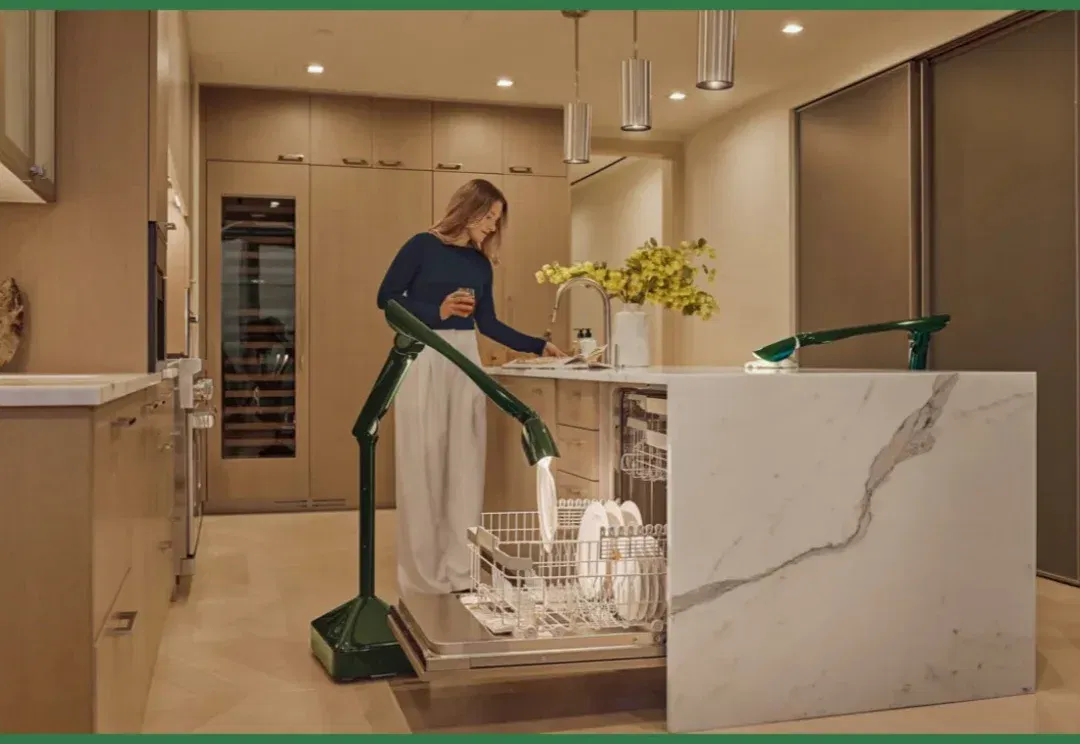
Syncere raises $11M for Lume, a household robot shaped like a floor lamp (opens in a new tab)
Syncere uses a floor-lamp form for Lume: one robot handles some pick-and-place tasks, while two work together in Duet mode on tasks such as folding clothes. Demos are edited; pricing and delivery reflect the source date, and home reliability remains unproven.

Genesis AI raises $500M Series A to advance its full-stack robotics and Eno (opens in a new tab)
Genesis AI announces funding at a $3.5B post-money valuation, outlining a stack of data gloves, simulation, models and the Eno robot. Production and customer deployments are planned; demonstrations and correlation experiments do not establish delivery at scale.
LiberAI's Liu Songming on connecting models, hardware and data for physical AI (opens in a new tab)
LatePost interviews LiberAI founder Liu Songming about Liber-0, glove-based data collection, robot hardware, full-stack integration and commercial use cases. The 2.2 million data hours and test results are team claims; a flagship application remains a goal.
Oxford researcher proposes cognitive symbionts for wearable AI augmentation and governance (opens in a new tab)
Hao Fei's perspective paper proposes cognitive symbionts and AI-Augmented Human Intelligence, covering long-term memory, wearables, proactive help and governance. Privacy, low latency and lifelong companionship are design goals, not verified product guarantees.