Huawei Cloud unveils CloudRobo-WM1.2, plans November 30 release of weights and code
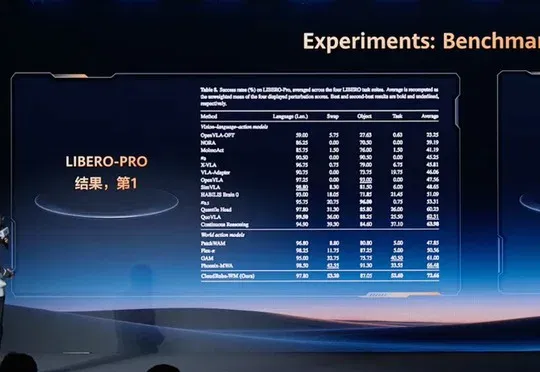
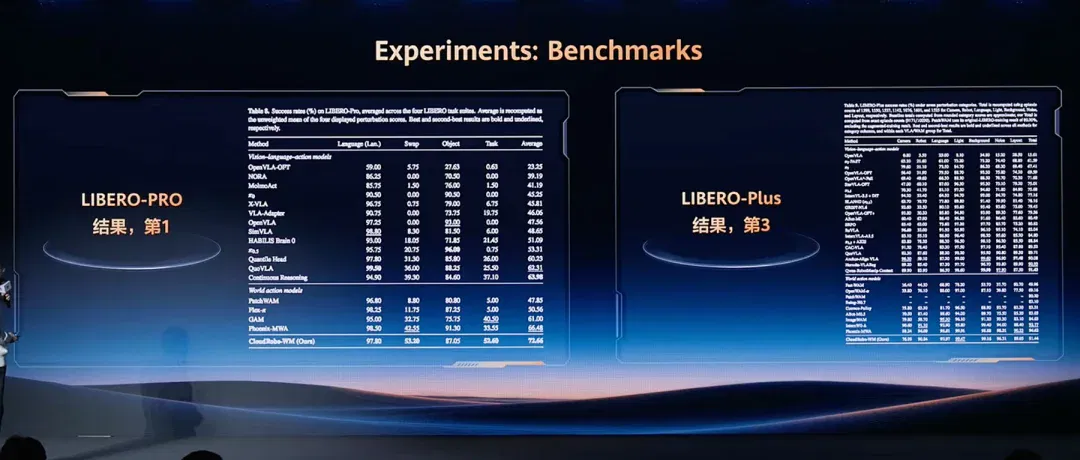
Huawei Cloud presents its Ascend-native embodied world model CloudRobo-WM1.2 and development platform, with two benchmark results and industrial demonstrations. Model weights, inference and post-training code, and pretraining practices are scheduled for November 30.
An open-source release this month.
Zhidx reported on November 16 that Huawei Cloud today introduced CloudRobo-WM1.2, its first Ascend-native embodied world model, and announced that it would release WM1.2 model weights, inference and post-training code, and pretraining best practices on November 30.
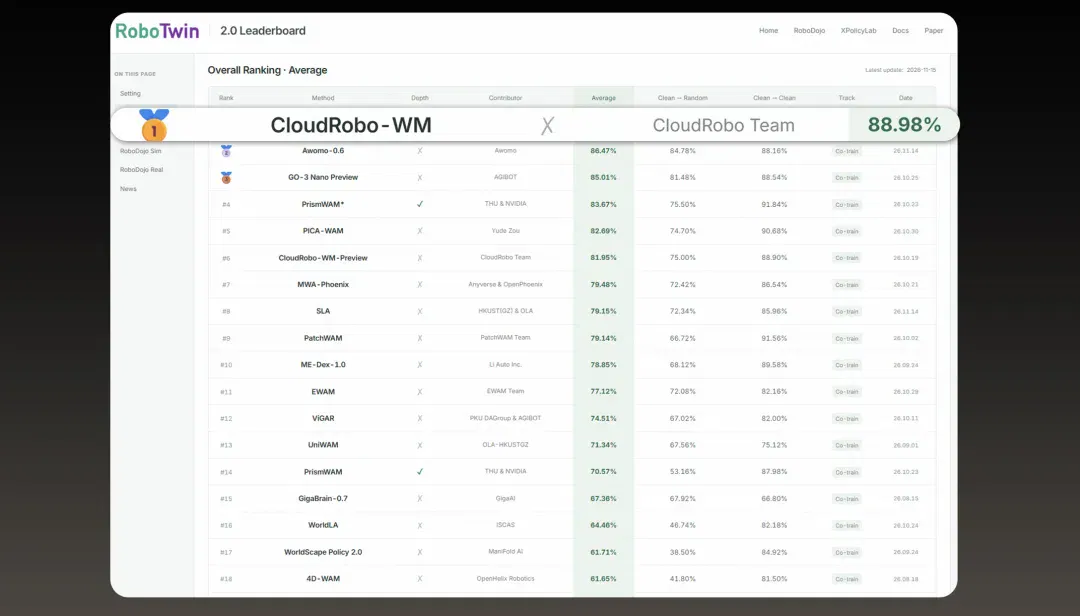
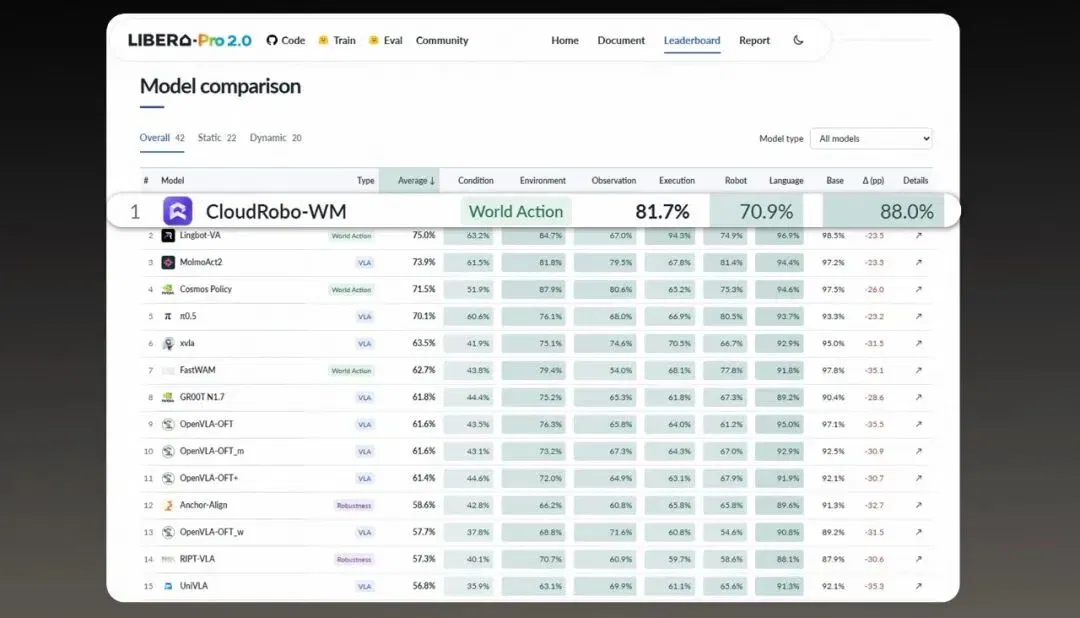
The model uses a shared world-model backbone for prediction-enhanced world representations and a world-model-native DualAct architecture for native action generation. It ranked first on both RoboTwin 2.0 and LiberoPro 2.0.
At the event, Huawei Cloud demonstrated robots based on CloudRobo-WM1.2 performing real industrial experiments such as continuous industrial material handling and bearing deburring, as well as storage tasks such as stocking shelves and placing gifts in cabinets in unattended retail settings.
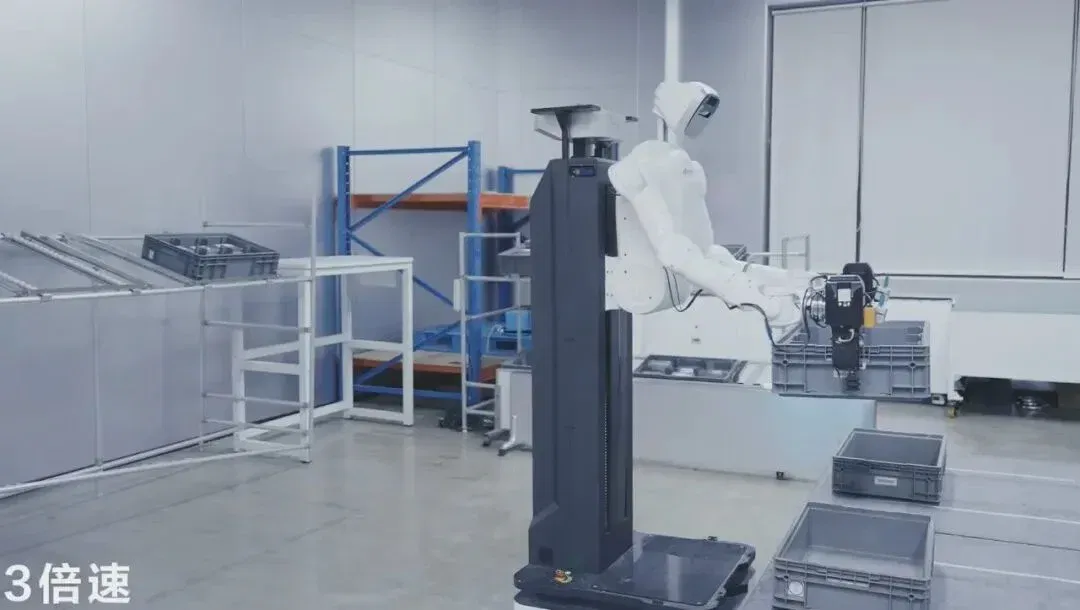
At the conference, Huawei Cloud stated: 'Huawei Ascend Cloud ranks first in China's embodied-intelligence market; already, 80% of Chinese embodied-intelligence companies have chosen Ascend Cloud, with essentially complete coverage of leading universities.' Here, 'ranks first' should be understood as domestic leadership in ecosystem penetration or customer coverage under the company's own statistical definitions, rather than third-party revenue-based rankings.
Huawei Cloud also announced that preorders had begun for an intelligent cleaning robot jointly developed with leading sanitation-equipment company Fulongma Group.
Facing five major challenges
Five technologies to improve robot intelligence
Wu Xiaodong, president of Huawei Cloud's embodied product line and director of its Embodied Intelligence Lab, said his team has been pursuing applications in industry-specific large models, autonomous driving for commercial and specialized vehicles, and embodied intelligence. They have encountered numerous challenges: traditional visual representations become 'half-blind' under occlusion, 'confused' when the viewpoint changes and 'stupid' once movement begins, with success rates dropping markedly in complex open environments.
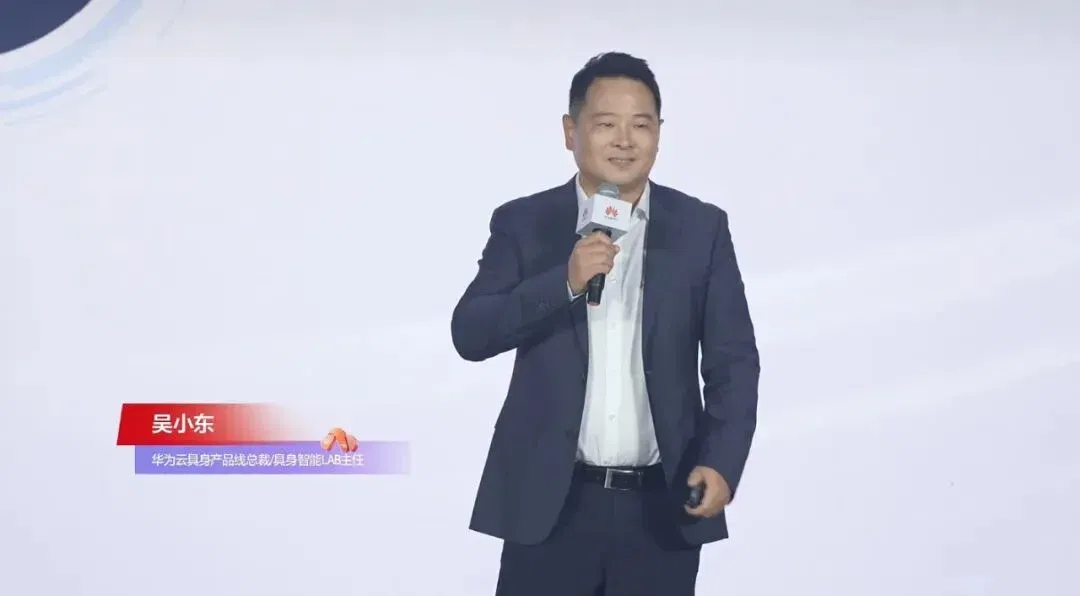
Overall, as embodied intelligence moves from laboratories into the physical world, it faces challenges including difficult multimodal physical understanding, coupling world understanding with action generation, using heterogeneous data at scale, generalization across robot embodiments, and high compute costs for real-time inference.
To address these challenges, Huawei Cloud drew on its engineering experience in AI and intelligent driving to introduce the CloudRobo-WM1.2 world model and CloudRobo development platform, aiming to create fertile 'silicon soil' for embodied intelligence.
CloudRobo-WM1.2 builds five core technical capabilities around embodied intelligence's main challenges:
1. PPA (Perceive-Predict-Act) multimodal world-representation architecture: The model not only recognizes objects but predicts physical-interaction outcomes. It combines RGB video, semantic features, depth and point clouds, introducing supervision through future multimodal prediction.
Wu said unified representation modeling aims to move robots from 'seeing one image clearly' to 'understanding a 4K film,' improving their understanding of the physical world. On seeing a cup, for example, a robot would know not just what and where it is, but predict how it would move if pushed and whether it would tip over.
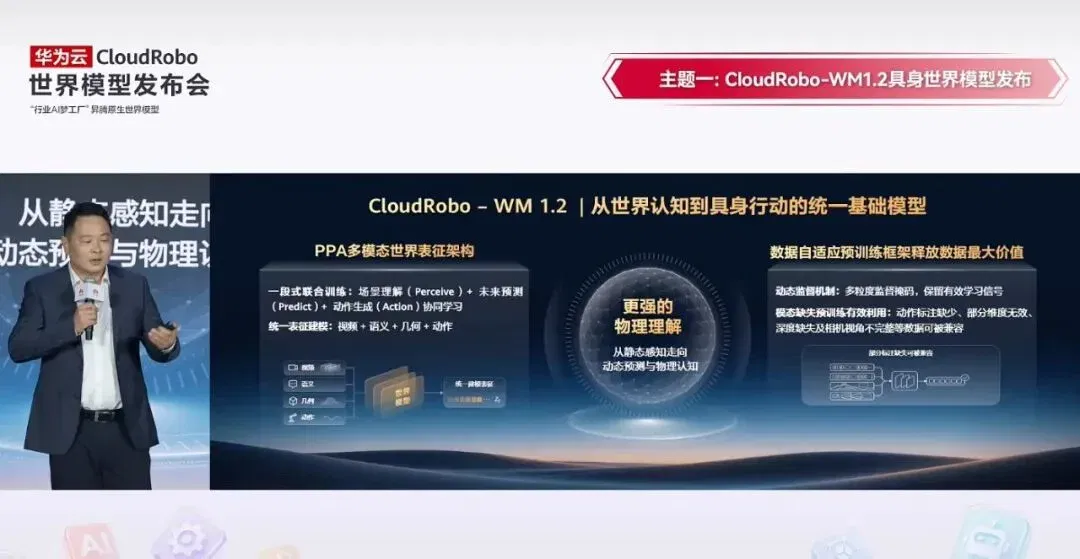
2. An adaptive pretraining framework for supervision at multiple granularities: Just as a caricature need not reproduce all of Andy Lau to be recognizable, but only his distinguishing features, CloudRobo-WM1.2 organizes supervision around the useful information actually present in data. It avoids discarding valuable data because of partial gaps, unlocking scaling potential in heterogeneous data. It accommodates missing action annotations, invalid dimensions, absent depth and incomplete camera views.
Wu described dynamic supervision as enabling the model to 'eat both coarse and fine grain': jointly supervising on data with missing action labels, invalid dimensions or absent depth to maximize data value.
3. World-model-native DualAct (Dual-path Unified Expert Training) architecture: 'One brain that understands the world, two action-generation paths.' The analogy is to direct control that bypasses the cerebral cortex, such as the fast, efficient knee-jerk reflex, alongside learned conditioned responses, such as reacting fearfully at the mention of a tiger. The world model directly outputs high-precision actions for native robot control; action experts based on an MOT architecture can also produce actions directly and efficiently. This dual-path design lets developers flexibly choose action-expert sizes and improve post-training efficiency.
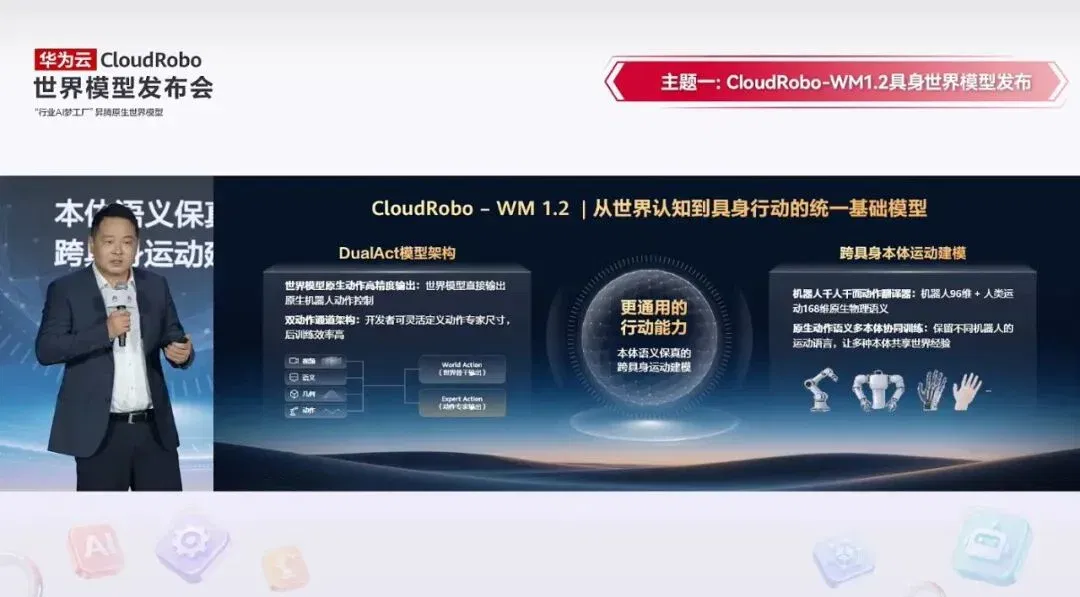
4. Cross-embodiment motion modeling that preserves embodiment semantics: This is like a unified action translator for single-arm, dual-arm, wheeled and other robot forms, aligning semantics across differing embodiments.
Wu noted that multiple embodiments cannot be handled simply by concatenating dimensions, which would lose their individual differences. The team built a robot translator that jointly trains the native semantics of 96-dimensional robot motion and 168-dimensional human motion, sharing a motion language and reusing human movement experience.
5. Four flexible inference modes combining World/Expert Action with Joint/Action-only as needed: Like ordering a meal to suit one's means, the choices match customer compute resources and inference latency. Two output goals—Joint, producing a future world and high-precision actions, and Action-only, producing only actions—combine with two output heads: World Action for precision and Expert Action for speed and efficiency. These form four possible inference modes, which customers can combine flexibly according to compute and latency requirements.
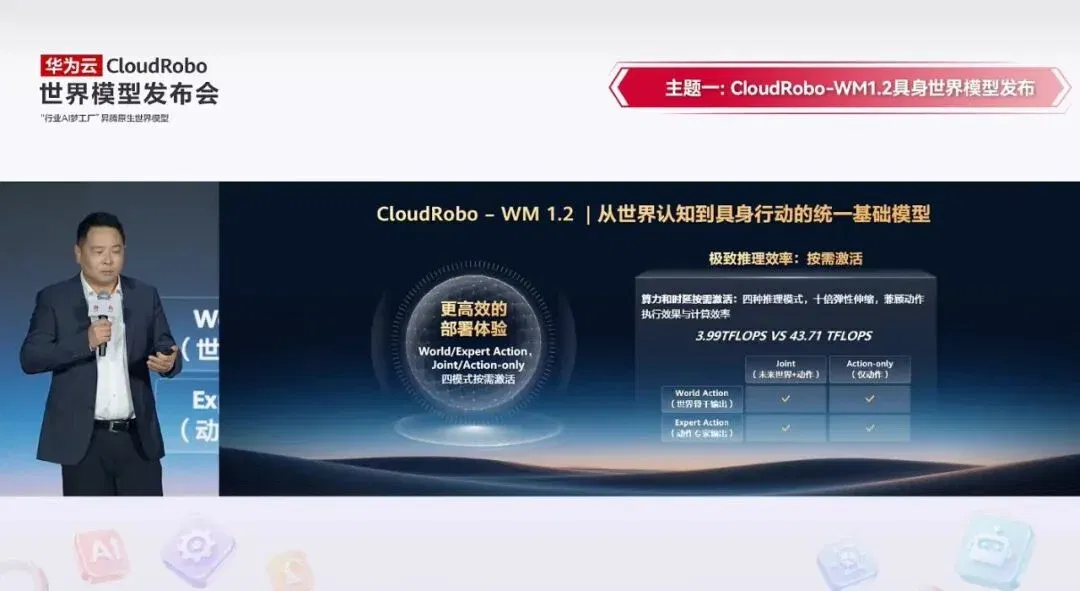
Together, the five core technologies support CloudRobo-WM1.2's continued development in world modeling, action generation, learning from data at scale and engineering deployment, providing a technical basis for moving embodied intelligence from model research into complex physical applications.
Three model layers plus three cloud layers:
Huawei Cloud builds a full-stack foundation for embodied intelligence
Building on those five technical characteristics, CloudRobo-WM1.2's architecture has three layers:
First, an embodied-native multimodal PPA architecture: prediction-enhanced world understanding plus native dual-path actions, jointly modeling world understanding and action generation.
Second, an embodied-data scaling system: flexible pretraining with effective supervision plus cross-embodiment motion modeling that preserves embodiment semantics, addressing incomplete data and coordination across heterogeneous embodiments.
Third, engineering-oriented world-model inference: four-mode flexible inference to accommodate prediction and action-generation needs across scenarios, along with computational efficiency.
Huawei Cloud has also built a cloud-native, full-stack, end-to-end Ascend cloud-computing platform for embodied technology, with three layers:
Compute infrastructure: a heterogeneous architecture for multimodality and physical simulation, combining heterogeneous compute and supernode interconnects, with context parallelism, parameter sharding and activation recomputation to handle training on long video sequences.
Compute, networking, data and storage: joint optimization of data and compute flows for embodied tasks, unified storage and retrieval of petabyte-scale multimodal data, and joint compute/communication scheduling for embodied reinforcement learning to improve inference-latency stability.
AI frameworks: Ascend-native acceleration for multimodal and embodied reinforcement learning, with substantially enhanced Ascend NPU support in RLinf v0.4 delivering up to 2.78x throughput.
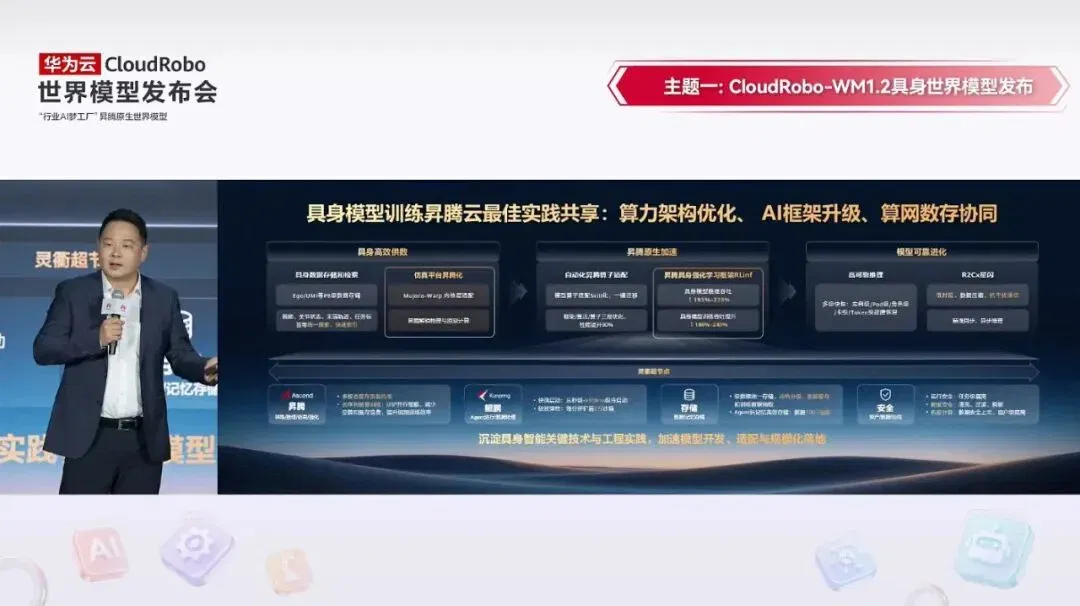
Wu said his team worked with Yu Chao's team at Tsinghua University to bring the RLinf reinforcement-learning framework onto the platform, improving inference efficiency and model-training throughput by two to three times.
Six engineering capabilities
Bridging the last mile of embodied-intelligence deployment
A world model has a long way to go from creation to real-world deployment. Wu said Huawei Cloud has built an end-to-end toolchain so developers can easily develop their own models and applications on the platform.
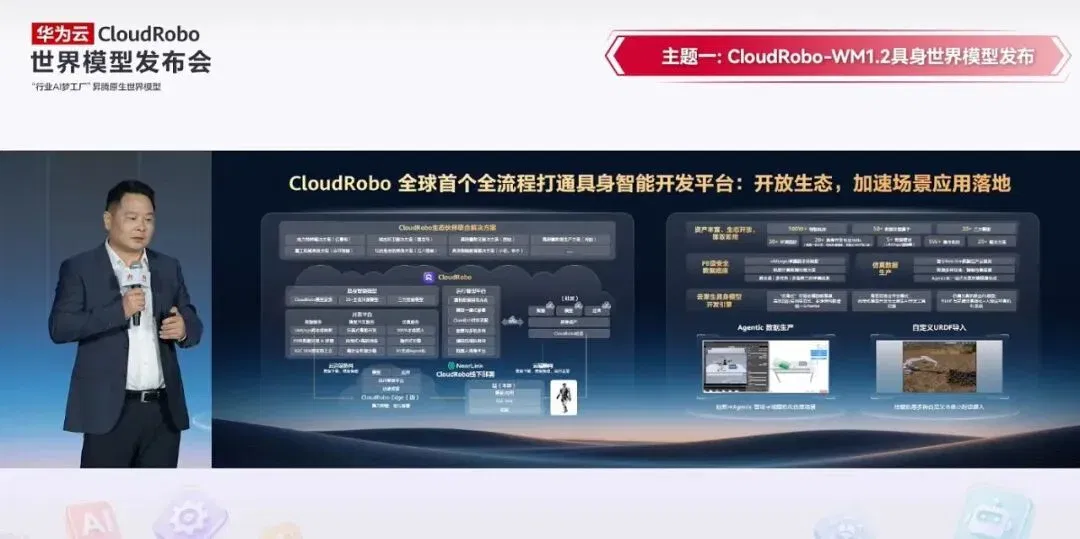
From model inference to real physical work, CloudRobo brings together six engineering capabilities to support embodied intelligence's move from laboratories into scaled deployment across industries:
1. Simulation enables industry cold starts: high-fidelity physics simulation, synthesis of extreme operating conditions and Real2Sim2Real transfer reduce real-robot data-collection costs.
2. Cloud-native model training: native acceleration for Ascend multimodal training and reinforcement learning, elastic compute scheduling, and a unified WAM/VLA/VLN development toolchain.
3. NearLink and HarmonyOS ecosystem integration: a high-concurrency R2C gateway maintains live connections for more than 1,000 robot embodiments, with hot updates of GB-scale models within minutes.
4. Fast R2C adaptation across embodiments: integration within hours, unified data and action interfaces for multiple embodiments, and reuse of model capabilities across robots.
5. An RSI architecture for continuous learning and evolution: a closed loop connecting operational data feedback, reward evaluation, real-robot reinforcement learning and policy iteration.
6. Safe, reliable operation: risk awareness, autonomous recovery, task orchestration and device-edge-cloud coordination to maintain a safety baseline for embodied intelligence.
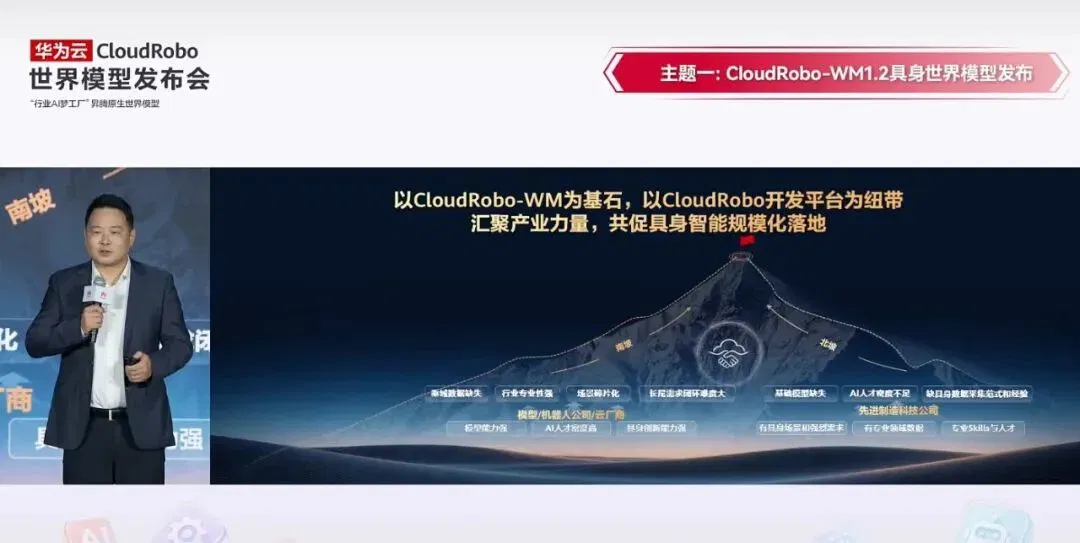
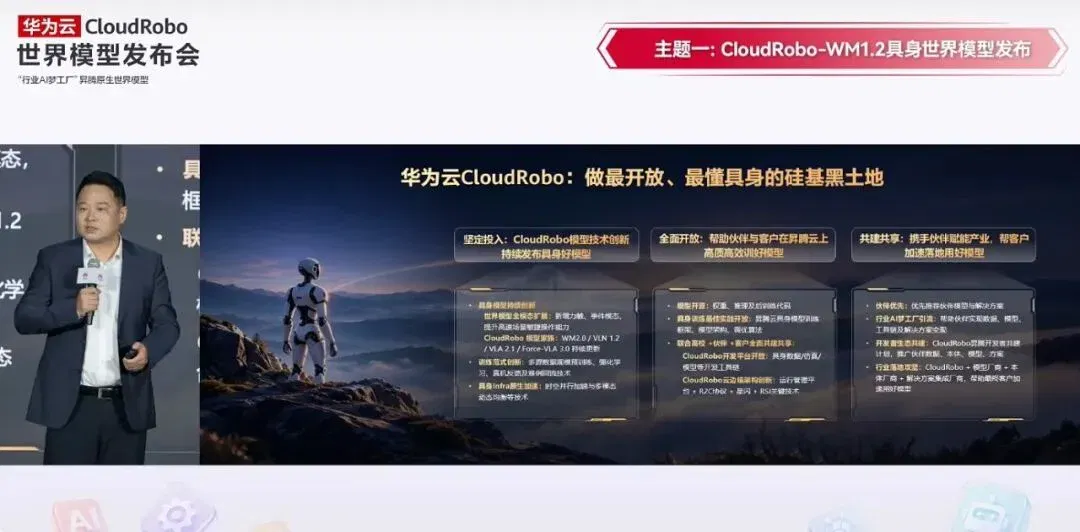
Wu described Huawei Cloud's three-part strategy for embodied intelligence: deeper technology development, open enablement and ecosystem co-development. It will keep investing in core technology to iterate models, open models and toolchains to industry partners using Ascend cloud compute, and combine ecosystem strengths to build industry solutions and accelerate scaled deployment across sectors.
Conclusion: world-model competition heats up
Robots begin learning to think and act
Globally, embodied world models are moving from environment prediction alone toward integrated prediction and action generation. Different technical approaches address the same question: how to make robots understand physical laws and turn that understanding into executable actions.
Huawei Cloud's distinguishing approach connects world models with Ascend compute, data toolchains, simulation training and robot-deployment platforms, while using open weights to attract industry partners.
Competition will next depend on more than leaderboard positions: cross-embodiment generalization, real-world success rates and deployment costs matter. Whoever first completes the loop from model capabilities to delivery at scale will gain the initiative in commercialization.
This article comes from the Zhidx WeChat account. Author: Zhidx.
After reading
Join the AINRK community
Read how to join the community and connect with people working in AI.
Related articles
Continue reading related topics and articles in this category.
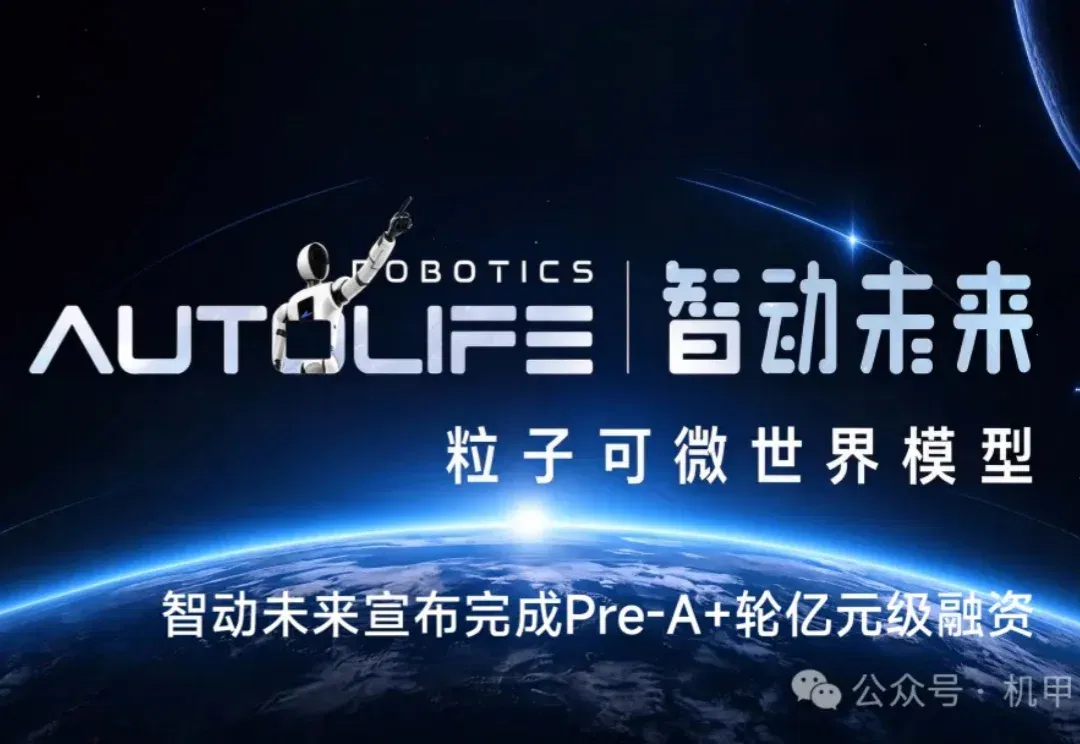
智动未来据报完成亿元级Pre-A+融资,资金用于产线与服务机器人部署 (opens in a new tab)
机甲觉醒报道,智动未来宣布完成亿元级Pre-A+轮融资,由中美绿色基金领投、南曦创投联合领投,资金拟用于广州产线、服务场景部署和世界模型研发。“智子世界”仍属技术预览,商业化效果待更多应用数据检验。

Syncere raises $11M for Lume, a household robot shaped like a floor lamp (opens in a new tab)
Syncere uses a floor-lamp form for Lume: one robot handles some pick-and-place tasks, while two work together in Duet mode on tasks such as folding clothes. Demos are edited; pricing and delivery reflect the source date, and home reliability remains unproven.

Genesis AI raises $500M Series A to advance its full-stack robotics and Eno (opens in a new tab)
Genesis AI announces funding at a $3.5B post-money valuation, outlining a stack of data gloves, simulation, models and the Eno robot. Production and customer deployments are planned; demonstrations and correlation experiments do not establish delivery at scale.
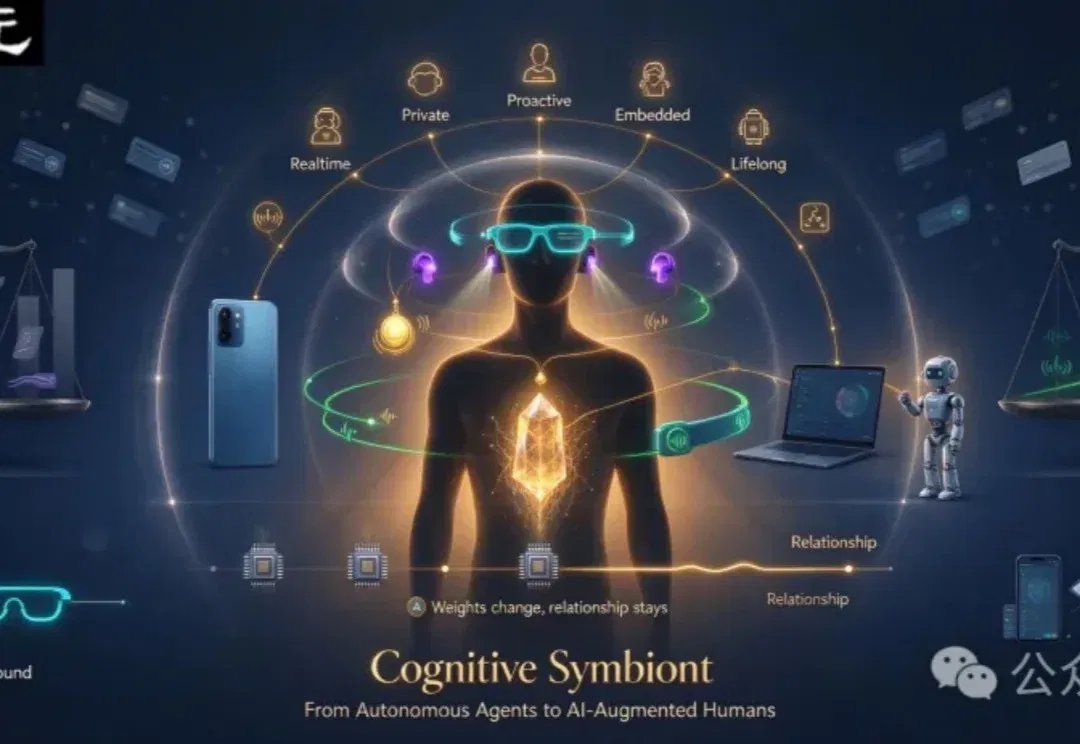
Oxford researcher proposes cognitive symbionts for wearable AI augmentation and governance (opens in a new tab)
Hao Fei's perspective paper proposes cognitive symbionts and AI-Augmented Human Intelligence, covering long-term memory, wearables, proactive help and governance. Privacy, low latency and lifelong companionship are design goals, not verified product guarantees.
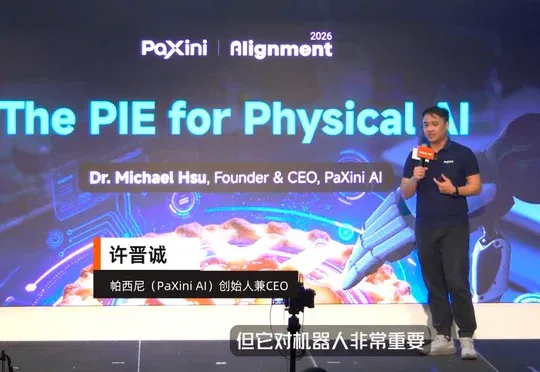
PaXini's Xu Jincheng on tactile sensing, embodied data and robotic execution (opens in a new tab)
In an ALIGNMENT conference talk, PaXini founder Xu Jincheng describes tactile sensors, data collection, VTLA models and execution hardware, discussing how perception, intelligence and execution work together. Product capabilities are claims disclosed in the talk.