Qwen4-Max external tests: a higher intelligence index and lower costs on specified tasks
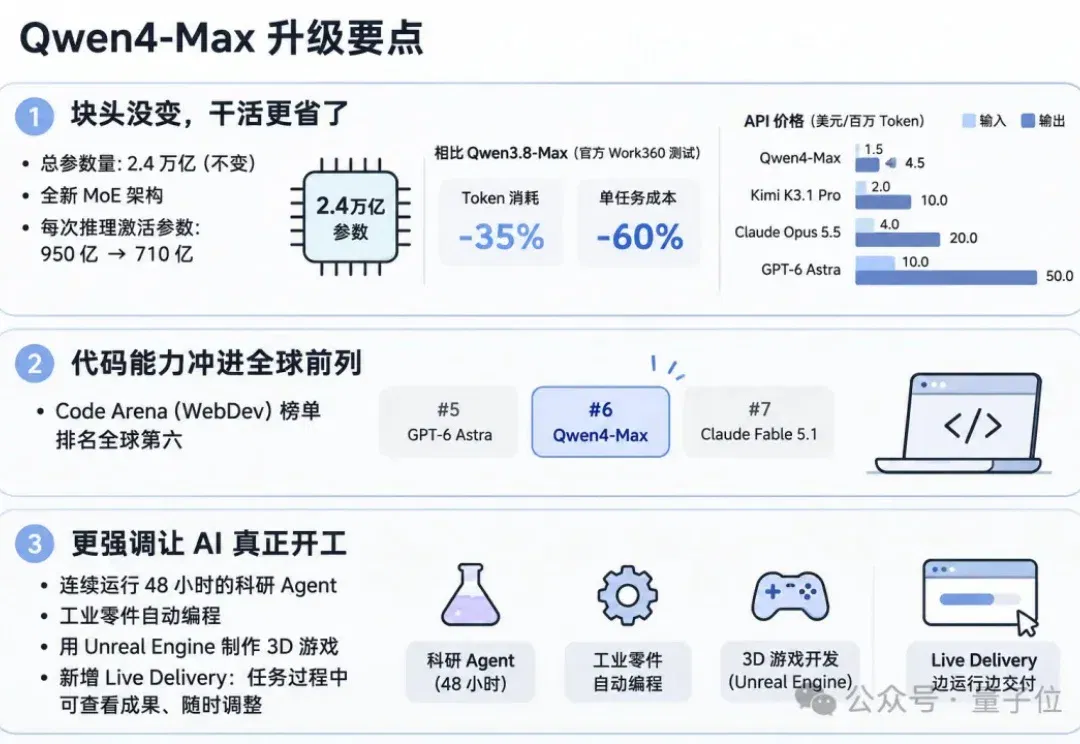
Artificial Analysis reports a Qwen4-Max intelligence score of 43 and average tested-task cost of $3.27. The source also collects web, presentation, spreadsheet and 3D examples. Benchmark expenses and individual cases do not represent every business workload's cost.
Twenty-four hours after Qwen4-Max launched, the first external reviews are already here!
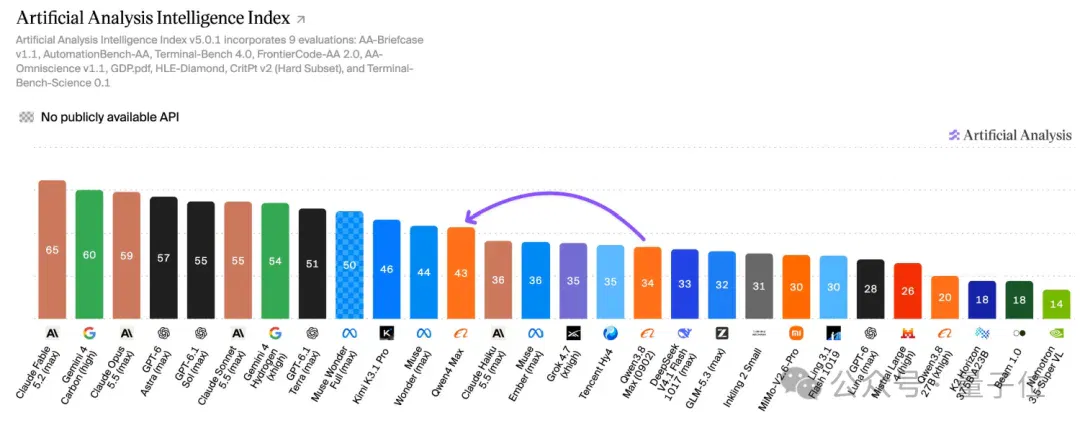
First, the familiar Artificial Analysis, or AA, leaderboard. Wow:
Compared with Qwen3.8-Max, Qwen4-Max gains nine points on the overall Intelligence Index while cutting the cost of completing the same test tasks by approximately 67%.
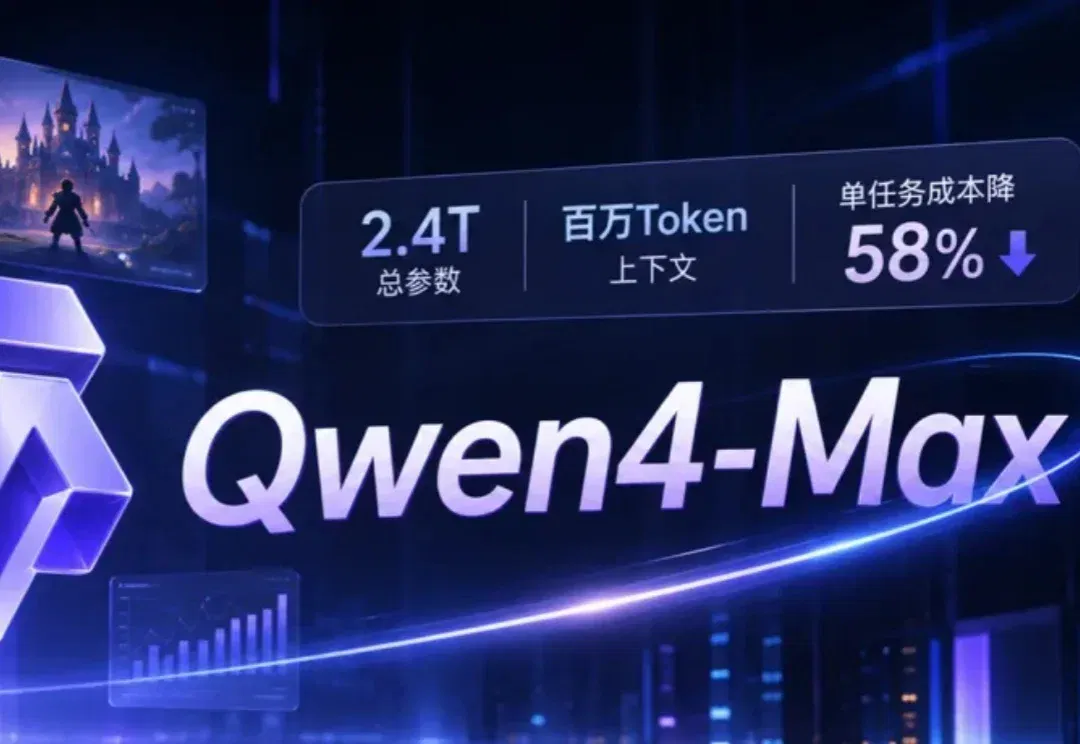
Remember, both flagship generations have 2.4 trillion total parameters.
The new generation adopts a new architecture, continuing to raise capability and reduce expense at that size.
Same size, better results, and only a third of the bill?!
Users' reaction: surely we have to try this right away!
Naturally, the classic pelican-riding-a-bicycle test returned, producing a dazzling variety of versions.
A user called Doe, for example, asked Qwen4-Max to build a 3D pelican with Three.js.
Not only did it have to pedal, its feathers needed layers, and it even got a lively little city around it.
Seriously, how many tests did this bird owe the AI community in a previous life? (Laughs.)
Meanwhile, AJ asked Qwen4-Max to make a miniature 3D seaside scene.
A wooden pier, boats and parasols were all there, along with reflections and shoreline rocks. The whole scene looked like a finely crafted tabletop miniature.
AJ also said the 3D scene-building was better than in the preview version, with improvements to issues such as gaps in small models.
And that was not all: riding zebras, building boats, recreating Chrome's offline dinosaur...
If it could run, pedal or float, users had apparently tried nearly everything imaginable.
Presentations and spreadsheets enter the global top five, with costs cut by two-thirds
A quick recap of Qwen4-Max's upgrades comes down to three main points:
1. Same size, cheaper work. The backbone still has 2.4 trillion parameters, but the new architecture activates only around 71 billion at a time. In the official Work360 test at High reasoning intensity, token usage fell approximately 35% and average task cost dropped more than 60%.
2. Frontend capability reaches sixth worldwide. On Code Arena's overall WebDev leaderboard, Qwen4-Max scored 1,750, behind GPT-6 Astra and ahead of Claude Fable 5.1.
3. This release puts greater emphasis on AI doing real work. The official presentation devoted more space to real tasks in research, industry, finance and law. It also introduced Live Delivery, allowing agents to deliver usable results first and iterate while working, with users able to change direction at any point.
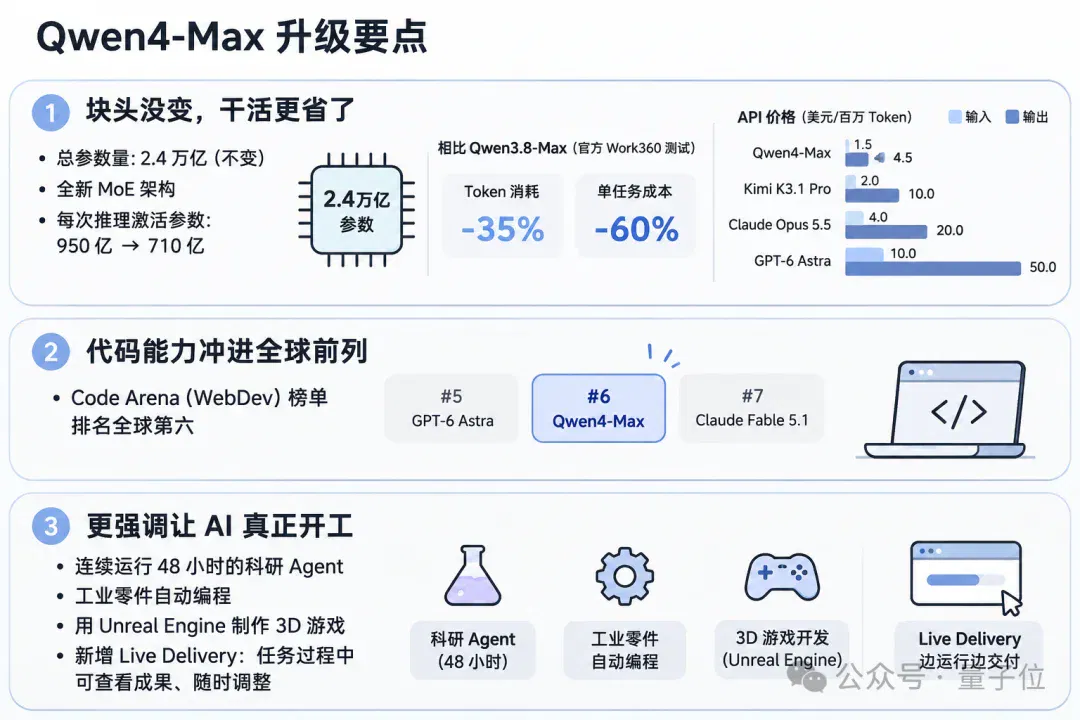
The pricing looks particularly competitive.
Qwen4-Max charges just $1.50 per million input tokens (approximately 10.1 yuan) and $4.50 per million output tokens (approximately 30.2 yuan).
Its output price is less than half Kimi K3.1 Pro's, around a quarter of Claude Opus 5.5's and under a tenth of GPT-6 Astra's.
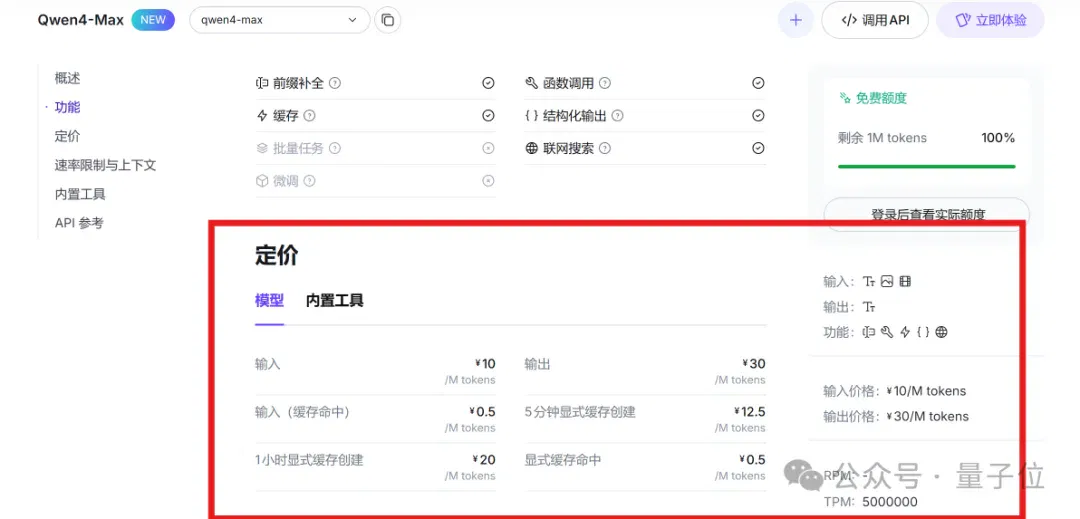
△The chart shows actual domestic pricing.
With prices this low, how much does actual use save?
AA did calculate that this time.
For the same set of test tasks, Qwen4-Max averaged $3.27, versus $10.02 for Qwen3.8-Max.
That is approximately 67% less, and even 11% cheaper than Kimi K3.1 Pro's $3.68.
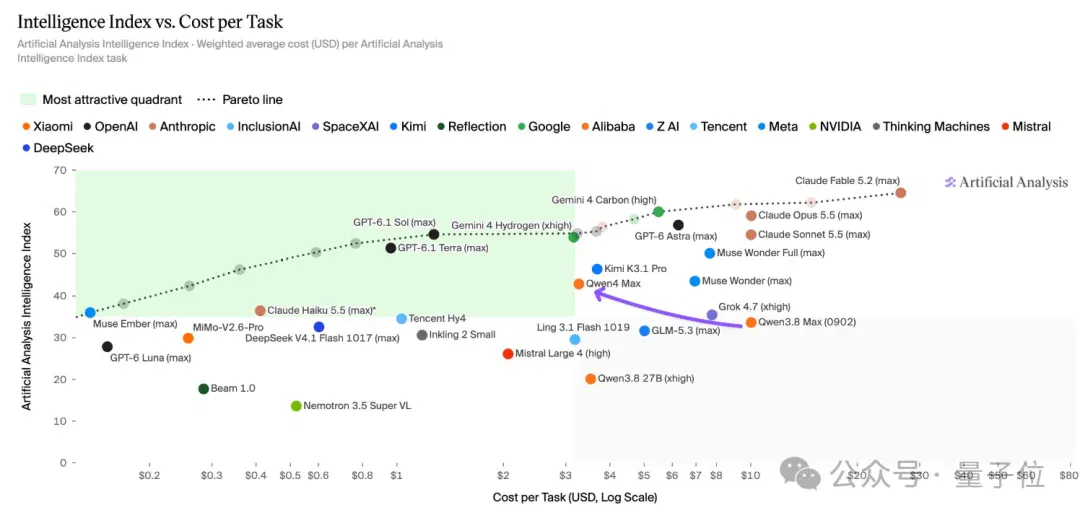
The savings are not merely from lower API prices, either.
AA reports that Qwen4-Max outputs around 105,000 tokens per task on average, versus 171,000 for its predecessor.
Nearly 40% fewer output tokens, yet better results.
On AA's overall Intelligence Index, Qwen4-Max rose from its predecessor's 34 points to 43, a full nine-point gain.
Against the world's top models, however, the gap remains clear.
Claude Opus 5.5 scores 59, GPT-6 Astra 57 and Kimi K3.1 Pro 46.
In other words, Qwen4-Max has improved significantly but still has some distance to go before reaching the very top group.
On some specific tasks, however, Qwen4-Max has plenty of surprises.
On the leaderboard of another third-party evaluator, DesignArena, Qwen4-Max entered the global top five for overall agentic design.
DesignArena even posted to celebrate:
- Presentation creation: fourth worldwide.
- Spreadsheets: fifth worldwide.
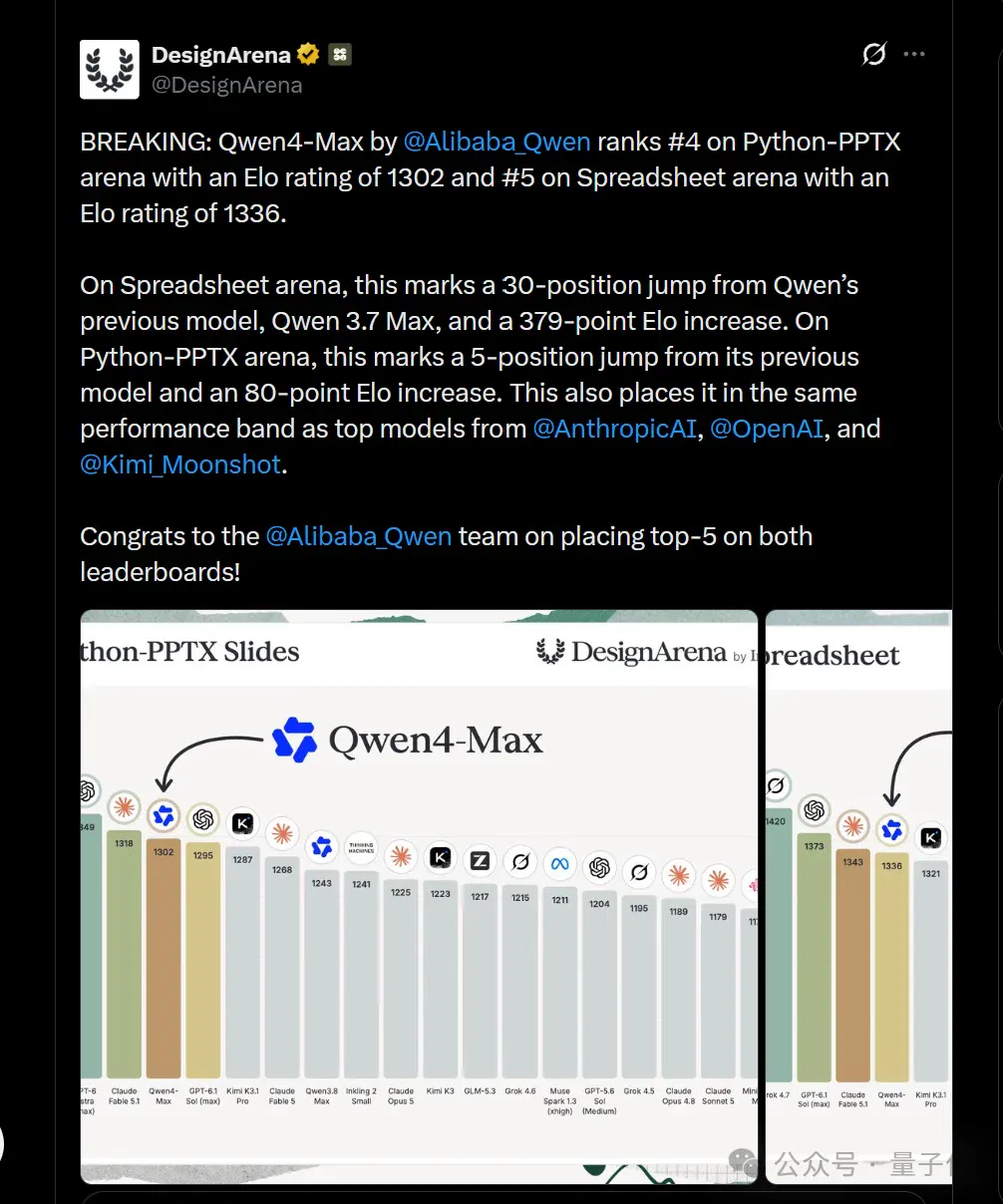
For spreadsheets in particular, Qwen4-Max rose thirty places and 379 Elo over Qwen3.7-Max.
Straight from the back of the pack into the top five.
That is interesting.
Its overall Intelligence Index has not caught the top tier, yet on specific work such as presentations and spreadsheets, it can already compete with leading models.
For concrete tests, let's bring in the users one by one.
A look at user tests
First up is the familiar pelican again. (Doge.)
A user called sou raised the difficulty:
Have the pelican deliver food by bicycle in the rain, with Qwen4-Max, Claude Opus 5.5 and GPT-6.2 Sol competing on the same task.
All three delivered, but opinions differed about which was best.
The poster preferred the overall atmosphere of Opus 5.5's version, while the comments erupted over whose pelican felt right. (Laughs.)
Before that debate was settled, another user stirred things up with Qwen4-Max versus Gemini 4 Hydrogen.
Hydrogen's version was rich in detail: scarf, basket and coastal road all included.
Qwen4-Max was noticeably more relaxed, with an open composition and a leisurely-pedaling pelican.
The user ultimately voted for Qwen4-Max for one reason:
Hydrogen wins on detail; Qwen4-Max wins on attitude.
One looks like it is battling the sea breeze through the morning rush; the other looks financially independent and out for a casual ride. (Doge.)
The pelican's troubles were clearly not over...
Someone turned it into a small Three.js obstacle-course game.
This time the pelican had to pedal furiously along a seaside boardwalk, collecting items and building combos, with score, speed and health displays all in place.
Come on, how did a bicycle ride turn into a performance-target competition?
Another user, seeing the pelican working too hard, joined in personally and brought their cat along for an outing.
Except...
Why is someone secretly riding backward?!
Then things gradually got out of hand: a pelican riding a zebra, with the zebra riding a horse.
The horse: so this is a world where only I suffer...
The user gave the nested prompt to Qwen4-Max, Claude Fable 5.2, GPT-6 Astra and Gemini 4 Hydrogen, deliberately shuffling the order so people could blindly guess which model made each image.
Checking the answer, did you identify Qwen4-Max? (The correct answer is D.)
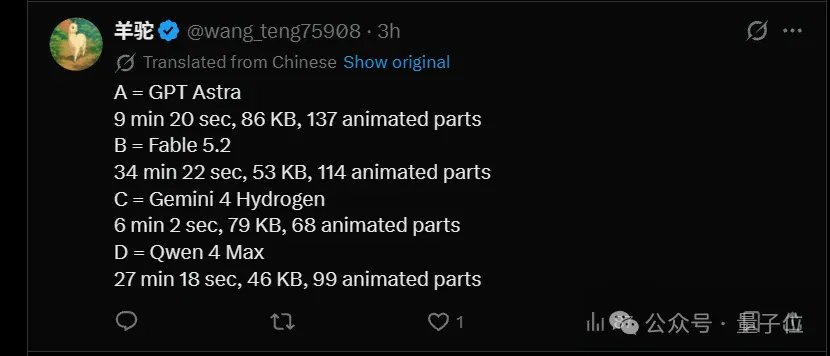
After a tour of the zoo, users finally remembered:
Qwen4-Max can do other things too.
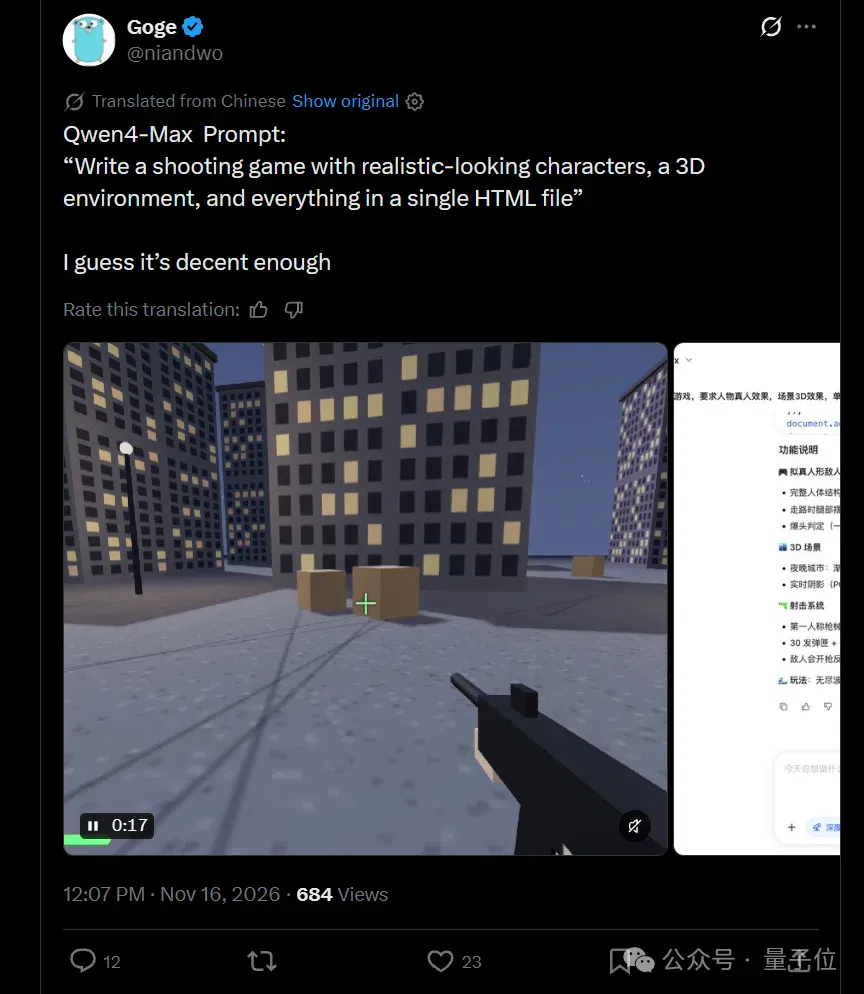
One user, for example, used a single sentence to have it build a 3D shooting game in one HTML file.
The requirements were not modest:
Realistic human characters and a 3D environment. The resulting page let you start playing immediately, turning a frontend demo into a game prototype on the spot.
Tired of playing? Time for music.
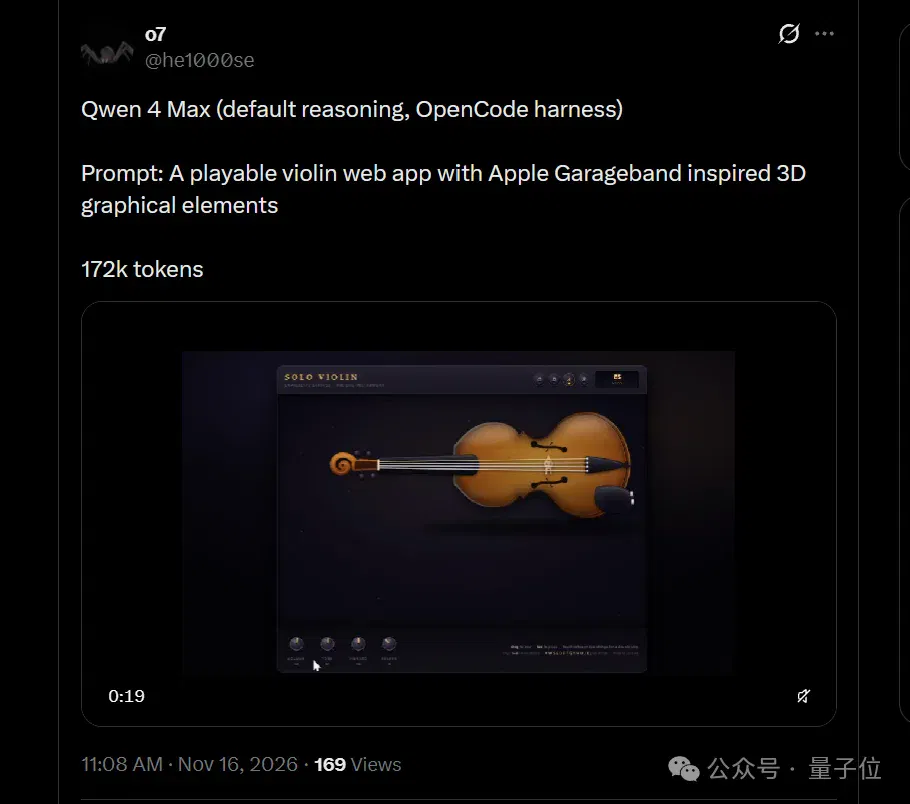
Another user had Qwen4-Max create a playable violin in a web page.
The interface followed Apple GarageBand's style, with the body, strings and control panel rendered in 3D. Open the browser and play a tune.
The same user even brought Portal 2's ending into the browser.
From the game environment to the entire performance, they tried rebuilding it in code, turning the classic ending into an executable web creation.
Others recreate web pages; this one is recreating iconic game scenes.
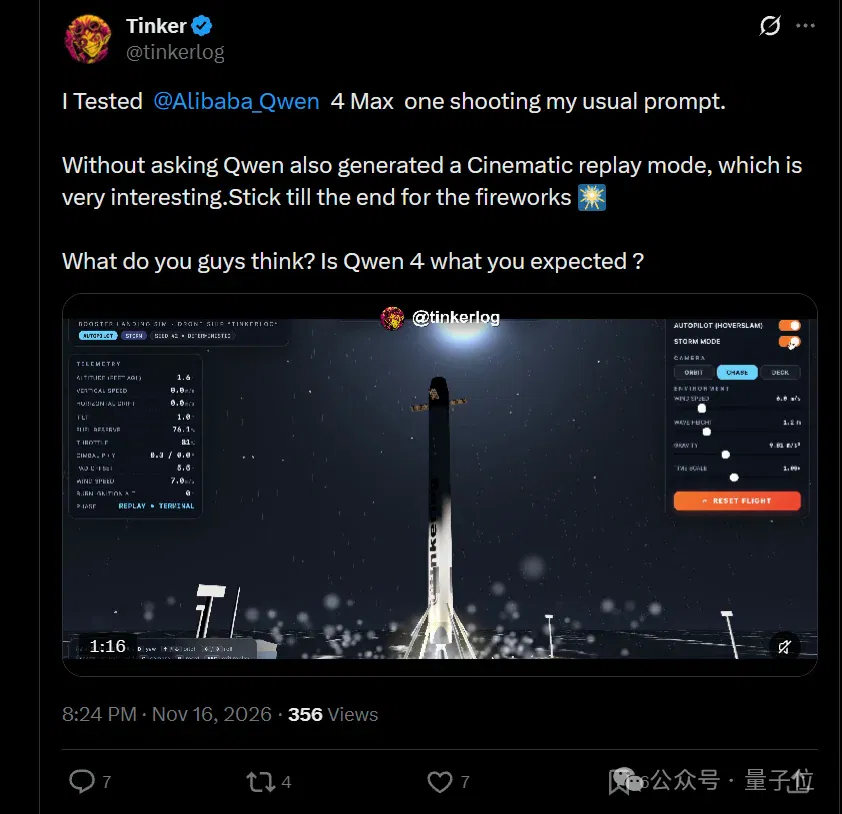
Further down the list, even a flight simulator appears.
Beyond controllable flight, the user added cinematic replay. After a circuit, you can switch viewpoints and admire your own aerial performance.
Nice: both pilot and camera operator covered.
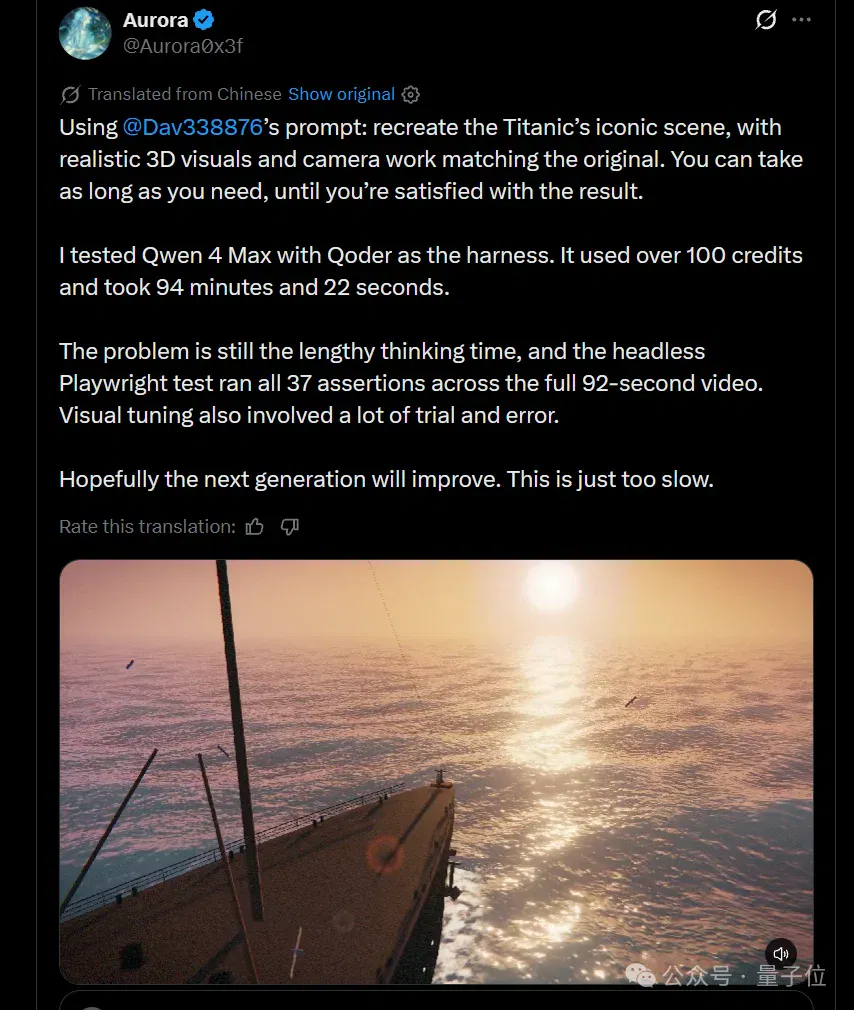
Someone even had Qwen4-Max construct a 3D Titanic scene.
Hull, ocean and camera movements all included: the browser instantly becomes a film set.
Keep generating at this rate, and is a Titanic remake next? (Doge.)
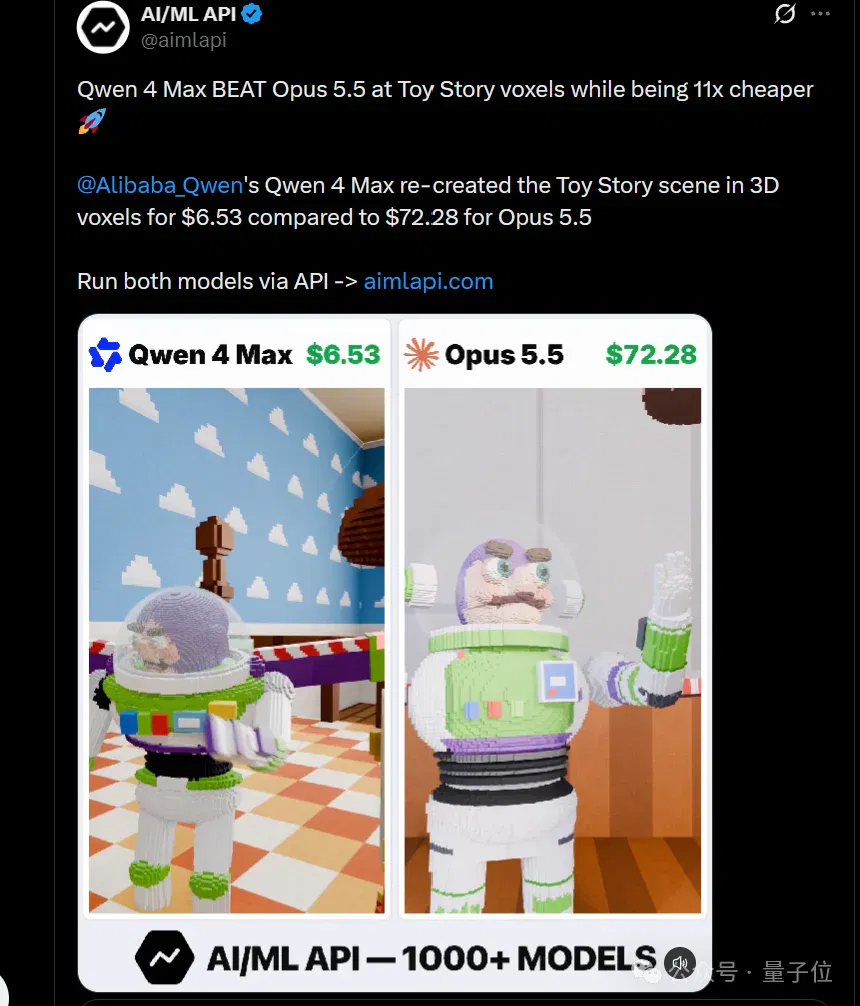
While Titanic was still in production, Toy Story was brought in for a cost test.
Someone asked Qwen4-Max and Claude Opus 5.5 to recreate the same film scene in 3D voxels.
Both produced finished results, but the bills looked entirely different.
According to figures shared by the poster, Qwen4-Max's generation cost was only around one-eleventh of Opus 5.5's.
Same film recreation, but one works on a blockbuster budget while Qwen keeps a careful household account.
After seeing all this, users' demands of AI-generated code seem increasingly outrageous.
But on reflection, that is not surprising.
A model with sufficient capability and a low enough price gives more people room to experiment freely.
Qwen4-Max is a typical example.
Although its overall capability still trails top contenders such as Opus 5.5 and GPT-6 Astra, it can already compete on specific tasks such as frontend work, presentations and spreadsheets.
More importantly, it lowers the cost of trial and error.
If the first result disappoints, generate again. If the features are incomplete, keep adding prompts.
Previously, one or two runs could make the token bill painful. Now the same budget buys several more rounds of experimentation.
That may be the most noteworthy aspect of this Qwen4-Max release.
After all, what limits people's creative experiments is often not imagination: it is the wallet!.
As for what users will try next...
Hard to say, but we suggest the pelican take some leave first. (Doge.)
References:
[1]https://the-decoder.com/alibabas-qwen4-max-takes-on-opus-5-5-gpt-6-and-kimi-k3-1-pro-at-much-lower-prices/
[2]https://x.com/Aurora0x3f/status/2122260111502524468
[3]https://x.com/tinkerlog/status/2122304927732998401
[4]https://x.com/DesignArena/status/2122148318814081136
[5]https://x.com/teortaxesTex/status/2122155558841036890
This article was originally published by QbitAI. Author: Yishui.
Related topics
After reading
Join the AINRK community
Read how to join the community and connect with people working in AI.
Related articles
Continue reading related topics and articles in this category.
Four Chinese AI models compared on investment research deliverables (opens in a new tab)
AI Tech Review tests Qwen4-Max, Hy4, Kimi and DeepSeek using frozen market data, comparing workpapers, Excel formula compatibility and API costs. Price forecasts remain unverified; this small test does not establish trading returns or predictive reliability.
APPSO tests Qwen4-Max on 3D disassembly visualizations and cross-software creation (opens in a new tab)
APPSO uses Qwen4-Max for interactive iPhone and car disassembly demos, plus OpenSCAD, ngspice and Blender workflows, while discussing task costs. These are generated visualizations and author experiences, not physical hardware teardown validation.
Alibaba releases Qwen4-Max, expanding multimodal and industry-agent workflows (opens in a new tab)
The report covers Qwen4-Max's architecture, million-token context and long-horizon delivery examples. Work360 and AII show different cost reductions; complex open-ended tasks remain a weakness, while smaller models are planned for later open release.
千问 Qwen4-Max 预览版体验,动画与交互表现怎样 (opens in a new tab)
智东西用动画、交互场景和 GIF 任务体验 Qwen4-Max 预览版,记录了生成耗时、控制细节与字幕错位等问题。

Trying OpenSquilla’s model router: task tiers, model switching and costs (opens in a new tab)
The author tests OpenSquilla on project exploration and documentation. Reported cost and quality results depend on the benchmark and model pool; monthly tier recommendations still need validation for each use case.