APPSO tests Qwen4-Max on 3D disassembly visualizations and cross-software creation
APPSO uses Qwen4-Max for interactive iPhone and car disassembly demos, plus OpenSCAD, ngspice and Blender workflows, while discussing task costs. These are generated visualizations and author experiences, not physical hardware teardown validation.
Editorial correction (November 18, 2026): These are model-generated 3D disassembly visualizations, not physical teardowns or hardware tests. Relative release-date wording has been corrected.
The latest battle among large AI models has seemed to involve Chinese models less.
Claude Fable 5.2 has dominated discussion, Gemini 4 has released several updates in a week, and numerous GPT-6.2 Astra tests have surfaced. Chinese flagships have seemed quieter by comparison.
Alibaba recently released Qwen4-Max. The following describes the author’s experiences and generated examples across several tasks, not a substitute for an independent standardized evaluation.
APPSO tried Qwen4-Max before release to see whether it could return to the leading ranks of Chinese models.
Our early use suggested a practical focus:
reducing long-running task costs and working inside demanding professional software.

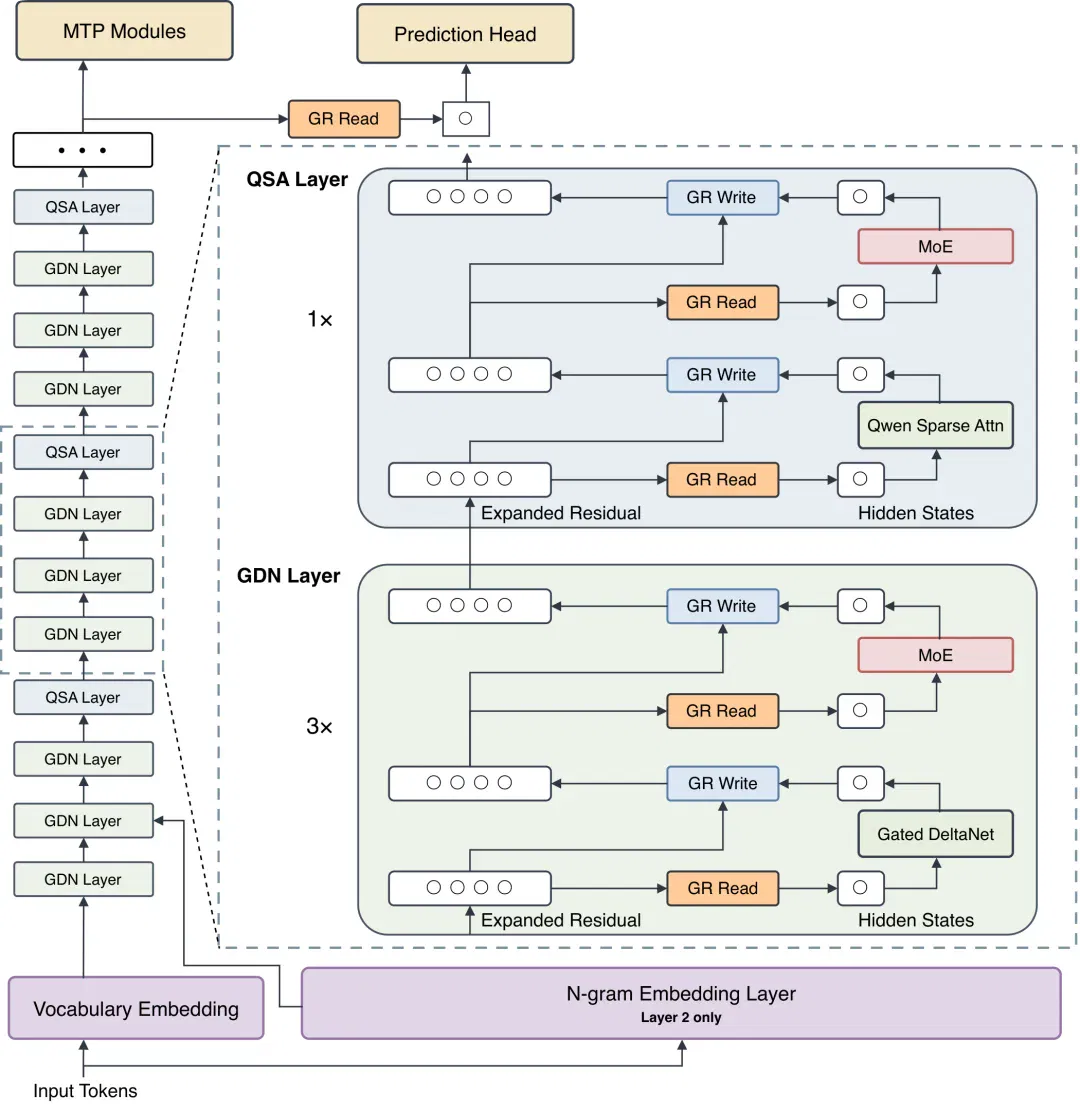
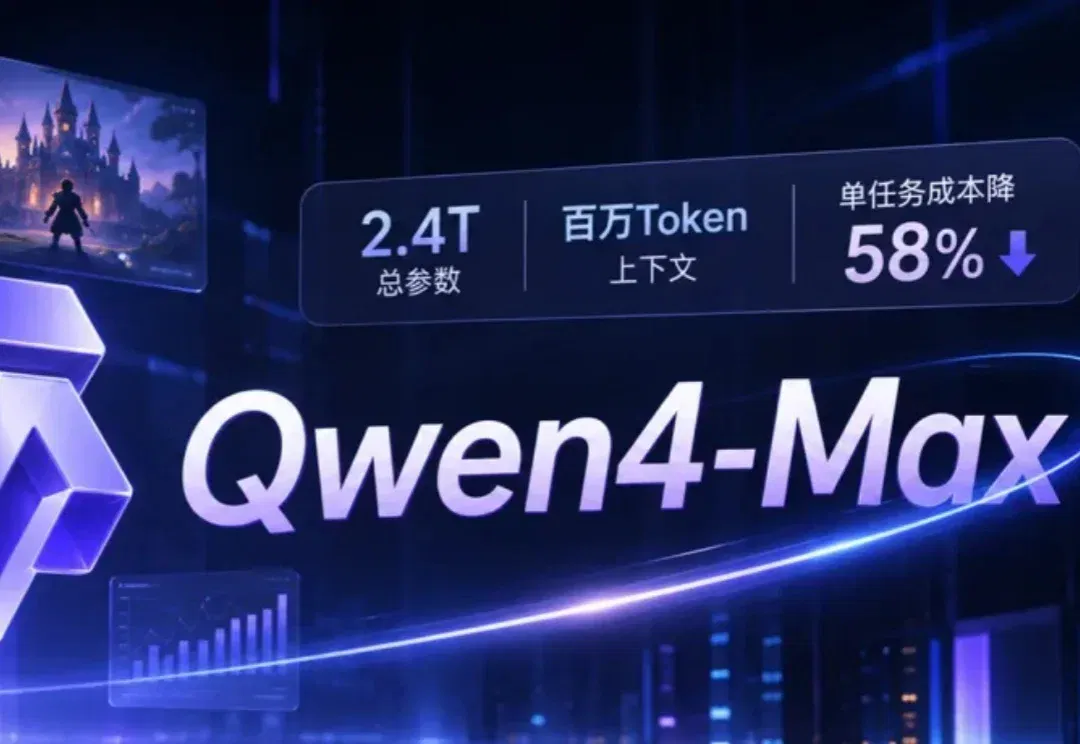
Qwen4-Max adopts a new architecture with 2.4 trillion total parameters, activating 71 billion per token—about a quarter fewer than the similarly sized Qwen3.8-Max. It supports native vision and a million-token context.
There are just three purposes behind this architectural change: make long-context computation more economical, pack more into the model, and make training more stable. For users, the most direct impression comes down to one word—savings!
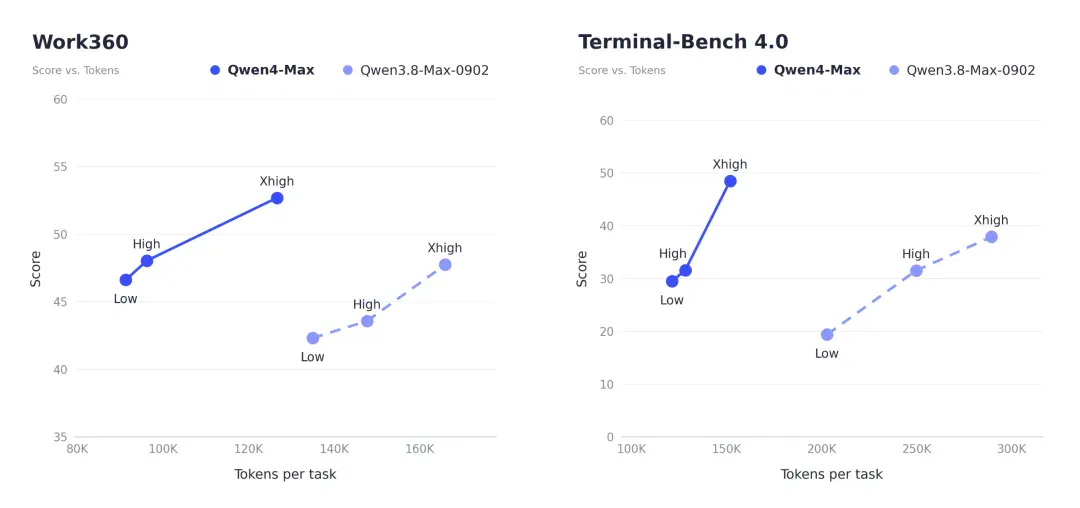
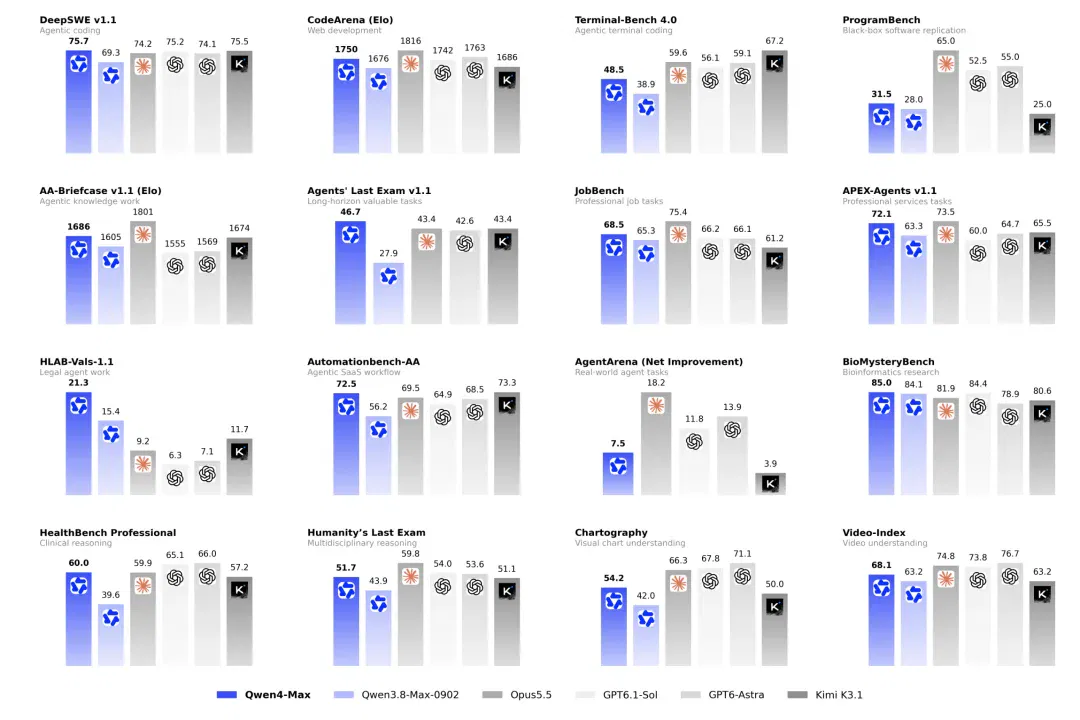
On Terminal-Bench 4.0, token use fell nearly by half while the score rose from 38.9 to 48.5.
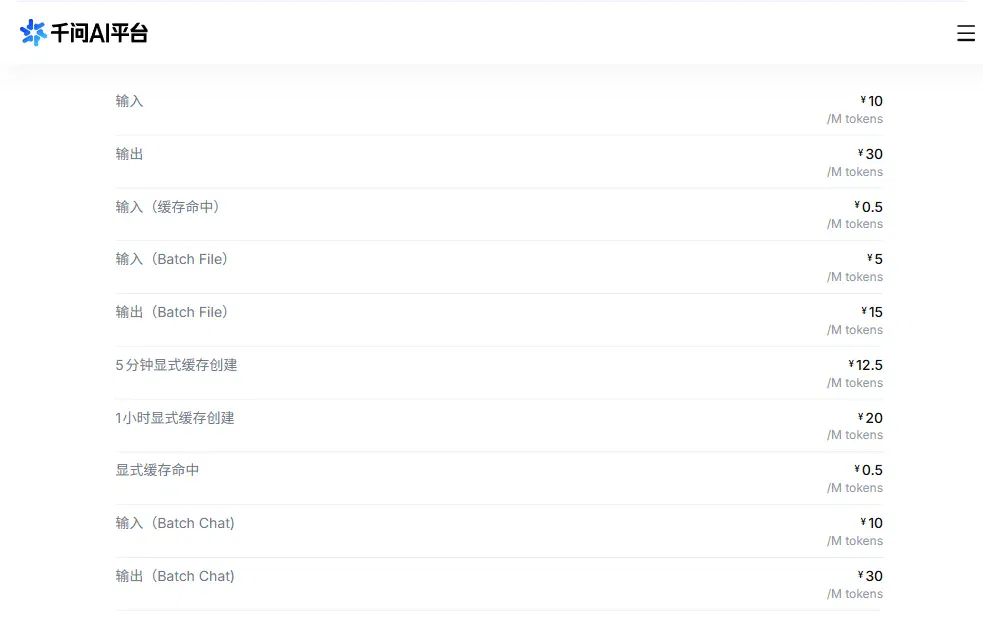
Chinese API pricing per million tokens fell from twelve to ten yuan for input and thirty-six to thirty yuan for output. Cache hits can cost as little as 0.5 yuan.
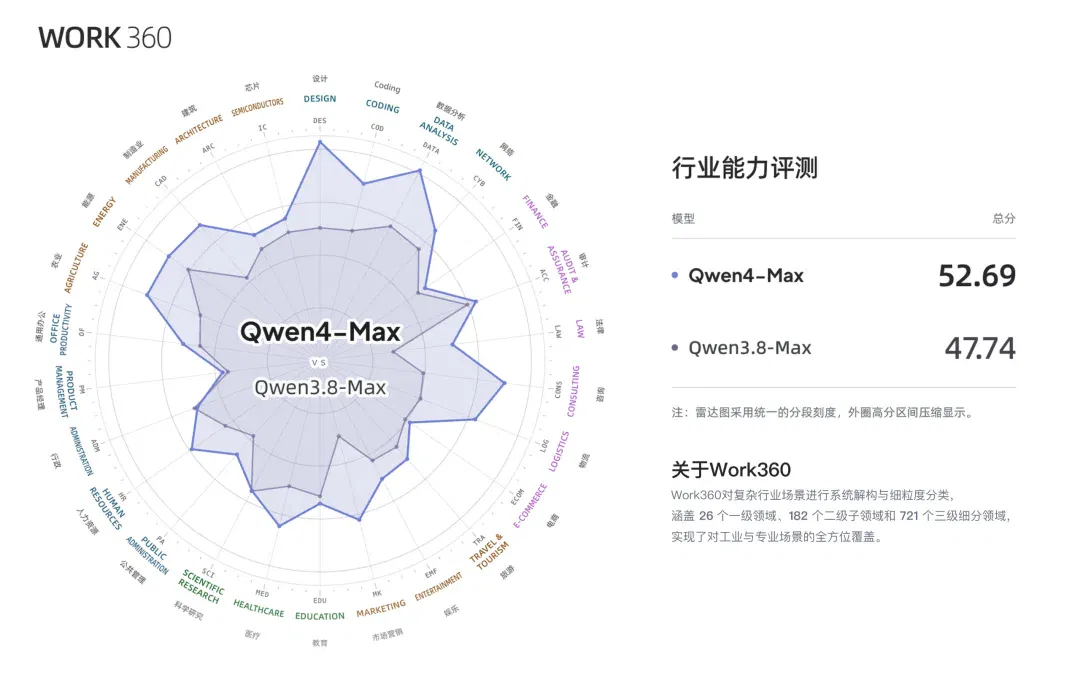
On Alibaba’s Work360 evaluation, average task cost fell 58%, from 26.58 to 11.16 yuan.
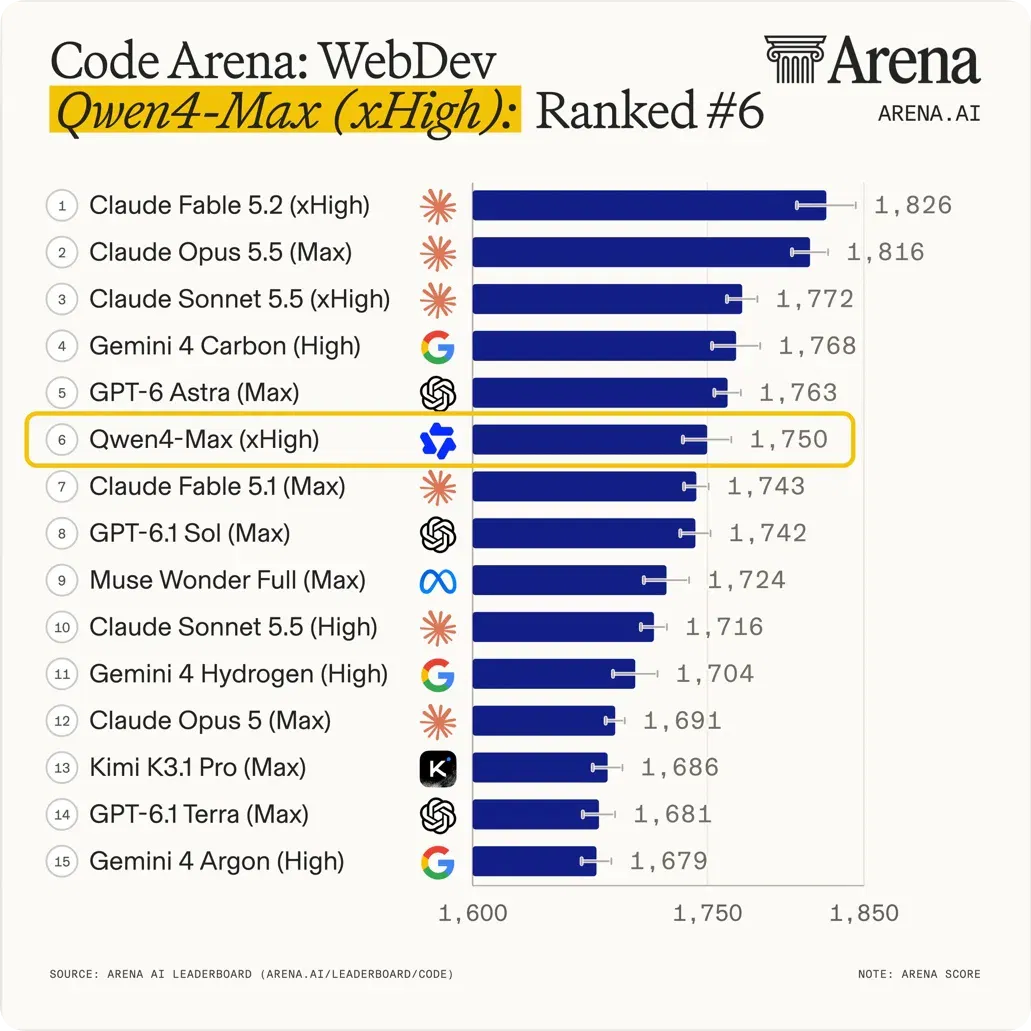
On Code Arena’s web-development leaderboard, based on blind user votes, Qwen4-Max scored 1750 and ranked sixth globally, between GPT-6 Astra and Claude Fable 5.1. It was the highest-ranked Chinese model on that leaderboard at the time.
It still trailed the strongest flagship there, Claude Fable 5.2 at 1826.
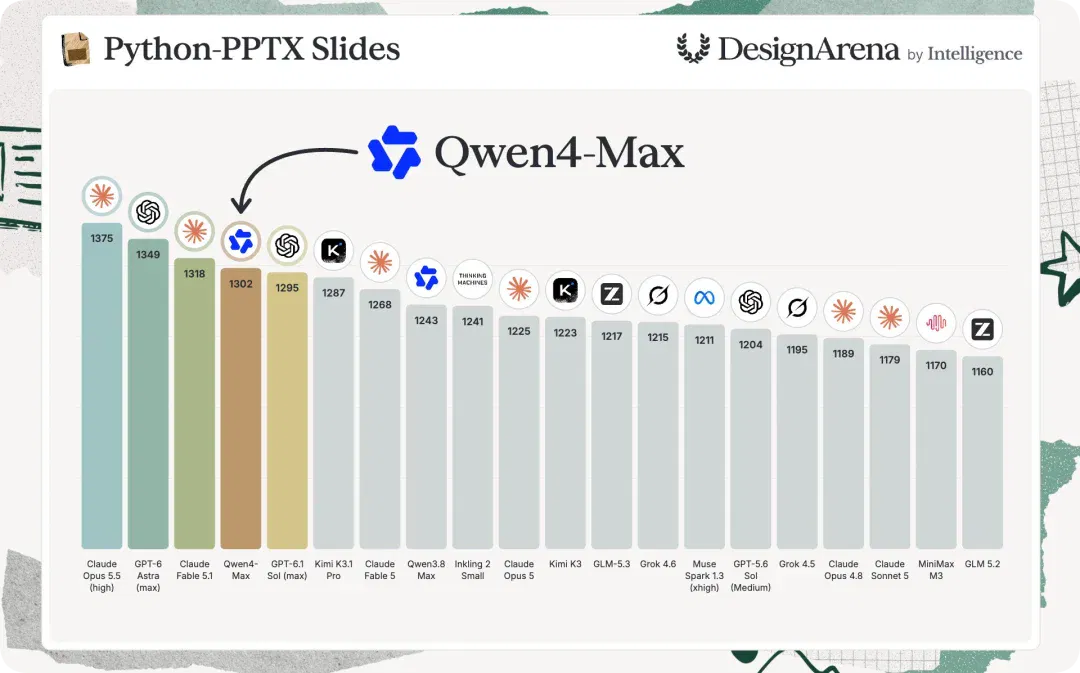
On third-party DesignArena, it ranked fourth for PowerPoint generation, above GPT-6.1 Sol and Kimi K3.1 Pro, and fifth for spreadsheets.
It looks like a model made for work, with office tasks its home territory.
It also topped a long-running-task evaluation ahead of Claude Opus 5.5 and Kimi K3.1. On complex tasks requiring dozens of steps, it had the highest success rate while cutting per-task cost by nearly 60% from its predecessor.
Alibaba demonstrated applications of Qwen4-Max across different industries, and also gave this way of working a name: “Live Delivery.” First, deliver a version that works, then add to it version by version based on the user's feedback.
One example was a physics-education website, delivered through fourteen usable versions and expanded into a polished site with 3D animation, interactive experiments and detailed explanations.
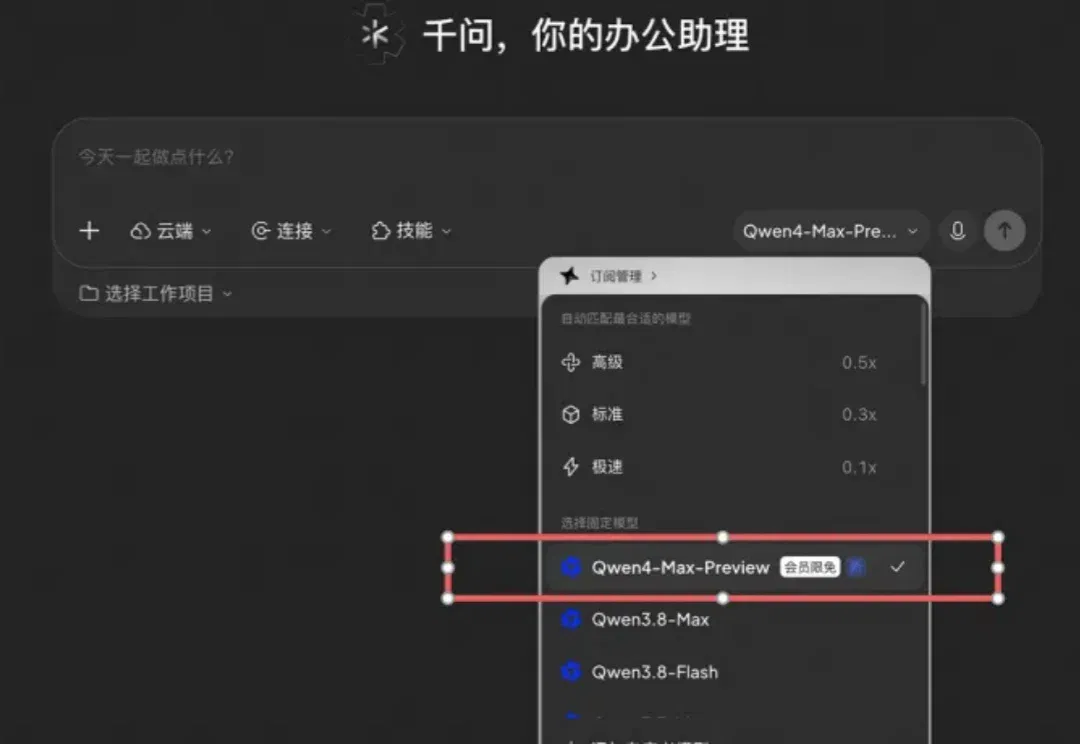
Qwen4-Max is available on the Qwen AI platform through APIs or Alibaba’s Token Plan, and directly in Qwen Office, Qoder, the Qwen app and Qwen Studio.
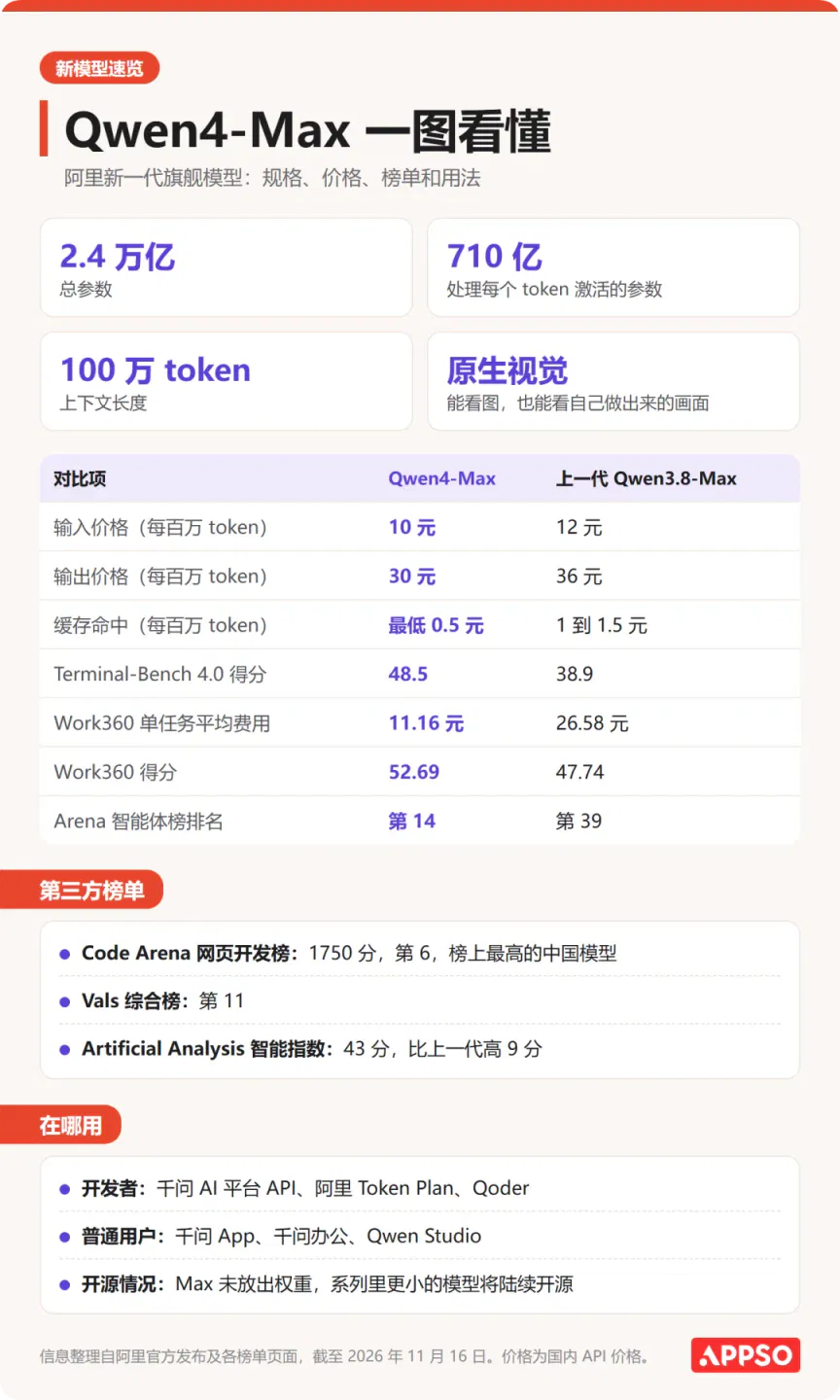
It is not open-source at this point; smaller Qwen4-series models are expected to follow later.
We had it take apart an iPhone
Now to our hands-on tests of Qwen4-Max’s actual performance.
We conducted tests involving circuit design, mechanical modeling, Blender 3D creation and game engines. In every case, we ran genuine, heavyweight professional software locally.
We asked it to create interactive Three.js disassembly demos for an orange iPhone 17 Pro and a Tesla Cybertruck, supporting viewpoint rotation, an expansion slider and reassembly.
It did not take the shortcut of importing external 3D models. Everything from screw holes to brushed-metal surfaces was built from code-generated geometry.
The first iPhone version looked convincing externally but had too few internal components. Asked to refine it, the model iterated on the existing code and quickly filled in the structure.

In the new version, as the screen slowly moves aside, the battery, trays, flex cables and charging coil are arranged in staggered layers, with the textures of metal, glass and rubber clearly distinguishable. At that moment, this so-called understanding of three-dimensional space finally felt tangible.
The Cybertruck demo similarly included staggered brake, suspension and battery connections. Returning the slider to zero precisely restored dozens of components, with almost no misalignment or interpenetration.
APPSO found the sequence of first version, visual feedback and iteration within the original project more efficient, successfully exercising Live Delivery.

Heavy AI users know the anxiety of waiting for allowances to reset, sometimes waking at night to restart tasks.
I asked it to design a physical bedside reminder that would alert me automatically when the allowance recovered.
This amounted to having it do the work of three roles on its own: structural design, electronics and animation. First, it used OpenSCAD, which draws industrial plans through code, to build a precise enclosure. It then used the professional electronic-circuit simulator ngspice to get the internal circuit working in simulation. Finally, it imported the design into the 3D animation software Blender to complete the assembly of the whole device and a dynamic demonstration.
The hardest part of cross-software work is consistent physical dimensions across all three. Qwen4 ultimately handled this well.
We also asked Blender to design a handheld music synthesizer called LOOP / 8, with tactile buttons, tuning knobs, a screen showing live waveforms and several layers of internal circuit boards.
It first delivered a static rendering of the exterior. We then had the camera make a full circle around the device, split the whole device into four exploded layers as though taking apart building blocks, and finally close it back up again. Along the way, it revised the script code once on its own to fix minor problems, then rendered the entire smooth, industrial-grade presentation animation.
The real secret weapon behind Qwen4-Max
Sixth place in blind coding evaluation does not make it the outright leader, but rapid iteration can change rankings several times in a month.
Alibaba’s story for this generation may lie beyond leaderboards.
To explain this, we have to go back to September's Apsara Conference. Alibaba brought up a very hot concept at the time: recursive self-improvement (RSI). Put simply, this means letting AI participate in its own cycle of iteration.
Qwen3.8-Max had already tested an early version, iterating automatically thirty-three times and making over ten thousand EDA-tool calls in a chip experiment that reduced area by 42%.
With Qwen4-Max, this story of self-improvement has taken a step forward. In its architecture, while keeping the total parameter count unchanged, it uses a quarter fewer parameters for each computation, first making itself more economical.
It then optimized the scheduling system on which it runs: the model proposed algorithms, a solver scored them and the next version followed. Annotation-task scheduling cost fell 10.42%, and offline CPU rescheduling became 14.61 times faster.
The saved compute has further uses. Alibaba previewed Qwen 4.5 and Qwen 5 at five to ten trillion parameters, two to four times the current size, at the Apsara Conference.
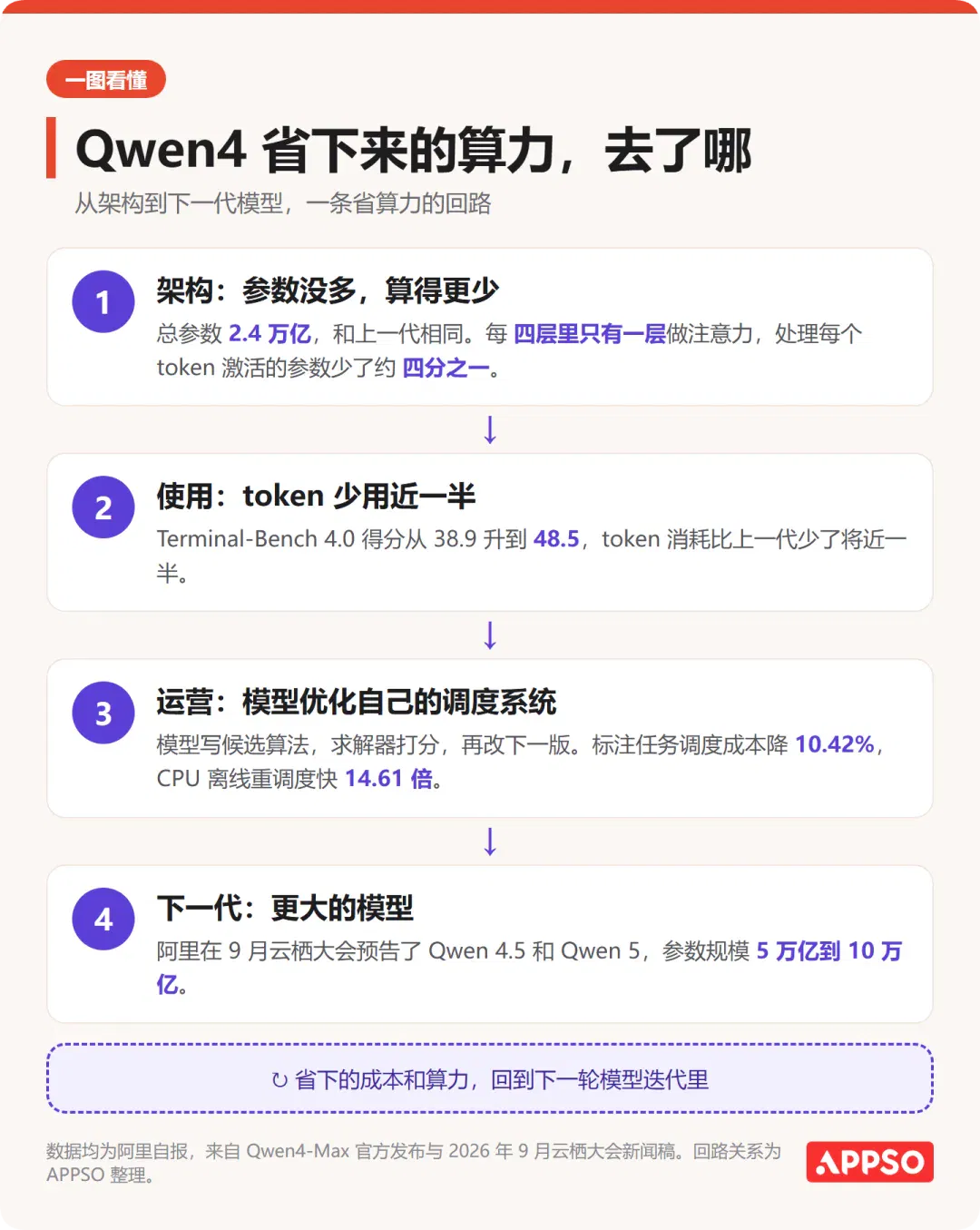
Its position becomes clearer: perhaps not the smartest model at the moment, but a key link in the evolution loop. Learning economy now helps make larger successors affordable to build and run.
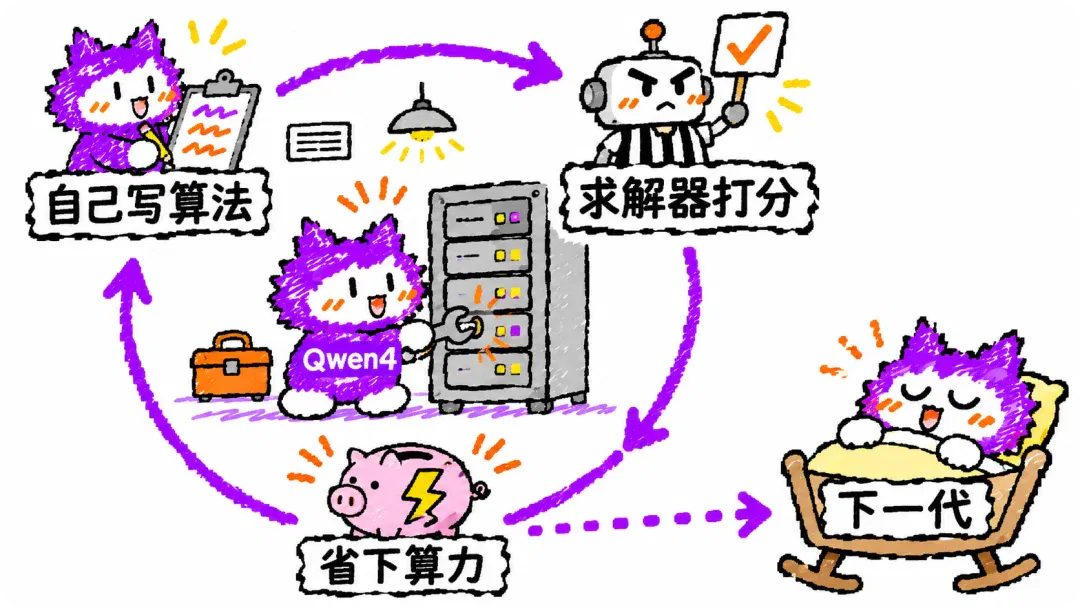
For now, it can change scheduling and resource allocation, not truly “models building models.” Still, that invites interest in Qwen 4.5.
As 2026 approaches its end, model iteration is entering another chapter.
This article was originally published by APPSO. Author: APPSO.
Related topics
After reading
Join the AINRK community
Read how to join the community and connect with people working in AI.
Related articles
Continue reading related topics and articles in this category.
Alibaba releases Qwen4-Max, expanding multimodal and industry-agent workflows (opens in a new tab)
The report covers Qwen4-Max's architecture, million-token context and long-horizon delivery examples. Work360 and AII show different cost reductions; complex open-ended tasks remain a weakness, while smaller models are planned for later open release.
千问 Qwen4-Max 预览版体验,动画与交互表现怎样 (opens in a new tab)
智东西用动画、交互场景和 GIF 任务体验 Qwen4-Max 预览版,记录了生成耗时、控制细节与字幕错位等问题。

Alibaba plans Hong Kong spin-off of T-Head; standalone financials and valuation await disclosure (opens in a new tab)
Alibaba says T-Head has filed a confidential listing application and plans a spin-off through a global H-share offering. ChinaVenture reviews its chip business and commercialization; the valuations cited are market estimates.
Qwen Code 1.0 Preview 发布,融合 Qoder 的 Harness 能力 (opens in a new tab)
Qwen Code 1.0 预览版开放融合后的运行框架,以事件组织会话、工具与反馈。团队保留稳定分支,并计划继续完善分布式扩展和任务接续。
第三方榜单出现疑似早期千问模型的游戏开发测试 (opens in a new tab)
GameFeel Bench 记录了使用早期标识的模型得分和单次任务成本。开发者展示了另一次未公开模型的测试,正式型号仍待厂商确认。