LiberAI's Liu Songming on connecting models, hardware and data for physical AI
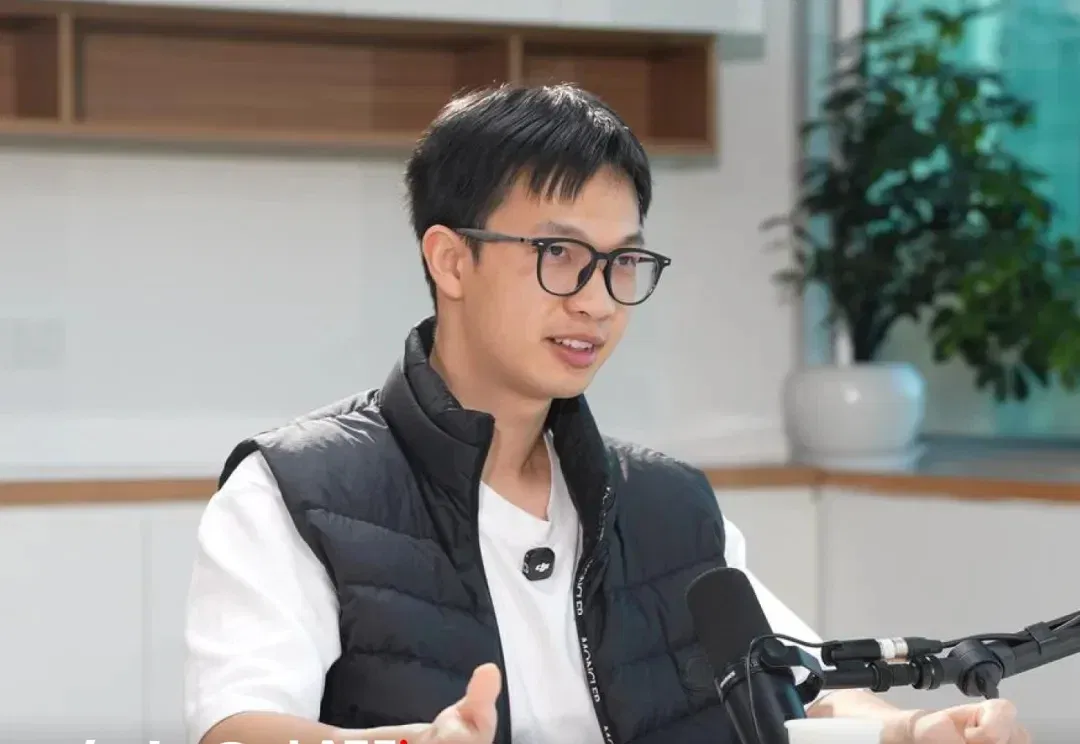
LatePost interviews LiberAI founder Liu Songming about Liber-0, glove-based data collection, robot hardware, full-stack integration and commercial use cases. The 2.2 million data hours and test results are team claims; a flagship application remains a goal.
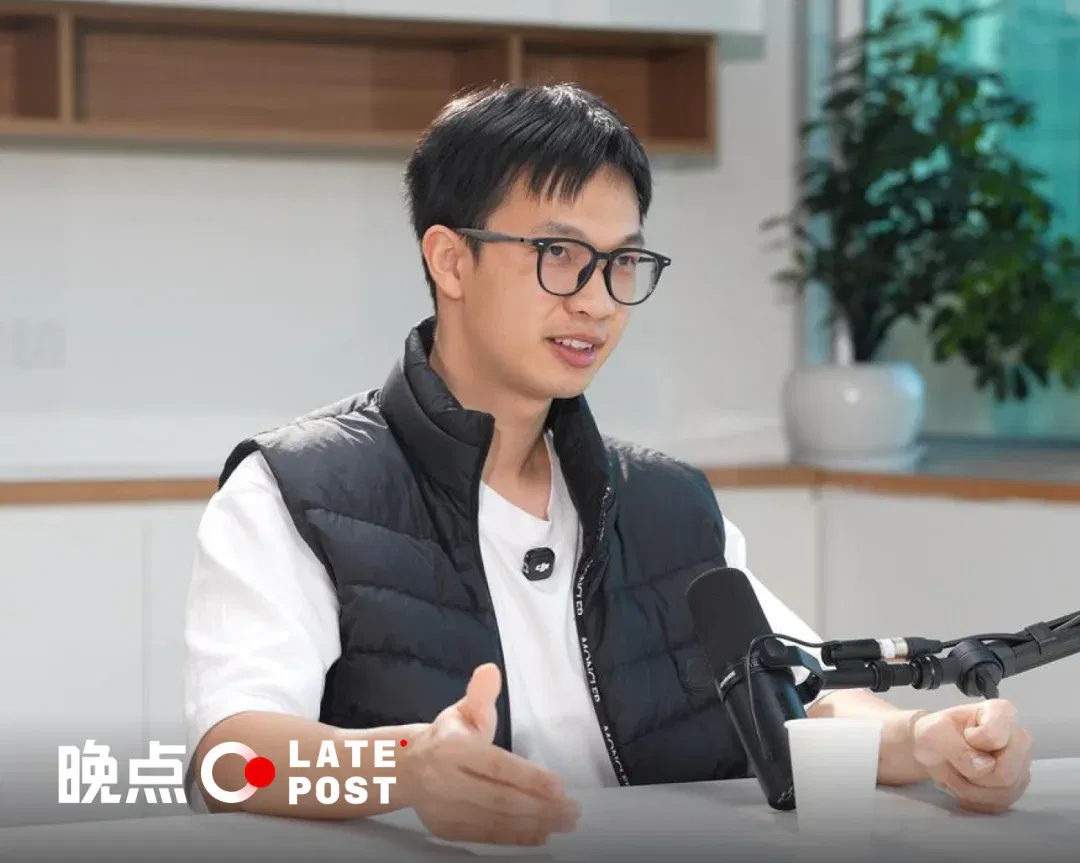
"There is one thing I truly love with absolute intensity: entrepreneurship itself."
"Tsinghua, born after 2000, world models": Liu Songming fits every one of these once-red-hot investment labels.
Born in 2000, he first gained recognition with the RDT-1B embodied model in 2024. At the end of 2025, in the third year of his PhD, he founded LiberAI. It subsequently secured six investment rounds from institutions including ZhenFund, HongShan, Meituan Long-Z and Shunwei, and released the Liber-0 world model in early November this year.
A partner at a well-known investment firm that did not invest in LiberAI called Liu Songming "China's strongest founder born after 2000."
On his résumé alone, it is a familiar narrative: a young researcher produces influential work, starts a company on that momentum and hopes to push the technology to its limits.
But Liu Songming presents contrasts that go beyond those labels.
Many researcher-founders start companies to pursue a particular technology. Liu chose physical AI because he had always wanted to start a company.
He saw physical AI as one of the few fields where an independent company could work with foundation models without being swallowed by them.
He is a star world-model entrepreneur who nevertheless thinks building only models is dangerous.
At the outset, Liu anticipated that foundation-model companies would enter physical AI and very likely absorb the task-planning layer, much as GPT-6 Astra later disrupted embodied AI:
So from day one we were a full-stack company, developing our own core robot hardware designs, key components and data-collection equipment.
This vertical integration of models, hardware and infrastructure brings slower iteration, heavier investment and more complex teams. Some investors considered it insufficiently streamlined and insufficiently focused on the models themselves.
But Liu believes the fragmentation of the physical world, the small initial scale of individual use cases and iteration cycles slower than software are precisely what prevent giants such as OpenAI from committing major resources in the near term. New companies at the edges have room to accumulate future bargaining power and develop their own hardware, products and interaction data.
The future he wants to compete for is becoming a company "as enormous as Apple" once the personal-robot market arrives. That ambition is not unusual. What is less common is his simultaneous acknowledgment that, at present, his actual commercial competitors are custom-automation companies.
From the customer's perspective, the comparison is whether our model plus hardware can beat their custom-automation solutions on cost and deployment efficiency.
A twenty-six-year-old founder who does not quite fit either the post-2000 or Tsinghua PhD stereotype has built a world-model company that does more than models. Liu now believes that "a full stack integrating software and hardware may be one of the approaches with the highest odds of reaching that endgame."
No completed PhD or faculty ambition: entrepreneurship was the only option
LatePost: You and LiberAI carry many labels: Tsinghua, born after 2000, world models. How would you describe the company and what it actually wants to do?
Liu Songming: First, being born after 2000 is an objective description. I really was born in 2000, so I cannot resist that label. But a world model, or any other technology, is not a company's mission in itself. It is more of a means.
Every company's ultimate mission must be to create commercial value. For us, that means using physical-AI technology to realize the product of a physical agent.
LatePost: Why are so many young prodigies starting companies in physical AI and world models?
Liu Songming: Fundamentally, the time from a technological breakthrough to its becoming an entrepreneurial opportunity is getting shorter.
This is especially clear in physical AI. First, the field only really began developing relatively recently. Google's RT-1, for example, was work from the second half of 2022, so the researchers in the field are relatively young. Second, as large models improve, people can learn different subjects faster with AI, shortening the time needed to accumulate experience.
LatePost: In October 2024, RDT-1B, which you developed in Professor Zhu Jun's lab at Tsinghua, brought you recognition in the industry. Investors were already encouraging you to start a company. Why did you not do so then?
Liu Songming: Because I was not yet confident about how to scale. I could not even list what I would do three months later. You cannot wait until you are 100% confident to start a company, but I think you need at least 60–70% confidence.
LatePost: What did you think was missing? VLA, or vision-language-action models, already existed, and your own RDT, Robotics Diffusion Transformer, was also an exploration in that general direction.
Liu Songming: VLA's breakthrough was introducing the idea of gaining generalization through pretraining to robotics. Before that, the mainstream approach was to collect separate datasets for different tasks and use imitation learning or reinforcement learning.
But it was unclear where the data for large-scale pretraining would come from. RDT-1B's main data also came from teleoperating real robots, which is slow and expensive to produce. So I had initially seen that pretraining was beneficial, but did not yet know how to do it at scale.
LatePost: Another common arrangement then paired an emerging academic like you as technical lead with an industry veteran who had resources as the overall leader. Did you receive invitations like that?
Liu Songming: Yes, but this time I wanted to be the overall leader. It depends on what drives the business. If resources are critical, it makes sense for a technical leader to serve as the face for fundraising and recruitment while a resource-oriented founder secures more resources.
But I could see major technical bottlenecks remained in this field. At this stage, technological breakthroughs truly matter, and most company investment must go into compute and data. When investment is that large, the overall leader must have technical judgment, because they decide how to spend the money and develop models and other things more capital-efficiently.
LatePost: When you started the company late last year, you were in the third year of your PhD. Did you consider finishing the degree and securing a faculty position first? Young professors starting companies is common now too.
Liu Songming: No. Timing matters. Besides, entrepreneurship has always been my unwavering pursuit. I have never considered another career possibility.
LatePost: When did that ambition begin?
Liu Songming: Around secondary school, I began asking what my goal in life was. A common answer is to obtain resources, money, status and influence. But go one level deeper: why do people need those things? I think the ultimate purpose is to get things done, certainly not to enjoy oneself. Enjoyment does not require that much money.
If the ultimate goal is to do things, there is no need to take a long detour. Entrepreneurship is the most direct route: it can bring extraordinary leverage, resources and influence, while itself being a direct process of doing things.
LatePost: Why did you begin thinking about this in secondary school?
Liu Songming: Growing up, my parents did not focus so much on my grades. What mattered most to them was what kind of person I wanted to become. They did not tell me what to do; they asked me what I wanted to do.
LatePost: How had you prepared for entrepreneurship?
Liu Songming: I was preparing all along. After high-school competitions, I chose Tsinghua because I had researched it and knew its entrepreneurship education and incubation systems were strong. I transferred from chemical engineering to computer science because chemical engineering is too capital-intensive and young founders have little advantage there, whereas IT offers more opportunities.
In my first and second university years, I joined Tsinghua's entrepreneurship association and Qichuang program. On one side, I learned about intellectual property, investment terms, running a business and reading financial statements. On the other, I gained practical experience, working on an online-education venture under the guidance of senior students and teachers. I was not the overall leader that time.
ChatGPT arrived in my fourth year, and I felt the time had come. But I did not have the means to build foundation models, so I listed many directions: AI applications, multimodal video generation, AI for Science, robotics...
My thinking was simple: foundation models would inevitably become enormous and require very high investment. I therefore had to build applications with sufficiently strong barriers to work with foundation models as an independent company rather than be swallowed by them. I thought applications connected to the physical world had unique problems and challenges, making independent companies more likely to emerge. I saw that direction in 2023 and waited for more mature technical signals.
LatePost: Do people describe you as good at solving exam questions? One archetypal technology founder has an intense lifelong passion: Frank Wang, for example, loved model aircraft as a child and gradually built DJI's drones. A top student like you, with a prestigious university and excellent résumé, seems to enter entrepreneurship through carefully calculated steps and with many options. How do you see that trait?
Liu Songming: It depends on the field. If intense passion means tinkering with something since childhood, then in embodied intelligence or physical AI, the technology of ten or twenty years ago was completely different from today's.
Besides, there is one thing I truly love with absolute intensity: entrepreneurship itself.
Anticipating foundation-model competition, full-stack from day one
LatePost: You formally founded LiberAI at the end of 2025. NVIDIA's world-action model DreamZero, which later sparked the world-model boom, had not yet been released. What signals of greater technical maturity did you see?
Liu Songming: Three things happened between 2024 and 2025. First, video began to play a role in embodied training. My labmates developed Vidar, and it was clear that a foundation model trained on video could help physical models generalize better. (Editor's note: Vidar, released in July 2025, was an embodied model jointly introduced by Tsinghua's Zhu Jun Lab and Shengshu Technology. Like NVIDIA's WAM DreamZero, released this February, it uses a video-generation model as its backbone.)
Second came my own research. We explored UMI, the Universal Manipulation Interface, extensively and found that collecting embodiment-free data with UMI could match real-robot teleoperation in performance, greatly reducing data-collection costs. But UMI uses grippers, whereas internet videos show human movements, so a gap remains.
To close that gap, robots need to be more human-like and have dexterous hands. That was the third signal: high-degree-of-freedom dexterous hands also became more mature in the second half of last year.
Together, those factors made the path of training embodied models on human data increasingly clear to me.
LatePost: You said you chose physical AI because you believed foundation models would not swallow it. But GPT-6 Astra, released this September, has strong spatial intelligence as a foundation model. How did that challenge your initial startup hypothesis?
Liu Songming: I actually anticipated from the outset that foundation-model companies would enter. First, their capabilities keep improving and capital expenditure is increasing, giving them both the ability and incentive to enter more use cases. Second, conversations with Silicon Valley friends brought reports in the second half of 2025 that OpenAI was recruiting a robotics team. Entry was only a matter of time.
LatePost: Even knowing OpenAI would enter embodied AI leaves different possibilities. Some thought it would form a relatively independent team to approach embodied AI using embodied methods. Astra later demonstrated the ability to operate robots directly. Did that exceed your expectations?
Liu Songming: The speed did, a little. The performance did not.
Intelligent systems in the physical world have three layers:
System 2 handles perception, planning and understanding: what is commonly called the embodied brain.
System 1 receives instructions and converts them into action sequences.
System 0 is lower-level motion control, reliably executing those action sequences.
Objectively, Astra did disrupt the narrative around embodied AI. One previous view held that all three layers belonged to embodied-AI companies. But when I started, I already thought System 2 was at risk. Astra demonstrated precisely those capabilities: understanding the world through writing code and perceiving distance, size and depth.
If the embodied-model layer could become thinner, building only models would be dangerous. We needed other things to strengthen our barriers. So we were full-stack from day one, developing our own core robot designs, key components and data-collection devices.
When we first raised money, many investors thought we were not streamlined enough and insufficiently focused on the model layer. That went against the mainstream narrative at the time.
LatePost: Some new companies in 2026 do focus more on models themselves. Yet the earliest embodied-AI companies from 2023 and 2024 also naturally chose full-stack approaches, partly because China has supply-chain advantages and partly because some came from hardware.
Liu Songming: The difference between us and that group of full-stack companies is the background of the overall leader. For us, hardware serves the model, rather than the model serving the hardware.
LatePost: In the Liber-0 technical report, you also tested Astra in detail. What is it good or bad at, and where are its boundaries?
Liu Songming: We compared two setups: Astra as System 2 with our model as System 1, and Astra directly as the policy model, covering both System 2 and System 1. The former's zero-shot success rate was several times that of Astra acting directly as the policy model.
Astra has a clear characteristic when directly controlling actions: it can move the robotic arm close to the target, but misses the final millimeter needed for contact, twitching back and forth and trying repeatedly. It struggles with operations closely tied to physical contact and deformable objects. Its strengths are equally clear: semantic understanding, task decomposition and planning. When an operation fails, it can use higher-level planning to guide the robot back onto the right path for more attempts.
The experiments suggest Astra's reasoning approach cannot absorb everything. Many physical operations require intuitive reflexes without slow deliberation. Robotic manipulation especially needs low latency and must cope with incomplete information, both distinctive challenges of physical AI.
LatePost: What happens after GPT-7? In October, Unitree founder Wang Xingxing said GPT-7's release might crack the embodied-intelligence problem.
Liu Songming: Some degree of disruption is inevitable. But at least GPT's current paradigm cannot solve every problem.
The ideal division is for foundation-model vendors to take the more general, embodiment-independent System 2 and provide a unified interface, while we handle Systems 1 and 0 and tackle difficult physical interactions. The commercial returns from that are already very good for us, but the messy, laborious work is simply not worthwhile for the big foundation-model companies.
We are also working with Kimi. First, we use its foundation model for RSI, recursive self-improvement, to shorten the long R&D cycles of hardware and embodied AI. Second, looking further ahead, many research or production loops need both digital information processing and interfaces for physical-world operations. They handle the digital-world loop; we handle physical operations.
Unless GPT-7 receives specialized training for physical contact or even touch, or introduces a smaller on-device action model, I think this division is a more enduring and fundamental structure. Even if they make a specialized embodied model, hardware, models and infrastructure are so intimately connected in actual deployment that the model is difficult to sell as a standalone product.
There is also a risk in GPT building small models: too few parameters can remove reasoning ability. Ultimately, it comes back to more effective allocation of computational resources. Intuitive models and long-thinking models differ in compute consumption, cost and optimization direction. Forcing a long-thinking model to do what should be an intuitive reflex is unnatural. There must be a lighter, cheaper way.
Liber-0: validation and findings from 2.2 million hours of data
LatePost: You have just released the company's first result, the Liber-0 world-action model. What substantial capability improvements does it offer?
Liu Songming: It validated several important hypotheses. Most directly, zero-shot operation can now be pursued systematically: completing a new task directly without any demonstrations or training.
In our tests, zero-shot success reached 60–70% for simple pick-and-place tasks and around 30% for non-pick-and-place tasks. Long-horizon tasks that previously had almost zero success now exceed 10%. No one in the industry had systematically tested zero-shot long-horizon success before; we may be the first.
We also established transfer from human-hand data to high-degree-of-freedom dexterous hands, which have far more degrees of freedom and are much harder to control than standard grippers.
Liber-0's launch video demonstrates zero-shot long-horizon task completion, the model's data mix, our glove-based collection method, the LEO robot platform and our model-training approach.
LatePost: This time you had GPT-6 generate sixty tasks: twenty each for pick-and-place, non-pick-and-place and long-horizon tasks. Which tasks impressed you as previously difficult for robots but now possible zero-shot?
Liu Songming: Using GPT-6 to generate the questions is itself an innovation, more objective than having people invent tasks. Long-horizon tasks stood out most. We previously thought zero-shot completion was basically impossible, but now see a glimmer of hope. For example, put objects from a tabletop into a bag, pull open a drawer, put the bag inside and close the drawer: four or five subtasks.
LatePost: What other hypotheses did you validate?
Liu Songming: Second, scaling in this field is not just piling up more data. You also need to understand how to scale more effectively.
That differs from LLMs, whose data format is all text. For embodied data, how it is collected and processed and what equipment is used all affect scaling efficiency.
We found that the curves differ substantially between data sources. Physical data collected with our in-house gloves has one of the steepest curves. That is another reason we are full-stack: final model performance depends not just on training but on data-collection devices and robot design. Vertical integration makes sense.
This also relates to our third finding: the entire system is mutually reinforcing. If data, robot hardware and model training each improve by 30%, the gains multiply to approximately twofold. For example, our LEO platform has waist degrees of freedom broadly matching a human's, and its wrists rotate spherically like human wrists. That is crucial for twisting operations, with clearly different results from other robot platforms, validating our fundamental hypothesis in starting the company.
LatePost: You trained with 2.2 million hours of data. What is the composition?
Liu Songming: A large portion is internet data: various videos of human manipulation. Second is first-person, or ego, data, including open-source and supplier-collected videos and data from our own gloves. Third is real-robot data, including our teleoperation data and open-source cross-embodiment robot data.
The experimental conclusion is that absolute data volume matters less than diversity, collection method and whether precise action information is present.
LatePost: Among other models with disclosed data volumes, GEN-1.5 used 500,000 hours this August and Dyna-2 used one million hours in September. How do the data mixes differ between companies?
Liu Songming: GEN-1.5 mainly used UMI data. Dyna-2 used entirely first-person human video in pretraining and added robot data during post-training.
We mixed video, ego and real-robot data across all three pretraining stages. The logic is simple: internet video is abundant and cheap but lacks precision and physical-action information such as hand trajectories. Glove data bridges the gap through action grounding, aligning with internet video while supplying the missing action information. UMI uses gripper data, which does not align with human hands, so we did not devote much effort to it.
LatePost: One experiment in the report found glove data combined with 25% real-robot teleoperation data outperformed 100% real-robot teleoperation data. Real-robot teleoperation is usually considered the highest-quality data. Why can glove data not just match it but exceed it?
Liu Songming: Teleoperation itself is not a perfect policy. The human views the robot from the side, unlike the robot's first-person view. There is no force or tactile feedback, movements are slow and sluggish, and they do not align with the fluid human movements in pretraining video.
Gloves, by contrast, are worn directly on human hands, preserving natural human manipulation while recording precise actions. They can better distill the information in internet videos.
We also found the model can learn skills from glove data that it never learned on real robots. In the experiment, real-robot data contained only pick-and-place tasks, while glove data contained non-pick-and-place tasks. After training on the mixture, the robot could perform non-pick-and-place tasks. That means the model can learn new skills directly from embodiment-free glove data, reducing reliance on expensive real-robot data.
This is one of our most important validations. It fairly clearly demonstrates that gloves can partly replace real robots. Gloves are cheap and real robots expensive, so this can reduce costs considerably and greatly benefit scaling.
LatePost: How much can substituting gloves for real robots reduce costs?
Liu Songming: In our results, gloves can replace 75% of real-robot teleoperation data with similar or even better performance. An hour of real-robot teleoperation currently costs more than a thousand yuan in total. The glove approach is an order of magnitude cheaper.
LatePost: You also mentioned greater efficiency from full-stack optimization. What hardware and key components do you make yourselves? What determines what you do or do not make?
Liu Songming: We only make the parts that can improve final model performance. Mature components and supply-chain needs are handled by outside suppliers.
For the robot body, we mainly design the configuration and components for certain key degrees of freedom, aiming to be more human-like. Since the policy model learns human manipulation, some knowledge will not transfer if the hardware is insufficiently human-like.
For example, LEO's waist bends forward and sideways. Together with base rotation and height adjustment, it can do almost everything a human waist can. Many humanoid robots' waists can bend but not lean sideways.
LatePost: Why is that design necessary? For adjusting operating height, for example, simply raising and lowering the torso vertically would be cheaper and easier.
Liu Songming: Because that is how people move in internet and first-person videos: naturally bending and leaning sideways when wiping a table or picking things up. If humans have that action space but robots do not, the policies will not align.
LatePost: So this is about learning more efficiently from data, rather than more degrees of freedom always being better?
Liu Songming: It is all for the model. Our wrist also uses a ball-like joint that can twist in place. Previously, mainstream wrists used serial joints. Rotating in place, such as unscrewing a bottle cap, also rotated a section of the forearm behind the wrist, potentially causing collisions in some situations.
LatePost: Why did others not previously add spherical wrist rotation or more waist degrees of freedom?
Liu Songming: Because they increase hardware cost and complexity. Although the proportion of the total robot cost is not high, purely from the hardware perspective it adds cost without benefit, so naturally no one did it. We do it because we see a clear benefit from the model side.
LatePost: Your report says Liber-0 on your LEO platform achieves over 90% success at twisting objects, bending to pick up shoes and opening drawers in narrow spaces, thirty percentage points above the control hardware platform. Does that also imply your model is weaker at adapting to different robot bodies: one brain across many forms?
Liu Songming: We certainly want cross-embodiment capability. But when data comes from humans, hardware closer to humans will naturally absorb that knowledge better and transfer it more effectively.
Ultimately, an ecosystem will emerge. Our model will work best with our own hardware and can also adapt to other bodies, with slightly weaker performance.
If there were no differences between robot bodies, vertical integration would be unnecessary, and the field would be wide open for Astra. This precisely shows that the closer you get to physical execution, the more tightly tied it is to hardware. Foundation models alone cannot simply sweep through it.
LatePost: The Liber-0 technical report shares data mixes, core hypotheses, validation methods and various comparisons. Are you not worried everyone else will follow?
Liu Songming: That depends on how you see the relationship between model capability and influence at this stage. The industry is young and facing capital-market scrutiny. Sharing validated information clarifies technical paths, gives the industry more confidence and helps people believe we are doing substantive work.
We also opened an online simulator this time. Anyone can photograph nearby objects, upload them and directly test Liber-0's grasping in simulation. (Simulator: https://sim.liberai.work/)
LatePost: If many people develop their own gloves, will that weaken your competitiveness?
Liu Songming: Many already are. But the difficulty is not the glove itself; it is the entire pipeline behind it, from hardware design and data processing to model training. It places heavy demands on a team's full-stack capabilities. We have spent a long time refining this system.
LatePost: Do you have any regrets about Liber-0?
Liu Songming: First, the tactile modality is still maturing, mainly held back by hardware and engineering: finding suitable tactile sensors, then making good use of the data. This is a critical part of System 1 and an area foundation models find harder to enter.
We also did not explore reinforcement learning enough in the previous training version. We want an approach comparable to RLHF, reinforcement learning from human feedback, in large models: task-independent reinforcement learning that improves the model's overall capabilities generally.
LatePost: Were there any unexpectedly difficult parts throughout Liber-0's training?
Liu Songming: Training was fine; hardware was harder. Hardware affects the model far more deeply than expected. Different mechanical configurations, sensor choices and even motor parameters can greatly affect final model results. This reinforced my belief that System 1 and the layers below it are currently tightly bound to hardware.
The downside is slower iteration, because models and hardware must evolve together, and hardware cycles are slower than software cycles.
The upside is that hardware R&D does not require pouring in money the way compute does. It requires good design thinking and has many sequential steps that money alone cannot readily accelerate. That also means large-model companies cannot simply spend their way past the cycle when they enter.
The hard work companies like OpenAI lack incentive to tackle
LatePost: How far along are you commercially?
Liu Songming: We are still exploring. The latter half of the Liber-0 demonstration video shows us making a complete cup of milk tea, from retrieving ingredients to sealing the cup. That is one exploration.
LatePost: I watched the nearly six-minute version without speedup or cuts. It does complete a complex long-horizon task, but some steps are hard for a robot. One involves pumping syrup from a dispenser into the milk tea, and even a person may not succeed with one press. How do you ensure success in actual operation?
Liber-0 makes milk tea in one continuous take. The video above is played at 2x speed; without speedup, the task takes approximately five minutes fifty seconds.
Liu Songming: Other modalities are needed to help. Humans combine touch and vision, but we do not yet have very good tactile hardware. For tasks like pumping syrup, where vision alone makes it hard to tell, sound or another modality might indicate whether syrup came out.
The closer you move to real use cases, the more you discover hardware constraints. Engineering and solution details, and the results of their vertical integration with models, may ultimately determine whether you can make money.
LatePost: Could you take another approach and simply replace that piece of equipment in the milk-tea process?
Liu Songming: Yes. But we are challenging ourselves not to modify the environment at all, which minimizes deployment cost and makes scaling easiest. Ultimately it is an economic calculation: which approach costs less and is more efficient?
LatePost: Would you accept human intervention if the initial setup were not fully automated?
Liu Songming: It depends on how much intervention is needed. Again, it is an economic calculation.
LatePost: Judging by the milk-tea demo, are commercial services your first priority? Why not industry, logistics or homes?
Liu Songming: Not showing other demos does not mean we have no ideas. The reality is that no use case is perfect. Homes are constrained by insufficient generalization and safety issues. Industrial settings require short cycle times. If we find slower workstations, we still need to be cheaper than people, and assess how much capability transfers from one station to the next. We are still exploring all of this.
LatePost: Fault tolerance, cycle times, value of the work: what do you emphasize when choosing use cases, and how do you prioritize them?
Liu Songming: First, they cannot be too nonstandard, or they require extensive custom engineering and risk commercialization slowing model development. Second, current model capabilities must meet the cycle-time and fault-tolerance requirements. Third, customers must genuinely be willing to pay.
In other words, they should not slow model R&D and should build lasting company assets, whether know-how about converting model capabilities into commercial value or use-case data. We will not enter a use case that does not make sense merely to rush short-term revenue.
LatePost: If you are not rushing short-term revenue, how long do you expect it to take to establish the first use case?
Liu Songming: Ideally, we will establish a flagship application in the next two to three years. That means, first, commercial value genuinely comes from model generalization rather than brute-force traditional custom automation. Second, it is replicable, has repeat purchases and ongoing revenue rather than a single one-off deal, and offers good margins.
LatePost: Do you think the market will give you two or three years? Venture investment in the private market has cooled noticeably since June and July this year.
Liu Songming: We have completed six funding rounds. When I started, I expected a market upswing followed by a trough. The turning point I anticipated was roughly the second half of this year.
So first, build cash reserves early and maintain strict capital discipline: spend efficiently. Second, prepare for commercialization and gradually generate our own cash. Our current reserves give us enough room for trial and error.
LatePost: You have never had a job or worked in industry. Where did this awareness come from?
Liu Songming: My family is in business, so I have a lot of firsthand impressions. Over all my father's years in business, most of the money he made may have come in two or three boom years. The rest of the time was about staying afloat. That is the industry cycle.
His business is traditional and very different from what I do now. But I have seen it many times: low-probability risks thought unlikely to happen eventually did happen. I increasingly believe decisions must never consider only the best-case scenario.
LatePost: How do you see competition from other kinds of companies? OpenAI is making its own robot hardware and dexterous hands, while Tesla and more automakers are also building robots.
Liu Songming: Once you reach commercial delivery, everyone is in the same position: winning customers one by one and tackling difficult deliveries, which directly affects service quality and payment collection.
In opportunity-cost terms, putting the same effort into coding might bring OpenAI twentyfold growth, while a year or two in embodied AI might generate little revenue. They already make comfortable software SaaS money. Even Sora, which was much easier to monetize than physical AI, was shut down this year. I do not think OpenAI has the DNA or incentive to earn money through this kind of hard work.
For automakers and companies like Huawei, the key is volume. Car sales are enormous, while early robotics might yield only a few hundred units after a year of hard work. They will not commit major resources at this stage.
From a customer's perspective, our main competitors in commercial delivery right now are actually companies providing custom automation and previous-generation robots. The comparison is whether our model plus hardware offers better costs and deployment efficiency.
LatePost: Many physical-AI founders disdain the idea of treating custom-automation companies as competitors.
Liu Songming: In the customer's eyes, they are. So foundation-model disruption is not the main concern in commercialization. The core risk is that while embodied AI's scaling trend is certain, the speed and route by which technology becomes commercial value are not.
A full stack integrating software and hardware may offer the best odds
LatePost: If foundation-model companies lack the incentive to pursue slower, harder, more fragmented revenue, how big can LiberAI become by choosing it? Having started a company, why not pursue the biggest opportunity?
Liu Songming: At the time I started, it was impossible to avoid dirty, laborious work while also building something lasting and competitive. Foundation models objectively already occupy their niche, and competing for it is extremely difficult.
Entrepreneurs then have only two choices: join the foundation-model companies, or do what those companies lack advantages in and will not invest heavily in soon. That leaves applications oriented toward the physical world.
On the other hand, slow, hard and small today does not mean small forever. Once robots enter the large consumer market of individuals and homes, it becomes an enormous business. Even before that market matures, enough deployment data and sufficiently good models could reduce the marginal cost of subsequent deployments to almost nothing, connecting fragmented markets into a large enough opportunity. When we bargain with foundation-model giants then, our hardware, products and interaction data grown from the physical world will be our key assets.
LatePost: How concentrated will the market be at that point? A large market does not necessarily produce large companies.
Liu Songming: Concentration is inevitable. There will definitely be an enormous company comparable to Apple. Intelligent robots will be among the greatest industrial products in human history.
LatePost: Is becoming such a company your goal?
Liu Songming: Yes, that is our vision: grow in places the giants overlook, put down roots and become large enough before competing. Looking at how we will play this game, I think a full stack integrating software and hardware may be one of the approaches with the highest odds of reaching that endgame.
LatePost: Can you share a question you are considering but do not yet have a clear answer to?
Liu Songming: When we reach large-scale commercialization and divide the market, how will profits be distributed along the physical-AI value chain? Which part and how large a share can we capture?
In the purely digital world, LLMs are delivered through APIs, leaving most of the money with foundation models and chips. But embodied intelligence cannot operate without robot hardware and infrastructure for specific use cases, so some value will necessarily remain in products that vertically integrate models, hardware and infrastructure. The eventual profit shares of the different parts remain unknown.
LatePost: You said entrepreneurship means being able to do valuable things directly. What achievement at LiberAI would make you feel one step closer to that?
Liu Songming: It relates to our name. LiberAI comes from Liberty, or freedom. Our Chinese name, Jiangxian Technology, means approaching leisure: freeing people from everyday chores and heavy physical labor.
"There are no carefree years; someone else is carrying the burden for you." If we do not want anyone forced to carry that burden, robots must do it instead. That is the biggest market and our greatest goal.
Lead image: LatePost.
This article was originally published by LatePost. Authors: Cheng Manqi and intern Wang Xiaochun.
Related topics
After reading
Join the AINRK community
Read how to join the community and connect with people working in AI.
Related articles
Continue reading related topics and articles in this category.
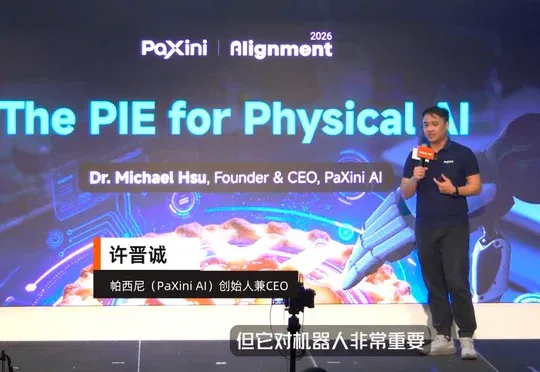
PaXini's Xu Jincheng on tactile sensing, embodied data and robotic execution (opens in a new tab)
In an ALIGNMENT conference talk, PaXini founder Xu Jincheng describes tactile sensors, data collection, VTLA models and execution hardware, discussing how perception, intelligence and execution work together. Product capabilities are claims disclosed in the talk.
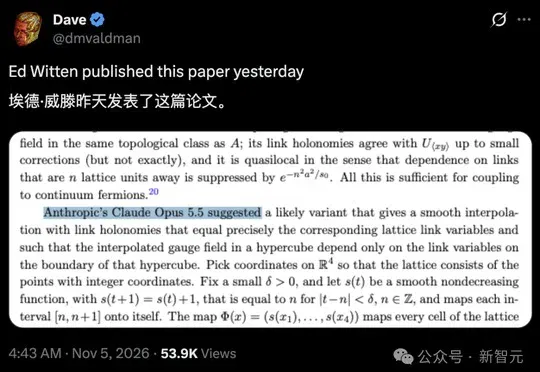
威滕在手征费米子预印本中记录 Claude 提出的插值思路 (opens in a new tab)
爱德华·威滕在一篇格点规范理论预印本中采纳了 Claude Opus 5.5 建议的插值变体,并在致谢中说明 AI 对若干细节的协助。
PSI 公布五项量子信息研究结果与 Lean 形式化材料 (opens in a new tab)
Physical Superintelligence 公布与开放量子问题目录相关的五项研究结果,并提供论文和 Lean 形式化材料供审查。结果涉及纠缠、贝尔不等式和量子因果过程等方向;各项结论有具体适用条件,需要区分对原问题的局部推进与完整解决。
一句话指挥机器人组团打工,还能越干越聪明?这波物理AI有点夯 (opens in a new tab)
「小狗,去找你的好朋友瓦力,打个招呼。」收到指令,机器狗立马朝瓦力走去,主动打起了招呼。
南京物理AI上大分!三位图灵奖得主发声,50个应用场景亮相 (opens in a new tab)
七十年前,在达特茅斯学院的会议室里,“人工智能”的概念首次落笔,开启了机器模拟人类思考的漫长探索;七十年后的今天,AI的时代之问早已从“机器能不能计算”进阶为“机器能不能理解世界”。