RoboScience introduces cloud-based embodied agent Visics-Agent, plans December 2026 launch
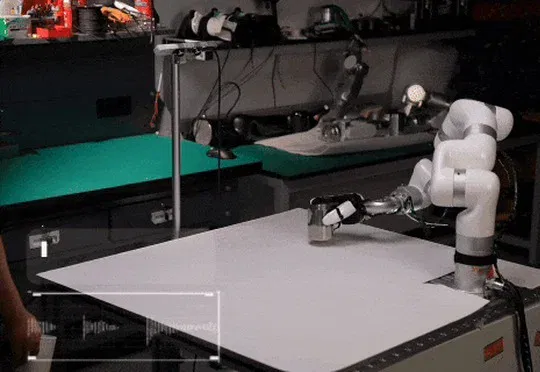
The team demonstrates voice teaching, skill accumulation and multiple end effectors, reporting tests of 454 internal task instructions. First trial applications are open; formal launch is planned for December 2026.
Editorial correction (November 16, 2026): The following is the team's product introduction and internal testing. Cross-platform compatibility, training-free integration, and task-execution results still need to be validated for specific hardware and environments.
For a long time, we have needed far too much specialist knowledge just to make a robot work properly. We need to understand motors and motion control, or it is merely an immobile lump of metal; we need to study manipulation models, or it can only move around meaninglessly; and we probably also need to master perception and motion planning, or it will either hit walls or grasp things at random.
You assemble a team of a dozen or so people, spend a great deal of time and a great deal of painstaking effort debugging it, and in the end it is only "more or less usable." Even that often comes with many prerequisites; change the setting, and you have to tear it down and start again.
But RoboScience believes robots should adapt to humans, rather than the other way around.
Around this idea, the team has introduced Visics-Agent. According to the company, this robot assistant can understand spoken instructions, remember users' habits, and learn things users teach it.
Visics-Agent:
Understands, learns, gets things done
Whether the job is tidying a cluttered desktop or sorting different kinds of objects, you only need to tell Visics-Agent what you want done and leave it to figure out the rest itself.
Of course, the development team's expectations go further than that.
For example, "it" should understand what the user says, offering voice control as responsive as your own arm:
For example, when it makes a mistake, it should not retry endlessly; it should draw lessons from experience, work out the patterns, and succeed next time:
For example, it should proactively adapt to people's pace, without my having to carefully accommodate it, and even let me interrupt at any time:
Even when you give somewhat complex spoken instructions, "it" can understand and carry them out:
Everyone is a distinct individual, with different habits and different ways of doing things. So it should also be able to remember the user's habits:
Users may even be able to teach "it" some sensible or questionable skills:
RoboScience hopes it can be taught new skills and do things itself, while accumulating experience through task after task, as an intelligent assistant.
That is precisely their original intention in creating Visics-Agent.
In terms of system form, RoboScience positions Visics-Agent as a cloud-based embodied-intelligence service (EaaS), aimed at giving robot developers access to its capabilities.
The team plans to provide these capabilities through Tencent Cloud APIs. Actual integration still requires matching sensors, control interfaces, safety constraints, and supported hardware; there is no guarantee that any dexterous hand can complete all tasks after connecting with zero configuration.
Teach Anything:
Teach it once, and it remembers
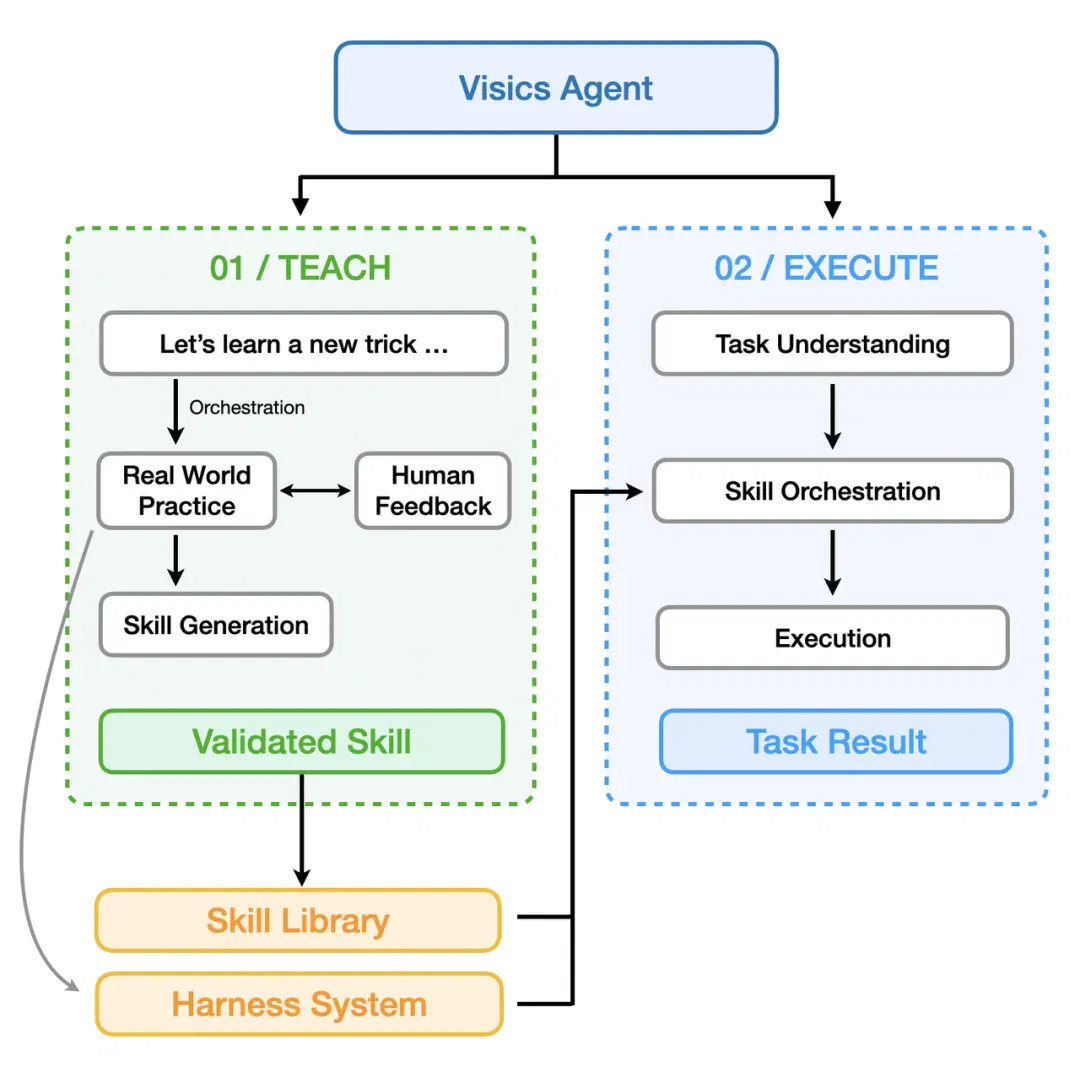
To enable robots to learn new skills, RoboScience divides Visics-Agent's workflow into two stages: teaching (Teach) and execution (Execute).
In the teaching stage, you can tell the robot what to do in natural language, just as you would teach a person. If it does not do it well the first time, you can keep correcting it until it produces a result you are happy with.
At that point, you only need to tell it: "Remember, do it this way from now on."
Visics-Agent can then organize this successful experience into a reusable skill and add it to the skill library. When it encounters similar tasks later, it can directly call on the skills it has already learned. In new settings, Visics-Agent can also combine different skills further, producing a 1+1 > 2 effect.
Harness Anything:
The more it does, the better it gets
Beyond the teaching mechanism, RoboScience has also designed a Harness system that lets robots accumulate experience from real-robot results and feedback and continually optimize existing skills.
This means teaching a robot a skill is not the endpoint, but the starting point for its continued progress.
For example, in one desktop-tidying task, a cluttered surface and the robotic arm itself blocking the camera's view together made it difficult for the robot to plan its next action. Visics-Agent tried lifting the arm first to clear the view, which allowed it to successfully plan the next action.
"In highly occluded, cluttered desktop settings, prioritize a clear view" thus became one of the lessons it accumulated. In similar situations later, it will proactively clear the view before planning its next action.
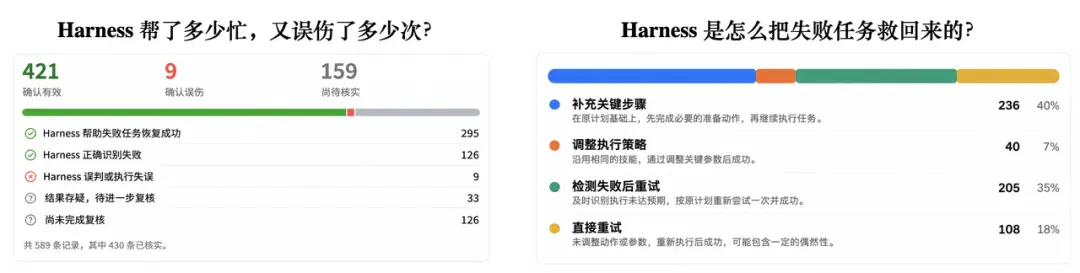
In the demo RoboScience exhibited at the Tencent Global Digital Ecosystem Summit, a month of uninterrupted real-robot testing allowed Visics-Agent to accumulate dozens of useful lessons and raise its single-skill success rate to 85% or more. Harness had a positive effect in the vast majority of tasks:
Of course, real tasks are often more complicated than performing a single grasp well.
The RoboScience team also hopes the robot can understand complex instructions and reliably complete a sequence of tasks. When something unexpected happens, it should be able to work out a solution itself, rather than simply stopping. This is another main problem the Harness system addresses.
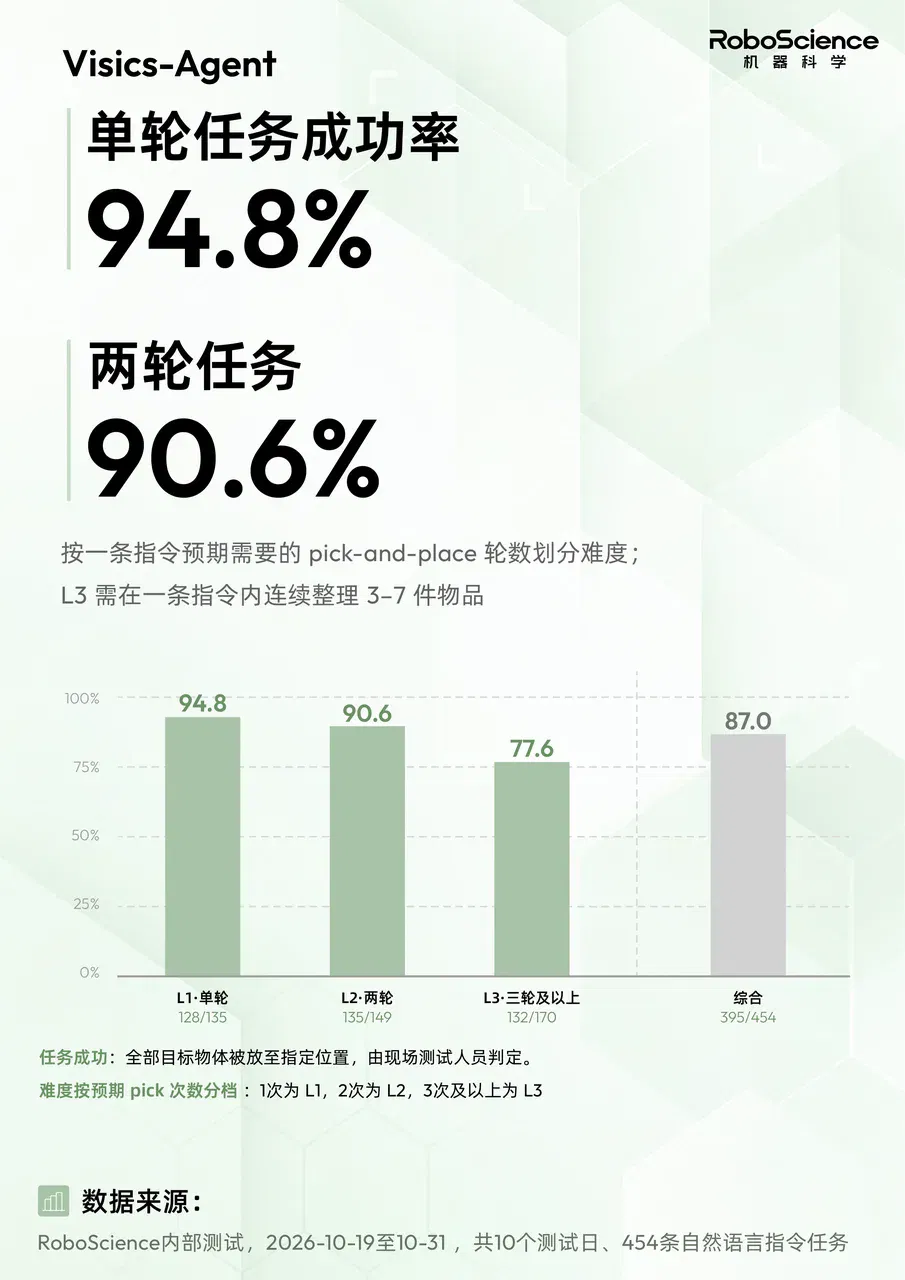
In actual testing, the team divides tasks into three difficulty levels, L1–L3. L1 and L2 mainly involve 1–2 pick-and-place operations, while L3 requires not only 3–7 consecutive operations but also understanding more complex rules such as classification, exclusion conditions, spatial relationships, and execution order.
For example, a typical L3 task is: "Of the three items at the back, put the other two in the box first, excluding that roll of tape. Then move this bundle of red cord on the table to the left of the tape."
In internal tests totaling 454 task instructions, RoboScience uses strict end-to-end acceptance criteria: success requires following the instructions completely and completing every operation. Success rates for both L1 and L2 tasks exceed 90%, while the success rate for complex L3 sequential tasks reaches 78%.
At present, the main challenges for L3 tasks still come from unexpected events in the real physical environment. For example, an object may fall off the table and leave the robot's workspace, situations from which autonomous recovery is difficult. The team is trying to teach robots to "pick things up and put them down gently" and anticipate potential risks before acting, so they can adjust grasping and motion strategies in advance and avoid such incidents as far as possible.
Adapt Any-Hand:
Change the hand, keep doing the job
Visics-Agent is powered by Visics, RoboScience's in-house large model for general-purpose manipulation. Thanks to this, Visics-Agent supports different end effectors, including different kinds of dexterous hands and two-finger or three-finger grippers, and can switch rapidly within 30 seconds.
Visics-Agent supports zero-shot transfer across hands, without retraining the grasping model for each end effector. Whether users have a gripper or a dexterous hand, RoboScience hopes they can quickly connect to these capabilities.
At the exhibition: a real-time experience
Over the past week, RoboScience brought Visics-Agent to the Tencent Global Digital Ecosystem Summit, driving a desktop robotic arm to demonstrate everyday tasks such as tidying a desktop, and attracting many attendees who stopped to watch:
Video details
However, Visics-Agent's application goals are not limited to desktops. With a different setting and a different kind of task, it should still be able to keep working.
According to RoboScience, at an upcoming international conference in Shenzhen, Visics-Agent will move from a home desktop setting into an industrial setting, demonstrating its performance in industrial sorting, continuous loading and unloading, and other tasks.
Visics-Agent is planned to formally launch in December 2026.
At that point, robot developers, researchers, and enterprises exploring real-world robot applications can all apply to be among the first trial users.
Applications for the first Visics-Agent trials are already open.
Application link: https://docs.qq.com/form/page/DVkVBUUFNWXBJanZS
This article comes from the WeChat official account "Synced," by "Synced."
Related topics
After reading
Join the AINRK community
Read how to join the community and connect with people working in AI.
Related articles
Continue reading related topics and articles in this category.
智动未来据报完成亿元级Pre-A+融资,资金用于产线与服务机器人部署 (opens in a new tab)
机甲觉醒报道,智动未来宣布完成亿元级Pre-A+轮融资,由中美绿色基金领投、南曦创投联合领投,资金拟用于广州产线、服务场景部署和世界模型研发。“智子世界”仍属技术预览,商业化效果待更多应用数据检验。

Syncere raises $11M for Lume, a household robot shaped like a floor lamp (opens in a new tab)
Syncere uses a floor-lamp form for Lume: one robot handles some pick-and-place tasks, while two work together in Duet mode on tasks such as folding clothes. Demos are edited; pricing and delivery reflect the source date, and home reliability remains unproven.

Genesis AI raises $500M Series A to advance its full-stack robotics and Eno (opens in a new tab)
Genesis AI announces funding at a $3.5B post-money valuation, outlining a stack of data gloves, simulation, models and the Eno robot. Production and customer deployments are planned; demonstrations and correlation experiments do not establish delivery at scale.
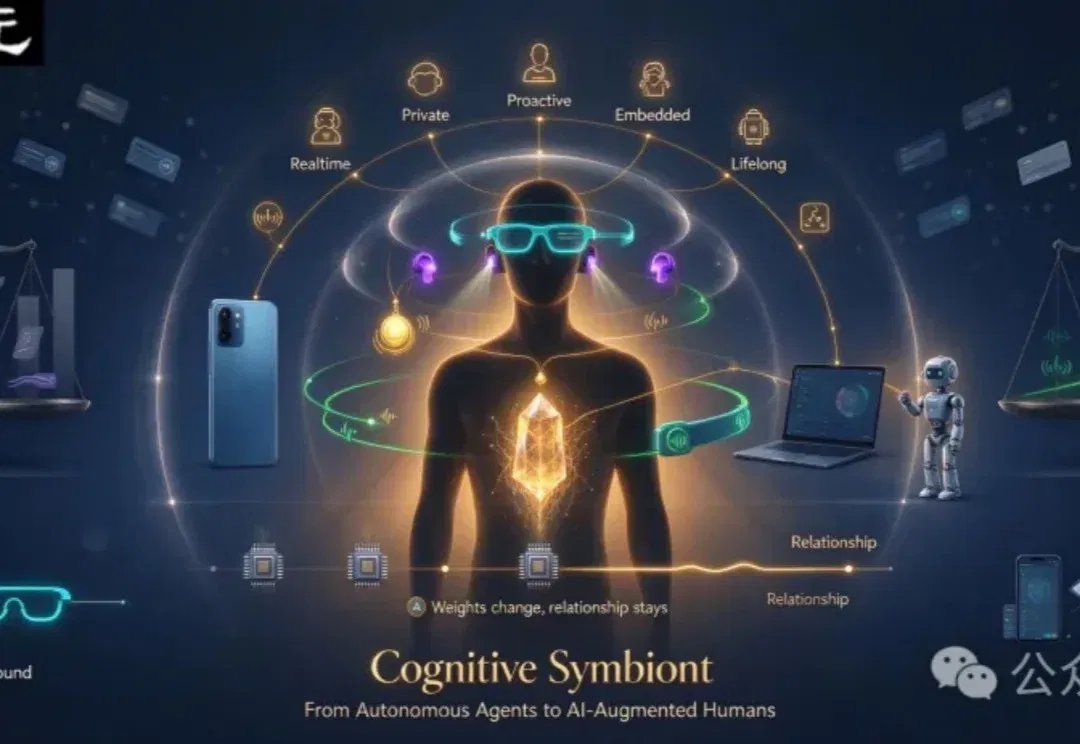
Oxford researcher proposes cognitive symbionts for wearable AI augmentation and governance (opens in a new tab)
Hao Fei's perspective paper proposes cognitive symbionts and AI-Augmented Human Intelligence, covering long-term memory, wearables, proactive help and governance. Privacy, low latency and lifelong companionship are design goals, not verified product guarantees.
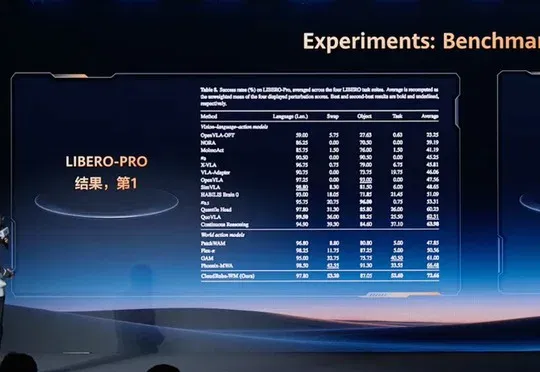
Huawei Cloud unveils CloudRobo-WM1.2, plans November 30 release of weights and code (opens in a new tab)
Huawei Cloud presents its Ascend-native embodied world model CloudRobo-WM1.2 and development platform, with two benchmark results and industrial demonstrations. Model weights, inference and post-training code, and pretraining practices are scheduled for November 30.