AlphaGenome 2 predicts DNA variant effects in cell states to support disease research
Google brings single-cell information into DNA sequence prediction and checks disease clues against existing studies. Model outputs help prioritize experiments and still require biological validation.
Editorial correction (November 13, 2026) Model predictions are used to screen research directions. They are not experimental confirmation, clinical diagnoses, or validated treatments. Computationally reproducing existing clues does not mean replacing the original biological experiments.
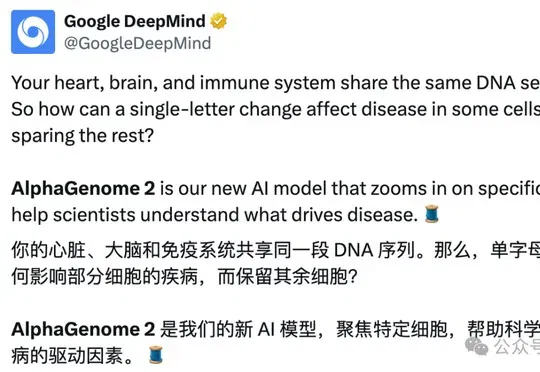
In which cells does a DNA mutation actually cause disease? AI can now help us investigate!
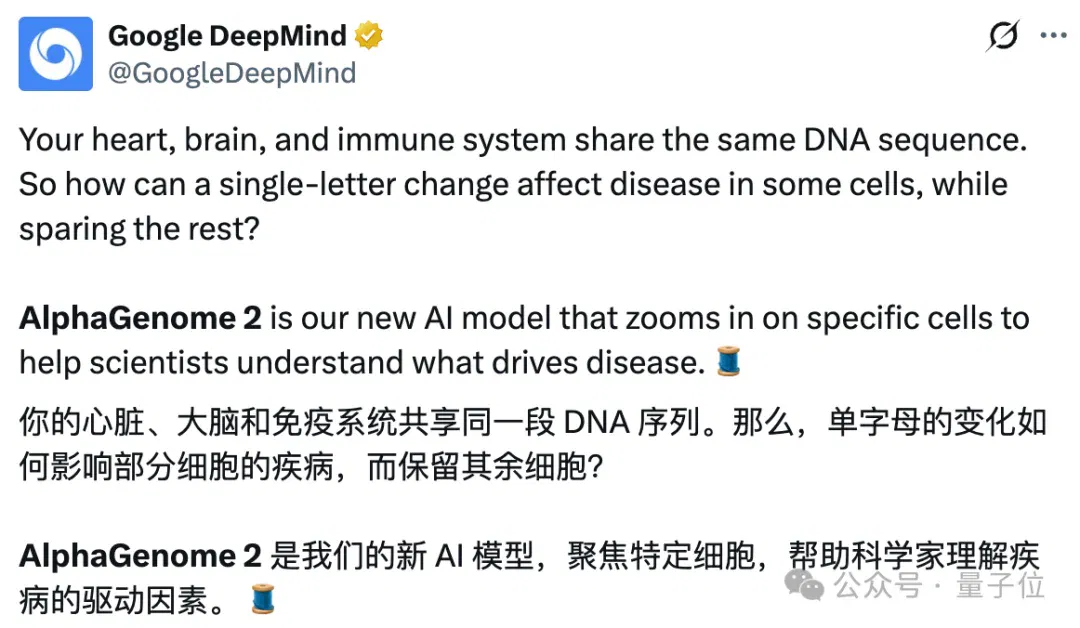
Google DeepMind has now released its next-generation DNA sequence prediction model, AlphaGenome 2.
It can predict which cell types a DNA mutation will act in and which genes it will affect, while also helping scientists trace the roots of disease and find more precise drug targets, opening new directions for targeted treatment of diseases such as cancer and diabetes.
And this time, its performance has genuinely left scientists astonished.
The model reportedly produced key predictions consistent with existing inflammatory bowel disease research in approximately half an hour of computation. That does not mean it completed or replaced the original team’s year and a half of biological validation in half an hour.
It prompted James Lee to exclaim in an interview with Nature:
They computed the answer in 30 minutes, while we originally spent a full year and a half doing the experiments…

Better still, AlphaGenome 2 can be configured and used immediately, without retraining.
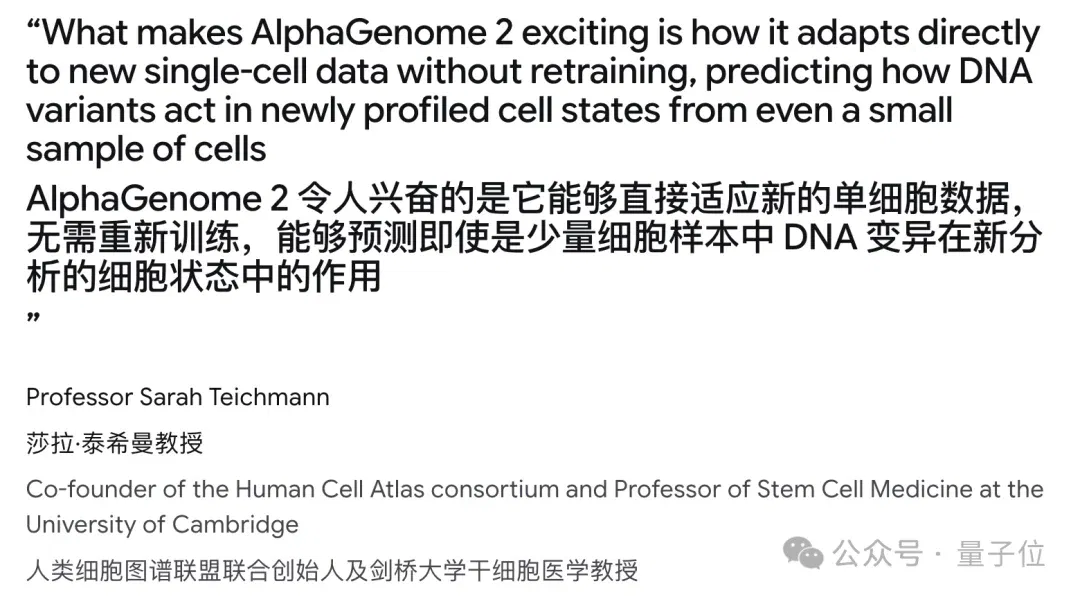
Reacting to this, Human Cell Atlas consortium co-founder and University of Cambridge professor of medicine Sarah Teichmann could not hide her excitement either:
The most exciting thing about AlphaGenome 2 is that it can adapt directly to new single-cell data without retraining;
even with only a small number of cell samples, it can predict how DNA variants act in newly observed cell states.
Onlookers were calling it awesome too:
Yes, yes, yes—this is exactly what I want AI to improve!

Some people have even started imagining a future in which they live past 100, hoping AI can really help. (doge)

An AI trained on 100 million cells can finally trace DNA variants to specific cells
So why can AlphaGenome 2 help scientists investigate the effects of DNA mutations?
When introducing this work, Google CEO Sundar Pichai offered a fascinating concept:
The cells in our bodies essentially all carry the same DNA blueprint, but different cell types, such as heart muscle cells and immune cells, interpret that blueprint differently.
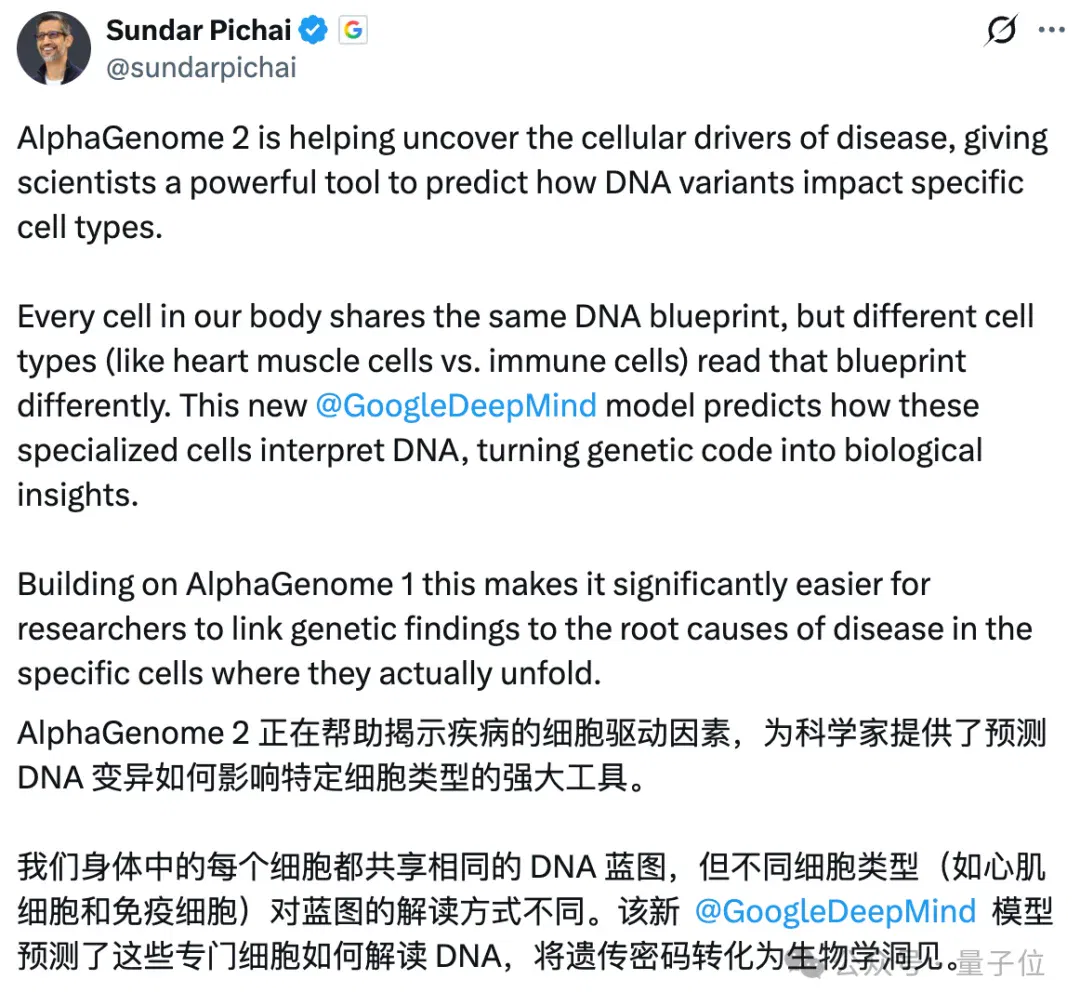
In other words, for the same stretch of DNA, some cells read certain genes while others switch them off and leave them unused.
The same DNA variant may therefore have an effect only in a particular type of cell.
This creates a difficulty for scientists.
Even when a stretch of DNA is known to be linked to disease, it is difficult to establish exactly which cell type and which gene are affected.
Now AlphaGenome 2 can help.
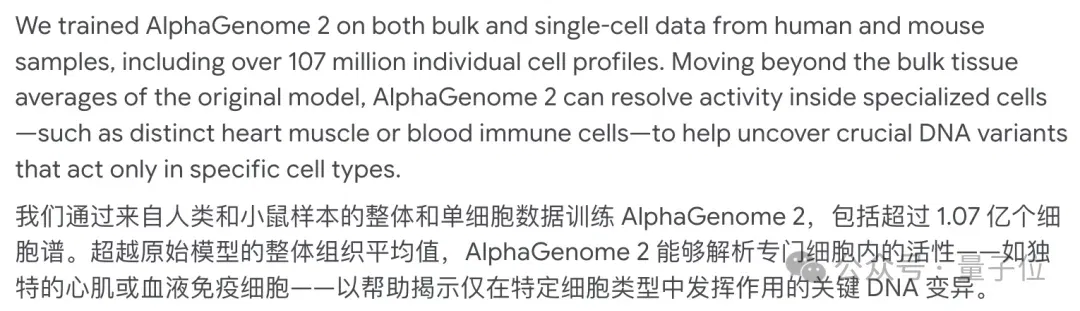
To teach AI to understand DNA in different cells, DeepMind put it through biological training on a huge scale.
The training data covered 68 tissue types and more than 107 million cells, including both human and mouse cells.
After taking in so much data, the new model delivered impressive results.
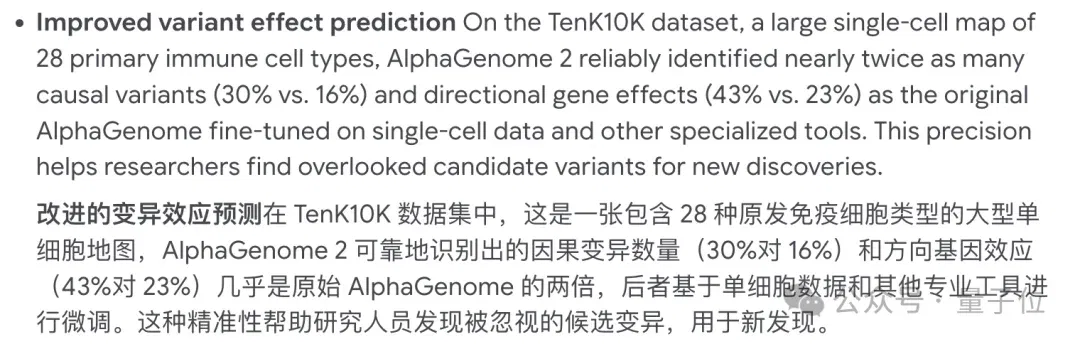
In the TenK10K test covering 28 types of immune cells, AlphaGenome 2 achieved recall for identifying key causal variants of 30%, compared with only 16% for the previous generation after fine-tuning on single-cell data—almost double.
Its performance in determining whether these variants increase or decrease gene activity also rose from 23% to 43%.
So how exactly does it do this?
The key is that AlphaGenome 2 has changed how it reads DNA.
(The previous AlphaGenome read approximately one million DNA bases at a time and simultaneously predicted their molecular activity across large numbers of tissues and cell lines. Although this approach of handling many prediction tasks at once was highly efficient, it had difficulty distinguishing subtle differences between closely related cell types.)
Scientists can now specify the precise cell type or state they want to study and ask the model to predict specifically how that stretch of DNA will function under those conditions.
(It is like previously grading a large pile of exam papers from different subjects all at once, whereas now you can specify the subject and examine the papers closely one by one.)
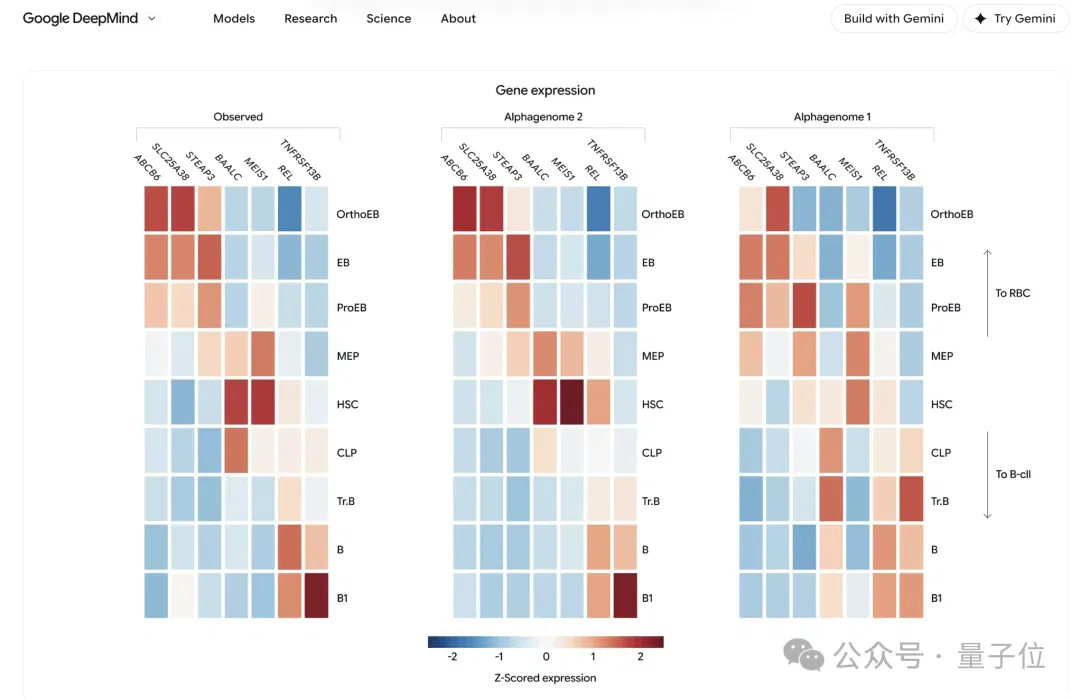
△ Heatmap of predictions from the old and new models
The new model has also learned to predict DNA methylation, and can even infer unmeasured molecular features, such as chromatin accessibility, from gene activity that has already been measured.
Scientists can therefore gradually narrow their research to further pinpoint exactly which stretch of DNA and which gene has quietly gone wrong in a particular cell.
OK, that is the theory covered. Now let us look at the most exciting part: practical applications!
From a needle in a haystack to a precise match! AlphaGenome 2 computationally reproduces findings from a year and a half of experiments in half an hour
How exactly does AlphaGenome 2 help scientists look for clues to disease?
Take the inflammatory bowel disease mentioned at the beginning, for example.
British scientist James Lee’s team spent a full year and a half on experiments before finally determining that a “gene desert” harbored a DNA variant that made the ETS2 gene overactive in intestinal immune cells, triggering intestinal inflammation.
With AlphaGenome 2, things became much simpler.
The model computationally scored seven candidate variants and produced predictions about the candidate variants, associated genes, and cell types that were consistent with the existing research. Causal relationships still require experimental support.
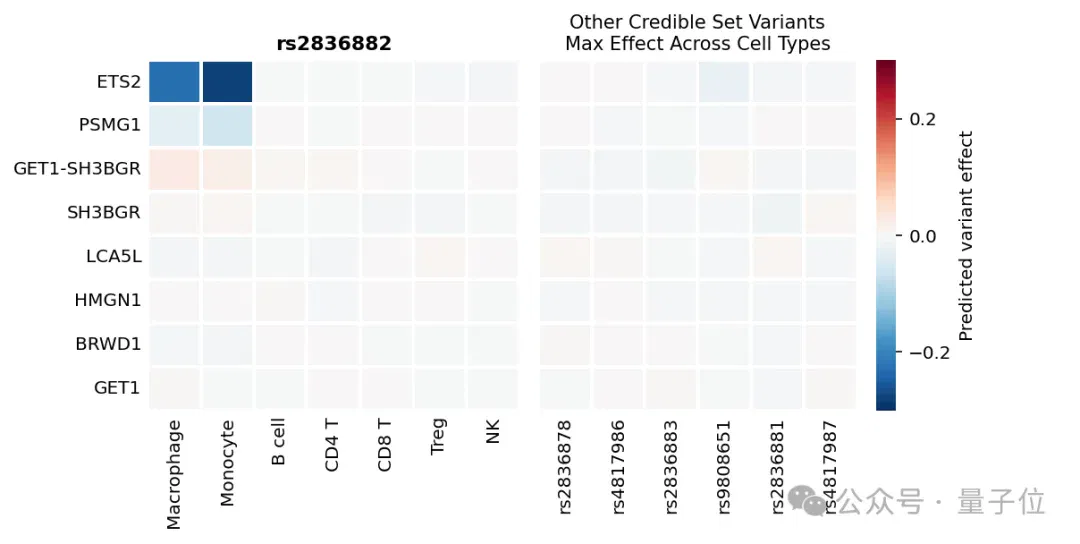
△ AlphaGenome 2 singles out the key variant from seven candidate DNA variants and predicts its effects on the ETS2 gene and specific immune cells. Image source: Google DeepMind
Google has also used AlphaGenome 2 in research into complex diseases such as type 2 diabetes, helping scientists screen vast numbers of DNA variants for more suspicious clues, identify the associated cells and genes, then conduct targeted experiments and look for potential drug targets.
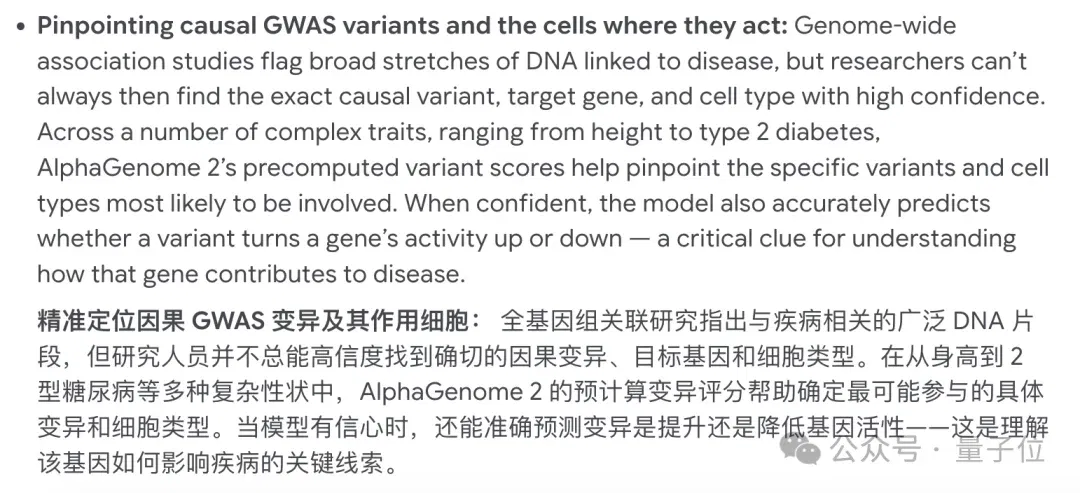
This means that scientists tackling complex diseases such as cancer and diabetes finally have another capable AI assistant, one that can identify disease-related clues and look for potential drug targets faster, opening new avenues for developing more precise treatments.
Patients who have long suffered from disease may also have a chance to receive more precise, more targeted treatments in the future.
Wonderful—this is the kind of AI benefiting humanity that we most want to see!
One More Thing
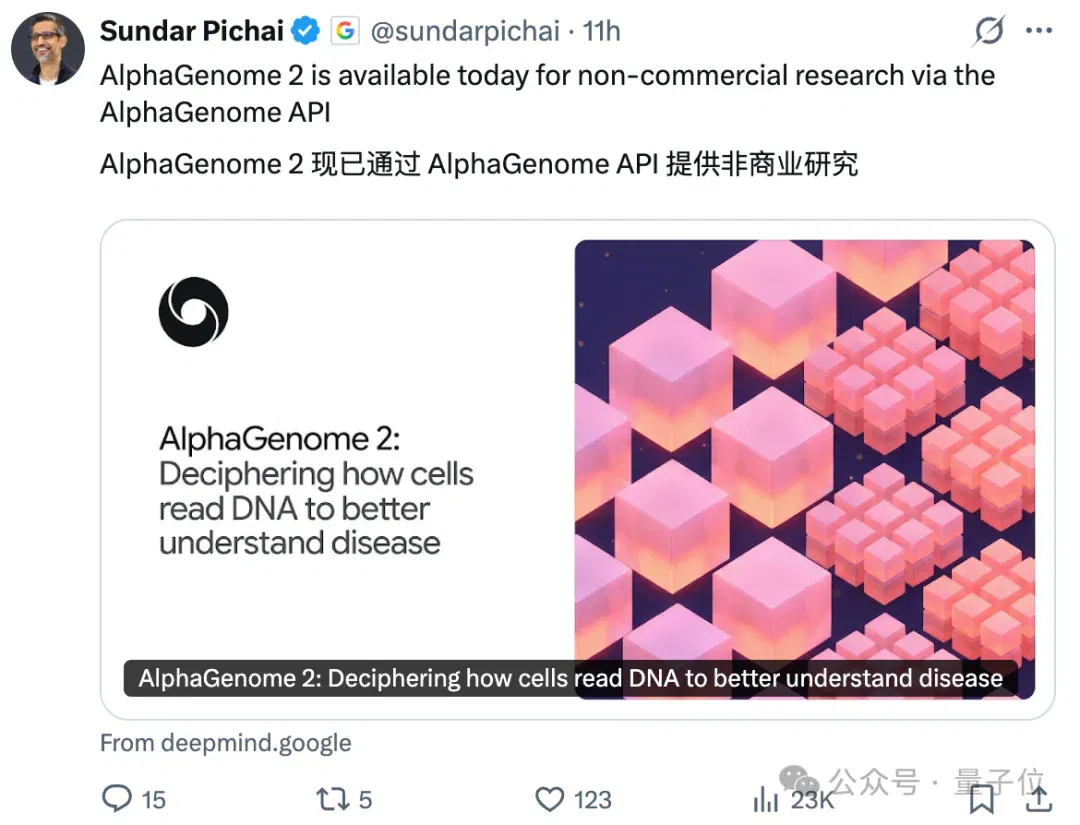
The good news is that AlphaGenome 2 is already available for noncommercial research!
You can access the new model through the AlphaGenome API and follow Google’s interactive Colab tutorials to try an experiment with your own single-cell experimental data.
Google is also preparing to put it into agents’ toolboxes.
Next, AlphaGenome 2 Skills will also arrive on Google Antigravity, allowing you to integrate this DNA prediction model into your own agent workflows.
If you are interested, go give it a try!
Reference links:
[1]https://deepmind.google/blog/alphagenome-2-deciphering-how-cells-read-dna-to-better-understand-disease/
[2]https://x.com/GoogleDeepMind/status/2120532824465805749
[3]https://x.com/sundarpichai/status/2120553080232329324
[4]https://www.nature.com/articles/d41586-026-03673-0?utm_source
This article comes from the WeChat public account “QbitAI,” and was written by “QbitAI.”
Related topics
After reading
Join the AINRK community
Read how to join the community and connect with people working in AI.
Related articles
Continue reading related topics and articles in this category.

Neon identifiers surface in Gemini web code; model and subscription positioning remain unconfirmed (opens in a new tab)
A source report recounts developers finding Neon model and subscription identifiers in Gemini web code, alongside discussion of element naming. Code strings and online guesses do not establish a release, plan features or access date.

Karpo Decision goes open-source; 31B model ties first on a specified Decision Index version (opens in a new tab)
MachinePulse releases 0.8B–31B decision models that score options in one forward pass. The 31B model ties first at 73.9 in the November 12 Decision Index 0.4.1 snapshot. Latency and costs depend on test configuration; single decisions differ from full workflows.

Google expands TPU system sales as software adaptation and inference economics draw attention (opens in a new tab)
QbitAI discusses complete-system deliveries, TorchTPU and agent-inference tests using filings and sources. Revenue, unfulfilled contracts and model-specific token-per-dollar comparisons are distinct measures; optimization rounds can change results.

Google adds TPU 8tx and 8i Max for confidential computing and long-context tasks (opens in a new tab)
Google describes new eighth-generation TPU variants expected in 2027. The report covers customer needs, supply constraints and external sales; its 2028 revenue figures are institutional forecasts.

Google releases Gemini 4 Hydrogen and the multimodel Orchestrator (opens in a new tab)
The new model emphasizes fast execution for coding and multimodal tasks. Google also details availability across services, API pricing and model-orchestration tests.