coScene raises nearly RMB 100 million in pre-A funding, focusing on real-robot data
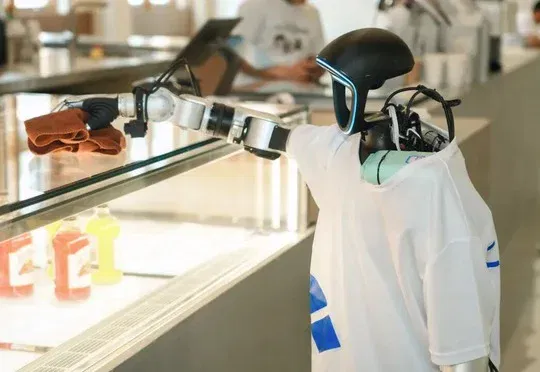
ChinaVenture interviews founder Yangming Huang on coScene's shift from infrastructure to data production, quality control, ecosystem partners and plans to collect data from deployed robots.
A data engineer's three changes of direction.
After attending the 2026 World Physical AI Conference, coScene founder Yangming Huang hurried straight to Silicon Valley. Repeated trips between China and the US have become a normal part of his life since starting the business.
Our conversation took place two or three days after his arrival in Silicon Valley. It was already late at night there, but even after a full day on the move, his enthusiasm for data and the industry was palpable. He even became so excited while sharing that he disturbed his roommate's rest.
Over the past year, I have met many entrepreneurs. Some speak fluently about technology; others deeply understand industry pain points. Huang discussed those too, of course, but he was one of the few startup founders to talk about company culture.
Returning to the funding question that interests us, Huang's background should fit the typical profile capital is pursuing this year: experience at a major overseas technology company, a veteran of autonomous driving and years in the data sector. Yet his rounds have not been particularly large or frequent, and participating institutions have mainly been industry investors.
Huang offered two reasons. First, "Investment is never just about getting money." Second, he has shut out external noise and holds to the traditional idea that each funding stage should serve its appropriate work, rather than focusing solely on raising money.
Discussing these choices, he repeatedly cited one point of reference: Xingxing Wang. "His strategic choices are very restrained and focused, and his route is completely opposite to what some Chinese manufacturers have chosen."
Huang sees two Unitree moves as particularly farsighted. Before the industry took shape, it first served research institutions, because "practical applications in research point toward the future direction of robotics." Later, as others sent robots into large factories to "work," Unitree was willing to concede some profits, build a platform and let the ecosystem handle last-mile deployment.
"Seeing such a farsighted company making these choices in the industry has affected me more deeply than ever before." This time, he was there to witness it. That sense of being present is also a prerequisite for understanding coScene.
He also acknowledged that coScene's next stage requires its ecosystem and capital to drive scaling. At this point, he is willing to open the fundraising window.
And so we see that coScene has just completed a pre-A round of nearly RMB 100 million. Investors include state-backed technology-innovation investment institutions and several leading embodied-intelligence companies, including Yonggui Fund and TIANJI. The funding will focus on improving pre-deployment environments, specialized data-understanding models and accelerating data infrastructure.
Huang told ChinaVenture that more robotics companies will join its shareholder list.
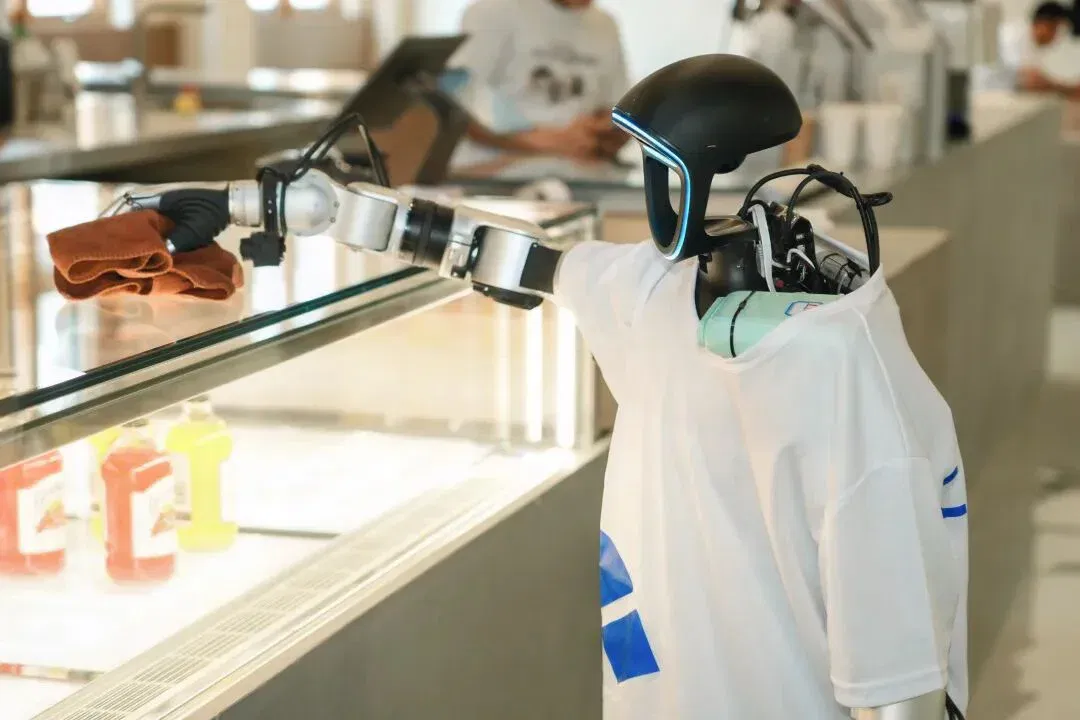
From Apple to Inceptio: a data engineer's three changes of direction
Huang's background is unusual among this wave of embodied-intelligence founders. He has neither formal robotics training nor a university research background. A closer look at his career, however, shows that it spans almost all the key milestones in the evolution of China's data infrastructure.
Huang began his career in banking, integrating transaction data. It was the frontier era of big data, not long after Google published the MapReduce and BigTable papers. He was among China's first Hadoop users and an early community contributor.
After joining Apple in 2015, his first project was the Apple Watch health big-data architecture. The data included heartbeats, blood pressure and gyroscope movements during exercise. For the first time in his work, data shifted from structured tables to continuous multimodal signals. His good performance later led to a transfer to Apple's autonomous-driving division, where he was responsible for infrastructure architecture.
"Data actually represents how people understand the world," Huang said. He divides data into three steps: structured data, then unstructured data, and a harder level of multimodal data that even words cannot describe. Physiological signals from watches, road scenes and trajectories in autonomous driving, and robot operations all belong to this third level.
In his view, every AI revolution moves a step toward data that is harder to abstract. He later returned to China and joined Inceptio Technology, building an entire data-loop system from scratch.
Looking one step beyond autonomous driving, he realized it was only a special case of spatiotemporal data, with a larger market beyond it. At that moment, he felt he had seen the future first, and set out to build a data-infrastructure company.
In May 2022, he founded coScene with colleagues and friends. Most of the core team came from frontline data engineering at Apple, Inceptio and Gausium. Co-founder and CTO Yujing Zheng had headed data platforms at Gausium and Inceptio Technology.
Autonomous driving was cooling that year, while embodied intelligence had yet to heat up. The company initially aimed at infrastructure alone. It proposed containerizing spatiotemporal data and developed its own data-container engine, workflow engine and semantic-search engine to support exabyte-scale unstructured-data access and governance. That August, it raised an angel round in the tens of millions of yuan from Linear Capital.
More than four years after its founding, industry concepts have shifted from autonomous driving to embodied intelligence and now world models, yet core-team attrition has been almost zero. Huang said he follows the old Silicon Valley rule that "when the business doubles every six months, headcount should grow no more than 1.5-fold." Rejecting overly rapid hiring has preserved consistent company culture and values.
While the core team has stayed stable, the company's positioning has changed twice.
While building data infrastructure, coScene realized, "Without data, how can we optimize infrastructure based on data patterns?" It therefore began producing data itself. That move expanded one business model into three: selling infrastructure, selling data and selling data-production capabilities. Doing all three well simultaneously is difficult for a startup.
The second pivot followed. Making general-purpose infrastructure easy for others requires effort in adaptation; infrastructure for internal use only has to work well for the team itself. Huang chose the latter, reducing generality and increasing data-production efficiency. Later, to avoid fighting on two fronts by "selling both infrastructure and data," infrastructure became an internal tool and data production became the absolute focus.
Huang is comfortable discussing this detour and refuses to erase the pre-2024 period from the story. He sees plenty of opportunists who "only started doing data when data became hot." coScene's pivots, he believes, prove its vision never changed: "I have always been on the same road. Whatever changes around it, as long as I believe my destination is right, I keep going down that road."
Focus on data, without building robot bodies or models
That focus also appears in coScene's product system. What it presents externally today is two systems and one methodology.
StarBase serves data production. It is a production-management tool derived from best practices established through the company's own collection operations, addressing how data can be produced at scale. coScene serves data applications, managing and applying spatiotemporal multimodal data. It has four major modules—a console, data platform, visual player and testing platform—addressing how engineering teams can use data continuously.
Both share the same underlying data engine. Its core unit is a "Scene" with semantics and start and end times. Huang likes a mining analogy: StarBase is the production system in the pit, deployed wherever there is "coal"; coScene is the central refinery, processing, grading and governing raw material from different sites into deliverable data products.
But the real moat is not these two software systems. It is a model.
Huang emphasizes that coScene builds neither robot bodies nor embodied models. It trains a model that understands spatiotemporal multimodal information, with data itself as its purpose: guiding collectors on how to collect, judging which actions make good data, filtering substandard samples, annotating semantics and designing data mixes. Its spatiotemporal understanding is embodiment agnostic: this judgment remains valid whatever form the robot takes.
This is what coScene sees as its flywheel and moat. Huang observes that some North American companies now do similar work, but almost no companies in China persist with it.
Over the past year, nearly every data company has collected data using first-person devices worn by people, then mapped it onto robots through retargeting. Such data was once seen as embodied intelligence's "affordable fuel." But on this Silicon Valley trip, Huang repeatedly heard the same signal: embodiment-free data is "close to hitting a wall." It helped models make a capability leap, then quickly reached a plateau. "It has already played its historical role," Huang told ChinaVenture.
Huang was among the earliest to examine—and abandon—this route. "I was at least among the first to know this would become an explosive growth area." His reasons for leaving were clear: the barrier is low, as "anyone wearing a camera can collect it"; it will inevitably depreciate quickly because everyone can do it; and the deciding factors are business development, on-the-ground promotion and capital rather than technology.
"This is not where a company whose strength is technology should focus." In Silicon Valley today, Huang has found validation for that statement.
Besides messages from the industry, Huang shared another detail. He rented a Tesla in Silicon Valley and used assisted driving along the way, yet sudden hard braking during a lane change caught him off guard. It made him think that even after ten years of work, the world's leading autonomous driving still has corner cases it cannot handle.
Huang uses this experience to explain his caution about the pace of embodied-intelligence deployment, and almost all of coScene's counterintuitive choices: not building robot bodies or embodied models, and voluntarily abandoning this year's hottest embodiment-free collection business.
For simulation, coScene draws a clear boundary. It builds neither rendering engines nor physics engines or solvers. It does only one thing: convert real-world collected data into simulation scenes.
Simulation does not replace real robots; it amplifies one real interaction into many in a virtual environment. Huang cited figures from public research to illustrate how hard real-robot data is to produce: DROID organized 50 collectors over 12 months to obtain about 350 hours of real-robot interaction data across 564 scenes.
Take industry capital and wait for the "passive" era
coScene's business model combines three interlocking approaches: off-the-shelf data delivery, customized production and delivery of data-processing capabilities. In its own words, it is moving from "selling cookware" to "cooking," taking on the entire business chain from data production and governance to compliance and delivery.
Strategically, Huang emphasizes, "I would rather charge high prices and sell somewhat less than use a labor-intensive mass approach."
Trading scale away brings pricing power. What is distinctive about coScene's collection settings is that it has built functional spaces: more than 200 scenes and over 600 task types, rotating sets, lighting and props like a film props crew. It simultaneously collects whole-body, dexterous-hand and long-horizon-task data using the latest robot models. High quality means high costs: trained professional collectors, comprehensive manual quality inspection and annotation all push prices up.
coScene sees this investment as worthwhile. After people inspect quality, information about good and bad data goes directly into the model, lowering manual costs for the next batch.
The result is visible in orders too. According to disclosures, its first delivered batch of Unitree real-robot data had an acceptance rate close to 100%, achieved through the model plus comprehensive human quality inspection and annotation. Last month, coScene announced the start of overseas real-robot data delivery under contracts worth more than RMB 200 million and covering about 300,000 hours in total. The first batch, over 1,000 hours of multi-embodiment data, passed acceptance, also at a rate close to 100%.
"Garbage in, garbage out," Huang said. Data quality directly determines model capability: "If you keep feeding in garbage data, the model that comes out is garbage too."
For ecosystem building, coScene chose an unusual path of turning data into assets. In July this year, the "High-Quality Real-Robot Data Demonstration Platform," jointly built by the Shanghai Technology Exchange, coScene and Unitree, opened in Shanghai. It is China's first embodied-intelligence data demonstration platform with end-to-end compliance.
Going global was part of coScene from day one. Huang's reasoning is simple and direct: "China has the cheapest and most numerous real robots, and the most scenes. Where are machines cheapest? Certainly China."
He defines coScene's role as "bringing the '1' from America's 0-to-1 back and igniting China's 1-to-100." What does that mean? US model companies started early but lack robot bodies and data; China has production capacity and scenes. A compliant cross-border chain is one of the earliest moats coScene established.
Huang calls its close ties with Unitree "the market's choice," rather than taking sides. "The market chose Unitree. We hope to make collection fit market demand better." As early as 2024, he noticed Unitree's influence in overseas developer communities. Overseas customers were increasingly adapting software and conducting research on Unitree platforms. Yet supporting algorithm research with data at scale is very difficult under specific task and deployment settings, supply-chain constraints, budgets and timelines. He sees that gap as coScene's place.
In coScene's view of roles, robotics companies are upstream and downstream partners rather than clients. That also underlies its shareholder list: having robotics companies invest essentially turns the ecosystem into a community of shared interests.
In January this year, Qiongche Intelligence, Leju Robotics and Linear Capital participated in a new funding round. The first two were industry investors, while existing shareholder Linear Capital continued investing.
For Huang, investment is never merely about getting money or lacking it; it is a process of building connections with industry. He hopes to assemble the capabilities to connect the entire chain from production to application, data processing and compliance through to final overseas customers. He is also frank about the cost of this choice: coScene's fundraising pace is relatively slow within its sector, and its investors are not the very top-tier names in the market.
coScene's next bet is "passive collection." It expects that, as robots enter real-world deployment next year, data will flow back from deployed systems, like Tesla's shadow mode, capturing the most valuable corner cases. But such deployment also has conditions: clearly defined scenarios, high fault tolerance and the ability to get started with small samples.
At the end of the interview, he repeated: "Data's value lies not in being collected or stored, but in being used." Whichever robotics company ultimately wins, data supply remains an unavoidable essential need. Huang intends to keep working in that least conspicuous position and wait for the wind.
This article comes from the "ChinaVenture" WeChat account. Author: "ChinaVenture."
Related topics
After reading
Join the AINRK community
Read how to join the community and connect with people working in AI.
Related articles
Continue reading related topics and articles in this category.
智动未来据报完成亿元级Pre-A+融资,资金用于产线与服务机器人部署 (opens in a new tab)
机甲觉醒报道,智动未来宣布完成亿元级Pre-A+轮融资,由中美绿色基金领投、南曦创投联合领投,资金拟用于广州产线、服务场景部署和世界模型研发。“智子世界”仍属技术预览,商业化效果待更多应用数据检验。

Syncere raises $11M for Lume, a household robot shaped like a floor lamp (opens in a new tab)
Syncere uses a floor-lamp form for Lume: one robot handles some pick-and-place tasks, while two work together in Duet mode on tasks such as folding clothes. Demos are edited; pricing and delivery reflect the source date, and home reliability remains unproven.

An AI researcher's view of synthetic data, expert networks and outsourcing (opens in a new tab)
Jinyan Su draws on post-training research and job-search experience to discuss data vendors' tasks, sales and quality checks. This is personal observation and commentary; anonymous examples are not independently verified or representative of every provider.

Genesis AI raises $500M Series A to advance its full-stack robotics and Eno (opens in a new tab)
Genesis AI announces funding at a $3.5B post-money valuation, outlining a stack of data gloves, simulation, models and the Eno robot. Production and customer deployments are planned; demonstrations and correlation experiments do not establish delivery at scale.
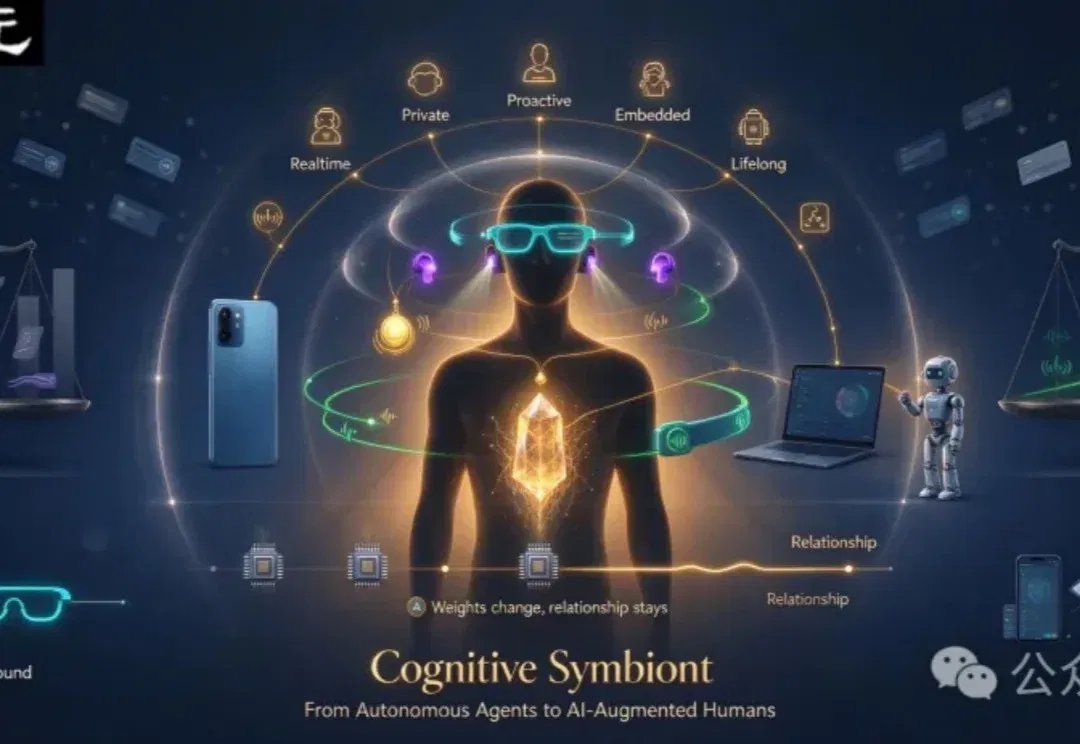
Oxford researcher proposes cognitive symbionts for wearable AI augmentation and governance (opens in a new tab)
Hao Fei's perspective paper proposes cognitive symbionts and AI-Augmented Human Intelligence, covering long-term memory, wearables, proactive help and governance. Privacy, low latency and lifelong companionship are design goals, not verified product guarantees.