Report: Anthropic slips below IPO price on fourth trading day amid profit concerns
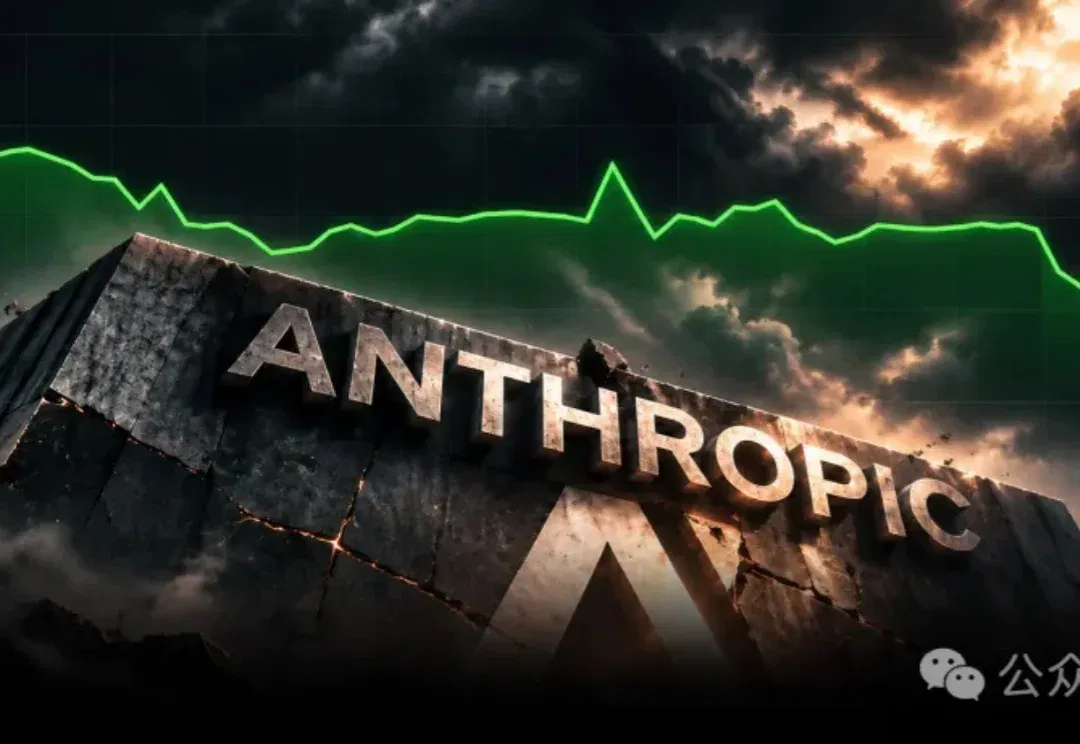
The report says Anthropic hit US$76.60 intraday on November 24, below its US$83 IPO price and about 31% below its US$111.50 opening price. It discusses capital spending, model prices and valuation pressure; price targets and a possible 2029 profit remain forecasts.
Editor's fact check (November 26, 2026): The market figures in this article retain the original report's basis for November 24, US Eastern Time. This review did not obtain verifiable historical quotes from Nasdaq. The 12.6% one-day decline, the roughly 7.7% drop from the US$83 IPO price, and the approximately 31.3% drop from the US$111.50 first-day opening price use different benchmarks; they cannot be conflated into a single claim of trading 30% below the IPO price. The IPO's approximately US$93.5 billion is the total gross offering amount, including selling shareholders' proceeds; the company's gross proceeds were about US$91.6 billion. Each founder's roughly US$280 million represents the gross value, at the offering price, of shares sold under the prospectus arrangements, and should not be read as an improvised sale after the stock fell below the IPO price. Broker price targets, profitability no earlier than 2029, and possible share-price support from index funds are forecasts or analysis, not realized outcomes. MSCI confirmed inclusion at the November 30 close, effective December 1.Anthropic's November 20 announcement of its IPO closing (opens in a new tab)SEC final prospectus: offering and selling-shareholder tables (opens in a new tab)MSCI's November 19 definitive announcement of ANTHROPIC A's inclusion (opens in a new tab)
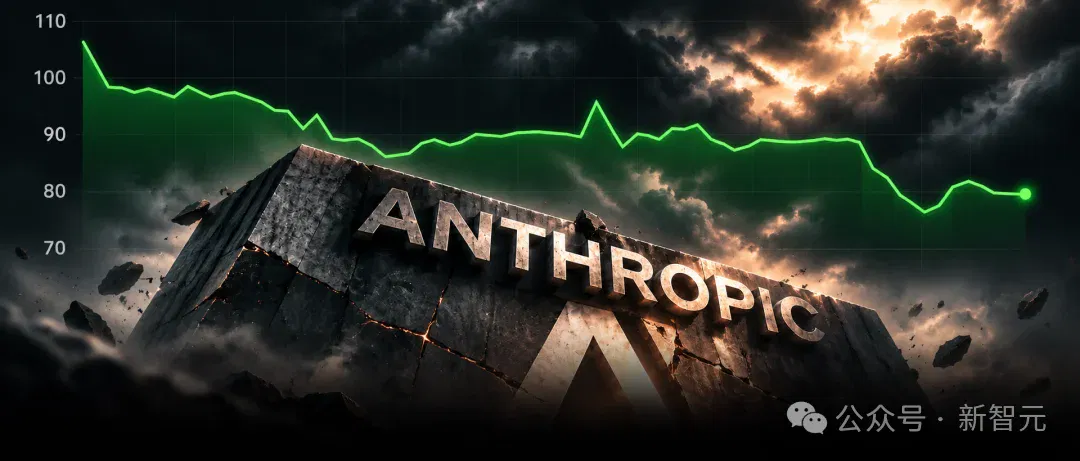
The largest IPO in global history lasted just four trading days before its shares fell below the offering price.
On November 24, US Eastern Time, Anthropic's shares fell as low as US$76.60 intraday, a decline of 12.6%, at one point wiping nearly US$200 billion off its market capitalization in a single day.
According to newly disclosed documents, the IPO closed the day after the listing. Under the prospectus arrangements, Anthropic CEO Dario Amodei and his sister, President Daniela Amodei, each sold approximately US$280 million in existing shares at the US$83 offering price.
The entire AI industry is watching Anthropic's share price.
After all, of the leading pair of OpenAI and Anthropic, it is the first to be priced publicly by Wall Street every day.
01
Down 30% in four days
On November 19, Anthropic listed on Nasdaq at an offering price of US$83. Its opening price reached US$111.50, a 34% premium.
Beforehand, investors had submitted more than US$500 billion in subscription demand. More than half of the institutional investors participating in the offering did not receive any shares.
With the underwriters exercising their overallotment option, the total gross IPO offering reached approximately US$93.5 billion, including selling shareholders' proceeds, with approximately US$91.6 billion going to the company before fees. This exceeded the IPO of SpaceX, which listed in June this year.
Yet nobody expected that shares so hard to obtain just days earlier would now be available on the secondary market for less than the offering price.
More concerning, Anthropic seems to have started a downward trajectory distinct from other AI stocks.
On November 23, Jensen Huang returned to NVIDIA, driving its shares up more than 30% and sparking a broad rebound in the AI sector.
Anthropic did not rise with it. Instead, it fell.
The next day, technology stocks came under renewed selling pressure. Anthropic also decisively lost its offering-price level, falling approximately 31% from its opening price on listing day.
02
What is Wall Street afraid of?
Even after this plunge, Anthropic's valuation is still approximately 40 times its revenue over the past 12 months.
Behind that figure are the capital markets' almost exacting demands for AI companies' future growth.
Unfortunately, the large-model business has two particularly troublesome characteristics.
On one hand, training more capable models and meeting growing inference demand both require enormous investment.
Rising interest rates and slower data-center construction could even directly affect the development timetable of the next generation of models.
On the other hand, model prices face continued downward pressure.
Open-source models from Chinese companies are catching up.
Users can deploy and modify these models themselves, without paying a closed-source model provider for every call.
If capability gaps between models gradually narrow, how high a price can Anthropic continue charging?
That probably deserves more attention than short-term share-price movements.
Market expectations cited in the original report suggest Anthropic might achieve a full year of profitability no earlier than 2029. That is not an outcome already achieved.
Of course, plenty of institutions remain optimistic about Anthropic. Canaccord and Oppenheimer have just issued price targets of US$135 and US$150, respectively.
The market is already deeply divided over the company's future.
03
The whole AI industry is holding its breath
Those most nervous about Anthropic falling below its offering price may also include AI companies that have yet to go public.
Over the past few years, large-model companies' valuations have mainly been determined in private markets. Just a handful of well-funded investment firms could raise a company's valuation by tens of billions of dollars in a single funding round.
Now, at last, one of the leading pair has a public price every day.
If Anthropic's shares remain depressed, the funding valuations and even IPO pricing of other AI unicorns could be affected.
Especially OpenAI, which also has plans to go public.
Still, it is clearly too early to declare that the AI bubble has burst.
In 2012, Facebook fell below its offering price on its second trading day.
After SpaceX went public this year, it also took only about a month to fall below its offering price.
Anthropic will also join the MSCI Global Standard Indexes after the November 30 close. The resulting purchases by passive funds could provide some support for its shares.
A few days of share-price performance are far from enough to define a company's future.
But one thing has already changed.
Previously, every time Anthropic released a new generation of models or solved another difficult mathematical problem, people discussed how far it remained from AGI.
Now Wall Street has another question: how much money can this astonishing, alien-like intelligence actually make?
This article is from Xinzhiyuan, by Yang Kun.
Related topics
After reading
Join the AINRK community
Read how to join the community and connect with people working in AI.
Related articles
Continue reading related topics and articles in this category.
Report: OpenAI and Anthropic Debate Limits on Frontier Model Releases and Training (opens in a new tab)
Axios reports internal debate over unreleased models' safety risks, with some researchers calling for a training pause. OpenAI's Jakub Pachocki separately proposes shared development limits. Neither amounts to an announced company-wide halt to training or public releases.
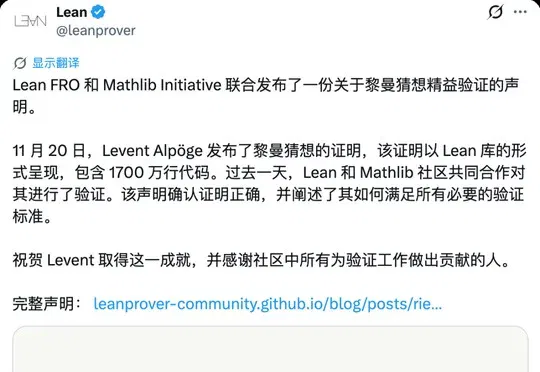
Alpöge says “250,000 pages” was a joke, addresses Riemann-proof code criticism (opens in a new tab)
Levent Alpöge says the “250,000-page” proof was a joke and acknowledges redundant, low-quality Lean code in his work with Claude. He argues that its ideas should lead to a more natural, concise mathematical framework; code quality and formal correctness remain distinct.

Dario’s early “immersive games” idea draws criticism; media accounts are distinct from company policy (opens in a new tab)
The article revisits media accounts of Dario’s early OpenAI discussions and critiques his views on AI jobs, safety and Anthropic’s culture. The idea is not current company policy; online speculation about his health lacks reliable evidence.
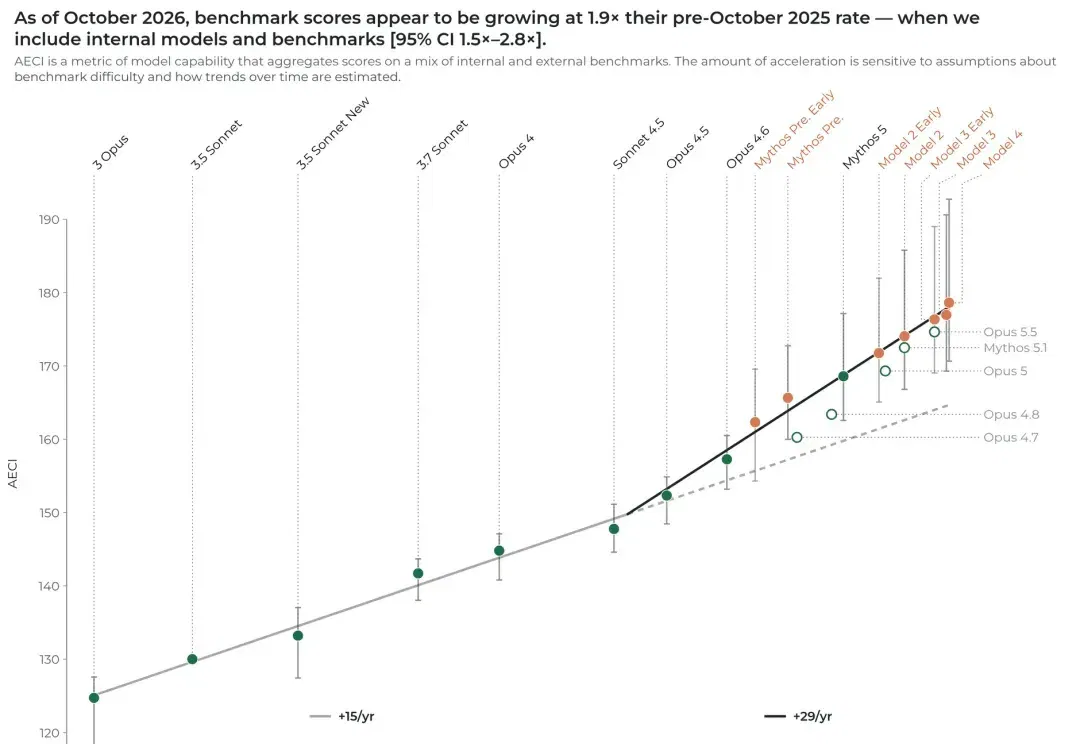
Anthropic’s internal models: METR reports faster R&D; unreleased products remain unconfirmed (opens in a new tab)
METR estimates Anthropic’s AECI progress at about 1.9× its previous pace, with uncertainty over causes and broader applicability. Reports of stronger internal models, Model 5 or future leaps are not confirmed product or release announcements.

Report revisits Dario Amodei’s early AGI risk estimate and Anthropic’s safety culture (opens in a new tab)
A commentary citing a Washington Post investigation and social-media accounts examines Amodei’s 2022 memo, Anthropic’s culture and IPO pressures. The 20%–30% figure was his subjective estimate of human destruction or permanent stagnation, not an objective probability.