JLC Connects EDA with Manufacturing: Its Hardware Platform and the AI Opportunity
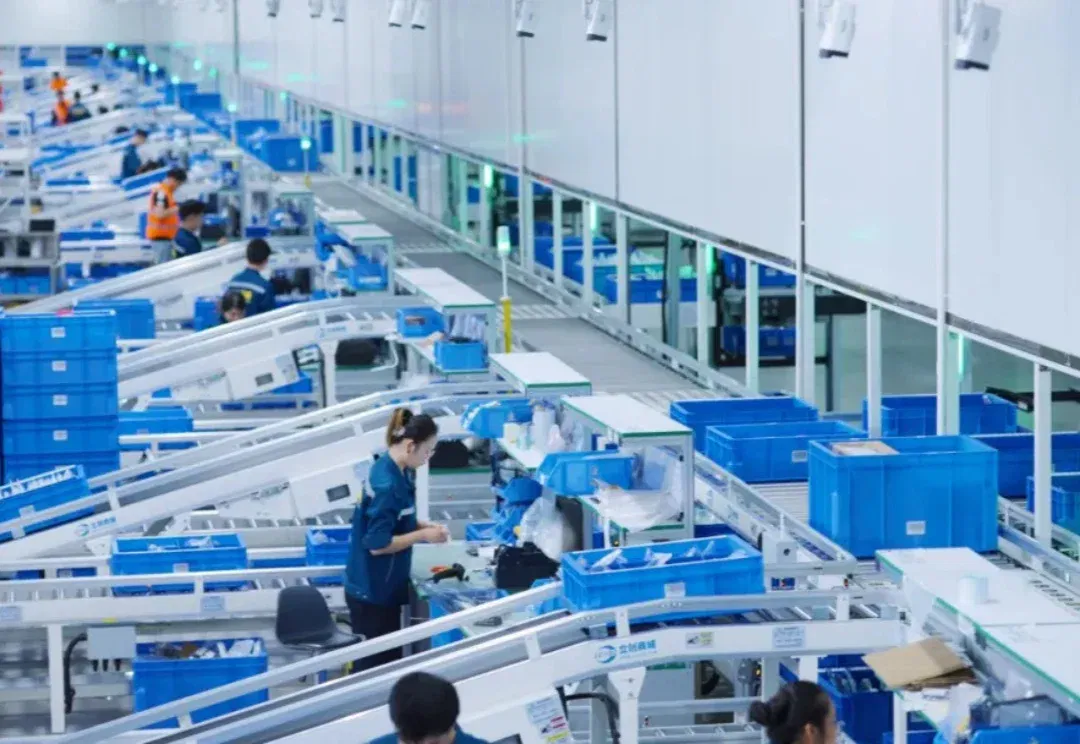
JLC links EDA, components, PCB, assembly and mechanical services. Its first-nine-month 2026 report lists RMB 11.998 billion revenue and RMB 1.866 billion attributable profit. The article explores order density and AI design; the hardware-GitHub analogy and future value still need validation.
Editorial check (2026-11-26): Financial figures follow the company's disclosures for the respective periods. Registered users, orders and projects each have their own statistical definitions and do not directly establish independently verified active-engineer counts or manufacturing quality. Hardware GitHub, physical compilation and the revenue formula are the author's commercial analogies and analysis, not evidence that every AI design can be produced automatically or has already generated corresponding paid business. The RMB 92.6 billion market value is the report's historical figure, close to but below RMB 100 billion. AI opportunities, delivery times and future growth depend on the specific products, processes and orders. JLC 2026 third-quarter report (opens in a new tab)JLC 2026 half-year report (opens in a new tab)
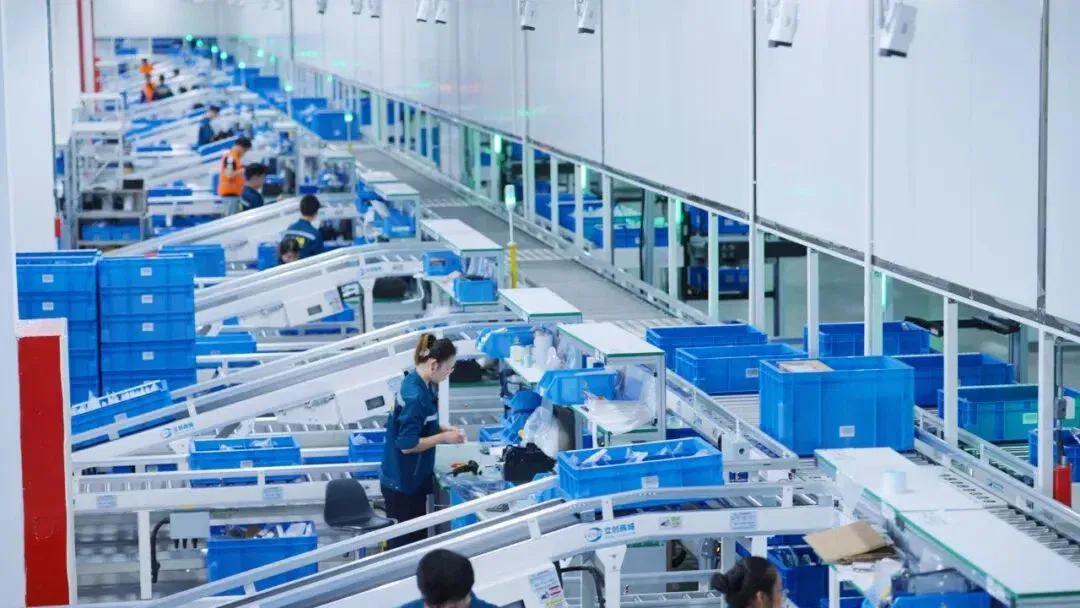
In Shenzhen's Huaqiangbei, you can now assemble the materials needed to customize your own AI hardware much as you would shop on JD.com.
The Global Smart Hardware Customization Experience Center on Huaqiangbei's main thoroughfare has desktop and industrial digital fabrication equipment, including CNC, UV printing and 3D printing. It offers more than 200 customization options in 14 major categories, emphasizing three propositions: customize a product's appearance and structure in ten minutes, build an AI device in thirty minutes, and buy everything needed in Huaqiangbei in one hour. Even people without hardware development experience can create a personalized AI device with staff guidance.
Drawing on JLC's one-stop electronics and mechanical supply-chain services and industrial design/manufacturing software, the center connects trading stalls and workspaces for one-person companies with the supply chain behind them, aiming to handle the entire smart-hardware customization process in this Huaqiangbei location.
Many still think of JLC as a PCB prototyping company. That label covers only its earliest history. Its business now extends from EDA design software, PCBs, components and printed circuit board assembly (PCBA) to CNC, 3D printing and factory automation (FA) parts. In the first nine months of 2026, revenue was RMB 11.998 billion, up 65.57% year on year, and net profit attributable to shareholders was RMB 1.866 billion, up 98.71%.
A more useful comparison may come from software. Developers manage code on GitHub and obtain compute from AWS on demand. Hardware engineers also need a system from which they can call up design tools, components, circuit boards, assembly lines, CNC machines and 3D printers, turning on-screen designs into physical objects that can be powered up, tested and iterated.
That is the system JLC is building.
A factory that can be called up online
Over the past forty years, Chinese manufacturing developed a globally unusual capability: taking a mature drawing and reliably making the same product one hundred million times. The next decade requires another capability: quickly making the first unit of each of a huge number of different ideas.
The former is mass production; the latter might be called mass innovation. Their logic differs. Mass production seeks consistency: the same product, process and production line yield lower unit costs as output grows. Manufacturing during R&D looks different. Every project varies, and each iteration may change the circuit, components or structure. Orders are small, varied and urgent, with high costs for reviewing drawings, quoting, preparing materials, changing lines and communicating. Such demand was previously difficult to scale.
JLC changes the source of scale. Individual orders remain small, but when tens of millions enter the same software, supply-chain and manufacturing system, demand becomes dense. Different customers' PCBs can be intelligently panelized, large volumes of bills of materials (BOMs) matched centrally against inventory, equipment scheduled through software, and engineering experience distilled into design-for-manufacturing (DFM) and computer-aided-manufacturing (CAM) rules.
Traditional factories scale through the output of a single product; JLC scales through the density of orders from different projects. The significance goes well beyond cheaper prototyping.
Building hardware takes engineers through a long chain: drawing schematics and PCBs, choosing hundreds of components, making boards, completing assembly and soldering, and producing enclosures and structural parts. If the first version fails when powered on, circuits, parts and structures may all need redesigning. This chain used to be scattered across suppliers, quotation systems and delivery schedules, leaving engineers with extensive search, negotiation, communication and waiting costs.
JLC places the chain in one system: EDA handles design, the component marketplace handles BOMs, PCB and PCBA services deliver circuit and functional boards, and CNC, 3D printing and FA parts complete structures and prototypes. Once an engineer submits a design, software begins quoting, reviewing orders, panelizing, scheduling and allocating manufacturing resources.
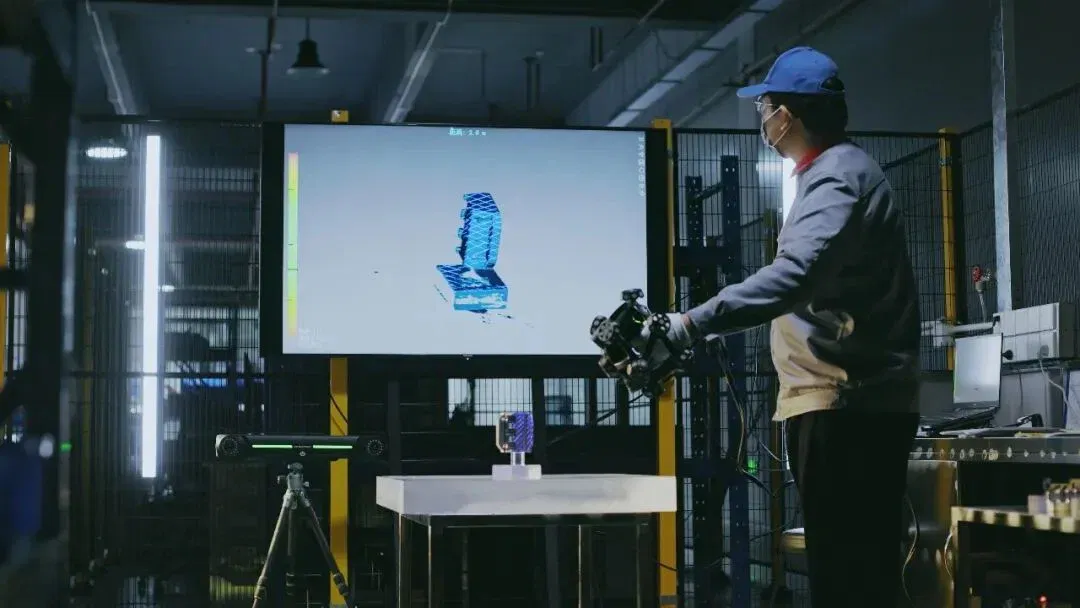
Here the factory itself is the product: always online, with transparent rules, automated quotations, trackable status and composable services. JLC owns many machines and factories, but its core capability is organizing machines, materials, software and engineering experience into an online service. Its 21.08 million orders in 2025 can be understood as 21.08 million calls made by engineers worldwide to this physical infrastructure during a year.
The entry point is design. At the end of June 2026, JLC had nearly ten million registered users, 7.3688 million registered EDA users and 55.9349 million cumulative design projects. Before engineers buy components or look for a factory, their design files already originate on its platform.
Projects then generate transactions along the same chain. In the first half of 2026, JLC recorded RMB 2.474 billion in PCB revenue, RMB 2.820 billion in component revenue and RMB 1.202 billion in PCBA revenue. PCBA grew 52.17% year on year, with paid-user penetration rising from 16.83% in mid-2025 to 18.60%. Mechanical supply-chain services for enclosures, frames and other structures generated RMB 363 million, up 97.66%; CNC and FA businesses each grew more than 100%.
PCBs answer whether circuits can connect; PCBA answers whether functions can run; mechanical services answer whether a product can stand up. Each step further along the chain lets the platform capture another layer of R&D value. Its revenue can thus be expressed as a formula: number of engineers × projects per engineer × iterations per project × services used per project.
This system, tested in China, has begun serving engineers worldwide. The half-year report puts overseas revenue for the first half of 2026 at approximately RMB 1.516 billion, or about 21.14% of total revenue.
AI generates possibilities; who delivers certainty?
The clock of hardware entrepreneurship is speeding up.
Huang Yi, born in 2004, founded RoboParty in 2025 to build full-stack open-source bipedal humanoid robots. From its publicly announced seed round in November 2025 to its pre-Series A in July 2026, it completed six rounds in roughly eight months. According to company announcements, the latest angel++ and pre-Series A rounds together totaled nearly RMB 500 million, with CATL investing in the pre-Series A.
Users worldwide are also voting with prepayments. Anker's eufyMake E1 finished its 2025 campaign with $46.76 million from 17,822 backers, setting Kickstarter's then-record across all categories. Snapmaker U1 raised $20.61 million, while Makera's desktop CNC product Z1 raised an eight-figure dollar amount. These products address UV printing, multicolor 3D printing and desktop CNC, respectively, but do the same underlying thing: bringing physical tasks that previously required factories and specialized equipment into personal workshops and small businesses.
Exports provide another angle. The General Administration of Customs reported 48.7% growth in industrial robot exports in 2025, when China first became a net exporter of industrial robots. Citing customs data, the Ministry of Industry and Information Technology's equipment industry development center put Chinese 3D-printer exports at 5.03 million units in 2025, up 33.2%.

Financing, crowdfunding and exports cannot substitute for one another as evidence. The author views them as a signal of a trend: more hardware projects, faster iteration, more fragmented SKUs and products targeting global markets from their first day.
AI is the larger variable. Models will increasingly assist with schematics, PCBs, structures and BOMs. A first design that once needed a professional team might eventually be produced by one person and a few AI tools. As design costs fall rapidly, design volumes rise and physical constraints become more pronounced: can parts be sourced, circuits manufactured and structures assembled without interference? Is the process reliable, and will the product pass testing? Real manufacturing systems must answer those questions.
In other words, every AI-generated hardware design must undergo physical compilation.
Software has already seen vibe coding; hardware next needs vibe hardware: a person proposes an idea, AI generates a design and a manufacturing platform performs physical compilation. JLC has connected EDA, BOMs, DFM, CAM, quoting, scheduling, manufacturing, inspection and delivery. AI can reduce manual order review and scheduling, and help engineers spot design problems, replace unavailable parts and improve first-build success before ordering. Actual manufacturing results can then feed back into AI training.
The Huaqiangbei center mentioned earlier is an offline example of this chain. For ideas without mature references or mass-production precedents, AI can generate an initial design, professional engineers can refine it, and a manufacturing order can follow the finalized design, turning the concept into a physical sample within a week.
Hit products are hard to predict, but the engineering work before they emerge is highly predictable. Every project passes through EDA, BOMs, PCBs, PCBA, structural parts, testing and small-batch delivery. Capital bets on a few winners; JLC serves the trial, error and iteration of hardware innovation.
Near RMB 100 billion in market value: what is the market paying for?
JLC listed in Shenzhen in August 2026 and had a market capitalization of RMB 92.6 billion at the time of the report. Should it be viewed as a PCB company or a platform? The answer changes the yardstick.
Companies stronger in individual links exist, but each lacks something. PCB companies have capacity and processes but usually lack an entry point serving nearly ten million engineers. EDA firms control design tools but often lack component supply chains and feedback from their own manufacturing. Component distributors have SKUs and inventory but usually do not enter the design stage. On-demand manufacturers handle fabrication, but often lack the full chain of EDA, BOMs, PCBA and mechanical services.
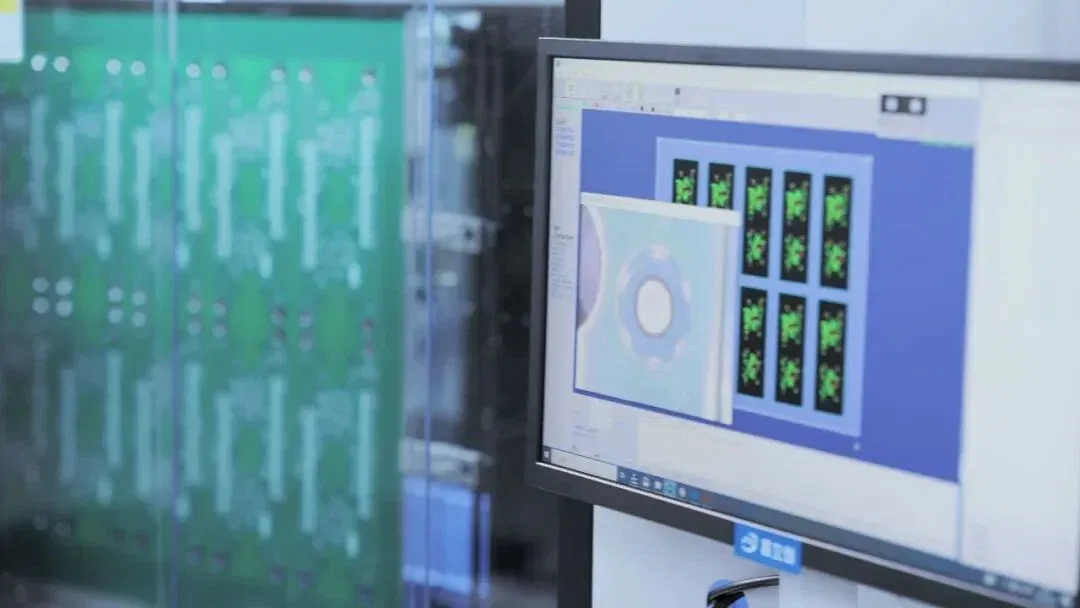
What is scarce is a platform holding all four interfaces: design, components, manufacturing and feedback.
Equipment can be purchased, software developed and marketplaces built. Harder to replicate together in a short time are four kinds of density. First, engineer density: nearly ten million registered users continually generate hardware R&D demand. Second, order density: around 64,000 daily orders in the first half of 2026 support high utilization of intelligent panelization, software scheduling, centralized procurement and automation. Third, supply-chain density: more than 819,700 in-stock component SKUs connect with large numbers of BOMs. Fourth, engineering-data density: 55.9349 million design projects and 11.6394 million half-year orders link designs, parts, processes, costs, lead times and manufacturing outcomes.
Price-to-earnings ratios measure existing profits; scarcity determines how long those profits can grow and what option value should remain for businesses not yet appearing in the income statement. Following that logic, JLC's value can be divided into three layers.
The first is profit and cash flow already delivered by the manufacturing platform. PCB services demonstrate scalable delivery. In the first nine months of 2026, net operating cash flow was RMB 2.364 billion, up 86.91% year on year.
The second is the scarcity of the complete loop and the duration of its growth. PCBA and mechanical services are beginning to show that the platform can capture an entire R&D project. Growth comes from users, projects, iterations, cross-category penetration and overseas replication; a single PCB cycle does not explain it all.
The third is the option value from AI. EDA, AI and manufacturing data will determine whether it can control the entry point to global hardware innovation.
These layers have different levels of certainty. The first is already in financial reports. The second is only beginning to materialize: first-half 2026 paid PCBA penetration was 18.60%, while overseas revenue represented about 21.14%, both around one-fifth. That indicates both the opportunity and what remains to be validated.
The third lies further away. Turning AI BOM and AI DFM into real products and paid use still takes time.
In the past, Chinese manufacturing made one drawing into one hundred million products.
Next, JLC wants one hundred million ideas each to produce their first unit.
That is the story a company nearing RMB 100 billion in market value needs to explain—and, more importantly, deliver quarter by quarter.
(This article is for reference only and does not constitute investment advice.)
This article comes from Huxiu APP, written by Qian Dehu.
Related topics
After reading
Join the AINRK community
Read how to join the community and connect with people working in AI.
Related articles
Continue reading related topics and articles in this category.

Qianyi Zhigan Raises Over 10 Million Yuan in Seed Funding for North American Pet Health Collars (opens in a new tab)
Z Potentials reports seed funding led by Shuimu Venture Capital with GHIC participation. Qianyi Zhigan is preparing a pet collar for North America using hardware sales and subscriptions. Reported errors and user alerts are team tests and anecdotes, not canine clinical validation.

Yujie Liu's Extra: Turning Hackathon Photos into Personal AI Newspapers (opens in a new tab)
SUSTech student Yujie Liu built Extra to turn event photos into personal AI newspapers. The interview traces a shutdown, a contest loss and queues for a prototype, distinguishing interest from market validation. Reported million-level funding has no disclosed currency, investors or closing details.
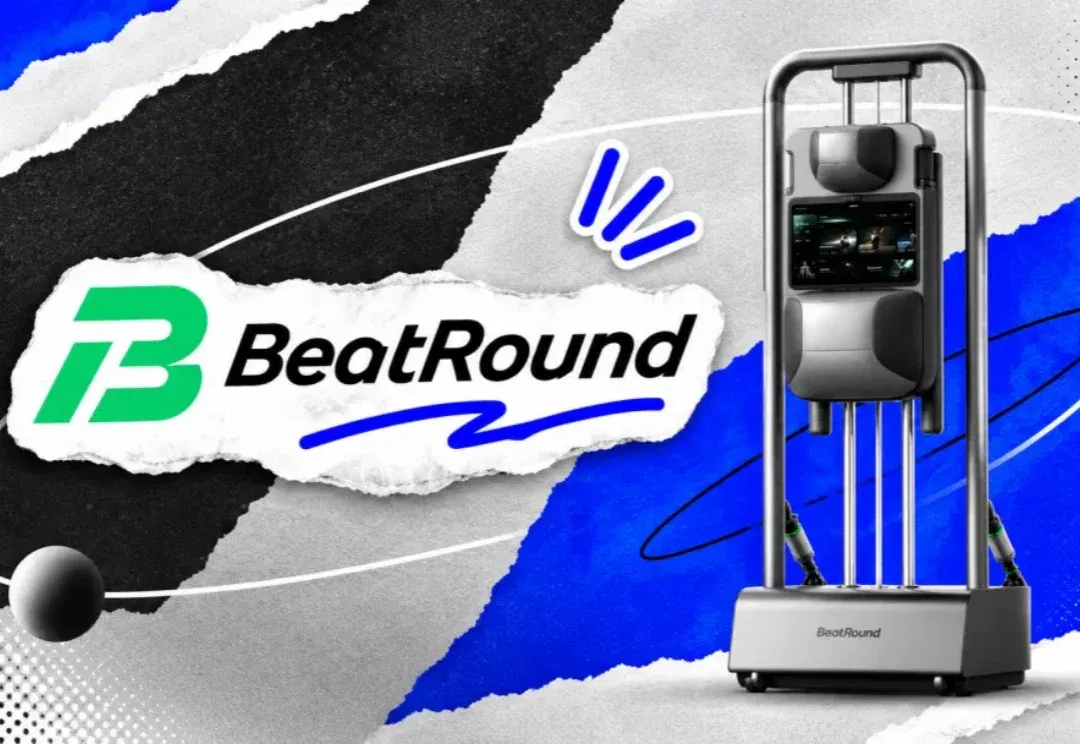
Qianxing Intelligence Raises Tens of Millions of Yuan for Boxing Sparring and Home-Fitness Devices (opens in a new tab)
Qianxing Intelligence says it raised tens of millions of yuan in a round solely led by Kunlun Capital. It is testing R1 humanoid sparring and R2 home-fitness prototypes with users and plans a CES 2027 debut; training-speed and survey claims apply to its specific tests and respondents.
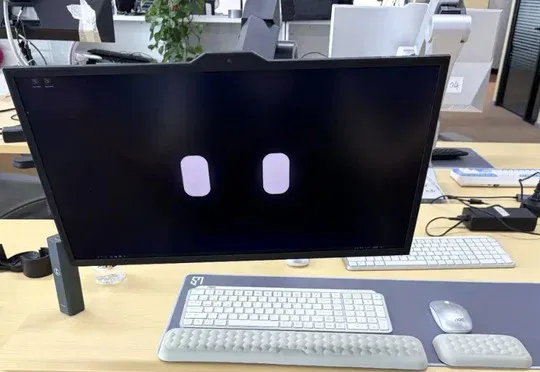
CyboPal ONE’s 27-inch display on a six-axis arm tops US$1.3 million in crowdfunding (opens in a new tab)
CyboPal ONE combines a 27-inch 4K display with a six-axis arm and voice, gesture and preset-position controls. Crowdfunding topped US$1.3 million at reporting. Fully automatic sit/stand/recline detection and tracking remain in internal development and are not publicly available.

EmotionX Gets Decent Capital Angel Backing; Feel Wearables Planned for CES 2027 (opens in a new tab)
EmotionX says it has angel backing from Decent Capital and has listed its fine AI app. Five hardware products remain in development, with Feel planned for CES 2027. Its proposed emotional-regulation loop still requires third-party validation.