Qianxing Intelligence Raises Tens of Millions of Yuan for Boxing Sparring and Home-Fitness Devices
Qianxing Intelligence says it raised tens of millions of yuan in a round solely led by Kunlun Capital. It is testing R1 humanoid sparring and R2 home-fitness prototypes with users and plans a CES 2027 debut; training-speed and survey claims apply to its specific tests and respondents.
Editor's fact check (2026-11-24): R1 and R2 are still progressing through prototype testing and user co-creation, and CES attendance is planned; this does not mean they have already entered mass production or launched commercially. The more-than-tenfold policy-training speed in the article comes from the team's test against a particular PPO setup. The figure above 70% refers to survey respondents willing to continue discussions, not a purchase rate among all consumers or a product-retention result. Reprint of Z Potentials' original report on the Qianxing team (opens in a new tab)
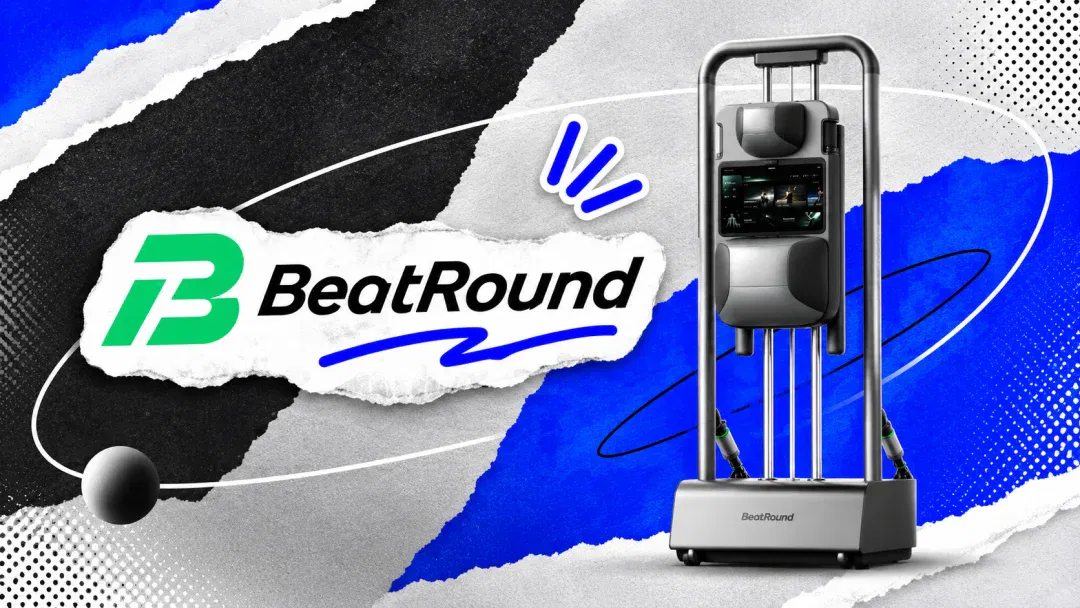
A rib fracture during boxing sparring and a treadmill that became a clothes rack prompted entrepreneur Zeyu Fan to rethink boxing training and home fitness. Now, Qianxing Intelligence has completed a funding round of tens of millions of yuan solely led by Kunlun Capital. Using its own boxing AI models and compliant robotics technology, it is developing two products—a humanoid boxing sparring partner and a home boxing-fitness device—and plans to appear at CES 2027. Founded by entrepreneur Zeyu Fan, the company has chosen boxing as its entry vertical, targeting the global home-fitness equipment market, worth more than $10 billion.
According to the team, Qianxing independently develops boxing-specific cerebellum and brain models, which have learned different fighters' movements and styles from more than a thousand boxing videos and enable the robot to generate movements autonomously, identify execution deviations and make physical corrections. Around this technology, the team is developing two product lines—a humanoid boxing sparring robot and home boxing-fitness equipment—hoping to bring robotic motion control into real sporting scenarios.
Boxing already has broad cultural influence and established paid fitness settings. Qianxing believes the sport also offers a business opportunity to validate robotic motion technology, earn recognition from professional users and gradually enter the mass-market home-fitness segment.
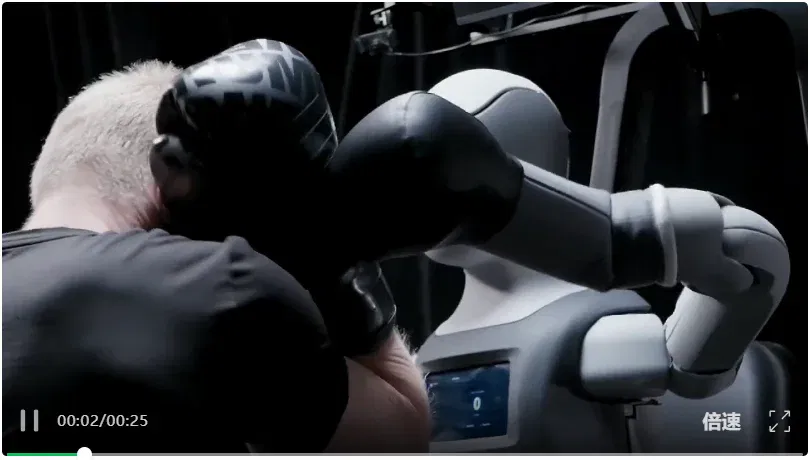
Image from Qianxing's internal testing video
01 From Boxing Enthusiasts to the Broader Home-Fitness Market
In 2024, the Tyson–Jake Paul fight set Netflix's sports-livestreaming record at the time: an average of around 108 million viewers per minute worldwide, with a peak of 65 million concurrent livestreams. A single boxing match attracted the attention of over a hundred million people.
Boxing's appeal has long extended beyond the professional ring. In terms of actual participation, industry research firm Market Growth Reports estimated that more than 32.4 million people worldwide participated in boxing training in 2024; data from the US Sports & Fitness Industry Association (SFIA) puts US participation in boxing and mixed-martial-arts fitness at around 8.38 million in 2023. Les Mills BODYCOMBAT classes are also available in 12,000 fitness clubs worldwide, attracting millions of participants each week.
From professional bouts to mass fitness, boxing already has broad cultural influence, a large exercise population and mature paid-use settings.
At home, traditional punching bags and boxing dummies remain common striking equipment. They can withstand punches, but cannot initiate offense and defense like a real person.
There is another frequently overlooked barrier at home: whether the equipment itself fits into daily life. Traditional freestanding punching bags require space and often look better suited to professional training facilities. For consumers who want fitness equipment in the living room while caring about home aesthetics—especially women exercising routinely—the product's shape, footprint, noise and convenience all influence purchasing decisions.
According to Fortune Business Insights, the global home-fitness equipment market reached $12.88 billion in 2025. Beyond established categories such as treadmills, exercise bikes and rowing machines, boxing already has the foundation to attract broad participation, while its home-training experience still has room for improvement.
Qianxing Intelligence sees an opportunity worth exploring: boxing's accumulated cultural influence and enthusiasm among participants have not yet been fully served by existing home-exercise equipment.
Through robotic motion control, AI movement perception and exercise courses, Qianxing hopes to give boxing enthusiasts richer offensive and defensive training at home, while helping ordinary users find an effective, sustainable form of full-body aerobic exercise through real striking, dodging, classes and games.
Start with recreational boxing, then move toward the broader home-fitness market.
02 From the Founder's Fracture to the Team Earning Boxing-Fitness Coaching Certificates Together
For boxing enthusiasts who truly enjoy sparring, the greatest attraction is the judgment and reaction involved in confronting an opponent.
But improving at sparring often presents two practical problems: finding an opponent available whenever you want to train, and the risk of injury in sparring with another person.
If you want half an hour of offensive and defensive practice after work, a partner of similar ability may not be available. When preparing for a bout and repeatedly studying a particular opponent's style, it is also hard to find a sparring partner who can imitate that style over time. Even with a partner, live sparring still carries injury risks. Gloves and protective gear can reduce some harm, but cannot guarantee that you will not get hurt.
Founder Zeyu Fan is such a user himself. He fractured a rib during a sparring session while preparing for a fight and spent three months recovering, forcing him to stop the sport he loved.
For frequent sparrers, injury means interrupting a training plan or even missing a bout. Wanting to train more intensely without being sidelined for a long time by injury is a tension many sparring enthusiasts understand.
Hitting a bag at home is convenient, but the bag does not throw punches, defend or dodge, much less simulate the technical styles of different opponents.
Another group consists of fitness users who encounter boxing through BoxFit, Supermonkey or Les Mills combat classes.
These classes offer instructors, musical rhythm and a group atmosphere, with clear exercise intensity and engagement. But consistently getting to a boxing gym or fitness center on schedule every week is not easy.
A class lasting around 45 minutes may involve another 30 to 180 minutes of round-trip travel. Working late, bad weather or a schedule mismatch can easily mean missing training. Differences between instructors in movement guidance, correction and class pacing also directly affect the user experience.
Practicing with YouTube videos at home eliminates the commute, but no one checks whether your movements are correct, and it is hard to adjust intensity to your physical condition that day. If you want to keep practicing real strikes, there may not be room for a large punching bag at home.
To study how to solve these problems, Zeyu Fan and his teammates studied boxing instruction together and earned boxing-fitness coaching certificates. They began examining the questions from a coach's perspective: which movements beginners should learn first, how to structure intensity, when movements need correction, and how someone with no boxing background can complete a training session.
A third group has a more general need: they want better health and an exercise habit, but struggle to sustain it at home.
Zeyu Fan once bought his parents a treadmill, hoping they could exercise at home every day, but it eventually became a clothes rack. Talking with them, he discovered that the problem was not a lack of concern for health; it was simply difficult to keep stepping onto a treadmill every day to walk and run repetitively.
This led him to reconsider a fundamental question about home-fitness equipment: what users really want is health, but conventional equipment often requires them to overcome boredom before receiving exercise's benefits. Relying on willpower over the long term is itself a high barrier.
Boxing gave the team a chance to change the exercise process. Punching, dodging, reacting and moving give each round different tasks. Combined with musical rhythm, courses and game challenges, users can complete full-body aerobic exercise through constantly changing movements and see progress through scores and training data.
Qianxing hopes users will begin exercising for their health and keep participating because they enjoy training, eventually developing a genuine habit of exercising at home.
As it studied user needs more deeply, Qianxing gradually identified three directions: sparring-oriented boxing users need a partner that actively attacks while reducing injury risk; fitness-boxing users need professional guidance and sparring at home without a commute; and general home-fitness users need exercise that is effective, easy to start and sustainable over time.
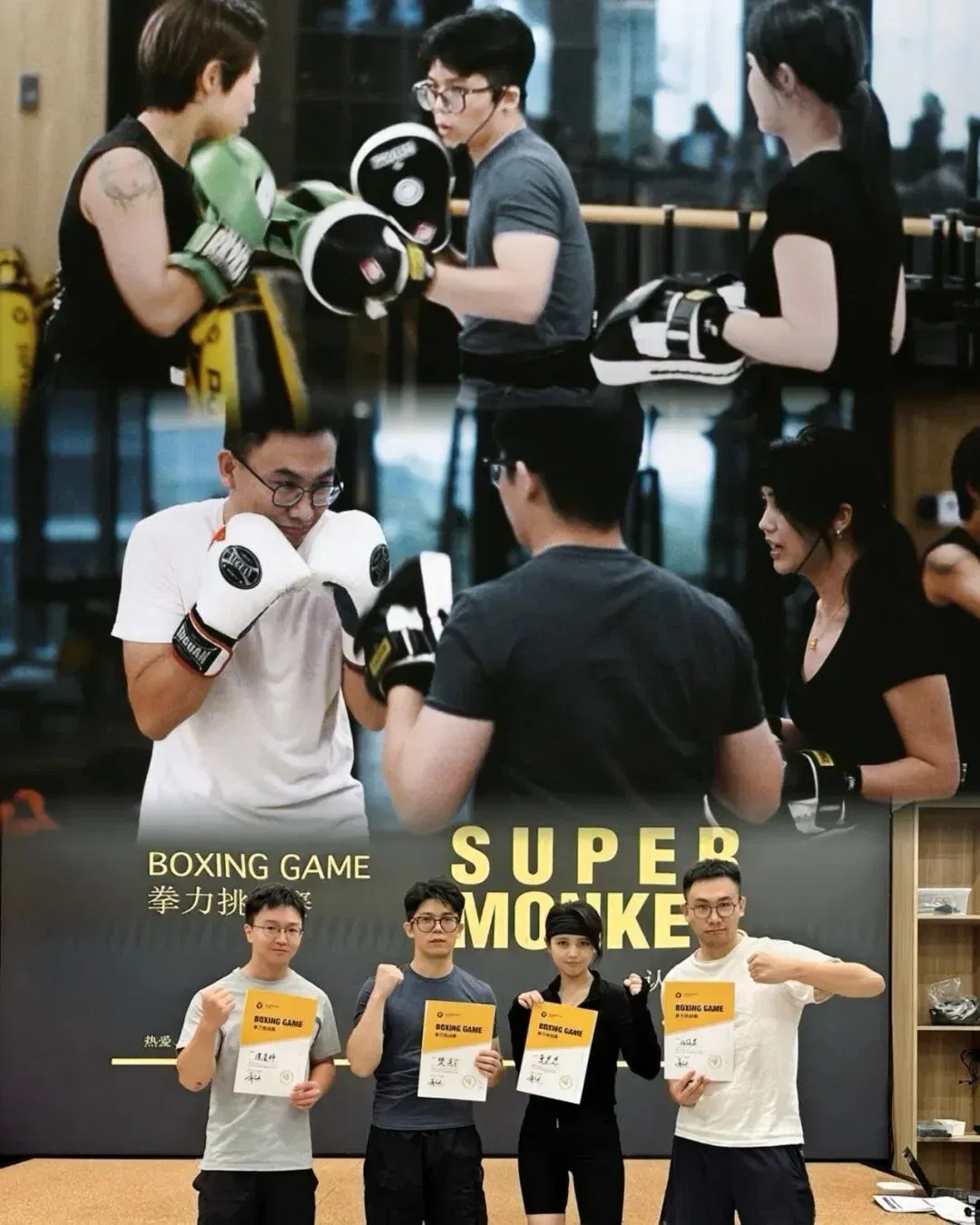
Qianxing team members earning boxing-fitness coaching certificates
03 Using Robotics Expertise to Develop Two Products for Different Exercise Needs
As it deepened its understanding of users, Qianxing found that professional boxing users sought realistic sparring that was safe and controllable, while general fitness users placed more emphasis on safe interaction, course guidance and an exercise experience they could sustain.
Drawing on its expertise in robotic motion control and compliant mechanisms, Qianxing chose two product-development paths: humanoid robots for professional sparring needs, and compliant interactive structures, courses and games better suited to home use for general fitness needs.
For professional sparring training, Qianxing has developed the R1 humanoid boxing sparring robot.
Making a robot punch like a person requires more than moving its arms; shoulders, torso and joints must work together. The team therefore specifically added degrees of freedom around areas such as the shoulder blades, enabling more flexible punching combinations and offensive and defensive movements.
Another core challenge is safe contact. The robot must initiate attacks to give users a real offensive and defensive experience while avoiding excessive impact. Qianxing uses a compliant exterior, sensors and contact-control technology to decelerate before contact and reduce force afterward, minimizing pain and injury risk as much as possible.
Image from Qianxing's shoulder-blade degrees-of-freedom demo
Getting a robot to perform boxing movements is not difficult. The real challenge is teaching it to hit targets and learn boxing tactics.
Some robots can already imitate punches, but becoming a genuine sparring partner requires solving two major technical problems: first, precisely controlling the body to hit targets and defend using standard boxing techniques; second, understanding constantly changing offensive and defensive situations and independently deciding when to punch, dodge or counterattack, rather than merely repeating preset movements.
To tackle these two problems, Qianxing has independently developed a tactical "brain" model and a motor "cerebellum" model specifically for boxing training.
The tactical "brain" learns fighters' styles from real match videos. By analyzing both fighters' three-dimensional body movements, distance and changes in offense and defense, it understands their tactical styles and continually optimizes decisions through league-style self-play, enabling the robot to choose offensive and defensive strategies autonomously based on an opponent's movements.
The motor "cerebellum" tackles the more complex problem of physical execution. The team combines motion priors with differentiable dynamics, allowing the robot to predict action outcomes within the model and optimize control policies, then translate tactical decisions into accurate, continuous boxing movements and correct deviations using execution feedback. According to the team's tests, this method trains policies more than ten times as fast as a conventional PPO reinforcement-learning setup.
From learning standard punches to understanding opponents' tactics, making decisions autonomously and executing them physically, Qianxing is moving its robot from "performing boxing movements" toward "genuinely providing boxing sparring." In the future, this technology could let robots simulate different fighters' styles, offering professional users more targeted offensive and defensive training that they can practice repeatedly.

Image from a demo of Qianxing's independently developed world-model system, the "boxing motor-control brain and cerebellum"
For fitness boxing and general home aerobics, Qianxing has developed the R2 home boxing-fitness device.
The biggest technical challenge is lowering the barrier to boxing so that people of different ages, heights and exercise backgrounds can participate easily and safely.
Qianxing has therefore developed an innovative ergonomic target system that combines real striking with active mechanical interaction. The striking targets must withstand continuous punches and offer a comfortable, realistic feel; two flexible rod targets actively strike, guiding users to dodge, squat and counterattack while controlling contact impact. Through multiple rounds of structural and interaction testing, the team continually optimizes compliant cushioning, movement trajectories and visual/tactile closed-loop control, with automatic height adjustment accommodating family members of different heights.
Hardware lowers the participation barrier; software must make users want to keep exercising over time.
The team incorporates more than a thousand combinations of boxing movements into aerobic courses, rhythm-based striking, virtual combat and motion-controlled games, letting users complete full-body exercise through constantly changing tasks.
The device also builds a progression system from data such as punching speed, force and reaction, combining levels, medals and leaderboards to make improvement visible. A creation workshop lets users choreograph punching combinations and fitness movements to music, make courses, and upload and share them.
Behind both products is coordinated development of mechanical structures, motion control, perception algorithms and software content. Founder Zeyu Fan previously developed humanoid-robot gait algorithms at UBTECH, then co-founded a commercial cleaning-robot company and served as CTO. Co-founder Guannan Ren spent five years at DJI, formerly leading the RoboMaster mechanical department, and was responsible for drone handoff-system technology at Meituan. The team brings this expertise into boxing and is developing a patent portfolio around compliant structures, joint transmission and impact perception.
From professional sparring to general home fitness, Qianxing is turning complex robotics technology into exercise products usable by different groups.
04 Involving Users in Development: From an Intercontinental Boxing Champion to European and American Fitness Users
To enable genuinely safe interaction between robots and people, Qianxing has iterated through ten generations of prototypes across its two product lines. From mechanical structures and motion control to impact feedback, every adjustment faces concrete engineering questions: whether punches accurately hit the target, whether consecutive movements look natural, whether contact with a human body can be controlled effectively, and whether users with different exercise backgrounds can keep up with the device's pace.
In developing the R1 humanoid sparring robot, Qianxing invited intercontinental boxing champion Chengcheng Yang to serve as a boxing technical adviser and help refine the product's movements and sparring experience.
For professional boxers, the speed and angle of the robot's punches, transitions between movements, and offensive and defensive rhythm all affect the value of sparring. The robot must simulate real movements while giving trainees time to judge and react and avoiding unnecessary contact impact. The champion's involvement lets the team bring real boxing's movement details, strategies and training requirements into robotic development.
The team also brought R1 into physical boxing gyms, where professional fighters, coaches and boxing students tested sparring in real training environments, evaluating movement fidelity, contact feel and different training difficulties and helping optimize the product through feedback.
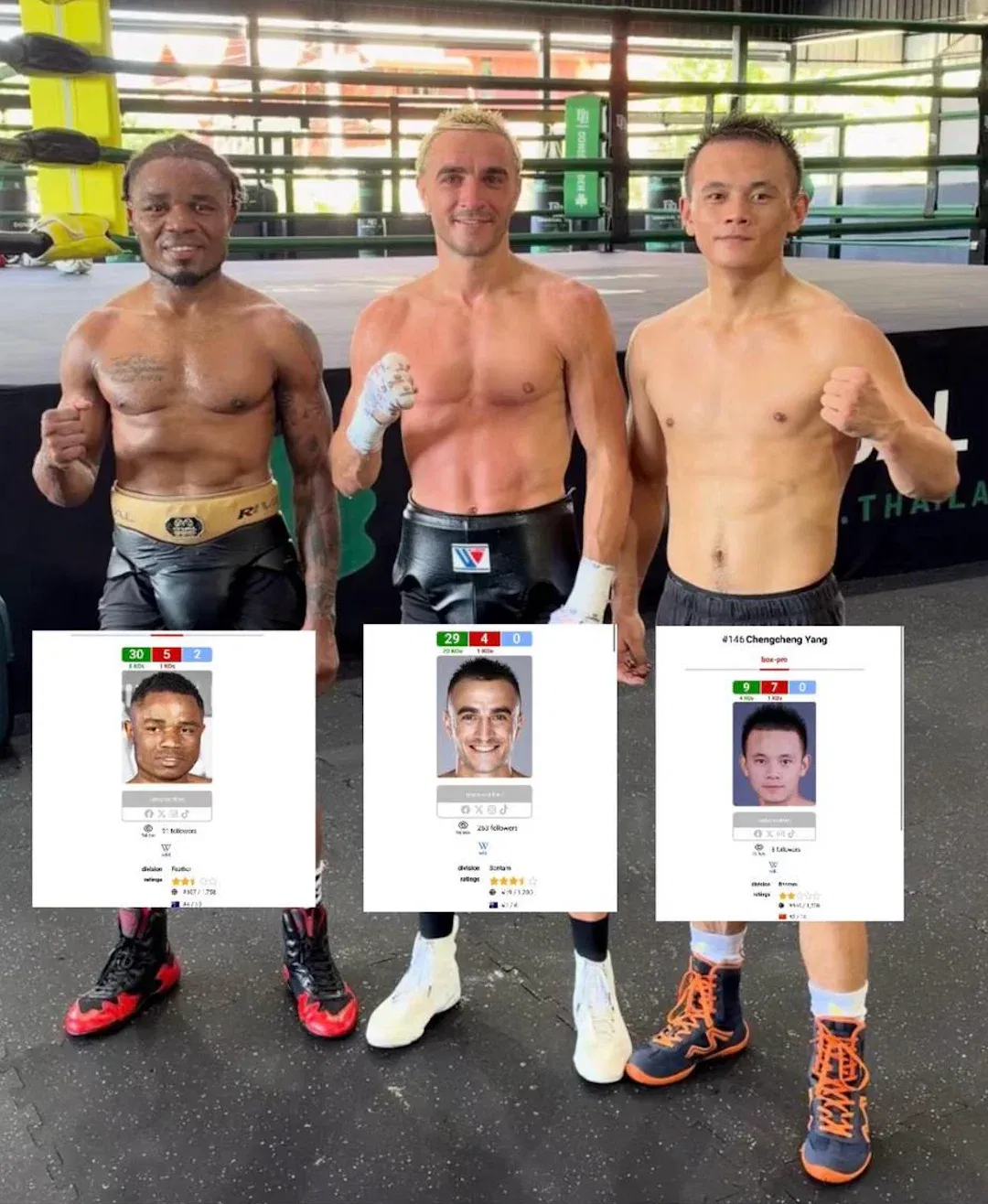
Qianxing's boxing technical adviser
For the home boxing-fitness device, Qianxing starts with the real needs of European and American users and involves them in product co-creation.
At the product-concept stage, the team used advertising, questionnaires and user interviews to learn how people normally exercise, which features interested them, and whether they were willing to try a new form of home fitness.
More notably, over 70% of survey respondents said they were willing to talk further with the founding team and participate in product discussions and co-creation.
The team subsequently invited European and American users to in-depth interviews, asking specifically what exercise equipment they had bought, how they normally trained, what existing equipment lacked, and which problems they hoped Qianxing's product would solve.
For example, an American user with boxing and mixed-martial-arts experience already had a treadmill, exercise bike and boxing dummy at home. He still used the dummy, but wanted equipment that could actively attack so he could practice dodging, defense and reactions.
He also made two specific suggestions: the device should offer different attack speeds so beginners and experienced users can both train; during exercise, only simple prompts are needed, while detailed punching-speed, force and hit data are better reviewed after training to avoid interruptions.
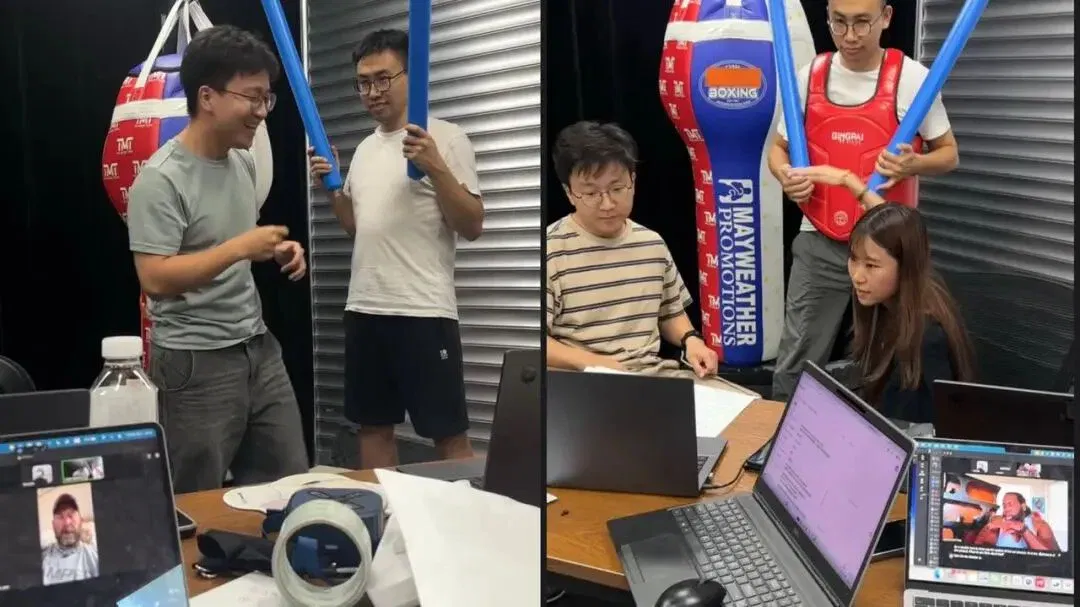
Qianxing's team conducting user interviews and product-development discussions
These suggestions further clarified the design requirements: mechanical attacks need adjustable difficulty, courses must suit different exercise backgrounds, movement guidance should not frequently interrupt users, and clear data feedback is needed after training.
Other users raised questions about installation, the experience for family members of different heights, and whether courses were varied enough. These opinions also became important references for optimizing mechanical structures, training content and software features. As prototypes gradually took shape, Qianxing invited foreign users to in-person hands-on sessions, letting them stand in front of the equipment, put on gloves and strike, exercise with the courses, and experience mechanical attacks, then report actual-use problems to the development team.
From the intercontinental champion refining the humanoid robot with the R&D team, to gym students participating in sparring tests, to European and American users offering suggestions through questionnaires, interviews and hands-on experiences, Qianxing involves real users from the development stage onward.
Professional boxers help make robotic sparring closer to real combat, while ordinary fitness users help make the equipment easier to use and the courses more enjoyable. Both products continue to improve with real users' participation.
05 Starting with Boxing, Moving Toward the Broader Home-Exercise Market
For commercialization, Qianxing has selected target markets according to the different characteristics of its two products.
The R2 home boxing-fitness device will first target recreational boxing enthusiasts with clear training needs, validating willingness to pay for real striking, interactive training and course guidance. Boxing-aerobics classes, music games and progression systems will then help it gradually enter fitness boxing and the broader home-aerobics market.
The R1 humanoid boxing sparring robot targets serious boxing enthusiasts, fighters and gyms, exploring the higher-end training market through highly realistic humanlike movements, professional training content and customized sparring. At present, Qianxing is prioritizing refinement of the robot's upper-body offense and defense to meet close-range sparring needs. It is also advancing bipedal humanoid development to gradually achieve complete offensive and defensive training incorporating footwork and body movement.
Behind the two product paths is the same judgment about commercializing robotics: start from users' existing exercise needs and let robots provide new value through real physical interaction.
Qianxing has now completed a funding round of tens of millions of yuan solely led by Kunlun Capital, developed robot prototypes that users can try, and conducted product testing and co-creation with professional boxers, physical boxing gyms, and European and American users.
In January 2027, the team plans to showcase its home boxing-fitness product at CES, bringing its independently developed robotics technology and exercise-interaction experience to the global consumer market.
From a longer-term technological perspective, boxing provides a concrete training scenario for robots: they need to understand human movements and intentions, actively plan their own motion, control force and safety boundaries during close contact, and continually adjust their actions based on actual execution results.
These capabilities may in future extend to more scenarios involving human exercise and physical services.
Starting with boxing and enabling robots to truly understand human movement and respond to human actions, Qianxing is exploring a new route for consumer robots into the home.
This article comes from "Z Potentials," written by "Z Potentials."
Related topics
After reading
Join the AINRK community
Read how to join the community and connect with people working in AI.
Related articles
Continue reading related topics and articles in this category.

Yujie Liu's Extra: Turning Hackathon Photos into Personal AI Newspapers (opens in a new tab)
SUSTech student Yujie Liu built Extra to turn event photos into personal AI newspapers. The interview traces a shutdown, a contest loss and queues for a prototype, distinguishing interest from market validation. Reported million-level funding has no disclosed currency, investors or closing details.
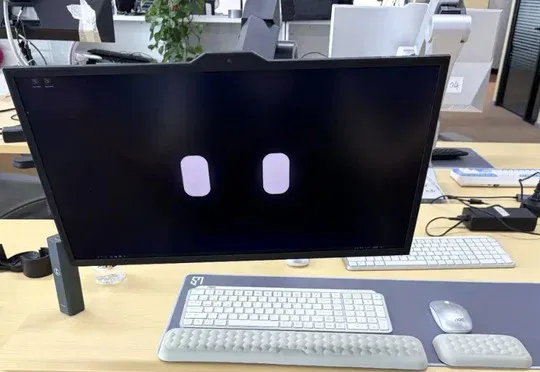
CyboPal ONE’s 27-inch display on a six-axis arm tops US$1.3 million in crowdfunding (opens in a new tab)
CyboPal ONE combines a 27-inch 4K display with a six-axis arm and voice, gesture and preset-position controls. Crowdfunding topped US$1.3 million at reporting. Fully automatic sit/stand/recline detection and tracking remain in internal development and are not publicly available.

EmotionX Gets Decent Capital Angel Backing; Feel Wearables Planned for CES 2027 (opens in a new tab)
EmotionX says it has angel backing from Decent Capital and has listed its fine AI app. Five hardware products remain in development, with Feel planned for CES 2027. Its proposed emotional-regulation loop still requires third-party validation.
General AI models enter hardware development, from files to prototypes (opens in a new tab)
Youxin reviews hardware-design examples involving OpenAI, Anthropic and engineering tools, spanning circuits, enclosures, firmware and CAD. Some prototypes were built and tested, but digital checks, engineering review and physical reliability remain distinct hurdles.
Suisheng raises tens of millions of yuan for Memoket wearable AI memory (opens in a new tab)
Zhidx interviews Suisheng founder Wang Shiyuan about the Memoket Gem wristband, KITE long-memory engine and software subscriptions. Funding, battery life, early user results and benchmark figures are company statements; long-term use remains to be tested.