Qianyi Zhigan Raises Over 10 Million Yuan in Seed Funding for North American Pet Health Collars

Z Potentials reports seed funding led by Shuimu Venture Capital with GHIC participation. Qianyi Zhigan is preparing a pet collar for North America using hardware sales and subscriptions. Reported errors and user alerts are team tests and anecdotes, not canine clinical validation.
Editorial check (2026-11-25): The financing, product errors and user experiences in this article mainly come from the team's account or individual early users. Human clinical samples and accuracy figures cannot be treated as clinical validation of a dog collar. The report does not provide the full sample, error definition or independent validation protocol for the heart-rate error of ±2 beats per minute and breathing-rate error of ±3 breaths per minute. Alerts do not establish validated medical diagnosis or emotion recognition. Existing products such as PetPace already publicly describe continuous vital-sign monitoring, so the whole market cannot be characterized as empty or limited to daily average heart rates. The market figures refer to the respective organizations' annual statistics, not this company's revenue or realized market share. PetPace official site: continuous pulse, breathing and HRV monitoring, with readings every few minutes (opens in a new tab)AVMA official 2026 U.S. pet ownership statistics: 88.9 million dogs (opens in a new tab)APPA official figures: actual 2025 U.S. pet industry expenditure of $158 billion (opens in a new tab)Pew original survey: 97% and 51% on pets as family members (opens in a new tab)

Z Potentials has exclusively learned that Beijing Qianyi Zhigan Technology Co., Ltd. (Qianyi Zhigan) has completed a seed financing round of more than 10 million yuan, led by Shuimu Venture Capital, with participation from the Global Health Industry Innovation Center (GHIC). Following the financing, the company has further defined its product positioning and use cases around North American pet-owning households' daily needs. It continues to improve its core health-sensing technology, hardware engineering and wearing experience, bringing university-origin electromagnetic sensing AI to consumer smart hardware. Its first smart pet collar, Kinsora One, has now entered the later stages of mass production, while brand building and user acquisition for North America are fully under way.

01 Beyond location tracking: adapting real-time sensing of pets’ physiological and emotional health to practical use
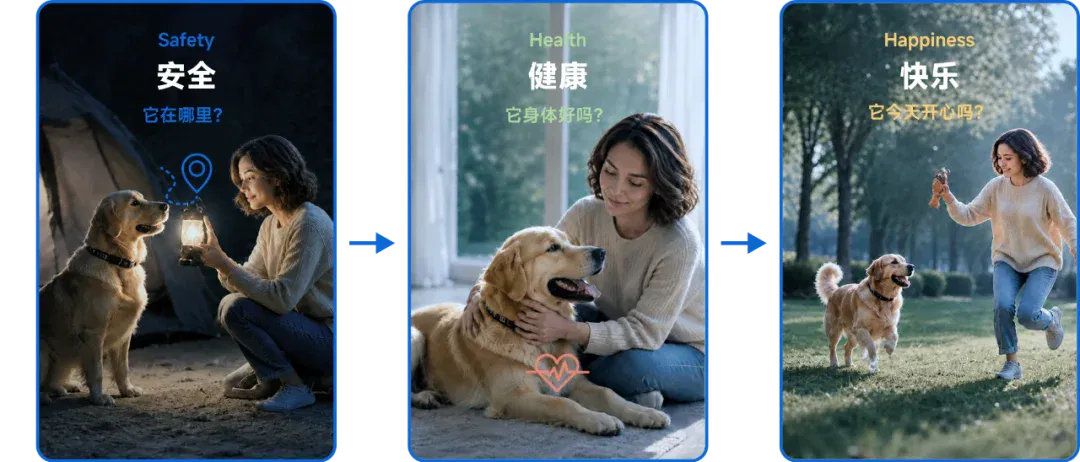
North America's smart pet collar market has developed around GPS location, electronic fences and activity tracking. Brands such as Tractive, Fi and Halo primarily serve pet safety and daily activity management. Location tracking addresses the important problem of lost pets, but for pet-owning households, timely understanding of an animal's everyday physical condition is even more important.
That judgment is based on real user needs. The Qianyi Zhigan team analyzed more than one million genuine discussions in pet-owner communities over nearly ten years, surveyed 1,300 pet owners in the United States, and held in-depth conversations with hundreds of users through TikTok, Facebook and other platforms. It found that pet owners' expectations of smart hardware were expanding beyond location and activity records toward health status, alerts to unusual changes and more detailed attention to emotional well-being.
Products still differ in the health indicators they monitor, measurement frequency and conditions of use. The ECG (electrocardiography) and PPG (photoplethysmography) approaches used in human wearables are difficult to reuse on dogs: thick fur prevents stable electrode contact with skin and substantially scatters or blocks optical signals. Some collars that mainly rely on motion sensors do not directly measure heartbeat and breathing; their "health" features largely infer activity levels and sleep duration from motion sensors. Other existing products publicly describe continuous vital-sign monitoring, so these products cannot broadly be categorized as providing only daily or resting averages.
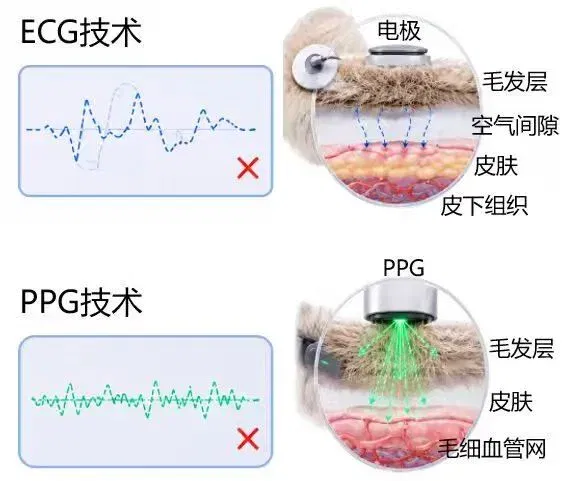
For dogs, averages can lose precisely the most important information. For example, dogs exhibit pronounced respiratory sinus arrhythmia (RSA): even at rest, their heart rate fluctuates markedly with their breathing rhythm. These fluctuations are not simply measurement noise but an important physiological manifestation of autonomic nervous system regulation. Changes in beat-to-beat intervals can be used to analyze heart rate variability (HRV), providing important physiological information for understanding pets' autonomic activity, stress responses and emotional changes. By contrast, low-frequency statistics such as daily average heart rate do not preserve the timing of beat-to-beat changes, making fine-grained analysis of short-term physiological changes difficult.
The team has accumulated more than 1,000 hours of experimental pet physiological-sensing data. Through continued optimization of sensing algorithms and hardware structures, it has achieved a heart-rate error of approximately ±2 beats per minute and a breathing-rate error of approximately ±3 breaths per minute. This is KIN Collar One’s core technological distinction: real-time, continuous, beat-to-beat sensing of each heartbeat, together with continuous monitoring of each breath.
02 More than a decade of research: bringing vital-sign sensing AI toward the consumer market
Qianyi Zhigan's core technology originates in frontier research at the State Key Laboratory of Networking and Switching Technology at Beijing University of Posts and Telecommunications. Its founding team includes several computer science PhDs who have worked on electromagnetic sensing AI and health monitoring for more than a decade. They proposed fine-grained sensing of submillimeter micromovements and developed a technological system spanning weak-signal acquisition, interference handling and continuous vital-sign interpretation. Some results have already been applied in products at scale.
Unlike traditional contact sensors, electromagnetic sensing AI can capture subtle physiological changes such as heartbeat and breathing without direct contact with the skin. The team has published more than 100 high-level academic papers, holds over 50 granted patents, and has received an ACM UbiComp Distinguished Paper Award, two gold medals at the International Exhibition of Inventions Geneva, and first prizes for scientific and technological progress from the Chinese Institute of Electronics and the Ministry of Education, among other honors.

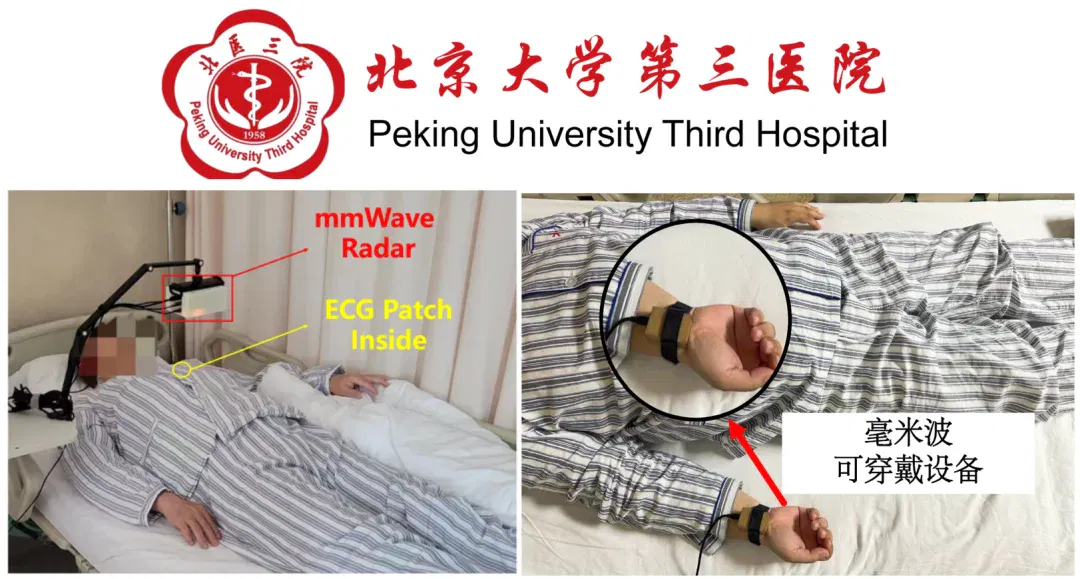
Beyond academic publications, the core technology has undergone large-scale clinical validation in collaboration with several top-tier hospitals, giving the team substantial experience in real-world applications. With Peking University Third Hospital, it built a cardiac microvibration-sensing dataset from thousands of clinical cases; the associated research achieved 97.3% accuracy in arrhythmia monitoring. Respiratory disease monitoring research with the PLA’s Third Medical Center and Beijing Chui Yang Liu Hospital covered nearly 1,000 cases and achieved a 93% detection rate for acute respiratory disease. Research with Beijing Anzhen Hospital developed unobtrusive, continuous blood-pressure monitoring.
These foundational capabilities, developed through long-term research and validated in real medical settings, combine with the team's specific adaptations for canine physiological sensing, motion interference and consumer hardware engineering. Together, they provide capabilities extending from core sensing technology to products across different settings, and constitute a technological barrier that the article describes as difficult to replicate.

03 From foundational sensing to consumer products: redefining the core value of smart pet collars
Beat-to-beat vital-sign sensing is only the first step toward a product. In the user experience, KIN Collar One combines electromagnetic sensing, sound, motion and location information. Multimodal AI algorithms jointly analyze vital signs and daily behavior, turning complex physiological signals into understandable insights into physical condition, health trends and alerts to unusual changes, helping owners pay timely attention to their dogs' physical and emotional changes. The team also continues to improve comfort, battery life, waterproofing and industrial design so the technology fits pets' everyday lives.
An individual early user's experience illustrates this product value. One KIN Collar One trial user received a health alert shortly after 4 p.m.: her dog's heart rate had remained unusually high. She returned home early and found the dog lethargic, breathing rapidly and heavily, with red eyes and a fever. She took it to a veterinary hospital, where a veterinarian diagnosed an acute respiratory tract infection and promptly provided medication. The user said that noticing the problem early spared the dog considerable suffering and reduced subsequent treatment costs.
For households with older dogs, the capability has another value. The owner of a nine-year-old golden retriever used to get up repeatedly at night out of concern for the dog's health. Now she can check its nighttime breathing status and trends through her phone or the collar's lights, gaining some additional reassurance in everyday care.
Beyond alerts to health changes, KIN Collar One turns vital-sign and daily behavior data into more accessible records of everyday life. Owners can learn not only what their dogs did, but also gain a deeper understanding of the day they experienced. These distinctive stories, built from real physiological and behavioral data, provide new material for sharing and discussion among pet owners. Around this capability, Qianyi Zhigan integrates exchanges of health-care experience and pet-life sharing into the product, extending continuous vital-sign sensing from individual health management to richer emotional connections and community interaction.
This attention to pets' physical and emotional health also extends to promoting science-informed pet care. Qianyi Zhigan founder and CEO Congkai An was invited onto the podcast Between the Virtual and the Real to discuss science-informed pet ownership. He shared his views on pet health, daily care and human–pet relationships, conveying the idea that scientific understanding can improve mutual understanding between people and pets.
04 Nearly 90 million pet dogs: new product opportunities in North America
A large pet-owning population and growing pet expenditure create a substantial market for smart pet hardware. According to figures released by the American Veterinary Medical Association, the United States has approximately 88.9 million pet dogs. American Pet Products Association data show that total U.S. pet industry expenditure reached $158 billion in 2025.
Beyond market size, pets' roles within families are changing. A Pew Research Center survey found that 97% of U.S. pet owners considered their pets family members, and 51% considered them as important as human family members. As pets become an integral part of family life, smart pet collars are rapidly moving toward real-time vital-sign sensing and intelligent health care, much as consumer wearables have expanded from step counts and activity records into continuous health monitoring and personalized services.
For North America, Qianyi Zhigan has established a self-operated portfolio of social media content channels, continuously attracting followers and early users and collecting product feedback through community interaction. It also collaborates with local pet-sector influencers, everyday opinion-leading consumers, veterinary hospitals and animal rescue organizations to build brand recognition and a user base.
KIN Collar One’s business model combines smart hardware sales with software subscriptions. Hardware serves as the entry point, while continuous vital-sign analysis, personalized health insights and long-term care services create ongoing user value. The brand’s own website will be the principal initial sales channel, followed by expansion to other e-commerce platforms. The company is also preparing to appear at CES 2027 in the United States to expand its brand presence in North America.
For Qianyi Zhigan, KIN Collar One is not an isolated smart pet device, but its vital-sign sensing platform's first consumer-market product. Drawing on more than a decade of research, the company has developed foundational sensing technologies covering heart rate, breathing, blood pressure and other vital signs, along with product-development capabilities spanning core sensing, AI algorithms and smart hardware. At this stage, it is concentrating its commercialization resources on North America's pet health consumer market, scaling KIN Collar One and growing its user base. Its underlying technology also has scope to extend into human health monitoring, with substantial technical experience already accumulated in unobtrusive sleep monitoring, continuous cuffless blood-pressure monitoring and emotional stress sensing. In the future, the company plans to build a portfolio of products for people and pets around its vital-sign sensing platform, connecting smart hardware with ongoing software services across different settings.
This article comes from "Z Potentials," written by "Z Potentials."
Related topics
After reading
Join the AINRK community
Read how to join the community and connect with people working in AI.
Related articles
Continue reading related topics and articles in this category.

Yujie Liu's Extra: Turning Hackathon Photos into Personal AI Newspapers (opens in a new tab)
SUSTech student Yujie Liu built Extra to turn event photos into personal AI newspapers. The interview traces a shutdown, a contest loss and queues for a prototype, distinguishing interest from market validation. Reported million-level funding has no disclosed currency, investors or closing details.

Qianxing Intelligence Raises Tens of Millions of Yuan for Boxing Sparring and Home-Fitness Devices (opens in a new tab)
Qianxing Intelligence says it raised tens of millions of yuan in a round solely led by Kunlun Capital. It is testing R1 humanoid sparring and R2 home-fitness prototypes with users and plans a CES 2027 debut; training-speed and survey claims apply to its specific tests and respondents.

CyboPal ONE’s 27-inch display on a six-axis arm tops US$1.3 million in crowdfunding (opens in a new tab)
CyboPal ONE combines a 27-inch 4K display with a six-axis arm and voice, gesture and preset-position controls. Crowdfunding topped US$1.3 million at reporting. Fully automatic sit/stand/recline detection and tracking remain in internal development and are not publicly available.

EmotionX Gets Decent Capital Angel Backing; Feel Wearables Planned for CES 2027 (opens in a new tab)
EmotionX says it has angel backing from Decent Capital and has listed its fine AI app. Five hardware products remain in development, with Feel planned for CES 2027. Its proposed emotional-regulation loop still requires third-party validation.
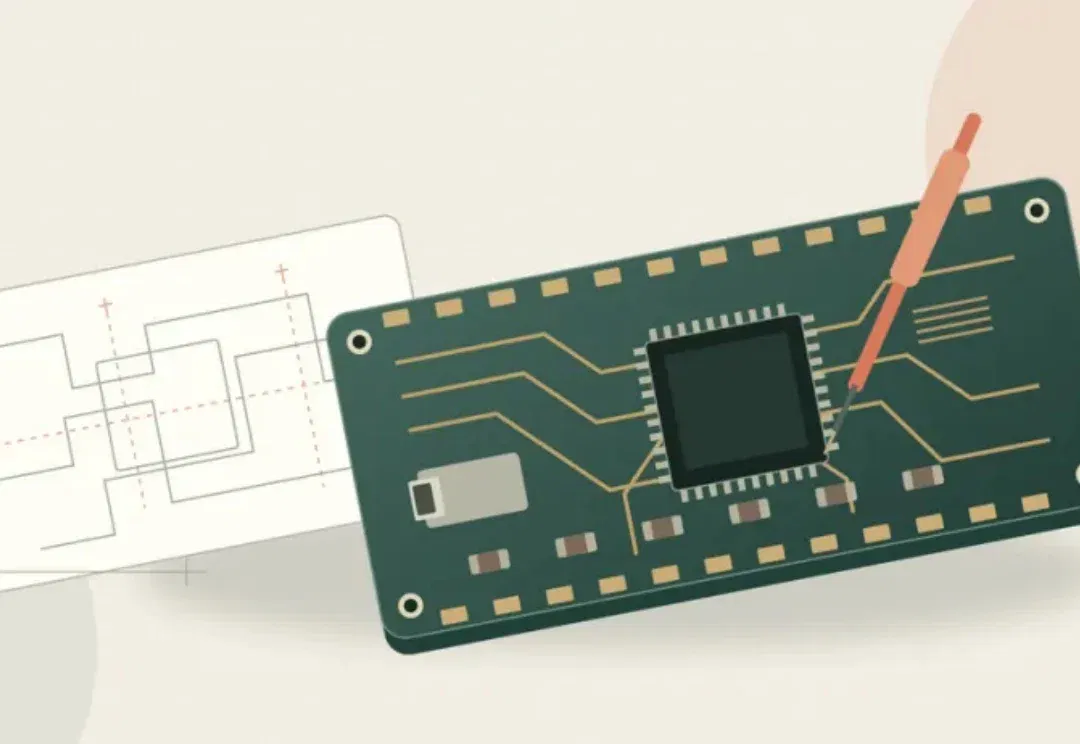
General AI models enter hardware development, from files to prototypes (opens in a new tab)
Youxin reviews hardware-design examples involving OpenAI, Anthropic and engineering tools, spanning circuits, enclosures, firmware and CAD. Some prototypes were built and tested, but digital checks, engineering review and physical reliability remain distinct hurdles.