haimacloud launches lumimax knowledge base and reports results on eight benchmarks

haimacloud's lumimax combines document parsing, knowledge relationships and evidence tracing. Eight vendor-reported benchmarks and three research, technical and literary examples require checks of configurations, samples and business data; they are not general accuracy or security guarantees.
Editorial fact-check (2026-11-26): This article contains a product introduction, vendor-reported benchmark results and usage examples presented by the author. The eight first-place claims, capacity figures and other metrics are limited to the comparisons listed by the vendor. This article has not independently reproduced or verified every configuration, cost or current competitor result. Relationship graphs, answers and suggested literary inconsistencies in the examples still need to be checked against the original sources; they do not represent a general accuracy rate. Offline memory consolidation, harness optimization and learning through model weights are different mechanisms and cannot be combined into a claim that general recursive self-improvement has been achieved. Data boundaries for knowledge-base deployment and external agent connections must likewise be confirmed against agreements, authorizations and actual configurations. Official lumimax product information and benchmark results; (opens in a new tab)Anthropic: The components of agent memory (opens in a new tab); Karpathy: Original LLM Wiki proposal; (opens in a new tab)Original SIM paper. (opens in a new tab)
Why do humans need sleep?
Neuroscience says it is to dream at night, compiling the day's short-term experiences into long-term memories.
Over the past two years, the entire industry has bet heavily on RAG, connecting vector databases to large models in the hope of making them remember vast document collections. But reality has been harsh: introduce cross-document, multihop reasoning, and RAG starts to struggle.
On November 17 at Ignite, Microsoft put it bluntly: "Simply giving a model access to information is far from enough."
In his LLM Wiki proposal, Karpathy suggested having models continuously maintain interconnected knowledge pages rather than rebuild answers from raw materials with every query. This is an approach to knowledge management, not an endorsement of lumimax or a certification of enterprise reliability.
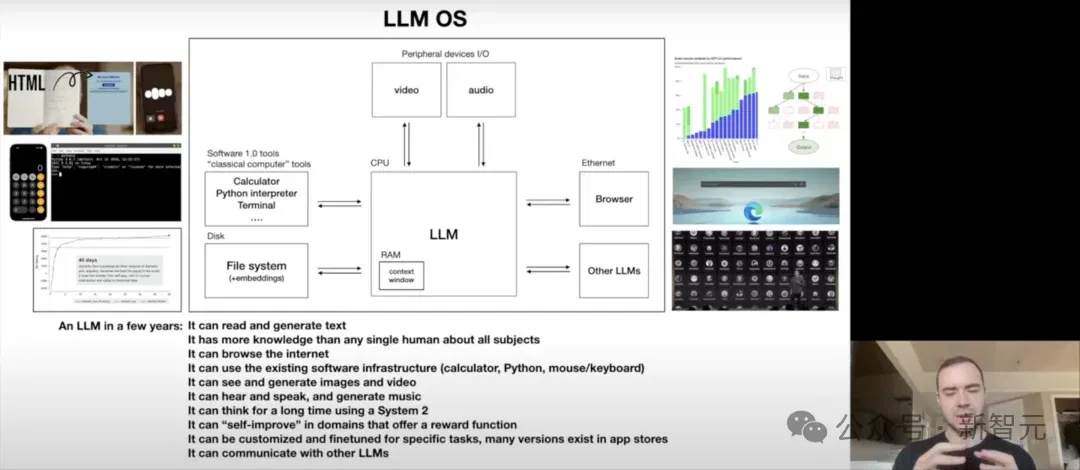
Now, Silicon Valley's major companies are racing to turn this idea into business. The direction has changed completely: from retrieval assembled on demand toward compiled knowledge.
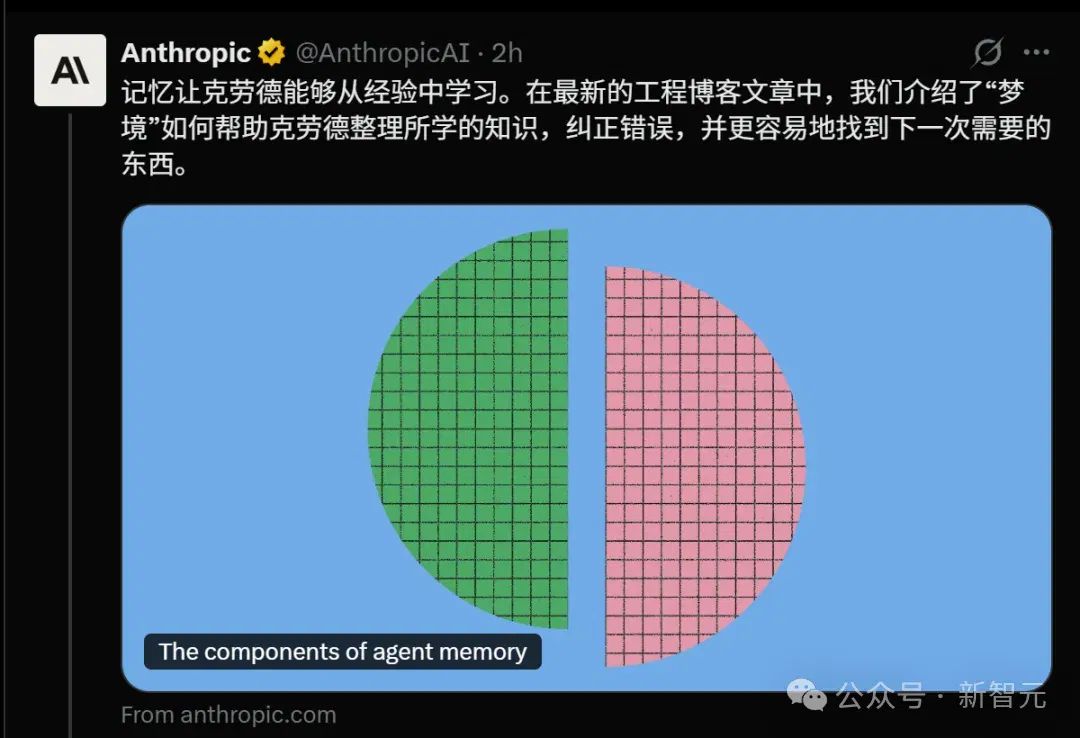
On November 6, Anthropic described offline dreaming in agent memory: organizing session records, correcting errors and building memory representations, including wikis. This does not amount to announcing the abandonment of RAG.
In one set of contract tasks reported by Anthropic, multiple agents concurrently wrote to a shared clause table. There were both omissions in summaries and agents overwriting one another, leaving the final brief with only 41 of 57 scored facts. After switching to one agent per contract writing a separate page with verbatim clause quotations, that task could satisfy all 57 scoring criteria. This is not a general accuracy rate for arbitrary contracts.
This exposes a lie about enterprise AI: semantic relevance is not the same as factual reliability. If even contract clauses can go missing, who would dare entrust core business to an agent?
The hardest challenge for enterprise knowledge bases is not throughput, but verifiable evidence.
Following this demanding approach, Chinese AI-native company haimacloud has launched lumimax, positioning it as a trusted enterprise knowledge-base system for agentic AI.
It aims to turn companies' vast, scattered documents into professional knowledge assets that AI can call on continuously, reason across and trace back to their original evidence.
Founded in 2014, haimacloud has used its in-house cloud computing and real-time rendering technology to provide ultra-low-latency cloud rendering services to more than 30 million users worldwide.
In the AI era, haimacloud is drawing on years of experience scheduling large-scale heterogeneous computing resources to extend further into vertical production settings. It aims to build an AI productivity system covering content creation, professional knowledge processing and intelligent task execution, making AI a form of productivity available to everyone.
As early as March this year, haimacloud began moving into agents, using its computing resources and technical strengths to launch RunningHub, an all-purpose AIGC content creation platform.
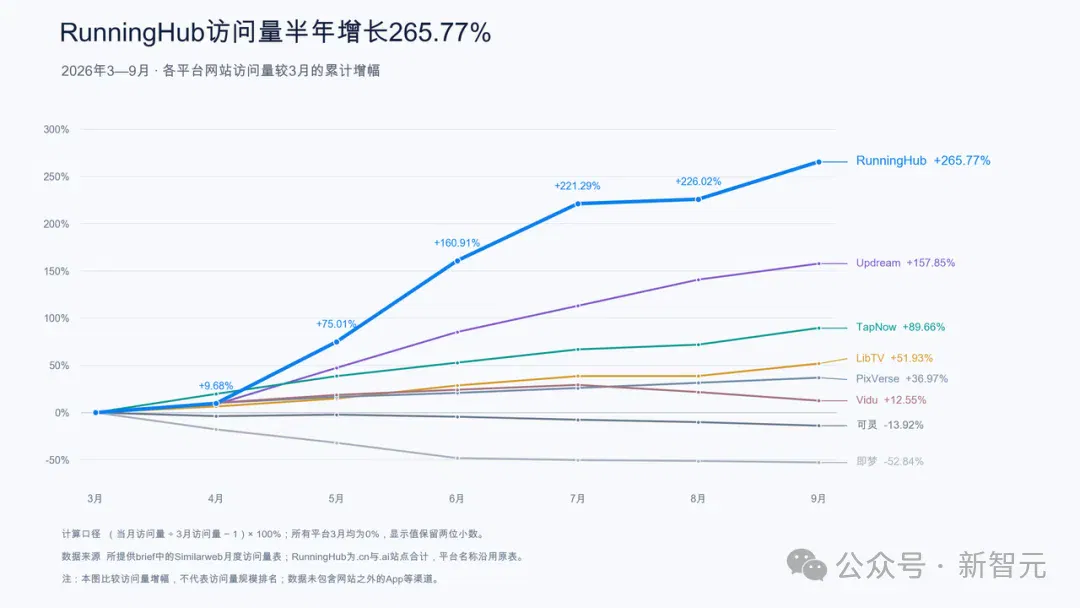
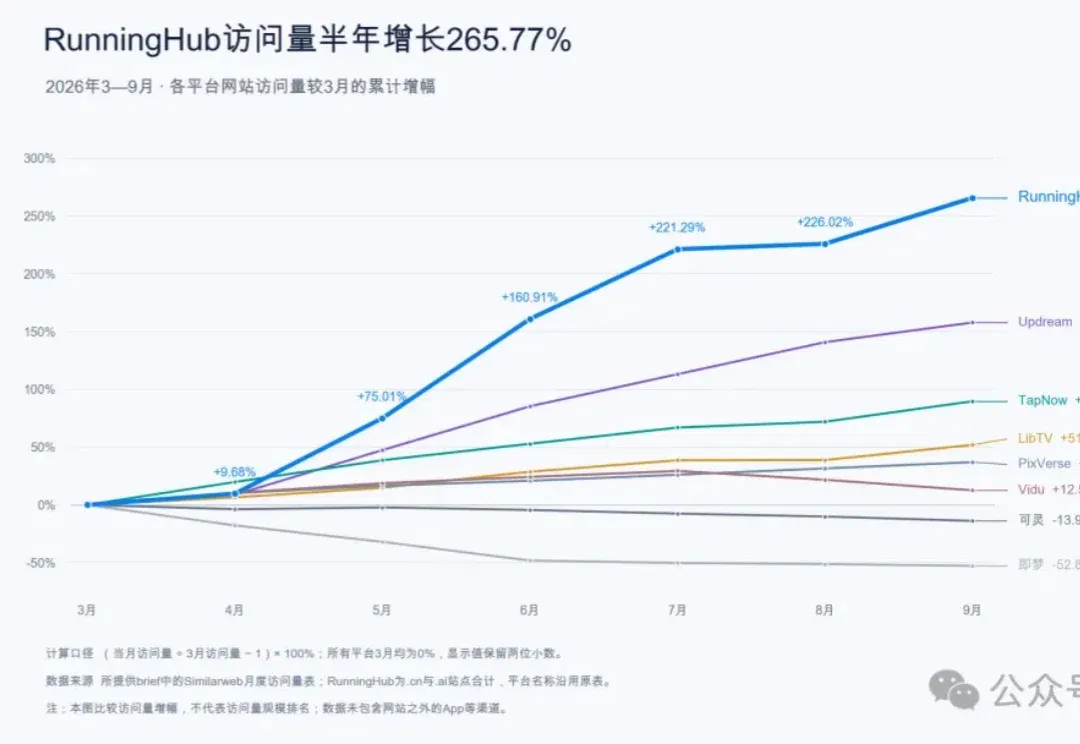
According to SimilarWeb, from March to September this year—just six months—RunningHub's site traffic in China and abroad grew by as much as 266%. Its growth far outpaced leading products such as Jimeng and Kling, placing it among the fastest-growing mainstream AI creation platforms.
Only eight months later, haimacloud has launched another major initiative, lumimax. Unlike RunningHub, an industrial-grade film and video content production platform, this effort focuses on context within the AI productivity system, giving AI applications an external brain equipped with enterprise knowledge.
From document retrieval to deep knowledge compilation:
What is lumimax trying to change?
Traditional RAG follows a basic sequence: split documents, build an index, retrieve passages and generate an answer.
lumimax takes another approach. Rather than merely splitting documents into retrievable knowledge fragments, it first parses the material in depth, then organizes its entities, events, relationships, facts and evidence into a unified semantic system.
Put simply, it turns a collection of disconnected documents into a knowledge network that AI can understand and compute over.
Behind this lies a complete technical pipeline: raw material → deep parsing → knowledge extraction → relationship construction → cross-document reasoning → evidence verification. At its core is lumimax's deep evidence-chain knowledge network, or DEN.
DEN is more than a knowledge graph in the traditional sense. Beyond entities, events and relationships, it aims to preserve the original evidence supporting that knowledge, connecting knowledge relationships with their factual basis.
For example, suppose a company uploads dozens of contracts, supplementary agreements and meeting minutes. A conventional retrieval system may find relevant clauses in each file separately. But when a user asks whether a particular business arrangement has changed, the system must also identify links between documents, their chronological order and conflicting clauses.
lumimax aims to organize this scattered information into a computable knowledge system, then reason along entities, relationships and evidence.
This brings four capabilities:
- Cross-document connections: establishing links among entities, events and facts across multiple sources.
- Multihop reasoning: reasoning step by step along knowledge relationships rather than merely matching keywords.
- Conflict detection: identifying inconsistent information in different sources to assist users' checks.
- Evidence tracing: linking reasoning conclusions to original documents and their sources for easier verification.
This technical approach does not mean RAG has lost its value. Retrieval remains an important part of accessing knowledge, and knowledge graphs are not inherently reliable either.
The real challenge is combining retrieval, knowledge organization, reasoning and evidence verification so that knowledge becomes a continuously maintained asset, rather than information fragments consumed once.
This is also the technical differentiation lumimax is trying to establish.
Eight vendor-reported benchmark results
A quantitative reference for complex knowledge processing
Whether a technical architecture works must ultimately be judged by test results.
lumimax has published a set of complex knowledge-processing results, which must be understood in light of the comparison systems and test configurations.
According to lumimax's officially published results on eight benchmarks, it achieved the highest score in each comparison it listed. This article has not independently reproduced those results.
These tests do not simply ask whether a model can answer general-knowledge questions. They cover several of the hardest parts of enterprise knowledge processing: long-document understanding, cross-document reasoning, complex relationship identification, analysis of visual and textual information, and knowledge extraction under high noise.
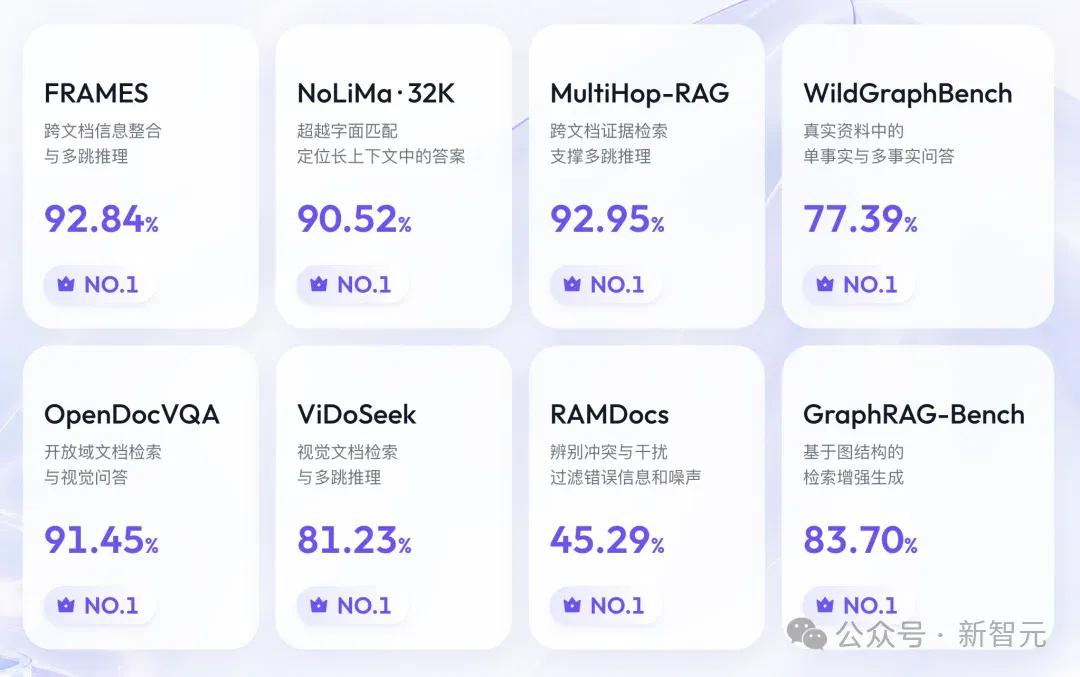
The evaluation is comprehensive and targets pain points directly, encompassing eight authoritative international benchmarks: FRAMES, RAMDocs, NoLiMa · 32K, GraphRAG-Bench, MultiHop-RAG, OpenDocVQA, ViDoSeek and WildGraphBench. They cover core capabilities such as long-document retrieval, conflict resolution, multihop reasoning and visual-textual understanding.
First test: Can cross-document reasoning connect scattered information?
Introduced by Google DeepMind, FRAMES requires retrieving, reasoning across multiple hops and checking facts from two to 15 separate sources for each question. It is an authoritative benchmark for AI deep-research and deep-search capabilities.
It tests not whether a model can find a relevant passage, but whether it can organize information from different sources into an evidence-supported answer.
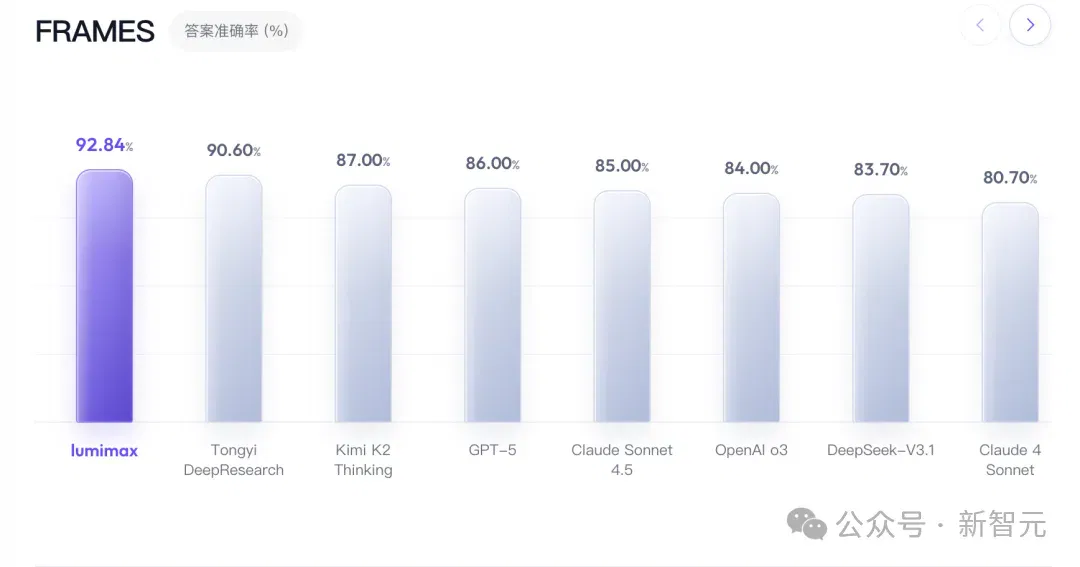
In the vendor's listed FRAMES comparison, lumimax scored 92.84%, compared with 90.60% for the listed Tongyi DeepResearch and 86.00% for GPT-5. These numbers must be understood alongside each system's model and retrieval configurations.
Second test: Can it avoid wrong conclusions when faced with contradictions and noise?
In the vendor's listed RAMDocs comparison, lumimax scored 45.29%, approximately 10 percentage points above the next-highest reference result listed.
You may wonder: how can 45.29%, not even a passing score, still rank first?
Because RAMDocs directly recreates a frustrating dirty-data environment, with documents containing ambiguities, hidden errors and noise everywhere.
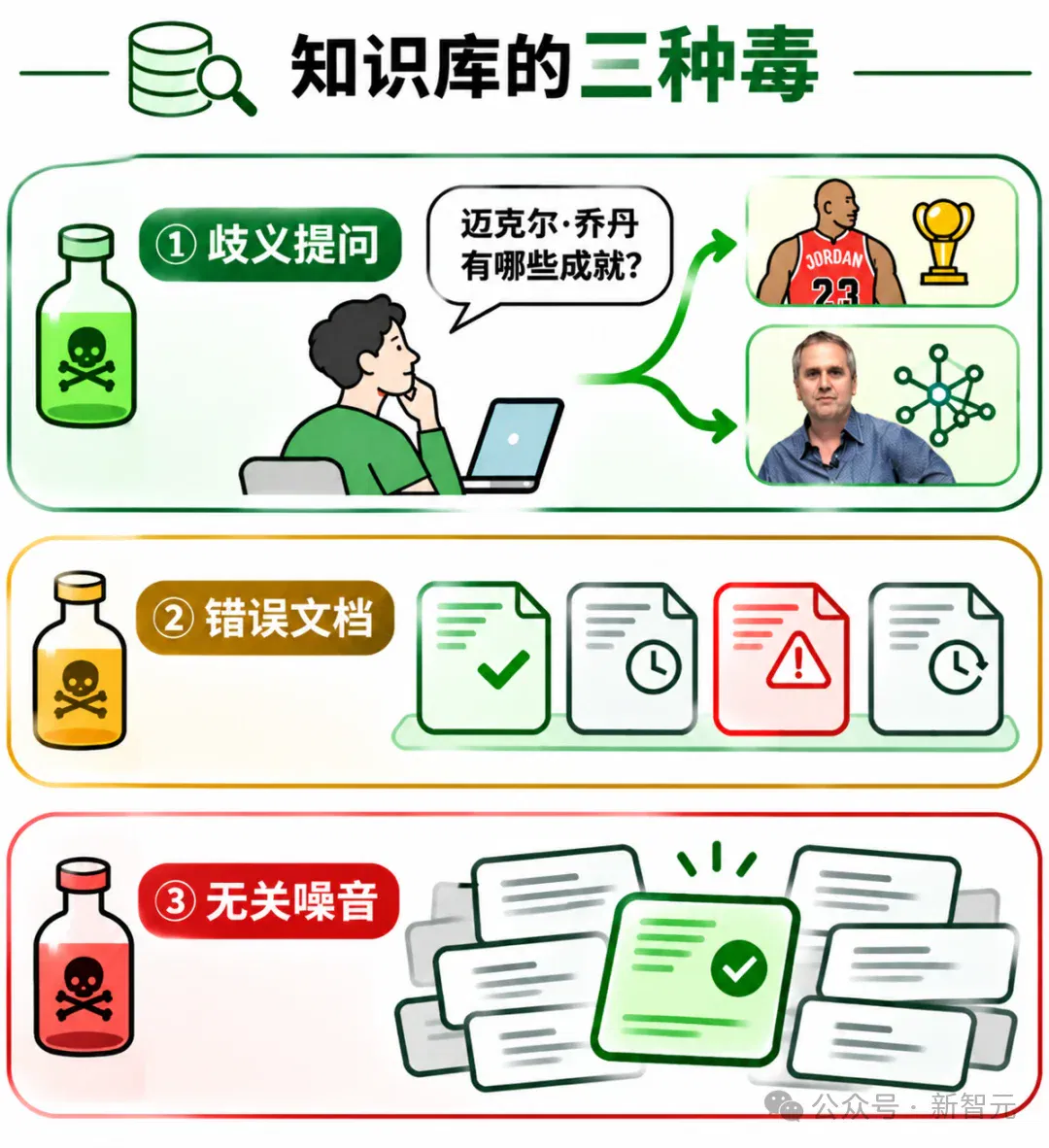
The figure may not look high, but RAMDocs applies strict evaluation standards. It requires not only finding the correct facts, but also exact-match answers. Omitting key information or introducing incorrect content can cost points.
For example, if a user asks what Michael Jordan has achieved, a collection may contain both the basketball superstar and the leading machine-learning researcher. The system must disambiguate their identities and avoid mixing the two people's information.
Third test: Can deep understanding of long documents break dependence on keywords?
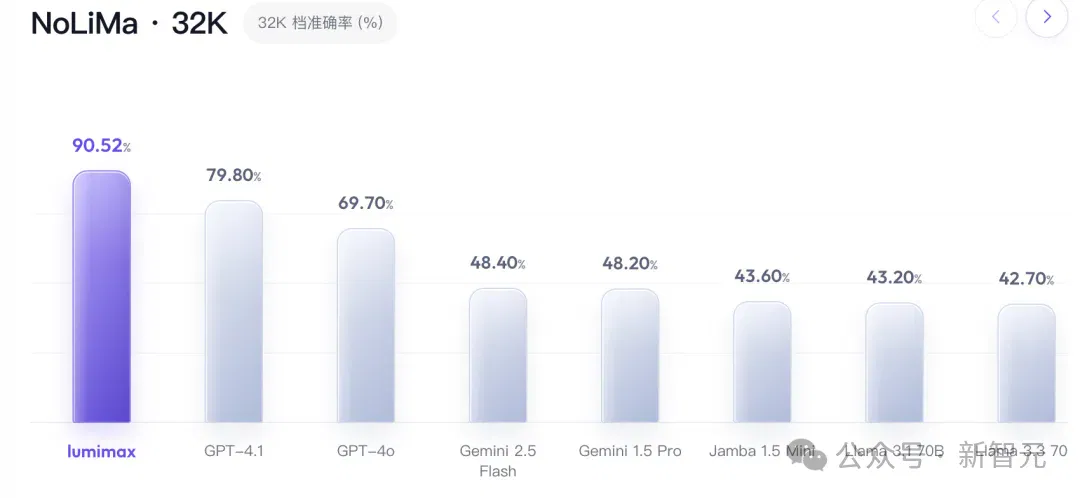
In the vendor-published comparisons, lumimax scored 90.52% on NoLiMa · 32K, 91.45% on OpenDocVQA and 81.23% on ViDoSeek, above the listed reference results for GPT-series and other systems. This does not establish an advantage on every document or task.
NoLiMa · 32K deliberately uses questions with low keyword overlap to test whether a model understands semantic relationships in long contexts rather than relying on simple keyword matching.
For example, the material says Zhang San has visited the Forbidden City, and you ask who has visited Beijing. Without the keyword crutch, 11 of 13 mainstream models score below 50% accuracy on 32K documents. The GPT-series models tested also score below 80%, while lumimax comes in at 90.52%.
For enterprise material with extensive combinations of text and images, such as financial statements, research reports and PowerPoint presentations, understanding a document involves more than extracting text. It also requires preserving relationships between charts and their context.
In visual document understanding, lumimax scored 91.45% on OpenDocVQA and 81.23% on ViDoSeek.
Fourth test: Can it extract useful knowledge from messy information in a high-noise environment?
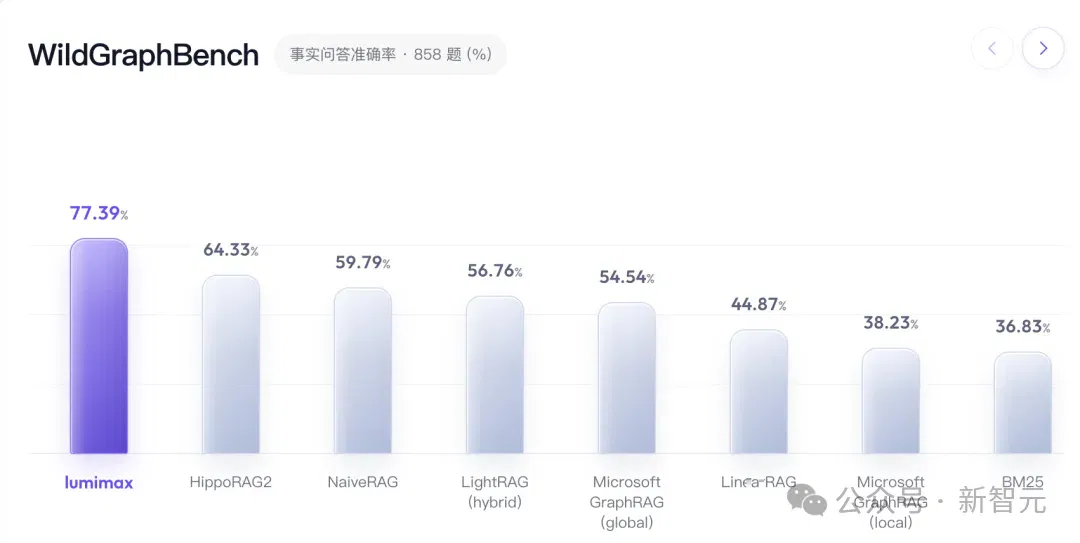
Finally, in the vendor-published WildGraphBench comparison, lumimax scored 77.39%, the highest among the systems listed.
Real-world data are not as tidy as standardized datasets. They often mix duplicate content, irrelevant information and incomplete context. WildGraphBench is designed for such complex environments. Using 45.5 million tokens of real webpages, blogs, messy PDFs and public reports, it tests information finding and integrated answering in real source-material environments.
Benchmark scores are not accuracy rates in real business operations. Different model configurations, data-processing methods, evaluation protocols and computational costs can also affect the final results. At a minimum, however, these tests provide a quantitative reference for assessing lumimax's complex knowledge-processing capabilities.
A knowledge base does more than store material:
It brings AI into professional workflows
Besides the official benchmark results above, lumimax advertises the following capacity and format-support capabilities. Claims of being the world's first or only such system lack a comprehensive basis for comparison that this article can independently verify:
A single knowledge base can hold up to 10GB and parse 10 million characters at once, supporting mixed text and images, video, audio and other modalities.

Beyond benchmark scores, we also wanted to see what this system could do with actual problems. We selected three tasks: tracking frontier AI research, analyzing complex technical questions and interpreting long literary works.
Scenario one: Turning scattered AI research materials into a knowledge network that supports reasoning
In recent years, technology podcaster Dwarkesh Patel has held in-depth conversations with leading researchers and founders including Dario Amodei, Demis Hassabis, Ilya Sutskever, Eliezer Yudkowsky and Mark Zuckerberg, mapping the contemporary AI landscape.
What exactly did they discuss? What have been the hottest events and concepts in AI over the past ten years?
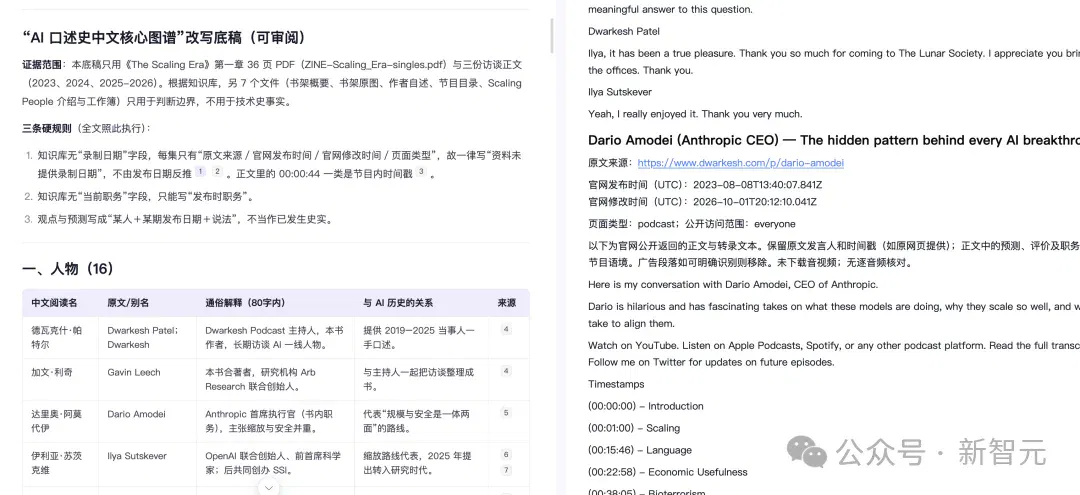
We first uploaded the original first chapter of The Scaling Era: An Oral History of AI, 2019–2025, which Dwarkesh Patel helped write, along with materials such as his podcast about the book.
These sources tell the same story, but not in exactly the same narrative, order or manner.
After the files are uploaded, lumimax automatically organizes the complex entities, events, relationships, facts and evidence in them into a unified semantic system: a knowledge graph.
The relationship graph makes connections between entities visible at a glance. It also includes conflict detection, helping users check different accounts and the conditions under which each applies.
lumimax preserves document structure and relationships between text and images, potentially reducing misunderstandings.
The overall relationship graph connects different chapters, levels, table contexts and relationships across passages. Text and other information become visible, intuitive structured information. Each point corresponds to an entity, whose detailed description can be opened directly in the graph to learn more.
The larger an entity's point in the graph, the more connections it has to other things, and thus the more important it is.
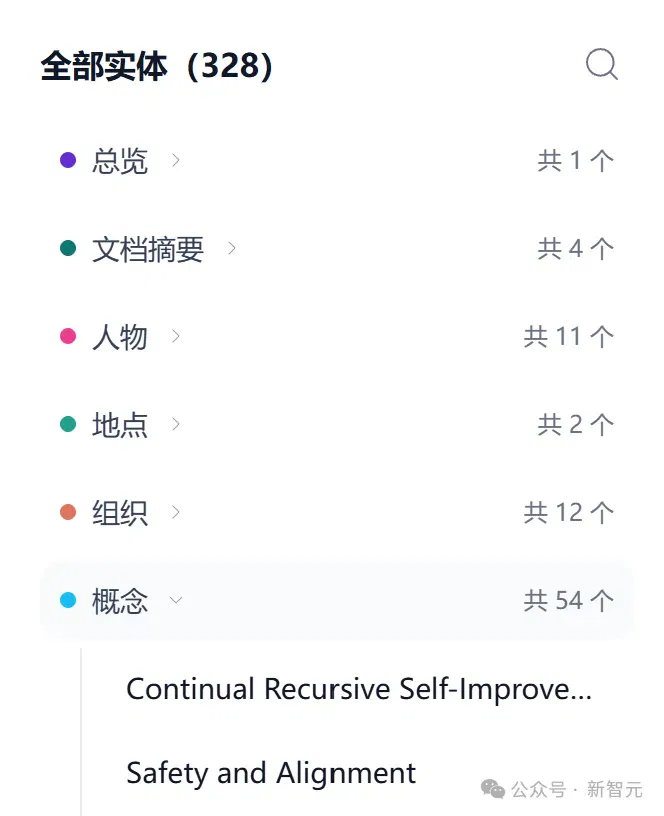
In the entity descriptions, lumimax has also categorized entities and generated an overview, with text search available too:

In knowledge Q&A, lumimax strictly confines knowledge to the newly created knowledge-graph table. Key conclusions can be linked to their original textual evidence, and when supporting evidence is missing, it prompts users to check the answer.
In knowledge-intensive fields such as law, research and finance, this is the evidence-checkable professional productivity that specialists need.
Scenario two: Can AI genuinely compare and analyze technical research across laboratories?
Another test was more challenging.
What key advances have several frontier Silicon Valley laboratories recently made in their technical exploration of recursive self-improvement, or RSI?
Which technical points corroborate or even inspire one another?
The key to this kind of test is not whether AI can repeat papers, but whether it can identify common ground, differences and evidential boundaries across studies. For researchers tracking technical trends over time, organizing knowledge across publications and conducting comparative analysis have practical value.
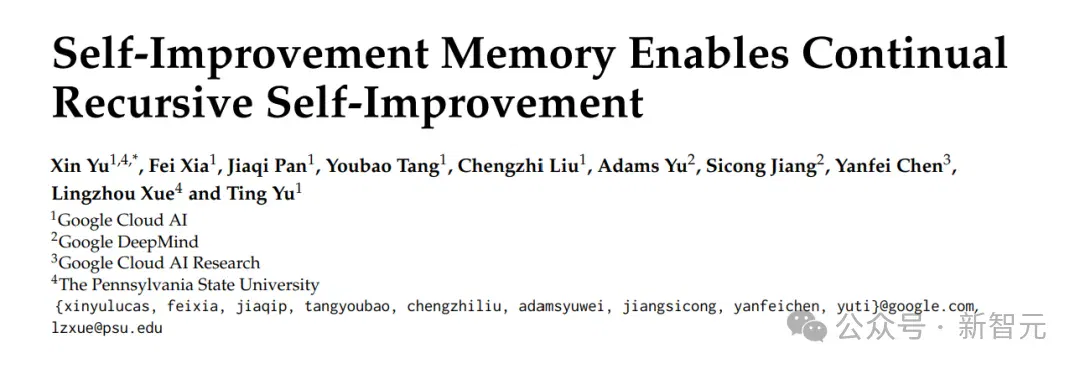
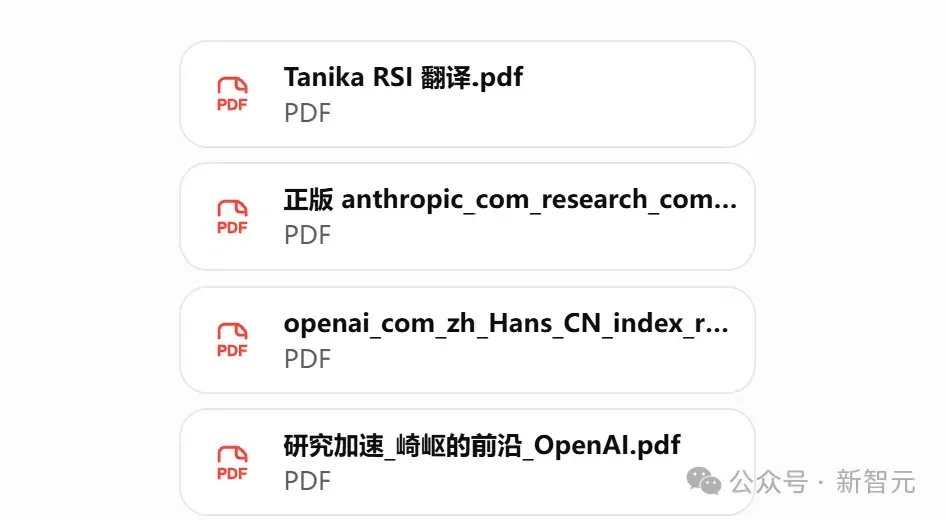
We started with events we knew relatively well. A Google team and collaborators proposed Self-Improving Memory, or SIM, retaining the reasons for modifications, expectations and measured results for a harness optimizer. They study whether optimization can continue across compatible benchmarks or changes in models. This does not directly update the task model's weights.
Anthropic also described dreaming, allowing Claude to learn from experience by organizing and checking memories. Its blog post does not prove that unlimited recursive self-improvement has already been achieved.
The article also selected two OpenAI research-acceleration blog posts, including "Research Acceleration: An Inside View of OpenAI" and "Research acceleration: The jagged frontie", to compare discussions of research workflows. They are not RSI experiments conducted under the same protocol.
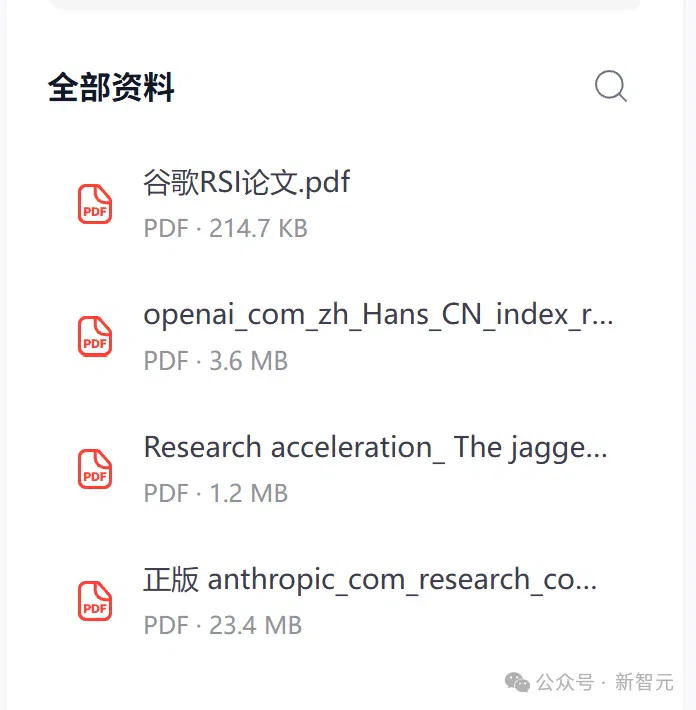
To clarify the laboratories' RSI progress, we uploaded a knowledge base of our own to lumimax.

Once the knowledge base was ready, we could ask some fairly specialized questions.
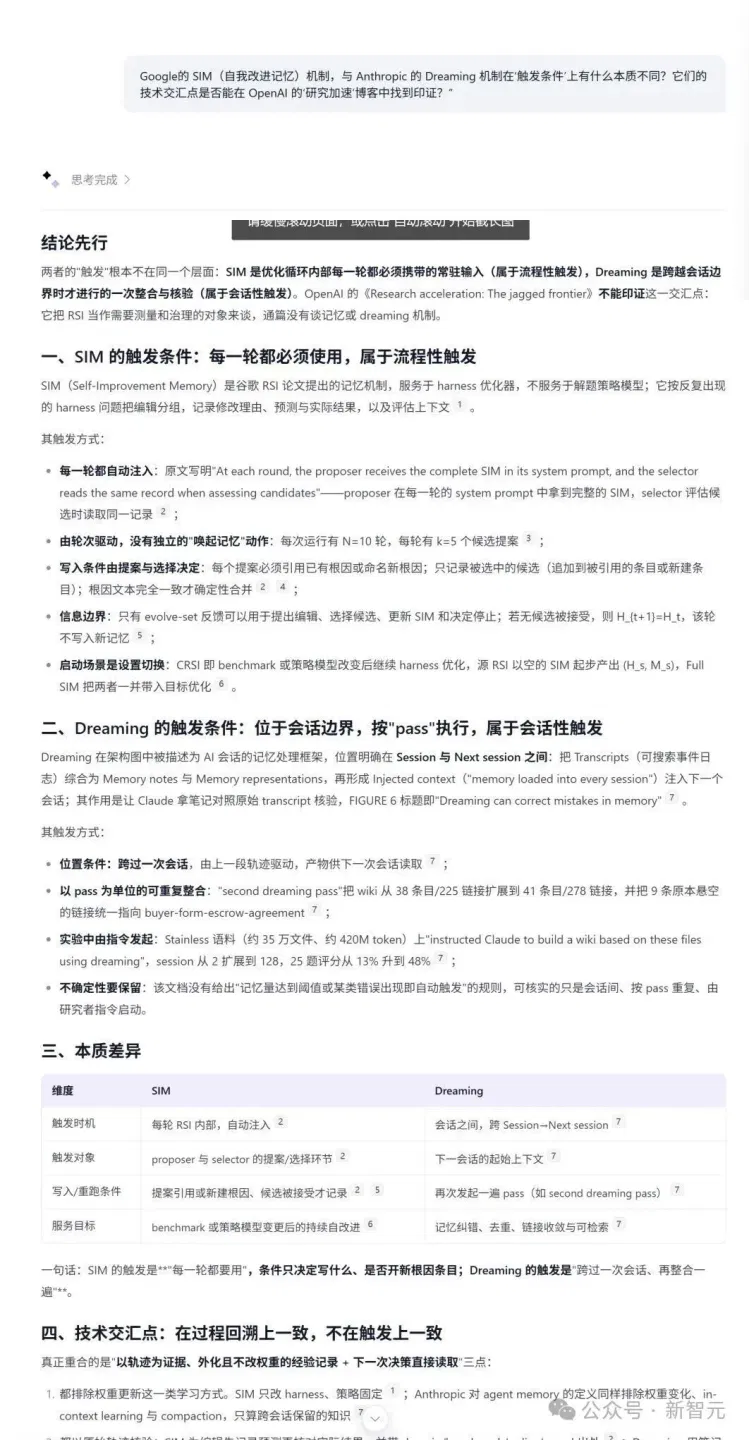
For example, what is the fundamental difference between the triggering conditions of Google's SIM, or Self-Improving Memory, mechanism and Anthropic's Dreaming mechanism?
lumimax answered that their triggers do not operate at the same level at all. SIM is a persistent input that must accompany every iteration inside an optimization loop, a procedural trigger. Dreaming is a consolidation and verification step performed when crossing session boundaries, a session-based trigger.
It also produced a table detailing the fundamental differences between SIM and Dreaming.
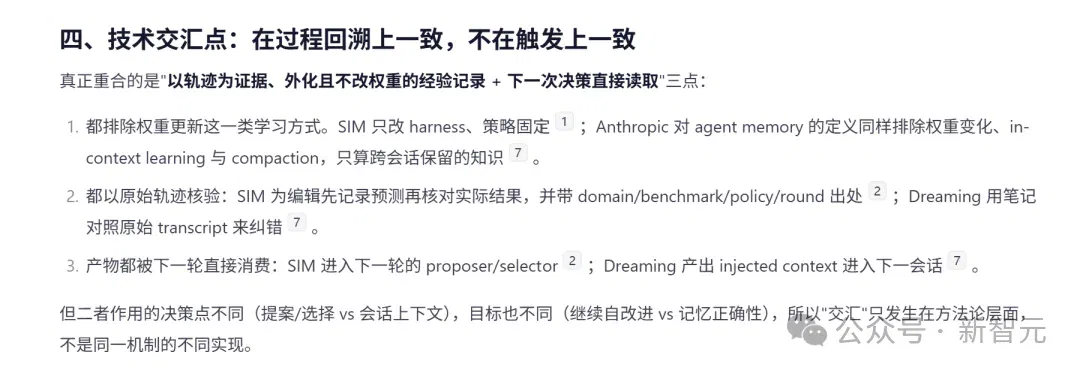
Most impressively, it explained in detail that the two techniques agree in how they revisit the process, rather than in their triggers.
For example, both exclude learning through weight updates, both verify against original trajectories, and both produce outputs consumed directly in the next round.
This is exactly what we most wanted to clarify when reading the papers, and lumimax now pointed it out clearly.
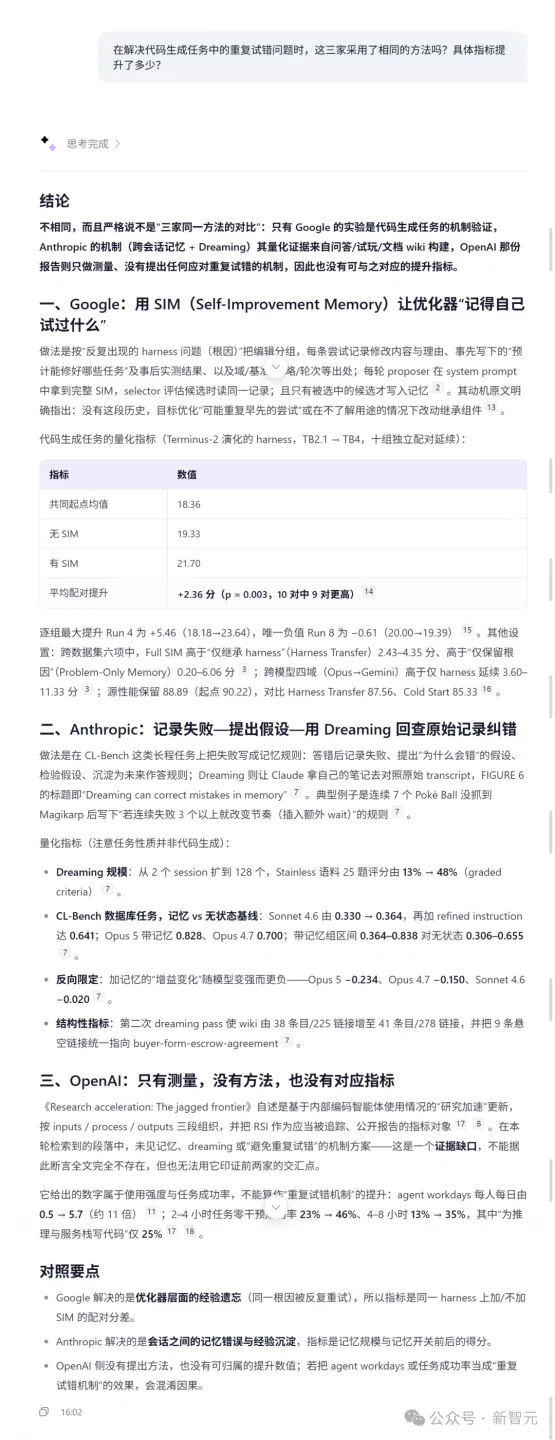
Next, we asked whether the three companies use the same method to address repeated trial and error in code-generation tasks.
lumimax explained in considerable detail that Google uses SIM to let the optimizer remember what it has already tried. Anthropic records failures, proposes hypotheses and uses Dreaming to revisit the original records and correct errors. OpenAI's official blog, by contrast, mentions measurement but not the method.
This knowledge graph contains 311 nodes and 305 relationships for the relevant systems.
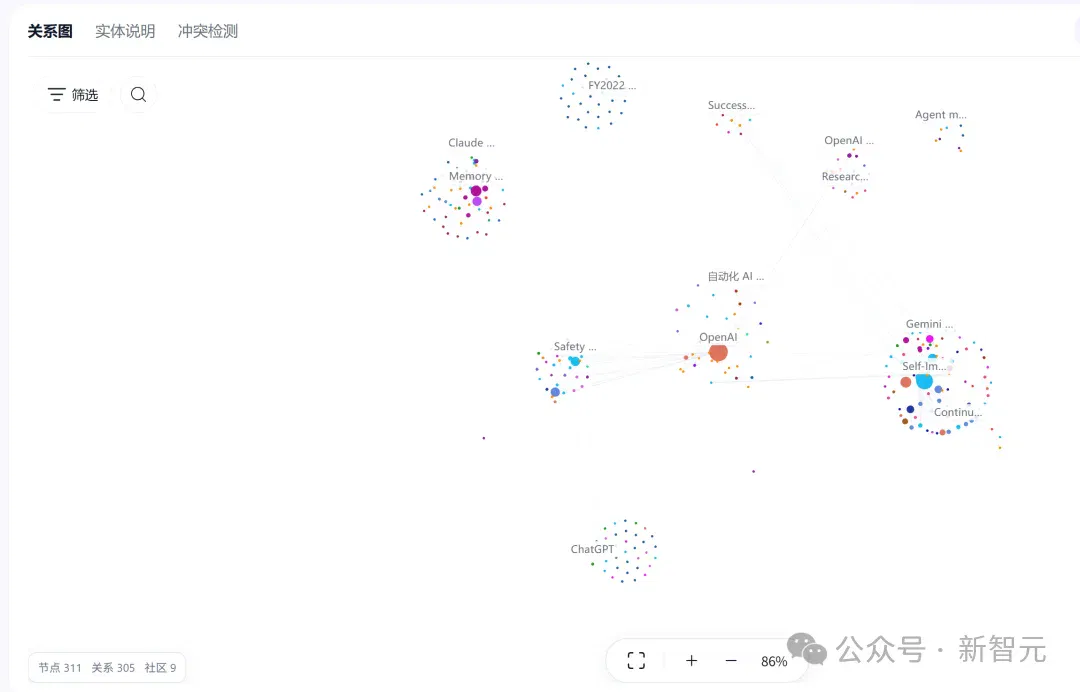
Clicking SIM reveals 17 associated relationships.
Opening the entity description reveals one overview, four document summaries, 11 people, two places, 12 organizations and 54 concepts.
We gave GPT-6 Astra the same request:

Its relationship diagrams are visibly rough: separate, elongated charts rather than a single dynamic relationship graph.
By comparison, GPT-6 Astra's version is much less flexible and detailed than lumimax's graph, and cannot fully show the interrelationships between different pieces of knowledge.

Scenario three: Can it untangle the complex relationships among hundreds of characters in A Song of Ice and Fire?
If the first two scenarios test professional research capabilities, handling expansive fictional worlds and vast amounts of material is a challenge for screenwriters, authors and documentary directors. Readers and viewers often discover gaps that never get resolved.
In this article's literary-material demonstration, lumimax was used to organize character networks, key events and world-building details. No timed test demonstrating completion in one second is provided.
A Song of Ice and Fire, the books behind Game of Thrones, features hundreds of characters and sprawling, complicated family power struggles that often leave readers confused. lumimax organizes obscure character relationships, key events and the vast world setting into a clear map of characters and events.
In the example shown in the article, the system linked 16 different names for the protagonist to the same person. This is not an identity-disambiguation accuracy rate for arbitrary texts.
But lumimax can unravel the threads, interpreting power struggles among families, characters' fates and narrative foreshadowing.
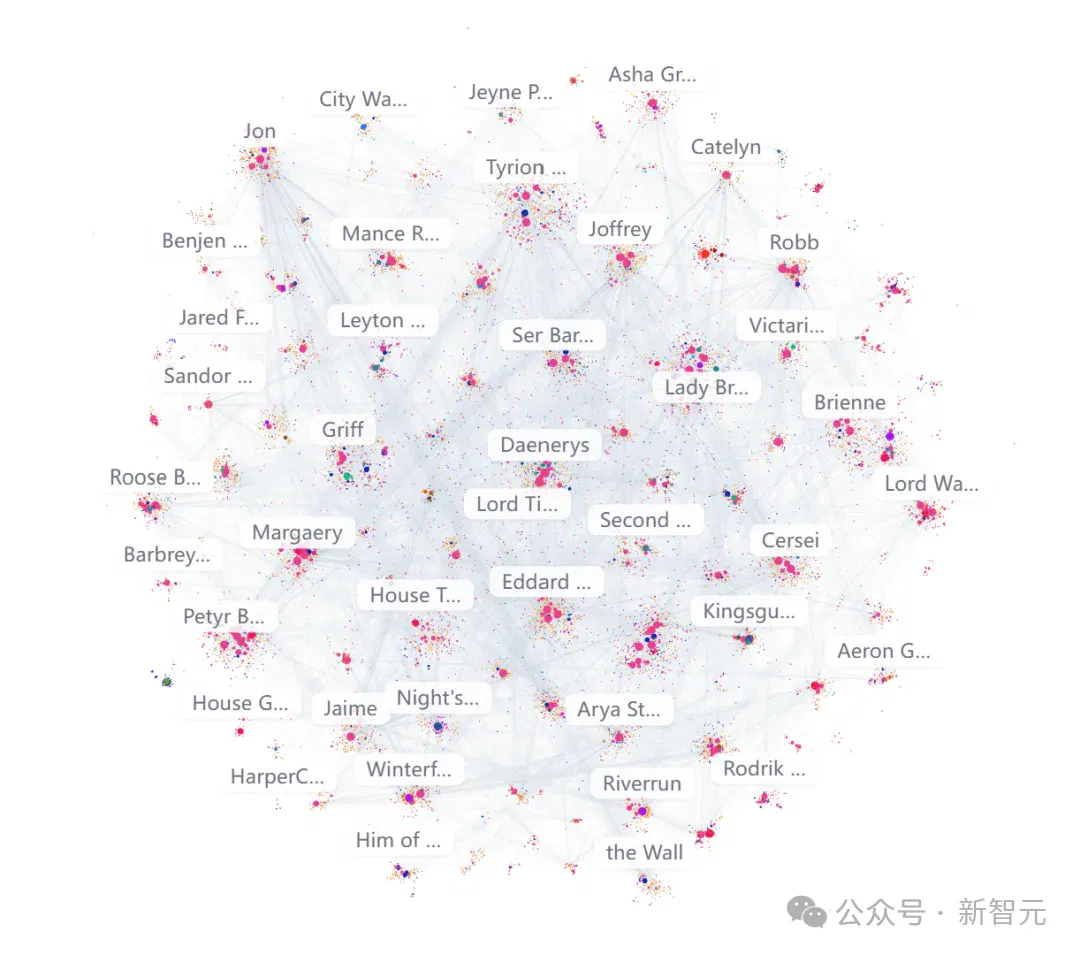
lumimax can explain the questions that arise as you read the books or watch the show, one by one.
For example, why must Jaime bear the reviled name "kingslayer"?
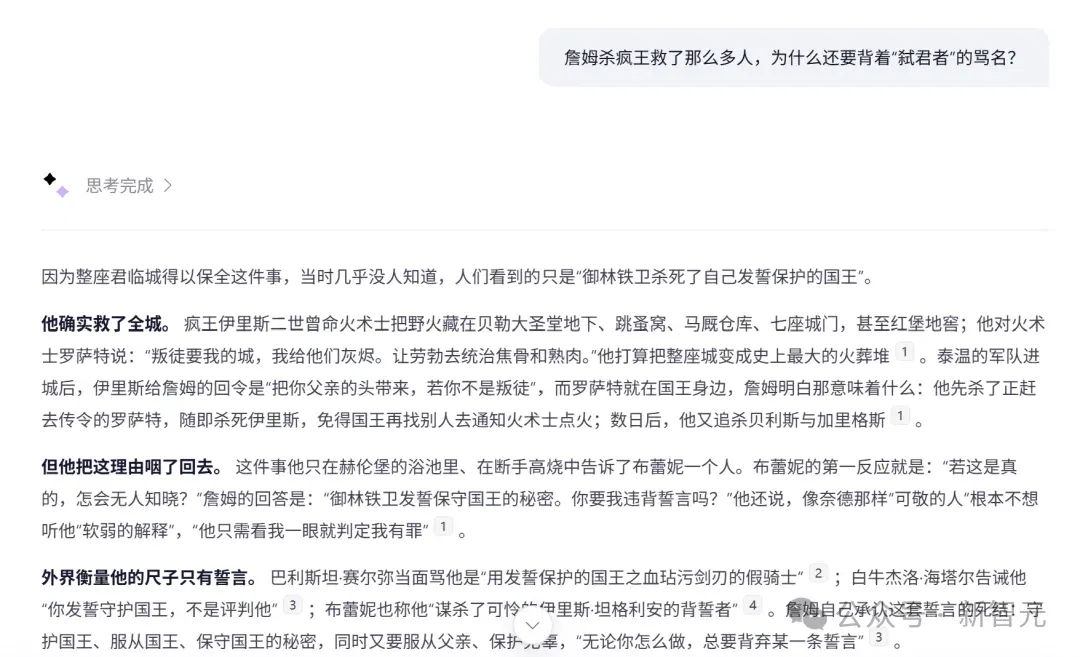
Coincidentally, former Microsoft engineer Robert Scoble had a similar idea and also tested Game of Thrones—
asking who Jon Snow's parents really are.
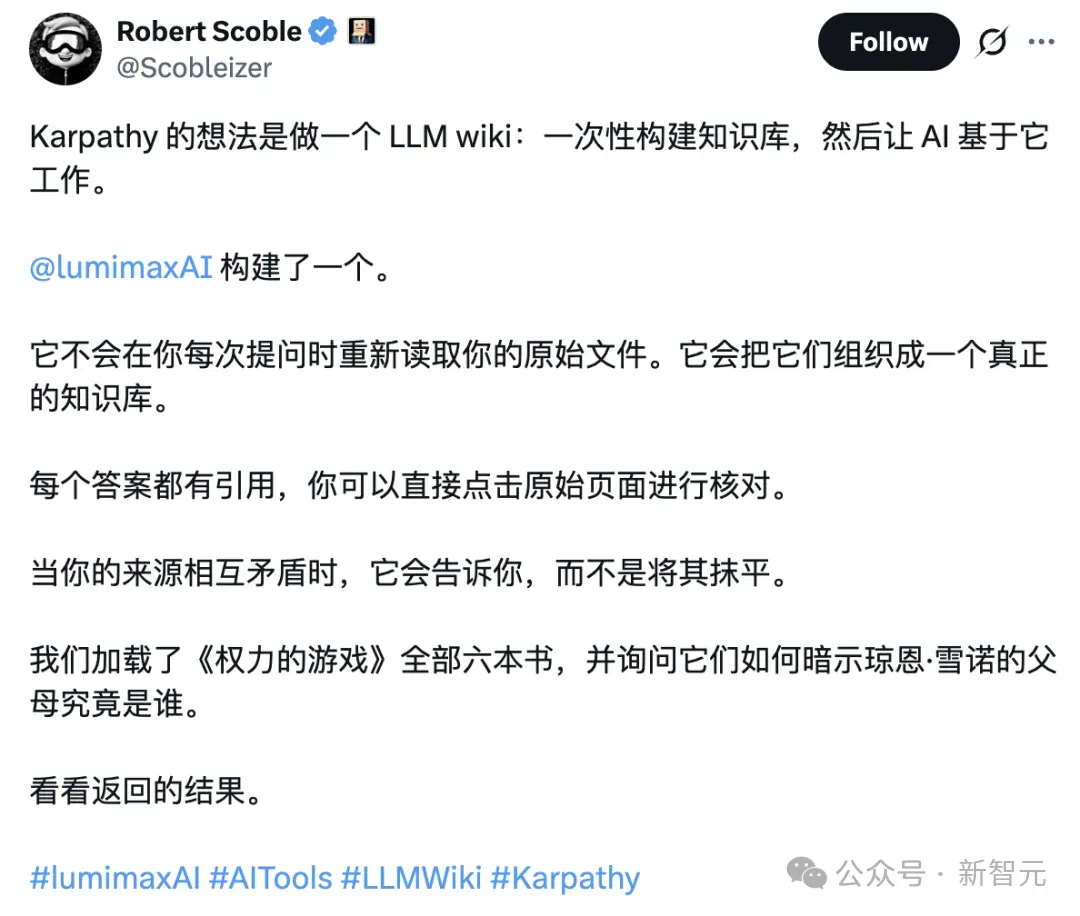

According to his account, lumimax also identified 39 inconsistencies in the books.
In the demonstration above, Robert Arryn is described on different pages as six, seven and eight years old. Whether those differences are truly contradictions still requires checking narrative chronology, editions and context. The tool can help flag potential issues, but cannot guarantee that writing errors will be avoided.
Companies need controllable professional knowledge assets
Moving our perspective from product features to the wider industry, lumimax's arrival is far more than the release of another tool. It is also a key strategic position in implementing enterprise sovereign AI.
Companies using large models face a critical paradox today: general-purpose models are intelligent, but they do not understand my company's business.
If a company chooses to have public-cloud models process core financial data, customer contracts or R&D materials, it needs to check data uses, access permissions and security agreements. Sending such materials to public-cloud models is not required by every form of enterprise AI deployment.
AI sovereignty means the ability of individuals to build and control AI based on their own materials, and of companies to do so based on company materials. A knowledge base is the core context and moat for sovereign AI.
lumimax is ideally positioned to address this strategic proposition.
It supports private enterprise deployment, helping companies accumulate large, continuously updated collections in a secure environment under their own control. It supports resumable uploads and incremental updates, allowing the knowledge collection to keep growing with the business.
Through MCP, it can also connect to external agents such as Doubao and WorkBuddy as an external knowledge brain, providing knowledge retrieval and evidence tracing.
This means companies need not bind every professional knowledge capability to a single AI product. Instead, they can treat their own knowledge bases as independent capability modules connected to different agents and business processes.
Whether company materials are used for training, transmitted to external models or accessed by particular parties depends on the deployment method, service agreements, authorizations and actual configuration. Private deployment or MCP integration does not itself replace those checks.
A decade of accumulated experience:
From computing capabilities to productivity capabilities
Many people are curious about the parent company behind a sophisticated system such as lumimax: where does haimacloud come from?
Founded in 2014, it was one of China's earliest GPU-as-a-service, or GPUaaS, providers. Over the past decade, haimacloud has delivered millisecond-level cloud rendering services to more than 30 million users.
The engineering foundations developed under massive concurrency have given it a capability that is particularly scarce today: running rendering and AI inference within the same scheduling system, truly achieving integrated rendering and inference.
But haimacloud is not competing in foundation models. Its strategic assessment is stark: AI's next phase will inevitably center on agent-driven task execution and value creation.
In the world ahead, with sufficient context and toolchains, agents will drive everything.
To support that ambition, haimacloud has not pursued a breakthrough at just one point. It has worked from the bottom up through a five-layer capability stack, building a moat across the full stack:
1. Computing layer: operating and scheduling large-scale heterogeneous computing resources. This is the foundation of integrated rendering and inference, enabling models to run quickly, reliably and inexpensively.
2. Model layer: moving beyond a single model toward task-driven intelligent routing, seamlessly orchestrating leading state-of-the-art models from around the world. Through post-training, it also develops general-purpose models into proprietary models with domain expertise.
3. Harness layer, the central hub: this is the key to putting agents-drive-everything into practice. Agentic workflows give large models, previously just brains, the hands and feet to work across systems.
4. Data layer: expert trajectory datasets, a resource in very short supply across the industry. Real operational data from industrial production lines and expert feedback feed back into models, creating a production–accumulation–evolution flywheel and competitive barrier.
5. Application layer: multiple parts of the ecosystem flourish. Alongside RunningHub, serving 140 countries or regions; haimaAPI, aggregating more than 350 models; and haimacloud Cloud PC, the new strategic product lumimax fills a crucial gap: its first trusted enterprise knowledge-base infrastructure built for agentic AI.
From squeezing more out of underlying computing resources, to giving AI hands and feet in the middle layers, to completing the data loop at the top, haimacloud has laid both the foundations and the road ahead. The era of empty talk about large models has ended. The practical era of agents driving everything has officially begun.
lumimax's proposed answer is to make knowledge something AI can not only read, but also organize, reason over, verify and reuse continuously. AI may possess vast knowledge, but only when that knowledge can be verified, called upon and accumulated into professional capabilities does it truly become enterprise productivity.
The product trial channel described in the original article is open, with a stated offer of 5,000 credits upon registration. Eligibility, amounts and usage rules are subject to the current product page.
This article comes from Xinzhiyuan. Author: Aeneas David.
Related topics
After reading
Join the AINRK community
Read how to join the community and connect with people working in AI.
Related articles
Continue reading related topics and articles in this category.
海马云谈 RunningHub:算力调度、创作工具链与数据如何配合 (opens in a new tab)
海马云围绕 RunningHub 介绍GPU池化、场景化模型后训练、专业软件连接及创作者工作流沉淀,主张从模型调用走向完整生产交付。访问增速、成本改善和留存数据为报道引用及公司披露,不能据此保证所有AI应用的商业结果。
13 组横评综合性能第一!RunningHub 发布 RH Upscale,瞄准视频超分「不变样」难题 (opens in a new tab)
海马云旗下RunningHub发布自研生成式视频超分模型RH Upscale,在13组横向评测中以综合得分0.539位列第一,通过内容保真约束下的时空联合重建与五档模式设计,解决视频超分中"放大而不改内容"的难题。
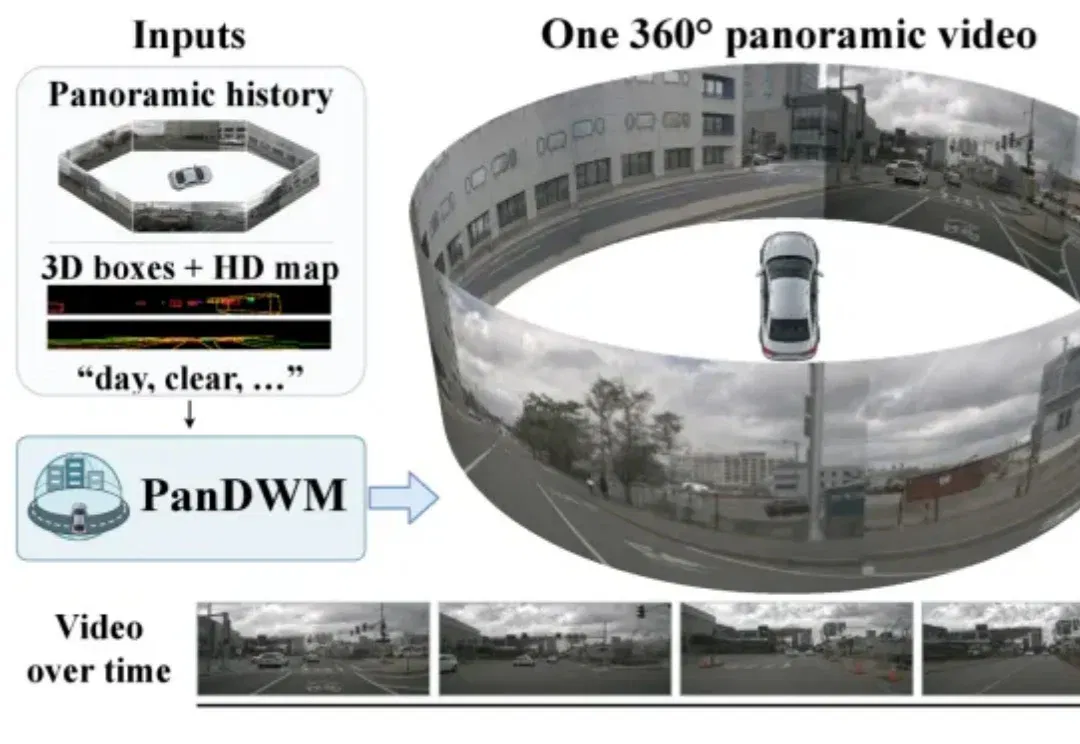
PanDWM generates panoramic driving video, then lifts it into 4D Gaussian scenes for new viewpoints (opens in a new tab)
Peking University's PanDWM maps six cameras to a panoramic strip, generates video with four-step causal diffusion, then lifts and fuses Gaussians for novel views. Its 0.5 and 1.96 s/frame timings use H100 and A40 GPUs; full 4D processing and refinement cost extra, with drift and occlusion limits.

Google's Gemini API CLI Gives Existing Agents Models, Media and Managed Research Tools (opens in a new tab)
gemini-api-cli exposes Gemini models, media generation and managed agents through a stateless Go binary with schemas and offline checks. It uses developer API billing; subscription allowances, promotional credits and paid balances are distinct, with eligibility and version limits.
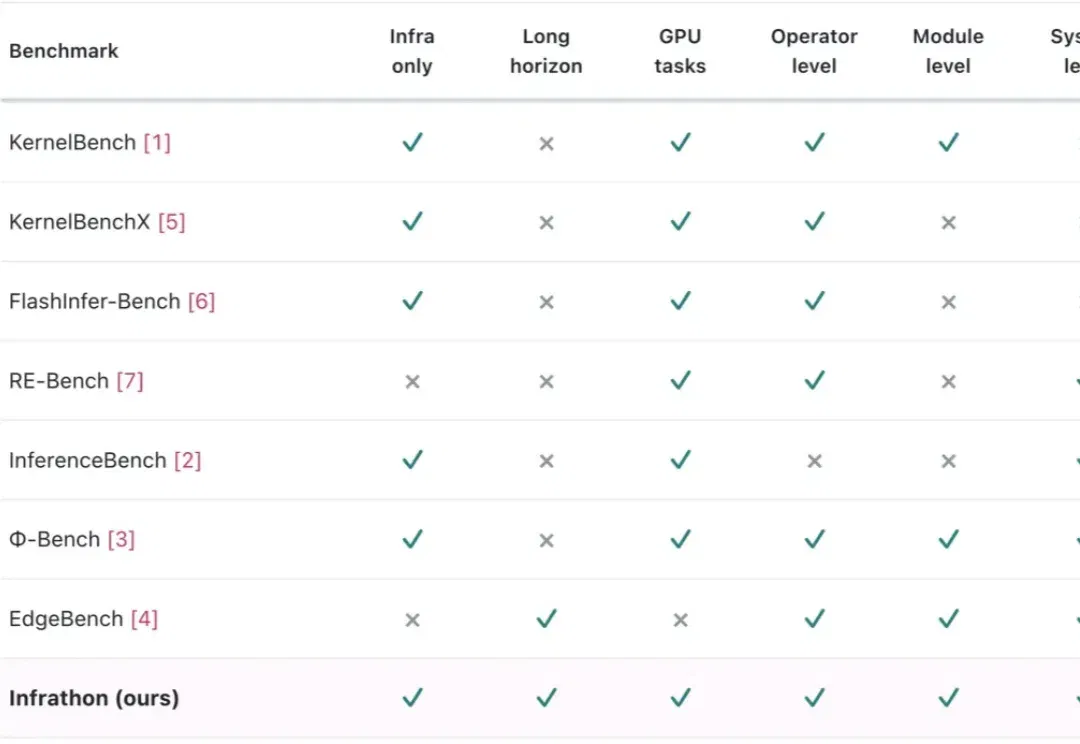
Infrathon tests agents' sustained optimization over 12–24 hours on 25 AI infrastructure tasks (opens in a new tab)
Infrathon spans 25 operator, module and system tasks. Across six models, 150 runs and over 10,000 GPU-hours, Claude Opus 5.5 leads with a 91.2 mean rank score, and 135 runs improve in their second half. Benefits vary by task and model; the benchmark does not establish general RSI.