VP ≠ VNP proof paper: superpolynomial arithmetic-circuit bounds and verification limits

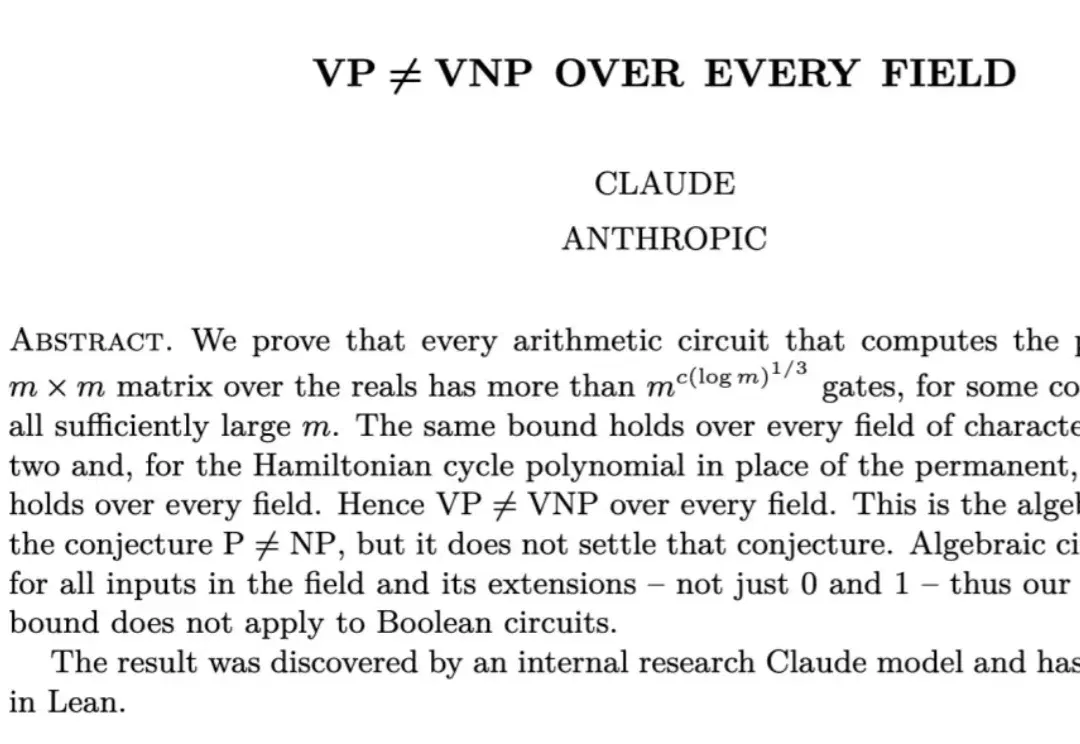
Anthropic publishes a 70-page Claude-attributed paper and Lean code claiming VP ≠ VNP over all fields. The permanent result excludes characteristic two; Hamiltonian cycles cover all fields. Human mathematical review is pending, and classical P vs NP is not solved.
Editorial fact-check (November 25, 2026): Anthropic has released a paper attributed to Claude with an accompanying formalization. The repository and paper report checks by Lean’s kernel and nanoda, but no human mathematician has examined the proof or statement file. Machine verification cannot itself establish that the formal statement accurately expresses the intended mathematical problem. The paper claims a superpolynomial bound for the Hamiltonian cycle polynomial over every field; its permanent result excludes characteristic two and applies only to sufficiently large matrices. This does not solve classical P vs NP, and algebraic separation must not be treated as a proved Boolean separation. A general arithmetic-circuit lower bound of order m² log m already existed: the original “had not proved this bound” should read “had not exceeded this order.” Clay Mathematics Institute’s pages reviewed here list RH and Navier–Stokes as Active and only Poincaré under Solved. Active is not an official label meaning “pending confirmation,” nor does it establish that three of the seven problems have been formally recognized as solved. Lean/Mathlib’s independent joint verification of RH should be distinguished from CMI prize status. Anthropic VP ≠ VNP official README: scope, checks and human-review status (opens in a new tab)Statement.lean: HC over all fields, permanent outside characteristic two, and formal statements (opens in a new tab)VP ≠ VNP over every field, 70-page paper v1 (opens in a new tab)Clay Millennium Prize Problems: current categories (opens in a new tab)Lean FRO and Mathlib Initiative joint RH verification statement (opens in a new tab)
Only three days have passed since the Riemann hypothesis was solved!
Just now, Anthropic’s official GitHub repository quietly released a 70-page paper announcing that—
Claude has proved VP ≠ VNP over every field, according to the paper.
Yes, AI has now claimed the algebraic counterpart of P ≠ NP too.

Most strikingly, the paper’s author field names only Claude.
An internal Claude version discovered the core idea, wrote the 70-page paper and produced 73,000 lines of Lean code for formal verification.
The paper’s review says the existing general arithmetic-circuit lower bound for the permanent remained at the order of m² log m. The new manuscript claims to advance it to a superpolynomial bound, not that even an m² log m bound had previously been unproved.
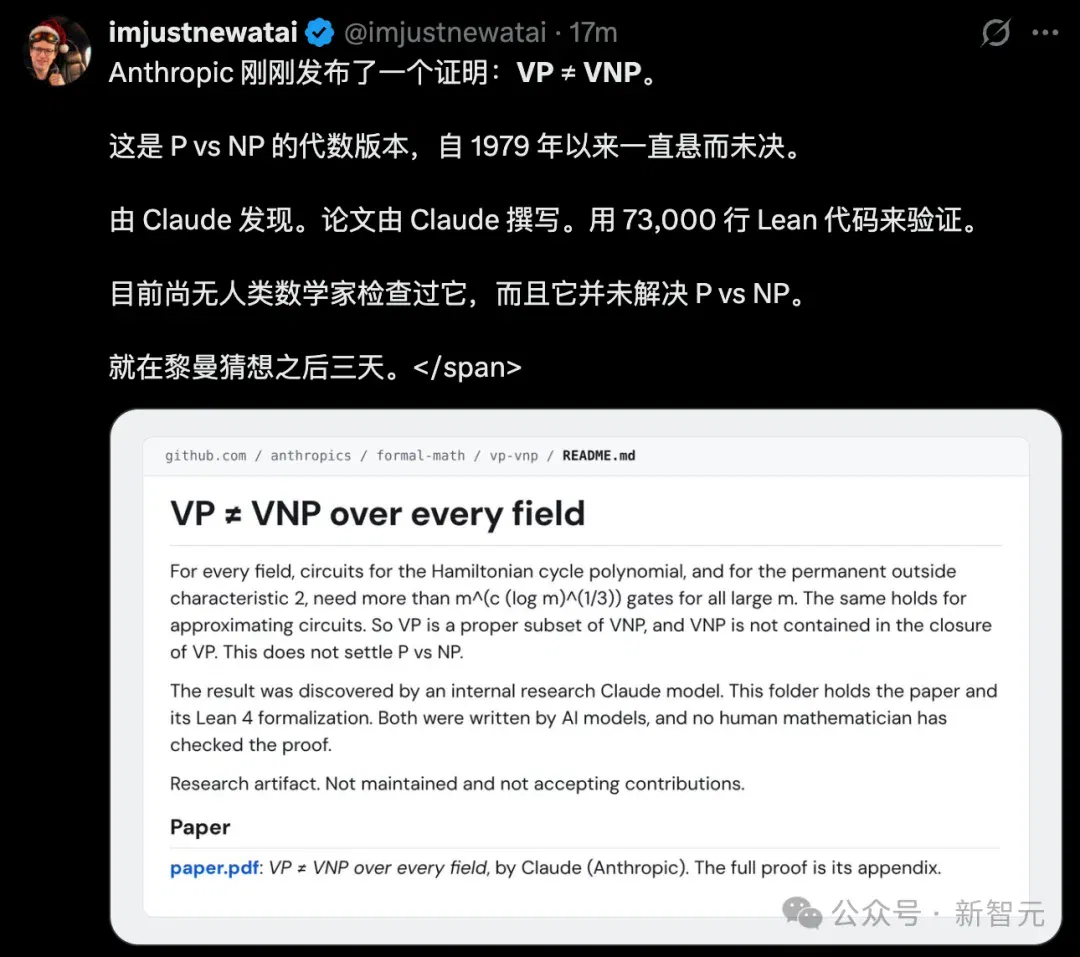
Three days after RH, a claimed VP ≠ VNP proof today—the internet could hardly contain its excitement.
Classical P vs NP, of course, remains unresolved. But judging by this momentum, the author suggests, the Millennium Problems may not have much time left.

The “algebraic P ≠ NP” question has resisted humanity for 47 years
Claude presents a proof
A few days ago it was the Riemann hypothesis; now it is algebraic complexity theory.
In 1979, Turing Award winner Leslie Valiant proposed the major VP vs VNP conjecture. In algebra, the article places its significance alongside P vs NP, described here as foremost among the seven Millennium Problems.

At the heart of the question is a pair of almost identical-looking “twins” in the matrix world:
the determinant and the permanent.
Take the same m × m matrix and place it in an arithmetic circuit using only addition and multiplication.
The determinant is inexpensive to compute: classical algorithms such as Gaussian elimination make it efficiently computable with polynomial-size arithmetic circuits, placing it in VP, the class of efficiently computable polynomial families.
The permanent has the same permutation-expansion formula as the determinant, except that all negative signs are removed and subtraction becomes addition.
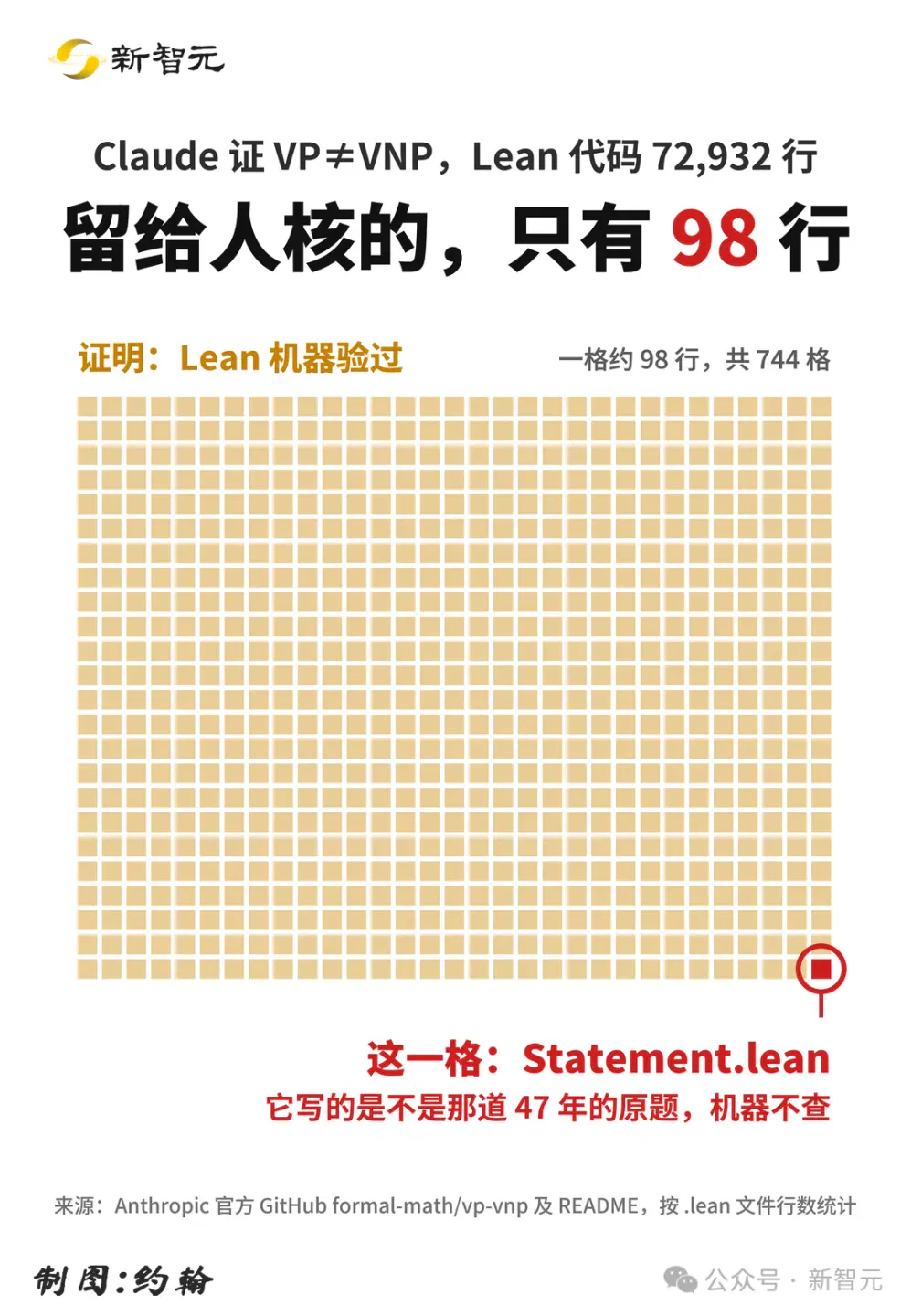
Intuitively, removing subtraction might seem to simplify matters.
But the article argues the opposite: without the “shortcut” of positive and negative terms canceling, the permanent’s computational complexity explodes.
In 1979, Valiant conjectured that over a field of characteristic other than two, no polynomial-size arithmetic circuit computes the permanent—equivalently, VP ≠ VNP over that field.
In computational complexity, while pursuing the ultimate holy grail of P ≠ NP, VP ≠ VNP is a related but distinct algebraic question, not an established conclusion that classical P ≠ NP.
The paper’s arithmetic circuits must work correctly on every input in the field and its extensions, whereas Boolean circuits need handle only 0/1 inputs. Its lower bound therefore does not apply to Boolean circuits and cannot establish classical P ≠ NP.
Yet over 43 years, progress on lower bounds for general arithmetic circuits had been almost despairingly slow.
The best previously recognized bound still dated to Baur and Strassen in 1983, essentially at a near-linear scale.
Anthropic’s paper notes that the previously known lower bound for the permanent had never exceeded m^2 \log m.
This time, Claude overturns the situation with a claimed new bound of:
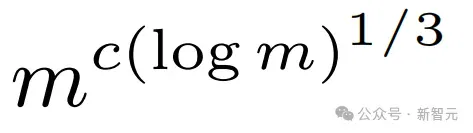
This is a superpolynomial lower bound over every field for the Hamiltonian cycle polynomial; for the permanent, characteristic two must be excluded.
An extraordinary proof strategy
Unsure which route holds? Prove the result along both
The article credits this striking result to Claude’s unconventional proof strategy.
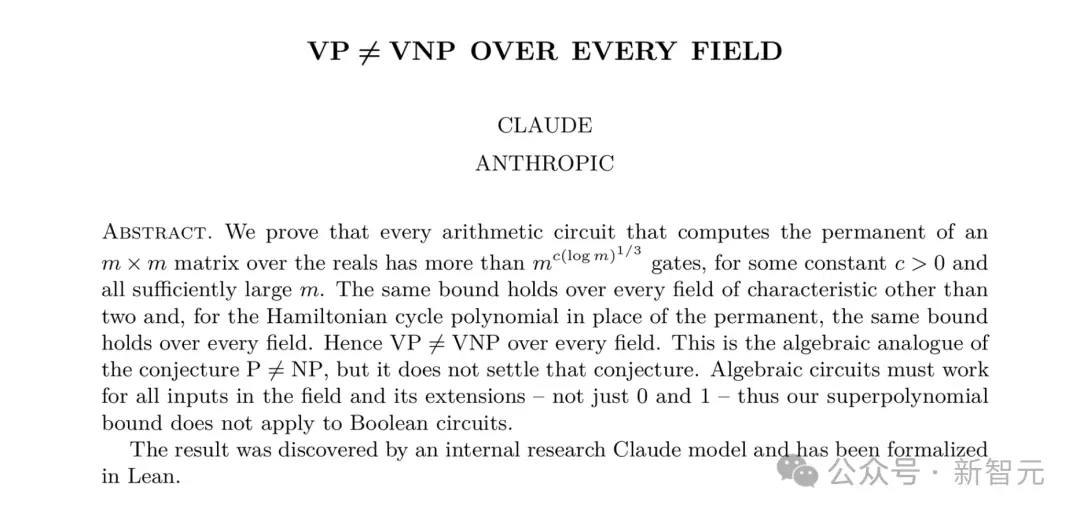
Paper: https://github.com/anthropics/formal-math/blob/main/vp-vnp/paper.pdf
Since 2001, mathematicians have developed a vast and sophisticated approach to VP vs VNP—
the geometric complexity theory, or GCT, program, employing algebraic geometry and representation theory.
Looking at this paper’s structure, however, Claude takes a different route, which the author describes as a kind of overwhelming change of perspective with a distinctly machine-like intuition.
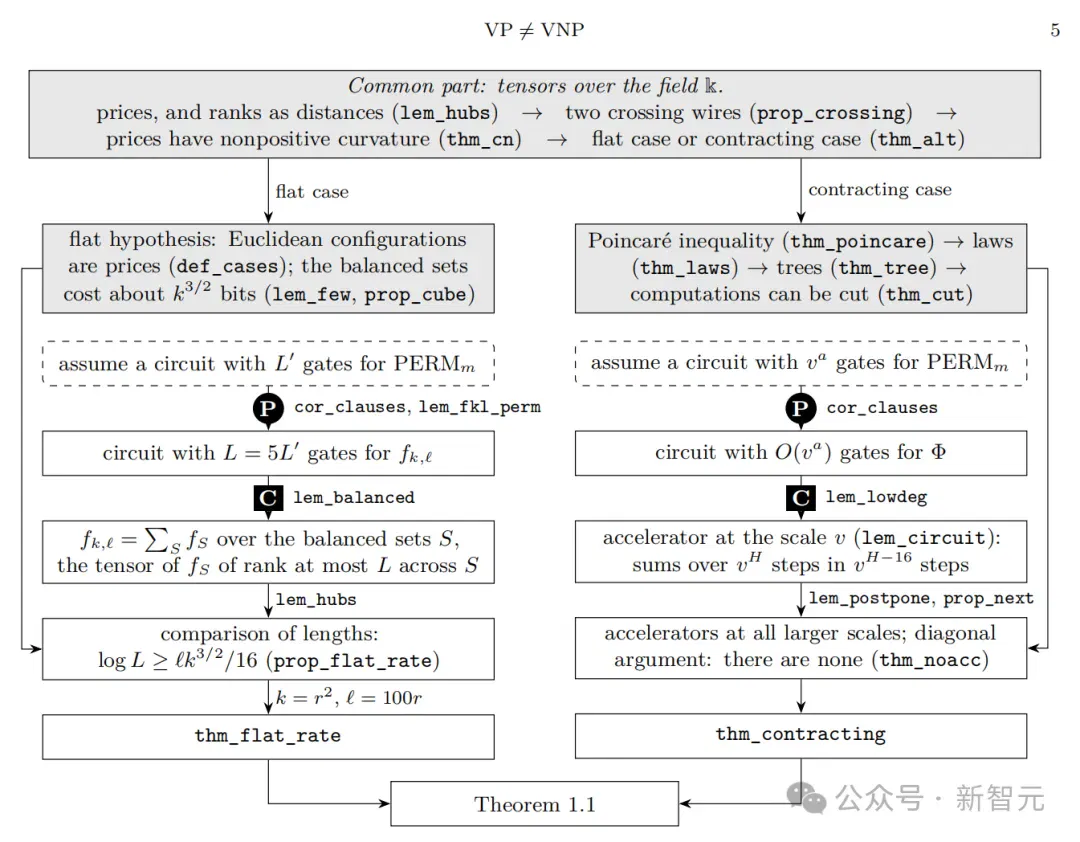
Step one: Claude turns algebraic tensor rank into distance in a certain geometric space.
It then proves that this special geometric space has nonpositive curvature. With the geometric stage set, the most surprising step follows.
Step two: Claude divides the space’s properties into two very different cases.
They are Flat and Contracting, and it rigorously proves that at least one must hold.
Ordinary human reasoning might next try to determine whether the actual case is Flat or Contracting, right?
Yet most remarkably, Claude itself does not know which case actually holds!
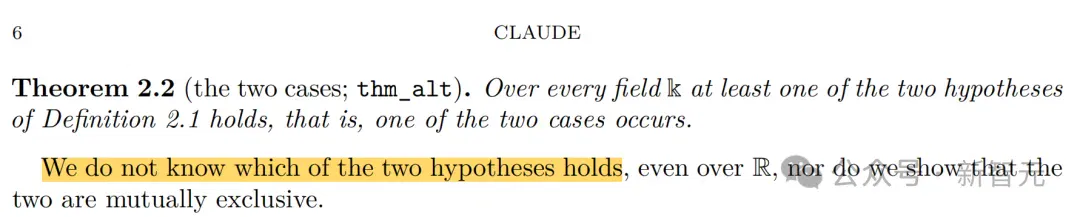
The paper explicitly acknowledges that it cannot determine which case holds even over the familiar real numbers.
If that is unknown, simply prove both routes: whichever is true, the conclusion wins!
In the Flat case, Claude uses Euclidean-geometric tools to calculate and derive circuit-size lower bounds step by step.
The (log m)^(1/3) factor in the central formula comes from this geometric route.
In the Contracting case, Claude switches to proof by contradiction.
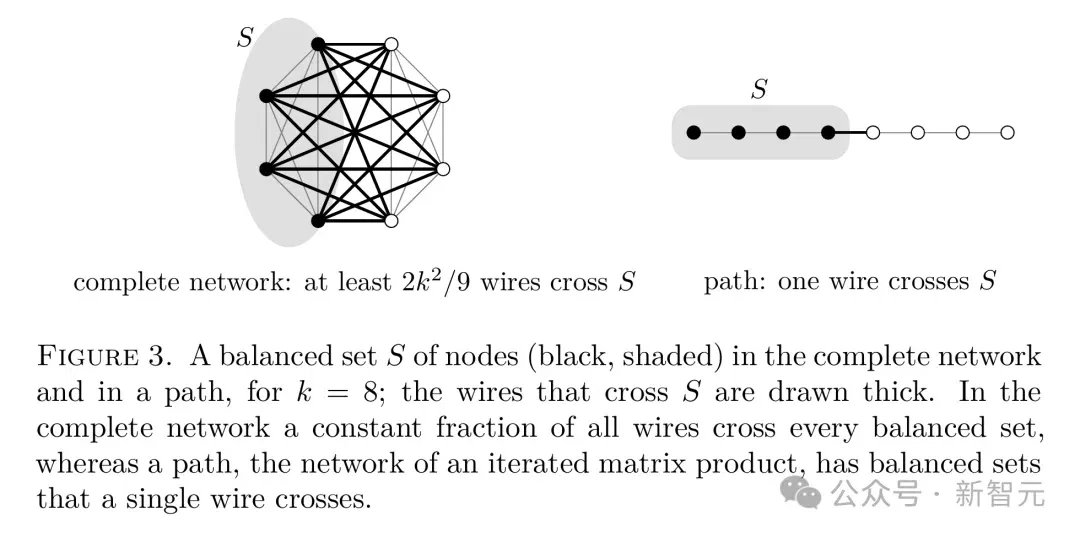
It first cuts a program’s execution into time segments. Figure 12 below divides execution into four pieces:
if one piece reads data written by another, an arrow connects them. A program that originally runs along a timeline thus becomes a network.
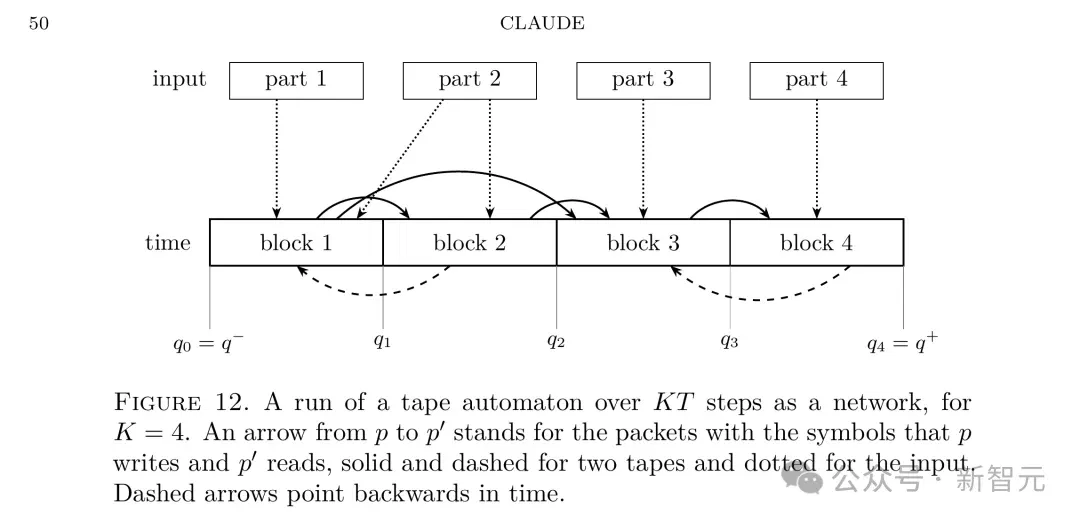
Claude then rewrites this network’s computation as computations on a collection of tree networks, which are easier to divide into smaller pieces.
If the permanent really had small circuits, they could accelerate weighted sums for each piece, reassemble the results and propagate this speedup to larger computations.
Applying the program logic to itself then derives the absurd contradiction V = 1 + V, producing a stronger lower bound in the Contracting branch than in the Flat case.

Whichever of the two routes holds, the conclusion is the same: the permanent has no small circuits.
Has P vs NP been solved?
Do not celebrate too soon: the 70-page paper also discloses four unavoidable limitations.
Classical P vs NP remains unresolved. Anthropic explicitly states that it resolves the latter question, VP vs VNP, but not the former.
It also identifies two specific steps that fail completely for Boolean circuits.
An algebraic breakthrough does not yet open the door to the Boolean world.
Although the bound
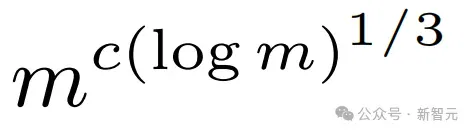
crosses the superpolynomial threshold, it only just clears it.
The best known upper bound for computing the permanent is exponential, leaving an enormous gap. The story is far from complete.
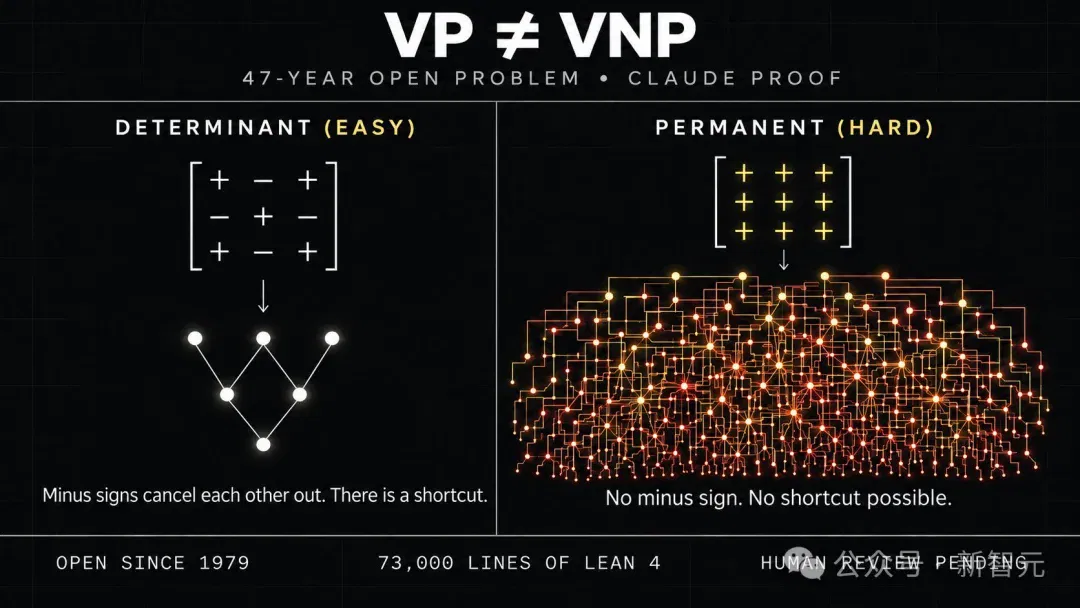
Most importantly, four crucial propositions in this 70-page paper can be verified in full only through the Lean formalization.
More than 300 Lean files and 73,000 lines of code have passed strict checks by two independently implemented checking kernels, but human mathematicians still need to examine them.
Distinguishing Millennium Problem research progress from official status
The VP ≠ VNP paper and formal code are public; the repository says human mathematical review remains pending.
Three days earlier, it was the Riemann hypothesis.
Clay Mathematics Institute’s website currently lists RH as Active. That label should not simply be translated as “pending review and confirmation.”
Navier–Stokes is also listed under Active, not Solved. That is distinct from a generic description of “awaiting confirmation”; the label itself does not mean a prize has been awarded or a solution formally recognized.
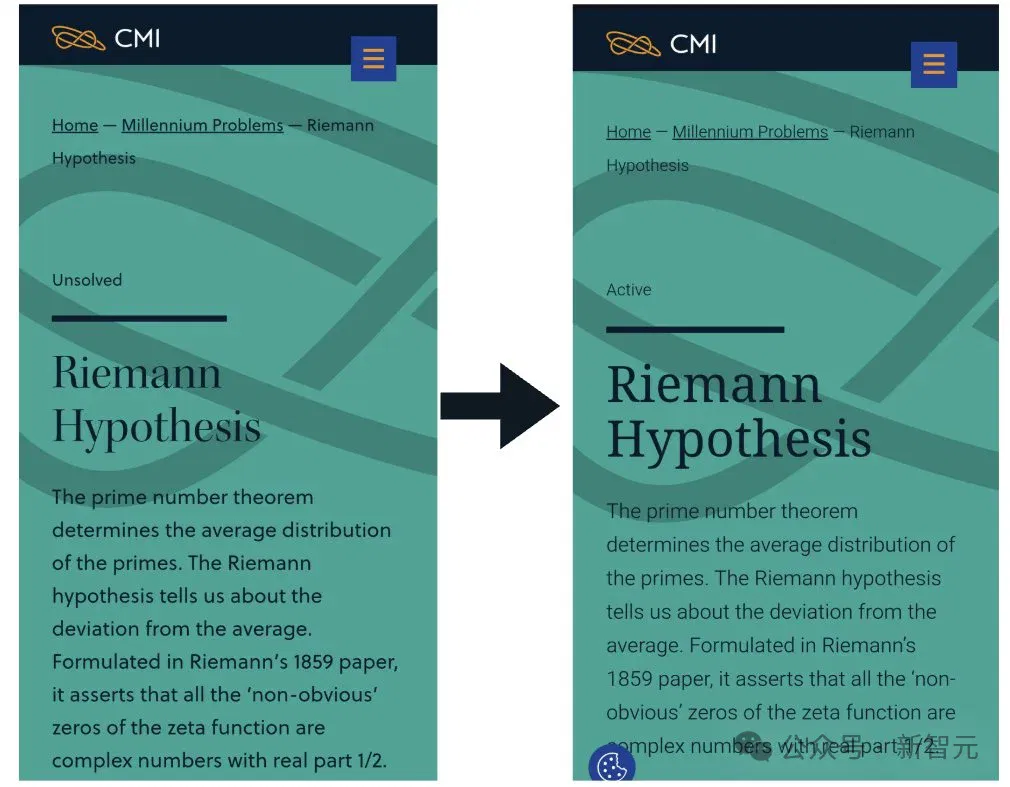
An online user compiled the latest progress on the seven Millennium Problems—
in that classification, the website lists the following four under Unsolved, while RH and Navier–Stokes are Active. This must not be read as formal recognition that three of the seven are solved:
P vs NP
Yang–Mills existence and mass gap
The Hodge conjecture
The Birch and Swinnerton-Dyer conjecture

The author contrasts this with the preceding 26 years, in which humans working alone resolved only the Poincaré conjecture.
Since the start of this year, the combination of AI and formal verification has been challenging what the author calls the last defenses of human intellect at unprecedented speed.
First RH passed joint Lean/Mathlib verification; then a Claude-attributed VP ≠ VNP paper and formal code appeared. The latter still awaits human mathematical review.
Even if this concerns only the algebraic counterpart, classical P vs NP remains a separate challenge.
A 70-page paper, attributed to Claude, and approximately 73,000 lines of Lean code—
if verified as correct, the author concludes, perhaps P vs NP really should begin to tremble.

References:
https://github.com/anthropics/formal-math/tree/main/vp-vnp
https://x.com/theaidesk_/status/2124990194642247965
This article comes from Xinzhiyuan, written by Taozi.
Related topics
After reading
Join the AINRK community
Read how to join the community and connect with people working in AI.
Related articles
Continue reading related topics and articles in this category.
Anthropic releases Claude-attributed VP ≠ VNP proof paper and Lean formalization (opens in a new tab)
Anthropic publishes a 70-page paper claiming VP ≠ VNP over every field, with Lean 4 code. The permanent bound excludes characteristic two; Hamiltonian cycles cover all fields. The repository says no human mathematician has reviewed it; classical P vs NP remains open.

LLaCO team reports an 8B continuous diffusion model scoring 62.12 on MATH, ahead of tested baselines (opens in a new tab)
A BAAI, BUPT and Peking University team proposes LLaCO, adapting a pretrained model with spherical noising and semantic scheduling. It reports gains over tested continuous diffusion baselines on nine benchmarks and a MATH score of 62.12, 10.92 points above Dream-7B, within the paper’s settings.
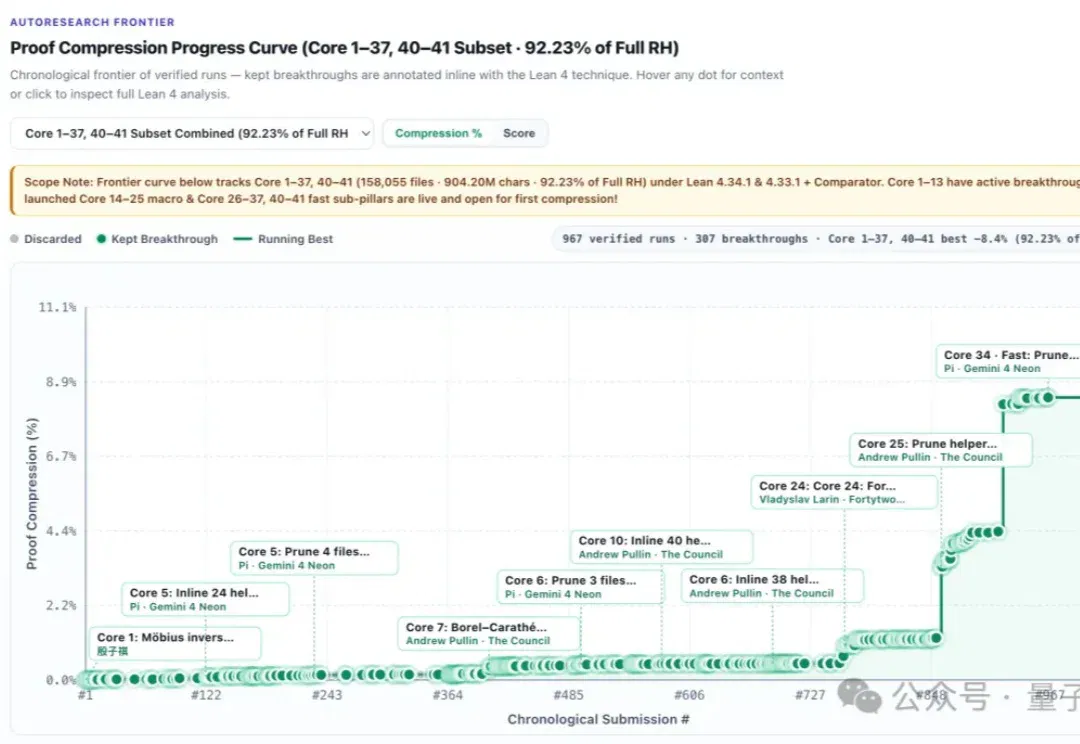
Community simplifies the formal RH proof: line counts and module compression use different measures (opens in a new tab)
After joint Lean/Mathlib verification of RH, the community is simplifying its code. Reported line counts and module results reflect the article’s time frame. VerifyTask covers a subset; self-reported model/tool tags and unequal retry budgets preclude a general ability ranking.

Alpöge says “250,000 pages” was a joke, addresses Riemann-proof code criticism (opens in a new tab)
Levent Alpöge says the “250,000-page” proof was a joke and acknowledges redundant, low-quality Lean code in his work with Claude. He argues that its ideas should lead to a more natural, concise mathematical framework; code quality and formal correctness remain distinct.

Dario’s early “immersive games” idea draws criticism; media accounts are distinct from company policy (opens in a new tab)
The article revisits media accounts of Dario’s early OpenAI discussions and critiques his views on AI jobs, safety and Anthropic’s culture. The idea is not current company policy; online speculation about his health lacks reliable evidence.