Suisheng raises tens of millions of yuan for Memoket wearable AI memory
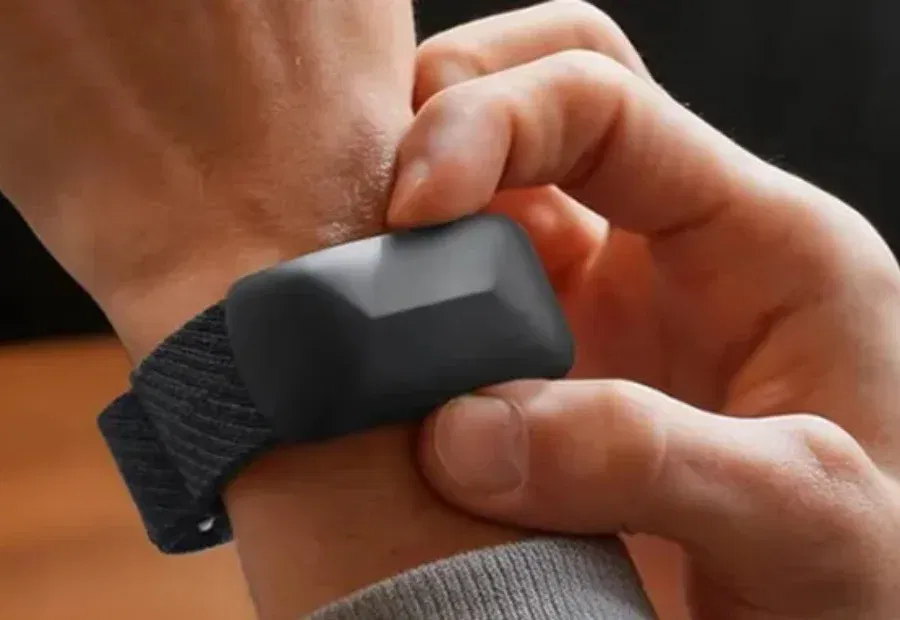
Zhidx interviews Suisheng founder Wang Shiyuan about the Memoket Gem wristband, KITE long-memory engine and software subscriptions. Funding, battery life, early user results and benchmark figures are company statements; long-term use remains to be tested.
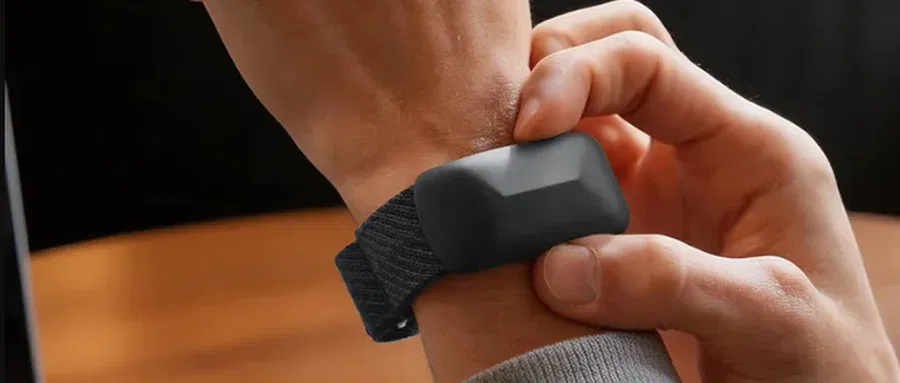
'Memory is intelligence.'
Zhidx reported on November 17 that Shenzhen AI-memory hardware startup Suisheng Technology today announced a new funding round worth tens of millions of yuan.
Suisheng was founded in 2025 by Wang Shiyuan, former CMO and China president of Anker Innovations. It had previously secured several million US dollars in angel funding from Sequoia China and Anker Innovations co-founder Gao Tao. Corporate registration records show that the new funding introduced investors including NexTide Capital and Alpha Startup Fund.
In early September, Suisheng's first product, Memoket Gem, officially went on sale during IFA 2026 in Berlin, winning an IFA Innovation Award. The 11-gram AI-memory wristband offers four wearing options: a standalone wristband, alongside an Apple Watch, as a pendant, or with a clip.
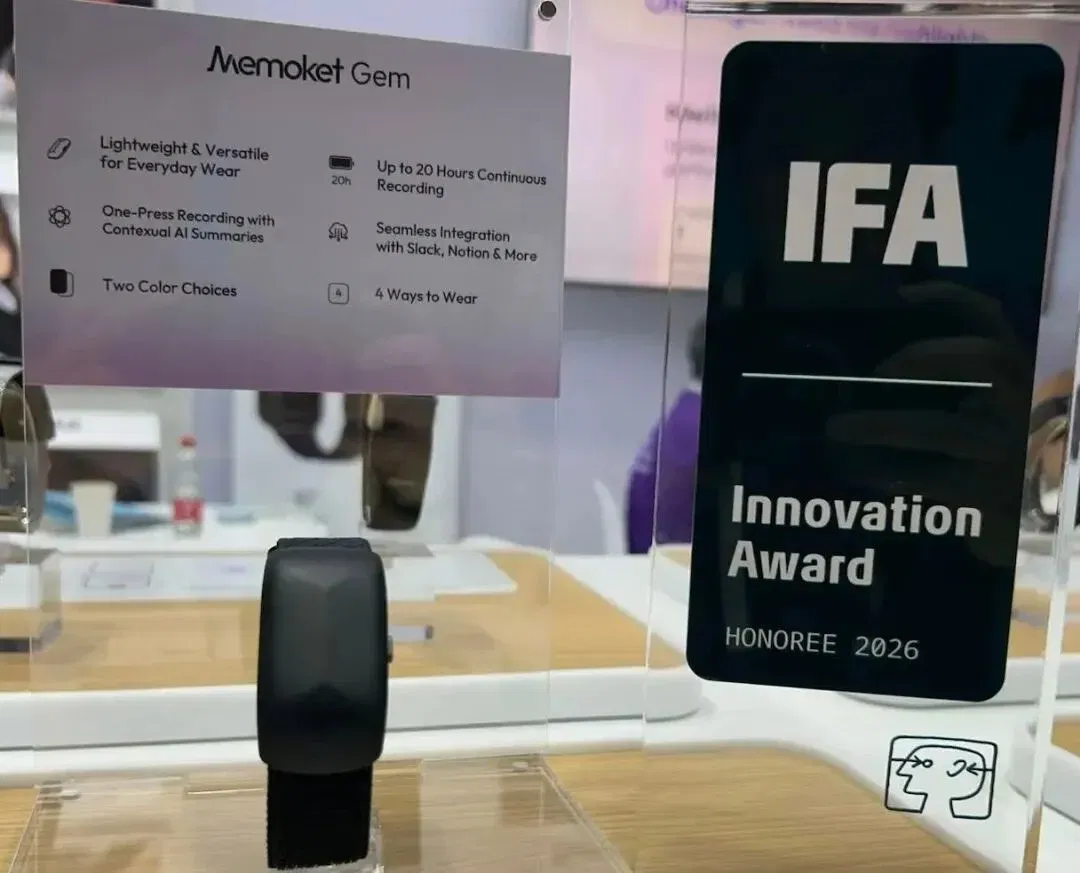
Unlike common AI recording devices, Memoket Gem focuses on 'long-term memory'. Users cannot remember every detail of their many daily conversations, meetings and spontaneous ideas. Memoket Gem acts as external memory with automatic organization: its 20-hour battery life lets users record at a press of a button, capturing conversations in the physical world. It then structures that material by time, person and topic, turning it into personal context available whenever needed.
Behind this is Suisheng's understanding of 'memory is intelligence': the more deeply AI understands someone's experiences, preferences and circumstances, the better it can help in ways that fit their needs.
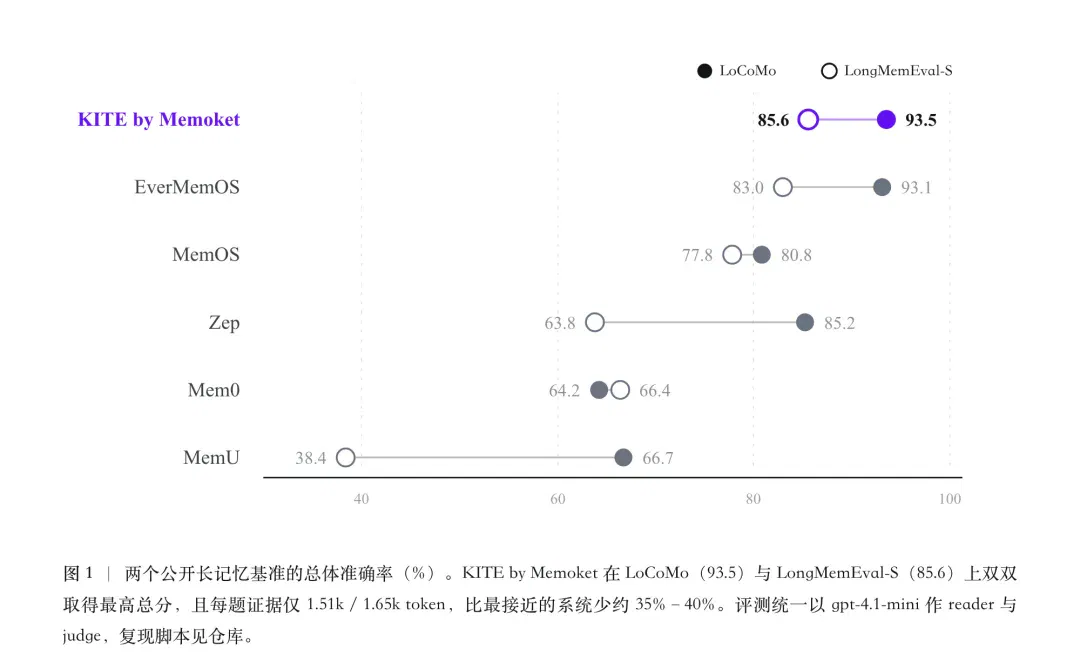
Substantial effort has gone into the product's software. Suisheng developed KITE, a vector-free long-memory engine, to provide efficient, accurate long-term memory. When open-sourced this August, KITE achieved accuracy of 93.5% on LoCoMo and 85.6% on LongMemEval-S, two mainstream long-memory benchmarks, setting new state-of-the-art results.
Memoket Gem can also connect to calendars, cloud storage, CRM software and AI applications such as ChatGPT and Claude, giving those tools access to the same context.
Memoket Gem currently sells mainly overseas. Most early users are entrepreneurs, small and midsize business owners, and corporate executives. They have many work meetings and conversations to record, and Memoket Gem can serve as a unified entry point for collecting that information.
Zhidx recently held an in-depth conversation with Suisheng founder Wang Shiyuan about AI memory, AI-hardware entrepreneurship and the division of value between software and hardware.
01.
Experienced leaders with past successes
Looking for an AI-native direction
After leaving Anker Innovations in March 2024, the first thing Wang did was spend a year 'finding himself.' He tried various things, ultimately concluding that he was 'not quite suited to retiring and doing nothing.' He and his current co-founders then began looking for a startup direction together.
Wang and the team evaluated embodied intelligence, the silver economy, healthy sleep, AI toys and other fields. Behind these seemingly scattered categories was one screening criterion: the product had to be AI-native. In early 2025, they settled on their direction: enter through hardware and build AI memory. Wang calls their immediate alignment fortunate: 'It is not easy for everyone's ideas to come together.'
Suisheng now has more than 30 employees. Wang describes it as a team with strengths in both hardware and software.
Many core hardware-team members come from Anker. The supply-chain lead was Anker Innovations' former head of supply chain; the product-design lead was its former head of product design; and the co-founder responsible for sales and marketing was the Anker brand's first brand director.
On the AI and technology side, Wang says the CTO was among the first AI researchers in China to train models using H-series cards, and previously worked at BSH and Huawei's 2012 Laboratories. The AI software-product lead has a background at Tencent and ByteDance and is also a serial AI entrepreneur.
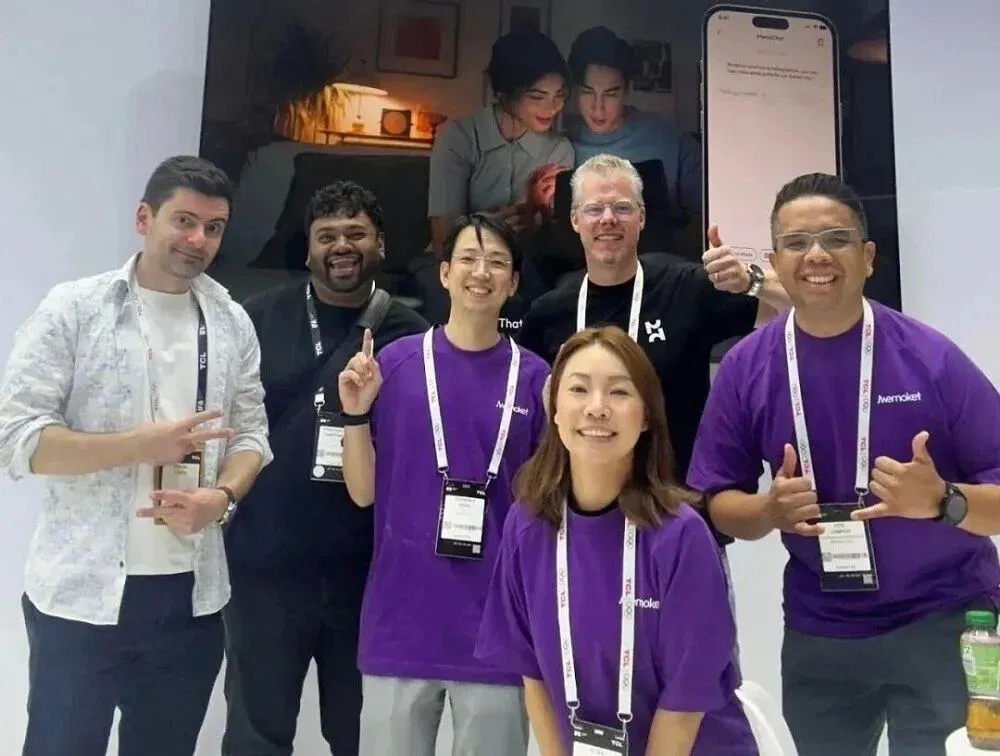
▲The Memoket team at IFA 2026
In Wang's words, product design, supply chain, technology, brand marketing and AI software each have someone 'already at the level of a functional head, or with highly successful experience' able to lead independently. Their working relationship is closer to a partnership: they discuss major decisions together and otherwise focus on what each does best.
Suisheng's angel round was funded by Sequoia China and Anker Innovations co-founder Gao Tao. Wang says the financing went relatively smoothly. Looking back on why investors were willing to back AI memory at such an early stage, he identifies three reasons:
First was agreement with its judgment. In early 2025, Suisheng argued that AI's next bottleneck would be personal context and memory. That was not yet a market consensus, but several investors recognized the forward-looking view.
Second, the team had already experienced Anker Innovations' entire journey from startup to listing, with a successful track record in the global consumer-electronics industry.
Third, its approach was practical and grounded: 'Investors could see that we were a team capable of making the product and selling it.'
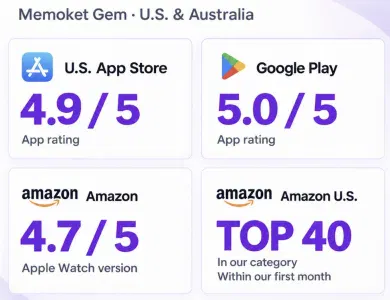
The funding mainly supported Memoket Gem's development and mass production. This August, it shipped the first 2,000 early-bird units. In September, it began public sales in the US, entered the top 40 in its Amazon category, and its companion app earned a 4.9 rating on the App Store.
02.
Defining an 'AI-memory wristband' from scratch
Coexisting with Apple Watch
How can 'AI memory' become hardware that users wear every day? Wang walked us through the process in detail.
As a new category, an AI-memory wristband must build market awareness from scratch. Suisheng found that consumer questions fell mainly into three groups: is Memoket Gem similar to AI recording devices such as Plaud? Is it a smart band that monitors health? Is it a fitness band like Whoop?
Wang's answer: 'We can do everything AI recording products can do, but that is not all.'
The first difference is its form. Unlike most card-shaped or pendant-style AI recorders, Memoket Gem introduced a design that can be worn on the same wrist as an Apple Watch or another smartwatch.
▲Memoket Gem and Apple Watch can be worn together
Wang explains the team's reasoning when choosing the form: a wearable first has to be worn. Only regular wear can establish a stable entry point for context. Wearing habits, however, have developed over decades or even centuries and are extremely difficult to change.
They therefore worked backward from shipment volumes. Among wearable forms, earphones rank first and bands and watches second. Annual shipments of bands and watches can be dozens of times those of necklaces, rings, magnetic clips and similar forms.
After weighing the options, they chose a wristband and adopted a 'coexistence' design approach. In plain terms, it does not compete with Apple Watch for wrist space. Users can have smartwatch and AI-recording functions on the same wrist: press for one second to start recording and another second to stop, conveniently capturing physical-world conversations as context.
The innovative form, however, introduced new engineering difficulties. Wang says the industry generally considers a card-shaped AI recorder achievable in three or four months at the shortest, or six months at the longest. That logic did not apply to an AI recording wristband: no one had made this form before. Many solution providers initially thought it would be easy, only to discover obstacles everywhere once they actually tried.
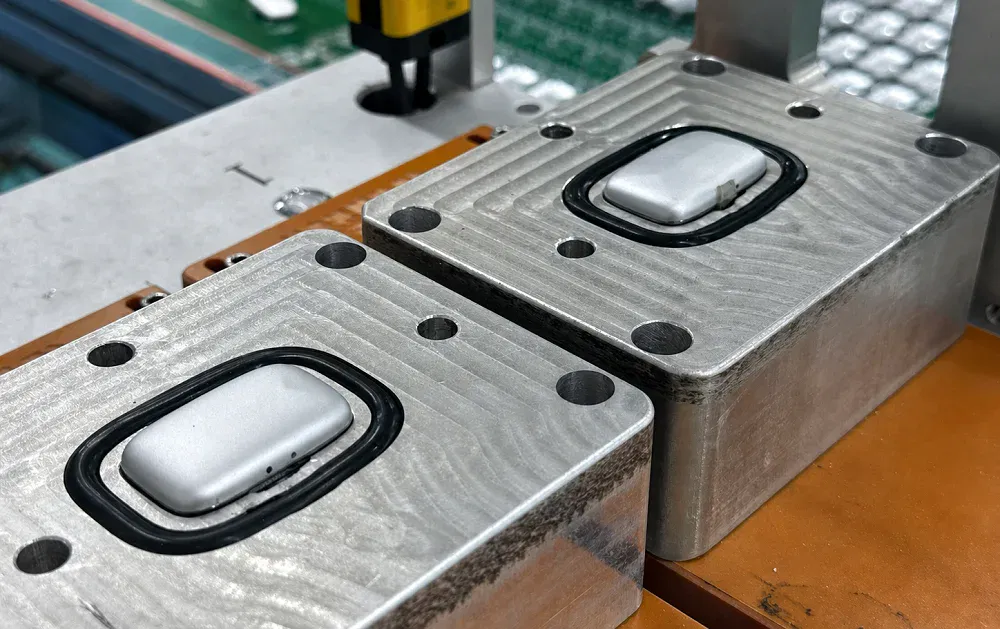
▲Memoket Gem on the production line
To make it light, small and barely noticeable while delivering 20 hours of battery life—roughly a week's usage—the team devoted substantial effort to mechanical design, component layout and selection, and waterproofing. Hardware thickness, for example, involved repeated trade-offs over one or two millimeters, because such a small difference on the wrist directly affects comfort, battery capacity, component stacking and many other details.
Wrist-worn use can also introduce additional noise sources that must be addressed. Drawing on experience in areas such as earphone noise-reduction algorithms, the team effectively suppressed common sources of noise at the wrist.
Wang says many trade-offs were ones they had not anticipated. From founding the company to mass production, the process took a full 12 months.
03.
From recording to long-term memory:
How can software account for half of AI hardware's value?
Memoket Gem's hardware makes it convenient to capture the physical world, while its software handles the subsequent use of that context. Wang believes software actually represents half the value.
Most mainstream AI recorders still follow a 'one recording, one summary' logic. Memoket Gem instead continually connects, integrates and structures the context users capture, then makes it available to AI—the capability it calls 'long-term memory'.
In the product, 'memory is intelligence' means using past records to understand the present: connecting exchanges from different times, identifying progress and changes in decisions, and drawing on those accumulated records to answer new questions.
This long-memory capability is supported by Memoket Gem's in-house vector-free long-memory engine, KITE. Wang explains that traditional approaches based on RAG and vector databases are essentially better at finding information through similarity. Human memory, however, does more than retrieve similar content: understanding of the same matter deepens and evolves over time.
KITE therefore tries a different process. It first organizes conversations into structured facts with times, people, topics and original sources. It then generates an explicit query plan based on the user's question, filtering, connecting and ranking historical information. Finally, it passes only a small amount of genuinely relevant evidence that supports the answer to the large model. This makes efficient long-term memory possible.
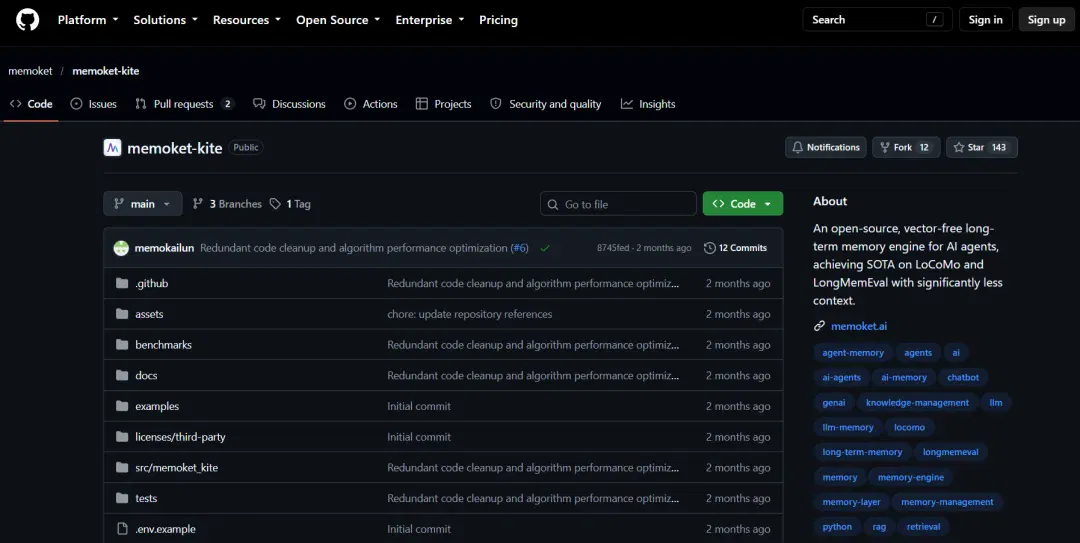
▲Screenshot of KITE's open-source page
Long-term memory also affects Memoket Gem's outputs. When users discuss an issue, for example, the software provides more than a summary of that conversation: it proactively searches for related past topics, points out what changed between the two exchanges, and suggests new ideas that may emerge from connecting them. As users accumulate more records, the software's understanding of them deepens.
Wang gives an example from his own use: he directly asks AI to 'summarize all of August's product development and milestones so I can send them to investors.' This requires AI to know what happened in August, understand connections among events and extract relevant information from substantial historical context. An efficient, accurate memory engine is key to this capability.
As supply chains for chips, batteries and other components mature and KITE continues to evolve, Wang says the engine may eventually run directly on edge hardware.
The next layer is sending that context to the AI and collaboration tools users already use.
Memoket Gem currently connects to AI tools such as ChatGPT and Claude through MCP, and can also integrate with to-do lists, notes, calendars, cloud storage and CRM software. It does not intend to build an entire software ecosystem itself. Instead, it keeps its product boundaries focused on memory and long context, passing that context to other tools for subsequent work.
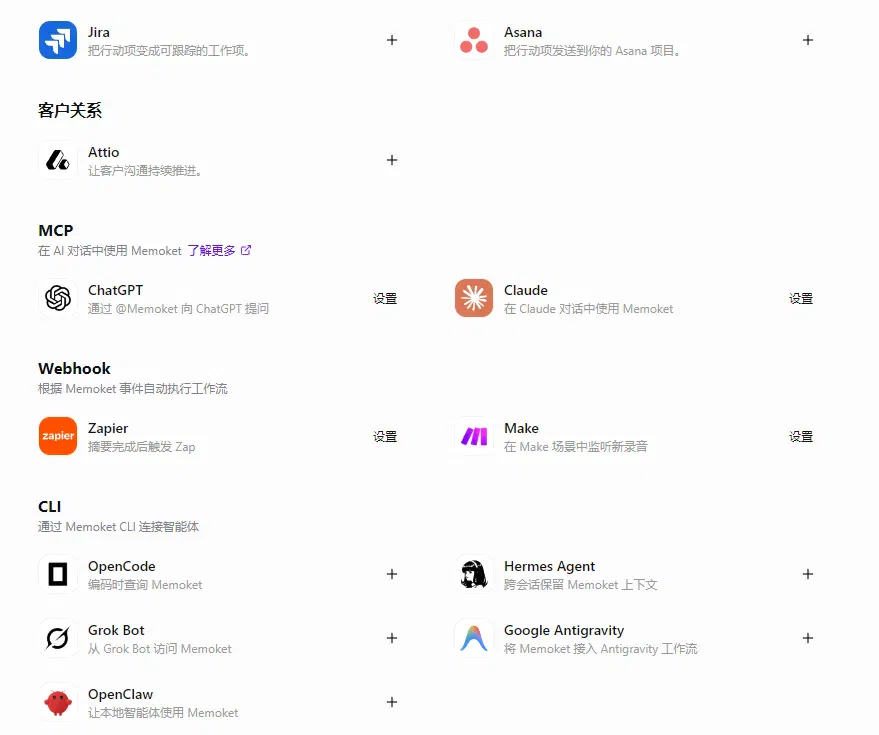
▲Some software and services that Memoket Gem can connect to
The companion app currently supports iOS and Android, with a desktop version as well, but must still be paired with the hardware. Since it mainly targets Europe and the US, the app emphasizes simplicity and focus, organized around the sequence of recording, understanding, connecting and retrieval.
Like most AI hardware, Memoket Gem is not a one-off sale. The hardware costs $199 and includes a monthly allowance of 300 minutes for recording, transcription and summarization. Users can subscribe for a higher allowance.
Wang believes hardware is the first step in customer acquisition, while software determines how long users stay. He cites smart-ring maker Oura as an example: according to Oura's prospectus, its Oura Ring has more than five million subscribers worldwide and an annual renewal rate above 80%.
'That is a renewal rate traditional software would struggle to imagine,' Wang says. When a product creates sufficient user engagement and its ongoing value mainly comes from software, hardware can serve as the entry point, while software supports long-term retention and recurring monetization.
This is also an important criterion in how he evaluates AI hardware: more than half of its value creation must come from software for an AI-hardware product to make sense as such; otherwise, it remains closer in essence to traditional smart hardware.
Subscription business models still face challenges in China, however, which is one reason Memoket chose to begin overseas. Wang notes that Chinese products such as Doubao are also exploring subscriptions, and he is watching to see whether they can cultivate new spending habits.
04.
Before the answer takes shape
Entrepreneurs have their window
Today, the AI hardware industry as a whole is flourishing, with all kinds of new product forms emerging one after another and both startups and major companies competing to enter the field. We also discussed this topic with Wang Shiyuan, whose assessment is that the market remains at an early stage of a vast, largely untapped opportunity.
In his view, the industry has not reached a real consensus. 'People are approaching this wave with different ideas, forms and methods. Some preliminary results will certainly emerge, but this is not the endgame—we have not even reached the middle game.'
Since the endgame has not taken shape, it is difficult to know which hardware form will ultimately win. Wang believes the question worth discussing is not which of glasses, earphones, bands or other forms will take market share from the others, but whether a new form can truly replace the smartphone in the future. That is the larger potential for AI hardware.
He is not worried about competition from major companies. Instead, he sees this uncertainty as a window for startups. Once consensus forms and an answer emerges, major companies have the advantage of brands, distribution and resources. Before the answer exists, startups have more room to experiment, innovate and take risks.
There are still some certainties within that uncertainty. Looking back at the development of consumer-hardware categories such as earphones, robot vacuums and portable outdoor energy storage, Wang believes several aspects of AI hardware can endure across cycles.
First are users. In his view, whether a product becomes the industry's eventual 'final form' matters less than whether users genuinely use it and develop habits and engagement. That user value remains even if the product's form changes later.
Second is intelligence, which Wang divides into data and models. Access to general-purpose large models is becoming easier to equalize, but vertical model capabilities are different. 'Accumulation always creates value. The earlier you start, the more you accumulate.' In AI memory, the context users leave over time is itself part of ongoing model improvement.
Third is brand trust. For a new brand, trust begins accumulating on day one. AI hardware inherently involves recording, personal data and long-term memory, so users' willingness to entrust that information to a new brand is itself a barrier.
For that reason, he does not believe AI hardware has any single moat that can be monopolized for the long term. Hardware is easy to replicate, and AI capabilities are becoming broadly accessible. Even large companies with strong brands cannot rest on their laurels.
The real barrier is more like a combination. A hardware form that leads competitors by six to 12 months creates a window. During that time, marketing and communication can establish early brand awareness; trust can encourage users to choose the product sooner; and real user data can accumulate while algorithms and models improve rapidly, ultimately improving the product experience in return.
05.
Conclusion: building a unified context layer
For the physical world
Wang's vision for the eventual AI-memory market extends beyond a recording device. His reasoning is that the more people rely on AI to complete tasks, the less they can do without it. Once AI becomes indispensable across work and life, people need a product to remember all their context and pass it smoothly among different AI systems.
He estimates that the number of people worldwide who depend heavily on AI workflows may be in the tens of millions today, potentially rising to hundreds of millions or even one billion in three to five years. Fragmented memories across today's software, aligned through manual copying and pasting, create an opportunity for a unified context layer. 'The ecosystem will certainly have more and more specialized agents,' he says. 'I regularly use five to seven myself. How could I explain my background to every one of them? That goes against human nature.'
In Wang's view, wrist-worn hardware is only an entry point for Memoket into everyday life. Its technology is designed for multimodal content, aiming to build AI memory for the physical world. The team will explore further context sources, including documents, vision, sensors and other agents, and the long-memory capability behind Memoket Gem may eventually serve more scenarios.
This is Memoket's long-term hope for 'memory is intelligence': making each person's accumulated experiences a basis for AI to understand them, allowing that understanding to accompany them across tools and situations and provide appropriate help when needed.
This article comes from Zhidx. Author: Chen Junda.
After reading
Join the AINRK community
Read how to join the community and connect with people working in AI.
Related articles
Continue reading related topics and articles in this category.
General AI models enter hardware development, from files to prototypes (opens in a new tab)
Youxin reviews hardware-design examples involving OpenAI, Anthropic and engineering tools, spanning circuits, enclosures, firmware and CAD. Some prototypes were built and tested, but digital checks, engineering review and physical reliability remain distinct hurdles.
Turning an unused Android handheld into an AI terminal with buttons, NAS memory and home control (opens in a new tab)
The author rebuilds a handheld around a Big Fat Fish character, voice input, meeting archives and Mijia controls. The project also exposes audio conflicts, button noise, clipped speech and excessive token use from camera polling.
How long is the window for AI recording hardware? From audio capture and transcription to personal-agent context (opens in a new tab)
GeekPark examines watches, recording cards and wearables, discussing system access, memory filtering and interface integration. Its six-month window is the author's forecast of competition.

iQIBLA opens Aura Premium preorders, bringing recitation counting and records to a ring (opens in a new tab)
The ring combines touch counting, display prompts and prayer reminders with app-based recitation records. The four million sales mentioned in the report refer to cumulative sales of the brand’s products.
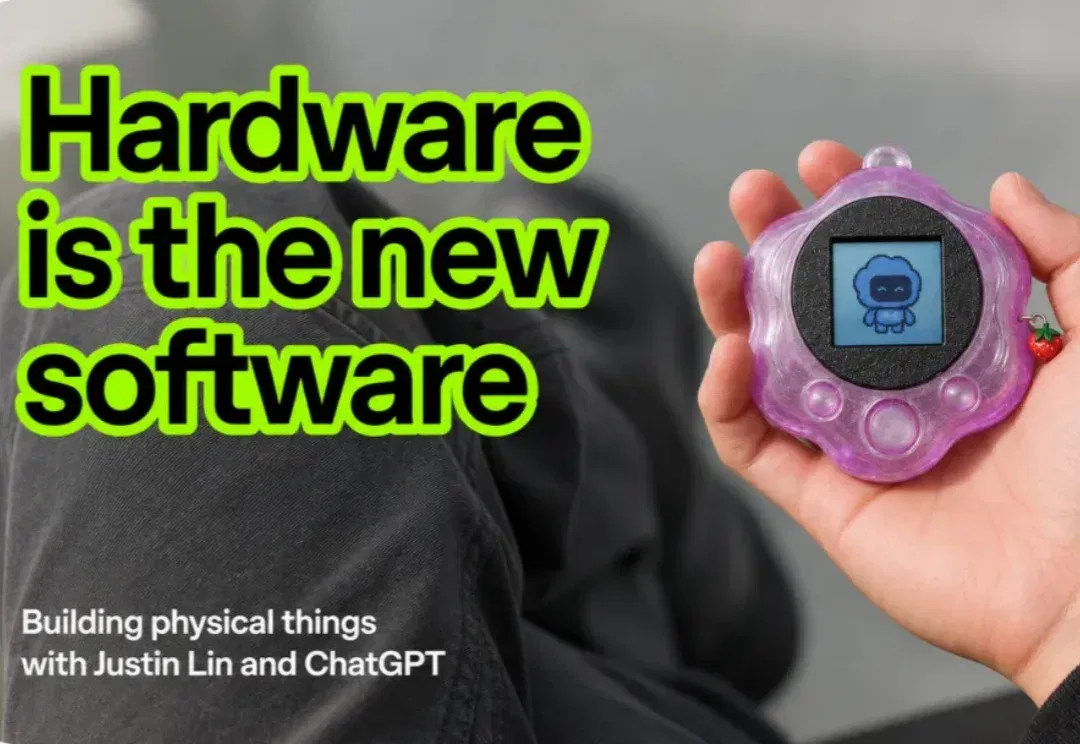
OpenAI 工程案例用 GPT-6 Astra 设计 Codex 掌机原型 (opens in a new tab)
OpenAI 两名员工用 GPT-6 Astra 设计掌机外壳、电路与固件,再经人工审查和制造修改,完成小批量原型。报告还分享了赛车零件与汽车仿真案例。