Claude Meetings brings collaborative documents into calls, with efficiency and recordkeeping tradeoffs

APPSO describes visible participation, live notes and whiteboard collaboration in Claude Meetings, examining how notifications, external guests, retention and AI summaries affect teamwork, privacy and the room for open-ended discussion.
Editorial correction (November 16, 2026)Live collaborative documents can reduce notetaking, but participants must still check and edit outputs and manage data permissions. They do not guarantee freedom from attention or organizational work.
"Let's have a meeting to align the details. Invite Claude."
You open Google Meet, ready to join, and see an avatar named Claude in the participant list.
The host adds Claude to the call. It appears visibly and posts a chat notification announcing its arrival. During the meeting it follows the conversation, taking live notes, organizing action items, drafting documents or structuring ideas and timelines on a whiteboard.
Team members edit its output directly during the call, with discussion and production happening together. Afterward, notes, actions and materials are automatically organized in claude.ai for later reference.
Also introduced are Claude Whiteboards for live collaboration, Claude Sheets and Claude Data for analysis (opens in a new tab). Alongside over nine thousand app connectors in Claude Marketplace, Anthropic is turning a chat interface into an office-product family spanning collaboration, seeking a place in the enterprise market long dominated by Microsoft and Google.
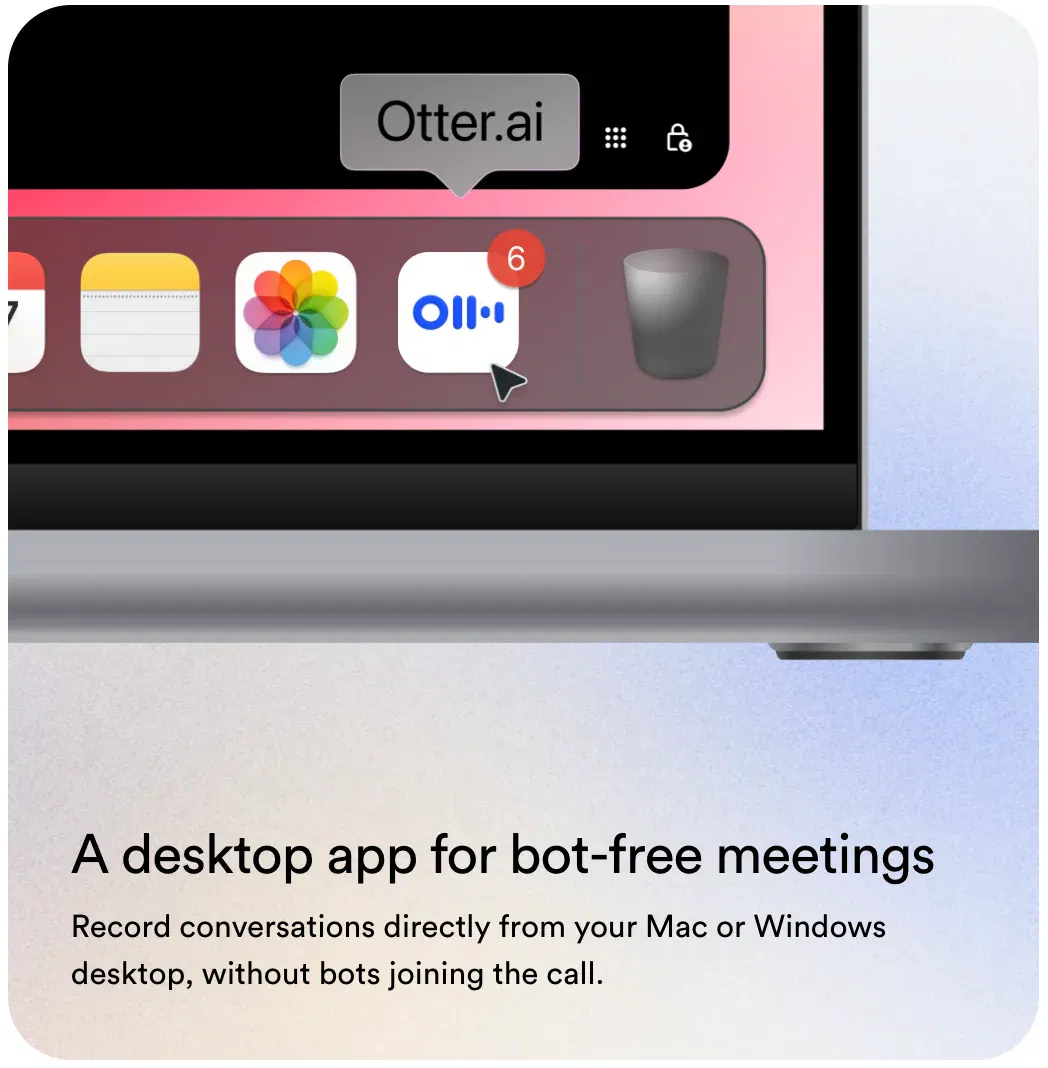
Meeting AI is familiar to office workers. Otter.ai and Fireflies have worked in the field for years, Copilot is embedded in Teams, Gemini takes live notes in Meet, and Zoom has AI Companion.
In China, Feishu and DingTalk connect transcription, summaries, to-dos and archives with their own task and document systems.
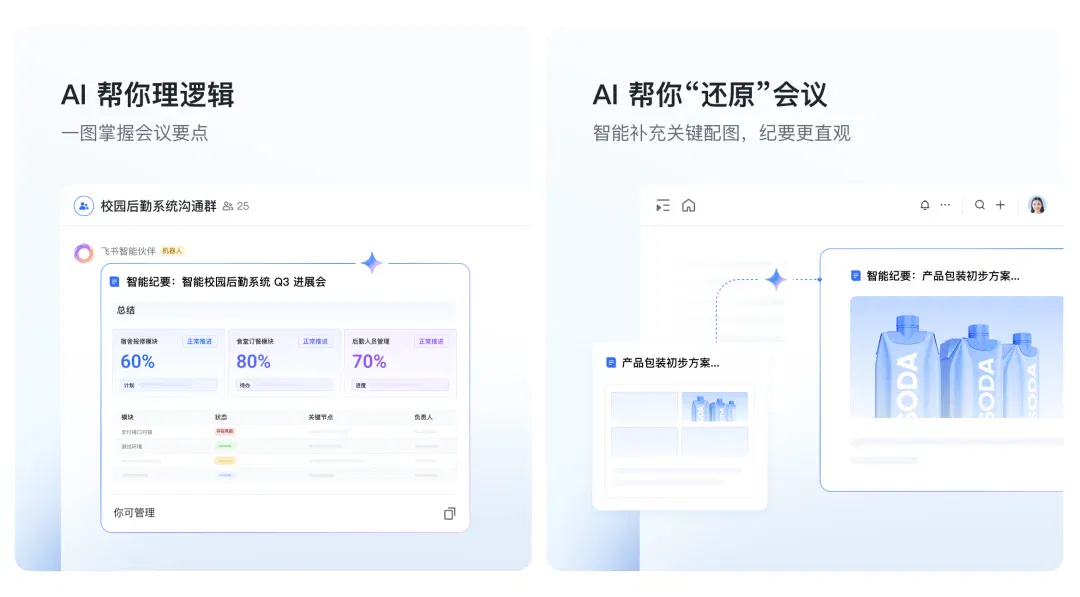
Image: Feishu.
Feishu's intelligent minutes provide real-time summaries. Claude Meetings differs by participating like a colleague and producing editable documents, whiteboards and spreadsheets live. The meeting becomes a workspace: everyone discusses and edits the same material, leaving usable outputs by its end.
Anthropic knowledge-work product head Nicholas Lin told media that Meetings had been tested internally for about two months and Claude now attended almost every company meeting. They want knowledge workers to move at the speed of thought, like software developers.
Claude Code let developers invoke AI for complex tasks while coding, producing a structural productivity gain. Anthropic now wants a similar rhythm in meeting rooms long seen as efficiency black holes.
The time gap is disappearing
The first generation of AI meeting tools tried to address the problem that organizing material after a meeting takes time and effort and makes it difficult to reconstruct the details. The approach was recording plus summarization: record the entire meeting, then have AI turn it into a written transcript and a list of key points afterward. This has already saved many teams a considerable amount of time. Structurally, however, the time gap itself has not disappeared: the meeting is still a discussion, and the deliverables still come after the meeting. Organizing the material has merely become somewhat faster.
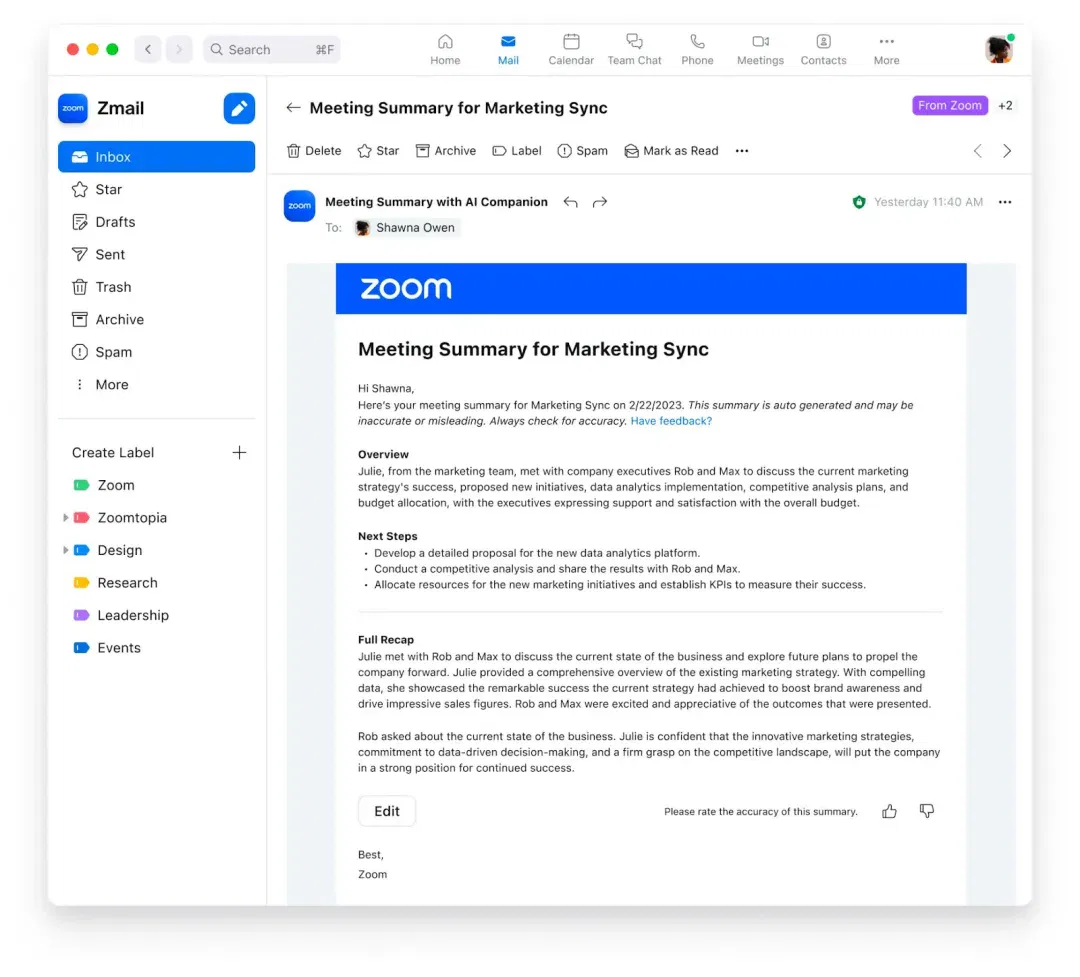
Zoom AI Companion has reached a milestone of one million meeting summaries.
Claude Meetings aims to change AI's role from recording what happened to helping make things happen.
Its product description offers a typical scenario: during scheduling discussions, someone asks Claude to put a timeline on a whiteboard. The team adjusts it while talking, and a first draft of the plan exists before the meeting ends.
For remote collaboration and distributed teams, finding a time slot when everyone can attend is already difficult each time. If the output can only be handed off after a delay while it is organized, that waiting is magnified. If action items and planning documents are already in place the instant the discussion ends, members in their respective time zones can follow up immediately, without having to wait for a set of meeting minutes to arrive.
Assistants share notetaking and drafting work, but participants must check mishearings, omissions and summarization bias. They cannot guarantee everyone can abandon recording and acceptance checks entirely.

Metrigy's research among 1,100 enterprises found over 40% planned to deploy meeting assistants within a year, while nearly 40% already used them. The market reached $3.5 billion in 2025 and is projected to reach $34 billion by 2035.
Structured whiteboard discussions can become documents or presentations, spreadsheets connect to CRM systems and databases, and information from Adobe, Atlassian, HubSpot and other tools can be retrieved during calls.
Leaving a record of everything is not so simple
There is a lawsuit in meeting AI you may not know about.
In August 2025, a class action against Otter.ai was filed in California federal court. Plaintiffs alleged that its assistant recorded and transcribed calls without every participant's explicit consent and used them to train speech-recognition models. Three similar suits were combined in subsequent months. This year the court denied Otter.ai's motion to dismiss, allowing core allegations to proceed.
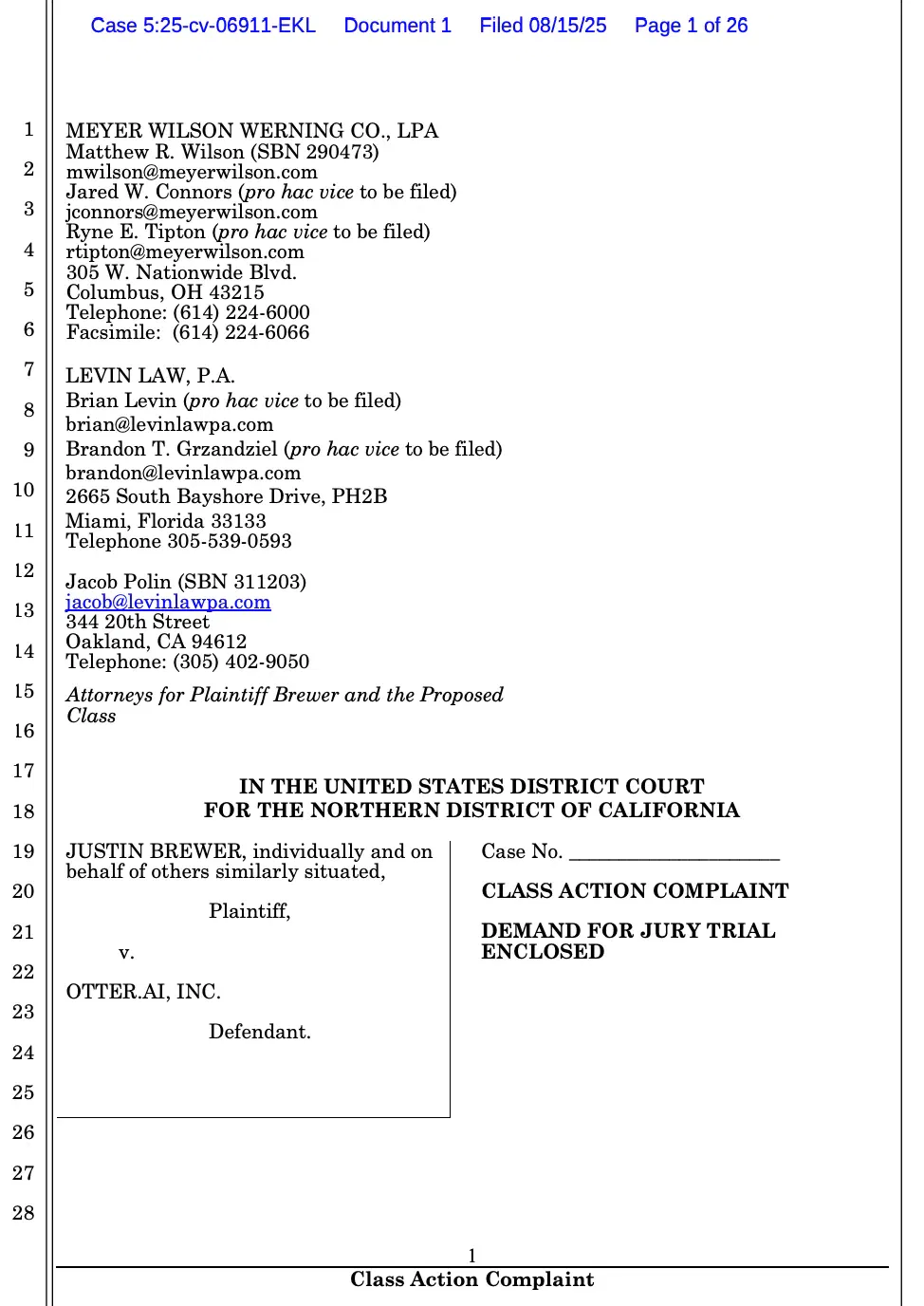
First page of the original complaint.
The dispute concerns Otter automatically joining and recording when the host is registered, requesting entry permission only from the host rather than consent from everyone. In jurisdictions such as California that apply a two-party-consent principle, this creates potential legal violations.
Otter.ai's CEO told media the practice was not fundamentally different from Copilot or Google's meeting notetaker. Informed-consent boundaries are broadly unclear across the industry.
Anthropic's design takes corresponding precautions. Claude announces itself in chat as a visible participant. By default it leaves when external guests attend unless an administrator specifically authorizes otherwise; if a guest joins midway, Claude automatically exits.
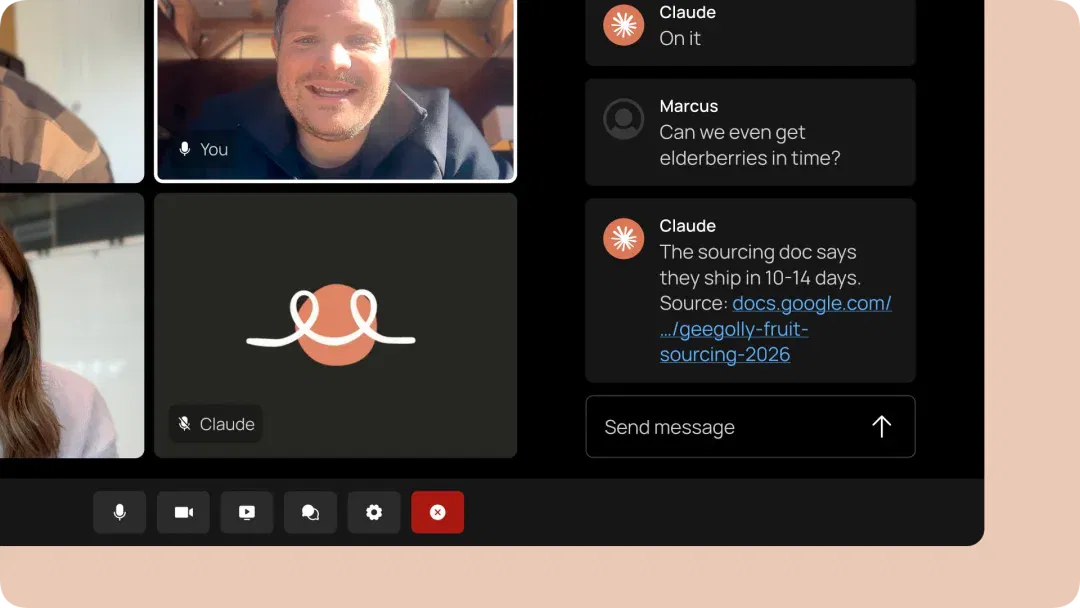
These designs are more cautious about transparency than Otter's earlier approach, but do not eliminate privacy complexity.
At present, Anthropic has not publicly clarified several key questions: where meeting content and transcripts are stored, how long they are retained, whether the product can be used compliantly within the European Union, and how much control enterprise administrators have over the data. For industries such as law, finance and healthcare that handle highly sensitive content, these are questions that have to be considered.
Beyond concerns about regulatory compliance, some researchers have observed that when people know every word they say will be recorded, organized and archived, the way they speak changes. Their wording becomes more cautious and their positions become more explicit, but tentative ideas, half-formed thoughts and good-faith debate may become less common.
Some creative ideas that arise in casual conversation need a relatively relaxed atmosphere, in which people are not afraid of making mistakes, before they can emerge. That atmosphere becomes harder to create in meetings that are archived from beginning to end.
Researchers observe that people expecting summaries often begin speaking for the summary rather than thinking freely.
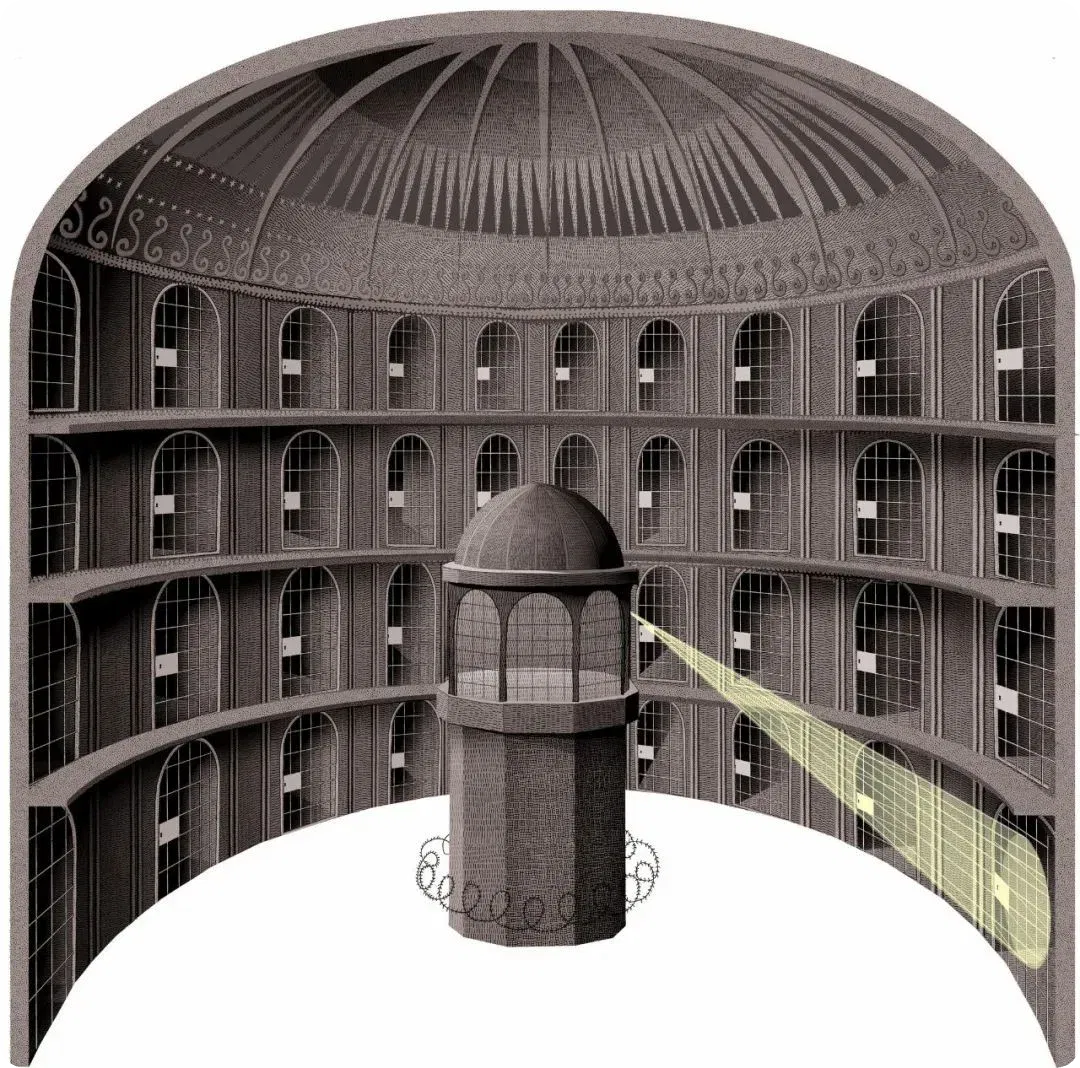
The panopticon: the central watchtower can monitor every cell around it at any time. Prisoners in the cells can see only an indistinct silhouette of the central tower and cannot tell whether a guard is looking at them. Image credit: Jenni Fagan.
Meetings are becoming increasingly task-oriented and increasingly resemble settings for execution, rather than merely serving as spaces for thinking, exploring and building relationships.
From an efficiency perspective, many meetings do indeed wander too far and produce overly vague outputs. Claude can help teams bring discussion down to the level of action, and that is valuable. But for early product exploration, the building of trust within a team, and communication in which departments get a sense of one another, deliberately insisting on deliverables can instead squeeze the flexible space these interactions need in the first place.

Image: The Devil Wears Prada (2006).
“Whoever controls the summary controls the narrative.” AI-generated meeting documents cannot be regarded as neutral mirrors. They are a compression and reorganization of spoken discussion, and any compression involves selection.
If AI output becomes the only text the team uses as a shared reference, details that were spoken in the room but not captured by it, or judgments given less weight during synthesis, may quietly disappear from subsequent discussions, without anyone realizing that they ever existed.
Anthropic's product vision is quite clear: it wants to turn Claude from a conversation tool into a permanent participant in enterprise workflows, connecting meetings, documents, whiteboards, spreadsheets and data within a single system. There are sound commercial reasons for this: entering companies' everyday workflows means increases in both frequency of use and stickiness.
However, when “What must this meeting deliver by the time it ends?” becomes an implicit expectation, the prospects look bleak for conversations that have no conclusion for the moment and no output for the moment, yet build understanding and trust between people.
Will meetings without deliverables quietly disappear under tool-driven pressure because they can no longer prove their efficiency?
This article was originally published by APPSO. Author: APPSO.
Related topics
After reading
Join the AINRK community
Read how to join the community and connect with people working in AI.
Related articles
Continue reading related topics and articles in this category.

Claude 推出表格与白板工具,更新数据分析和应用连接 (opens in a new tab)
Anthropic 公布 Claude Sheets、Whiteboards 及 Data 更新,覆盖表格编辑、团队构思和数据解读。部分能力分批推出,连接器及账号条件各有不同。

Doubao Work vs. WorkBuddy: task times and usage with the same models (opens in a new tab)
The author compares profiles, calendars, sales reports and presentations, then tries Flash research followed by Kimi drafting. Results depend on plans, temporary offers and the specific task.
LobsterAI Team hands-on: how shared credits affect a small team's office AI bill (opens in a new tab)
The author examines zero seat fees, credit allocation and local workflow handover, comparing team spending using recorded prices. Actual costs still depend on usage, credit validity and model connections.
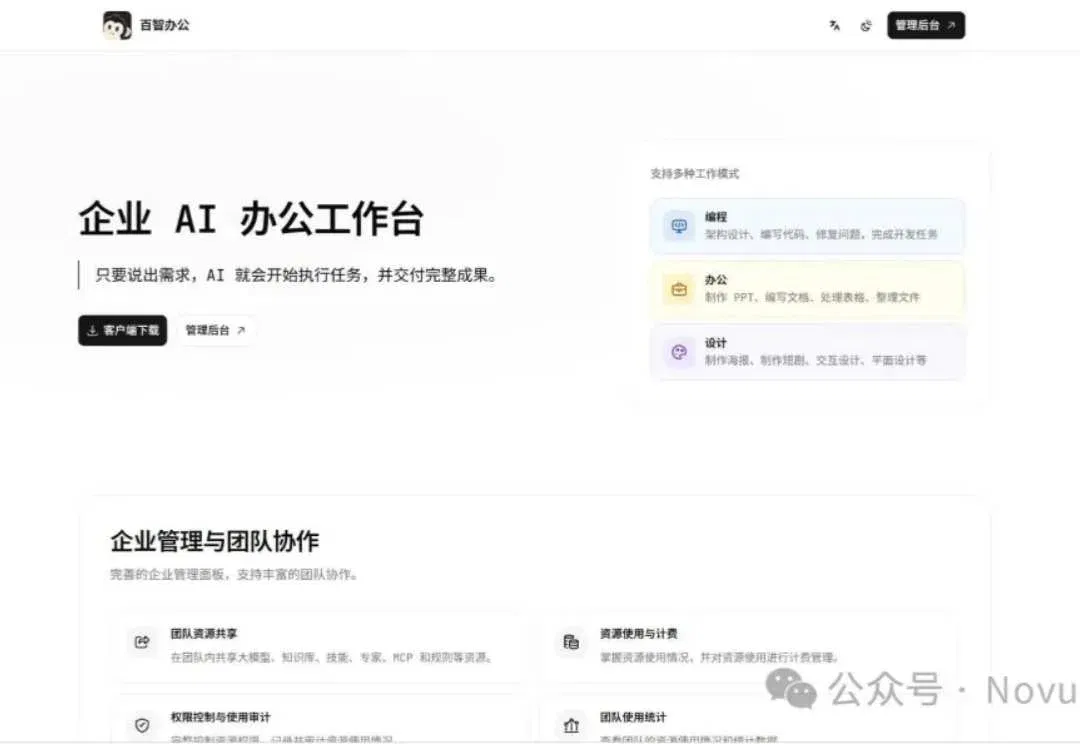
Trying Baizhi Office: shared configuration for models, knowledge bases and team usage quotas (opens in a new tab)
The author explores resource distribution, permissions, billing and task review from managers’ and employees’ perspectives, then tests document and web-page generation with a mock product brief.
从 Blender 动画到代码绘画,创作者体验 Fable 5.2 的视觉表达 (opens in a new tab)
数字生命卡兹克分享 Fable 5.2 生成动画、三维场景和代码绘画的体验,并与 Carbon 的部分案例比较。文章重点讨论作者对生成作品审美的判断。