OpenAI Reportedly Developing Athena to Help Agents Understand Business Metrics

The Information reports that OpenAI is developing Athena, a semantic-layer-like platform for business rules and metrics. It remains at an early stage, with no announced release date or pricing; accuracy gains and competitive effects are goals and analysis rather than verified product results.

A semantic-layer-like function intended to reduce errors in complex business tasks.
Zhidongxi reported on November 25 that, according to The Information, which cited people familiar with the matter, OpenAI is developing a data management platform codenamed Athena (named after the goddess Athena). It is intended to help Data Agent, the data analysis agent in ChatGPT Work, understand enterprise operations and improve the accuracy of its answers and task execution.
People familiar with the matter told The Information that Athena would function much like what the industry calls a semantic layer. It could standardize definitions of business metrics such as revenue and customers, helping agents distinguish total revenue from net revenue and active customers from paying customers.
Athena is currently in an early stage of development, with neither a release date nor pricing announced. OpenAI has presented its development plans to some customers and partners, but a company spokesperson has not commented publicly on the matter.
01.
Athena would function like a semantic layer
With the aim of improving agent accuracy
According to The Information, Jason Strimpel, a managing director at consulting firm Andersen Consulting, believes an important reason agents often make mistakes when handling large volumes of complex business data is that they must work out for themselves what the data means and how its elements relate to one another.
A semantic layer can act as a translator between business terminology and underlying data, ensuring that different departments, reports, and dashboards use the same metric definitions. This reduces the guesswork agents must do and helps them work faster and more accurately.
Citing people familiar with the matter, The Information reported that OpenAI is developing a type of agent for Athena that collects, records, and continuously updates the guidance other agents need to perform tasks. Other agents could refer to the business rules it contains rather than working everything out from scratch each time.
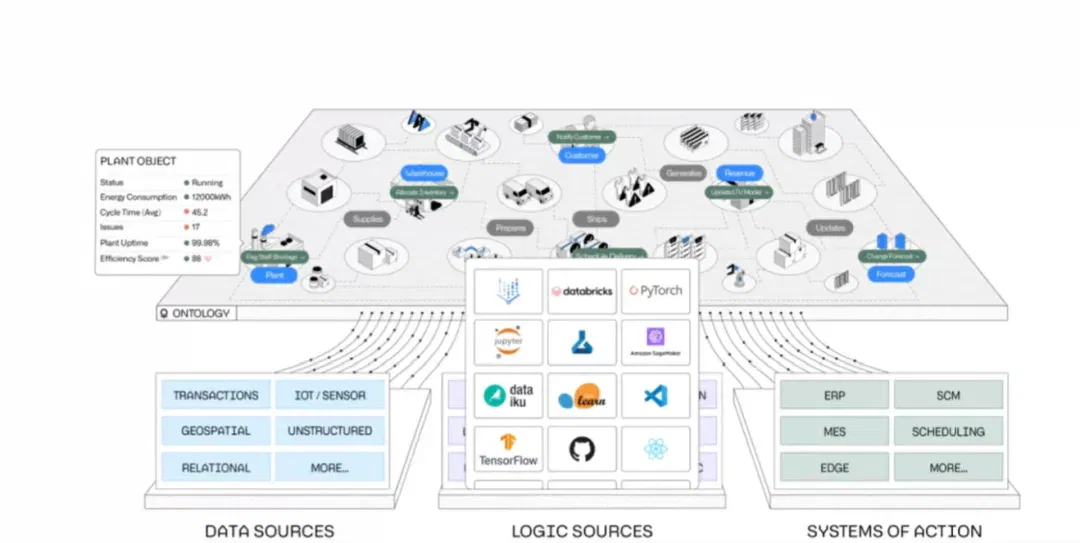
The Ontology System diagram (image: Palantir)
This approach differs from the ontology solution offered by US enterprise software company Palantir. An ontology models the various objects within a business and the relationships between them so applications can understand and use them. According to The Information, Palantir customers including NVIDIA, Cisco, and law firm Kirkland & Ellis have used its ontology software to develop applications for supply chain management, legal document drafting, and other purposes.
The people cited above said Athena could allow enterprises to skip the work of building formal business models in advance for some tasks, but is not intended to replace ontology systems in situations where those models are still needed.
According to The Information, an adviser who works with both OpenAI and its customers believes OpenAI wants to use Athena to widen its competitive moat. Enterprises can now switch between models quite easily, but migrating a semantic layer is much more difficult.
02.
Enterprise business doubled in Q3 and contributes over half of revenue
OpenAI continues competing for enterprise customers
According to The Information, some customers who have used OpenAI's existing data analysis agent, Data Agent, believe it is not yet accurate enough for large-scale adoption. OpenAI is developing Athena to improve Data Agent's performance. Launched this September, Data Agent is currently offered as the Data plugin in ChatGPT Work. It can connect to enterprise databases and office files, analyze business data such as sales, customer retention, and spending, and generate interactive dashboards.
Enterprise business has become an important source of revenue for OpenAI. Earlier this month, OpenAI President Greg Brockman said at the WSJ Tech conference that the company's enterprise business doubled in the third quarter and now accounts for over half of its revenue. Separately, Yahoo Finance reported that the company's total third-quarter revenue was approximately $10 billion (about RMB 66.7 billion), up nearly 50% from the previous quarter.
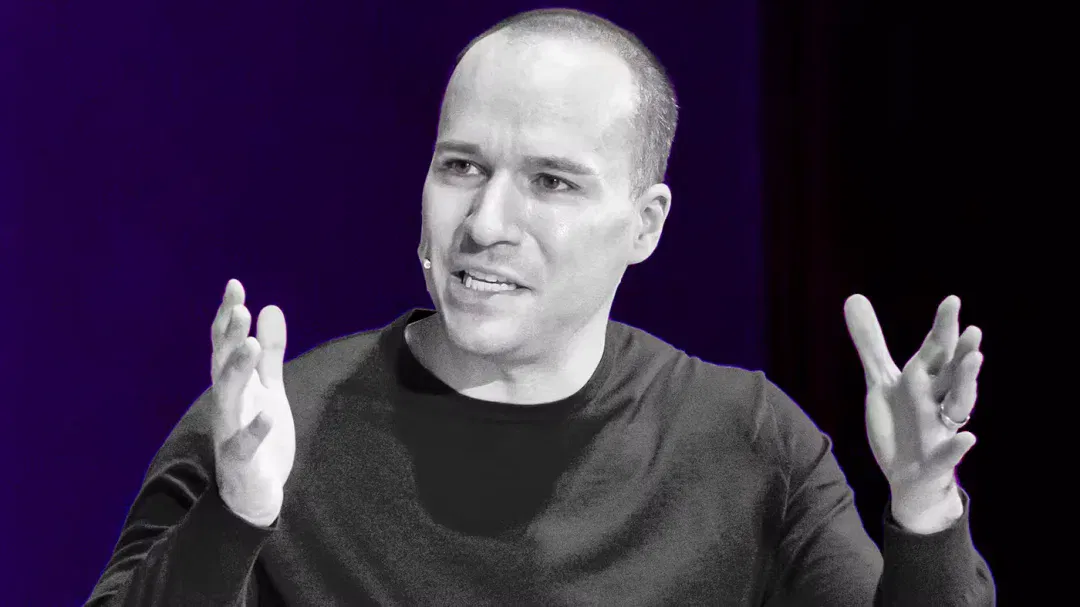
OpenAI President Brockman (image: The Information)
OpenAI previously launched ChatGPT Work to compete with Anthropic's Claude Cowork for enterprise customers. This February, it also launched Frontier, an enterprise agent platform for developing, running, and managing agents. Frontier is reportedly one of the core products in the company's enterprise AI strategy, but OpenAI has disclosed little about subsequent progress since its launch.
Citing people familiar with the matter, The Information said improving agent accuracy could help OpenAI win large enterprise contracts in areas such as supply chain management and financial workflow automation. Through Athena, OpenAI hopes to help agents understand enterprise operations better. Anthropic also emphasizes this kind of business context: Claude agents access customers' internal systems through MCP, the Model Context Protocol, and follow instructions in Skills to perform specific tasks.
03.
Conclusion: OpenAI extends its enterprise product portfolio
Potentially competing directly with existing data platforms
To get work done, enterprise agents need an accurate understanding of internal data definitions and business rules. Athena would extend OpenAI's product portfolio into organizing and maintaining this information, aiming to reduce the work agents must do to understand a business anew each time they perform a task.
US data analytics companies Snowflake and Databricks already offer semantic layers that help agents understand enterprise business metrics and data relationships. Many enterprises therefore choose to develop agents using OpenAI models on top of the data stored on those two platforms. Athena could help OpenAI compete for that business, while also bringing it into more direct competition with existing data platforms.
Source: The Information
This article is from Zhidongxi, by Sun Xiaowen.
Related topics
After reading
Join the AINRK community
Read how to join the community and connect with people working in AI.
Related articles
Continue reading related topics and articles in this category.

OpenAI Releases Nine Math Manuscripts on Matrix Multiplication and Strongly Polynomial Programming (opens in a new tab)
OpenAI added nine manuscripts in two families on November 24, claiming a 9/4 matrix multiplication exponent and strongly polynomial linear programming. Lean formalizes selected results; the repository treats the work as raw research data rather than completed academic review.

Codex corrects GPT-6.2 usage accounting; some requests will reach limits sooner (opens in a new tab)
Reporting cites Tibo saying some Codex requests were undercounted at GPT-6.2's launch. A fix means Astra and Sol will reach limits sooner, with a discretionary reset offered. This should be distinguished from ChatGPT chat limits and API pricing; marketing motives remain speculation.

GPT-6.2 Sol rolls out to Chat; report says some GPT-5.6 access will end in December (opens in a new tab)
OpenAI's release notes confirm that chat-optimized GPT-6.2 Sol began rolling out to paid plans on November 23. Citing official X posts, the report says some GPT-5.6 models in Chat, Work and Codex will retire on December 23; this does not establish a simultaneous API shutdown.
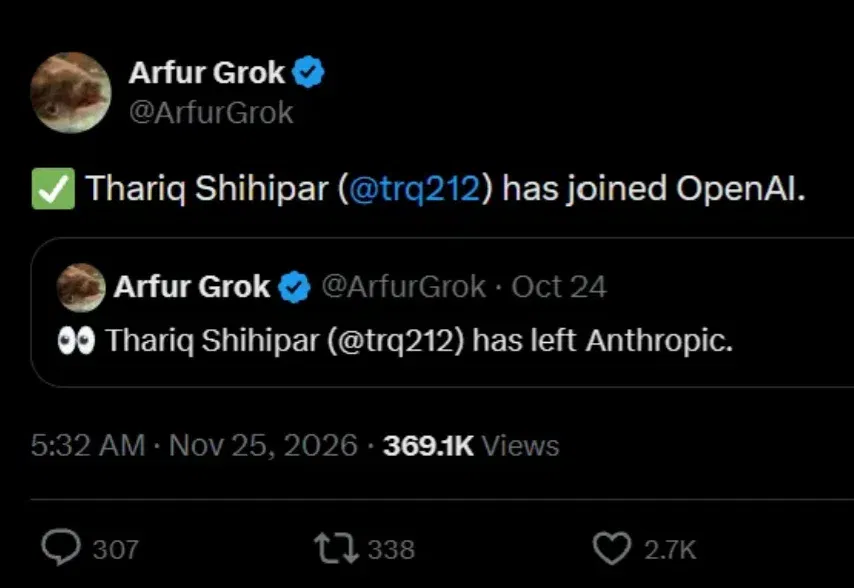
Reports Claim Two Former Claude Code Members Joined OpenAI, Highlighting Agent Talent Moves (opens in a new tab)
QbitAI cites a tipster's claims that Thariq Shihipar and Anthony Morris joined OpenAI, alongside Cat Wu's announced move. The two reported hires await firsthand confirmation. IPO equity estimates do not establish individuals' holdings, compensation or future listing proceeds.

DeepTech Says OpenAI Researcher Ruochen Wang Has Left and Returned to China; Next Move Unconfirmed (opens in a new tab)
DeepTech reports that Ruochen Wang has left OpenAI and returned to China, with his next move unconfirmed. His personal site lists ChatGPT-Voice, a GPT-5 launch demo, Sora, robotics-related models and reinforcement learning; that résumé is separate from the return report.