Doubao's Xiaodou joins the personal assistant race: AI memory, misunderstandings and switching costs
Using Doubao's Xiaodou, Meta Muse and Gemini as examples, APPSO examines how personal agents turn long-term memory into action, the risks of stale memories and mistaken inferences, and the cost of switching platforms, drawing on a Stanford workshop report about user-controlled portable memory.
With Doubao launching its new Personal Agent product, Xiaodou, this proactive, close-at-hand form of assistant has finally arrived in China. We reviewed it as soon as it became available. (opens in a new tab)
Personal agents have been a hot product category this year, but all popular AI products face the same problem: they arrive with earth-shattering fanfare, with people fighting for invitation and beta codes, yet once you actually start using them and connect all your usual personal apps, you are still left scratching your head. So what, exactly, can they do?
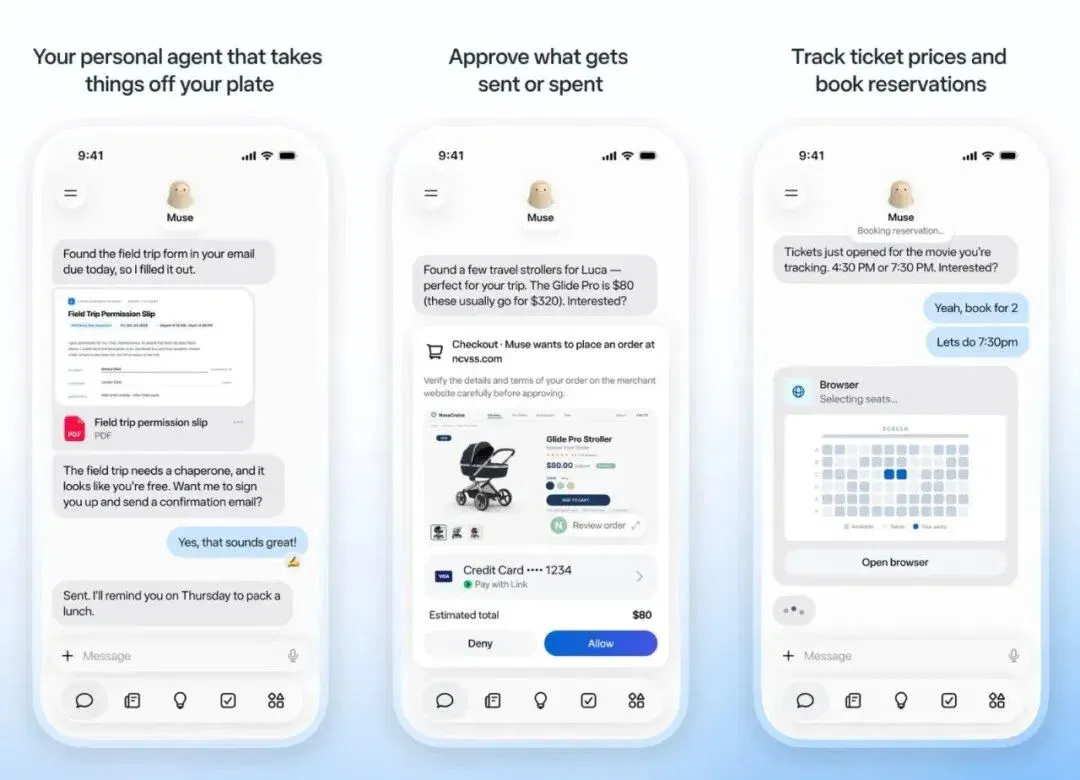
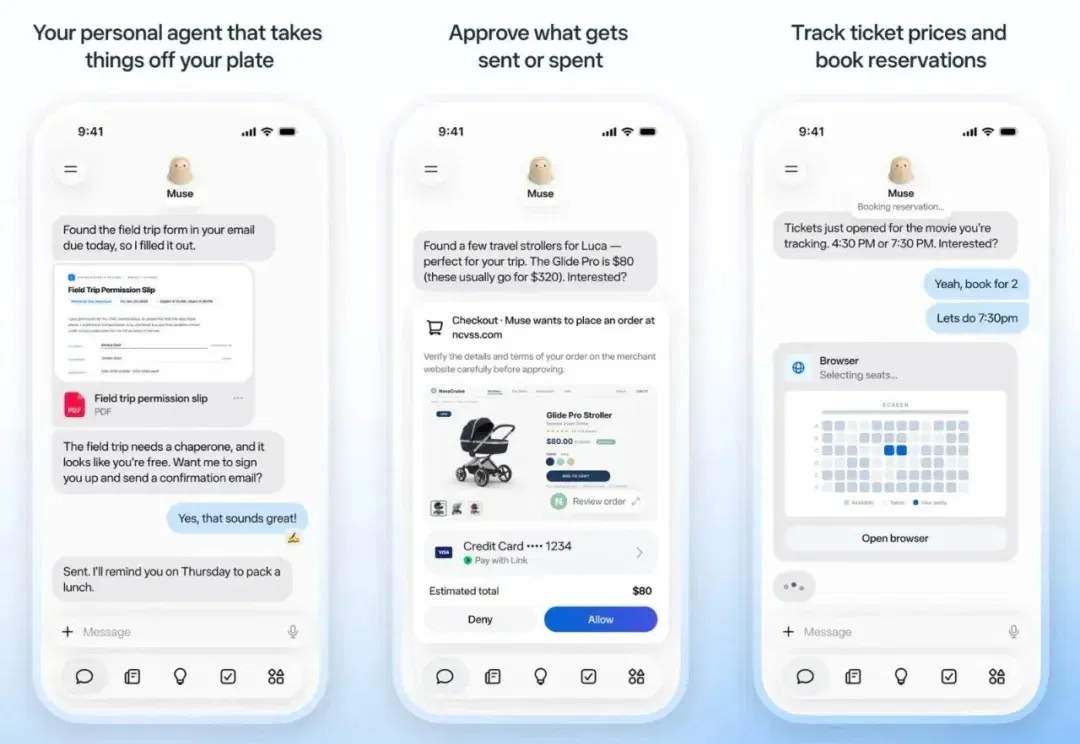
The interface of Meta Muse's personal agent app, showing email, shopping and task execution. Image source: App Store, via iPhoneSoft.
An ideally useful personal agent would gradually piece together 'who you are' and 'how you usually make decisions' through hundreds or thousands of seemingly casual conversations. The more you talk to it, the more smoothly it can get things done for you.
But there are two sides to this. When 'understanding you' becomes a product's core capability, your relationship with that particular AI also becomes increasingly difficult to walk away from.
Before AI can get things done for you, it has to truly 'know' you
Internet products have long been trying to 'understand users deeply.' Taobao remembers your saved items, likes and shopping cart; Douyin has figured out which videos make you linger for three more seconds and which ones you watch all the way through repeatedly. But what traditional recommendation algorithms collect is mostly the traces left by your behavior.
Recommendation algorithms are only responsible for keeping you fed with content; they can never truly understand 'why you do it.'
Seeing you scroll through food videos late at night for three days in a row, an algorithm immediately recommends late-night meal deals. But perhaps dieting is so painful that watching videos is your way of compensating. It knows you have bought dozens of programming books this year, but not whether you are preparing for a career change or buying them for your university-age child.
Each app is like a blind man feeling one part of an elephant: its data is locked in its own silo, and none can piece together a complete picture of your life.
The information you reveal when chatting with AI, however, is on an entirely different level.
In a chat window such as ChatGPT's, you may express more than your actions alone reveal, especially in voice mode: lately you have been thinking about changing jobs, but fear a gap in income; you bought a gym membership, yet when the weekend comes, all you want to do is lie down and catch up on sleep...
Your words contain specific goals and tasks, but also hidden hesitation and inner conflict. They reveal a living person whom no browsing history or click data can calculate into existence.
A workshop report released this year by the Stanford Digital Economy Lab makes a perceptive point: as basic reasoning capabilities in large models become less remarkable,
persistent, accurate 'Personal Context' will instead become the scarcest resource of the AI era.
The report argues that the self people reveal in a chat box is far more complex than what they reveal in a search box. An agent that wants to manage long-term affairs for you across apps cannot start questioning you from scratch every time you meet, as if you were a stranger.
To capture this strategic high ground, major companies in China and abroad have already begun closing in along different paths.
When upgrading its memory system, OpenAI emphasized that ChatGPT would not only remember things you explicitly asked it to retain, but also extract useful background for future conversations from earlier casual chats, working in the background much as humans organize memories while dreaming. Meta's Muse and Doubao's newly released Xiaodou have independently combined 'long-term memory' with 'proactive execution.'
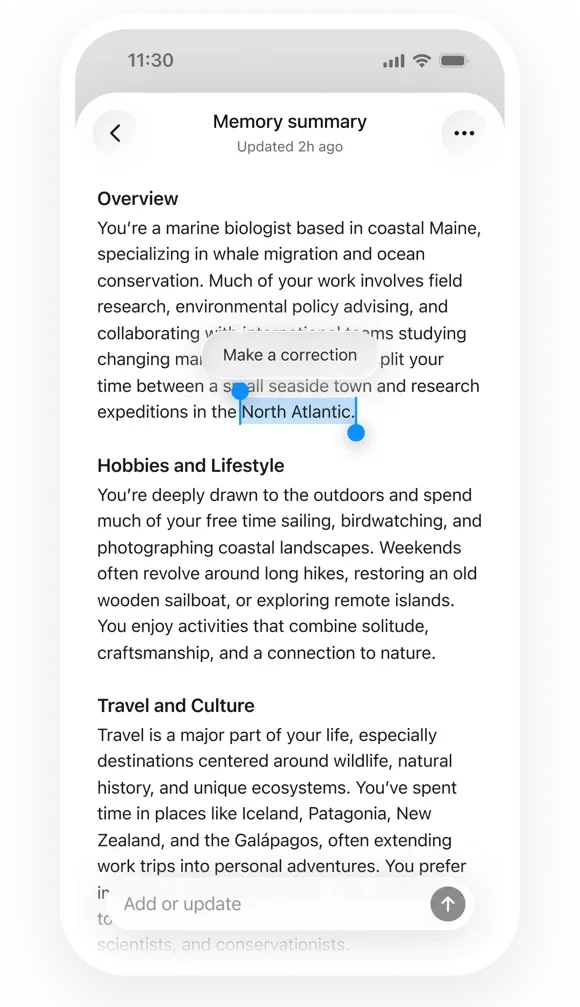
ChatGPT's 'memory summary' is available for users to view and correct. Image source: OpenAI.
That might mean automatically accounting for a friend's dietary restrictions when planning a group meal, as in Muse's official demonstration, or directly asking to connect your Gmail, photos and calendar, as Google's Personal Intelligence does, so Gemini can 'read' and understand you from years of digital assets without waiting for you to spell everything out.
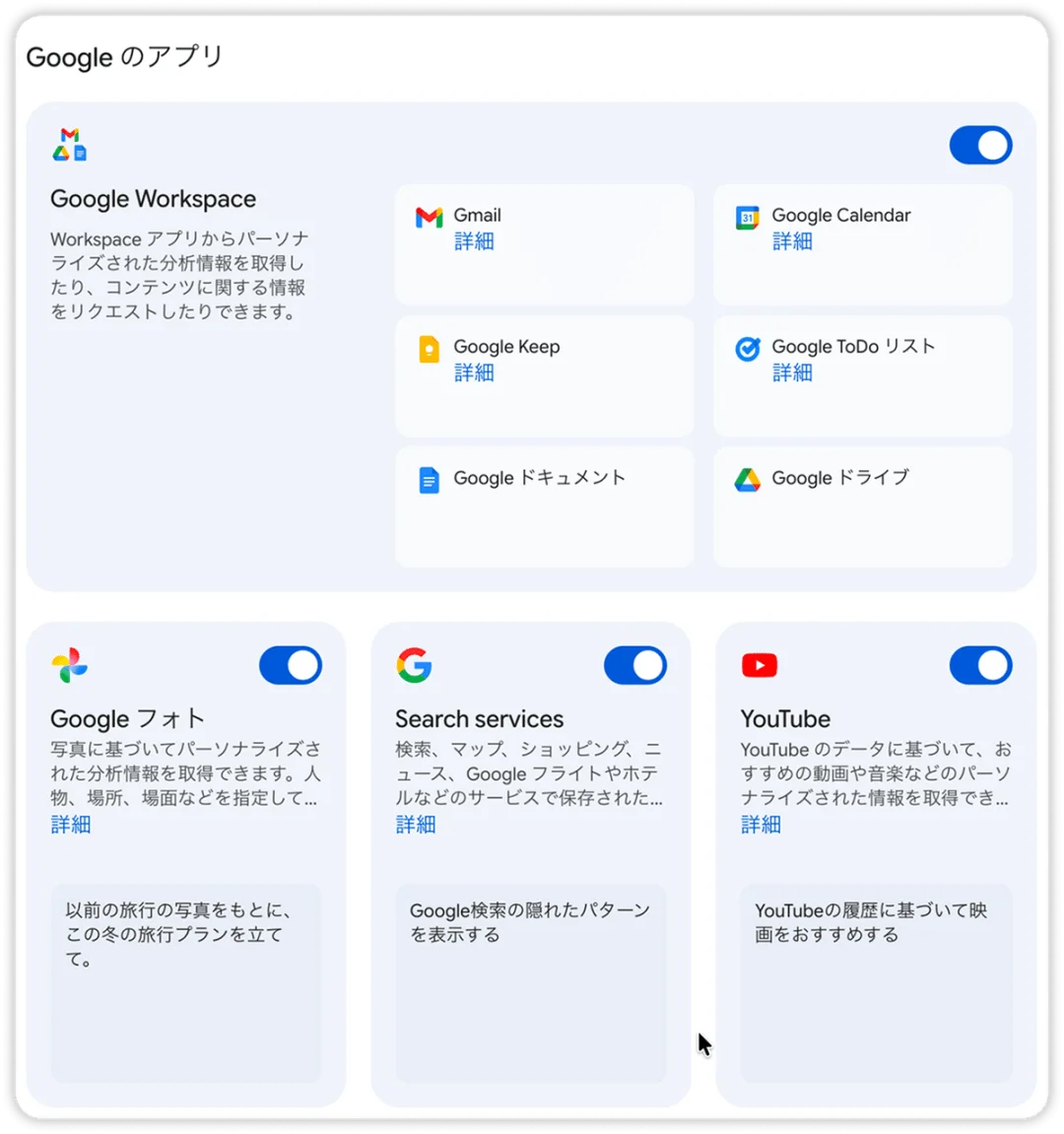
Gemini Personal Intelligence's app-connection settings, showing authorization for personal information sources such as Gmail and photos. Image source: Google Gemini's official materials.
Xiaodou, for example, aims to connect to various apps on your phone, find your saved items and favorites, and seamlessly take over your miscellaneous to-dos. Their core logic is the same: put memory directly to work in service of action.

An official public-beta promotional image for Doubao's personal assistant Xiaodou. Image source: Doubao's official materials, via Qianjiang Evening News.
Whether it is a Silicon Valley giant or ByteDance, the company behind Xiaodou, competing to become 'more useful the more you chat' is not fundamentally about maximizing conversation time. The real deciding factor is whose system can distill a sufficiently accurate 'personal profile' from lengthy conversations and authorizations, let that profile grow with you, and call it up at precisely the right second.
An agent too eager to understand you can also get the wrong idea
Getting AI to remember you is far more complicated than dumping every chat log into a database. People are the most changeable of creatures, and 'memory' without a sense of boundaries can easily become an intrusion or a disaster.
This is also related to model capabilities. Suppose an employee working overtime late at night vents to Xiaodou, or another AI: 'I never want to do this lousy job again!' Should the AI treat that as a carefully considered career plan and start sending job listings every day? Or should it understand that this is simply an emotional outburst that calls for reassurance?
Or perhaps you were saving every penny to buy a home last year, but this year you have more money and decide to treat yourself to a good trip. You once told a certain friend everything and met for a meal every week, but later quietly lost touch. If AI merely keeps mechanically piling old information into a 'memory bank,' it will soon become a personal assistant unable to read the room: intelligent, but not quite intelligent enough.
Stanford's report notes that a competent personal-memory system must behave like a meticulous archivist, tagging every memory with its source, timestamp and confidence level. More importantly, it must strictly distinguish 'facts the user explicitly stated' from 'inferences the model guessed for itself.'
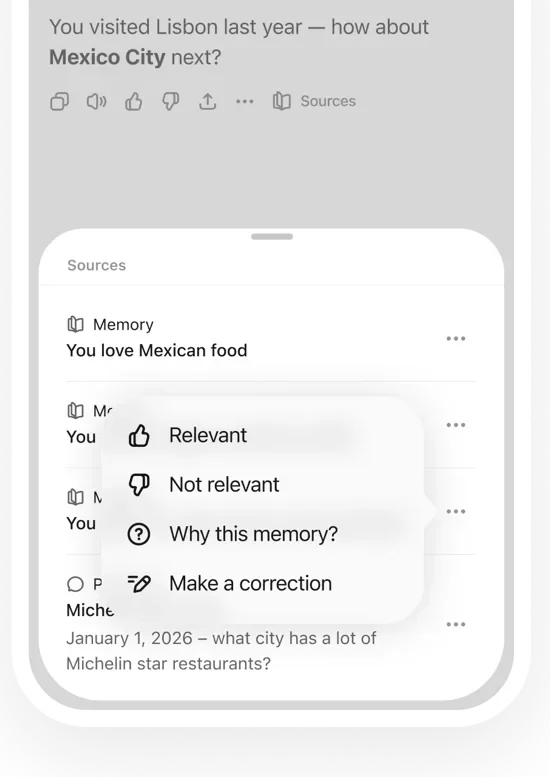
ChatGPT's memory-source interface, with options such as 'why this memory came up' and 'make a correction.' Image source: OpenAI.
Users must also have the right to inspect, edit or even erase these memories with one click at any time. Otherwise, the harder your agent works to understand you, the more likely it is to stubbornly carry out misguided tasks based on 'a version of you that is long out of date,' or even 'a version it imagined for itself.'
This is precisely the most fundamental dividing line between personal agents such as Xiaodou and traditional tools.
If a search engine gave you the wrong answer in the past, you could simply search again with different keywords, without lasting consequences. A personal agent that 'remembers you incorrectly' in its underlying logic, however, may make decisions in the wrong direction for you day after day while booking restaurants, arranging schedules or filtering information. It appears increasingly attentive and increasingly willing to take matters into its own hands, while you do not even know what information it is acting on.
If you replace it, will the new AI still know you?
Once 'personal memory' starts to have a real influence on daily life, a problem everyone must face comes to the surface: leaving a product will become more difficult than ever. This is why major companies are betting so heavily on personal agents such as Xiaodou and Muse. Once you have brought an agent up to speed, the cost of replacing it is no longer just downloading another app.
The new agent may have a smarter underlying model and be more adept at operating your phone, but it is like a stranger who has just started the job. It does not know which family member is allergic to lactose, or remember that you have already tried three different diet-management approaches over the past six months and that all three failed. To get the new assistant back to the point where one sentence is enough, you have to explain the past few months, or even your earlier life, all over again.
The giants have thought of ways to lure away rivals' users. This year, Google added a 'memory moving' feature to Gemini, encouraging users to import memory summaries and chat histories from other AIs. You can ask your old assistant to write a short 'biography' of you and copy it to Gemini, or simply package and upload your past chat history.
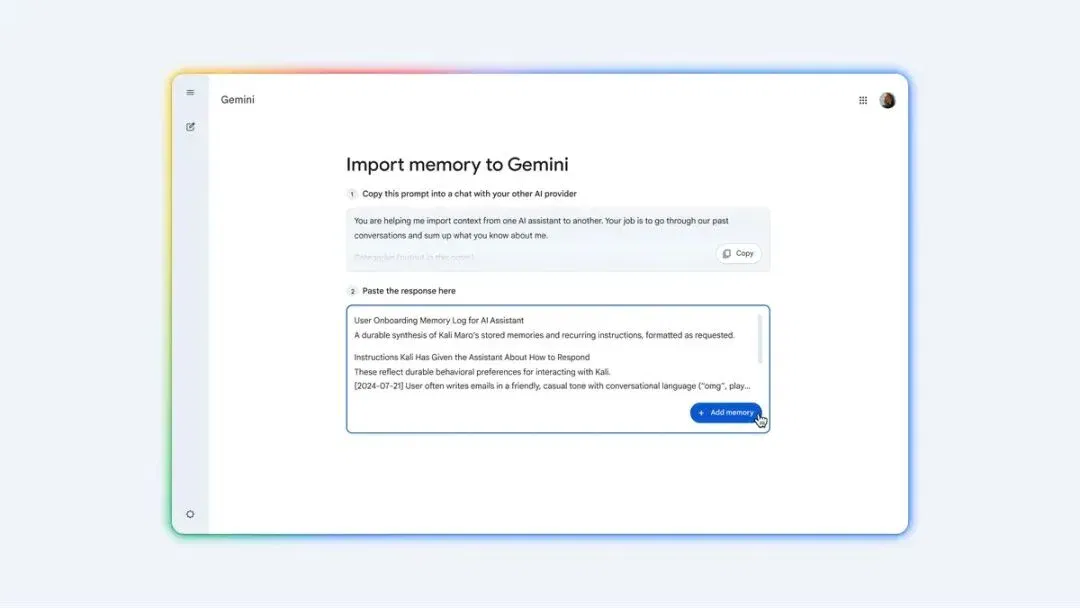
A demonstration of Gemini's 'import memory from other AIs' feature. Image source: Google.
But this still barely scratches the surface. 'Moving over a chronological record of past conversations' and 'having a new system instantly understand which habits still hold and which were only temporary expedients' are two entirely different things.
Stanford scholars have imagined a more ideal future in which everyone has their own 'Portable Memory' layer that they can carry with them. Like a digital identity card, it would let different AI services read only the necessary portions, according to the task and their permissions. For example, an agent booking a restaurant could read your dietary restrictions, but would have no right to inspect all your medical examination reports.
Tim Berners-Lee, the 'father of the World Wide Web,' undertook a similar venture called Solid many years ago. Its central concept is to give every internet user a dedicated Pod, or Personal Online Data Store.
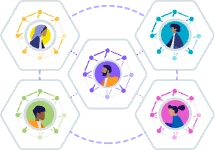
An official diagram of a Solid Pod, illustrating authorization between personal data and applications. Image source: Solid Project.
Following this idea, this article imagines personal data, preferences and memories being stored in one's own Pod. If assistants such as Meta's Muse, Google's Gemini or Doubao's Xiaodou support the relevant interfaces in the future, they could read necessary memories such as 'you don't eat nuts' with the user's authorization, and have that permission revoked after completing the task. This could reduce the cost of having to explain your background again when switching assistants. However, it does not mean that all these products currently connect to Solid, nor does it guarantee that memories can move between different assistants without any loss.
Unfortunately, such a system is difficult to introduce in today's commercially fragmented world. Even the 'father of the World Wide Web,' after nearly ten years of promotion, has been unable to persuade internet giants to surrender sovereignty over user data, because doing so touches the foundations of their competitive moats.
In the AI era, as 'personal memory' replaces basic computing power as the most expensive commercial moat, platforms that have worked so hard to 'raise' you through day-and-night companionship will be even less inclined to open their doors and put this core asset into a 'data pod' you can take away whenever you wish. Even Stanford's report appears rather pessimistic about this.
For more than a decade, we have worried that social apps would create 'information cocoons,' comfortable places people would not want to leave. In the face of AI today, the outer walls of those cocoons seem particularly impenetrable.
This article comes from APPSO, and was written by APPSO.
Related topics
After reading
Join the AINRK community
Read how to join the community and connect with people working in AI.
Related articles
Continue reading related topics and articles in this category.
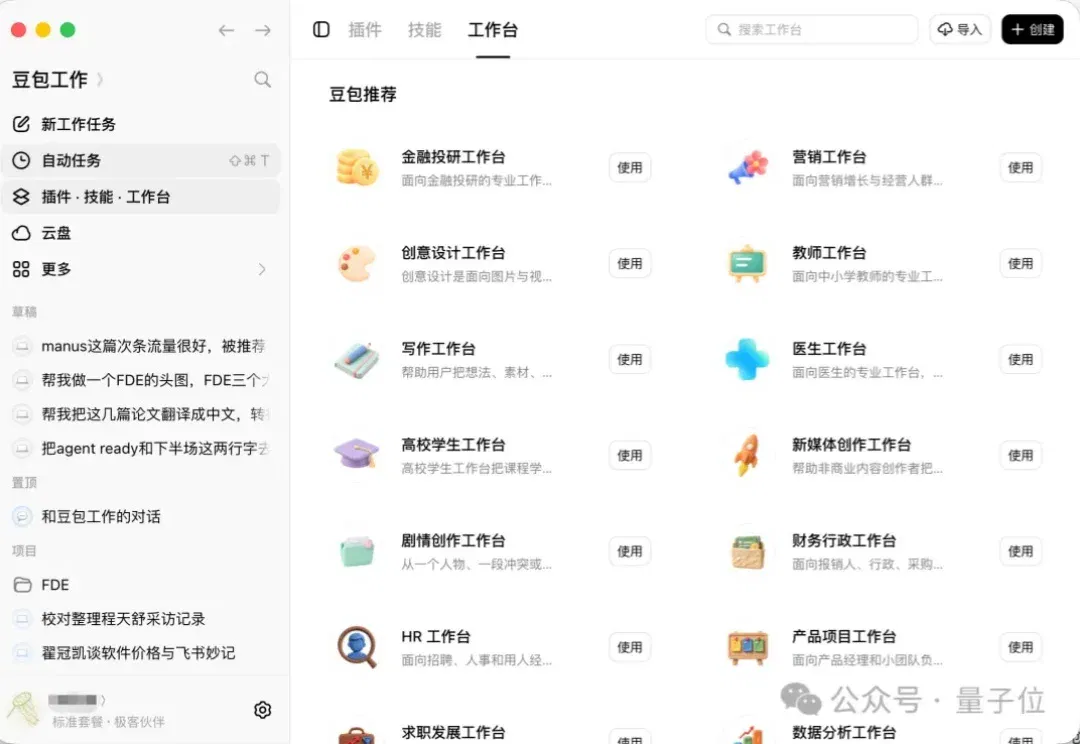
Doubao Work Adds 21 Professional Workbenches: Four Task Trials and Human Review Limits (opens in a new tab)
QbitAI tries Doubao Work's new workbenches for finance, design, medicine and teaching. They produce useful drafts but sometimes miss instructions. The author's 80/100 is subjective; facts, medical information and final deliverables still need professional review.

Doubao adds map-based store discovery linking merchant details, deals and navigation (opens in a new tab)
Dujia tests Doubao’s Find Stores feature, which displays nearby merchants, group-buy offers and navigation and connects to ordering. The report examines conversational AI in local services; actual pages determine feature availability.
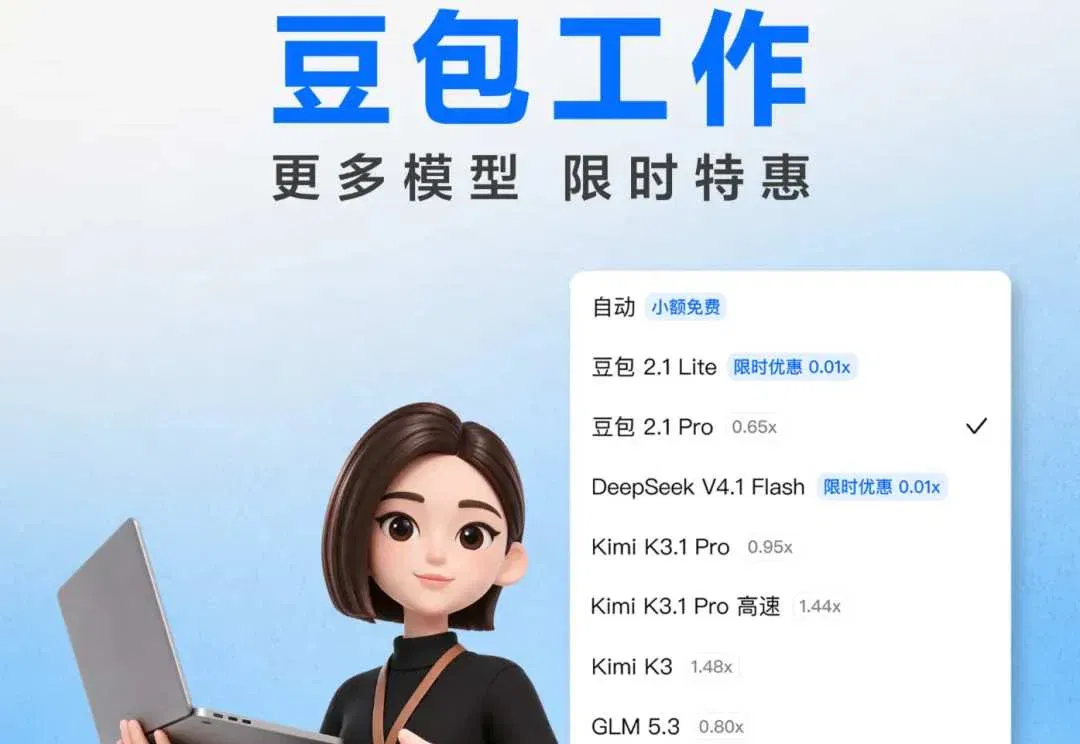
Doubao Work adds Kimi, GLM and DeepSeek and displays model credit multipliers (opens in a new tab)
The platform expands third-party model choices, adjusts some credit multipliers and introduces limited-time discounts, letting users choose models for different tasks within one work interface.

赵祺负责豆包前,怎样积累产品、增长与组织经验 (opens in a new tab)
报道回顾赵祺从豆瓣阅读、豌豆荚到字节跳动的履历,以及他接手豆包后面对的产品整合和商业化课题。月活与组织变化按原报道时间和口径呈现。
Claude Code 和 Codex 里的个人资产,可以跳槽到豆包工作了 (opens in a new tab)
把 Claude Code 和 Codex 搬进豆包工作,只需点一下。