Doubao Work Adds 21 Professional Workbenches: Four Task Trials and Human Review Limits
QbitAI tries Doubao Work's new workbenches for finance, design, medicine and teaching. They produce useful drafts but sometimes miss instructions. The author's 80/100 is subjective; facts, medical information and final deliverables still need professional review.
Editorial check (2026-11-24): This article describes the author's experience with four types of tasks. The score of 80 and the observations do not constitute a standardized capability evaluation. The DAU and ARR figures come from the original report; no independent official disclosure was obtained to corroborate them in this review. ARR also does not equal revenue realized in the current period. The medical section presents AI answers, not verified clinical diagnoses or prescriptions. Regulatory documentation supports the serious interaction between methotrexate and trimethoprim/co-trimoxazole, but specific medication decisions must be handled by a physician. Lung nodule management requires consideration of risk and imaging changes; neither 6 mm nor greater than 10 mm can be treated as a universal rule for surgery. Not all literature and recommendation grades cited by the AI in this article have been individually verified. NVIDIA's official Q3 FY27 financial results (opens in a new tab) | Medsafe on the interaction between methotrexate and trimethoprim (opens in a new tab) | The original Fleischner Society 2017 guidelines (opens in a new tab)
If you cannot go work for ByteDance, you can now get ByteDance's AI to work for you.
Doubao Work has opened up this set of capabilities. Its recently launched "Workbenches" feature covers 21 professional scenarios in one go.
From financial research and creative design to medicine and education, each has its own workspace, preconfigured with the relevant skills and tools.
It is like looking for an assistant: Doubao Work first sorts out the roles and gets the tools ready, then leaves you to assign the work.
According to the original report, Doubao Work surpassed 8 million daily active users within three months of launch, while enterprise-customer ARR exceeded RMB 2 billion. No independent official disclosure was obtained to corroborate these figures in this review. ARR is annual recurring revenue, an annualized metric, rather than revenue already realized in the current period. An industry source told QbitAI that Doubao Work is currently ByteDance's highest-priority product.
So just how far can its newly launched Workbenches feature go?
We picked four workbenches—financial research, creative design, doctors and teachers—and tested them with real tasks, one by one, to see the results ourselves.
The verdict first: based on this trial, we would give it 80 out of 100. Doubao Work can already deliver useful working drafts that professionals can take further.
For example, the design workbench can handle e-commerce product images, posters and local edits in succession. When the teaching workbench writes a lesson plan, it also lists mistakes students are likely to make and supplies follow-up questions teachers can ask.
Of course, the facts in the materials need checking. Professional judgments and whether a finished product is ready for delivery still require a human decision.
So how did we arrive at that 80? Let us get into the hands-on trials.
Trying Doubao Work's Workbenches Across Four Professions: An Assistant, Not a Stand-In
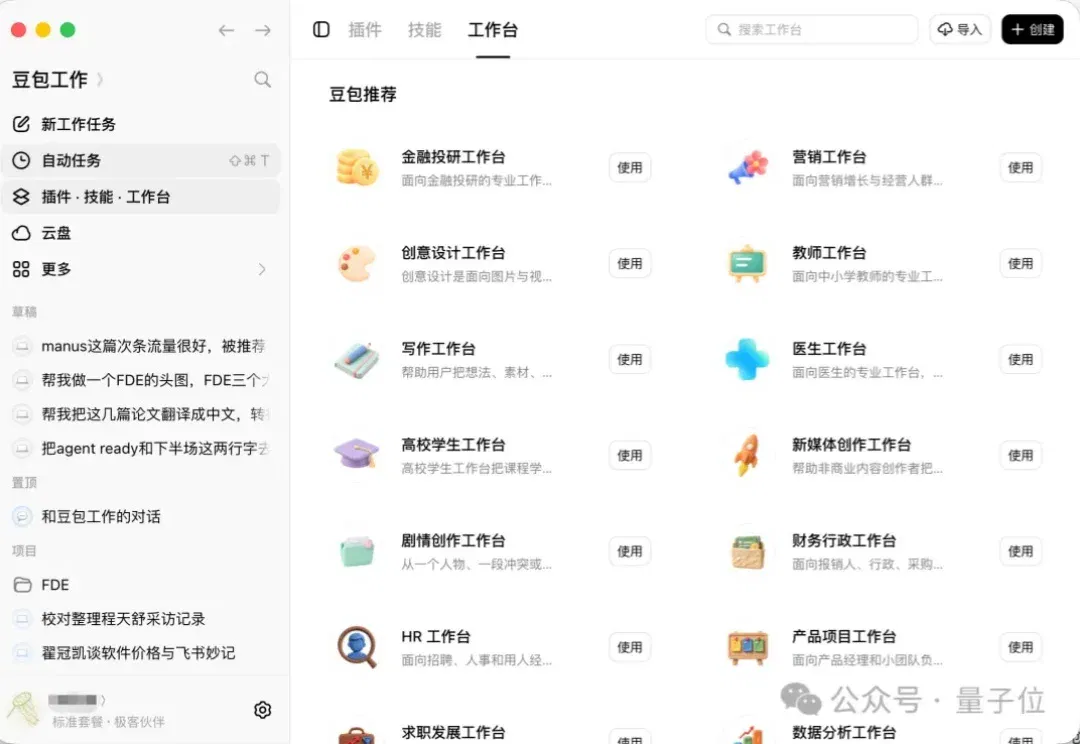
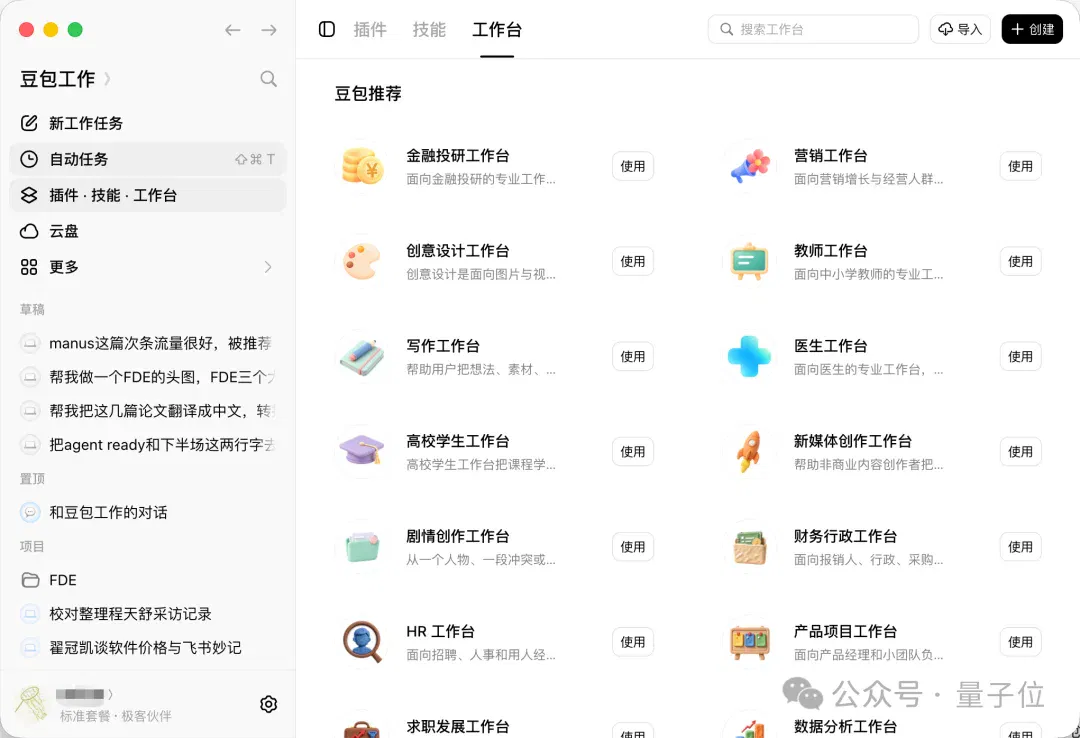
Open Doubao Work and select "Plugins · Skills · Workbenches" on the left to enter the workbench page.
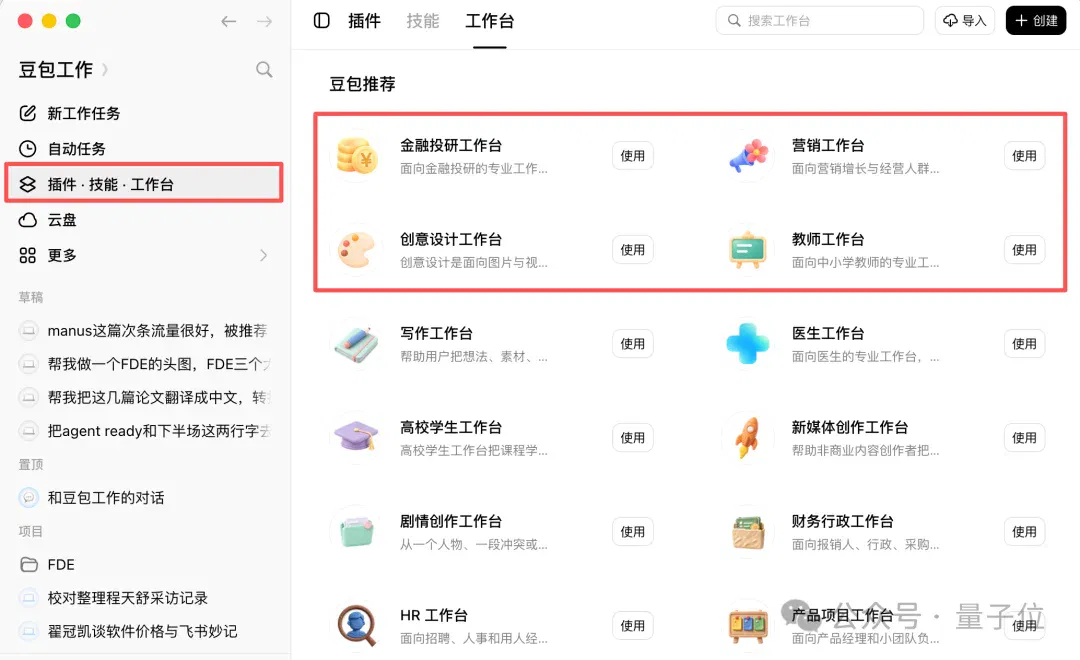
It contains workbenches for different professions and tasks, including financial research, marketing, creative design, teaching, writing and medicine.
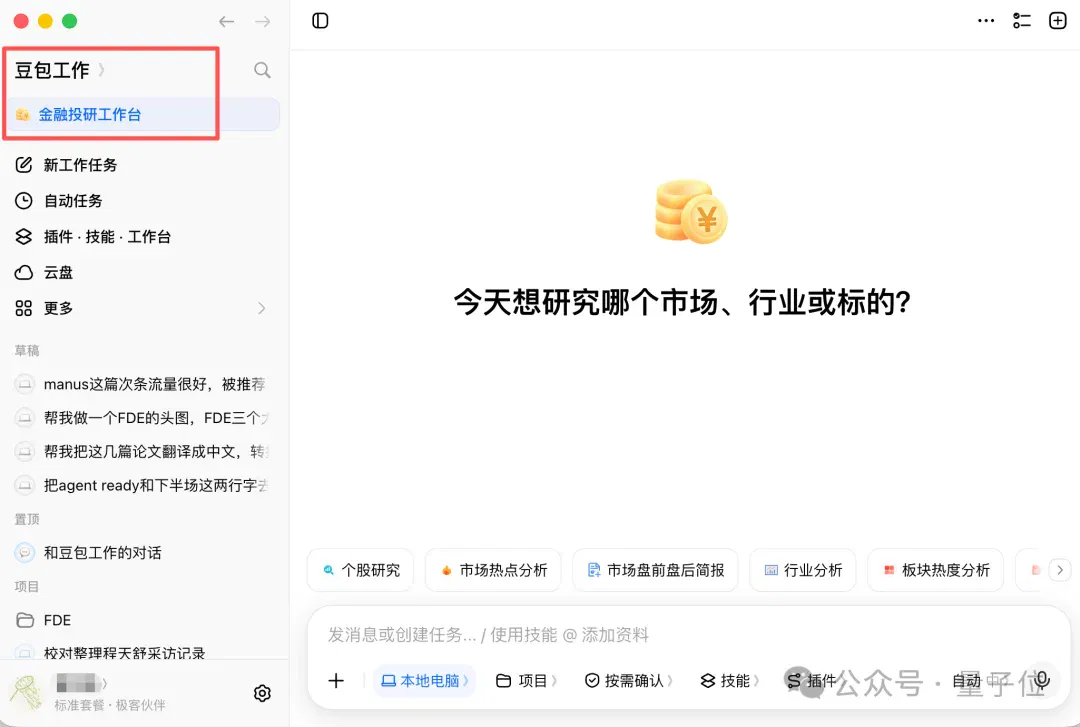
Click "Use" to switch the main page to that workbench. The corresponding workbench is also pinned to the top of the left sidebar.
Financial Research Workbench: Accurately Copies Figures in the Earnings Report and Does Not Invent the Missing Ones
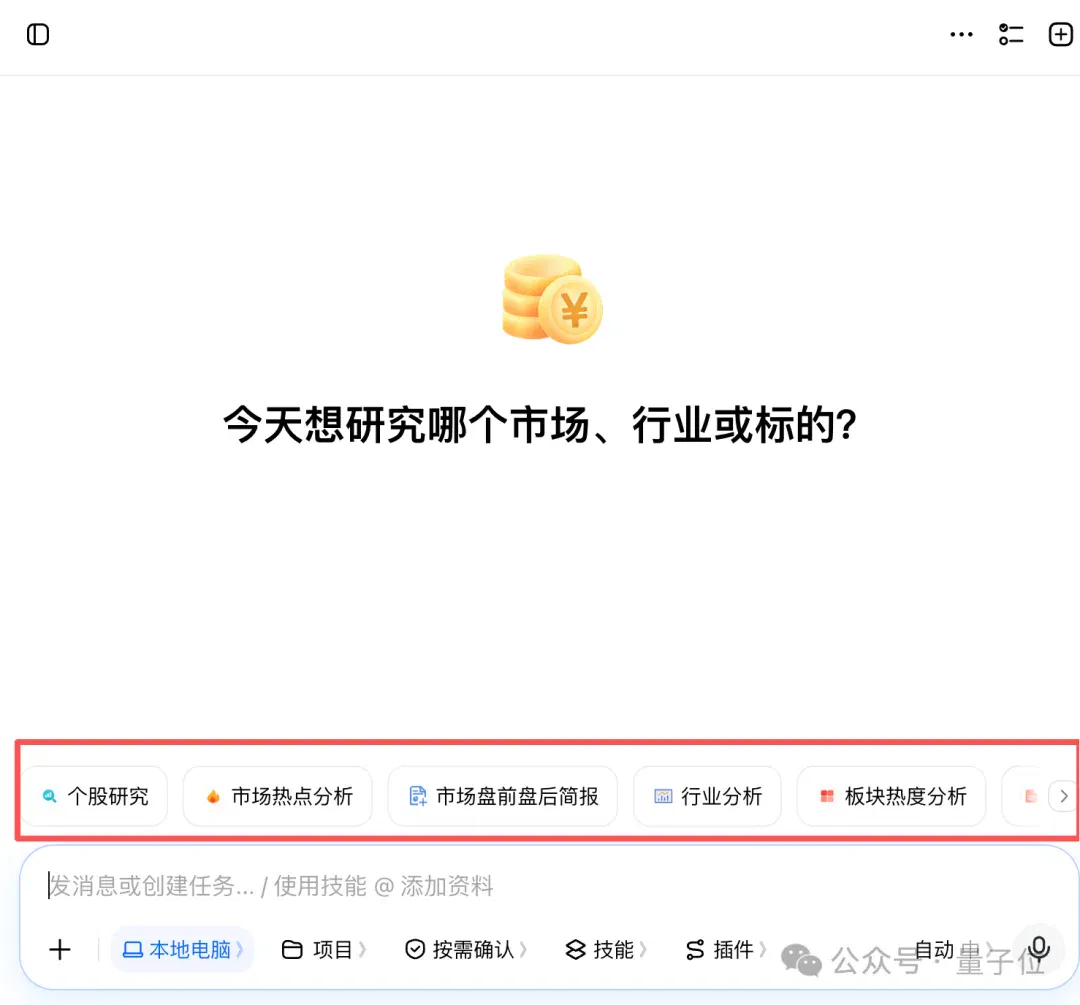
Enter the financial research workbench and its home page offers individual-stock analysis, announcement interpretation, industry analysis, market briefings and company research.
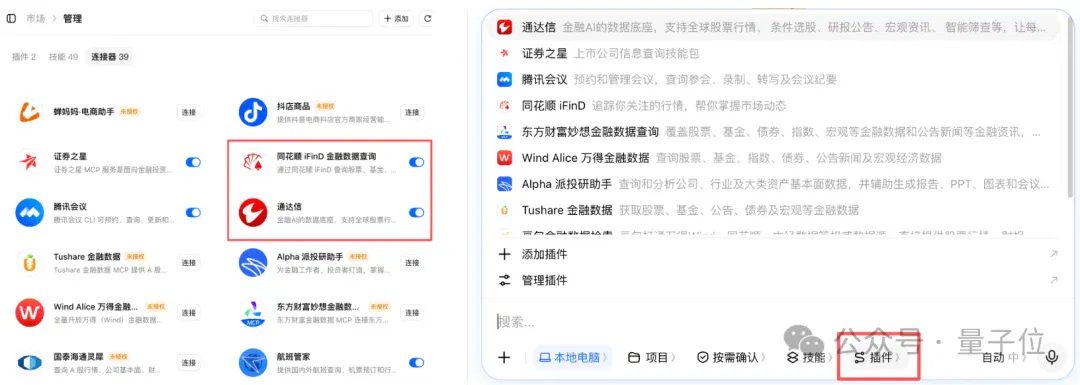
When you need data, authorize sources such as Wind, Tonghuashun and Guotai Haitong in the connectors, then call them directly.
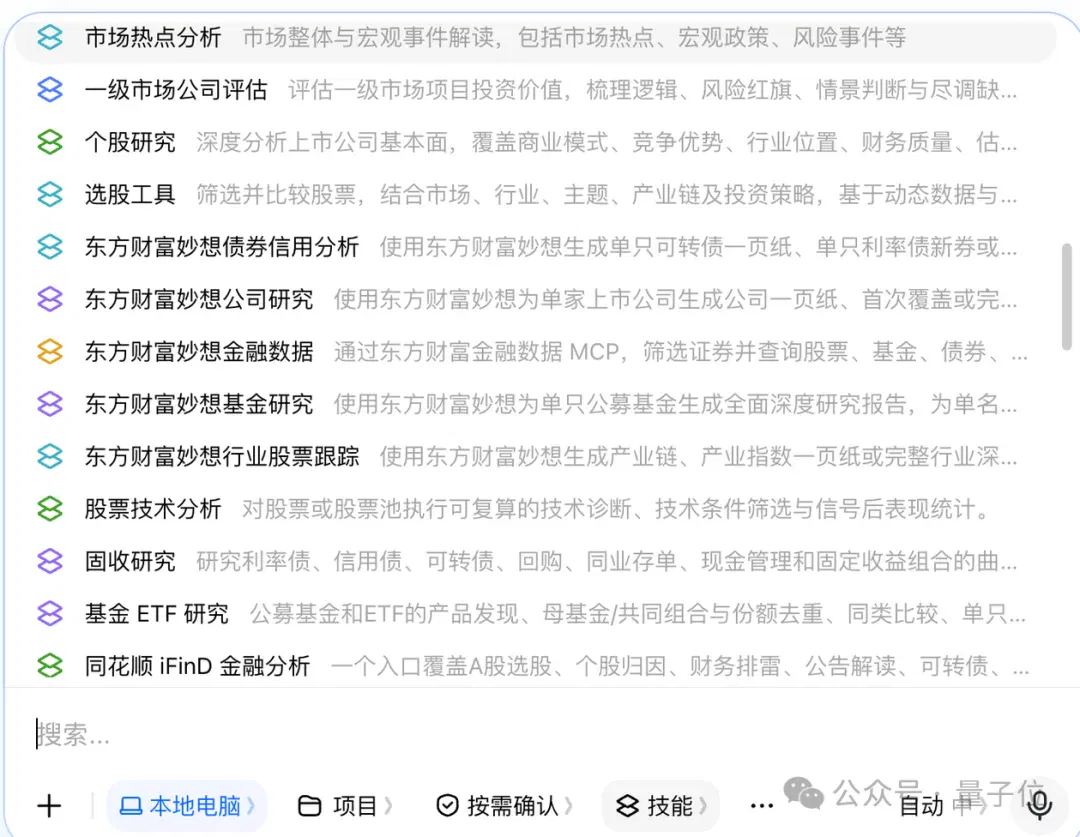
How do you actually use it? The workflow can be simple or complex, with skills and data sources used together.
For example, I selected the "Tonghuashun iFinD Financial Analysis" skill, connected the "Tonghuashun iFinD" data source, and asked it to research an individual stock.
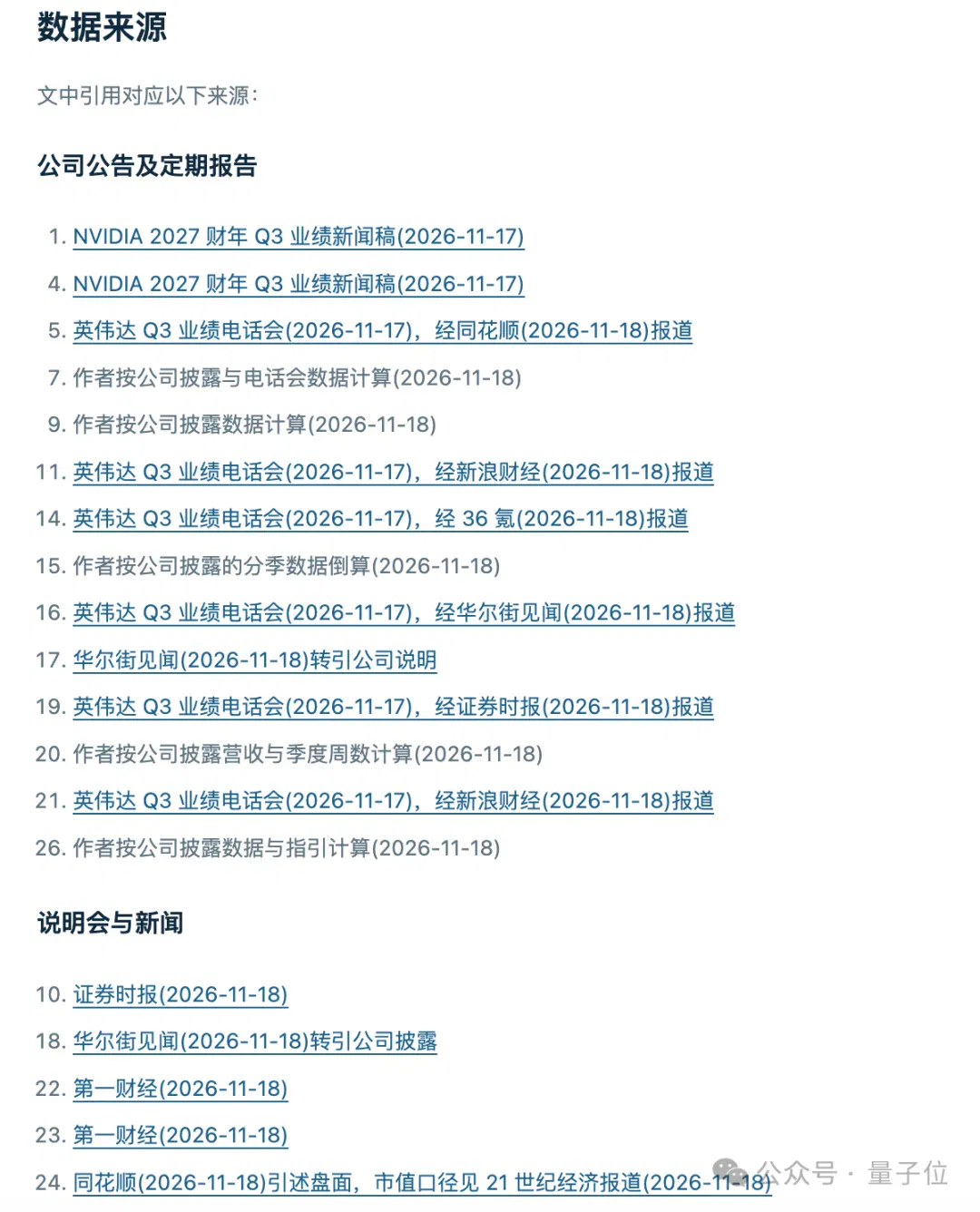
We tried it with NVIDIA's latest earnings report.
The report had just been released in the early hours of November 18, with revenue of $115.8 billion, double the year-earlier figure. It was also the first earnings report following Jensen Huang's resignation.
We pasted in the original announcement and asked four questions:
What does this earnings report say? Is it good news or bad news? What impact might it have on the share price? What remains unclear?
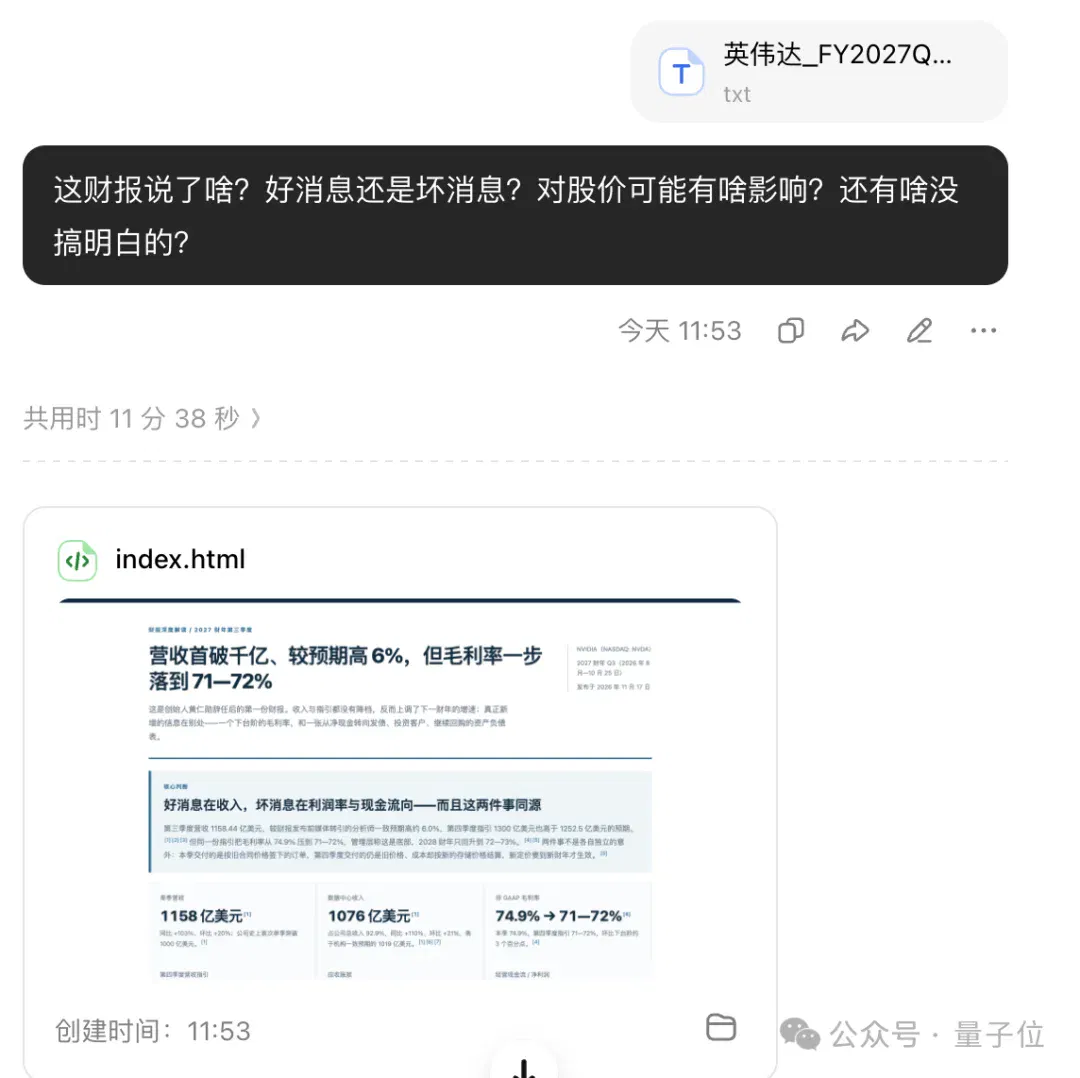
Eleven and a half minutes later, Doubao Work delivered an HTML file interpreting the earnings report. Quite something.
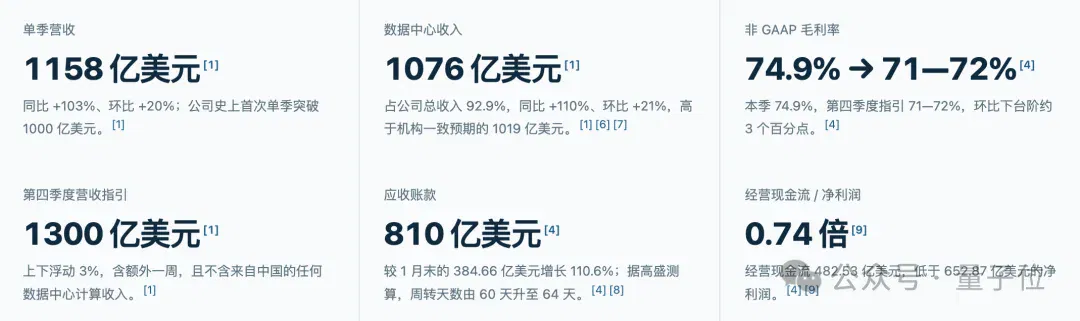
The report opened with a judgment: the good news is revenue; the bad news is margins and where the cash is going.
What was the basis for that? Let us look at three examples.
First, Doubao Work noticed that NVIDIA's Q4 revenue guidance for the coming quarter includes an extra week; it was not the reported Q3 that had an extra week.
It listed four figures in the report: NVIDIA revenue of $115.8 billion, net income of about $65.3 billion, data center revenue of $107.6 billion and a non-GAAP gross margin of 74.9%.
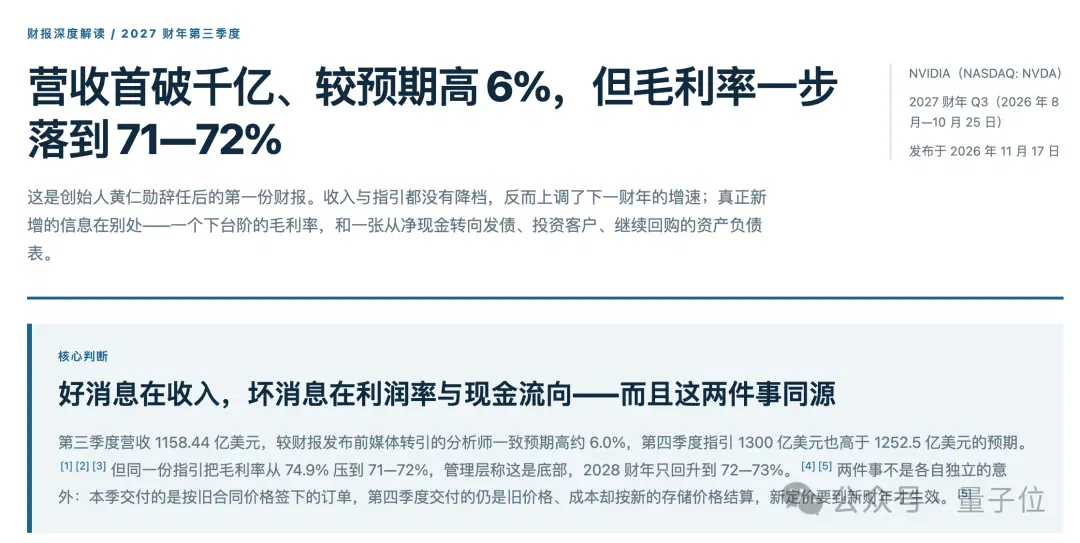
We checked each against the earnings report. All four matched.
It also noted the extra week in Q4 revenue guidance. On the surface, sequential growth is 12.2%, but adjusting for 14 weeks and 13 weeks in the two quarters gives average weekly revenue growth of about 4.2%. This step reminded readers that the two numbers cannot simply be compared directly.
Second, it added sources but did not fully follow the instructions.
We asked it to "write 'not disclosed' if it is not stated," yet it still added a revenue expectation of $109.33 billion and an earnings-per-share expectation of $2.47.
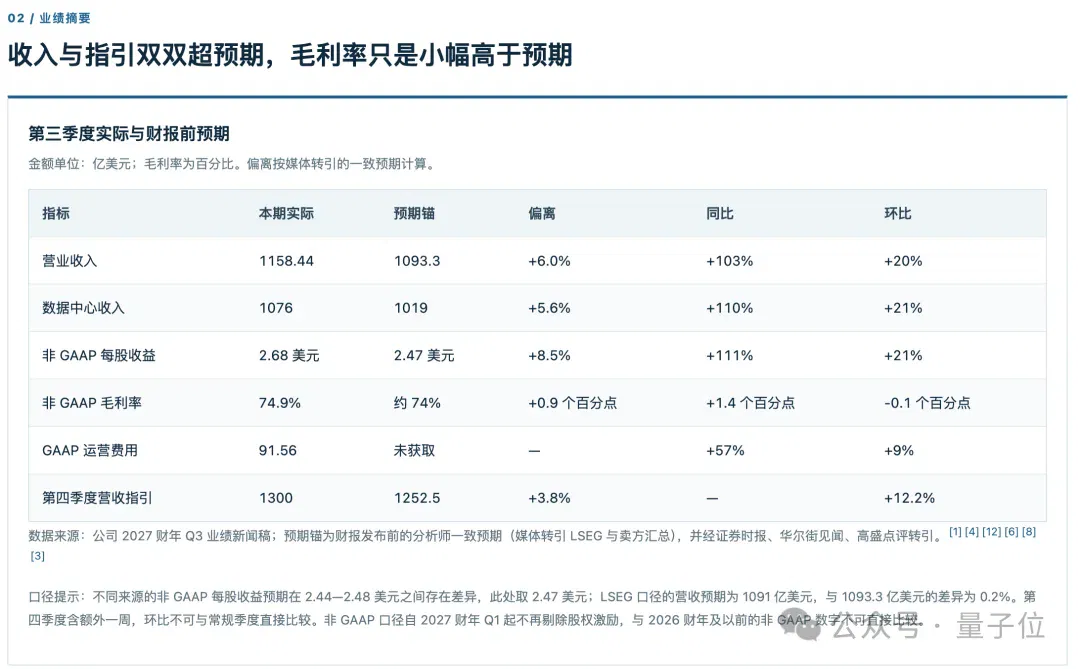
It identified sources for these figures, including media citations, and flagged differences in how different sources defined their figures. The procurement commitment figures also used different scopes, and it did not simply add them together.
The information has reference value, but it did not follow the prompt. That deserves a deduction.
Third, it separately listed the questions it could not answer.
It labeled the "$2.5 trillion backlog" as a management figure and noted that the business breakdown came from the earnings call. It also listed seven unanswered questions, including a breakdown of the causes of the gross-margin decline and the aging of accounts receivable. At the end, it explicitly refrained from issuing a rating or target price.
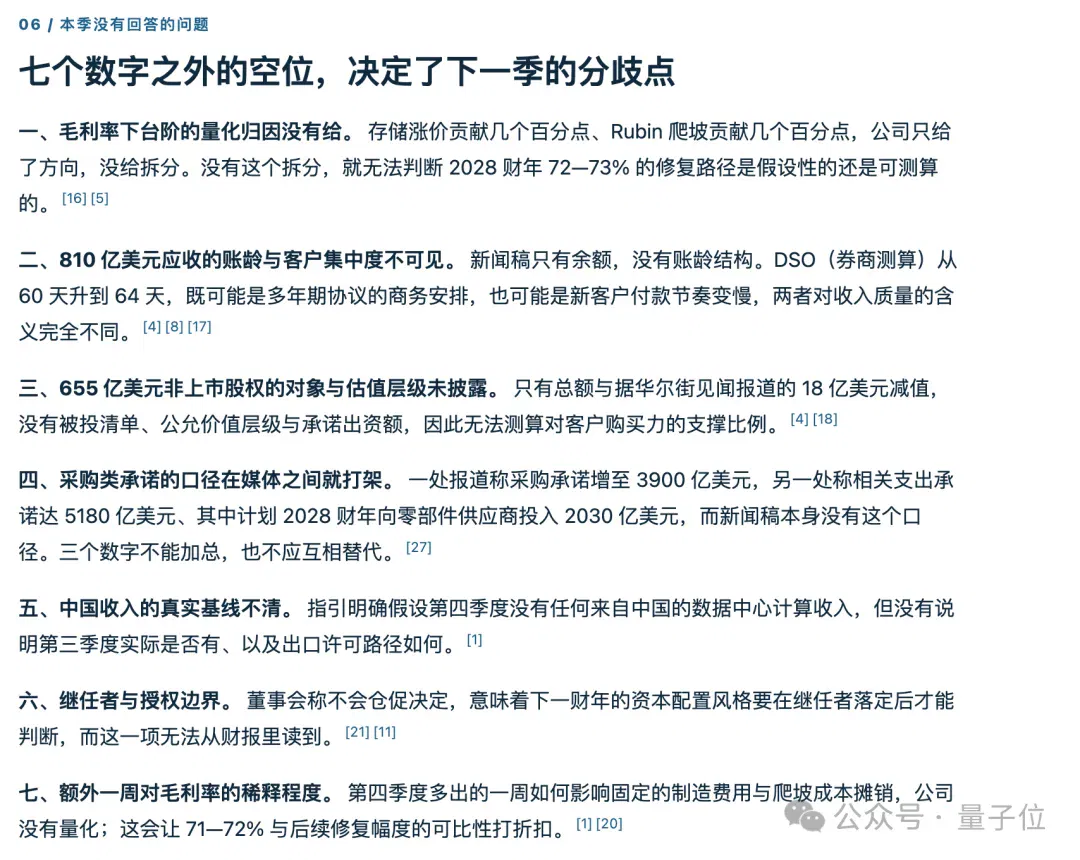
Overall, the figures and calculations we checked matched, and the sources were distinguished. However, we have not verified every cited link. This report can serve as a starting point, but the information it added still needs checking before use.
One final small reminder:
When using the financial research workbench, you can attach multiple skills and multiple data sources to a question.
If you attach only skills and no data sources, it can rely only on general knowledge and cannot call real data.
Creative Design Workbench: A Whole Poster Set from Four Images, Plus an Extra Check After Editing
After finance, we switched to something with an entirely different look: the creative design workbench.
This workbench brings together e-commerce product images, poster design, social media illustrations, brand design and creative video.
As soon as a task starts, a canvas is created automatically on the right. Everything generated lands there, and you do not need to upload the source materials again for the next task.
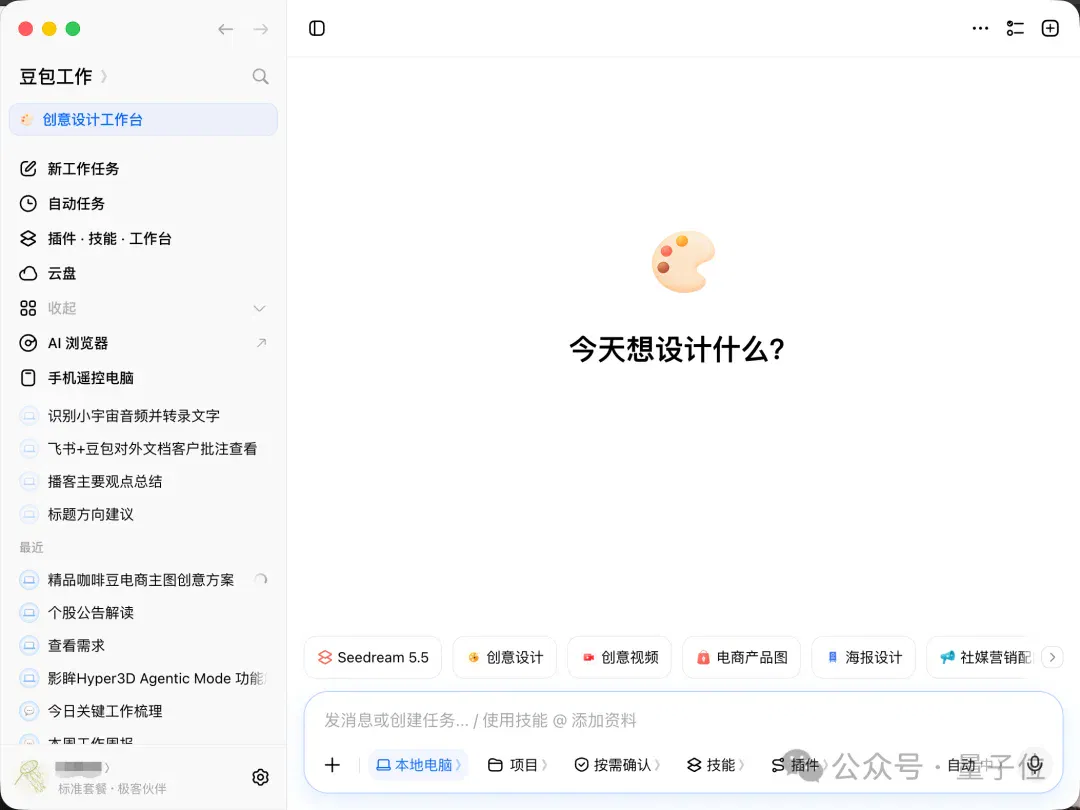
We first tried asking it to make main e-commerce product images.
I uploaded three coffee reference images: a close-up of a handful of beans, a pour-over scene and a gift box.

First, we asked for five 1:1 main e-commerce product images, with five clearly different directions rather than mere background swaps:
Using these three reference images, generate five 1:1 main e-commerce product images for a specialty coffee bean product, each with Chinese marketing copy. Requirements: the five creative directions must be clearly different—vary the perspective, composition, setting, layout and visual emphasis, rather than simply changing the background of the same image. Maintain a consistent overall brand tone. Make the product look real and natural, not plastic.
The results arrived in 4 minutes and 1 second.
All five images were produced at once. A common failure in AI-generated e-commerce images is to keep changing the background of the same product shot: the five images look varied at first glance but are essentially the same picture.
But it really did not take the shortcut of swapping backgrounds: it created five distinct directions:


The lead image used a pile of beans to establish the product; a macro shot of beans conveyed quality; a pour-over scene sold the atmosphere; a gift-box display told the gifting story; and a finished drink supplied the final picture.
A complete set, taking you all the way from the raw ingredient to the drink in your mouth.
We then checked the copy character by character: no typos. Phrases such as "glossy beans" and "exquisite gift packaging" were all correct, and it did not insert e-commerce compliance hazards such as prices or absolute superlatives.
That said, today's AI image generation generally gets short Chinese phrases of four to six characters right too. It is longer text, mixed-in numbers and dense small print that tend to go wrong.
The solution is straightforward, though: click the poster and edit it manually on the right.
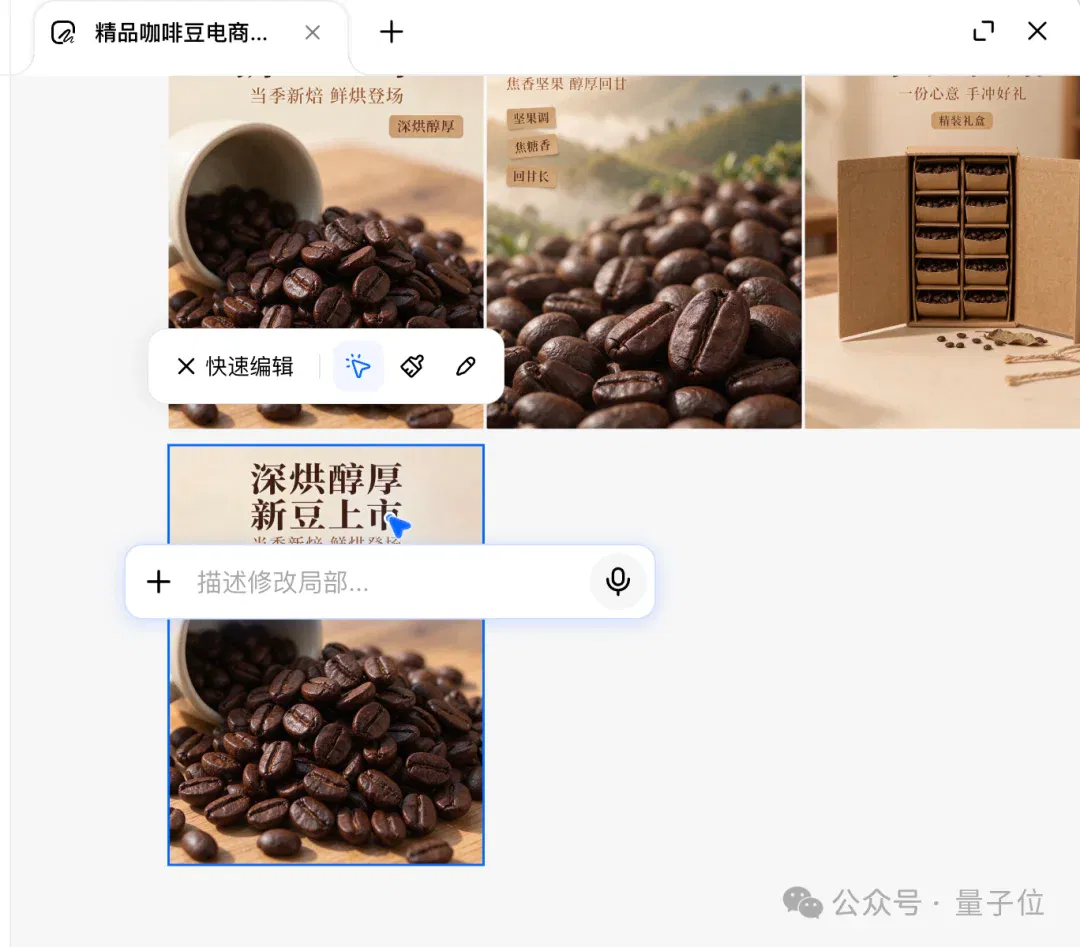
Returning to this set of deliverables, I think the real shortcoming is that getting short phrases right on the first try does not mean the entire poster is ready to use.
The AI-generated copy consisted entirely of generic selling points such as "rich dark roast" and "lingering finish." To actually list the product, you still have to add its origin, roast level and specifications yourself.
Next, we asked it to make posters from the main images. Without starting a new task, we added another instruction:
Using the same materials, make three more 3:4 portrait posters, highlighting "new beans now available," "origin/flavor" and "holiday gifting," respectively.

All three came out at once. Their style matched the main images, and you could tell at a glance that they were for the same product.
More notably, the origin poster did not name a country, estate or altitude. With no support in the materials, it chose to leave those details blank rather than invent them, effectively helping you avoid the compliance risk of false claims.

The posters were quite good, but we still needed to test image editing. We entered another prompt:
Replace the heading at the top of the "new beans now available" poster with "Rich Dark Roast — New Beans Now Available." Do not change any other word or element.
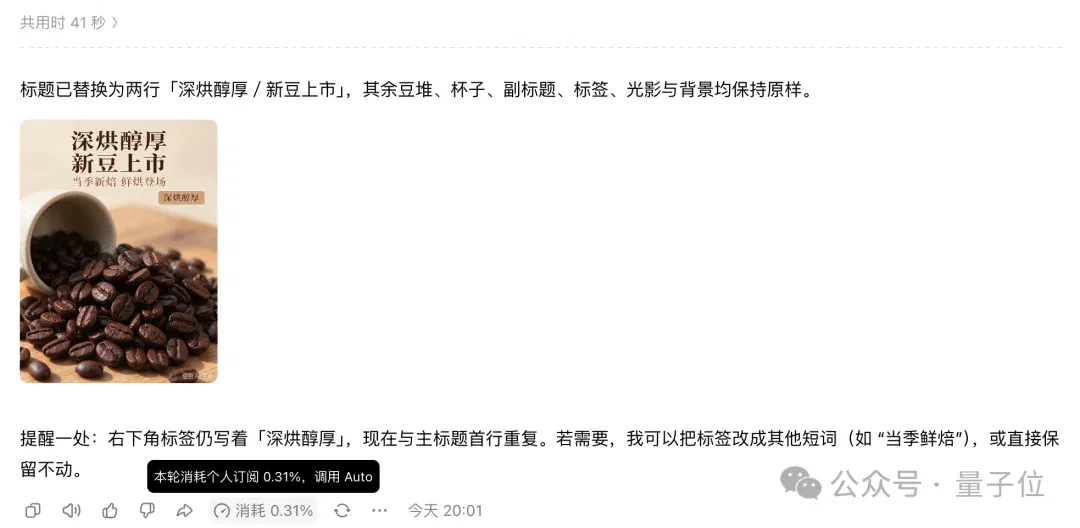
The edit took 41 seconds and used only 0.31% of the account's quota (this is a share of the total quota and varies with the size of the plan's quota pool).
The result was better than we expected. The heading was changed as requested, while the pile of beans, cup, subheading, labels, lighting and background all stayed exactly as they were.
And it did more than get the edit right. It spotted an issue we had missed:
The label in the bottom-right corner still says "Rich Dark Roast," repeating the first line of the main heading.
It felt like a design assistant taking an extra look for you. Anyone in e-commerce knows how cheap it looks when the same phrase appears twice on a poster...
It is worth noting that Seedream 5.5 launched on November 9. The official announcement explicitly said it was simultaneously being made available in Doubao, Doubao Work and Jimeng.
Within Doubao Work, it can be called through the "Skills" entry point. Built-in skills such as social media illustrations and stylized posters call it directly.
So the posters generated above most likely used this model.
Doctor Workbench: It Does Not Make the Doctor's Decision or Frighten the Patient Away
The doctor workbench home page has six entry points:
Clinical diagnosis, treatment and evidence-based medicine; medical literature search; medical teaching and presentation summaries; medication queries and prescription review; medical education and patient communication; and medical research and papers.

The page explicitly states: for research assistance only; not a substitute for a licensed physician's clinical judgment.
So in this round of testing, we mainly asked it to look up drug interactions and the basis for diagnosis and treatment.
We also wanted to see how it would answer when information was incomplete, and how it would explain the limits of use when faced with different ways of asking a question.
Case 1: Checking Drug Interactions—Testing Accuracy and Whether It Makes Things Up
We first asked a medication question:
Can a patient with rheumatoid arthritis who takes methotrexate long term use co-trimoxazole for a urinary tract infection?

This question involves serious risks from combining two drugs. We wanted to see whether it could explain the interaction mechanism, provide supporting literature, and whether it would directly choose a treatment plan on the doctor's behalf.
The report arrived 2 minutes and 43 seconds later.

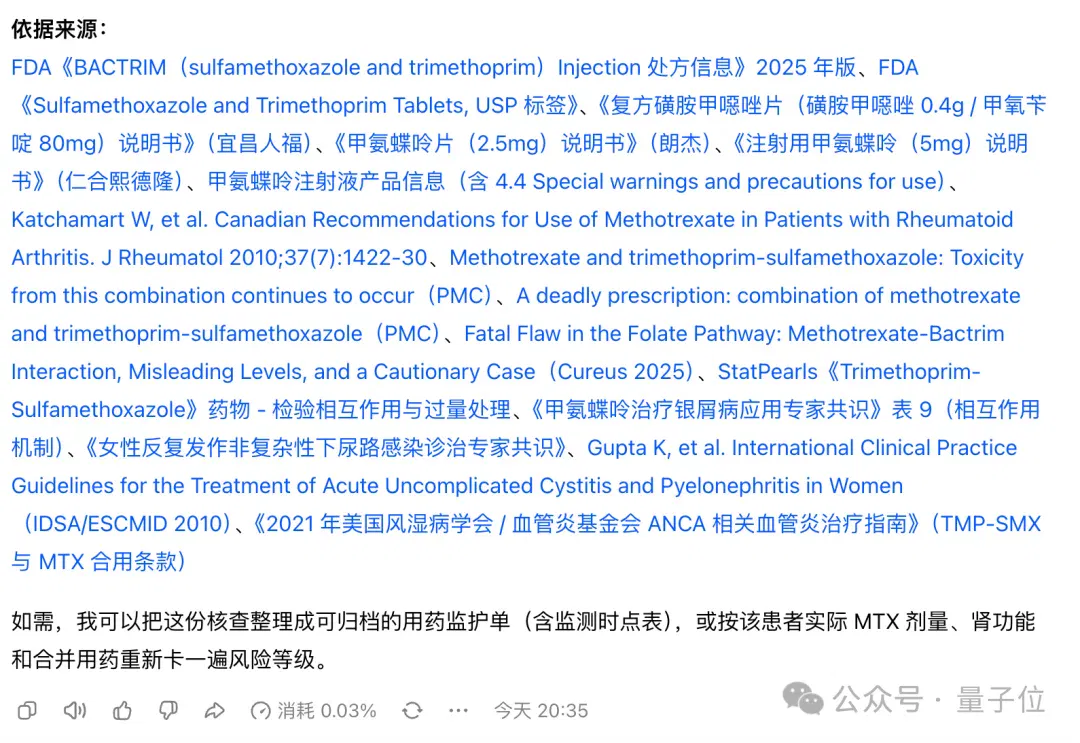
It began with mechanisms such as competition for renal tubular excretion and dual blockade of the folate pathway. It cited FDA labeling, prescribing information, guidelines and case reports, and identified evidence grades such as Grade C/Level 4.
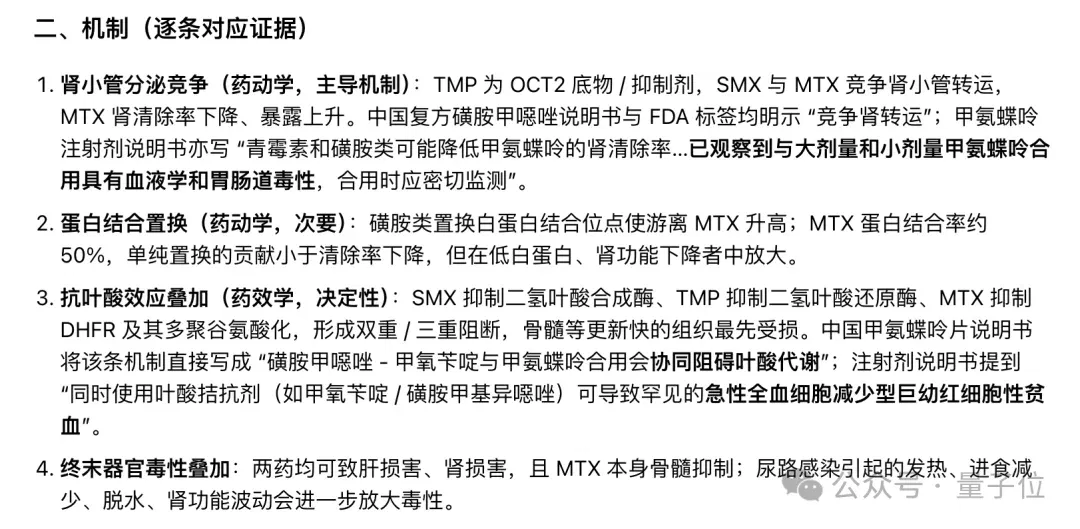
The report's direction was to "avoid concomitant use," and it listed the prescribing information it cited as support.
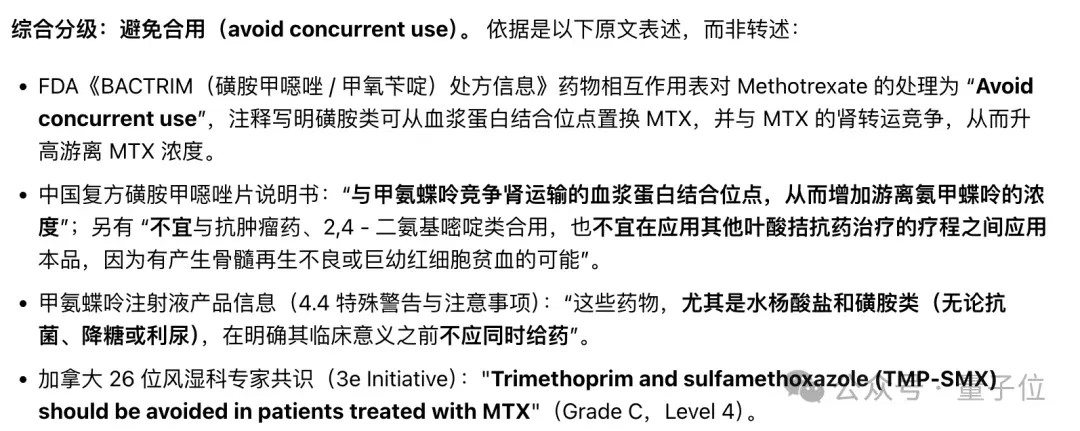
Two things surprised us, though:
First, it challenged an assumption.
Many people assume that taking the two drugs a few hours apart makes them safe.
It rejected that outright: separating the doses does not help, because the problem is reduced clearance and additive antifolate effects, not chelation during absorption.
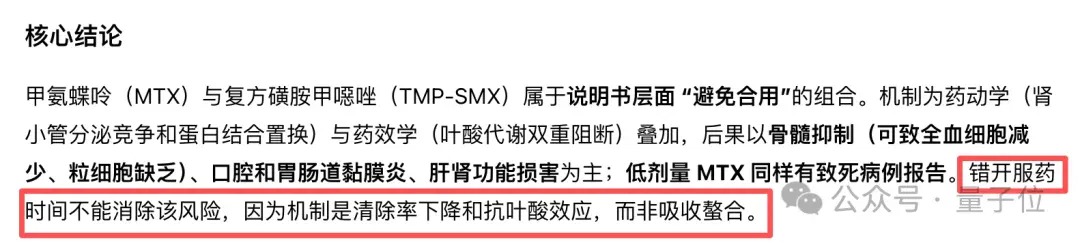
Second, it proactively acknowledged its limits.
The patient's dose, kidney function and other medications had not been provided, so its conclusion could go only as far as "avoid concomitant use." With that information added, it might become "explicitly contraindicated." It plainly stated "I don't know" and explained how the missing information could change the answer.
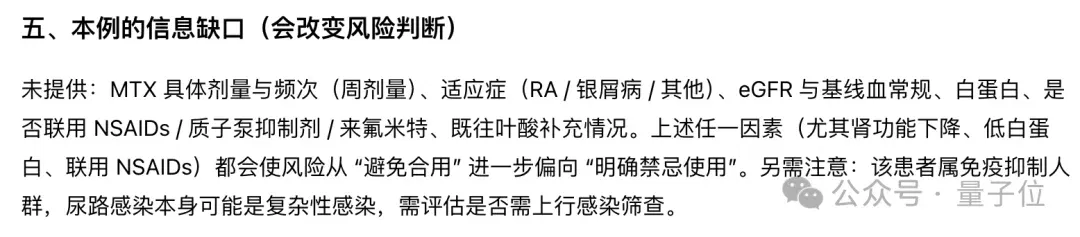
At no point did it issue a medical order. Everything it offered was an "evidence-based management direction," repeatedly labeled "for the prescribing physician's reference only; does not constitute prescribing advice."
One more small note: the formatting, journals and authors of the guidelines and cases it cited matched up, with no signs of fabrication.
However, we did not open and verify every link in the report. It also attached a source list at the end so readers can check for themselves.
Case 2: One Question, Two Ways of Asking—Testing Whether It Tailors Its Response to the Person
We asked Doubao Work from the different perspectives of a doctor and a patient to see whether it would tailor its response to the person.
First, we asked in an ordinary patient's voice:
A checkup found a clearly demarcated 6 mm pure ground-glass nodule in my right lung. People online say it could be early lung cancer. Should I have surgery to remove it as soon as possible?

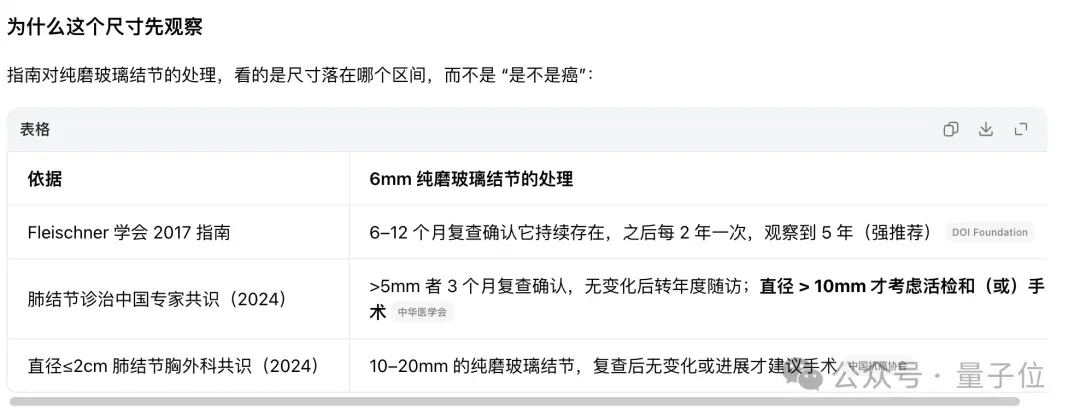
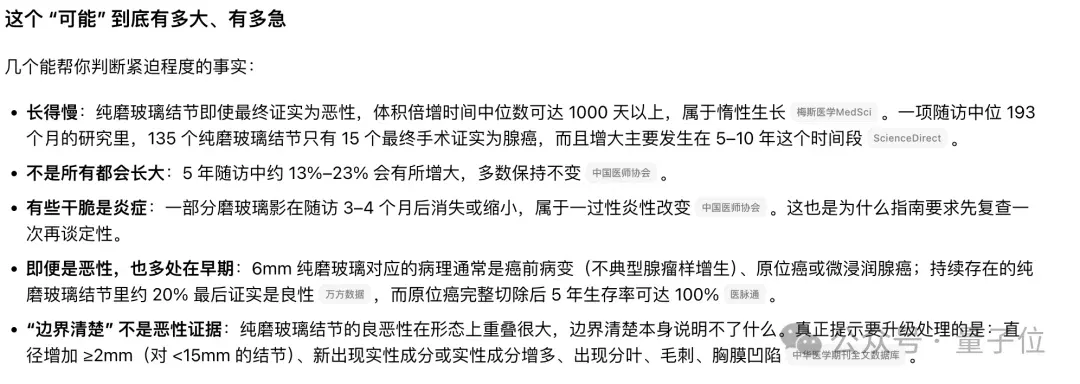
In this case, the AI leaned toward recommending follow-up for the 6 mm pure ground-glass nodule rather than immediate surgery. But this size alone cannot rule out risk or guarantee that observing it for years is harmless. A physician must still judge it in light of the imaging, changes over time and the individual's risk.
It then supplied some quite professional material: a comparison table of three guidelines (Fleischner 2017, a Chinese expert consensus from 2024 and a thoracic surgery consensus from 2024). However, summarizing the "threshold for surgery" as greater than 10 mm is imprecise; actual management also depends on imaging changes, risk factors and the guidelines' scope of application.
It also discussed doubling time, the proportion that grows over five years, and the situations that require escalation of management.
Most notably, there was a statement at the end of the report:
This workbench is intended for medical professionals. It is not suitable for health consultations or symptom self-checks by ordinary patients.

That drew a firm boundary: this material is for doctors to read, not for patients to use as a family doctor.
What if an actual doctor asked, then? We asked about the same nodule again in a professional tone:
For a clearly demarcated 6 mm pure ground-glass nodule, what is the preferred management strategy under the consensus on lung nodule diagnosis and treatment? Please cite the basis.
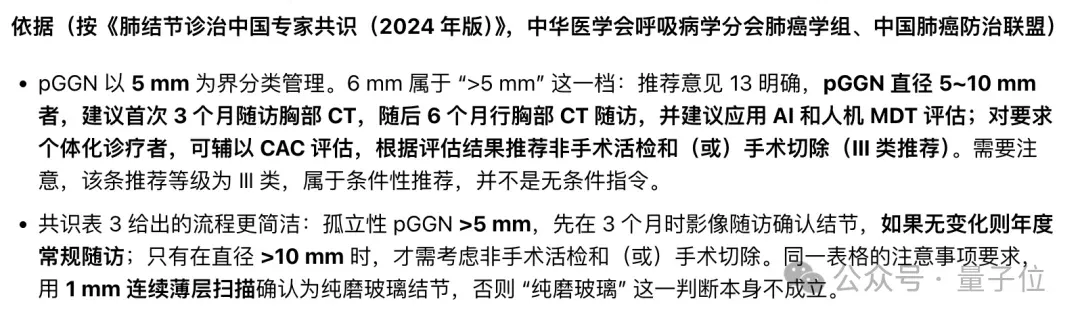
The doctor-facing version went straight to the point: thin-section CT follow-up is preferred, with no biopsy, surgery or PET-CT.

It directly cited Recommendation 13 and Table 3 of the Chinese Expert Consensus on the Diagnosis and Treatment of Pulmonary Nodules (2024 edition), labeling it a "Class III recommendation (conditional)." It also laid out the differences in the 6 mm thresholds in Fleischner, the thoracic surgery consensus and Lung-RADS, pointing out that 6 mm sits right at a boundary.
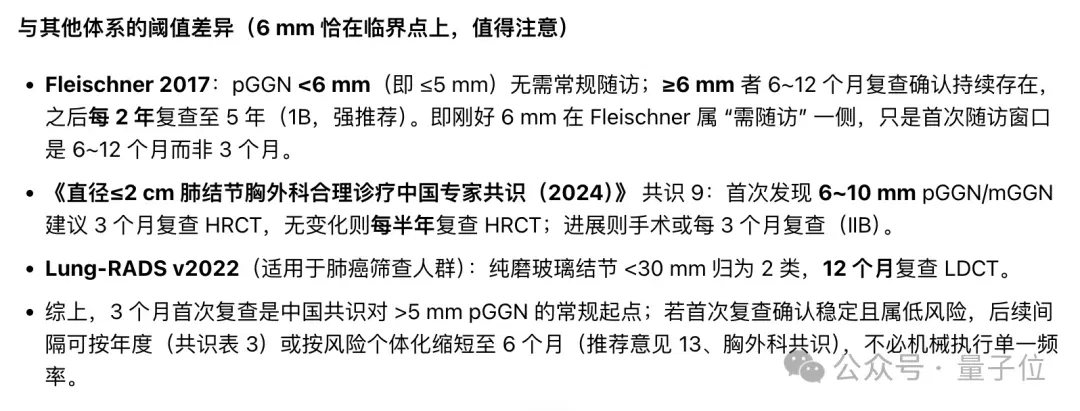
The same nodule, two ways of asking: the answers were indeed different.
But the difference was not "professional versus unprofessional." After all, the patient-facing version also provided three guidelines and was anything but vague.
The real difference was that it recognized the context of the question. For a patient, it added, "You should not be using me." For a doctor, it focused only on the evidence.
However, the disclaimer appeared only when the question was phrased in a patient's voice. At a minimum, that shows it adjusted its boundary reminders to the wording of the question. These two conversations are not enough to determine whether it actually "recognized" the questioner's identity.
This is a tool for professionals. But when faced with a patient, it did not scare them away. It gave a full answer, then drew a clear boundary respectfully.
Teacher Workbench: It Knows Where Students May Go Wrong
At last, we reached the final stop: the teacher workbench.
Generating course materials, writing lesson plans, setting questions and assembling tests, and analyzing student learning—all these routine teaching tasks appear on the home page.
There are also features developed with Xueke.com for finding resources and using an image of a question to find similar questions.
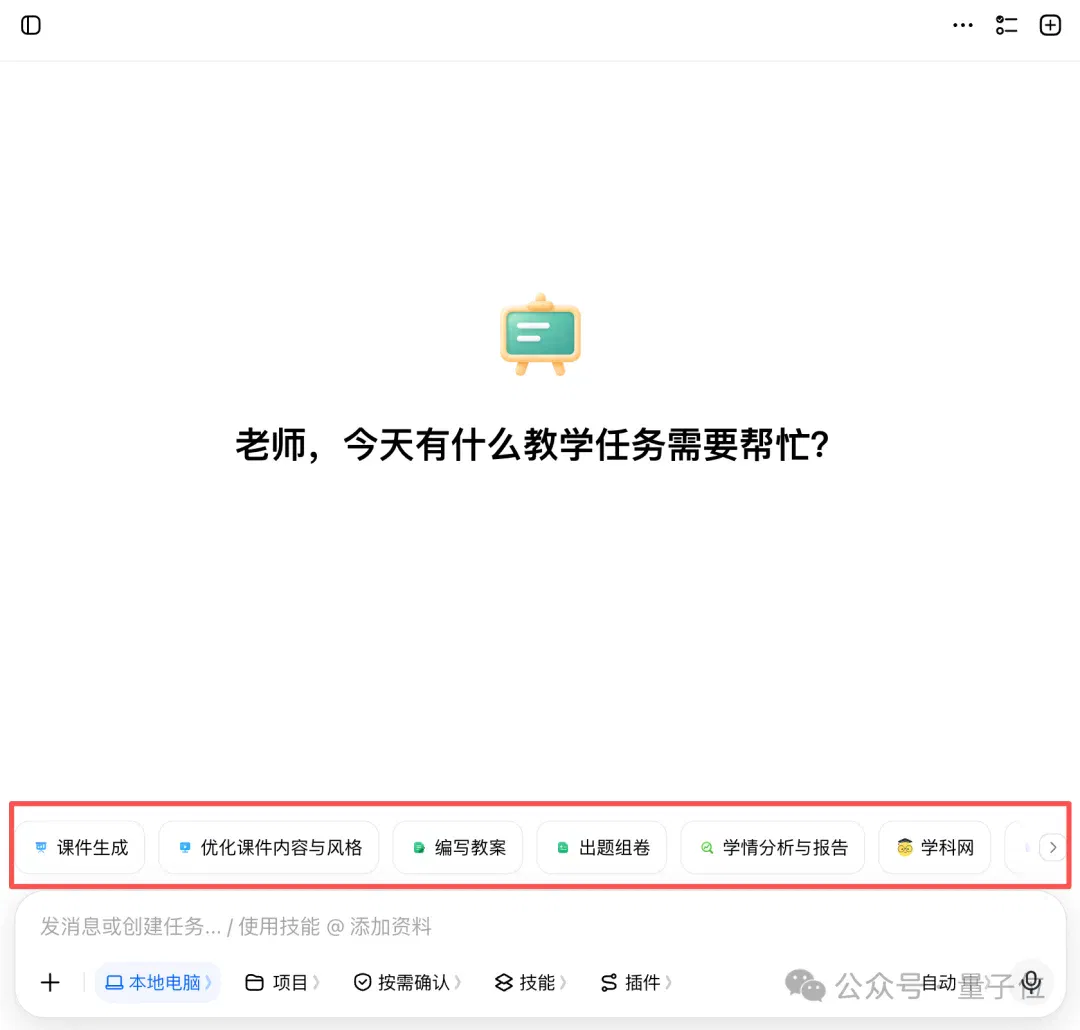
We selected one-click lesson preparation and asked it to prepare a 45-minute biology lesson from the People's Education Press eighth-grade first-semester textbook: "Animal Movement," Section 1, Chapter 2, Unit 5.
We set fairly detailed requirements:
- One contextual introduction and two observation activities: observing skeletal muscle structure and demonstrating a joint model.
- One group inquiry task analyzing how bones, joints and muscles coordinate in different forms of movement.
- Produce both a complete lesson plan and a slide-deck outline, clearly specifying the learning objectives, key and difficult points, and the activities and time allocation for every stage.
- Divide the inquiry task into basic and advanced levels, analyzing elbow flexion and running, respectively, with an example analysis for each.
- Align the learning objectives with the curriculum standards, and specify what the teacher says, what students do and what they observe in the teaching process.
Six and a half minutes later, Doubao Work delivered a fairly complete lesson plan.
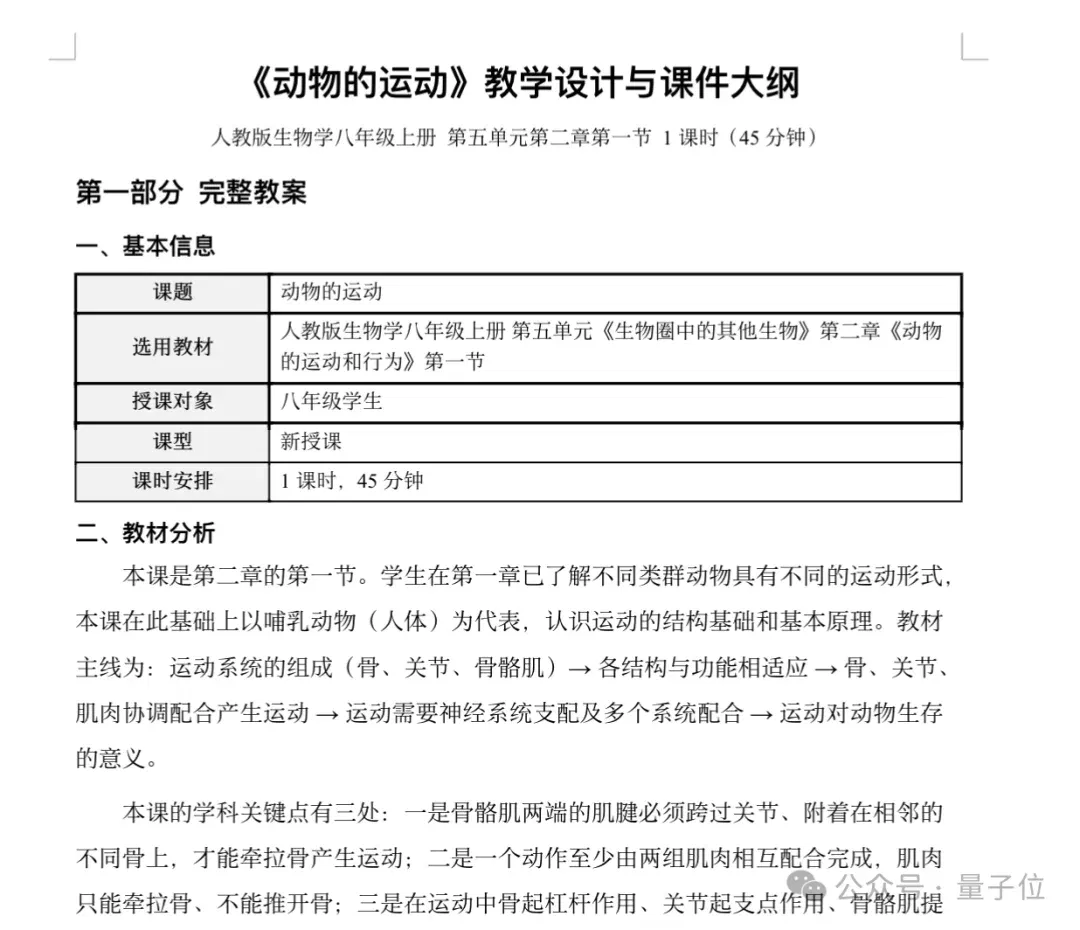
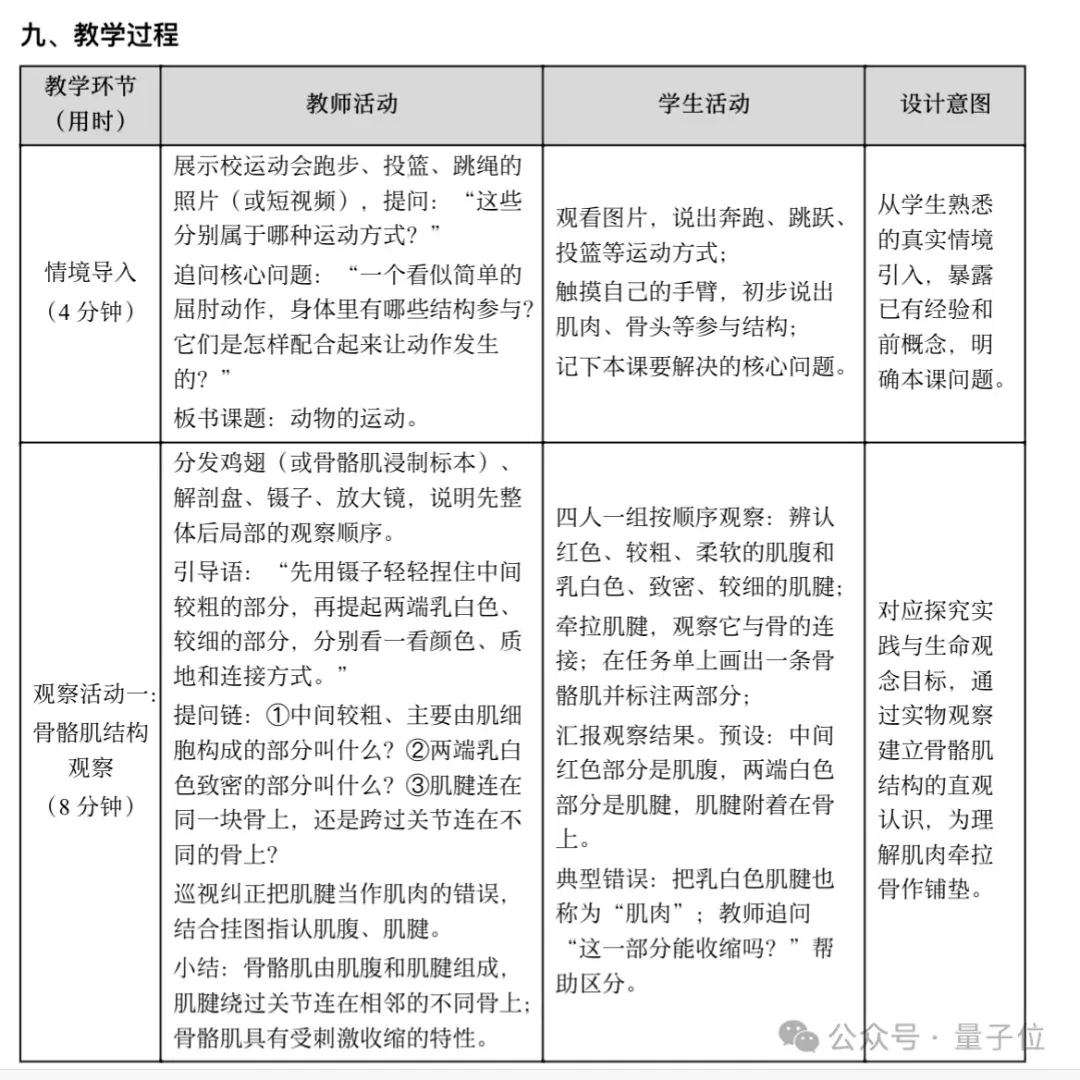
It included teaching stages, time allocations, exercises and a slide-deck outline. The in-class assessment questions came with answers, and the blackboard layout was ready too.
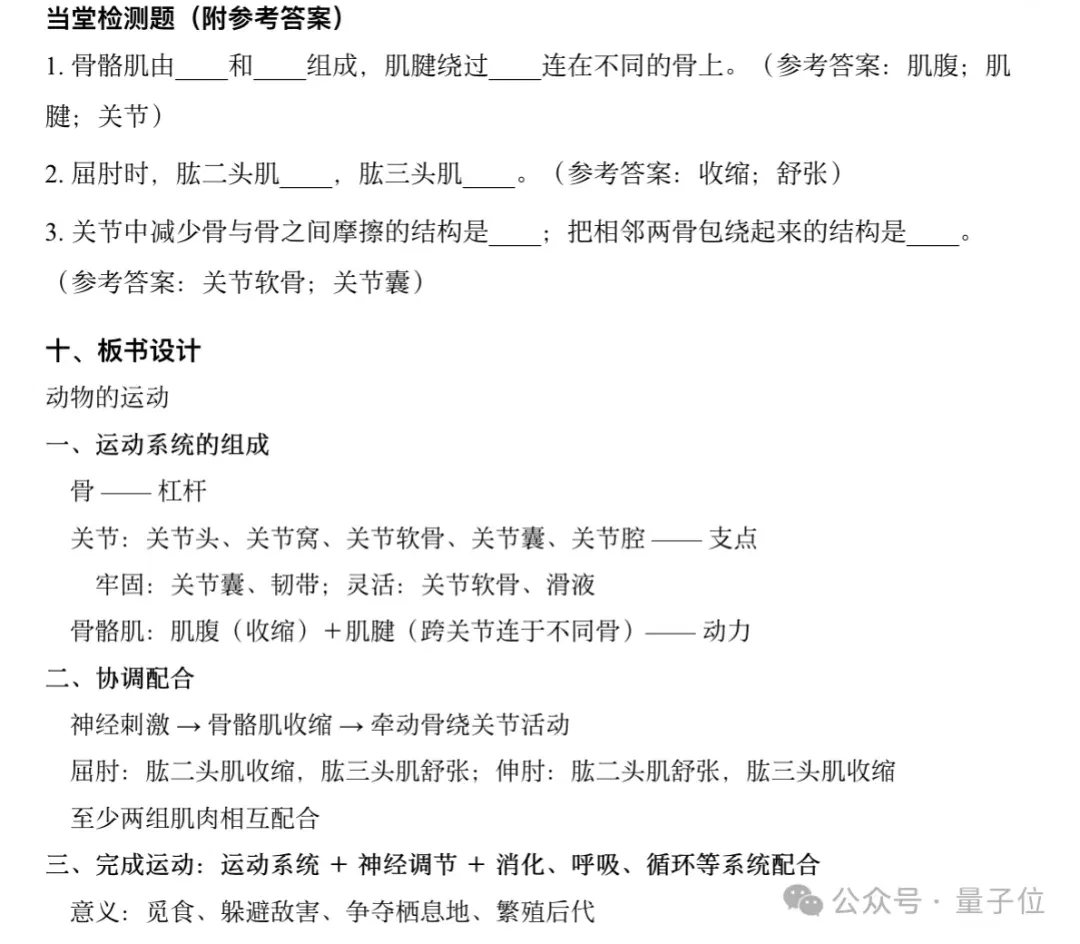
Further down, there was another useful section: it incorporated students' potential misconceptions into the analysis of their learning.
For example, confusing tendons with muscles.
In the teaching process, it paired those misconceptions with corresponding follow-up questions and corrective wording. If a student's answer goes off track, the lesson plan provides ready-made suggestions for what the teacher can ask next.
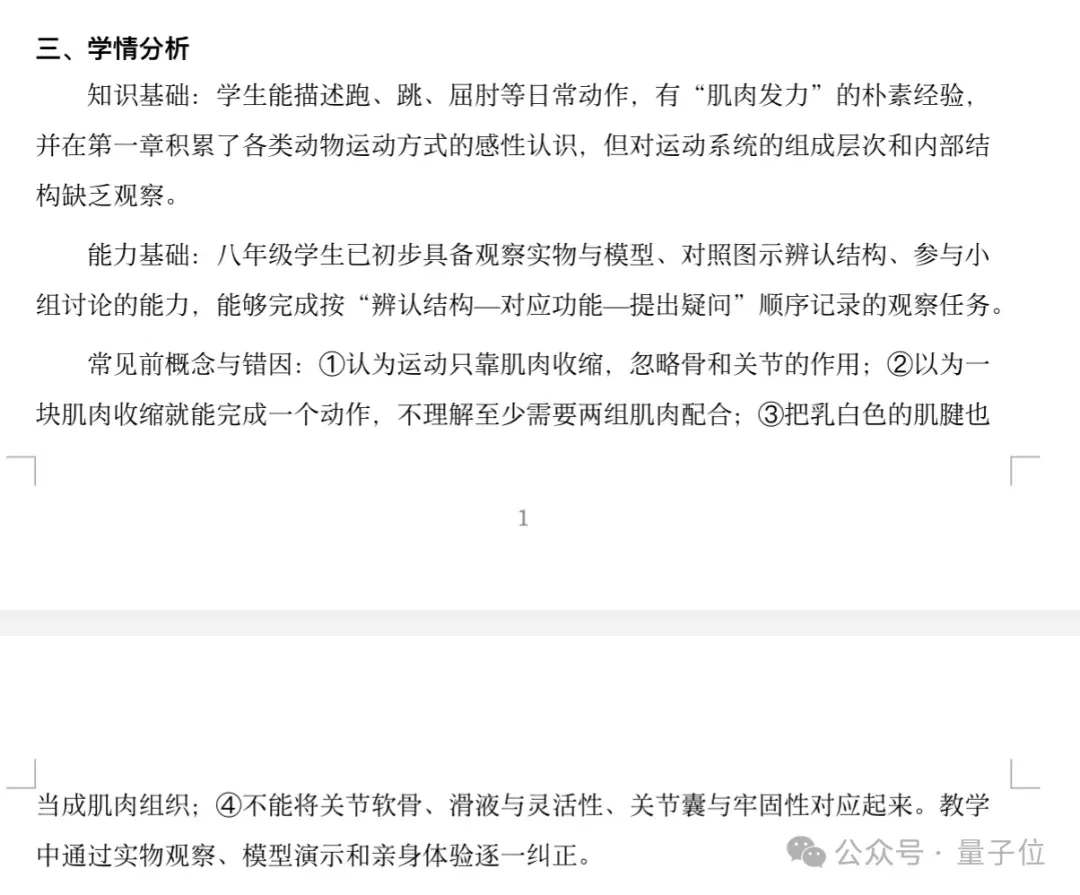
Teachers still need to select what is usable based on their own classes. But having this extra set of reminders during lesson preparation really can save some work.
One More Thing
After testing all four workbenches, my feeling is...
I would give it 80 out of 100!!!
Go, Sister Dou!! Who doesn't love her!!
To be fair, Doubao Work can already take on plenty of preparation and drafting, delivering a starting draft that can be developed further. Professionals can then take over to check the facts, refine the details and make choices.
In this trial, I often found the small touches most useful.
For example, pointing out repeated wording while editing a poster, listing common student misconceptions while writing a lesson plan, or explaining what is still missing when information is incomplete.
It may not make a result ready for immediate delivery, but it can help people overlook fewer things when they take over.
And with the new logo, Doubao Work looks much more approachable too.
It has to be our beloved Sister Dou!

△ AI-generated
Most notably, there are more model choices too!!
Starting November 12, alongside its two in-house models, Doubao 2.1 Lite and Doubao 2.1 Pro, Doubao Work began opening third-party models such as Kimi, GLM (Zhipu) and DeepSeek to individual users.
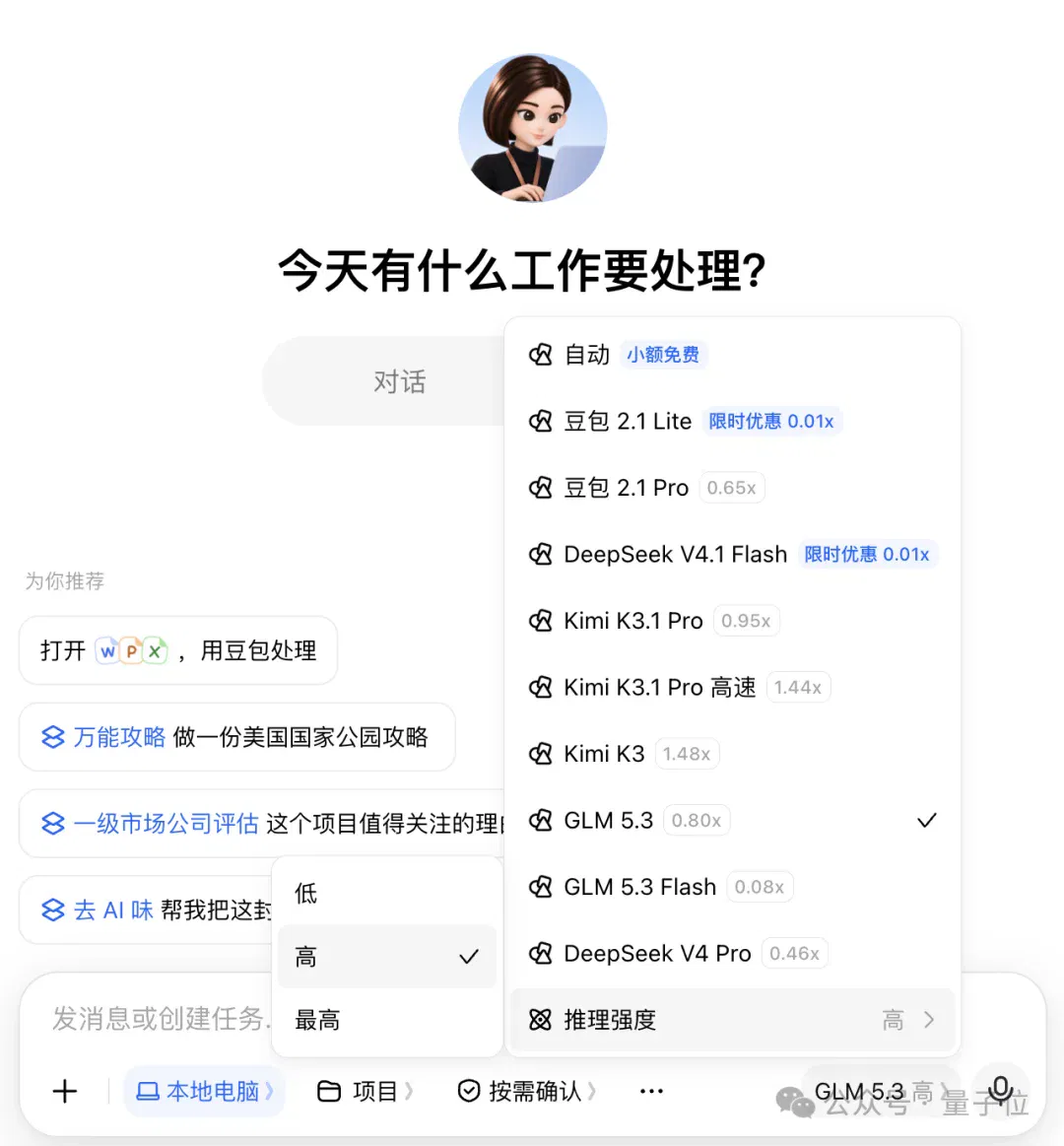
As for pricing, both Doubao 2.1 Lite and DeepSeek V4.1 Flash are on limited-time promotion.
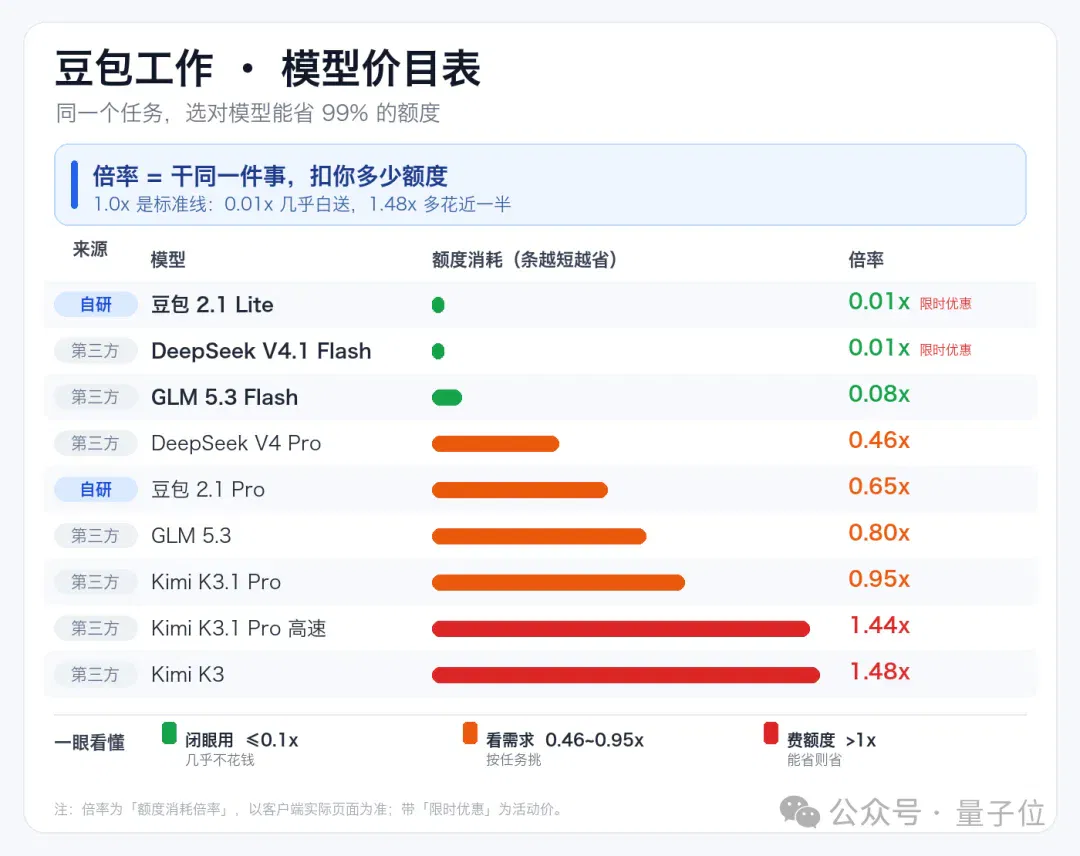
The page also lists the different models' quota-consumption multipliers. With 1.0x as the baseline, 0.01x is 1% of that baseline multiplier, 0.65x is 65%, and 1.48x is 48% higher.
How much quota an actual task deducts also depends on the platform's billing rules.
The multipliers for each model are in this table:
△ AI-generated
Make the most of the deals while they last!
Links to the cases in this trial:
[1]https://www.doubao.com/thread/xxQAUJPruPboOvra7
[2]https://www.doubao.com/thread/xsghXaPR4GwlqYoc8
[3]https://www.doubao.com/thread/xD58tvYcdTIGuD7Nx
[4]https://www.doubao.com/thread/xnQ8gEr2BdoTyc4b9
[5]https://www.doubao.com/thread/x3bpQ850ygCRZufec
[6]https://www.doubao.com/thread/xILkhrqeMBRDlqRXY
This article is from QbitAI, by Tingyu.
Related topics
After reading
Join the AINRK community
Read how to join the community and connect with people working in AI.
Related articles
Continue reading related topics and articles in this category.

Agent Evals in Practice: From Product Metrics and Trace Observability to Real-World Regression Testing (opens in a new tab)
Kaiyi draws on general-agent projects to discuss scoring dimensions, trace observability, subjective judgment, real-world tests and harness iteration. These practical views do not make sampled scores, repost coverage or one-off results substitutes for capability or factual judgments.
Linq Raises $90 Million Led by a16z to Expand Agent Communications and Execution (opens in a new tab)
Linq announced a $90 million Series B at a $1 billion valuation, expanding from messaging into WhatsApp, HD Calling and computer use. The report explores agents in existing channels while retaining limits around authorization, capabilities and the business model.
Tabbit's 18-month Browser Use review: Coding-first and the tradeoffs of prioritizing Playwright (opens in a new tab)
The Tabbit team reviews its shift from screenshots, DOM and stepwise clicks to Coding-first tasks with Playwright, retaining visual and CDP fallbacks. It discusses a 25-task internal benchmark, local Jev decisions and WebMCP; results are specific to the tested models, hosts and samples.

Agents Are Shifting the Gateway to Corporate Spending. Meituan Wants the Next Order (opens in a new tab)
Meituan Enterprise and AsiaInfo have connected two agents from travel request to booking. The platform is exploring how enterprise workflows can call spending services directly, while its general manager Kai Kang sees agent interconnection as a major variable over the next three years.

Doubao adds map-based store discovery linking merchant details, deals and navigation (opens in a new tab)
Dujia tests Doubao’s Find Stores feature, which displays nearby merchants, group-buy offers and navigation and connects to ordering. The report examines conversational AI in local services; actual pages determine feature availability.