Harry Shum at IDEA: rethinking computer science through MoonBit, embodied AI and research tools
The report covers MoonBit 1.0, agent-security hardware prototypes, first-person data, low-altitude trials and Mozi 2.0 at the sixth IDEA conference. Performance and costs are team disclosures; embodied-AI timelines are forecasts, and drug-candidate experiments do not establish clinical efficacy.
Editor's fact check (November 26, 2026): This is a conference report. The categories of one billion, 20 million, and 5,000 people are observational estimates relayed by a speaker. MoonBit's release, performance and ecosystem size, hardware costs, embodied-task success rates, and drug-platform speeds are recorded as disclosed by guests or teams, not independently reproduced here. The demonstration rising from 11% to 92.63% does not identify the full benchmark, sample, or detailed denominator for the US$140,000 cost. It cannot be generalized to overall robot capabilities or deployment costs. Month-based predictions for embodied AI, ecosystem catch-up, and low-altitude operating scale are outlooks, not accomplished outcomes. The security hardware remains a prototype; reductions in protein levels and predictions of molecular trajectories do not establish clinical drug efficacy. The original names the data system GeoTwin, while the vendor's public pages call a similar product EgoTwin. How those names correspond remains to be confirmed.IDEA institute website and conference entry point (opens in a new tab)MoonBit's official release updates (opens in a new tab)Visincept's official EgoTwin product page (opens in a new tab)Visincept's official founder interview: EgoTwin (opens in a new tab)BioKinema's official implementation (opens in a new tab)
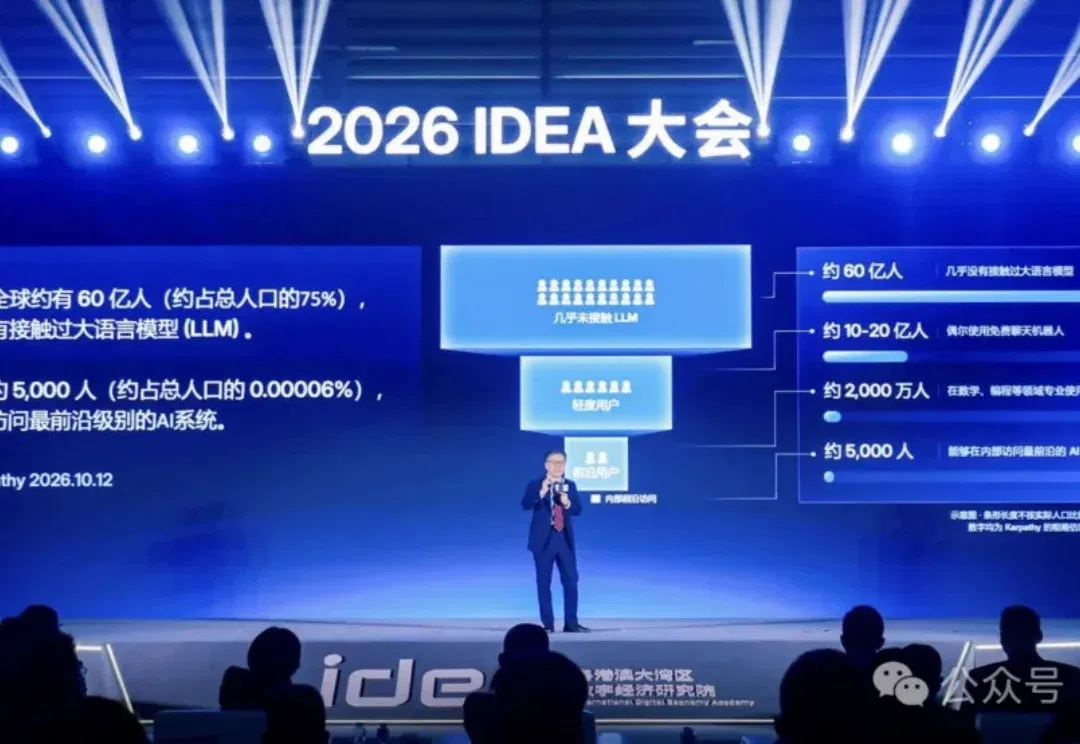
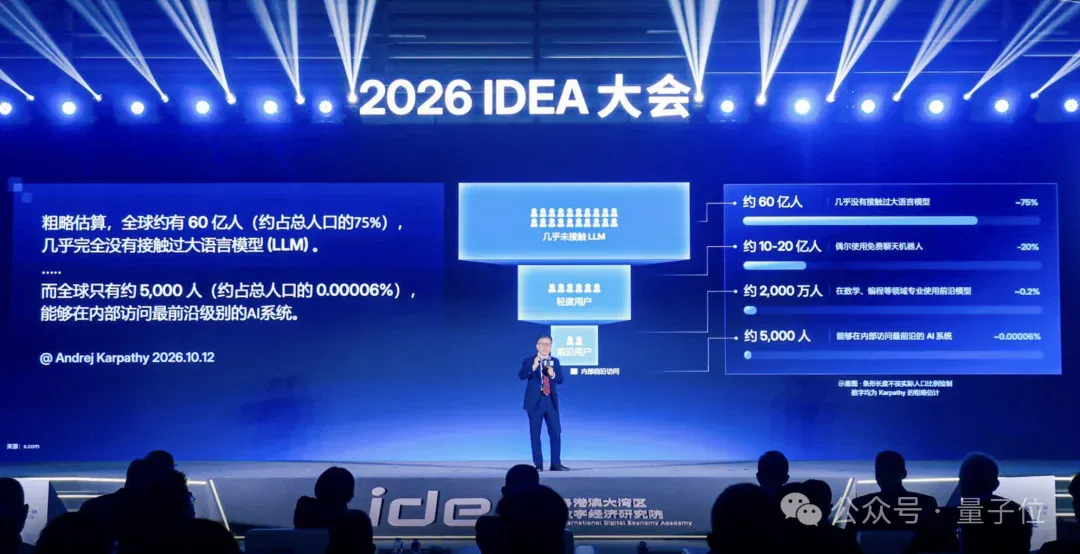
One billion people, 20 million people, 5,000 people.
Living in the same AI era, people may nevertheless see completely different worlds.
Harry Shum, founding chairman of IDEA and an international member of the US National Academy of Engineering, says AI's breakthroughs in mathematics, programming, and video generation over the past year have had a profound impact on him.
What struck him most, however, was Karpathy's observation about the AI world:
The worlds overlap. Approximately one billion people worldwide have used large models, and around 20 million have used them in areas such as mathematics and programming. Yet perhaps only 5,000 truly understand how powerful frontier AI is.
Shum candidly said that even those in the audience might not belong to those 5,000.
Recently, he met a young Chinese researcher working on quantum computing at a major Silicon Valley company. To solve extremely difficult scientific problems, the researcher was spending more than US$1 million a month on compute.
Faced with this technological progress, Shum is looking again for innovation opportunities within the entire technological system built up over 70 or 80 years of computer science.
At the recently concluded sixth IDEA conference, he proposed a theme for reflection—
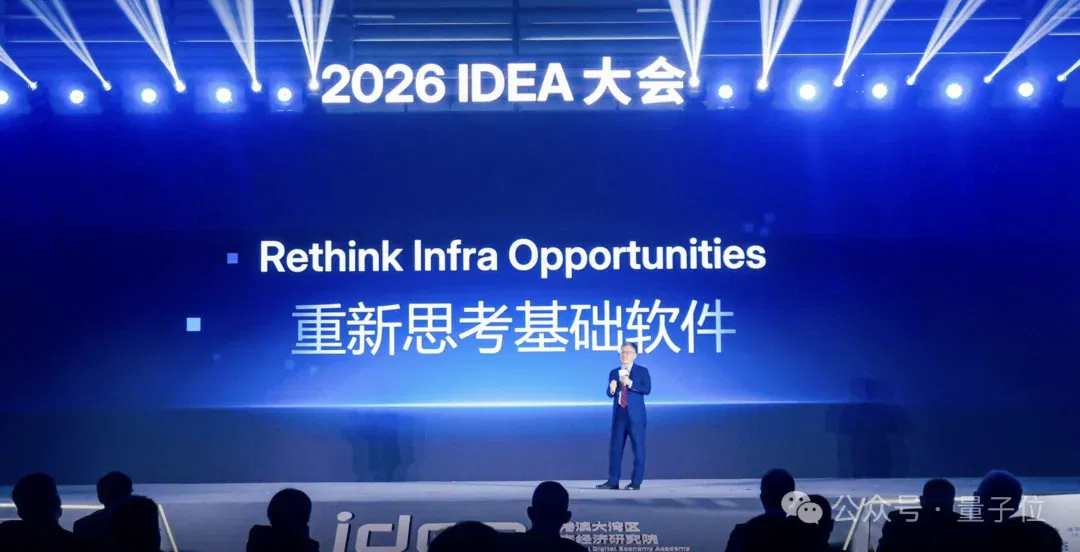
Rethink Computer Science.
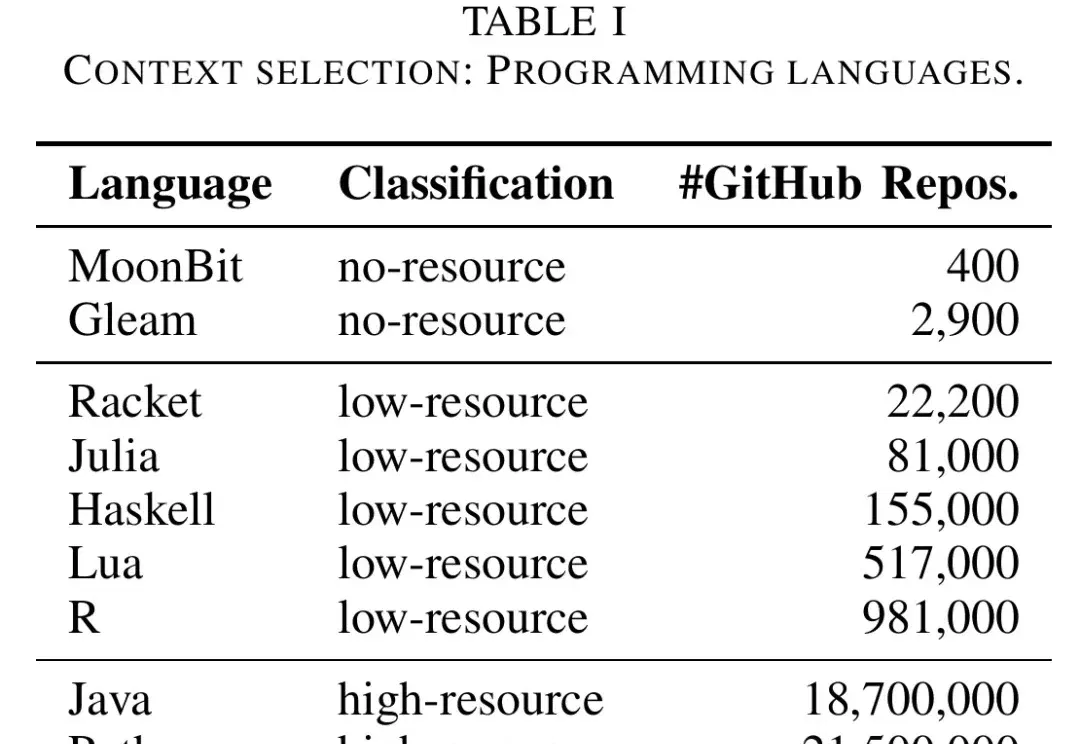
A typical example is programming languages. As AI increasingly becomes the main writer of code, there is naturally room to change how programming languages are designed.
Following this idea, Hongbo Zhang's team at IDEA spent four years building a general-purpose programming language specifically designed for agents, MoonBit, and formally released version 1.0.
Similar opportunities are even more plentiful in the physical world, where AI has yet to make a full impact. Shum devoted considerable time to reviewing embodied intelligence along four dimensions: data, brains, bodies, and ecosystems.
In his view, although AI has demonstrated remarkable capabilities in mathematics and programming, the volume of training data for embodied intelligence has not even reached the level used for GPT-2 back then.
As for when embodied intelligence might reach its own GPT-3.5 moment, some predictions at the conference were measured in months.
Programming languages matter less to people now, but a great deal to AI
One thread has run for years through Shum's thinking about innovation opportunities in the AI era: human-computer interaction.
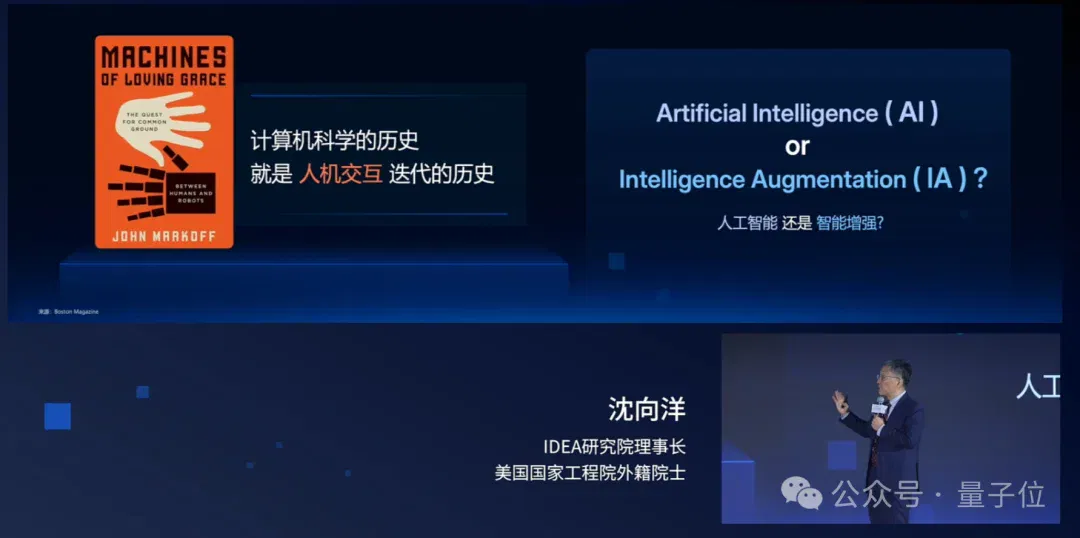
Graphical interfaces in the PC era, search in the internet era, and recommendations in the mobile-internet era: each change in interaction has nurtured new technologies, products, and business models.
Today, AI's natural interaction changes how computers are used, opening opportunities to redesign the underlying foundational software.
For programming languages, Shum believes an AI agent's choice of language will profoundly affect the capability ceiling of the software ultimately delivered.
With this in mind, Hongbo Zhang's IDEA team formally released MoonBit 1.0.
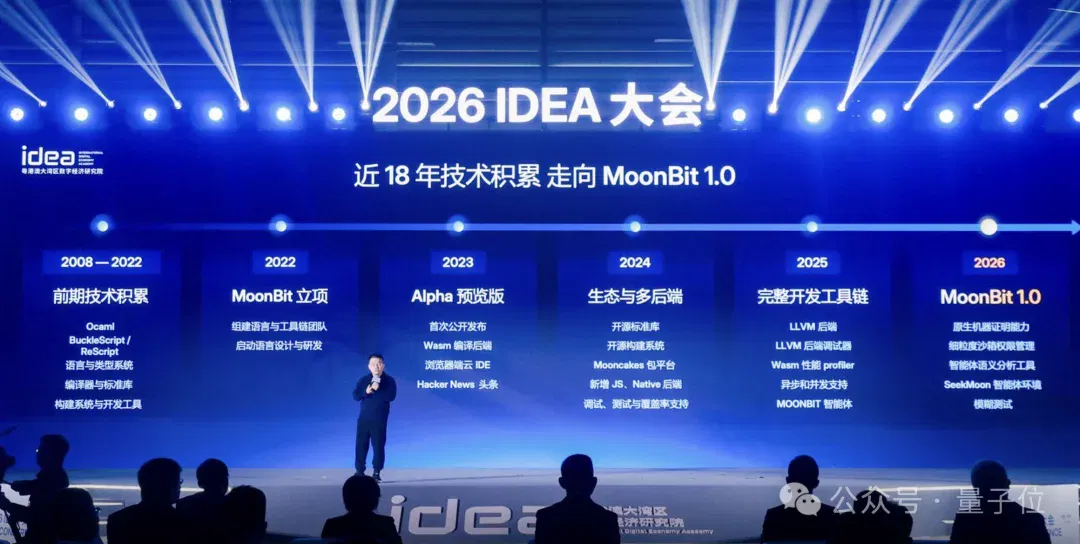
MoonBit began as a project in October 2022, one month before ChatGPT burst onto the scene.
At that time, the industry was far from reaching consensus on whether the AI era needed a new programming language.
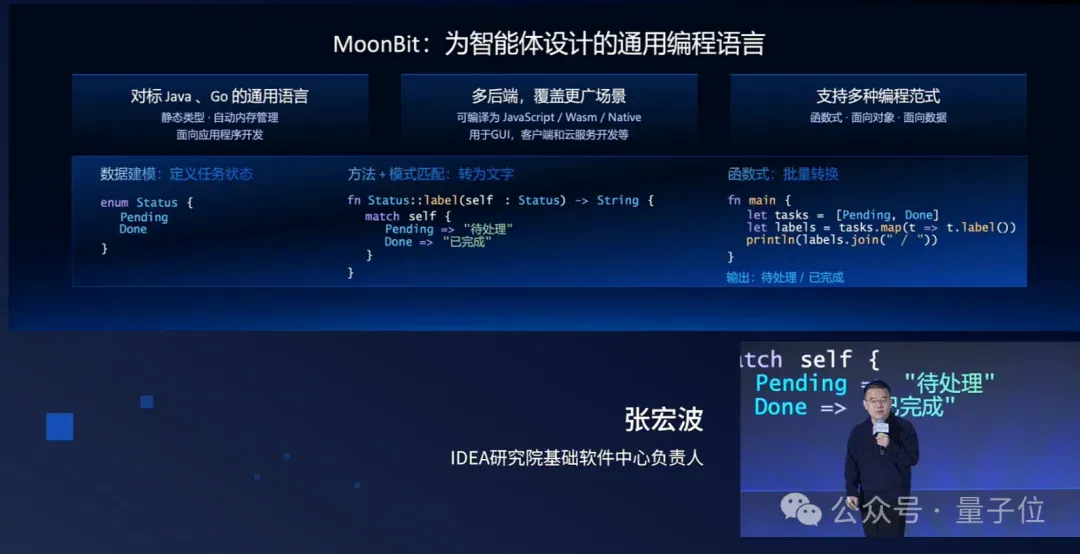
As a general-purpose language benchmarked against Go and Java, MoonBit has several designs tailored to agent programming:
- Lightweight sandboxing: a native, Wasm-based language-level sandbox starts in microseconds and isolates the execution environment for AI-generated code.
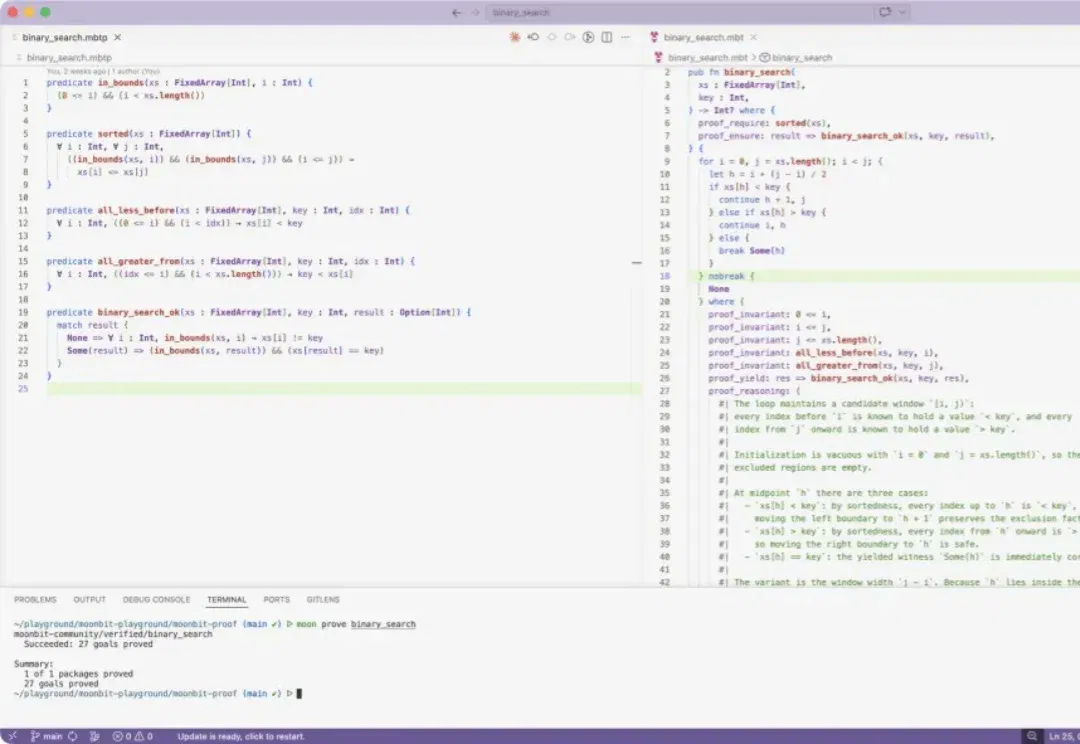
- Native formal verification: combining a programming language with a logic language for mathematical proofs lets AI provide correctness proofs alongside generated code, and even verify the low-level assembly produced by compilation.
- Both compilation and runtime efficiency: in a compilation test involving hundreds of packages, MoonBit takes only one-tenth of Rust's time and is faster even than Go, known for compilation speed.
Hongbo Zhang's team had Opus 5.5 develop database engines in MoonBit and Rust, conducting three rounds of controlled experiments with approximately 500 tests.
With almost identical test pass rates, MoonBit uses 12% fewer tokens than Rust. According to the team, the model's MoonBit-related corpus is only 1% as large as its Rust corpus.
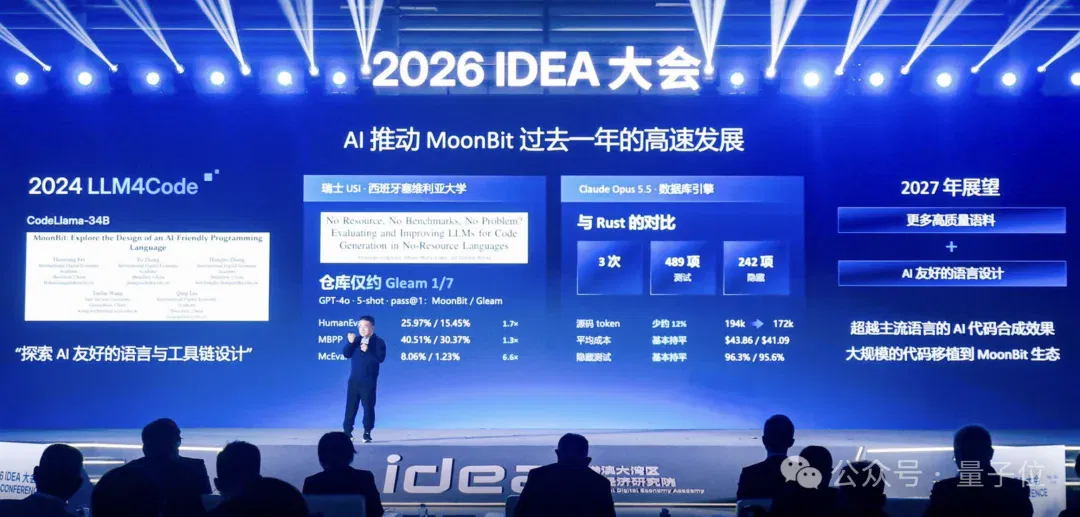
At last year's IDEA conference, Zhang disclosed that MoonBit had more than 100,000 users.
This year, its ecosystem has virtually exploded. Over the past six months, MoonBit package downloads have approached 10 million, with nearly three million in the last month alone—equivalent to the accumulation over almost the preceding two years.
Its ecosystem libraries have also grown from approximately 2,500 at the start of the year to 36,000. Zhang predicts that, if this growth rate continues, MoonBit could have an ecosystem comparable in size to Rust's by late 2027 or early 2028.
For large-scale software development, the team has written 880,000 lines of MoonBit to create an Office document-processing toolkit occupying just 17MB. Incremental compilation at the million-line scale takes one to two seconds.
Overseas agent vendors are already using MoonBit to develop products, and Peking University has introduced it into graduate courses. Zhang's team has also incubated a company called MoonBit to explore end-to-end software delivery by agents.
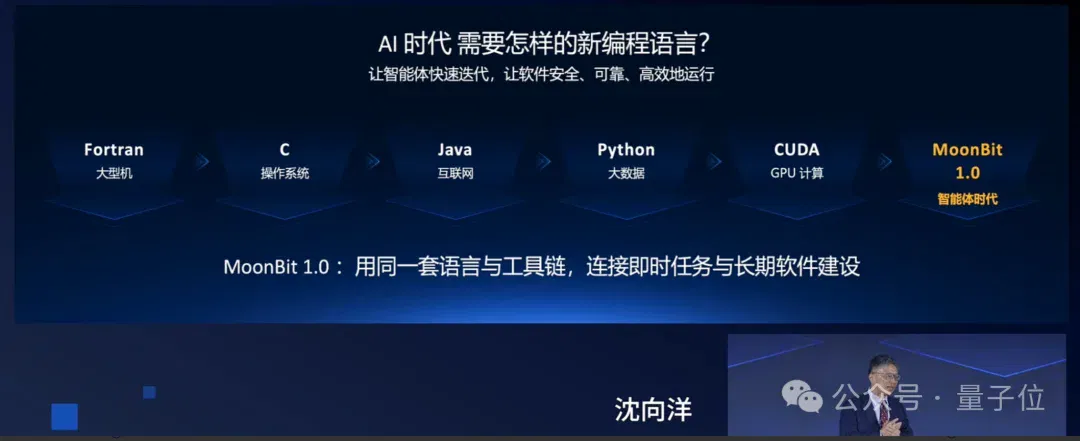
The mainframe era had Fortran, the internet era Java, the big-data era Python, and the GPU-computing era CUDA. Shum hopes the agent era will see a globally influential programming language developed by a Chinese team.
Alongside programming languages, the rise of agents creates new research questions for secure computing.
Agents need to access files, call tools, and even use account credentials to complete tasks. In calling third-party services, cloud agents may expose users' sensitive information to multiple systems.
To address this, Jiaping Wang's team, responsible for IDEA's security center, demonstrated a new agent-security hardware prototype——
using local data masking and a trusted execution domain to keep critical information such as accounts and passwords, as well as tool execution, on the user's own device while still calling cloud-based large models.
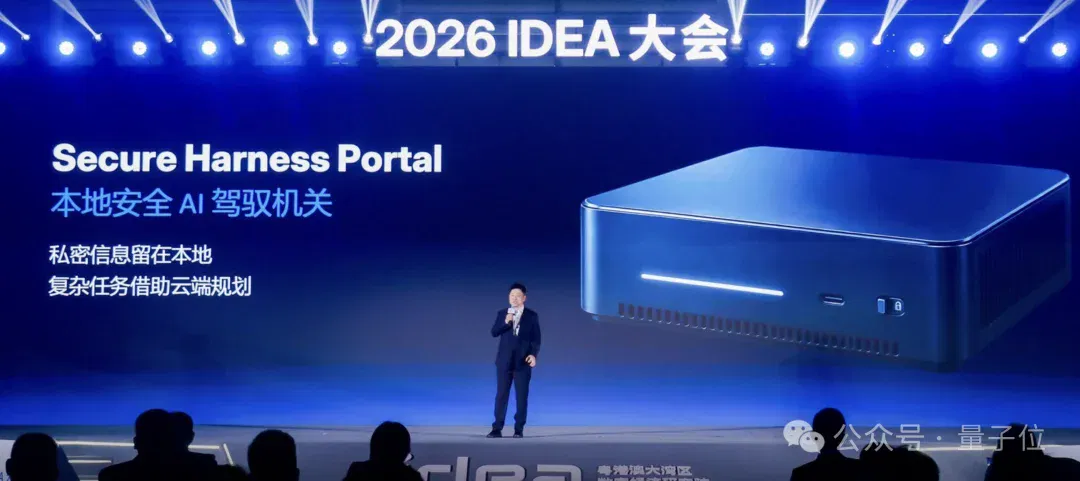
The prototype mainly consists of three chips, with a bill-of-materials (BOM) cost below RMB1,000.
Four years ago, Shum proposed the concept of an SPU (secure processing unit) at the IDEA conference, emphasizing the security of computation itself.
This research direction now also extends to the harness layer, responsible for task orchestration, tool calls, and acceptance of results.
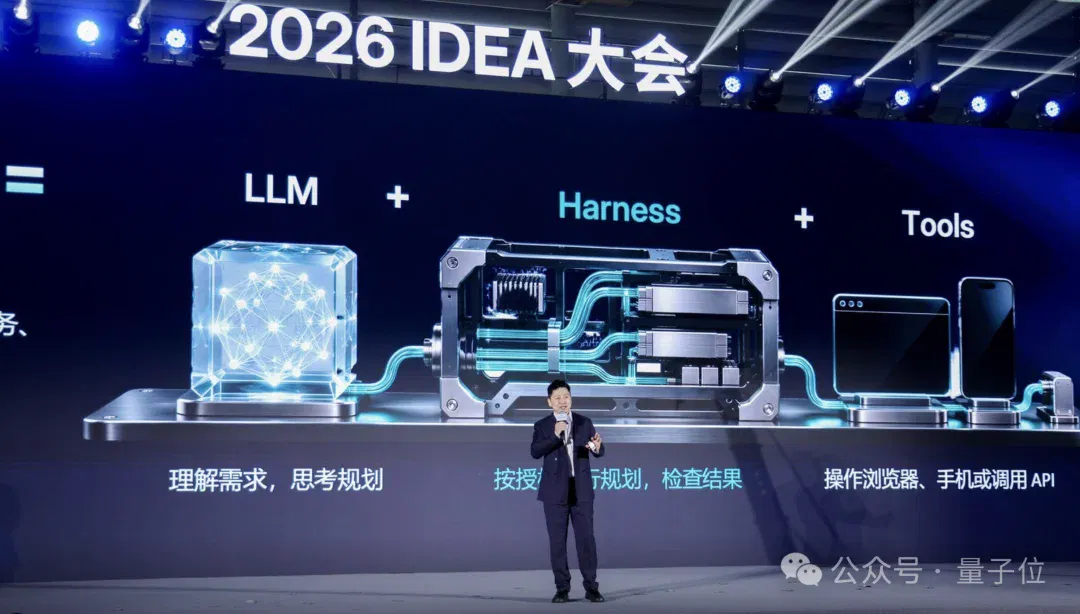
In Wang's view, users' trust in agents directly determines how much data and permission they will grant, in turn affecting how fully agents can exercise their capabilities.
Embodied intelligence's data volume has not reached GPT-2's level
Compared with digital intelligence, a fundamental challenge for embodied intelligence is the scarcity of high-quality physical-interaction data.
In Shum's assessment, this is because the training data available to current embodied-intelligence models fall far short of what GPT-2 used back then.
To improve collection efficiency and scale, the team led by Lei Zhang, an IDEA chair scientist and the founder and CEO of Visincept, introduced an egocentric manipulation-data processing system—GeoTwin.
People simply wear a camera and work normally with their own hands to collect robot-training data.
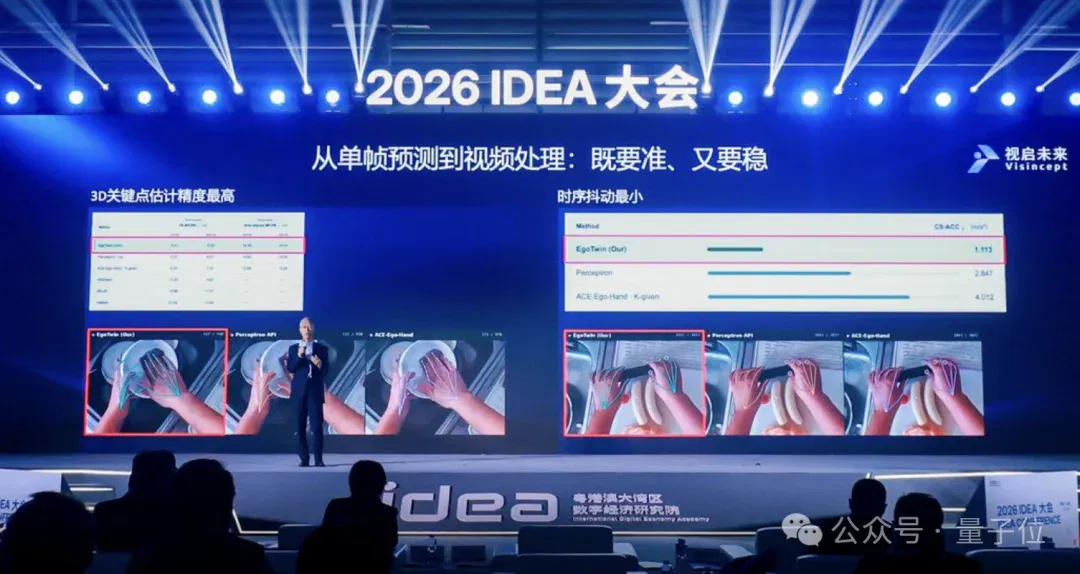
Compared with robot teleoperation or handheld grippers, vision-only collection with bare hands interferes less with natural human movements and more easily covers diverse manipulation scenarios.
Merely recording people performing tasks, however, is not enough.
To turn these videos into action data robots can learn from, algorithms must accurately reconstruct the positions of the human hand's 21 keypoints in three-dimensional space, while addressing hand occlusion, camera movement, keypoint jitter, and other issues.
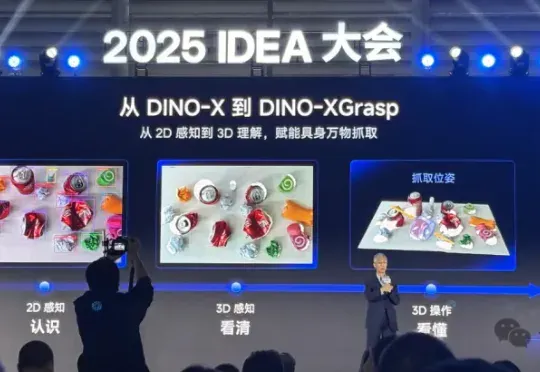
Those familiar with IDEA may remember that, at the previous three conferences, Zhang's team successively presented T-Rex, which uses visual prompts; DINO-X, which recognizes objects without prompts; and DINO-X Grasp, the model for “grasping anything.”
The team's accumulated expertise in vision is now being applied to producing embodied-intelligence data.
In Zhang's words:
Great work is not about chasing a hot topic. It is about the topic becoming hot after the team has already spent a long time working on it.
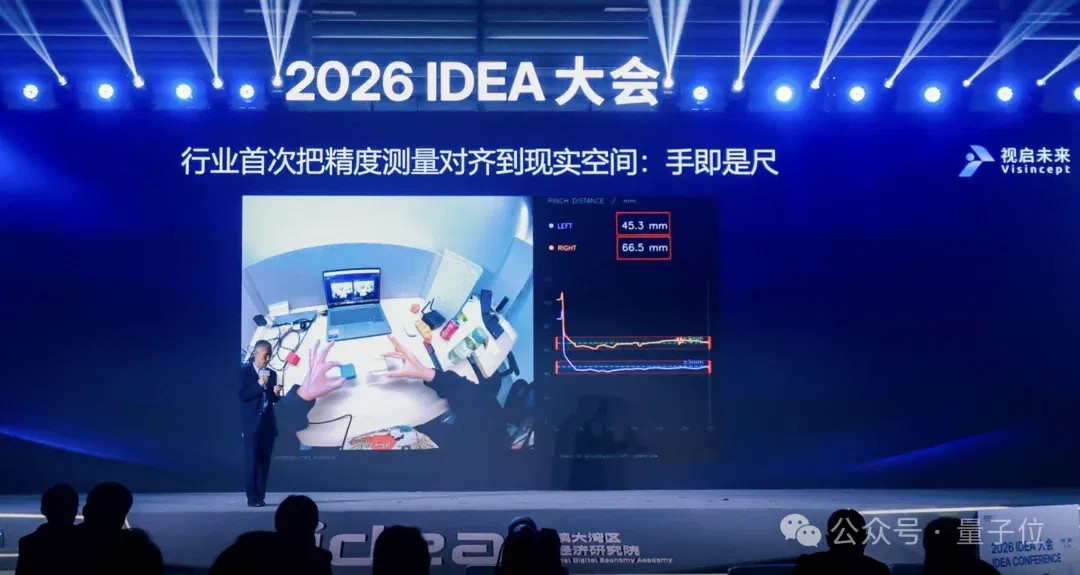
GeoTwin currently supports the full chain of data collection, cleaning, semantic annotation, and 3D annotation. In a specific fingertip-distance measurement experiment, its error can be kept within ±5 millimeters.
Using perception technology and large-scale egocentric data, the team also challenged a robot to perform a delicate task: giving a person a manicure.
The process involves long-horizon task decomposition, active following, precise manipulation, and error recovery.
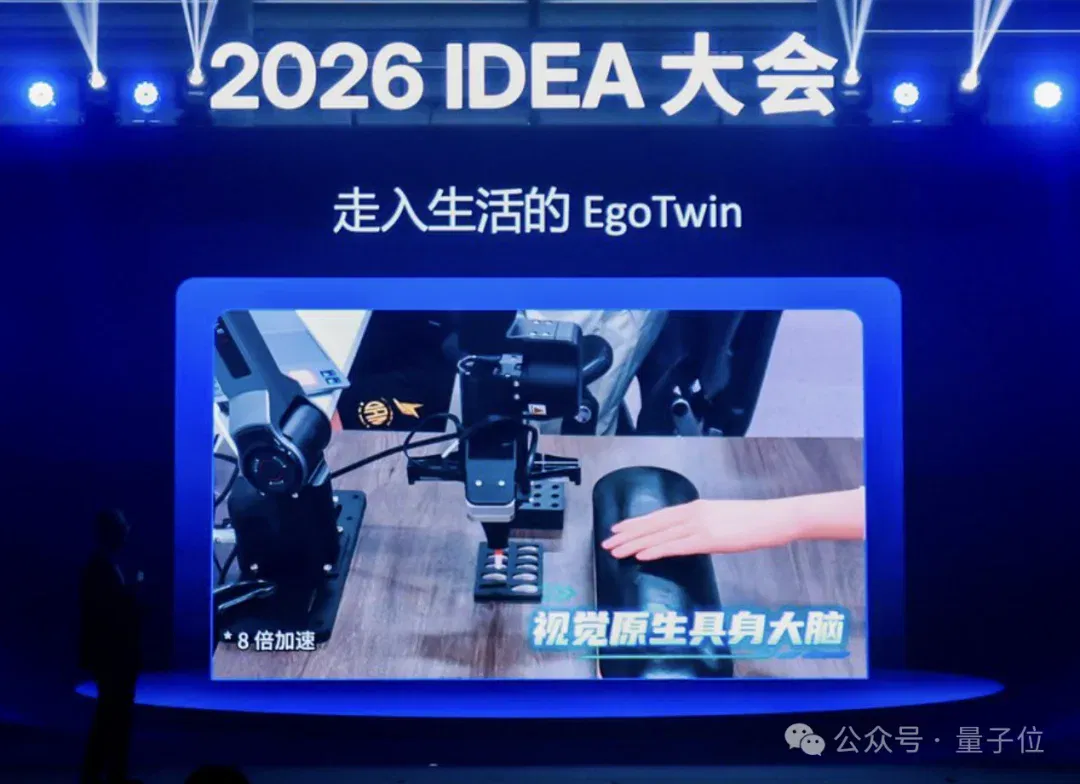
Beyond vision alone, Professor Ping Tan's team at the Hong Kong University of Science and Technology also uses first-person glasses and gloves to add tactile information to embodied data.
Beyond data, when it comes to robot brains, Shum is particularly optimistic about actionable world models.
Rather than merely generating video, these models emphasize understanding individual objects and their spatial relationships in physical environments, then reasoning about actions to guide robots through real manipulation.
Meanwhile, advances in general-purpose foundation models are also changing the capability ceiling of embodied-intelligence models.
Song Yao, director of the International Advanced Technology Application Promotion Center, disclosed experimental figures:
In a benchmark involving a complex task, with the underlying manipulation model π₀.₅ unchanged, introducing GPT-6 Astra for planning and supervision raises the success rate from 11% to 92.63%.
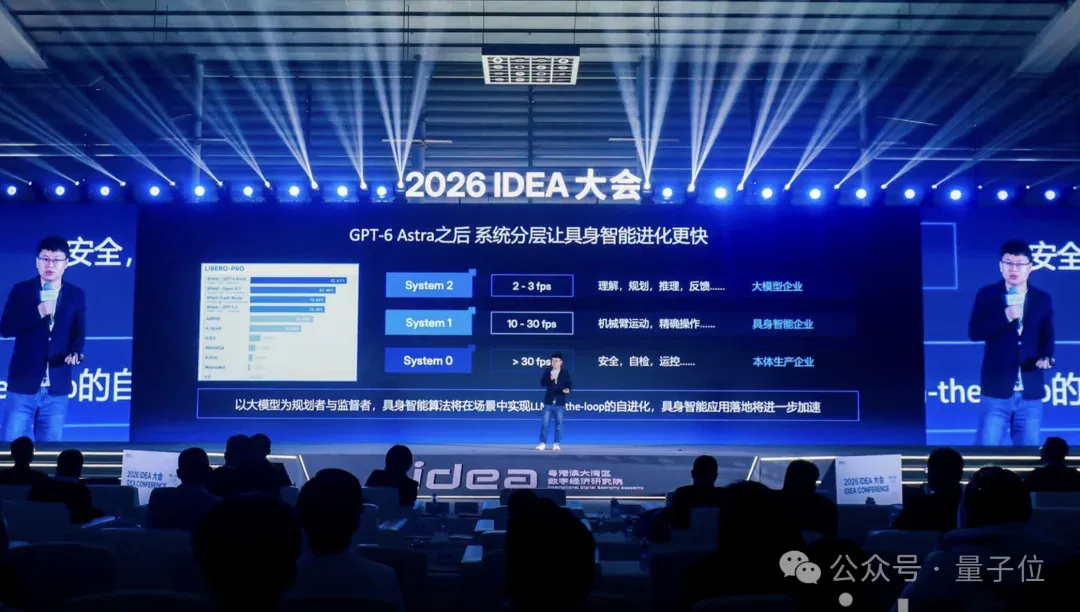
But the cost is 32 seconds of inference per frame and as much as US$140,000 for a single test.
Hao Su, founding dean of Fudan University's Institute of General Physical Intelligence, described it as “a bit like doing robotics by solving math problems.”
Advances in general-purpose foundation models also clarify a layered approach: complex planning can go to large cloud models, while concrete action execution requires lighter, faster on-robot models.
Tan believes assembly-line robots driving screws or sorting parcels do not require particularly advanced knowledge. There remain substantial opportunities to train native embodied models using high-quality manipulation data.
Beyond models, a sufficiently dexterous pair of hands remains a major technical challenge for robot bodies. Even Tesla's robot development has been hindered by it.
A human hand has 27 degrees of freedom. Replicating its capabilities in a robot requires balancing six factors: dexterity, strength, durability, sensing, cost, and repairability.
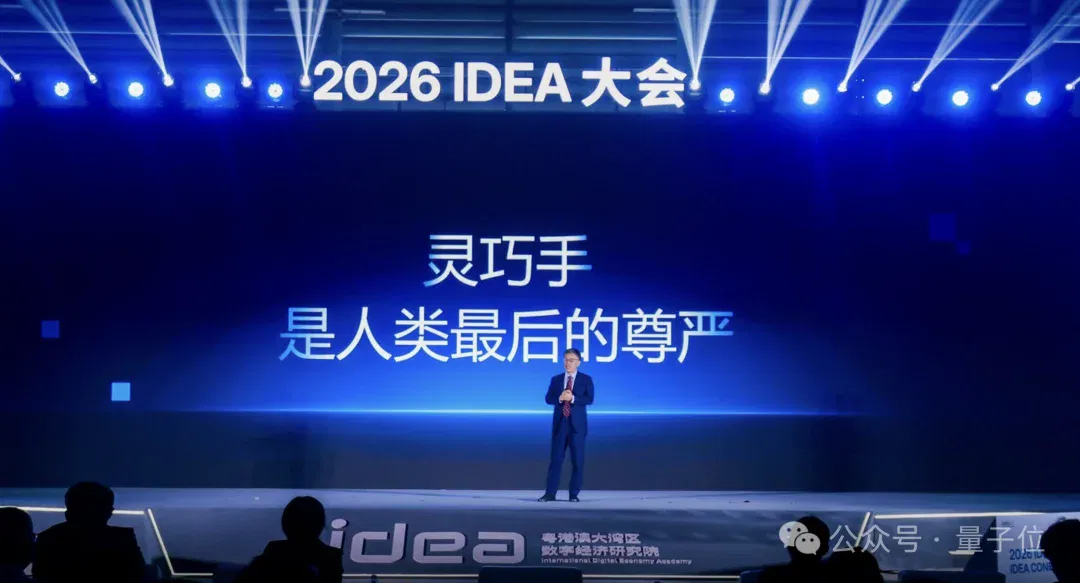
In Shum's words:
In the face of AI, dexterous hands are humanity's last dignity.
The automotive and computer industries have mature supply chains; robotics does not yet. Shum believes Shenzhen may well be the first place to develop a mature robotics supply chain.
As for the industry's stage of development, Yao compares embodied intelligence with large language models' development cycle, predicting three peaks and troughs:
- From 2023 to early 2026, the industry experienced its first technological boom and is now in a cooling phase.
- Over the next two or three years, embodied intelligence will demonstrate its abilities in more open, real, and complex scenarios, reaching a second peak comparable to that brought about by DeepSeek.
- Over the next five or six years, some verticals may reach a peak in large-scale deployment and commercialization.
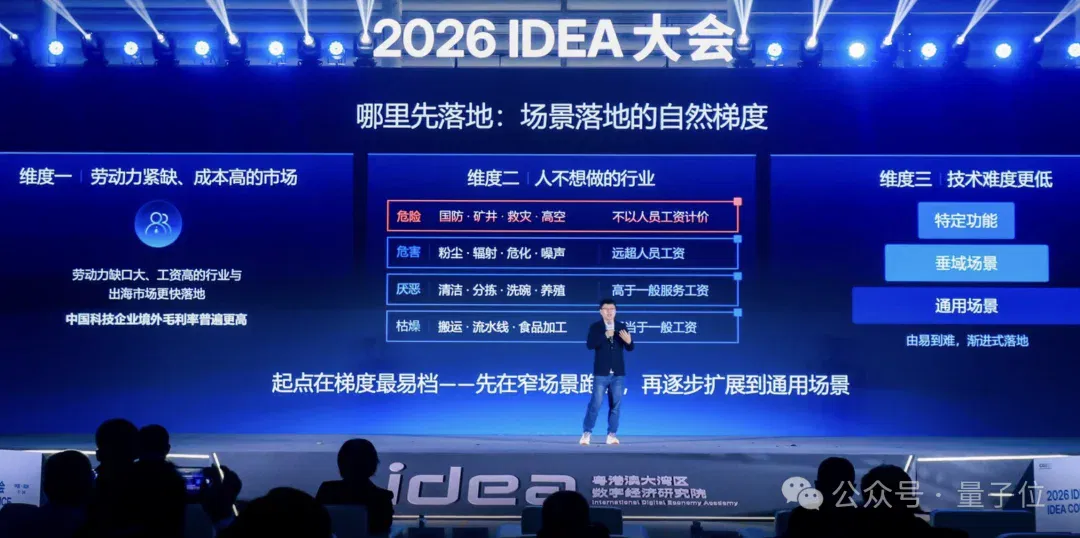
Yao also offers three criteria for likely early commercial applications: markets with labor shortages and high labor costs; dangerous, unhealthy, or undesirable work; and relatively straightforward tasks that can be delivered reliably.
Because the brain, “cerebellum,” robot body, and solutions are tightly coupled, Yao considers embodied-intelligence systems two to three orders of magnitude more complex than Level 4 autonomous driving.
Foundation-model advances are accelerating this process, however. He made a bold prediction about near-term breakthroughs:
Within three to six months, or at most a year, embodied intelligence may reach its own GPT-3.5 moment.
What other new results were presented?
The IDEA conference also highlighted several other research developments.
Low-Altitude Economy White Paper 6.0: toward a spatiotemporal economy
The low-altitude economy is a field Shum has devoted effort to continuously for five years.
For Shenzhen's future, his envisioned design scale for low-altitude infrastructure is on the order of ten million flights per day, with 100,000 to one million aircraft connected concurrently.
At that scale, beyond individual aircraft safety, sharing airspace, takeoff and landing facilities, and communication networks among large numbers of aircraft becomes a new challenge.
This year's Low-Altitude Economy White Paper 6.0 expands its research to spatiotemporal computing, bringing physical laws and real operating rules into a common framework to address coordination among multiple actors with limited space-time resources. The technology could also extend to fields such as smart manufacturing.
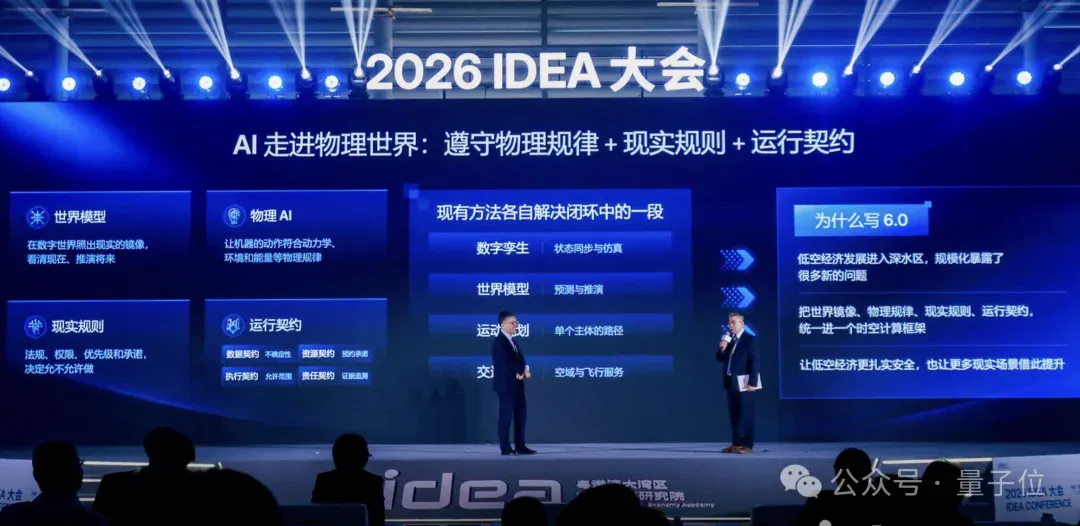
In practical applications, IDEA's test site in Dapeng, Shenzhen, has already enabled multiple types of drones to fly routinely in the same airspace.
The team combines virtual and physical methods, overlaying a virtual, 1:1-scale version of central Futian's buildings onto the Dapeng test airspace. The drones actually fly in open Dapeng, while testing routes and safety for navigating between Futian's high-rises.
Communication round-trip latency between drones and the flight-service control system has been reduced to 20 milliseconds. The platform can also rehearse emergencies such as severe weather and communication failures.
IDEA is also working with China Unicom on a second test network at the Eastern General Aviation Base in Yantian, expected to begin operation by the end of this year.
AI drug-discovery platform Mozi upgrades to 2.0
IDEA launched its end-to-end AI drug-discovery platform Mozi last year. This year, it expands into peptides, antibody drugs, long-acting formulations, and other areas.
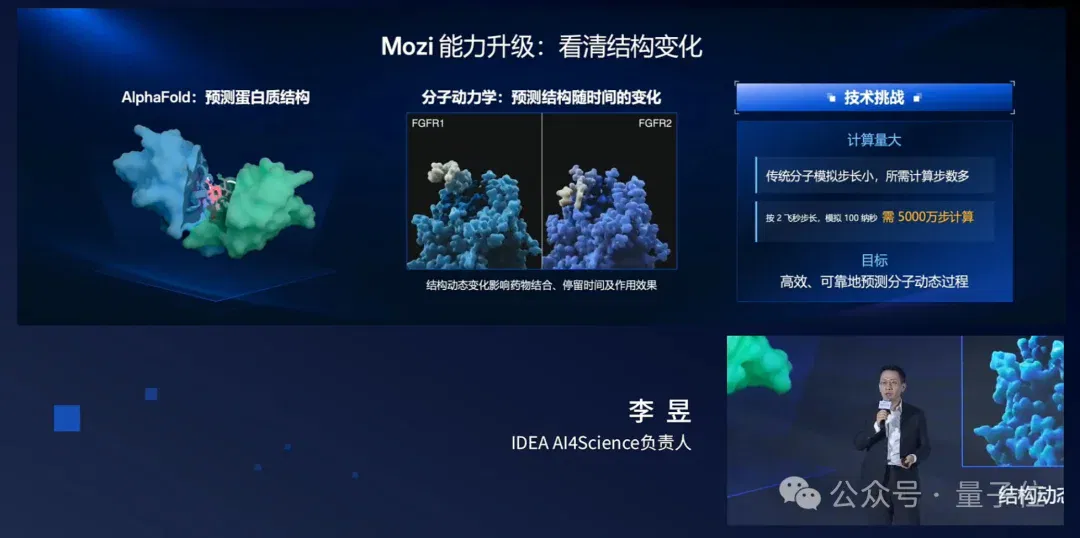
The newly released molecular-dynamics prediction model BioKinema can rapidly predict the continuous motion of proteins and drugs.
In one experiment disclosed by the team, conventional molecular simulation takes 22 hours, while BioKinema completes the same prediction task in under one minute, a speedup of more than 1,000 times.
Another technology, Mozi Auto Research, automates the development of prediction models.
For example, in a long-acting formulation project with NHWA Pharmaceutical, the team needs to predict drug release over 28–30 days. A prediction model that previously took algorithm engineers weeks to build can now meet requirements within one day.
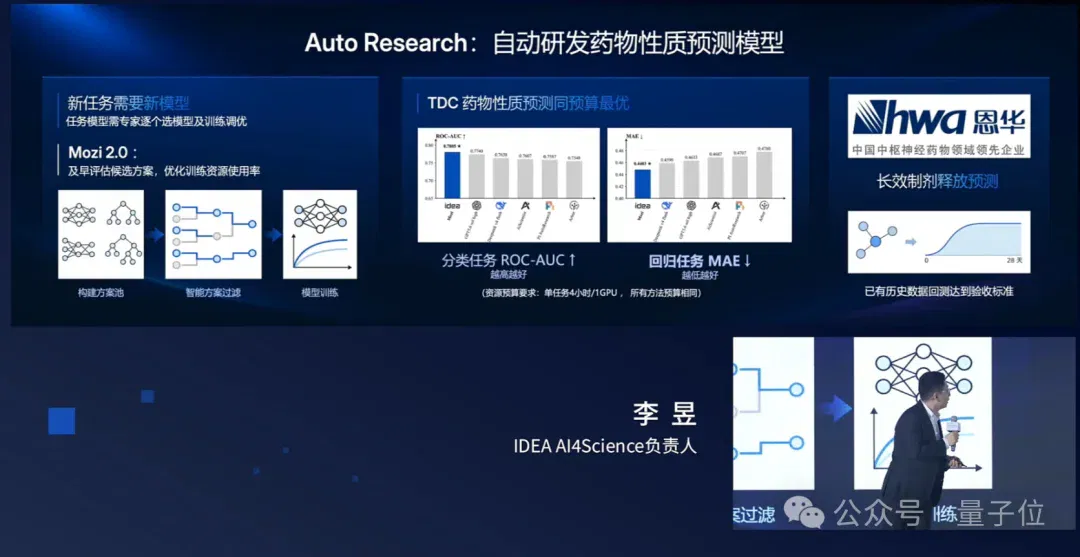
In a peptide-design project with Tsinghua University, two of the team's three designed candidates showed the expected reduction in target-protein levels in experiments.
Mozi has thus begun connecting AI design with real experiments in a closed loop between computational and wet-lab work.
At the conference, IDEA, now six years old, also disclosed its five-year IDEA 2.0 plan, established an engineering center, launched an AI full-stack model ecosystem collaboration initiative, and set up joint laboratories with several institutions.
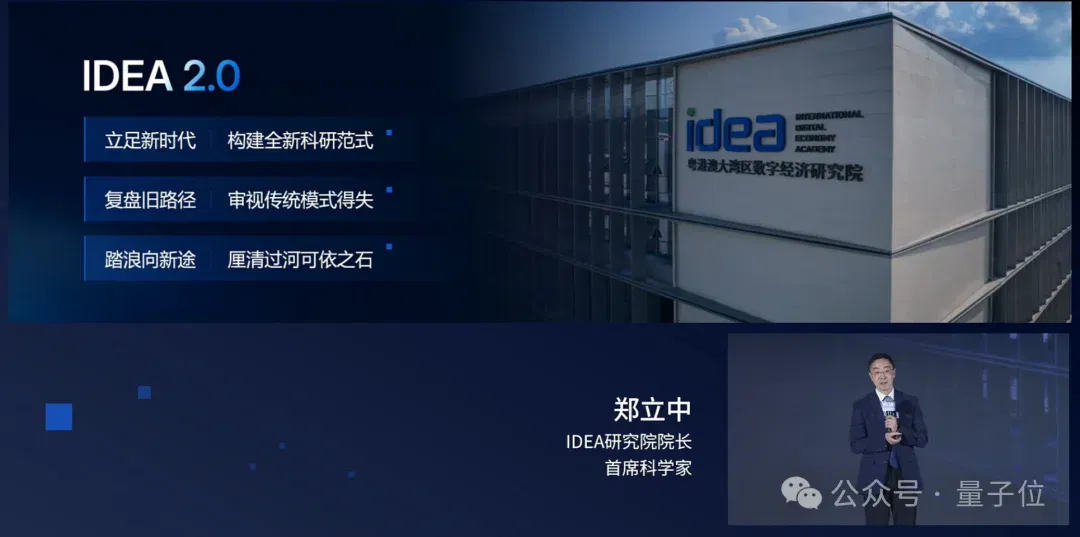
IDEA president and chief scientist Lizhong Zheng summarized its new-stage positioning in one phrase: industry-oriented basic research.
During more than 20 years at MIT, Zheng heard many senior professors describe how they had conducted research and overcome difficulties when young. The methods they explored back then later came to be used around the world.
He said:
The scientific research paradigms we take for granted and know so well today are not actually that old; they were established after World War II… Their creators were not ancient sages, but old professors you could see and touch, who could lose their tempers.
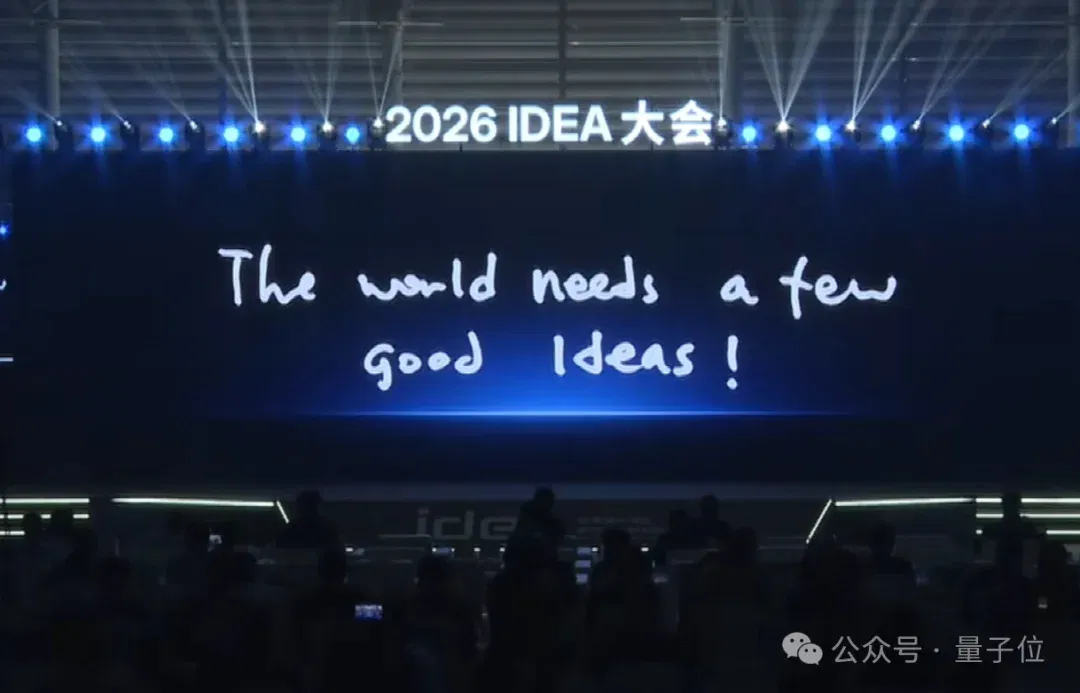
Every era has research paradigms suited to it. AI now opens new possibilities for exploring research itself.
In Zheng's view, “Building the research paradigms of this era is our generation's responsibility.”
This article is from QbitAI, by Jessica.
Related topics
After reading
Join the AINRK community
Read how to join the community and connect with people working in AI.
Related articles
Continue reading related topics and articles in this category.
沈向洋解读AI演进五大维度!IDEA研究院发布“万物可抓取”模型,GPU渲染器打破国外垄断 (opens in a new tab)
带领IDEA研究院(粤港澳大湾区数字经济研究院)走过第五个年头的沈向洋,新鲜分享了他用来梳理智能演进的五个维度——作为IDEA研究院创院理事长,相比给出一个技术路径路线图,他更希望提出一个识别机会的思考框架,帮助创新者在智能演进中找到技术、产品与商业的切口。
冷门新语言AI写不动?IEEE论文:从零到及格线,MoonBit给出完整训练路线 (opens in a new tab)
对于Python、Java、JavaScript这些语言,大模型通常能给出相当成熟的答案。
当 AI 主宰写代码,MoonBit 嵌入「形式化验证」让 Bug 清零 (opens in a new tab)
AI 写代码越来越快,真正的问题却越来越尖锐:生成成本在下降,正确性却不会自动提升。

Clients question lawyers with AI advice: trust and communication pressure in legal consultations (opens in a new tab)
New Weekly interviews lawyers about clients questioning mediation and repeatedly rewriting documents with AI, alongside its help with research and drafting. Accounts of lawyer Huang Qin's death come from her firm's obituary and colleagues; they do not establish medical causation involving AI.
a16z Studies 11,307 AI Shopping Runs: Overlapping Picks, Channels and Checkout Barriers (opens in a new tab)
a16z and The Prompting Company test four agents across 1,270 prompts and 11,307 runs, alongside separate YipitData spending samples. Recommendations vary with use cases and merchant policies; 81% guest-checkout progress means reaching the form's end, not payment conversion.