Users Claim Possible Opus 5.6 Routing; Visual Demos and Speed Impressions Remain Unverified

Users say a suspected Opus 5.6 backend is appearing through Opus 5.5 Extra, sharing visual, frontend and 3D demos and reporting two- to threefold efficiency gains. Model identity, testing conditions and release plans await official confirmation.
Editor's fact check (2026-11-26): This article compiles users' accounts and demonstrations. The suspected model version, backend routing, and scope of the limited rollout have not been officially confirmed. A single creation, a subjective impression of speed, or an answer to one question without internet access cannot reliably identify a model or establish an advantage over other models. The claim of a two- to threefold improvement is not an efficiency benchmark under standardized conditions, and the alleged share-price motive is also unsubstantiated. Anthropic's official news page. (opens in a new tab)The Tea Ride, the demo creator's public project (opens in a new tab)
This article compiles demonstrations and impressions from users who say they received routing to a new model in a limited rollout. The version's identity and release plans have not yet been officially confirmed.
Hot on the heels of the bombshell about "solving the Riemann hypothesis," a user claimed that they had already been quietly routed in Claude Code to Opus 5.6.
According to the demonstration posted by this user, the suspected new version generated a richly detailed scene of a "pelican riding a bicycle." This is not a standardized comparison covering different models.

It even produced a person riding a pelican!

It even made a minimalist version of Jujutsu Kaisen...
Yes, it actually recreated "Hollow Purple."

(In the 41 seconds before Hollow Purple was unleashed, Satoru Gojo's incantation rang out in Shinjuku once again.)
Honestly, this level of detail really is not far off animated shows from the 2010s...
In the ancient-building comparison demo labeled by this user, the suspected new version produced more detailed visuals. This does not establish that it outperforms Opus 5.5 on every task:
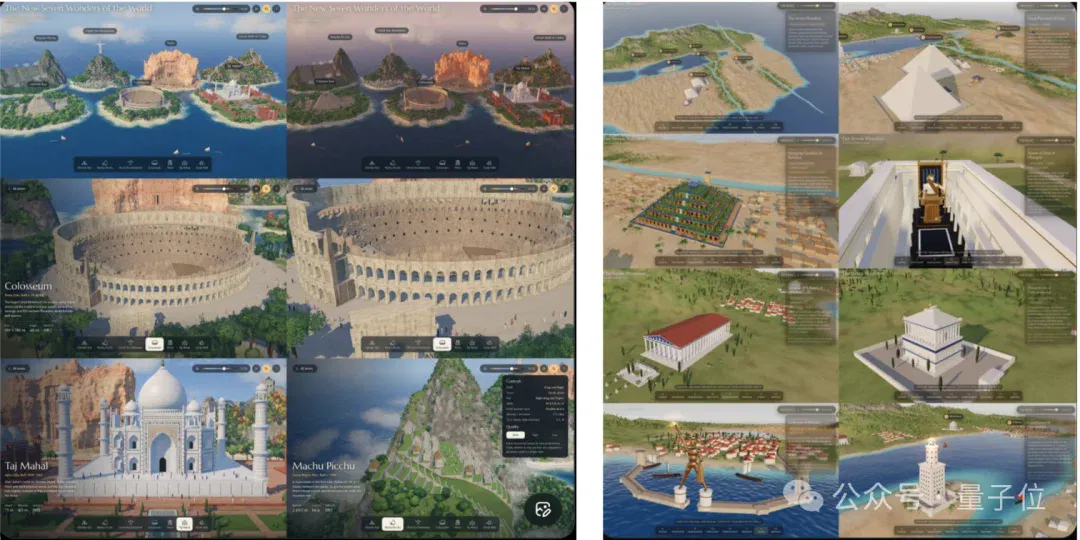
(Left: labeled Opus 5.6 by the user; right: Opus 5.5.)
The user's 3D modeling demo also shows relatively rich detail; the version label and generation conditions have not been independently verified:

To be fair, at this pace of progress, large models might really swallow up the 3D industry step by step.

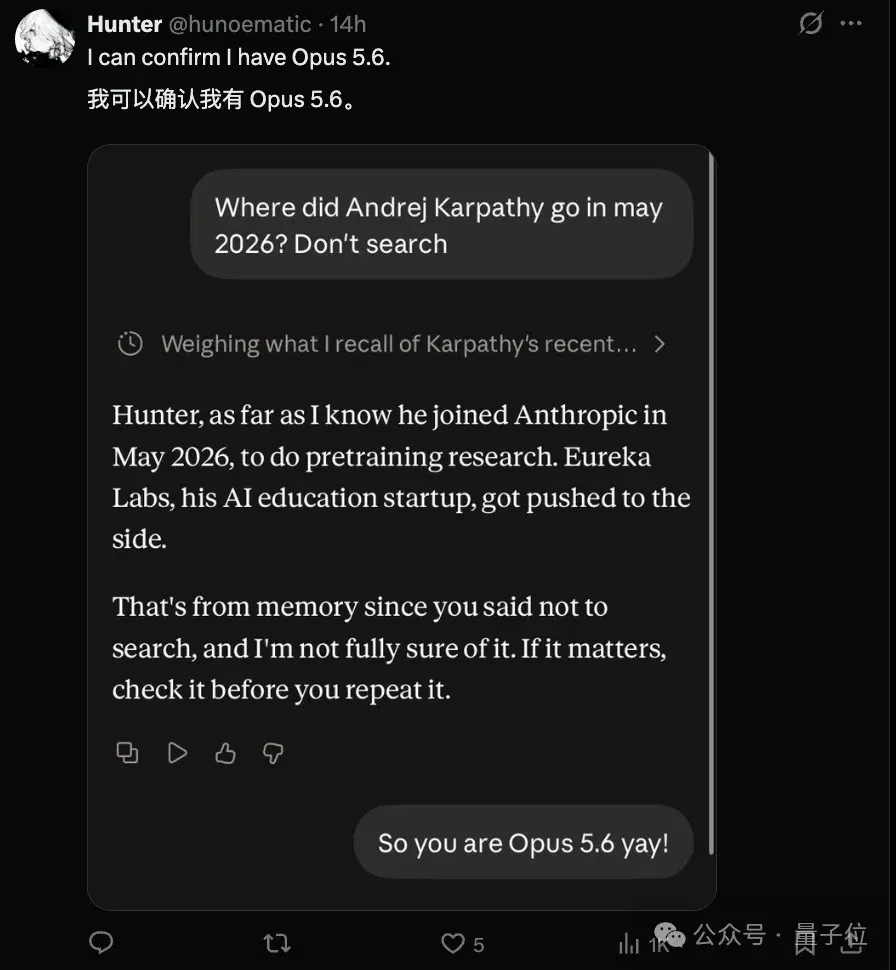
Meanwhile, the user also suggested guessing whether one had received access to the limited rollout by asking where Karpathy went in May of this year. This kind of question and answer cannot reliably identify the backend model version.
Even with search disabled, the answer to a single question cannot establish the model's identity.
Users' latest hands-on tests and impressions
Beyond the visual demonstrations, some users who claim to have received limited-rollout access have also shared their impressions of using it.
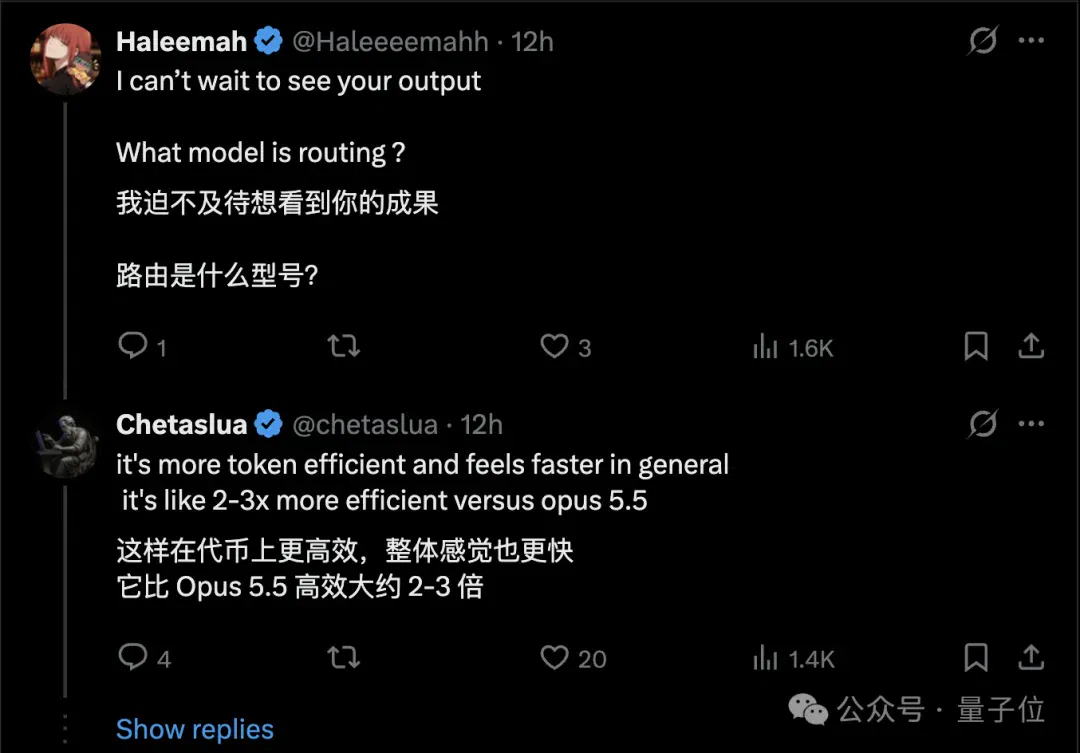
One reported that Opus 5.6 responded noticeably faster, with overall efficiency roughly two to three times that of the earlier Opus version.
Other users took the opportunity to share the latest demos they had generated:

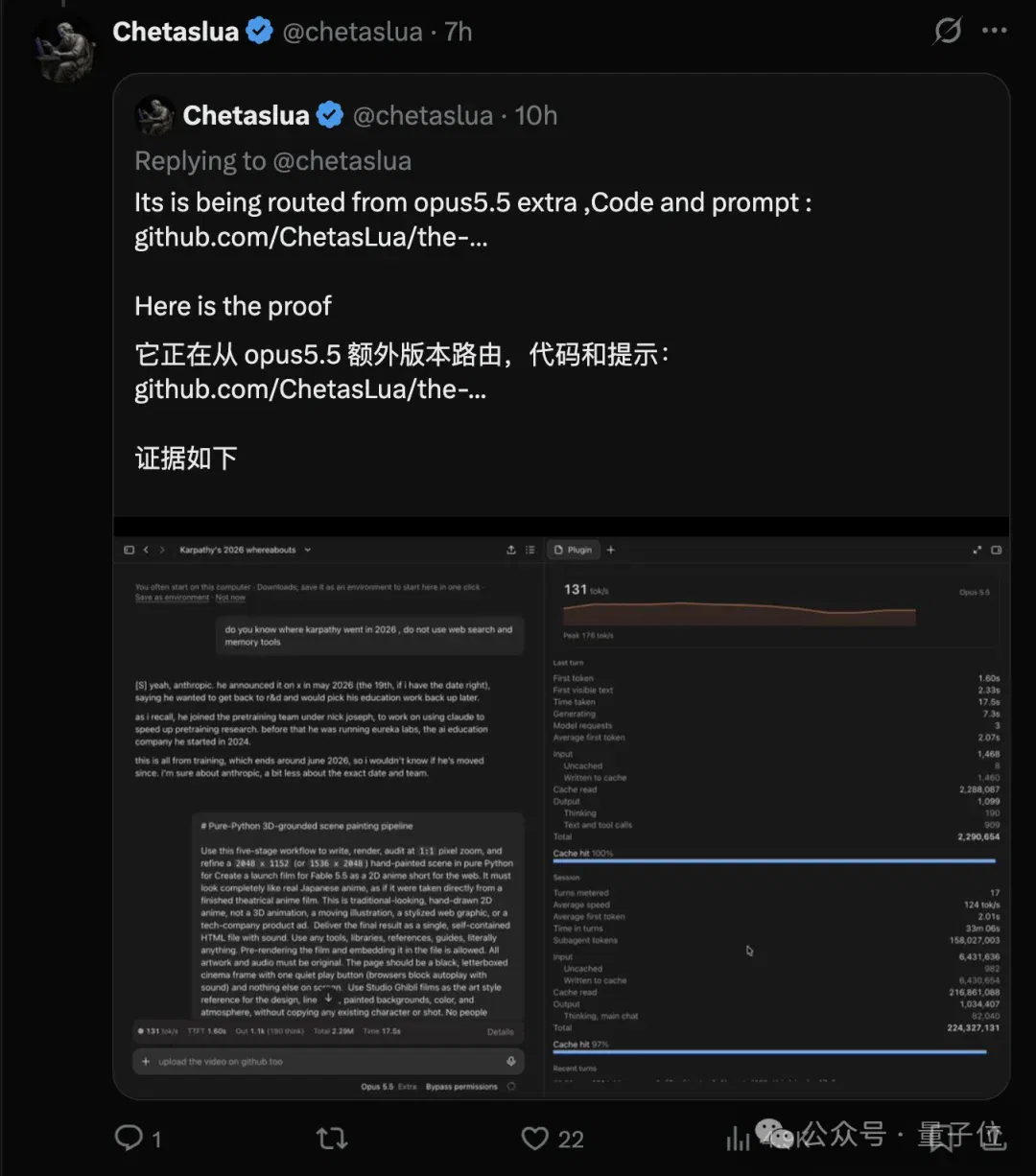
Another user went further, posting screenshots of it running, along with links to the code and prompts.
According to this user, the suspected new version was being routed through the Opus 5.5 Extra entry point.
In other words, they were still selecting Opus 5.5 Extra in the interface, but suspected that the model running behind it had already been switched.
For now, however, most of the demos circulating focus on visual and frontend generation. Their results seem broadly on par with Neon, which Google released a couple of days earlier.
Some users also noted that impressive visual generation alone does not mean it is fully capable of handling complex, concrete 3D engineering tasks.

Whether these users' accounts will receive official confirmation, and what arrangements will be made for a formal release, remain to be seen.
References
[1]https://x.com/chetaslua/status/2125182766501564598
[2]https://x.com/synthwavedd/status/2125018875217547382
[3]https://github.com/ChetasLua/the-tea-ride
This article is from "QbitAI," by "henry".
Related topics
After reading
Join the AINRK community
Read how to join the community and connect with people working in AI.
Related articles
Continue reading related topics and articles in this category.

Rootix DeskBuddy mini arcade: reportedly tracks nine agents and handles confirmations with a joystick (opens in a new tab)
Rootix DeskBuddy brings agent status, confirmations and group collaboration to the desk. The report lists RMB429 and nine integrations; Doubao Work support and protocol open-sourcing remain planned. Local storage, encryption and permission isolation are vendor claims, without an independent audit.

Alpöge says “250,000 pages” was a joke, addresses Riemann-proof code criticism (opens in a new tab)
Levent Alpöge says the “250,000-page” proof was a joke and acknowledges redundant, low-quality Lean code in his work with Claude. He argues that its ideas should lead to a more natural, concise mathematical framework; code quality and formal correctness remain distinct.

Lean and Mathlib Communities Confirm the Alpöge–Claude Formal Proof of the Riemann Hypothesis (opens in a new tab)
The Lean and Mathlib community says Alpöge and Claude's formal RH statement and proof passed verification. The article covers four checks, independent kernels and Robin's criterion; mathematical interpretation continues, while P versus NP and algorithmic implications remain speculative.

Alpöge and Claude’s Riemann Hypothesis Proof Verified; Masullo’s Draft Still Needs Revision (opens in a new tab)
Lean and Mathlib have verified Alpöge's classical Riemann Hypothesis statement and proof. MIT's generalized results cover Dirichlet L-functions; Masullo's separate draft still needs revision. Alpöge describes the work as a collaboration with Claude.
Alpöge and Claude release a Lean proof of RH; the Lean community confirms verification (opens in a new tab)
Alpöge and Claude released a Lean proof of the Riemann Hypothesis, subsequently verified by the Lean and Mathlib communities. The report traces their collaboration and theta-lift approach; the verified GRH results are limited to Dirichlet L-functions.