Sun Zhiwei reduces a Diophantine definition of integers over the rationals to 26 auxiliary variables
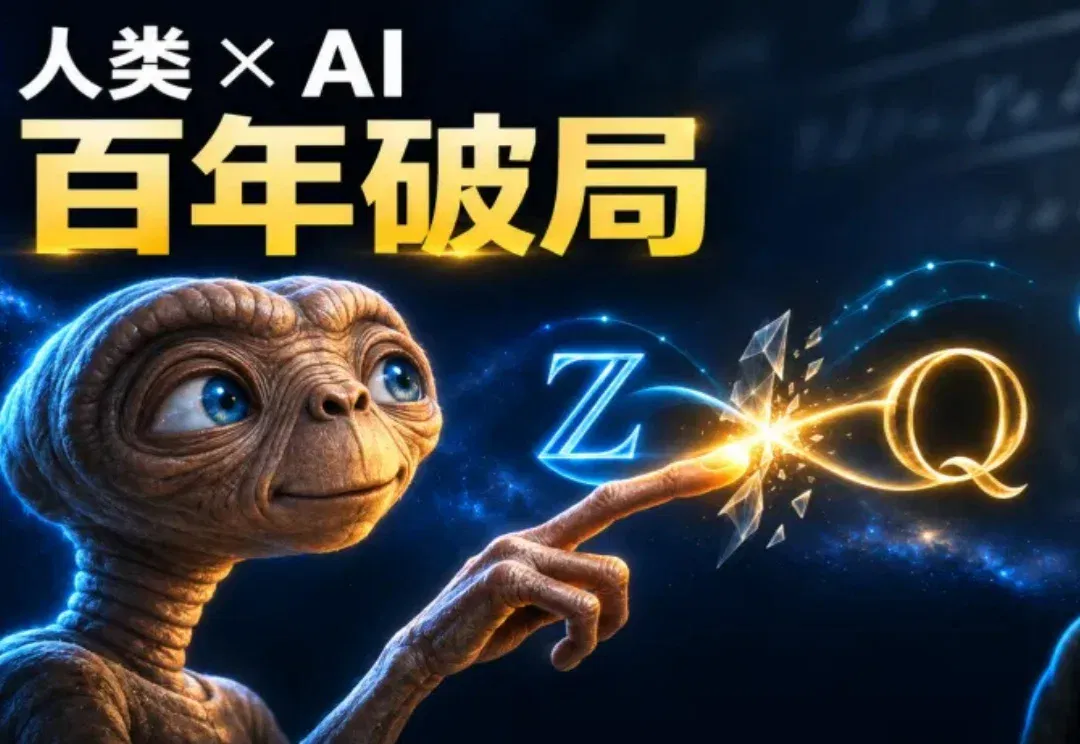
Human- and AI-assisted manuscripts simplify a Diophantine representation of integers over the rationals. Sun Zhiwei’s November 13 preprint revision uses 26 existentially quantified auxiliary variables. Peer review and formal verification remain distinct.
Editorial fact-check (November 24, 2026): The paper’s “26” refers to existentially quantified auxiliary variables, excluding the input x whose membership in the integers is being tested. Giving a Diophantine definition of the integers within the rationals is one sufficient route to proving that Hilbert’s tenth problem over the rationals is undecidable. The constructions, assumptions and verification status of the different manuscripts must be understood separately. Sun Zhiwei’s preprint (opens in a new tab)Project status statement (opens in a new tab)
AI produces a monster equation with nearly 300 billion variables; eight days later, a Chinese mathematician reduces it to 26
292,890,231,905.
That is the number of variables in a certain mathematical equation.
On November 5, logician Elliot Glazer released a manuscript. Working with several AI systems, he constructed a polynomial equation containing nearly 300 billion variables.
This monster does just one thing: identify exactly which rational numbers are integers.
Its highest degree is reportedly far greater than the number of atoms in the universe. It cannot be printed in the paper and can only be stored as code that generates it.
The announcement caused a stir in academic circles. Someone on social media compared it to humanity digging up an incomprehensible alien Dyson sphere on Mars.
The reversal came faster than expected.
Just one day later, researchers at the University of Illinois Chicago (UIC) took up the manuscript and reduced it to 12,504 variables, bringing its degree straight down to four.
A relay followed: a few hundred, then 221… the numbers kept plummeting.

On November 13, Nanjing University mathematician Sun Zhiwei submitted a new paper.
The variable count settled at 26.
Eight days. From nearly 300 billion to 26.
A century-old problem and an “integer detector”
In the summer of 1900, at the Second International Congress of Mathematicians in Paris, David Hilbert set out 23 mathematical problems that helped chart the course of twentieth-century mathematics.
The tenth sounded rather like a programming problem:
Could there be a universal algorithm to decide whether any given “Diophantine equation” has a solution?
Do not be intimidated by the name. A Diophantine equation is a polynomial equation with integer coefficients for which integer solutions are sought.
For example, take 2x + y = 5. If only nonnegative integer answers are allowed, its solutions are (0, 5), (1, 3) and (2, 1).
The famous Fermat’s Last Theorem also essentially concerns whether a family of Diophantine equations has positive integer solutions.

Humanity wrestled with this question for a full 70 years.
In 1970, work by Soviet mathematician Yuri Matiyasevich and others finally resolved it through the famous MRDP theorem. The answer was unequivocal: no universal algorithm exists.
But mathematicians naturally like to press a question further. The problem over the integers was solved; what if the restriction were loosened?
If instead of insisting on integer solutions, we allowed rational numbers (meaning that unknowns could be fractions as well as integers), would a universal algorithm exist?
One important sufficient route is to prove that “the set of integers ℤ is Diophantine over the field of rational numbers ℚ,” which would imply that Hilbert’s tenth problem over the rationals is undecidable.
For a long time this route proved impassable, raising an even more fundamental question: might such an “integer detector” simply not exist?
As early as 1992, mathematician Barry Mazur proposed a conjecture about the topology of rational points, discussing it further in a 1995 article: for any algebraic variety defined over the rationals, the closure of its rational points in its real-point space has only finitely many connected components.
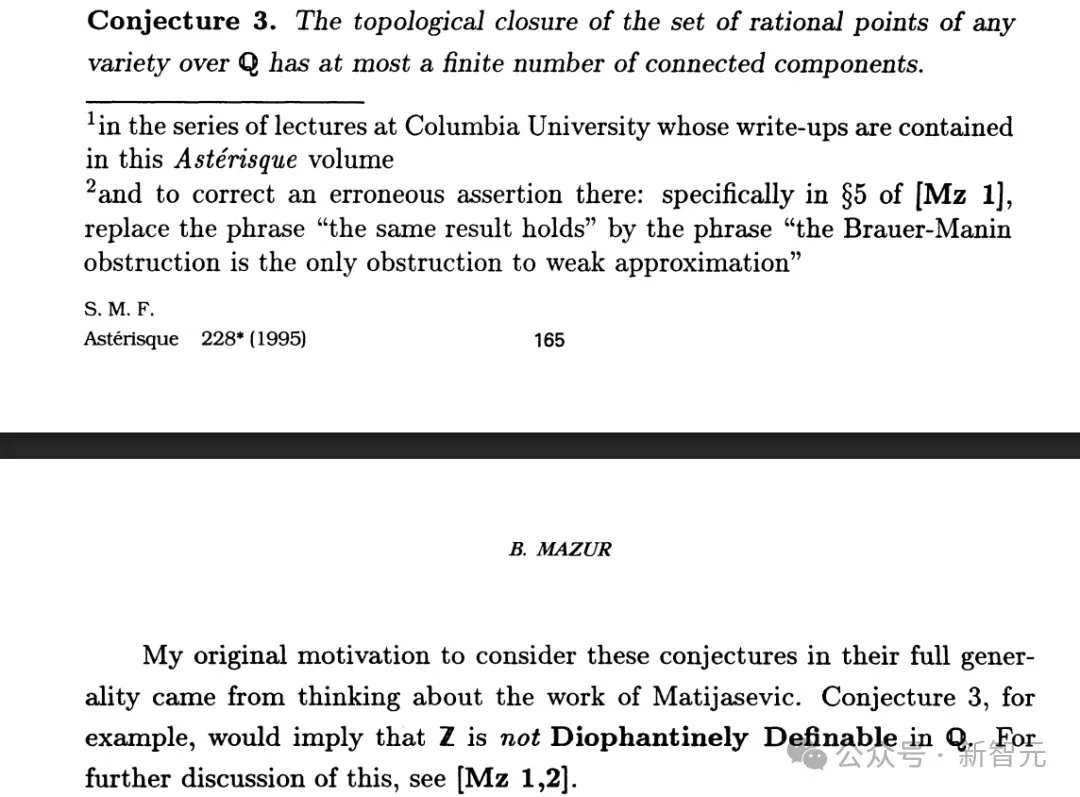
If that conjecture holds, it really would be impossible to single out exactly the integers within the rationals using such a polynomial equation.
In other words, if Mazur’s conjecture holds, the “integer detector” cannot exist.
For decades, countless number theorists and algebraic geometers stared up at this mountain without finding a route to the summit.
Then, in the autumn of 2026, AI knocked on the door.
From nearly 300 billion to 26: humans turn an answer into mathematics
The storm began with a preprint OpenAI released on October 6.
OpenAI’s internal mathematics team announced that it had given a negative solution to Hilbert’s tenth problem over the rationals.
Then, in mid-October, mathematician Sohail Farhangi used ChatGPT 6 Pro to build a conditional proof framework.
The real shock came on November 5.
Principia Labs researcher Elliot Glazer announced that, with help from multiple AI systems, he had directly constructed that “integer detector.”
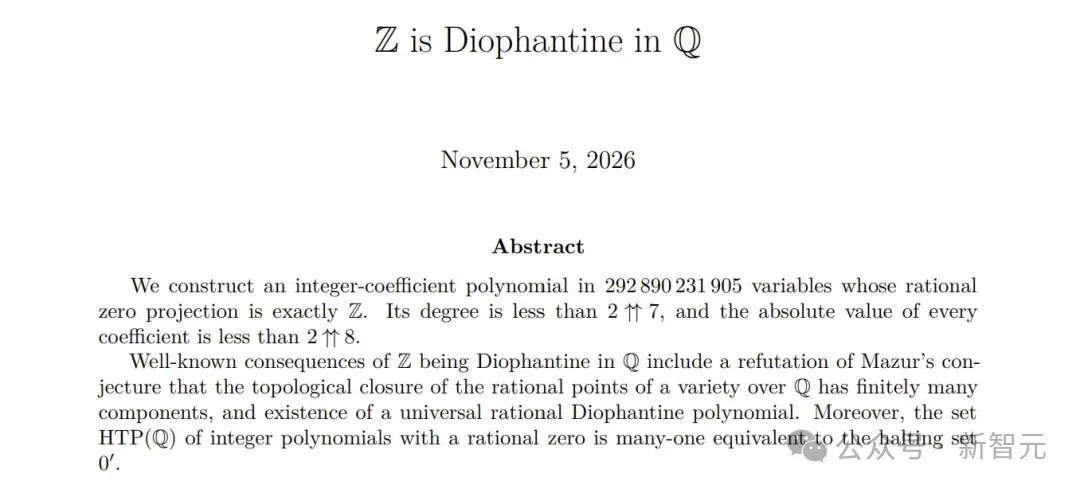
On first seeing the manuscript, prominent number theorist Abhishek Saha exclaimed:
This polynomial maps the entire theory of integer Diophantine equations into rational equations!
The price was that astronomical figure: 292,890,231,905 variables.
It was so large because AI had performed a “brute-force translation,” cramming arithmetic rules, verification conditions and high-dimensional geometric constructions into the equation layer by layer. The more literally everything was assembled, the more variables it required.
It cared only whether the logic formed a complete chain, not whether the result was beautiful.
Academic discussion erupted, mixing mockery with amazement:
It was like humanity digging up an incomprehensible alien Dyson sphere on Mars, only for the aliens to arrive hours later and fold it into a Rubik’s Cube.
Indeed, within 24 hours of Glazer publishing the monster equation, UIC researchers Gabe Conant, Caroline Terry and James Freitag rapidly followed up.
Combining it with Farhangi’s manuscript, they rewrote the translation scheme, cutting the variable count from nearly 300 billion to 12,504 and reducing the degree to four.
A degree-four equation with 12,504 variables… My brain crashes just trying to imagine that matrix.
Conant and colleagues then compressed it further, bringing the number down to 221.
The climax came on November 13.
Nanjing University mathematician Sun Zhiwei posted a preprint on arXiv, slashing the variable count to just 26.
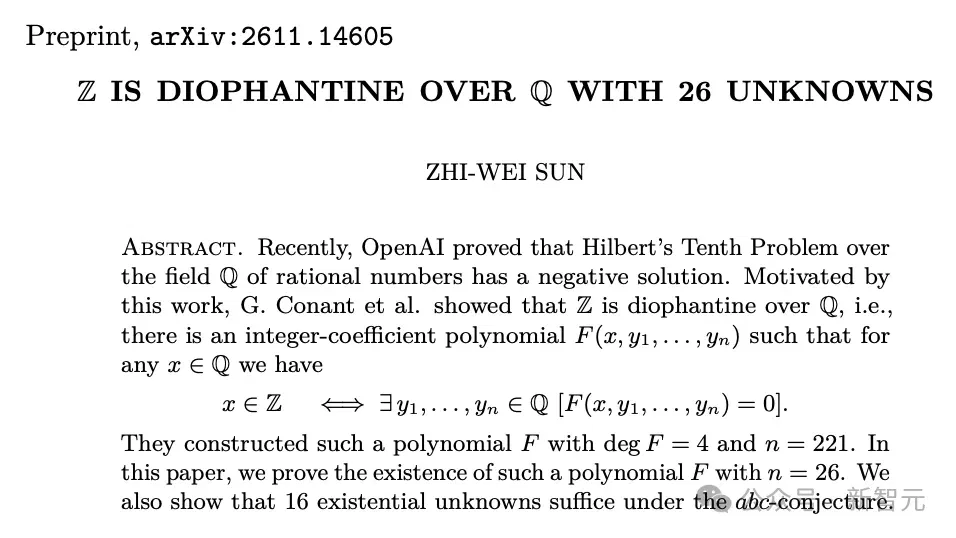
One particularly moving detail stands out when opening Sun’s paper.
AI appears only in the first sentence of the abstract—a sentence explaining that the work was motivated by OpenAI’s result.
Just that one sentence, with nothing more.
Below it, the entire paper uses the familiar language of mathematicians: rigorous, clean logic, with 26 unknowns neatly laid out on the page.
The source is acknowledged and the answer absorbed. Nearly 300 billion variables have been pared away by humans, line by line.
The machine’s answer was unbearably ugly: perhaps correct, but unreadable. Humans took the baton and refined it bit by bit until it became mathematics that could genuinely be read and appreciated.
This may be the ideal way for AI to enter mathematics: machines lead the charge, while humans turn the answer into mathematics.
At the time of the report, neither the nearly 300-billion-variable version, the degree-four equation with 12,504 variables, nor Sun’s 26-variable paper had passed rigorous peer review.
Glazer himself offered a sobering caveat, acknowledging dismal progress on formal verification—for example, making the proof run through Lean 4, one of mathematics’ most exacting theorem provers:
Formal verification will take a very long time. We have consumed substantial computing resources, but internal estimates suggest that the current agent cluster has completed only 5% of the formalization.
Why is it so difficult?
Because the proof uses analytic number theory and algebraic-geometric constructions far beyond the coverage of Lean’s existing mathematical library, Mathlib.
The proof contains extensive intensive computations that, according to the report, could not be completed in reasonable time using only Lean’s three standard axioms. The team therefore resorts to “Factored Verification”: perform the intensive calculations in external software first, then package them as “certified axioms” and insert them into the Lean framework.
This raises a pointed question of trust:
If a mathematical proof is written by multiple AI systems and audited by multiple AI systems, while most of its high-dimensional algebraic manipulations cannot be checked by hand, why should we believe it is correct?
In response, Glazer invoked two famous mathematical “black boxes”:
Logicians constantly use the MRDP theorem as a tool, although the vast majority have never read its complete proof;
scholars outside group theory also often cite the classification of finite simple groups (CFSG), yet its proof runs to tens of thousands of pages and, the account says, no individual in history has read all of it from beginning to end.
Glazer argues that a theorem’s statement is often itself a highly valuable black box, and that others need only a “certificate of truth.”
Even so, the edifice of mathematics cannot ultimately be built on sand.
Glazer plainly states a disclaimer on the project repository’s front page: multiple rounds of AI auditing are absolutely not equivalent to independent human peer review.
Alien intelligence arrives: mathematicians’ next frontier
Beyond the specific theorem lies the deeper question of mathematics’ own future.
Pure mathematics has long been regarded as a glory of human intelligence, a kind of gymnastics for the mind.
Now, however, mathematics is being pushed toward the character of an “experimental science.” Like a Large Hadron Collider, AI smashes hundreds of billions of variables together, filters them and spits out results. Human mathematicians identify the tracks crossing the instrument screens, then distill them into axioms and beauty that humans can understand.
This does not mean human mathematicians are about to lose their jobs. Quite the opposite.
As immense high-dimensional symbols pour out of the machine’s abyss, the author argues, only humans can ask, “What does this actually mean?” Only humans can translate an alien language into a poem with 26 variables.
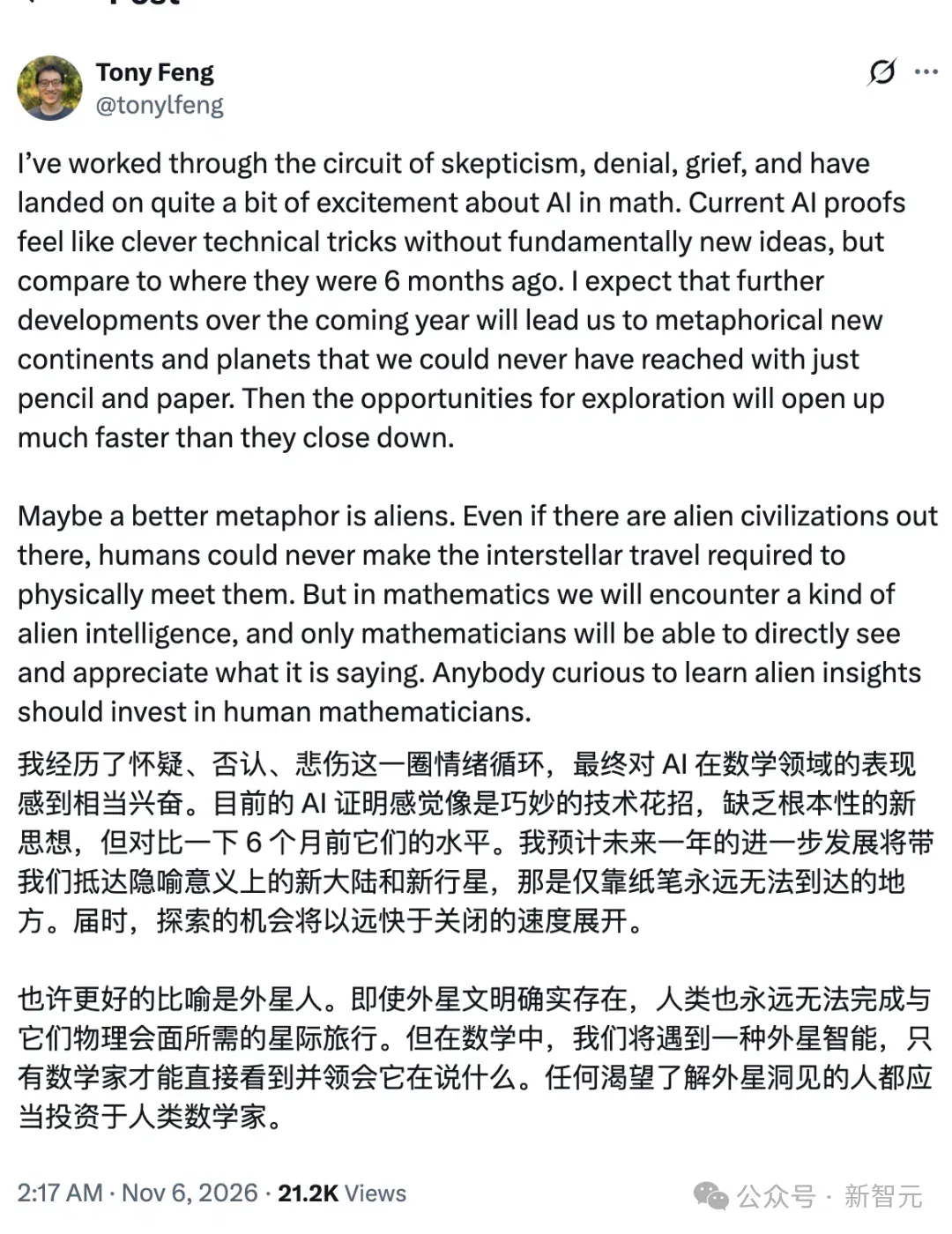
It recalls the widely shared reflection Feng Zhaolun wrote after moving through doubt, denial and grief:
In mathematics, we are encountering an alien intelligence, and at present only human mathematicians can directly understand what it is saying. Anyone who wishes to understand these alien insights should now invest in human mathematicians.
The curtain has only just risen.
References:
https://arxiv.org/pdf/2611.14605
https://bigospeedrun.com/other/z-diophantine-in-q
This article comes from Xinzhiyuan, written by David.
Related topics
After reading
Join the AINRK community
Read how to join the community and connect with people working in AI.
Related articles
Continue reading related topics and articles in this category.
GPT-6 Astra drafts short proof of Deligne's bound from Alpöge's outline; human review pending (opens in a new tab)
A November 21 preprint develops a new proof of Deligne's Frobenius eigenvalue bound from Alpöge's footnote. Its core argument is under six pages but assumes étale cohomology and weak Lefschetz. The manuscript says models wrote and checked it; no human has checked it.
Levent Alpöge and Claude's Riemann Hypothesis collaboration: Mathematics and formal verification (opens in a new tab)
An account of Alpöge's number-theory training and six-week collaboration with Claude. Lean and Mathlib have confirmed the formal proof of the Riemann Hypothesis; understanding, simplification and recognition by the Clay Mathematics Institute are separate matters.
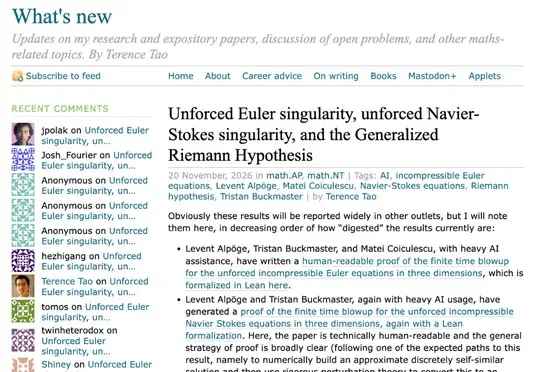
Masullo releases a GRH proof draft; Vakil’s update says issues remain unresolved (opens in a new tab)
Ravi Vakil introduces Masullo’s The Music of the Primes draft, which the author says took nearly 12 years without AI. Issues remain unresolved. Its status differs from the formally verified Alpöge–Claude RH proof; they cannot be described as two established proofs.

Alpöge and Claude’s Riemann Hypothesis Proof Verified; Masullo’s Draft Still Needs Revision (opens in a new tab)
Lean and Mathlib have verified Alpöge's classical Riemann Hypothesis statement and proof. MIT's generalized results cover Dirichlet L-functions; Masullo's separate draft still needs revision. Alpöge describes the work as a collaboration with Claude.
Alpöge and Claude release a Lean proof of RH; the Lean community confirms verification (opens in a new tab)
Alpöge and Claude released a Lean proof of the Riemann Hypothesis, subsequently verified by the Lean and Mathlib communities. The report traces their collaboration and theta-lift approach; the verified GRH results are limited to Dirichlet L-functions.