GPT-6 Astra drafts short proof of Deligne's bound from Alpöge's outline; human review pending
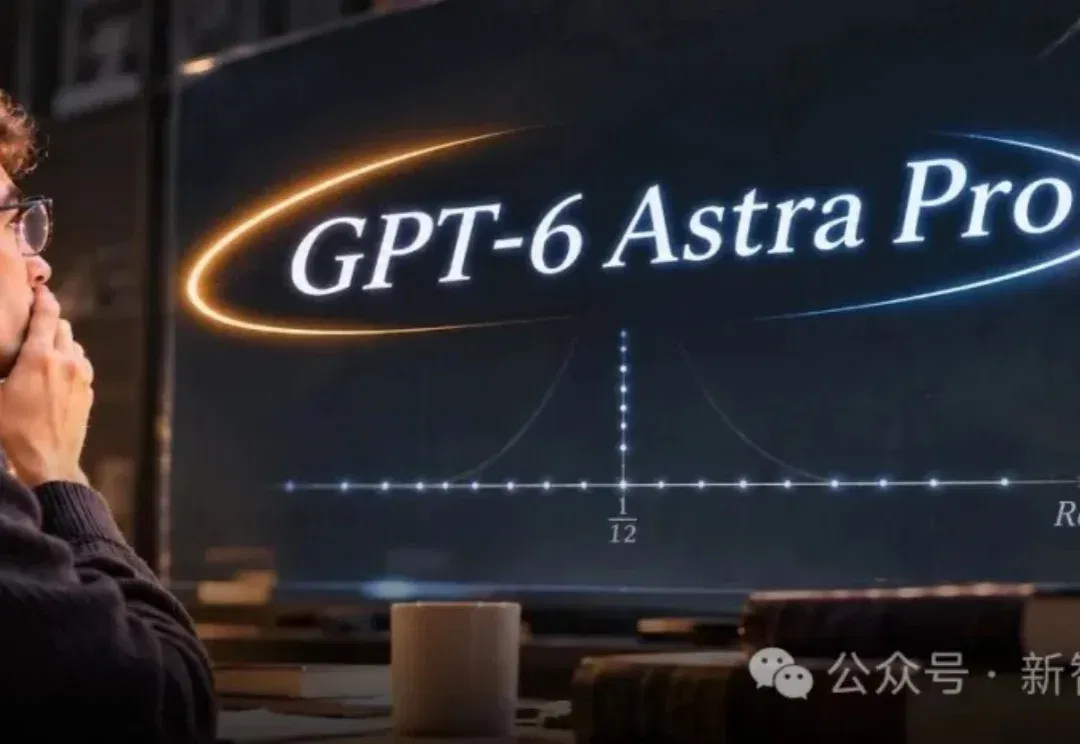
A November 21 preprint develops a new proof of Deligne's Frobenius eigenvalue bound from Alpöge's footnote. Its core argument is under six pages but assumes étale cohomology and weak Lefschetz. The manuscript says models wrote and checked it; no human has checked it.
Editor's verification (2026-11-24): This is a preprint presenting a new proof of an existing theorem of Deligne, drawing on Alpöge's human research sketch and assuming the established frameworks of étale cohomology and weak Lefschetz. The manuscript explicitly states that no human has checked it. Cross-checking by several models does not amount to human peer review or formal verification. "Under six pages" refers to the core argument, not to building all the underlying theory from scratch. Original preprint (opens in a new tab)
The mathematics community is in full celebration!
On November 20, humanity witnessed a day for the history books—
Anthropic mathematician Levent Alpöge teamed up with Claude to announce a proof of the Riemann Hypothesis, releasing 17 million lines of Lean code.
Early in the morning, the authoritative Lean organization confirmed: Claude's proof of the Riemann Hypothesis is correct!
Everyone had thought this was already the high point of the year in mathematics.
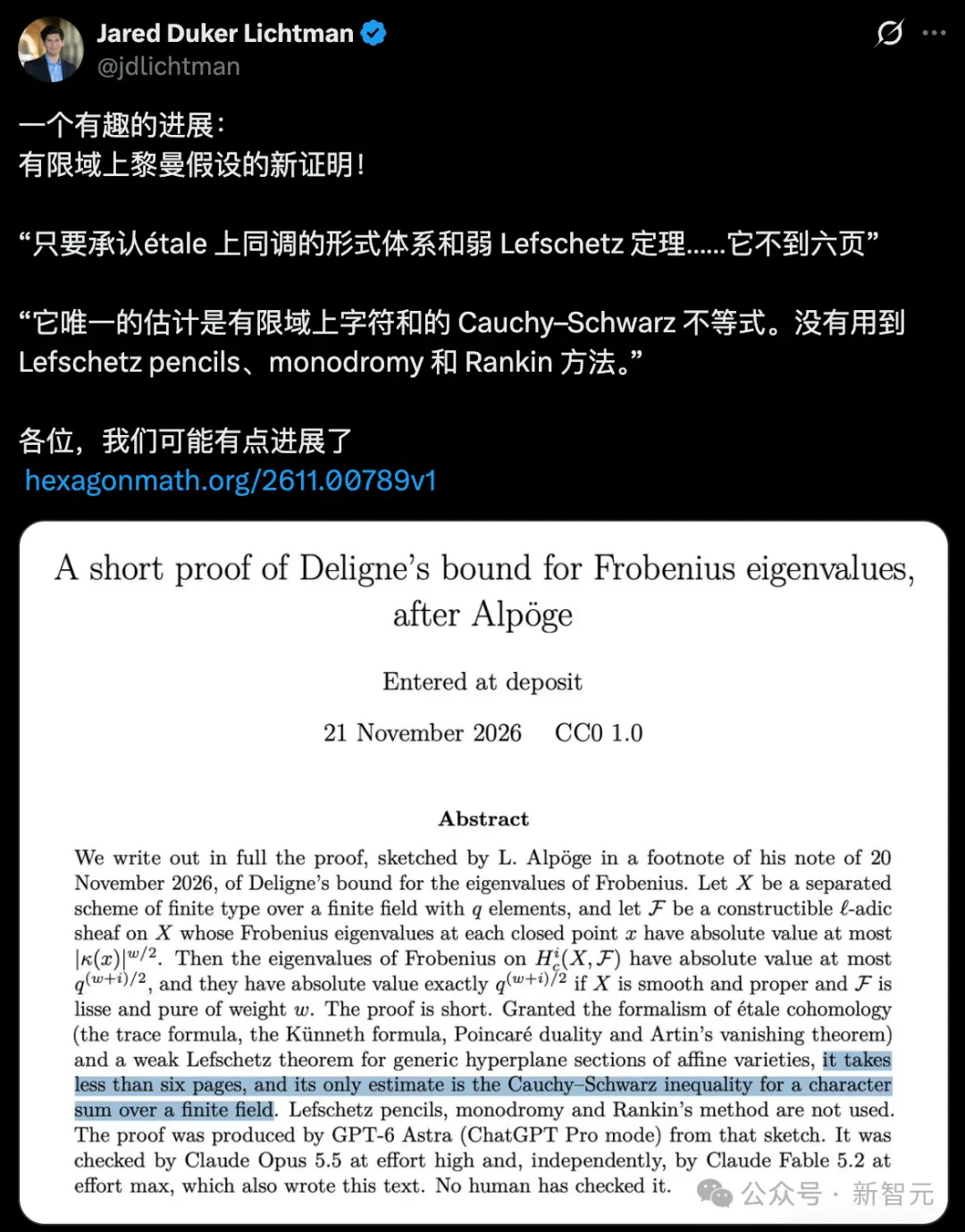
But just one night later, a paper whose core proof runs to fewer than six pages appeared, setting the academic community alight again.
This time, GPT-6 Astra Pro single-handedly proved the "Riemann Hypothesis over finite fields".
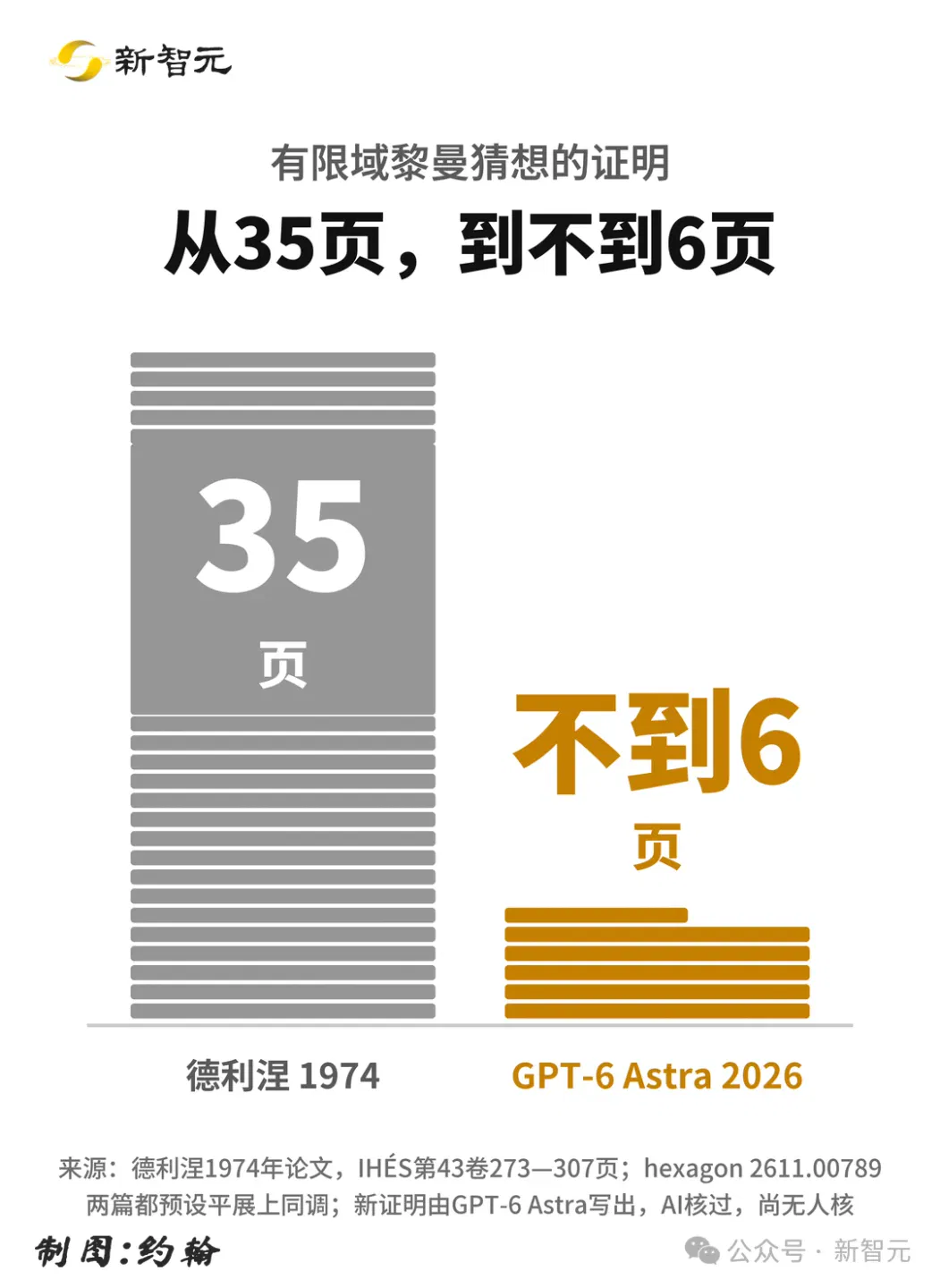
In 1974, the great mathematician Pierre Deligne solved this problem, writing two landmark papers totaling more than 150 pages and earning a Fields Medal for the achievement.
Yet the core derivation in this new proof from GPT-6 Astra runs to fewer than six pages!
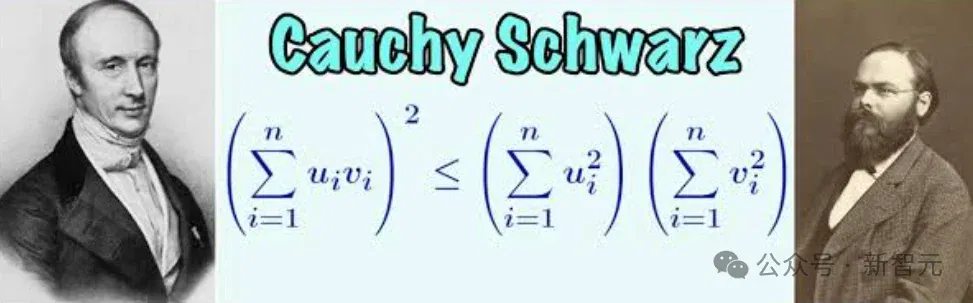
Most astonishingly, the only central inequality estimate the AI uses throughout is the Cauchy–Schwarz inequality, familiar even to undergraduates.
According to the manuscript, models generated and checked the proof based on Alpöge's human research sketch; no human has checked it yet.
Stanford mathematician Jared Duker Lichtman could hardly contain his amazement: "We may really be approaching some kind of tipping point!"

In under 24 hours
GPT-6 Astra proves the Riemann Hypothesis over finite fields
The Riemann Hypothesis over finite fields is also known as the celebrated "Weil conjectures" (Weil Conjectures).
The French mathematician André Weil first proposed them in 1949.
They connect the counting problem of "how many solutions an equation has over a finite field" with structures deep within algebraic geometry.
In this finite world, mathematicians wanted to determine one thing: exactly how many points lie on a high-dimensional geometric object?
At the time, Fields Medalist Alexander Grothendieck virtually rewrote all of algebraic geometry, constructing the theoretical edifice of "étale cohomology."
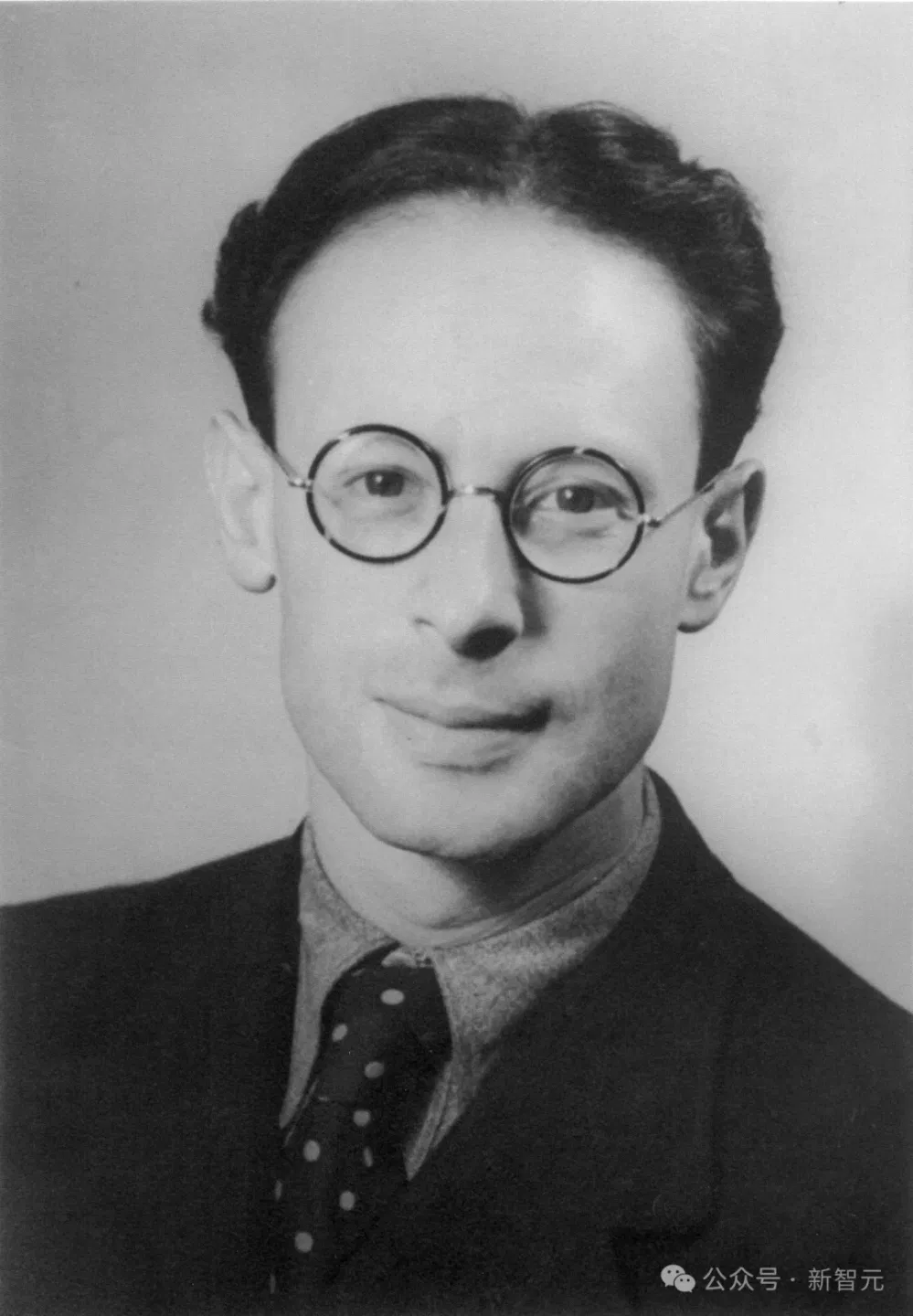
Finally, in 1974, the master of algebraic geometry Pierre Deligne resolved its most difficult part: the Riemann Hypothesis component.
He drew on virtually the entire "arsenal" of modern mathematics, deploying three "heavy weapons": Lefschetz pencils, the Kazhdan–Margulis theorem, and Rankin's method.
In the end, Pierre wrote more than 150 pages of daunting mathematics to overcome this mountain.
But over these past two days, AI has completely rewritten mathematical history.
The inspiration for this new proof comes entirely from mathematician Levent Alpöge's newly released notes on the Riemann Hypothesis.
At the foot of pages 2 and 3 of the notes, Alpöge left an inconspicuous footnote.
Perhaps a clever choice of "sign" could directly prove the Weil conjectures and Deligne's bound from the equation qN = M^k + R.

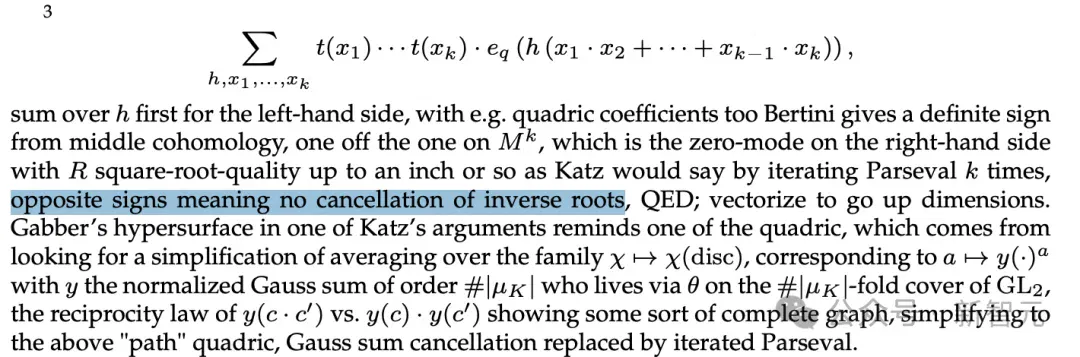
Unexpectedly, a passing footnote in a leading mathematician's proof became the inspiration for GPT-6 Astra's breakthrough.
An undergraduate inequality handles the central estimate
Produced in just 24 hours, with a core proof under six pages, GPT-6 Astra completed the argument with such elegance.
The paper is titled "A Short Proof of Deligne's Bound on Frobenius Eigenvalues (Following an Idea of Alpöge)."

In the abstract, the sentence that particularly caught mathematicians' attention was:
Assuming the basic framework of étale cohomology and the weak Lefschetz theorem, the entire proof takes fewer than six pages.
Even more strikingly, the sole "central estimate" throughout is the Cauchy–Schwarz inequality familiar to university students, applied to a character sum over a finite field.

Lefschetz pencils, monodromy, and Rankin's method: not one of these three core methods was used.
The key idea of GPT-6 Astra Pro is that a "sign" determines everything. At the heart of the entire proof is the equation qN = Mᵏ + R.
The solution process has just four central steps.
Step 1: Count points. Construct a special equation of the form x₁x₂ + x₃x₄ + …, then use "additive characters" to rewrite "counting how many solutions this equation has" as a sum.
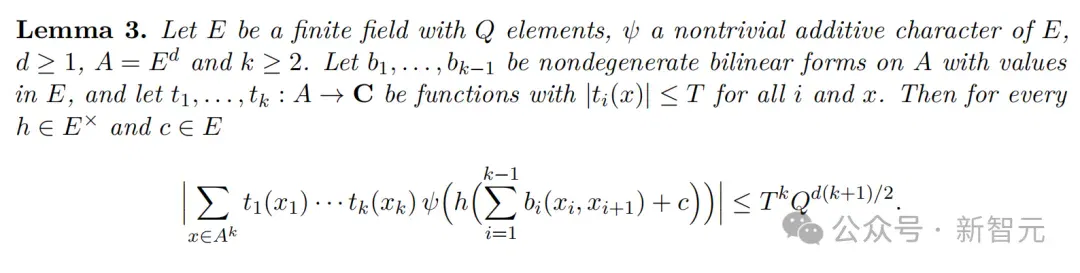
Step 2: Split the sum. The contribution from the trivial character is the main term Mᵏ; everything else goes into the remainder R.
Step 3: Control the remainder. Applying Parseval's identity k times in succession to the remainder shows that R has only "square-root size." The only estimate used here is the Cauchy–Schwarz inequality.
Step 4, the most ingenious of all: Fix the sign.
The usual difficulty in arguments like this is that the eigenvalues in cohomology can be positive or negative, large or small, and may cancel one another. A small sum does not mean every individual term is small.
This proof uses a hyperplane-section argument, the weak Lefschetz theorem, to give the contribution from "middle-dimensional cohomology" a definite sign, with a degree differing from that of the main term Mᵏ by exactly one.
Once the sign is fixed, the eigenvalues can no longer cancel one another.
The upper bound on the sum thus directly becomes an upper bound on every individual eigenvalue. The Riemann Hypothesis is secured.
Finally, GPT-6 Astra Pro replaces scalars with vectors and generalizes to higher dimensions, completing the entire proof.
GPT-6 and Claude team up in a relay
Zero human involvement throughout
What you would never expect is that Claude Opus 5.5 was the one to kindle this spark of inspiration.
The research involved more than GPT-6: Opus 5.5 and Fable 5.2 also took part.
The three models ran a beautiful "relay race," bringing the proof down to under six pages.
First, Opus 5.5 turned the footnote into a research proposition. After GPT-6 Astra produced a complete proof, Opus 5.5 checked every step line by line, re-derived the core lemmas, and wrote the first draft.
In the final step, Fable 5.2 cut off access to all previous checking records, entered a "double-blind review" mode, and independently proved the result again from scratch!
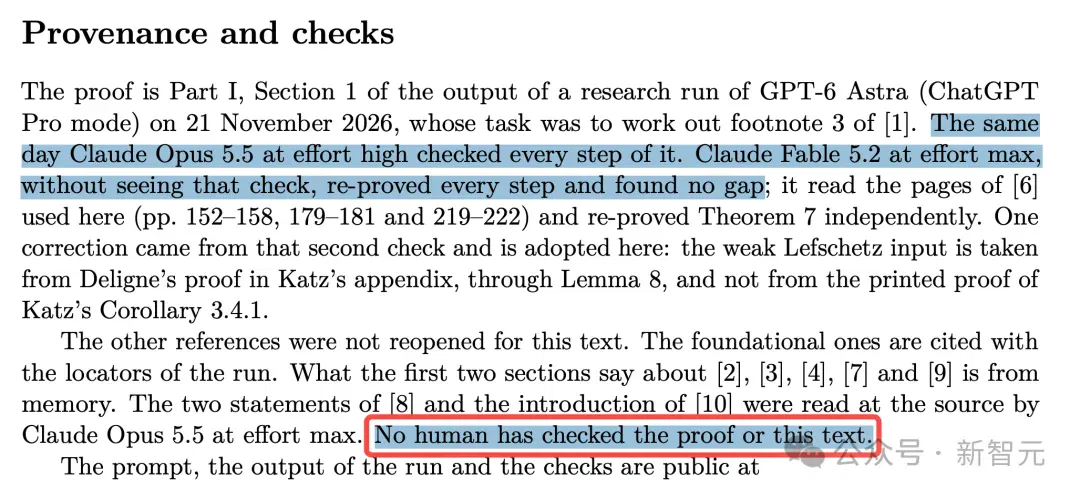
The AI giants that normally compete fiercely thus "collaborated" on a mathematical paper.
Most impressively, Fable 5.2 really did catch a deeply hidden academic bug during its blind review!
The citation for the "weak Lefschetz theorem" in the initial draft was slightly off.
The final paper adopted this correction, replacing the reference with the original proof written by Deligne himself in the appendix to a paper by Katz.
As for the human author, Floris Alderliefste, the only thing he did throughout was upload the paper online under a CC0 license.
The manuscript says the text was written by models, but the research began with Alpöge's footnote, and existing human mathematical results were also essential prerequisites.
A golden age of mathematics: No need to wait until the next century for the Millennium Problems
It really is staggering. Over these two days of the weekend, Claude has turned the world upside down.
In just 48 hours, mathematics experienced three successive conceptual earthquakes.
When the Clay Mathematics Institute put up $7 million for the "seven Millennium Prize Problems" in 2000, almost everyone thought these seven Everests would keep humanity climbing for a century or two.
Over the past two decades and more, only the reclusive mathematician Perelman had solved one: the "Poincaré Conjecture."
On reflection, what is most exciting about these two days is the new understanding taking shape between humans and AI.
A "golden age of mathematics," led by human intuition and advanced through all-AI collaboration, has arrived with a rush.
Perhaps the remaining Millennium Problems really will not have to wait until the next century.
Reference: https://x.com/jdlichtman/status/2124244181417906543
This article is from "Xinzhiyuan," by "Taozi."
Related topics
After reading
Join the AINRK community
Read how to join the community and connect with people working in AI.
Related articles
Continue reading related topics and articles in this category.

Sun Zhiwei reduces a Diophantine definition of integers over the rationals to 26 auxiliary variables (opens in a new tab)
Human- and AI-assisted manuscripts simplify a Diophantine representation of integers over the rationals. Sun Zhiwei’s November 13 preprint revision uses 26 existentially quantified auxiliary variables. Peer review and formal verification remain distinct.
Levent Alpöge and Claude's Riemann Hypothesis collaboration: Mathematics and formal verification (opens in a new tab)
An account of Alpöge's number-theory training and six-week collaboration with Claude. Lean and Mathlib have confirmed the formal proof of the Riemann Hypothesis; understanding, simplification and recognition by the Clay Mathematics Institute are separate matters.
Masullo releases a GRH proof draft; Vakil’s update says issues remain unresolved (opens in a new tab)
Ravi Vakil introduces Masullo’s The Music of the Primes draft, which the author says took nearly 12 years without AI. Issues remain unresolved. Its status differs from the formally verified Alpöge–Claude RH proof; they cannot be described as two established proofs.

Alpöge and Claude’s Riemann Hypothesis Proof Verified; Masullo’s Draft Still Needs Revision (opens in a new tab)
Lean and Mathlib have verified Alpöge's classical Riemann Hypothesis statement and proof. MIT's generalized results cover Dirichlet L-functions; Masullo's separate draft still needs revision. Alpöge describes the work as a collaboration with Claude.
Alpöge and Claude release a Lean proof of RH; the Lean community confirms verification (opens in a new tab)
Alpöge and Claude released a Lean proof of the Riemann Hypothesis, subsequently verified by the Lean and Mathlib communities. The report traces their collaboration and theta-lift approach; the verified GRH results are limited to Dirichlet L-functions.