Selling as AI Products Converge: Rox, Decagon, and Granola Leaders Discuss GTM
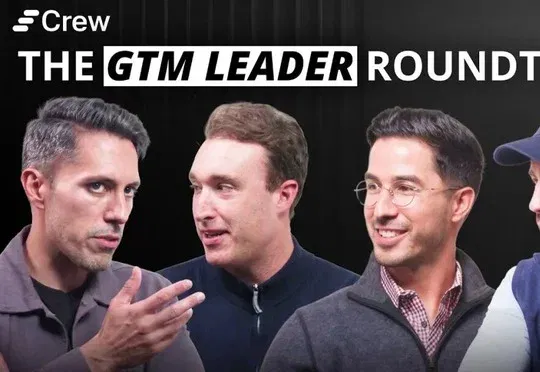
On The Crew Podcast, sales leaders from Rox, Decagon, and Granola discuss hiring, enterprise accounts, and commissions. They favor one AE owning large accounts from the first sale through expansion, while recognizing different needs for smaller customers.
Have you ever wondered how you would win if you were the head of sales at an AI company, facing two or three heavily funded rivals in the same category whose products looked almost identical to customers? I have been thinking about this question a lot recently. It was only after watching a GTM—go-to-market and sales—roundtable recorded in San Francisco for The Crew Podcast that I felt someone had explained it in concrete terms.
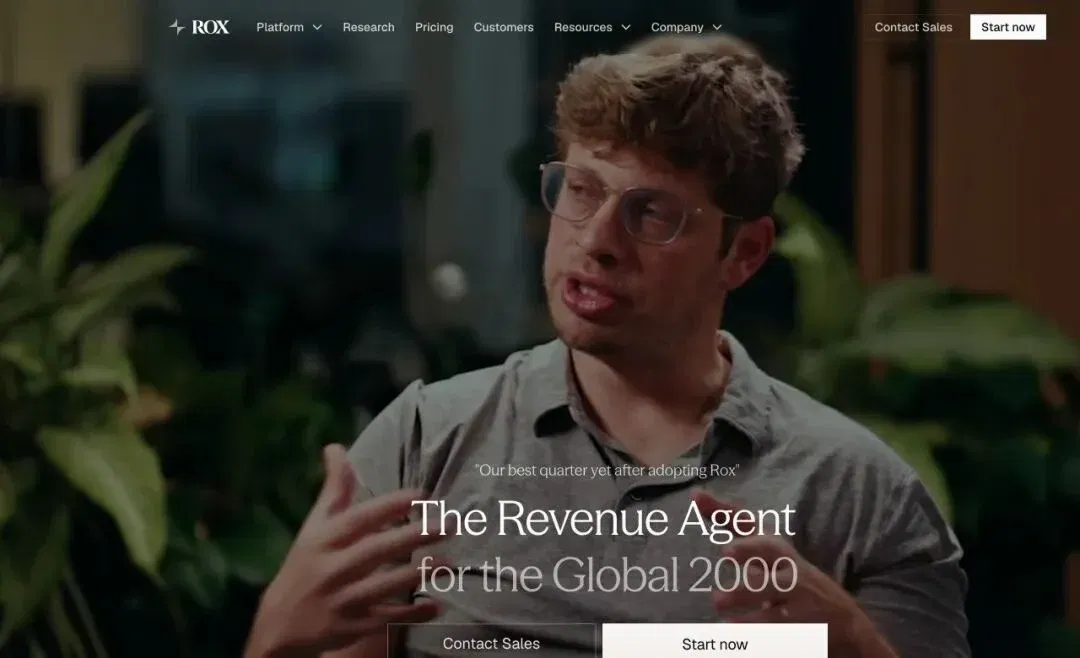
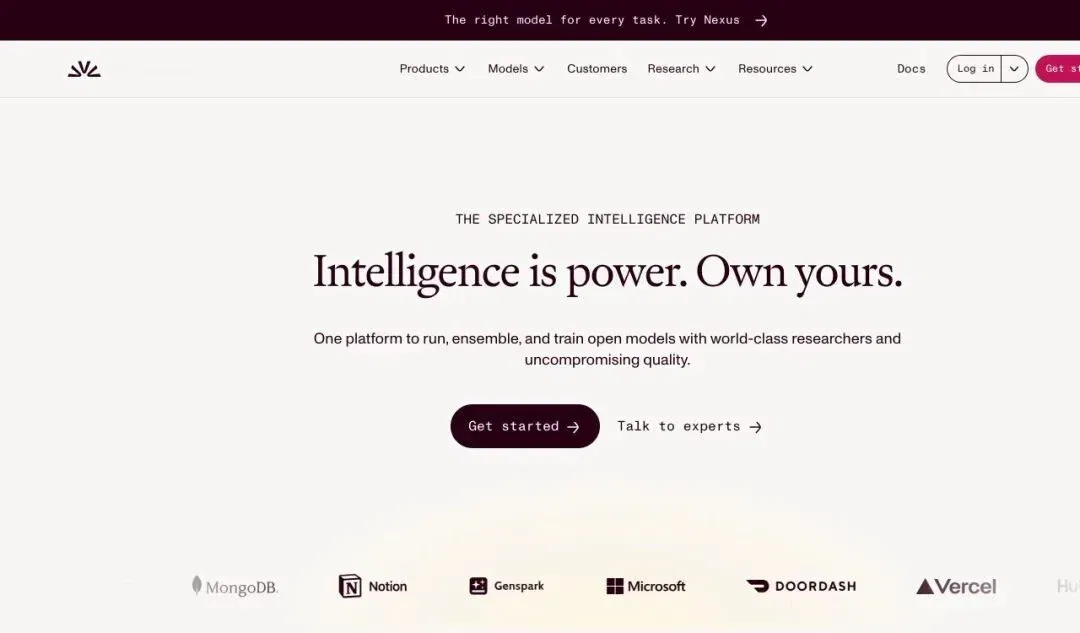
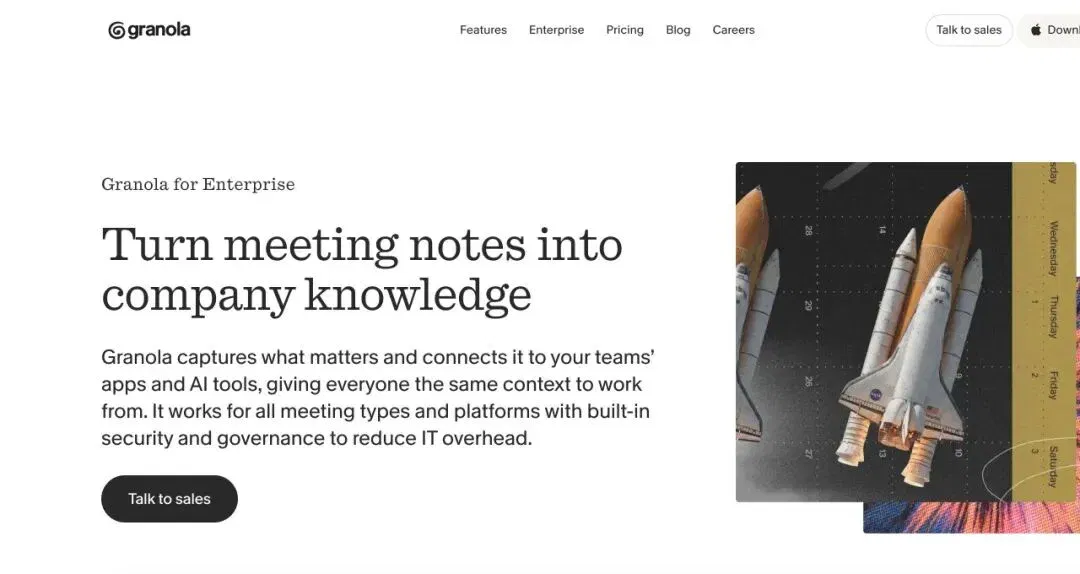
The episode was hosted by Crew co-founder Chris Balestras. Crew is a recruiting and media company specializing in hiring salespeople for AI companies. The three guests lead sales at some of San Francisco's hottest AI companies: Adam Ali, SVP of Revenue at Rox; Evan Cassidy, VP of Sales at Decagon; and Bardia Shahali, VP of Sales at Granola, who previously worked in sales at Fireworks. Rox makes sales agents, Decagon handles customer service, and Granola takes meeting notes. Their customers and approaches differ, but the problems they encounter are similar. They discussed which interview questions immediately rule out a candidate, what career histories raise red flags, how commissions should be designed, and how large enterprise deals are actually won when products cannot pull far ahead of one another.
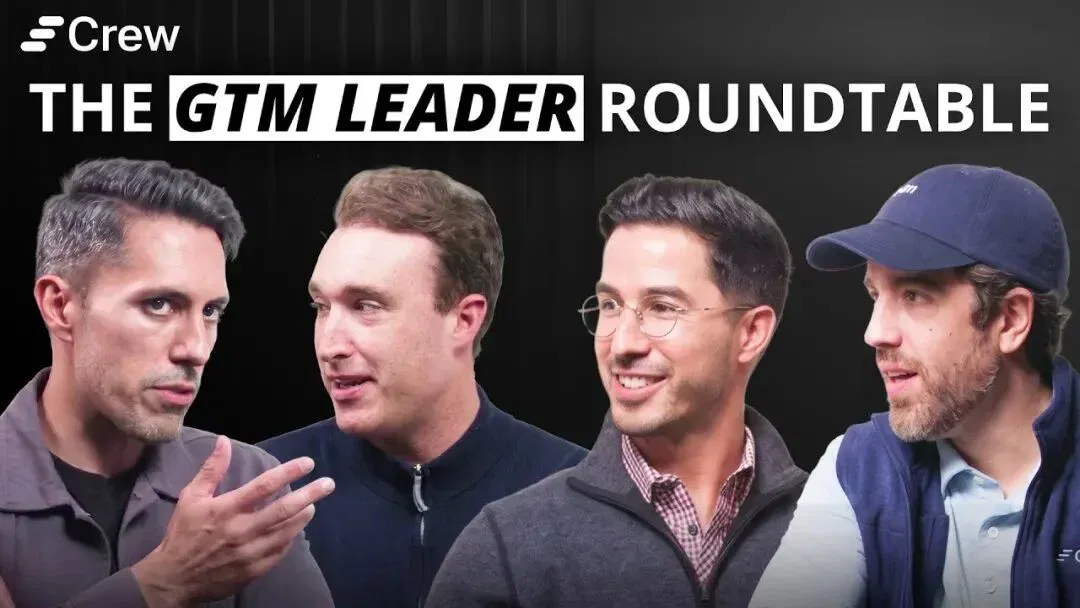
One remark from Adam captures the tone of the entire conversation: sales will be the most valuable currency in the future, because getting something done inside a large enterprise is so difficult, as is maintaining those relationships. Coming from a company that sells AI sales agents, this sounds somewhat counterintuitive. Yet everything the three later said about hiring, commissions, and winning deals followed from that idea.
Asking "What Is Your Moat?" Counts Against You With These Interviewers
Chris asked the three to discuss the worst interview questions, and Evan immediately named one: asking about the moat—the advantage others cannot copy. He offered several reasons. Every category now has several players, nobody is far out in front, and product differences are smaller than ever. If you are still asking what will allow this company to win, he argued, you are still thinking in traditional SaaS terms and have not understood how AI companies differ from what came before. Moreover, anyone who has seriously done their homework and looked at companies in the field should first notice how similar they all are; the question should not need to be asked. What concerned him most was something else: people who ask this often expect the company to possess a magic wand that explains why it is guaranteed to win. Such people probably won deals in the past by relying on a brand or a unique feature, and would struggle in an environment where products are all similar.
Evan said they had recruited many people from different companies, and almost all said the same thing after joining: I have sold in competitive markets before, but this time is different.
I find something particularly interesting here. In the earlier SaaS era, a product lead of one or two years was common. Chris recounted interviewing an early salesperson at Segment: after its Series A, Segment held back a new product for almost a year, waiting for engineers to deepen its functionality before launching. The resulting advantage then lasted another year or two. That window has largely disappeared. Someone asking about the moat is therefore effectively navigating with an old map. What the interviewer hears is not curiosity, but that this person has not yet entered the industry.
Asking About a Training System at an AI Company Is Asking the Wrong People
A similar question asks what the company's enablement—sales enablement—looks like. Evan's response was direct: AI makes information and context particularly easy for everyone to obtain. If your first question on coming in is about training procedures, you are probably not someone willing to hustle. You sound more like someone from an established SaaS company who expects classes and exams after joining, with a sticker awarded for passing.
He said they would not operate that way. New hires get system access, and there is an internal agent running in Slack that they can ask directly about anything; colleagues will help too. Formal training might come when the company matures further, but at the present stage, spending a few precious interview minutes asking about it wastes time.
An interview is itself a miniature sales call. The person opposite you is a busy decision-maker, and your first question has already shown them what you would be like with a customer.
What Good Questions Look Like, and Why Interviewers Will Coach You on the Spot
What kind of question makes a VP's eyes light up? All three offered very concrete examples.
One category concerns the company's current situation. A guest said his team had grown threefold in ten months, so a candidate asked: what effect does expansion like this have on the existing people? How do you plan to help new hires succeed? What infrastructure is needed? He liked these questions because they were precisely what he thought about every day. The candidate had clearly done their homework and understood the inflection point the company was at. Bardia added several categories. Granola has a free product, so he likes questions about conversion from free users to enterprise customers, why businesses buy, and what obstacles arise. Another simple but effective question is: what do your best salespeople do when they first arrive? This is how I have done things before—does it match the approach that works here?
Another category brings a specific point of view. One guest said that just an hour before recording, he had interviewed someone who had listened to his podcast and remembered his advice to "test a champion—a supporter inside the customer organization—before developing them, rather than the other way around." The candidate asked: that is the opposite of what I learned; why do you think so? They then walked through the candidate's last deal: when did you last test that person? If you had tested them earlier, would developing the relationship afterward have gone more smoothly? The candidate thought about it and said the point was right. The interviewer said this exchange immediately made the person memorable.
Interestingly, several guests regarded moments like this as coaching opportunities. Evan was clear: many sales leaders do the job because they like developing people. An interview is the first step in building a relationship, and only when a candidate is willing to put a disagreement on the table can the interviewer see whether they are coachable—open to guidance. Some like to tell a candidate directly that an answer needs tightening when it wanders slightly, because they want the person to get an offer. The same applies to a case-presentation stage: first have the candidate review their own performance, then give feedback. A good salesperson quickly understands where the feedback is heading, and you can see it on the spot.
I think this logic makes particular sense in AI companies. They do not have complete training programs, the pace is fast, and new hires quickly face opinionated colleagues as well as a CRO, or chief revenue officer. If an interview does not reveal whether someone can absorb feedback, nobody will have time to wait for them to improve after joining. Rox's hiring lead used a vivid analogy: sometimes talking with a candidate is like playing basketball—a fake, a screen, then a pick-and-roll. If the other person cannot keep up, they lose the thread, and probably cannot match the company's pace either.
Five Years at a Company Growing 5% Is a Red Flag to Bardia
The most contentious roundtable topic was career history. Bardia's view was pointed: many people now treat five or six years at one company as a badge of honor. To him, it is a major red flag, because they may lack ambition and simply be coasting comfortably.
He used Figma as an example. Figma had five or six years of dominance and captured the whole market. But looking at today's AI categories—support, legal, ERP, or enterprise resource planning, and foundation models—almost none has produced a winner like that. Anthropic and NVIDIA are, at most, partial exceptions. This means two things: you need people who can operate in such a melee, and the opportunity cost of staying at a company growing only 5% is higher than ever. Many people cite a tweet from some major-company executive saying that staying five years is necessary to be considered dependable. Bardia's response: you do not know how long this wave will last; do you really want to spend half those years at a mediocre company?
Here I have a thought of my own. The three guests recruit from a very small group: people willing to show up in person, able to ask good questions, already familiar with AI circles, and capable of selling to large enterprises from the top down. Everyone is targeting the same small pool, which makes the competition for talent fierce. Their solution is not to keep bidding up pay but to choose a profile and stick to it. Decagon favors young salespeople who began with smaller customers, want to move into enterprise sales, can do outbound, are technically curious, and have hunger. They call this "betting on slope": looking at how fast someone is rising rather than where they stand now. These people are willing to come into the office five days a week and be coached. The more successful people the team has, the easier it becomes to recruit the next group. One guest also described a line he would not cross: his first sales leader lived far away and wanted to come in only one or two days a week. After several rounds of discussion, the requirement remained five days. Everything else was negotiable; that was not.
How Large Enterprise Deals Are Won When Products Look Similar
When the conversation turned to winning deals, the three answers were more straightforward than I expected.
One guest began by saying that choosing the right company is half the battle. A company is not just its product; it also includes the founder's vision, the team's execution, and the chemistry between people. He then made a statement he admitted was biased: go-to-market has never mattered more. If products do not differ greatly in technical terms, how do you win a large enterprise deal? You need to work harder than competitors, visit customers in person, and ask worthwhile questions rather than wasting their time with superficial ones. You also need to start multithreading early—contacting several people on the customer's side at once—maintain urgency, and take a consultative approach to conversations. He thought this had also been true in the SaaS era, but there is a new development today: usage-based contracts can grow enormously. If you lose a deal and a competitor wins it, their sales figures can suddenly leave yours behind. His conclusion was that the craft of sales has never mattered more.
Another guest went into more detail. He asks his team to follow a sequence: first understand the customer's problem, then align it with a specific use case, only then discuss the product, and finally the resulting outcome. Beyond this, everything everyone says sounds the same: they all have a data layer, a harness—the engineering framework that enables a model to work—and agents. Many salespeople get overexcited after trying a product and liking it, so they lead with the product. But customers want their problem solved. Once a customer confirms that something really is a problem, you can discuss how your product is ready for enterprise use, with governance and structure, and can actually solve it. That is where you beat competitors in sales and get deployed faster. He also described a different view from the customer's side: buyers are bombarded by AI companies in turn, everyone sounds alike, and they say outright that they do not understand how the products differ.
Adam from Rox said that because they sell sales agents, outsiders ask whether they intend to replace salespeople. His view is precisely the opposite. Finding the right people inside an enterprise, securing a budget, and maintaining relationships over years are difficult for technology to replace. The more products converge, the more valuable this work becomes. An AI sales-tool company arguing that salespeople will become more valuable strikes me as reasonably credible, because he deals with this every day.
Designing Commissions: Do Not Let Salespeople Drag Out the First Deal for Half a Year to Squeeze Out All Its Value
If sales is so important, how people are paid becomes a major question. The three largely agreed: the same AE, or account executive, should own both the land—the initial sale—and expansion—subsequent account growth.
The reason is this. Most AI companies follow a land-and-expand approach. If commissions count only the initial sale, salespeople will want to extend the first PoC, or proof-of-concept trial, indefinitely, trying to capture all the value in one deal because that is their only chance to get paid. A PoC drags on for six months, during which five rivals find their way in. One guest said he had seen founders who did not understand sales commissions assume they should pay only for the first sale, not expansion. This slow motion is the result. At both Fireworks and Granola, he therefore used the same approach: when an AE wins a customer, the later expansion also belongs to that AE. If you worry that people will sit back and collect expansion orders, limit the number of accounts each person can hold at once, but make sure they retain ownership of expansion.
To keep people winning new customers, he added, attach a spiff—a special bonus—to a new logo, meaning a new customer. It does not need to be large; the aim is to make the right choice easy. Another guest said they also keep expansion with the same salesperson while setting thresholds and incentives for the initial sale in the commission plan. They had recently added something new: an extra $30,000 for each new Global 2000 customer won. This sits on top of commission accelerators, the plan's commissions, and new-customer bonuses, simply for landing that new logo.
Why assign accounts to individual people? They gave two reasons. First, each account is worth much more in the AI era than in SaaS. A customer that once spent $100,000 a year on a SaaS product might now spend $500,000 or $1 million on agents. A salesperson's job is to realize the account's full value. Second, competition never stops. Even after you have landed, another vendor may enter through a different opening, and its salesperson has an incentive to expand from the start. If you do not motivate your own people to keep finding opportunities, you risk losing not just revenue but the customer itself.
A different view also came up, based on another founder's approach discussed in an earlier episode: the same salesperson should not handle both landing and expansion. The guests felt it depends on the business. Small customers offer limited room for growth, and assigning senior salespeople to them distracts those people; such accounts should be handled by a team designed to operate at scale. Customers like the Global 2000, with effectively unlimited potential, should remain with the original salesperson. Segmenting by an account's potential rather than imposing a universal rule seems more practical to me than arguing over whether to separate the roles.
Why Moving the Fireworks Team Unchanged to Granola Would Not Work
Bardia moved from Fireworks to Granola. One provides inference infrastructure, the other a user-facing application, and selling the two is completely different. At Fireworks, the organization involved several forward-deployed engineers spending extended periods with customers. Engineers often spoke directly with customers' engineers in Slack channels, while the salesperson did comparatively little. At Granola, the product works out of the box and the API is simple. Forward-deployed engineers are unnecessary; the mix is more CSMs, or customer success managers, and AEs.
His advice, therefore, is not to arrive with preconceived ideas. First spend time understanding the environment you are in, then build a playbook. People in the industry jokingly call some individuals "playbook people": they bring the entire team from their previous company, plug it into the same process at the new company, and six to nine months later leave one by one. He said they had seen this more than once.
Another guest added a layer. The skeleton of enterprise sales does not really change. You still need to find a potential champion and an EB, or economic buyer, who controls a budget. Those elements remain. What must change is the approach: encourage creativity within that skeleton, or you will end up with an army of robots that merely follow instructions and fail. He said buyers currently feel that every company's pitch sounds identical, so salespeople must adapt to an ever-changing game rather than run the old routine.
Next Year's Keywords: Consolidation and More Demanding IT Departments
Near the roundtable's end, Chris asked what new problems had emerged over the past year or two. One guest offered a prediction: this year has been the year of agents, with everyone talking about them; next year will be much more boring—a year of consolidation. Many customers he speaks with are already tired of the constant tool pitches. They ask how you differ from another company that offers something similar. IT departments were easy to bypass over the past few years, but now he speaks with IT staff every day. They do not care about a tiny product difference; they simply say, this is the same as that one, so let us talk business.
He believes this trend will only accelerate next year, bringing strong pressure to prove ROI—return on investment—demonstrate value, and explain exactly how you differ. A salesperson who can keep that conversation going with a difficult IT leader is someone you will very much want to retain. Another guest picked up the point: companies therefore need to move from point products to platforms and multiple products, embedding themselves more deeply so competitors find them harder to replace.
A Few Reflections of My Own
My strongest impression after listening to the roundtable was that everyone kept saying "the products are all similar now," yet none regarded it as bad news. Quite the opposite: several felt this was the best time to be in their line of work. If products cannot pull apart, customers must choose on other grounds, and among those other factors, salespeople are closest to the customer.
So when these companies recruit, they look for people who can ask the right questions for themselves in an environment with no training or established approach. Commissions change accordingly: one person must own a customer from the beginning through growth. Rox is even willing to pay an extra $30,000 for a new logo. With customers, the contest is not over feature lists either, but over who first helps them articulate their problem clearly.
There is still something I have not worked out. The guests all hire from the same small pool, which is limited and increasingly fiercely contested. Their approach is to choose younger, fast-rising salespeople and develop them themselves. How long that can last depends on whether there are enough people to coach them. If the industry really enters a consolidation period next year, as they say, and customers' IT departments become increasingly impatient, those who remain may be the salespeople who learned earliest to explain one thing clearly in a crowded market, along with the people willing to spend time developing them.
If you happen to be considering leaving a company where you have stayed a long time, this roundtable at least offers one perspective for making that judgment: do not ask whether the company has a moat. First ask yourself whether you are willing to visit customers every day and solve this problem for them.
This article originally appeared on the WeChat account "Shensi Quan," written by Shensi Quan.
Related topics
After reading
Join the AINRK community
Read how to join the community and connect with people working in AI.
Related articles
Continue reading related topics and articles in this category.
Mo Gawdat on AI-Native Products, Vibe Coding and Rethinking User Workflows (opens in a new tab)
Former Google X chief business officer Mo Gawdat argues for redesigning software around users' goals and working with technical partners. His account of two people building Emma in nine months, and views on small teams and AI-linked layoffs, remain personal claims.

Founder Show Singapore presents eight AI startups and their commercialization plans (opens in a new tab)
Founder Park covers eight teams in education, virtual pets, agent collaboration, game creation, video, authorization, forecasting and growth. Product capabilities, business metrics and plans largely reflect the participating teams’ presentations.

Young people in the AI hackathon boom: startup chances, education choices and selection pressure (opens in a new tab)
Intelligent Emergence interviews participants, organizers and investors about funding opportunities and dropout narratives, alongside project homogeneity, contract constraints and elusive hopes of upward mobility.

Meitu's Xinhong Wu on AI apps: deepen vertical use cases and control model and monetization costs (opens in a new tab)
AI Product Aying distills a podcast's lessons on product choices, small-team validation, subscriptions plus service fees and global markets, alongside reflections on the author's own startup.
Emergent 榜单汇总创业者提名的 29 家早期公司 (opens in a new tab)
Newcomer 与 Felicis 的名单覆盖研发、智能体基础设施、企业自动化和生物科研等方向。文章整理公司产品和提名理由,并注明参与方视角。