Bezos Discusses Prometheus Engineering AI: Funding, Simulation and Early Tests

Citing Bezos at a Semafor summit, the report says Prometheus has raised about $14.5 billion and is developing engineering-design and multiphysics AI tools tested in two Blue Origin projects. No public launch date has been given; a general AI engineer remains a goal.
Editor's fact-check (November 22, 2026): The body's statement that Amazon 'invested an additional $25 billion' in April 2026 needs a distinction about completion: Amazon then announced a $5 billion investment and up to another $20 billion in future investment, not $25 billion already invested that month. Anthropic's AWS spending commitment is more than $100 billion over the next ten years. Prometheus's fundraising, 12-hour engineering-design claim and internal Blue Origin tests are statements by company executives cited in the reporting. The rumored acquisition fund of up to $100 billion is still being planned and must not be counted as money already raised or as independently validated engineering results. Amazon announcement (opens in a new tab); Semafor's direct interview (opens in a new tab)

AI has eaten software. Now it wants to eat industry.
Five years after stepping down as Amazon's CEO, Jeff Bezos could not resist finding himself another job.
On November 17, 2026, local time, Bezos and physicist Vik Bajaj made a rare joint appearance at Semafor's 'Silicon Valley and the World' summit in Menlo Park, California. His latest title is co-founder and co-CEO of the AI startup Prometheus. This is the business titan's first return to a frontline CEO role since handing over Amazon's reins in 2021.
Bezos, who had invested in the seed-stage company as early as late 2024, made no attempt to hide his excitement onstage. The project was progressing so quickly, he said, that he simply could not sit on the sidelines and watch.
What brought Bezos back into the arena is a huge bet.
Open Prometheus's homepage and, for now, you see little more than a minimalist logo and a warm halo background, with almost no public product details. Beneath the surface, however, this mysterious company, with only around 250 employees, has already reached a $41 billion valuation and raised approximately $14.5 billion.

Prometheus maintains an extremely low profile. Its homepage currently shows only its branding, and its tool suite is not yet publicly available. Image: Prometheus website.
During the 32-minute conversation, Bezos revealed his hand for the first time. Designs for analog chips, radio equipment or valves that once required a team of 10 to 20 engineers working for six to nine months could be completed by Prometheus's system within 12 hours. His commercial space company, Blue Origin, is already privately testing the tools on two projects.
While Silicon Valley fights tooth and nail over chatbots and coding agents, Bezos has moved to a different table altogether.
Prometheus aims to become the OpenAI of the physical world, using 'AI for atoms' to reshape a physical manufacturing sector worth tens of trillions of dollars.
Newton Could Not Build a Toaster Oven
Prometheus's $14.5 billion in funding prompted an immediate assumption from many people: Bezos must be entering humanoid robotics too.
At the summit, he rejected that speculation outright. Prometheus builds neither language models for chatting nor bipedal robots. Its ultimate goal is to create an Artificial General Engineer, or AGE.
Why can today's seemingly all-capable text-only large language models not do the work of a serious engineer?
Bezos offered a vivid analogy: 'You cannot learn engineering just by reading. Even if I read a thousand books about gymnastics, I would still be a terrible gymnast; if I read a thousand books about dance, I still would not know how to dance.'
Bezos said that if you put six great physicists, including Newton, Einstein and Maxwell, in a room and asked them to build a toaster oven, these geniuses would probably have no idea where to start. Understanding Maxwell's equations would be of no help in building a toaster oven, because theoretical physics and engineering manufacturing operate at completely different levels of granularity.
Co-CEO Bajaj, formerly a senior Google X executive and a professor at Stanford School of Medicine, added another practical point. Even among pure language models, specialization has become unavoidable. Anthropic's coding lead, for example, comes precisely from intense focus. In the physical world, packaging even an unassuming radio module inside a phone requires not only decades of accumulated engineering expertise but mastery of thermal, mechanical and electromagnetic properties at the same time. In conventional engineering, setting up a single physics simulation often takes days or weeks.
To bridge that gap, Prometheus has avoided a purely textual approach, instead building neural surrogate models for numerical simulation and unified multiphysics models as its foundation, turning them into a new generation of AI-driven CAD, physics simulation and engineering agents.
This interdisciplinary capability has shown striking intuition in internal tests. One engineer on the team, who had worked on the Mars helicopter at NASA's Jet Propulsion Laboratory, JPL, tried asking the system to redesign the Mars helicopter with a single prompt.
Faced with Mars's extremely harsh conditions, the model independently weighed alternatives across a vast design space. It compared quadrotor, coaxial counter-rotating helicopter and fixed-wing designs, ultimately converging on a coaxial counter-rotating configuration very similar to the real Mars helicopter. It also calculated parameters such as blade chord for Mars's thin atmosphere, automatically generated requirements and even asked the engineer follow-up questions when the intent was unclear.

An artist's concept of NASA's Ingenuity Mars helicopter. An engineer who worked on the project used a single prompt to get Prometheus to derive a very similar coaxial counter-rotating configuration. Image: NASA/JPL-Caltech.
Tackling a challenge this difficult takes far more than algorithmic geniuses who write code. Prometheus has assembled an unusually diverse, 250-person dream team.
On the AI side, it has recruited many top researchers from OpenAI, Google DeepMind, Meta and Microsoft. Kyle Kosic, an xAI co-founder who led construction of Musk's Colossus supercomputer, joined in early 2026 to oversee compute infrastructure personally, committing a substantial share of the company's funding directly to compute purchases. In November 2025, it also quietly acquired General Agents, an agentic AI lab co-founded by former DeepMind and Tesla researcher Sherjil Ozair, bringing real-time computer-control capabilities in-house.
On the engineering side, the team is full of veterans of aerospace, chemical, materials, marine and energy engineering, along with specialists crossing over from Epic Games' game-engine division, Waymo's autonomous-driving team and Red Bull F1's advanced-technology division.
Its advisers even include the US Army's chief scientist for ground systems and Chase Johnson, formerly a lawyer at defense technology company Anduril, making its intention to enter the defense industrial base and critical supply chains increasingly apparent.
To support their research and development, the company has offices in San Francisco, London and Zurich. In August 2026, it also leased roughly 9,300 square meters of factory space in the former American Steel industrial complex in West Oakland, California, specifically attracted by its high-amperage industrial power supply.
Untangling the Industrial Data Knot
The technical architecture may be in place, but every company attempting industrial AI hits the same wall: Where are the data?
OpenAI can crawl the internet's web pages to feed GPT, but process parameters for aircraft engines, precision valves and analog chips have never been on the internet.
At the summit, Bezos discussed precision casting, a process with a history spanning thousands of years. Even today, the industry relies heavily on experienced workers manually inspecting industrial X-rays or CT scans for cracks, then using their experience to add insulation at particular points in a mold through repeated trial and error. Many traditional factories lack even basic digital monitoring equipment, leaving no foundation for data at all. Even where data exist, they are manufacturers' lifeblood. Bezos himself said onstage that if a company truly has unique proprietary data, it should 'never share them and guard against leakage.'
If ready-made data are unavailable, how does Prometheus feed its large models?
The answer lies in the laws of physics themselves. Bajaj explained that they generate high-quality synthetic data with their own multiphysics simulation system, greatly reducing reliance on sensitive corporate data and enabling foundation-model training with core proprietary processes stripped out. Meanwhile, Bezos has turned his own space ecosystem into the toughest proving ground: Two Blue Origin projects are already running internal tests.

Blue Origin's New Glenn rocket lifts off. The company is currently privately testing Prometheus tools on two internal projects. Image: Wikimedia Commons.
What has truly shaken Wall Street, however, is the depth of their capital and business-model plans.
As early as the start of 2026, foreign media repeatedly reported that Bezos and Bajaj were planning a manufacturing-transformation holding company and meeting sovereign wealth funds in Singapore and the Middle East, with plans to raise a rumored sum of up to $100 billion to acquire traditional engineering, construction and manufacturing businesses affected by AI, an approach described externally as an industrial Berkshire Hathaway.
At the November summit, Bezos gave this approach a clearer commercial framing. Physical manufacturing worldwide is a vast market worth tens of trillions of dollars, he reasoned. 'It cannot be a walled garden.' Prometheus must collaborate openly with thousands upon thousands of outside companies.
Opening up its tools is only the first step. Bezos said that, beyond supplying tools and services, Prometheus would invest directly in some traditional companies empowered by its tools, sharing in the gains from their growth as an investor after their efficiency rises sharply.
As for speculation that he might follow Musk's example and merge Amazon, Blue Origin and Prometheus into a super-empire, Bezos laughed and said:
「That is a funny idea. There is nothing to announce」.
AI's Next Phase Splits Toward Atoms
Bezos's vision is backed by real money. Prometheus's fundraising speed can only be described as staggering.
Incubated at Foresite Labs in 2024 under the initial name FL2024-008 INC, the company disclosed a $6.2 billion first round when it emerged in November 2025. In June 2026, it announced a new $12 billion financing round, including some earlier funding arrangements, bringing its valuation to $41 billion. According to Bezos's latest statement onstage in November, the company had actually raised about $14.5 billion in total to date. Its investors include JPMorgan, Goldman Sachs, BlackRock, DST Global and ARCH Venture Partners.
The logic behind leading investors piling in is clear: In 2026, AI is undergoing a sharp split, moving from intense competition over bits toward competitive moats built around atoms.
In the digital world, OpenAI and Anthropic dominate text reasoning and code generation, but anxiety about text corpora reaching their limits and software becoming commoditized is spreading. Intriguingly, Amazon, where Bezos is executive chairman, had just invested as much as an additional $25 billion in Anthropic in April 2026, securing a $100 billion cloud-spending commitment in return. While Amazon anchors the cloud foundations of the digital world, Bezos himself has turned toward the much tougher physical world.
In this new arena, players are carving out territory by granularity. Periodic Labs, founded by former OpenAI research vice president Liam Fedus and a former DeepMind materials-AI lead, raised a $300 million seed round. Its combination of AI scientists and autonomous robotic laboratories focuses on microscopic discovery of new materials, and Bezos also invested personally. Other engineering-simulation players include Neural Concept and P-1 AI.
By contrast, Prometheus is targeting macro-scale engineering design and manufacturing, the most demanding stage and the one that creates commercial value most directly.
But it is important to recognize that bringing AI out of the screen and onto a factory floor instantly reduces the margin for error to zero.
When a chatbot hallucinates, at worst it writes incorrect marketing copy or makes a programmer fix a few more bugs. If an industrial engineering model hallucinates, however, it could mean a valve bursting under high pressure, a whole batch of fabricated analog chips being scrapped or even a rocket breaking apart on its launchpad. The cost of physical-world validation and stringent compliance reviews on the level of the FAA or FDA cannot be easily bypassed simply by piling on compute.
A more fundamental challenge for Prometheus and its competitors lies in the word 'general.' An anonymous early core researcher at Prometheus told the media that the breadth of engineering is daunting: 'There is no such thing as one general engineer.' Getting the same underlying model to generalize freely across highly heterogeneous disciplines such as mechanics, thermodynamics, electromagnetism and chemical engineering is technically far harder than language modeling.
To this day, Prometheus has not provided a public product-release timetable.
Beyond technology lies an unavoidable social tension. In a June 2026 interview, Bezos strongly pushed back against fears of AI-driven unemployment. He predicted that reducing the cost of invention to one-tenth would create more than ten times as many new opportunities and ultimately lead to a labor shortage, with only one person in a two-income household needing to work and no one having to work overtime anymore.
The other side of reality is somewhat harsher, though. Over the past year, Amazon, where he is executive chairman and which employs more than 1.5 million people worldwide, has cut tens of thousands of jobs under CEO Andy Jassy's automation strategy.
In Greek mythology, Prometheus stole heavenly fire, giving humanity the power to forge metal and transform nature. Bezos is now trying to put the heavenly fire of engineering design into an algorithmic black box.
Will this fire, worth tens of billions of dollars, let humanity leave overtime behind for good, or first reshape countless engineers' livelihoods? The countdown to an answer may already be starting in the heavy industrial buildings of West Oakland.
*Lead image: Semafor / AP
This article was originally published on the WeChat public account 'GeekPark,' by GeekPark.
Related topics
After reading
Join the AINRK community
Read how to join the community and connect with people working in AI.
Related articles
Continue reading related topics and articles in this category.

LiberAI's Liu Songming on connecting models, hardware and data for physical AI (opens in a new tab)
LatePost interviews LiberAI founder Liu Songming about Liber-0, glove-based data collection, robot hardware, full-stack integration and commercial use cases. The 2.2 million data hours and test results are team claims; a flagship application remains a goal.

PaXini's Xu Jincheng on tactile sensing, embodied data and robotic execution (opens in a new tab)
In an ALIGNMENT conference talk, PaXini founder Xu Jincheng describes tactile sensors, data collection, VTLA models and execution hardware, discussing how perception, intelligence and execution work together. Product capabilities are claims disclosed in the talk.
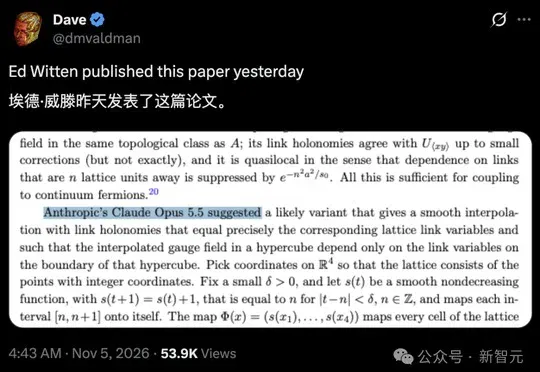
威滕在手征费米子预印本中记录 Claude 提出的插值思路 (opens in a new tab)
爱德华·威滕在一篇格点规范理论预印本中采纳了 Claude Opus 5.5 建议的插值变体,并在致谢中说明 AI 对若干细节的协助。
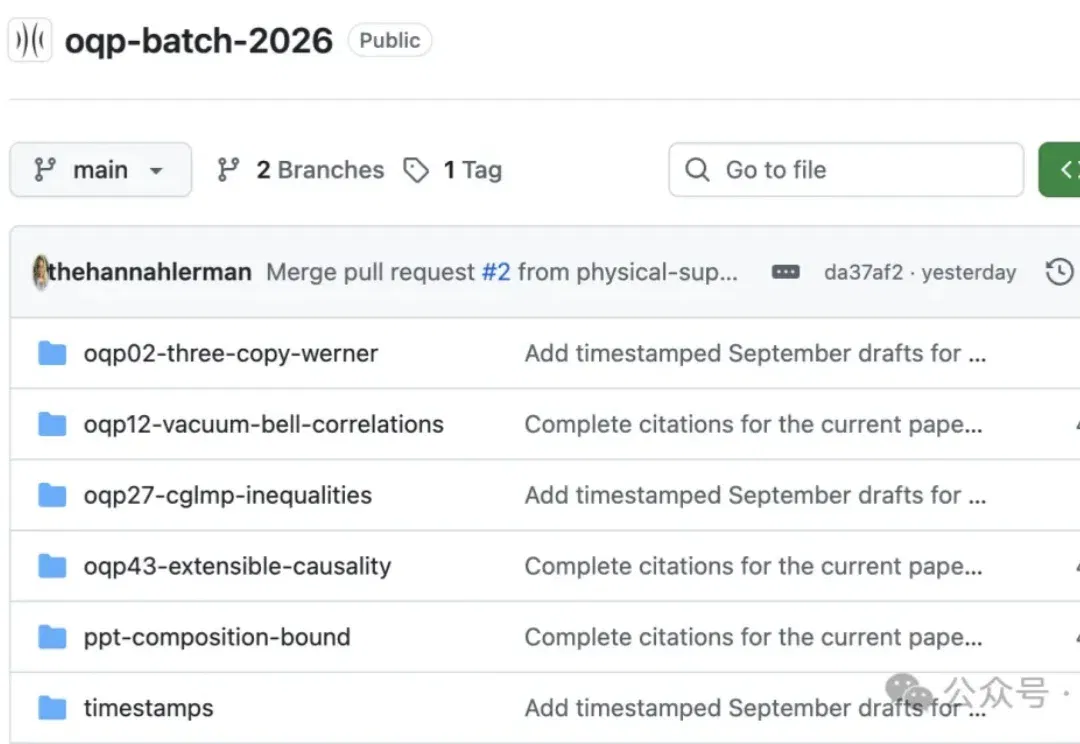
PSI 公布五项量子信息研究结果与 Lean 形式化材料 (opens in a new tab)
Physical Superintelligence 公布与开放量子问题目录相关的五项研究结果,并提供论文和 Lean 形式化材料供审查。结果涉及纠缠、贝尔不等式和量子因果过程等方向;各项结论有具体适用条件,需要区分对原问题的局部推进与完整解决。
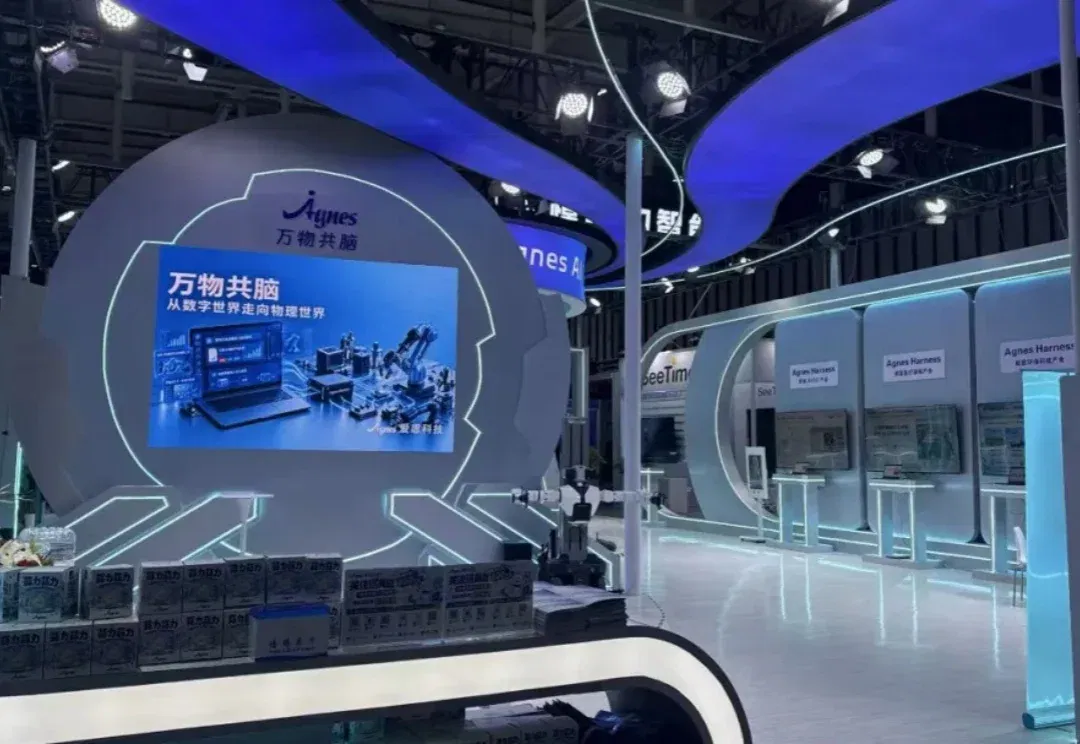
一句话指挥机器人组团打工,还能越干越聪明?这波物理AI有点夯 (opens in a new tab)
「小狗,去找你的好朋友瓦力,打个招呼。」收到指令,机器狗立马朝瓦力走去,主动打起了招呼。