RunningHub competition concludes, showcasing an AI filmmaking toolchain
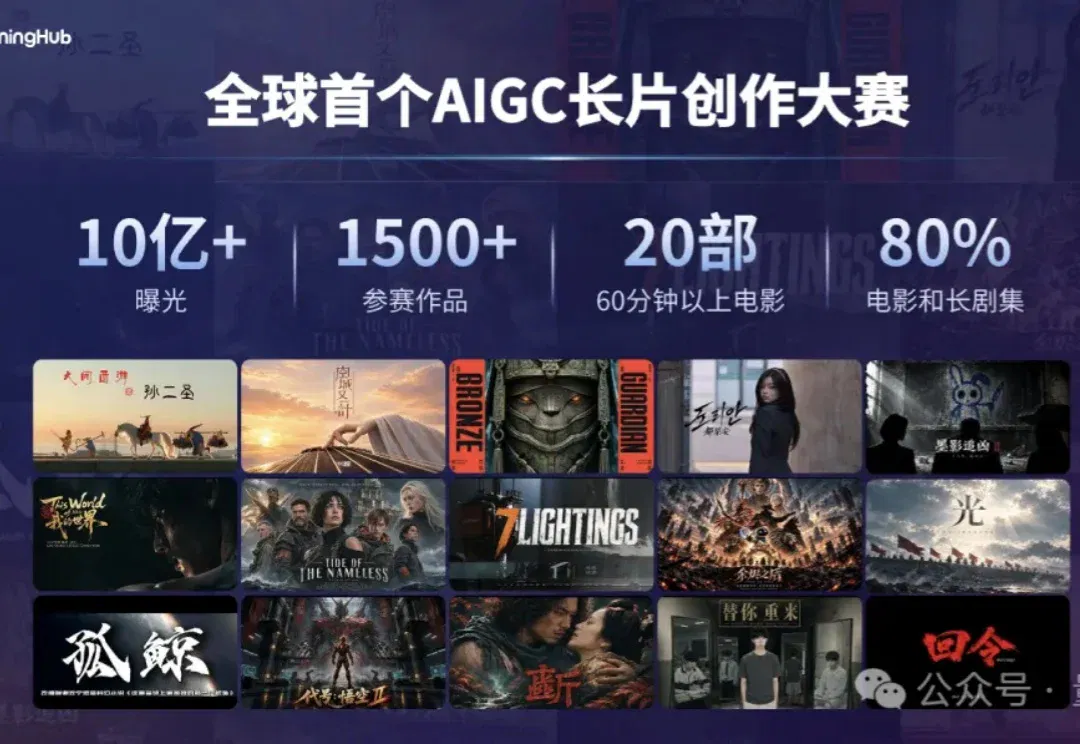
Using entries such as Codename: Wukong, Dulian and Lone Whale, QbitAI examines RunningHub’s script breakdown, 3D previsualization and local repair tools, alongside its announced IP licensing, creator support and distribution plans.
A junior-high-school graduate, a former baker, self-taught in a new field, working single-handedly… made a science-fiction series with 10 million views for a single episode?!
Wait, haven’t we stacked a few too many buffs here…
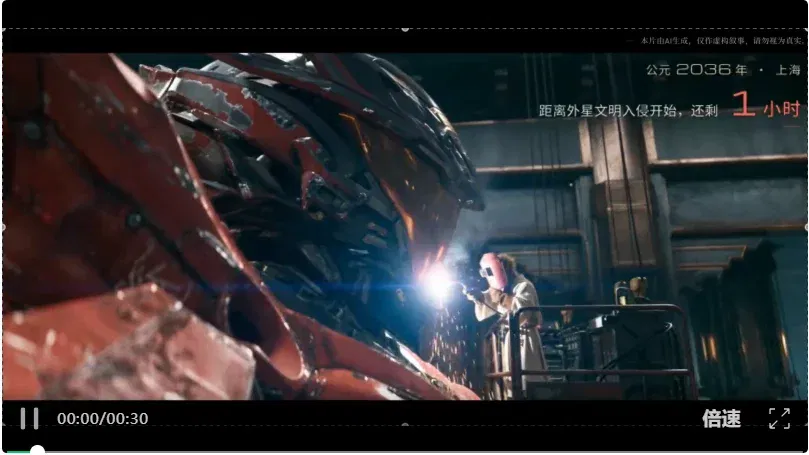
Creator Lingyu’s series Codename: Wukong places Wukong in a future Shanghai.
The waters of the Huangpu River surge upward, and a monster several hundred meters tall storms into Lujiazui. Wukong’s divine powers have long since been sealed away. What is he to do?
So the monkey builds himself a mech and charges into battle in it.
And this is not the only AI film to reach 10 million views.
Chinese creative team Lili’an also broke out with an “authentic Korean drama” made using AI.
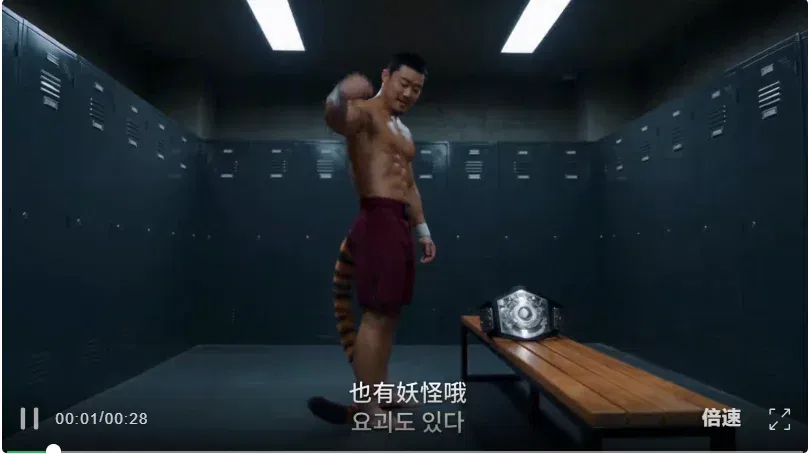
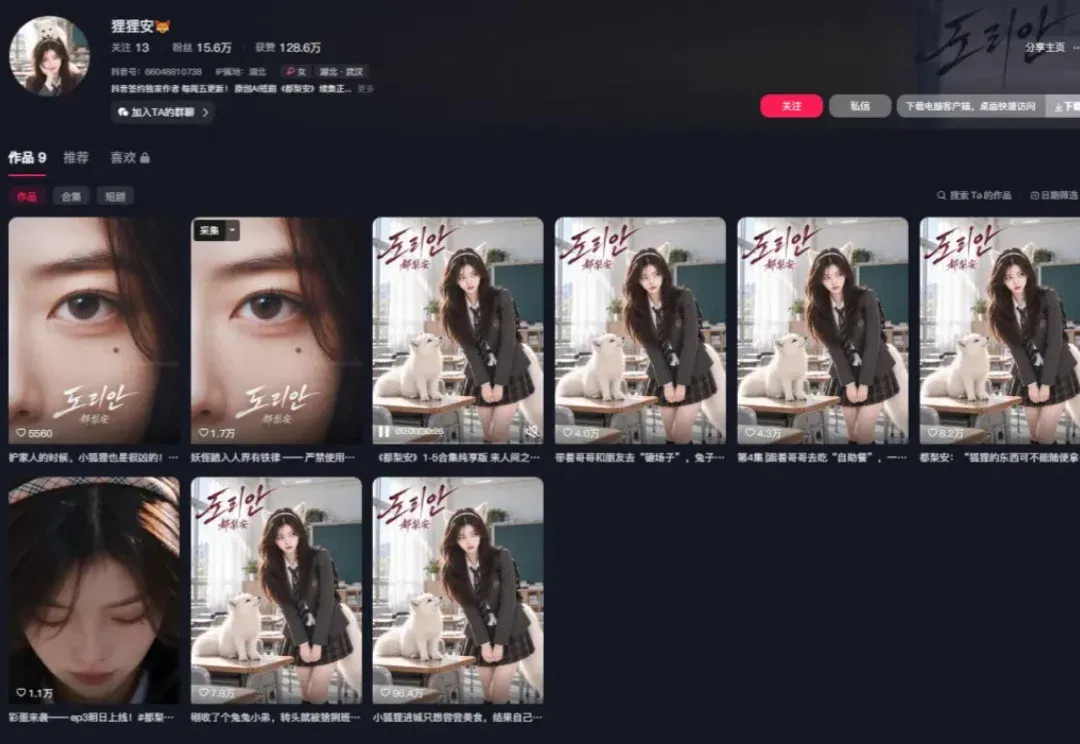
Dulian puts a fox and a lynx into a school setting for a light comedy. A single video on Douyin surpassed 15 million views and racked up 960,000 likes.
A little digging revealed that all these viral productions came from the same AI filmmaking competition.
Recently, the world’s first AIGC competition focused on feature-length film and television production, the RunningHub Global AIGC Feature-Length Creation Competition, officially concluded.

To be honest, the results are a little staggering.
It attracted more than 1,500 entries from around the world; long-form dramas and cinema-grade feature films accounted for more than 80%, and more than 20 productions ran longer than 60 minutes.
Yes, the kind of feature-length production that could play in a cinema for over an hour.

These entries produced nearly 100 hits with a million views, along with dozens of phenomenal feature-length hits that exceeded 10 million views.
Even more strikingly, Another Empty City Stratagem, which won the competition’s RMB 1 million cash grand prize, and shortlisted entry Huo Yuanjia have officially entered the project development process for theatrical films.

What does that mean?
AI video has moved beyond spectacular highlights lasting a dozen or so seconds and the era of repeatedly rolling the generation dice. It has officially entered the era of long-form storytelling and industrial-scale production.
AI filmmaking has gone from amateur creators enjoying technology for its own sake to a route straight to the big screen.
So let’s look at what is new about these productions. How exactly did they break through running-time limits, overcome the curse of broken visuals, and even attract the attention of professional film and television teams overseas?
AI video enters the era of long-form storytelling
We used to think AI video creation was really just about testing the waters.
Roll the generation dice a few times, cobble together a little clip lasting a dozen or so seconds for fun, post it on WeChat Moments, and you’re done!
But once you actually try to make a feature-length production, you discover that it is an entirely different matter. Imagining it as simply adding up more of the generation attempts used for short clips could not be more wrong…
The first issue creators have to tackle is the script.
How do you break down a literary work tens of thousands of Chinese characters long into industrial-grade shot language that AI can understand?
A film or series is often adapted from a novel running to tens or even hundreds of thousands of Chinese characters. Turning it into a screenplay requires an extremely painstaking process of structuring the material.
In a traditional production workflow, this stage requires collaboration among screenwriters, directors, storyboard artists and others. They spend weeks or even months in repeated meetings and discussions before they can turn the prose into hundreds of executable shot scripts.
The entire stage also involves a great deal of subjective judgment, making communication costly.
I have seen far too many teams with scripts organized into a tangled mess and storyboard prompts going out of control in all sorts of ways. Their projects die at the very first step.
The productions in this competition, however, managed to crack precisely this problem.
Here is a little background: all these hit feature-length productions, combining compelling narratives with cinematic images and sound, run on the AI film and television production pipeline built by RunningHub, a Haima Cloud company.
Take the Best Short Drama winner This Is My World. Its director, Lin Shan, a creative veteran with more than a decade of experience, made the series using AIGC. Viewers reposted it to YouTube, where a single episode also exceeded a million views.

To explain how such sprawling storylines can be organized so neatly, we have to talk about RunningHub’s RHTV Script Workshop.
It supports long-form scripts of up to 100,000 Chinese characters. Drop a novel straight in, and with one click it can parse it into an outline, individual scenes and then standardized storyboard prompts.
This is not simply text summarization. It develops a deeper understanding of dramatic structure, identifies character relationships, plot turning points and emotional arcs, and then translates them into industrial-grade storyboard language containing scene descriptions (Scene), camera angles (Shot), character movements (Action) and dialogue (Dialogue).
It also supports online collaboration among multiple people, who share a single asset library.
Screenwriters, directors and AI production staff all work from the same set of assets, eliminating the first break in the production chain between literature and shots.
Once the script problem is solved, the next obstacle is shooting.
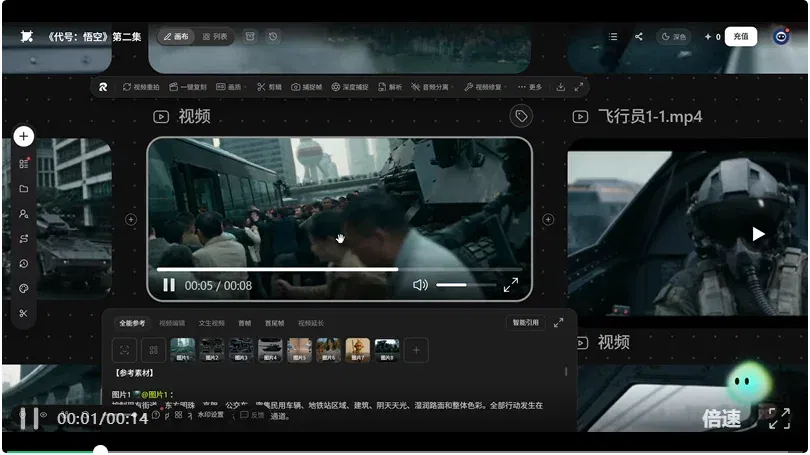
For example, in Codename: Wukong, which won the “Most Promising Science-Fiction IP Award,” creator Lingyu relied heavily on RHTV’s Infinite Canvas capabilities.
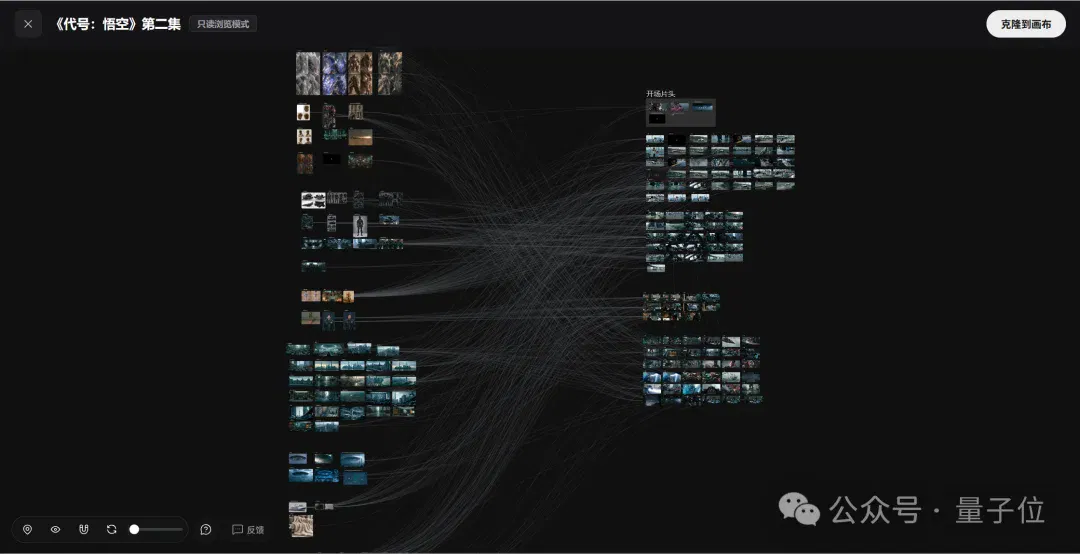
△The Codename: Wukong canvas
In one sequence, viewers see Wukong piloting his mech against a giant monster. But while editing it, Lingyu was tripped up by a little wooden puppet in a child’s hand.
In episode two, a mother and her child evacuate from the Bund.
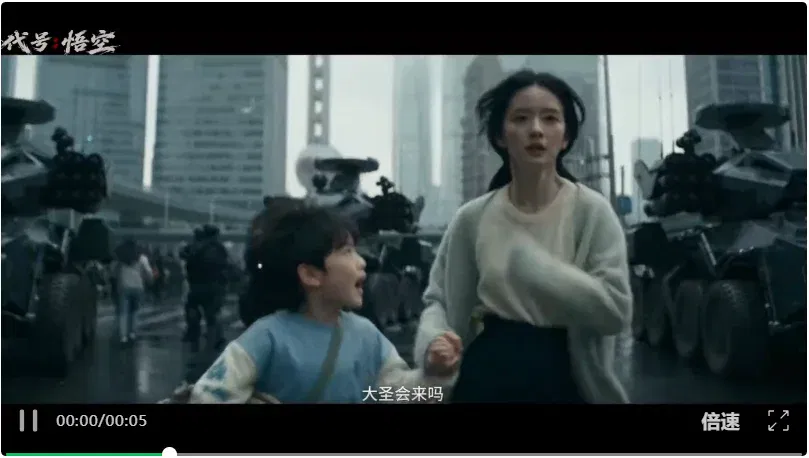
The child clutches the puppet all the way. Each clip looks fine on its own, but when they are cut together, why does the puppet in the child’s hand suddenly grow bigger as they run?
Another version was even more outrageous: one moment the two were running into the street, and after a cut they had turned around and were going the other way…
To fix continuity errors like these, Lingyu initially had to look through maps of the actual location, consult real photographs, and then draw storyboards by hand to check everything bit by bit. It was time-consuming and laborious.
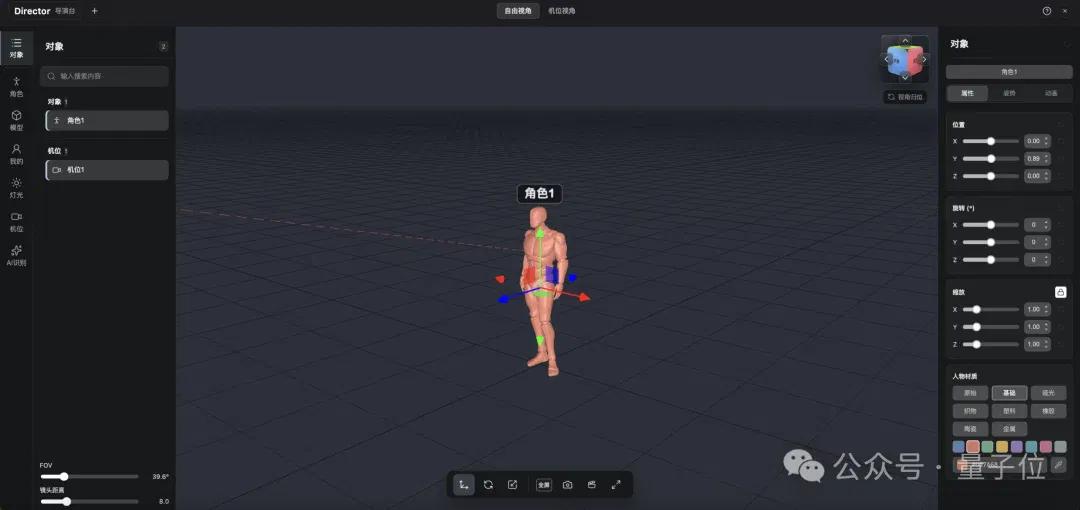
But after adopting RHTV’s 3D Director’s Console, the approach became completely different:
First, place two character stand-ins in the scene, position virtual cameras, and rehearse the characters’ evacuation route. With synchronized previews from two camera positions, you can see at a glance whether their direction of travel and the spatial logic are right, preventing shot-continuity failures at the source.
Simple blocking is one thing. But with more complicated fights or camera movements in large-scale scenes, how do you avoid blindly rolling the generation dice?
Traditional, purely two-dimensional text-to-video generation is highly prone to “losing spatial control” when dealing with trajectories and fight choreography. Put plainly, it makes things up wildly.
Tell a character to “run from left to right across an exploding street,” and the AI might have them run straight through a car, or abruptly cut to some inexplicable camera angle… The character’s movement has no logic to it; it is essentially a blind box.
Several productions in this competition, however, displayed practically textbook camera work.
In Best Film winner The Bronze Guardian (creator: Mao Daren Ai Shui Dajiao / Light and Shadow Geometry Animation Studio), the words “Three months later” have barely appeared on screen when a wanted poster is blown into the foreground.
Only as the wanted poster drifts away do the buildings at the far end of the sea of sand come into view.
The camera enters the city, then slips into a narrow alley hung with red cloth canopies. A little robot rolls across the foreground, while a woman in black approaches from deep within the crowd. The camera shows her footsteps and her face, then cuts behind her as she walks into a pitch-dark archway.
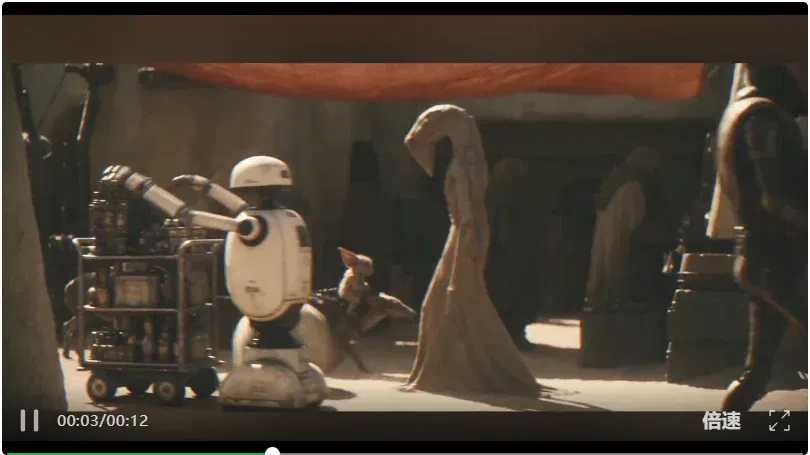
Both sequences are well suited to first using 3D blockout previsualization.
The production combines an epic feel with Eastern aesthetics, and its scene blocking is complex and grand in scale. Its view count is approaching 10 million, and it even drew a group of Netflix production professionals to watch and discuss it.
That brings us to another of RunningHub’s powerful tools, RHTV Cloud Studio.
Put simply, RunningHub has moved Blender directly into the cloud. There is nothing to install; just open it and use it.
Then, whatever you want to build, wherever you want to put a camera, and however you want to block the scene, you only need to describe it in natural language. An agent can build the 3D scene and plan the camera paths for you in the cloud.
If you need to work on fine details, you can seamlessly switch to Blender’s native interface at any point and make manual adjustments.
In the sequence above, for instance, the wanted poster can initially be represented by a thin plane. You can test where it should flip over in flight so that viewers can just make out the words, while its departure reveals the buildings in the distance.
In the market, a short cylinder can initially stand in for the little robot, simple figures for the woman and passersby, and just an outline for the archway.
All the complicated staging, blocking for multiple characters, and complex camera moves in a continuous take can first be rehearsed in 3D space using simple untextured models.
First test when the robot should roll out of the foreground, then move the camera behind the woman and see whether viewers can still follow her footsteps to find that doorway.
Once those simple models can make the blocking clear, let the AI “start shooting”: create the paper’s edges fluttering wildly in the wind, the red cloth canopies swaying in the alley, and the lighting dimming as the woman steps out of bright sunshine into the doorway.
More crucially, previsualization itself becomes an asset.
The spatial relationships, character routes and camera paths established during the blockout previsualization stage become reusable production assets in their own right. They serve directly as spatial and composition references for downstream video-generation nodes.
The entire process forms a closed loop on the same canvas, with none of the information loss caused by exporting between applications, directly reducing pre-production costs by 50%.
This is no longer rolling the generation dice. It is a director calling the shots on set.
Moving image production toward stable output at scale
All right, the preparations are done. As we move into production and post-production, even more troublesome problems appear.
First comes character consistency.
A feature-length production can easily contain dozens of scenes, with constantly changing lighting, angles and shot sizes. How do you make sure the lead character does not “change faces” along the way?
How do you get rid of the visual breakdowns that crop up from time to time?
And AI-generated characters generally lack subtle, realistic microexpressions. What do you do if their expressions look stiff?
These are longstanding problems in AI video.
Several award-winning entries in this competition offered some quite impressive answers.
The Korean-drama-style short series mentioned at the start, Dulian, has a total of five to eight episodes planned, each four to six minutes long, starring an anthropomorphic fox and lynx.
Instead of treating the animal ears and tails as merely decorative effects, the production tightly ties these animal traits to the characters’ personalities and the emotions of the story. The movements of the ears and tails themselves express the characters’ feelings.

At the same time, the series places extremely high demands on character consistency.
Across shots spanning multiple episodes, the shape, size and fur texture of the ears and tails, as well as the arcs of their emotion-driven movements, all have to remain stable and controllable. Avoiding breakdowns such as a tail suddenly changing size or fur texture appearing and disappearing requires precise local constraints and fine adjustments, producing stable results over long sequences by adding animal traits to a live-action human base.
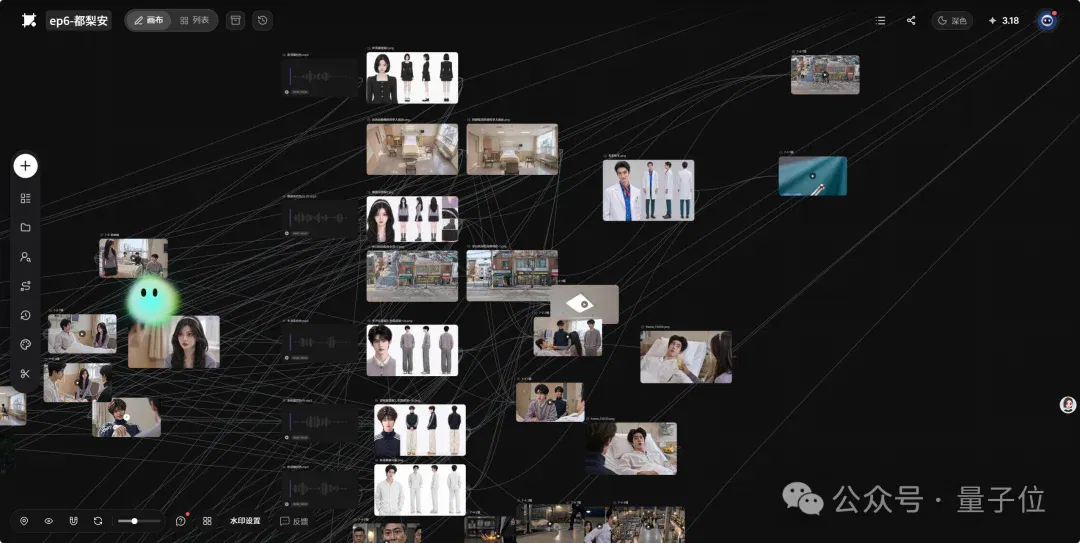
△Character assets for Dulian
Records of Strange Evils (creator: Yangyu) also achieves a high degree of stability in its Eastern supernatural aesthetic and the appearance and state of its characters across multiple episodes and scenes.
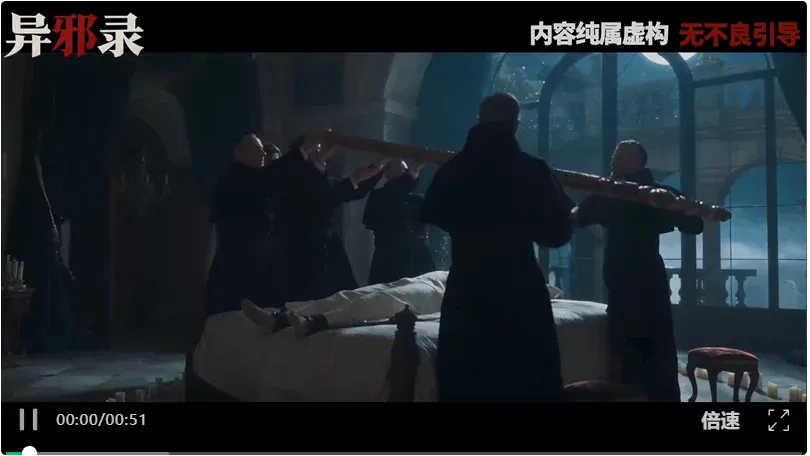
The most remarkable example is Lone Whale. Its creator, Yesheng Guo, working alone for one month, independently completed an entire 78-minute feature for the extremely low cost of just RMB 15,000—
It topped Bilibili’s trending searches and exceeded 10 million views across the web.
Costs and efficiency like these practically overturn the table.

So how did they lock down consistency? It takes a combination of approaches.
The first is pixel-level precision in local repairs.
Previously, if even one frame or one local area in an AI-generated video went wrong, that was it: the whole clip had to be discarded and you had to start over.
But the newly generated result might fix the hand while breaking the face…
Now RHTV supports extracting frames second by second and locally repainting them on the canvas, repairing whichever area is broken.
It is like the Healing Brush in Photoshop, putting an end to the despairing rework of fixing one problem only to create another.
At this point, you might think RunningHub has simply built a very powerful toolset.
But its real competitive moat goes far beyond that.
Haima Cloud founder and CEO Dang Jinfeng has this assessment:
Consumer AI struggles to make money; the only applications that can truly be put into use and monetized are specialized productivity scenarios. The essence of AI’s next phase will no longer be open-ended probabilistic generation, but deterministic system delivery. Anyone can buy models. What really separates the players is a “productivity engine” that deeply integrates computing power, the harness—that is, agents, context and toolchains—and data.
All of RunningHub’s tools are built on this AI productivity engine.

At its heart is a coherent five-layer capability stack:
At the bottom is Haima Cloud’s proprietary rendering-and-inference-integrated compute layer, which uses intelligent scheduling to increase GPU utilization by 70%, lowering production costs at the source;
Above that is the model layer. Rather than building general-purpose large models, they focus on specialized models such as H3 RH Enhanced, post-trained for specific scenarios to solve practical problems in industrial film and television production;
At the core is the harness system orchestration layer, which acts like a neural network. Through agents, it coordinates the entire toolchain, from LoRA character assets to cloud-based Blender, automatically completing complex creative tasks;
Keeping all of this running is the data layer, which continuously absorbs professional creators’ operation histories on the platform, forming a closed-loop flywheel that gets smarter with use;
Finally, all these capabilities converge at the application layer, in products such as RHSTORY and RHTV Cloud Studio that are delivered directly to creators.
This five-layer architecture is what gives RunningHub the foundation to support industrial-grade AI feature-length filmmaking.
The technical pipeline has brought down the cost of producing feature-length works and substantially shortened production cycles.
This also truly realizes the idea that “one person is an entire cinema-grade crew covering the full production process.”
But AI directors immediately face an even more practical, ultimate question:
Once you have made a feature, where do you monetize it? Who pays for the enormous computing bill?
Connecting literary IP, celebrity likeness licensing and commercial distribution
When a short video attracts traffic, the next one has a chance to carry an ad. The path to monetization is very short.
But to make a feature-length production, you have to pay for the script, storyboards and computing up front. The money does not come back until the film is finished and a distribution channel has been found.
A creator may spend months immersed in the work and already have a film sitting on a hard drive, yet still not have received a first payment.
Even if you grit your teeth and get through this one out of sheer love for the work, what about the next?
Who do you approach for adaptation rights to the novel you have your eye on? Where does the computing power to make the film come from? And who do you hand it to for distribution once it is finished?
Creators have to make all these connections one by one and figure things out for themselves.
Many independent creators have no shortage of ideas or talent, yet get stuck in the same predicament:
However good the idea, they lack the supporting conditions to realize it. However good the film, they have no channel to reach an audience.
Without an upstream source of IP, computing support or distribution channels, many people can only create out of passion. It is difficult to build a sustainable creative cycle.
Through this competition, RunningHub has brought these previously scattered resources together, with the goal of building a complete ecosystem—
a full-stack, closed-loop ecosystem of IP assets + an industrial production pipeline + a distribution studio.
First comes IP. Anyone who regularly makes Hollywood films knows—just kidding—that IP is the most valuable thing.
Haima Cloud has gone ahead and built the IP library for you.
It has signed exclusive AIGC adaptation rights to six science-fiction works, including Ruins of Time and The Eye of Saishiteng, and has also teamed up with the Xingyun and Tianwen awards to establish an IP co-creation library.
For collaborations involving celebrities’ digital likenesses, actress Irene Wan is one of RunningHub’s first partner artists.
Her authorized digital likeness is due to join RunningHub’s artist asset library, for creators to use in AIGC film and television production within the scope of the authorization.

Next comes backing with real money.
Haima Cloud has launched a Studio Plan.
It plans to commit cash on the order of hundreds of millions of yuan plus unlimited computing power, providing support throughout the process to advance 10 theatrical-grade films, 100 high-quality IP series, and five interactive film-and-game productions.

Finally, there is distribution.
Once a film has been made, it cannot simply stay on a hard drive.
RunningHub has joined forces with mainstream platforms such as iQIYI and Tencent to connect production, distribution and revenue sharing, helping projects such as Another Empty City Stratagem and Huo Yuanjia move from online hits toward the theatrical big screen.
As you can see, RunningHub has connected the entire chain, from the source IP to the industrial production pipeline and then to commercial distribution.

For the past hundred years, turning flights of imagination into cinema-grade moving images has remained a “privilege” reserved for a small minority.
The barriers to filmmaking have shut out many creators with good stories to tell.
Today, the digital soundstage for everyone has officially started shooting!
This article comes from “QbitAI,” written by “Wenle.”
Related topics
After reading
Join the AINRK community
Read how to join the community and connect with people working in AI.
Related articles
Continue reading related topics and articles in this category.
《都梨安》三人团队谈AI剧制作:单集算力约千元,人工另计 (opens in a new tab)
FoST采访狸狸安团队,介绍《都梨安》的剧本分工、角色主图、镜头返修和RunningHub协作流程。团队称五六分钟1080P单集算力成本约1000元,人工另计,剧情与细节仍需三人反复把关。

DataEye: NetShort ranked second in overseas short-drama app in-app revenue for two straight months (opens in a new tab)
Citing DataEye, CYZone says NetShort ranked second in overseas short-drama app in-app revenue in September and October, with estimated nine-month in-app revenue of US$205 million. A title's US$8 million-plus revenue is an industry-source report; its budget, ad costs and profit are undisclosed.

As “Armed Into the Song Dynasty” takes off, how photorealistic AI mini-dramas keep viewers watching (opens in a new tab)
APPSO examines short episodes, long-running series, production rework and platform distribution, discussing the character consistency and storytelling challenges that remain as AI lowers visual-production barriers.

即梦短剧工作室实测:从剧本、角色资产到分镜预演 (opens in a new tab)
量子位用一集校园短剧测试即梦的剧本生成、角色和场景资产、3D 导演台与局部重拍。测试中仍需调整人物位置、背景和镜头,报道还介绍了创作支持计划。

独家丨红果短剧App上线“小果AI”,字节会掀起新的内容分发革命吗 (opens in a new tab)
今日头条、抖音等一众字节系爆款产品,是如何崛起的?