As “Armed Into the Song Dynasty” takes off, how photorealistic AI mini-dramas keep viewers watching
APPSO examines short episodes, long-running series, production rework and platform distribution, discussing the character consistency and storytelling challenges that remain as AI lowers visual-production barriers.
Editorial correction (November 13, 2026) The month for the user figures has been aligned with the chart caption in the article; cumulative views are not the same as the number of unique viewers.
Several kilometers away, a general patrolling a Song-dynasty city wall watches warily for arrows that might come his way. Yet he is struck down in the end—he cannot defend against bullets.
In a historical costume drama, that plot would seem absurd. But if I told you this was a story about modern special forces traveling back to the Song dynasty, with all their weapons and equipment traveling back too, wouldn’t it make much more sense? This is Armed Into the Song Dynasty, which made the trending searches today.
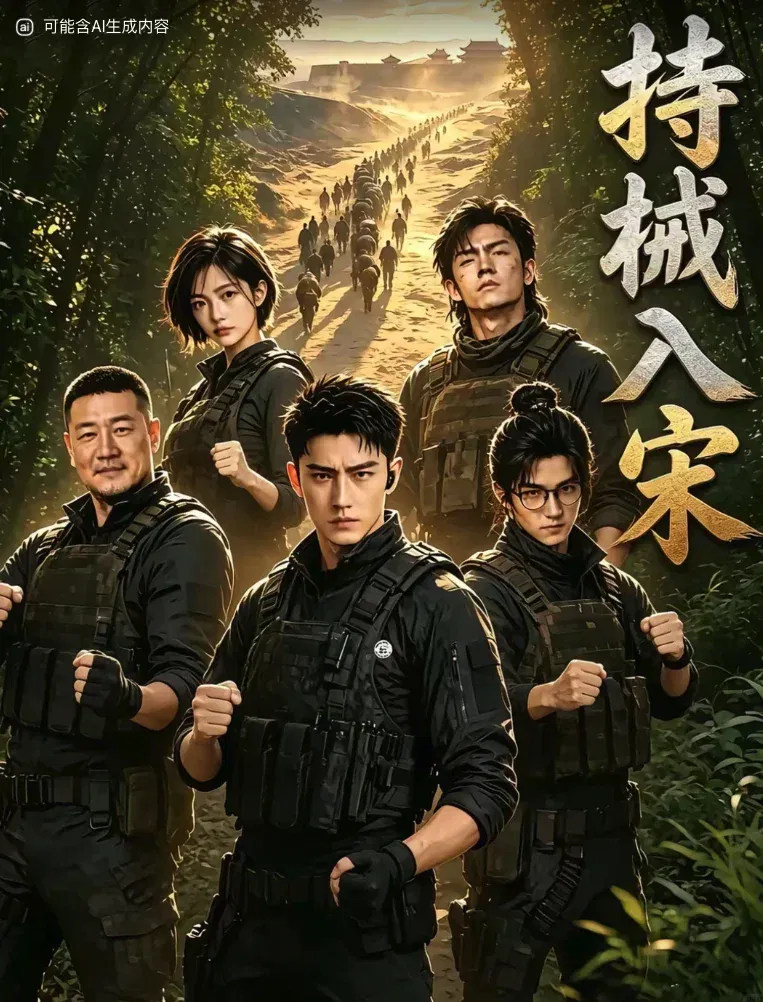
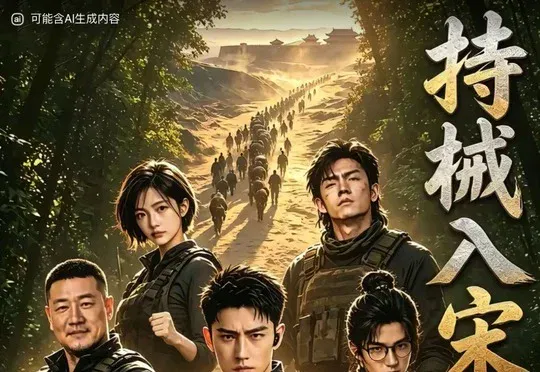
All the characters and images in Armed Into the Song Dynasty are AI-generated. As of November 6, its cumulative views across the internet had exceeded 12 billion. Around ten seasons have been released so far, with 100 episodes per season—a total of 1,000 episodes.
The QuestMobile chart caption in this article refers to September 2026: Hongguo Free Mini-Dramas had 430 million users and Doubao had 419 million. The original text described this chart as October data; it is corrected here to match the caption.
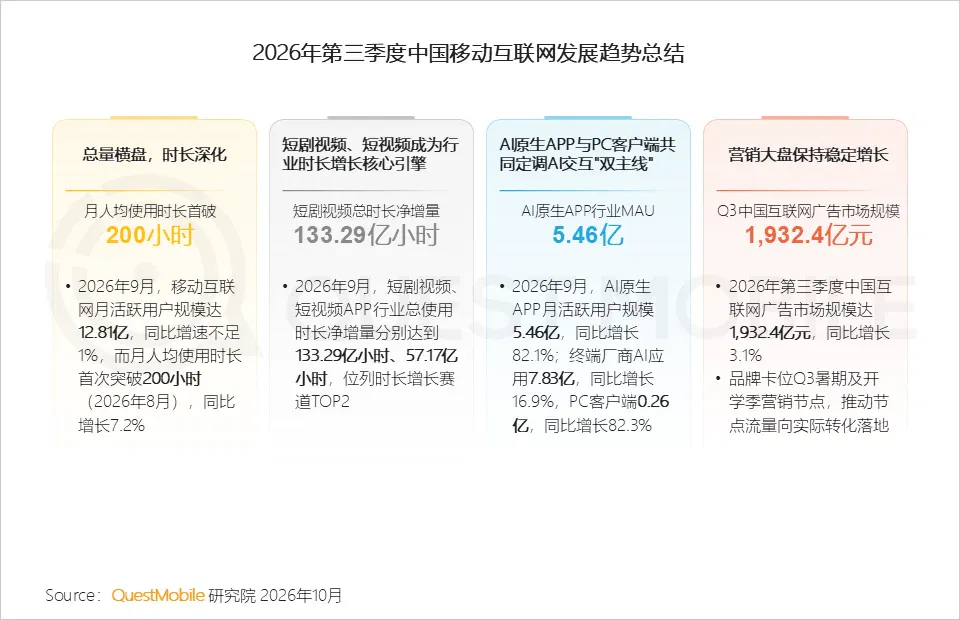
Comparison of user numbers for apps under Douyin: in September 2026, Hongguo Free Mini-Dramas had 430 million users and Doubao had 419 million. Image source: QuestMobile.
Armed Into the Song Dynasty has already reached a thousand episodes. That distinguishes it from the stereotype of mini-dramas that “can be finished in under an hour,” but it does not ask viewers to sit down and watch a long film continuously either.
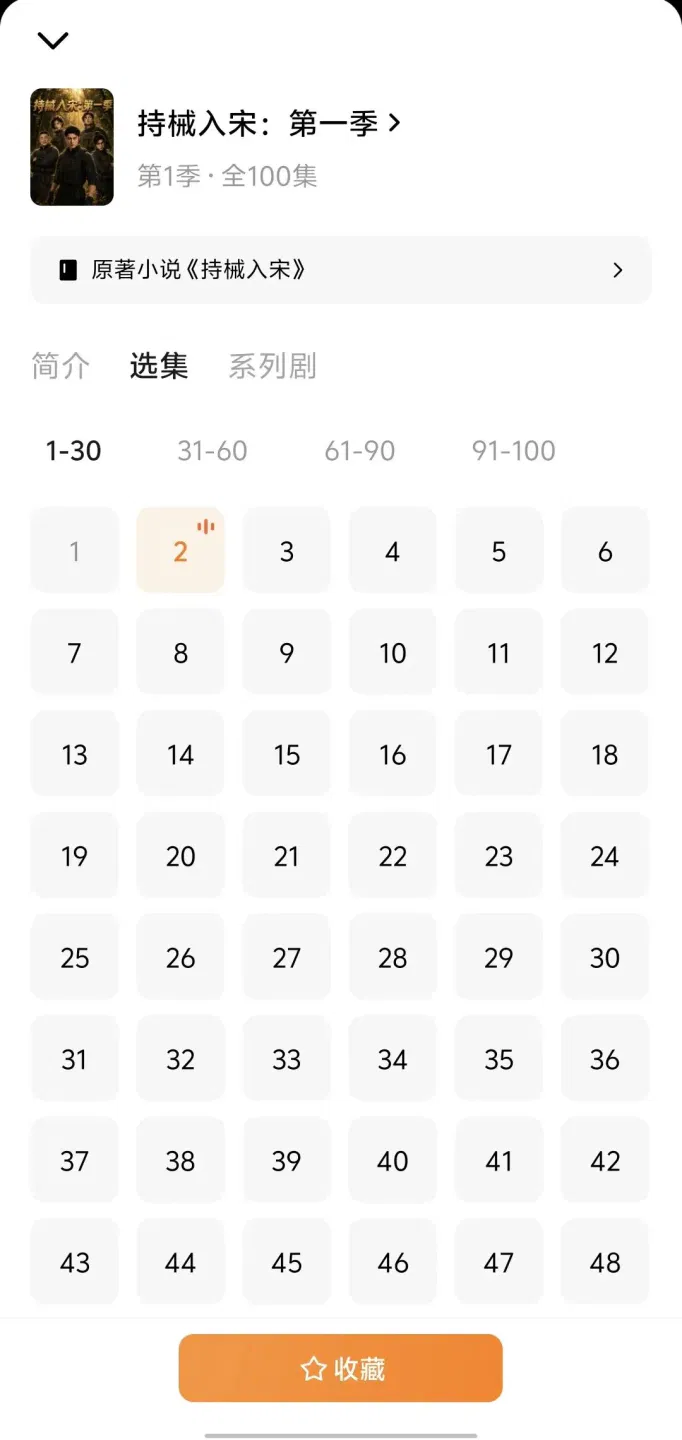
A thousand episodes sounds like an endless long-running drama. In fact, each episode of Armed Into the Song Dynasty lasts less than two minutes. Series information lists the first season’s total running time as approximately two hours and 34 minutes, the length of a movie. In actual viewing, though, it is split into 100 segments that can be opened or stopped at any time.
In this series, AI and mini-dramas fit together more closely than ever before.
AI dramas have different SKUs too?
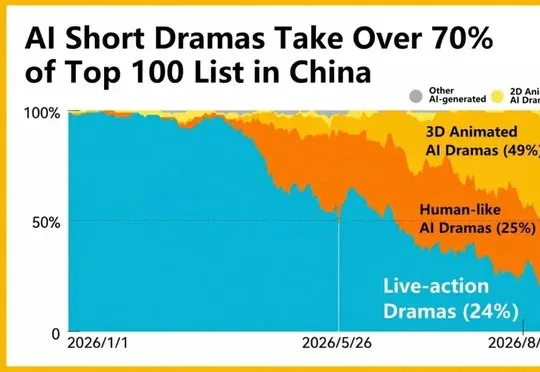
According to DataEye Research Institute, a total of 500 AI and animated dramas appeared on Hongguo’s charts this September. Of these, 460 were 3D animated dramas, accounting for 92%; only 38 were photorealistic dramas, or 7.6%. Both in the number of chart entries and in total popularity, 3D animated dramas held an overwhelming advantage.
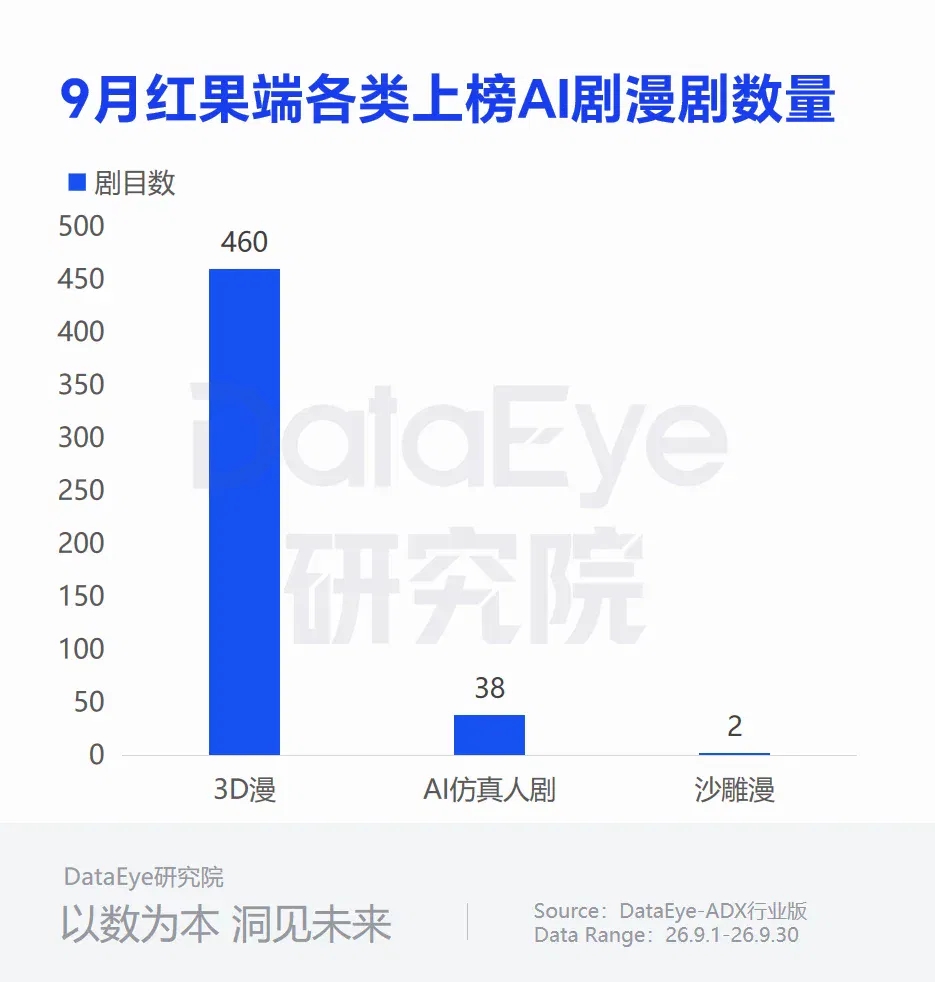
Image source: DataEye Research Institute.
Yet Armed Into the Song Dynasty became a huge hit during the same period, showing that photorealism is not a dead end for AI drama production. Why did it choose photorealistic images rather than the 3D animation more common on Hongguo?
The answer may lie first in the story itself. Many 3D animated dramas on Hongguo’s charts are set in fantasy worlds, immortal-cultivation settings or other worlds. Their characters and settings need not follow the rules of reality in the first place. Instead, 3D characters, exaggerated action and spectacular imagery suit these genres.
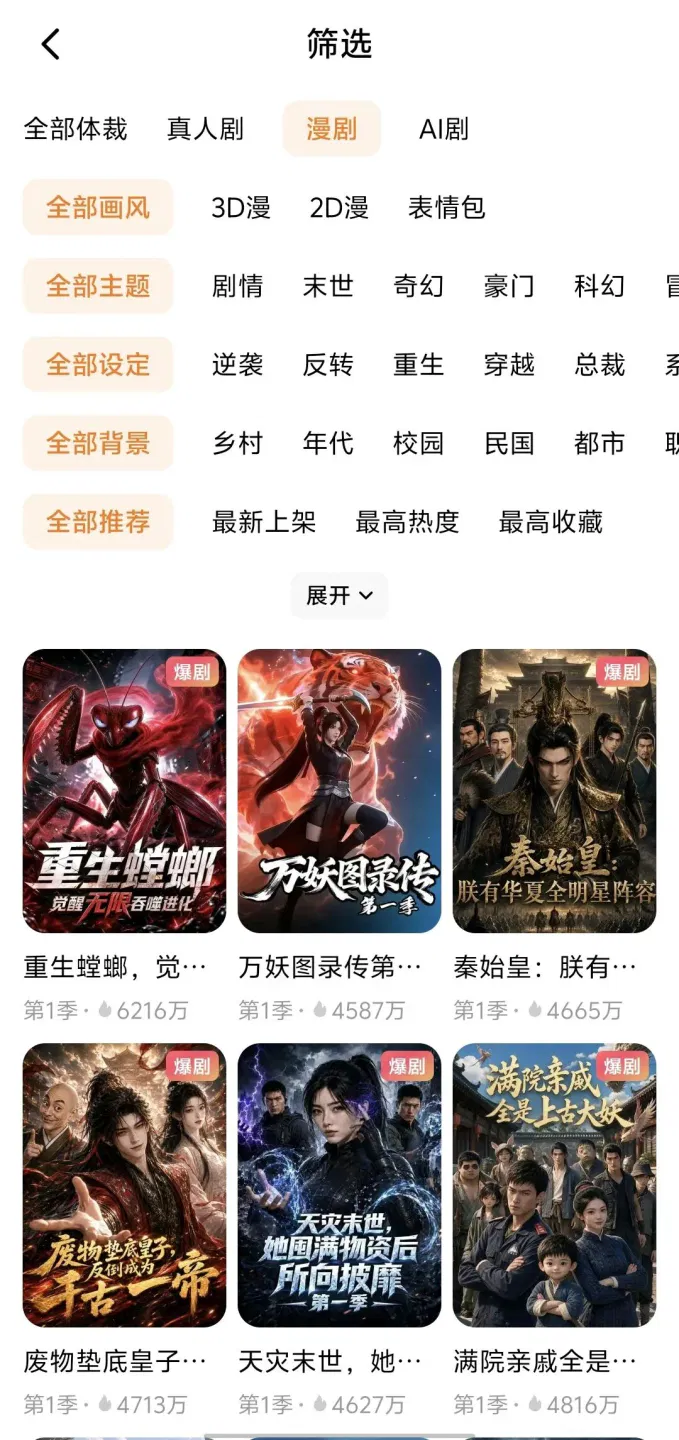
The animated-drama category in Hongguo Mini-Dramas.
Armed Into the Song Dynasty is different. It follows a modern squad that travels back to the late Northern Song dynasty, moving from building a village, training troops and making weapons to gradually becoming embroiled in larger-scale wars.
Although the story is fictional, its characters must enter a world made up of villages, military camps, battlefields and officialdom. Photorealistic imagery can draw on viewers’ visual experience of historical and war dramas, making these settings and the relationships between characters easier to understand.
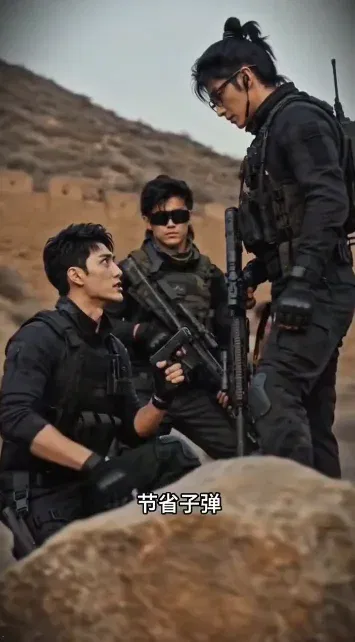
This does not mean Armed Into the Song Dynasty can only tell its story well through photorealism. Rather, this format gives it one viable means of expression.
AI generation solves different problems in these two types of work. For fantasy animated dramas, it makes it feasible to produce large numbers of fictional characters, settings and visual spectacles.
For Armed Into the Song Dynasty, it lowers the barriers to depicting war, ensemble casts and historical settings. If a story like this were shot in live action, personnel, costumes, props and locations alone would entail considerable costs. AI at least gives creators the chance to present these scenes under the production conditions of mini-dramas.
But merely mastering the technology and tools clearly does not mean you can produce a continually updated series, let alone a runaway hit.
In interviews, the creators of Armed Into the Song Dynasty have said that the team designed separate appearances for principal characters and even supporting characters to reduce faces getting mixed up between them. Ordinary shots were generated an average of three times. Complex battle shots often required more than ten attempts, sometimes more than twenty.
Reading the entire original novel, adapting the script and establishing the characters also remain necessary preparatory work. Photorealistic dramas must maintain continuity of characters and settings as far as possible; otherwise, viewers will struggle to understand successive shots as part of the same story.
Nor is the reason Armed Into the Song Dynasty keeps viewers watching simply that it uses AI to generate battle scenes. After its initial time-travel premise, the story continues to develop along multiple threads involving the battlefield, officialdom and the characters’ emotional relationships. Each episode is less than two minutes long, yet continually advancing the characters’ situations and plot suspense allows the story to continue for a thousand episodes or more. Photorealistic images give the story a form of expression, but what sustains the continued release of such a long series is still web-novel-style plot progression and the viewing rhythm of mini-dramas.
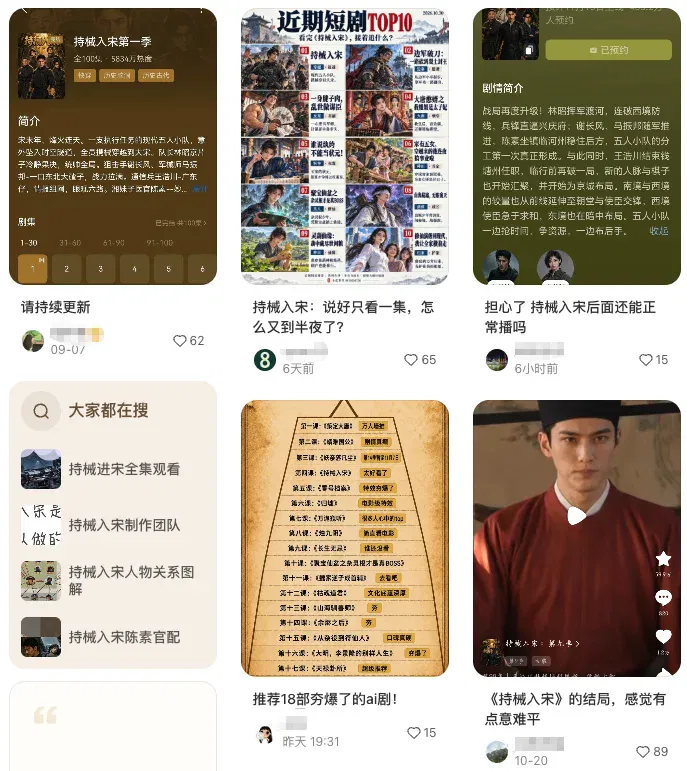
Discussion of Armed Into the Song Dynasty on social media.
This also creates a worthwhile comparison between Armed Into the Song Dynasty and the 3D animated dramas on Hongguo’s charts. Their visual forms, genres and production difficulties differ, but all use very short episodes to carry very long stories and rely on continual updates to keep audiences following them.
While 3D animated dramas dominate on Hongguo, more views go to photorealistic dramas within Douyin itself, where they account for more than 60% of total views. All this suggests that:
Content supply and viewing environments on different platforms do not necessarily lead to the same visual form.
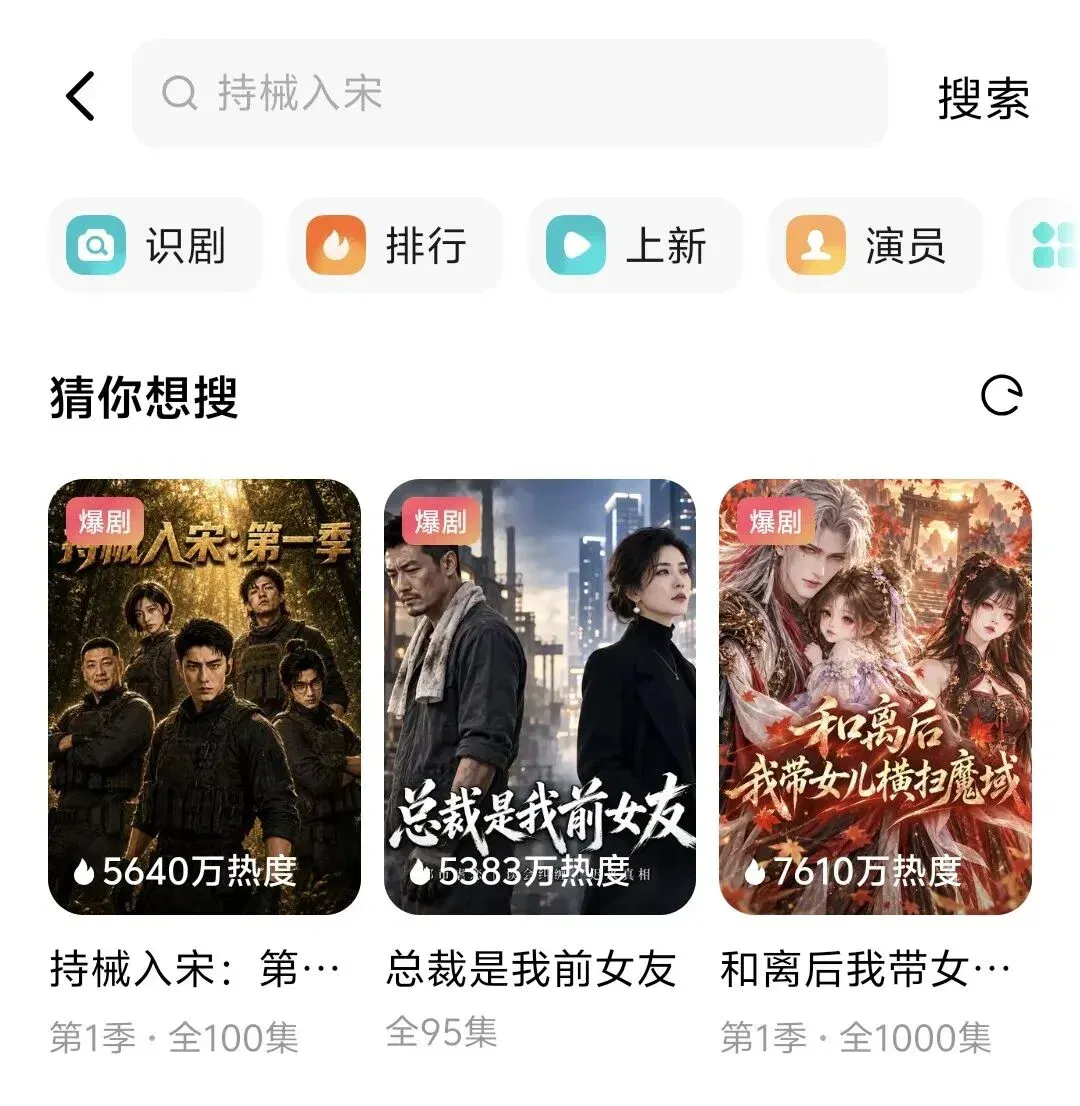
On Hongguo, Armed Into the Song Dynasty receives plenty of preferential traffic, but the animated adaptation beside it is more popular.
For AI dramas, how closely the images resemble live-action cinema may never have been the only measure of quality. Distribution placement, content supply, genre and users’ ways of watching can all affect the eventual mix of formats.
How Armed Into the Song Dynasty became an exception
Before mini-dramas, AI-generated visuals always carried “historical baggage” when they entered viewers’ awareness. Making a feature film sets high technical demands and poses even greater challenges to people’s viewing habits. Using AI for post-production or in a supporting role, meanwhile, taps only part of its capabilities and is more like adding a finishing touch.
The fact that a photorealistic mini-drama like Armed Into the Song Dynasty has become a huge hit among so many AI animated dramas shows precisely that different genres need different forms of visual expression. Episodes of one or two minutes, rapidly advancing plots and long-running series with continual updates let AI bring stories to audiences without first solving every difficulty of long-form film and television production.
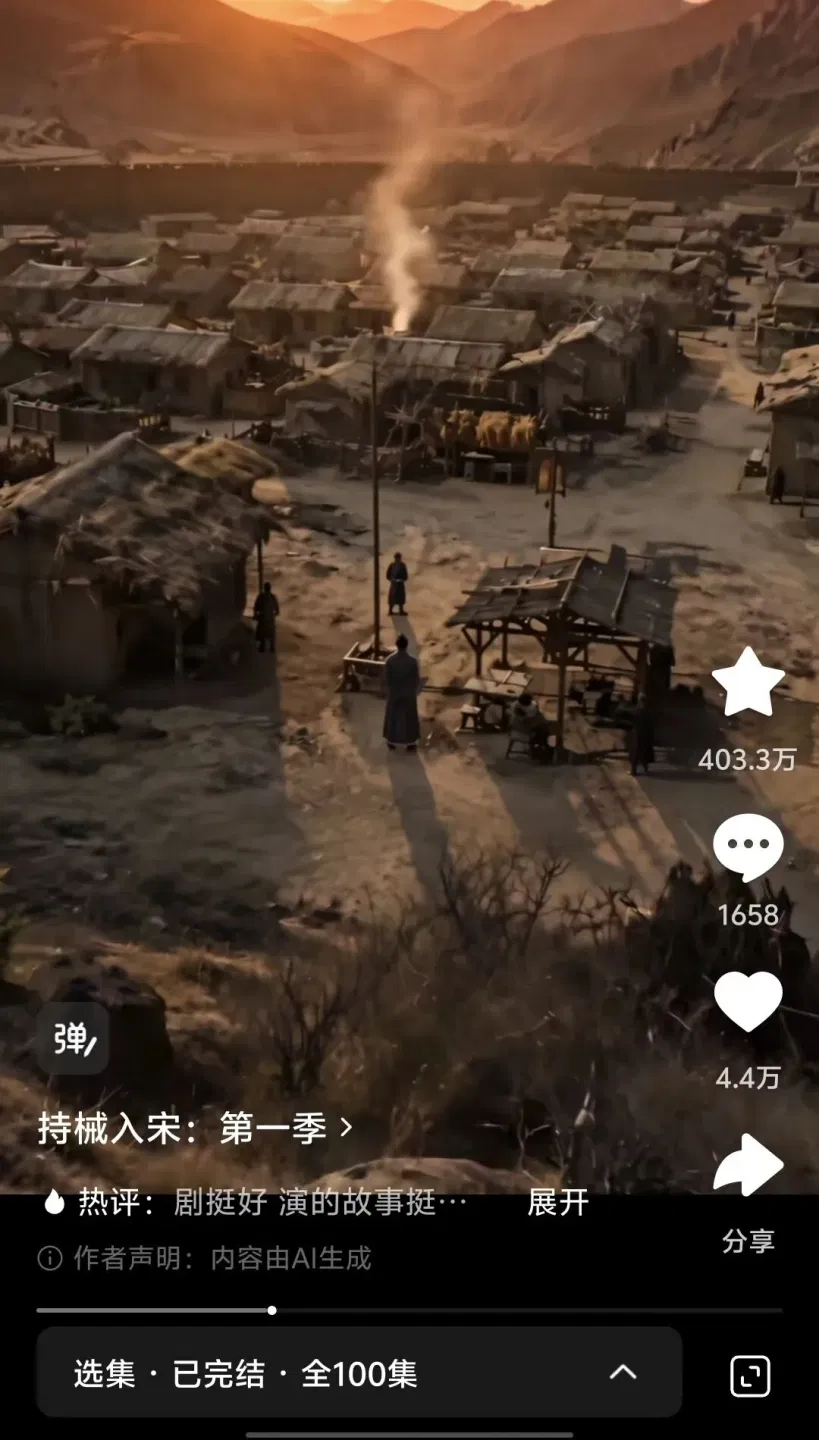
Whether a format can ultimately work also depends on whether it can keep telling a story under its particular production conditions and in its viewing context. Armed Into the Song Dynasty has already reached a thousand episodes or more, embodying this seemingly contradictory combination: episodes can be very short while the story can be very long.
Perhaps this is the more noteworthy aspect of AI dramas first finding audiences through mini-dramas. They have not yet developed a unified visual standard, but they can already tell different stories in different forms and reach viewers through mini-dramas’ established content structures and distribution methods.
For these viewers, what matters may be less how far the images remain from live-action cinema than whether the story is worth continuing to watch.
This article comes from the WeChat public account “APPSO,” by APPSO.
Related topics
After reading
Join the AINRK community
Read how to join the community and connect with people working in AI.
Related articles
Continue reading related topics and articles in this category.
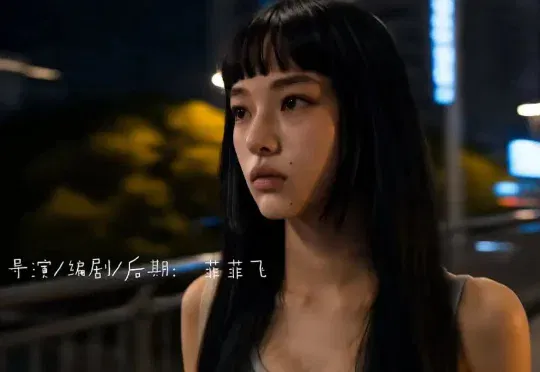
一个被“淘汰”的模特,用AI手搓出了2亿爆款短剧《被裁掉的女孩》 (opens in a new tab)
6月12日,AI系列视频《被裁掉的女孩》在抖音及抖音精选上线,11集,73分钟,2亿播放,均集点赞超30万。第二季8月1日上线,仅一张预告海报,评论区就涌进上千条催更。主角方桃子成了全网第一个被记住的虚拟角色。有人说“我在桃子身上看到了自己”,这是今年暑期第一个真正意义上的爆款视频。
foyege on AI drama production: character assets, multiple models and canvas collaboration (opens in a new tab)
QbitAI interviews a LibTV-signed creator about a Harry Potter fan adaptation, covering character design, storyboards, sound and model switching. Viewing figures are those reported in the article.
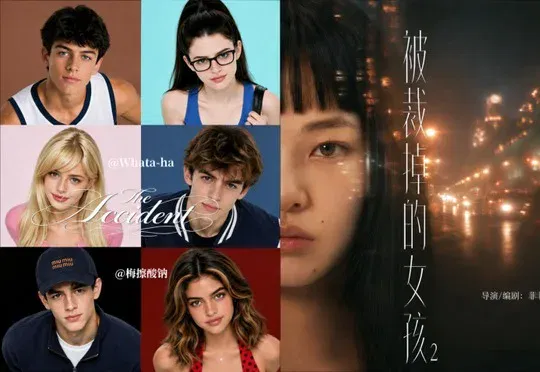
即梦短剧工作室实测:从剧本、角色资产到分镜预演 (opens in a new tab)
量子位用一集校园短剧测试即梦的剧本生成、角色和场景资产、3D 导演台与局部重拍。测试中仍需调整人物位置、背景和镜头,报道还介绍了创作支持计划。
独家丨红果短剧App上线“小果AI”,字节会掀起新的内容分发革命吗 (opens in a new tab)
今日头条、抖音等一众字节系爆款产品,是如何崛起的?
AI 短剧,未必是「算力泔水」 (opens in a new tab)
文章指出,AI短剧消耗国内55% Token和占据一半算力的说法并不准确,但其快速增长正创造新增推理需求,并推动视频模型与算力基础设施扩张。