DataEye: NetShort ranked second in overseas short-drama app in-app revenue for two straight months
Citing DataEye, CYZone says NetShort ranked second in overseas short-drama app in-app revenue in September and October, with estimated nine-month in-app revenue of US$205 million. A title's US$8 million-plus revenue is an industry-source report; its budget, ad costs and profit are undisclosed.
Editor's note: Second place in this article refers to CYZone's citation of DataEye's rankings of overseas short-drama apps by in-app revenue in September and October 2026, not a company's global market share. The US$205 million figure for the first three quarters is estimated in-app revenue. The US$8 million-plus figure for a single title comes from media reports citing industry sources; no public settlement records or evidence of profit have been provided, so it should not be interpreted as net earnings. DataEye's public reports (opens in a new tab)
According to the DataEye statistics cited in this article, NetShort, operated by a Chongqing company that began with WeChat official accounts, ranked second in overseas short-drama app in-app revenue in both September and October 2026.
According to the latest data from DataEye Research Institute, NetShort, owned by Chongqing-based Maiya Media, ranked second in overseas short-drama app in-app revenue for two consecutive months this September and October. In the first three quarters of this year, the platform's estimated in-app revenue reached US$205 million, approximately RMB1.366 billion, while cumulative downloads exceeded 180 million.
Yet only a little over two years ago, the company was just entering the overseas short-drama market. Platforms such as ReelShort and DramaBox were already ahead of it.
This year, taking advantage of advances in AI video generation, Maiya Media has released one hit after another.
Among them, an AI short drama called One Move God Mode became popular overseas. According to media reports citing industry sources, its worldwide revenue exceeded US$8 million, approximately RMB53.32 million.

It tells a fairly clichéd underdog story: a farmer everyone looks down on turns out to be the son of Poseidon, god of the sea. He enters a knight selection contest carrying a rusty pitchfork, then uses his awakened divine powers to leave everyone who dismissed him dumbfounded.
A few years ago, shooting a short drama involving a mythological world and fantasy battles would have cost a considerable sum just for sets and visual effects. Now, with AI, Maiya Media can bring production costs down to one-tenth those of a North American live-action short drama.
Maiya Media is also releasing similar works in batches. In October this year, 63 titles on the overseas short-drama top 100 had NetShort as the main platform promoting them. On the overseas AI drama top 100 for the same period, NetShort also occupied 54 places.
Maiya Media founder He Yunchang previously said in an interview: "In 2026, what we mainly did was seize the opportunity in AI."
From its beginnings in Chongqing
to the leading ranks in overseas short-drama app in-app revenue
Maiya Media was founded in Chongqing in 2015 and initially operated WeChat official accounts. Local lifestyle accounts such as "Chongqing Yanzi" and "Chongqing Food Circle" were among its early content products. As Douyin and Kuaishou rose, Maiya expanded into short videos and began incubating creators at scale.
By 2019, according to the company's public information, Maiya had 30 IP accounts at the million-follower level, with a combined short-video following of 200 million across platforms.
Around the same time, Maiya began experimenting with serialized narrative videos, dividing a story into several episodes and leaving a cliffhanger in each to entice users to watch the next.
In 2022, Maiya formally entered the short-drama industry. In May the following year, it also entered the market for paid short dramas on mini programs.
He Yunchang once shared two interesting examples. A narrative-content creator with a million followers gained another wave of followers after appearing in a short drama. Another person, previously an amateur with only a few dozen followers, gained nearly 100,000 in a month thanks to a role in a short drama.
For a multi-channel network, or MCN, short dramas opened up a new business. The company could earn money by producing dramas, and could also turn actors into stars through those productions, accumulating resources for subsequent talent management and commercial partnerships.
By 2024, China's domestic short-drama market had become crowded. More and more film and television companies, online fiction platforms and startups were entering the field, competing for scripts, actors and advertising traffic. Maiya turned its attention overseas.
NetShort officially launched in September 2024. By then, Chinese short-drama platforms such as ReelShort, owned by Crazy Maple Studio, and DramaBox, owned by Dianzhong Technology, had already established a first-mover advantage overseas.
Maiya had little time to catch up. Shooting live-action short dramas overseas meant finding actors afresh, assembling production crews, and addressing script adaptation and cultural differences. Expanding production capacity quickly required continued spending.
By 2026, Maiya discovered that making short dramas did not have to be so expensive.
The budget for one drama
can now make ten
Li Li, NetShort's head of global business development, previously said that producing a live-action short drama in North America typically cost the company US$200,000–300,000. An AI short drama could bring production costs down to US$20,000–30,000, while shortening production from several months to a matter of days.
Alongside the sea god's son and his reversal of fortunes in One Move God Mode, NetShort had another popular AI short drama this year, The Wolfless Carpenter Rules the World. It follows the resurgence of an exiled werewolf heir.
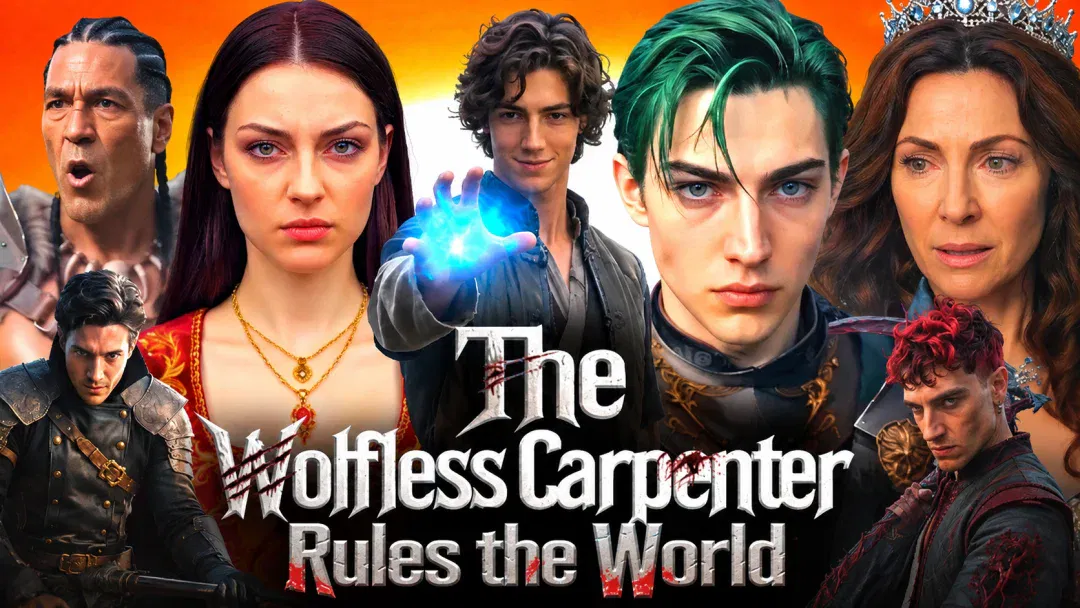
These works feature many fantasy settings, character transformations and supernatural powers. Live-action production would require additional spending on visual effects, whereas AI greatly lowers the production barrier for such subjects.
These fantasy scenes also work well as short-drama advertisements. A werewolf suddenly transforms, the protagonist awakens divine powers, or a villain is publicly humiliated: a clip of ten-odd seconds may be enough to attract viewers to download the app and pay for the story that follows.
According to DataEye Research Institute, more than 80,000 sets of ad creatives were used to promote One Move God Mode in the first half of this year, placing it first on the overseas AI drama top 100. The werewolf-themed drama mentioned above had nearly 70,000 sets of ad creatives and ranked third.
Lower production costs let Maiya use the same budget to try more subjects. Audiences in which countries prefer werewolves? Which users are willing to pay for mythological stories? Would the same underdog story be more popular with a different character setup? More productions and more frequent market tests can help find answers to these questions.
And as it moves from short videos to short dramas, Maiya can use AI to turn more than a decade of experience in plot design, advertising and users' willingness to pay into new productions more quickly.
As making dramas becomes easier, knowing what to make and whom to sell it to becomes more valuable instead.
Of the 41 titles newly entering the overseas AI drama top 100 this October, 19 came from NetShort. Maiya is also developing its own AI agent platform to support script development and the generation of fully AI-produced works, with plans to open it to outside creators and production partners in an attempt to expand its content supply further.
Competing with the tech giants
An AI short drama with reported revenue exceeding US$8 million, yet a possible production cost of only one-tenth the old level: the business sounds very attractive. But overseas short dramas involve another, larger expense—buying traffic.
According to a report by Xiaguang Think Tank, paid user acquisition accounts for about 50% of the total cost of taking short dramas overseas, and acquiring one user in North America costs about US$5.28. Even if production budgets fall by 90%, platforms still need to spend heavily on Meta, Google, TikTok and other channels to compete for users.
Maiya Media has not publicly disclosed One Move God Mode's actual production budget, advertising spending or profit for the individual title. Exactly how much additional profit AI short dramas have brought the company remains an account outsiders cannot see.
Meanwhile, more and more players are entering the business.
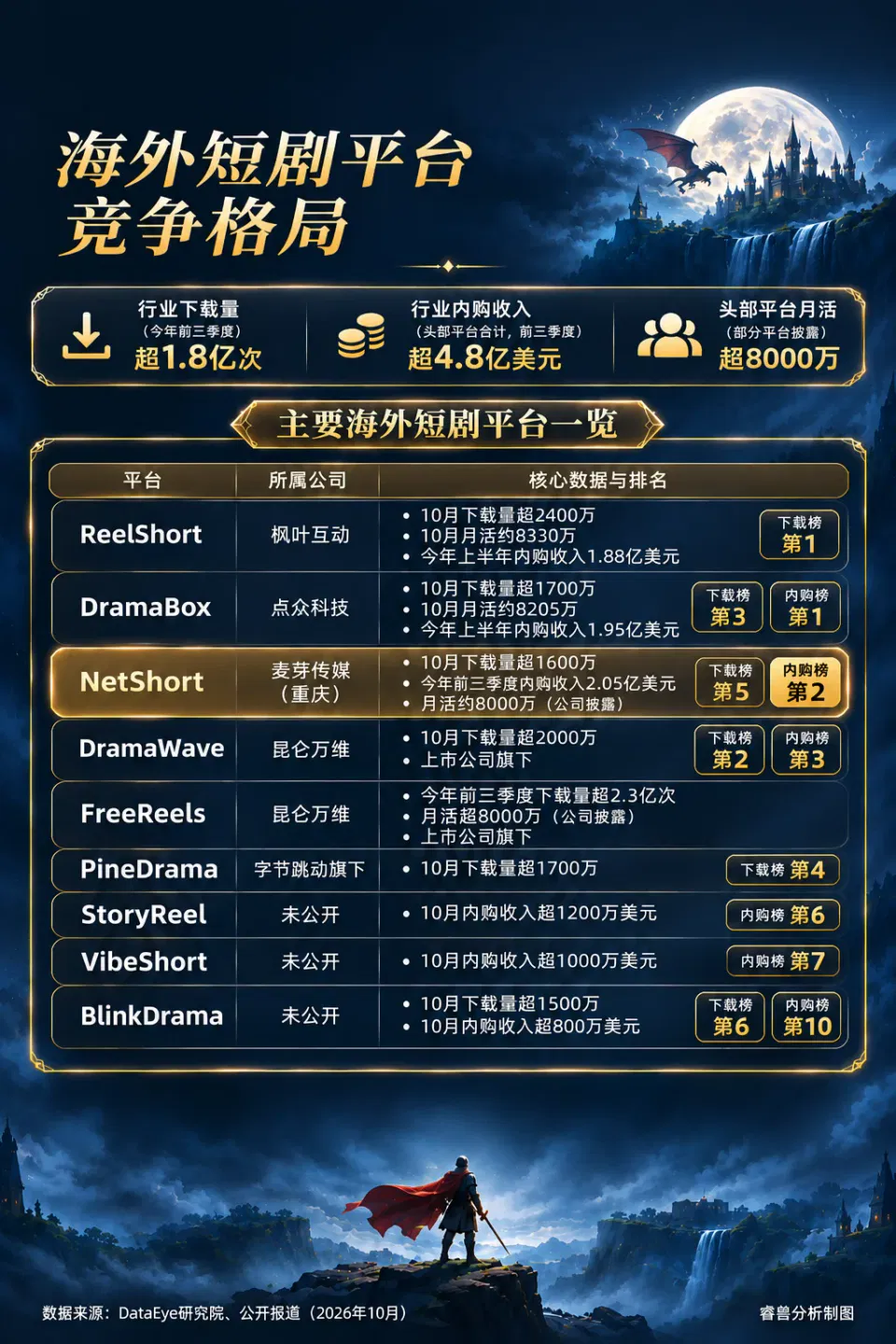
This October, ByteDance's short-drama platform PineDrama recorded more than 17 million downloads in a single month, ranking fourth globally.
Kunlun Tech's DramaWave exceeded 20 million monthly downloads, ranking second, while also entering the global top three for in-app revenue. Another Kunlun Tech short-drama product, FreeReels, accumulated more than 230 million downloads in the first three quarters of this year, leading the overseas short-drama app download ranking.
Established players are also adding large amounts of AI short-drama content. According to independent data provider GASP, AI content's share on ReelShort climbed from 10% this May to 88% in September, while live-action short-drama output remained at 10–30 titles per month over the same period.
But newcomers still have an opportunity to take a slice of the business.
This October, three new AI short-drama products launched less than a year earlier all entered the overseas short-drama app in-app revenue top ten. Among them, StoryReel and VibeShort each had estimated monthly in-app revenue exceeding US$10 million, while BlinkDrama surpassed 15 million downloads in a single month.
However, tech giants can use AI too, and they have more funding and more mature distribution channels. Production costs have fallen, but the cost of competing for good stories and users' attention will not necessarily decline.
At least, though, an MCN founded in Chongqing now has a chance to compete with internet giants such as ByteDance for users around the world.
Similar opportunities are emerging in software development, game production, film and television creation, and other industries. More and more businesses that only large companies could previously afford are becoming things small teams, and even ordinary people, can try.
Perhaps the most exciting thing about the AI era is that ordinary people's ambitions finally have a cheaper way to become reality.
This article originally appeared in CYZone, written by Si Qi.
Related topics
After reading
Join the AINRK community
Read how to join the community and connect with people working in AI.
Related articles
Continue reading related topics and articles in this category.
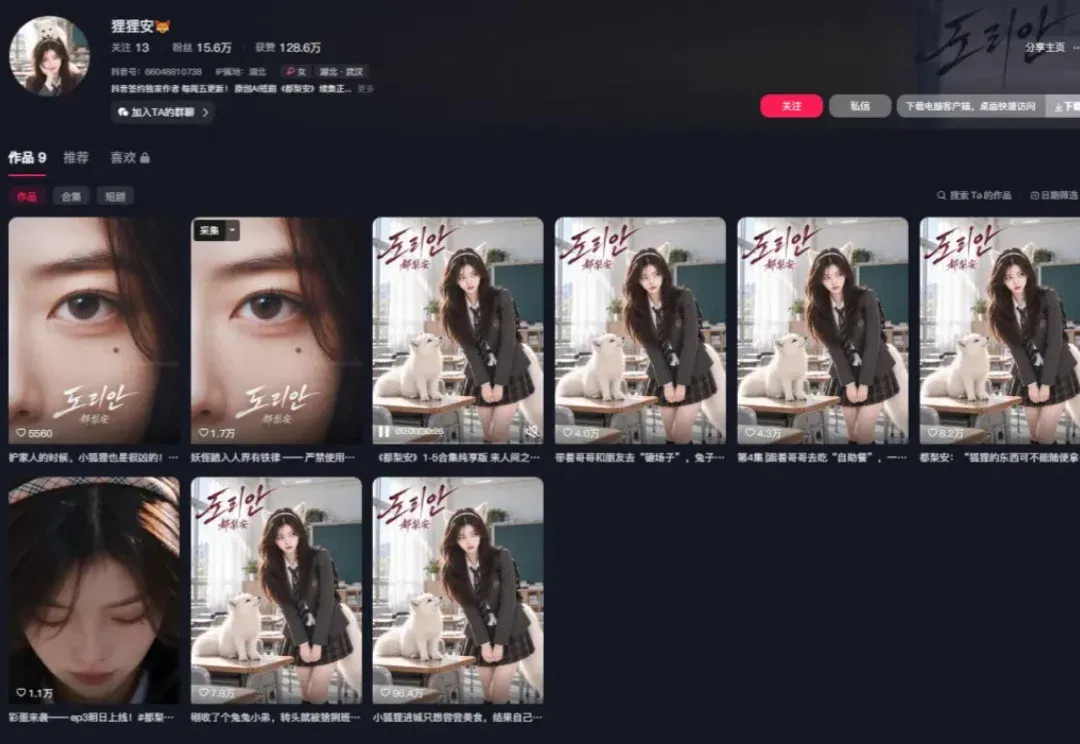
《都梨安》三人团队谈AI剧制作:单集算力约千元,人工另计 (opens in a new tab)
FoST采访狸狸安团队,介绍《都梨安》的剧本分工、角色主图、镜头返修和RunningHub协作流程。团队称五六分钟1080P单集算力成本约1000元,人工另计,剧情与细节仍需三人反复把关。
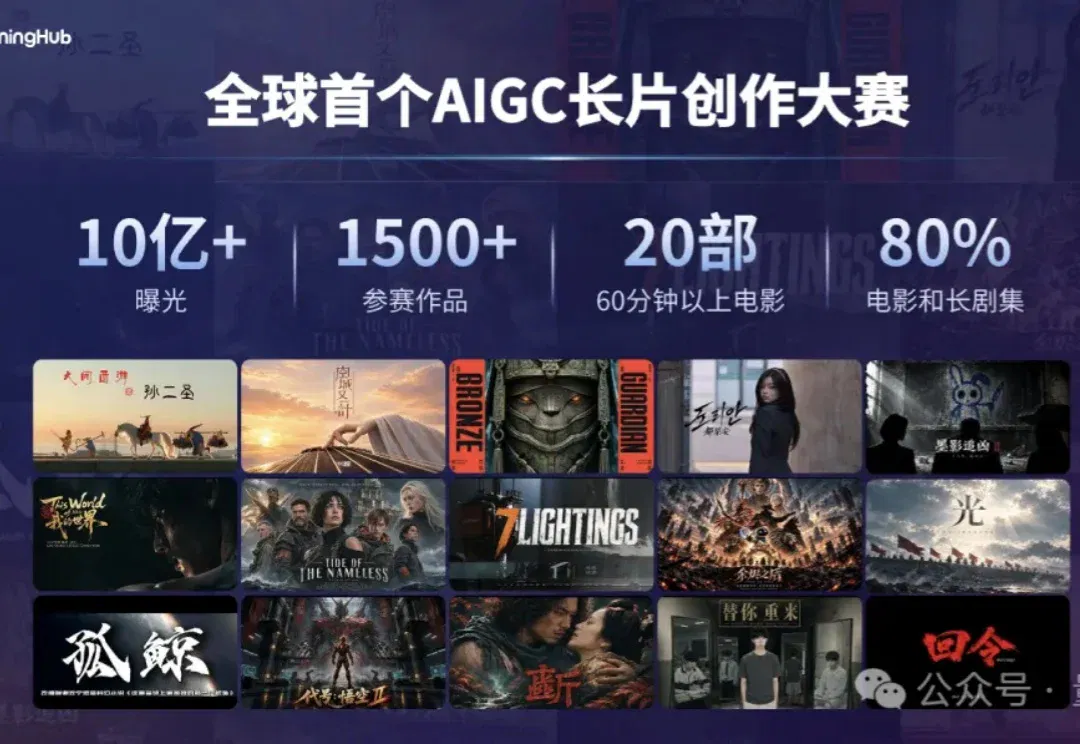
RunningHub competition concludes, showcasing an AI filmmaking toolchain (opens in a new tab)
Using entries such as Codename: Wukong, Dulian and Lone Whale, QbitAI examines RunningHub’s script breakdown, 3D previsualization and local repair tools, alongside its announced IP licensing, creator support and distribution plans.

As “Armed Into the Song Dynasty” takes off, how photorealistic AI mini-dramas keep viewers watching (opens in a new tab)
APPSO examines short episodes, long-running series, production rework and platform distribution, discussing the character consistency and storytelling challenges that remain as AI lowers visual-production barriers.

即梦短剧工作室实测:从剧本、角色资产到分镜预演 (opens in a new tab)
量子位用一集校园短剧测试即梦的剧本生成、角色和场景资产、3D 导演台与局部重拍。测试中仍需调整人物位置、背景和镜头,报道还介绍了创作支持计划。

独家丨红果短剧App上线“小果AI”,字节会掀起新的内容分发革命吗 (opens in a new tab)
今日头条、抖音等一众字节系爆款产品,是如何崛起的?