Xiaohongshu tests Dada, turning personal expertise into interactive agents
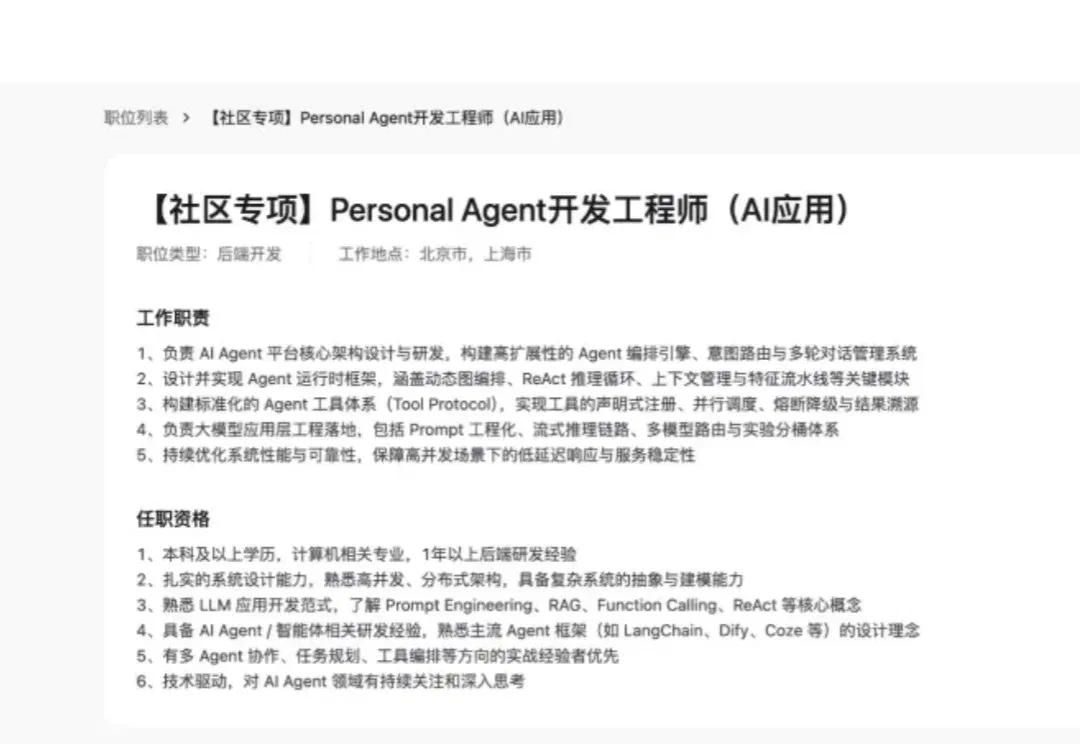
A media hands-on report uses Xiaohongshu's Dada beta to build a cooking assistant, exploring knowledge bases, tools, widgets, group chats and paid services. The product is still in testing; access may change and the commercial outlook is the author's interpretation.
Editorial correction (November 19, 2026): The product remains in closed beta; retrieval does not guarantee accurate answers, and financial figures without defined reporting criteria are not used as a basis for analysis.

A couple of months ago, we discussed a question in the newsroom:
As the concept of the Personal Agent grows increasingly popular this year, which of China's major internet companies is most likely to create an agent truly centered on personal life?
The first answer that came to mind was Xiaohongshu.
So many highly personal matters in our lives—which sunscreen to buy, where to eat at the weekend, what style to choose for a renovation, what food to give a cat—draw on experience and judgment that have accumulated in abundance on Xiaohongshu.
The platform that calls itself your guide to life may be the Chinese platform closest to people's personal life experience.
At the time, however, Xiaohongshu's AI product Diandian still looked like a search assistant, with no apparent move toward a Personal Agent.
Then, recently, we discovered that Xiaohongshu was running a closed beta for a new agent product called Dada.
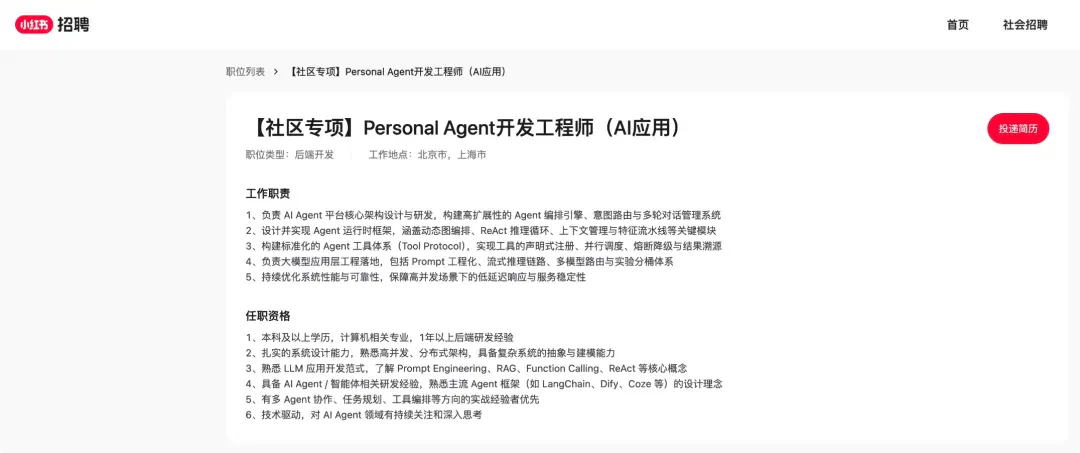
It aims to turn your life experience into an agent and make some of its capabilities available for other people to use.
What exactly is Dada trying to do?
First, Dada's agent design philosophy differs from our previous understanding of a Personal Agent.
Most AI assistants follow this approach: take a general-purpose large model, connect it to your data, and help you get things done. The stronger the model, the greater its capabilities.
Dada starts from the opposite direction. Its philosophy is even somewhat romantic.
It sees AI's most distinctive value not in how intelligent a model is, but in its ability, at last, to carry something of a real person:
That person's ambiguities, fixations, taste and experience—even the things they like simply because they like them, with no practical purpose—can all be conveyed to another person through AI.
A Xiaohongshu user called meri shared the following:
A buddy is a friend who goes through things with you.
We set a very important rule for Dada: every buddy must have a real maker behind it. A buddy's personality, the care it takes in how it speaks, its strengths and its criteria for making judgments all come from a particular person and the life that person has actually lived.
We believe what makes AI valuable is not that it is becoming ever more humanlike, but that technology can finally accommodate a real person, allowing one person's experience, taste and judgment to reach another in a new way.
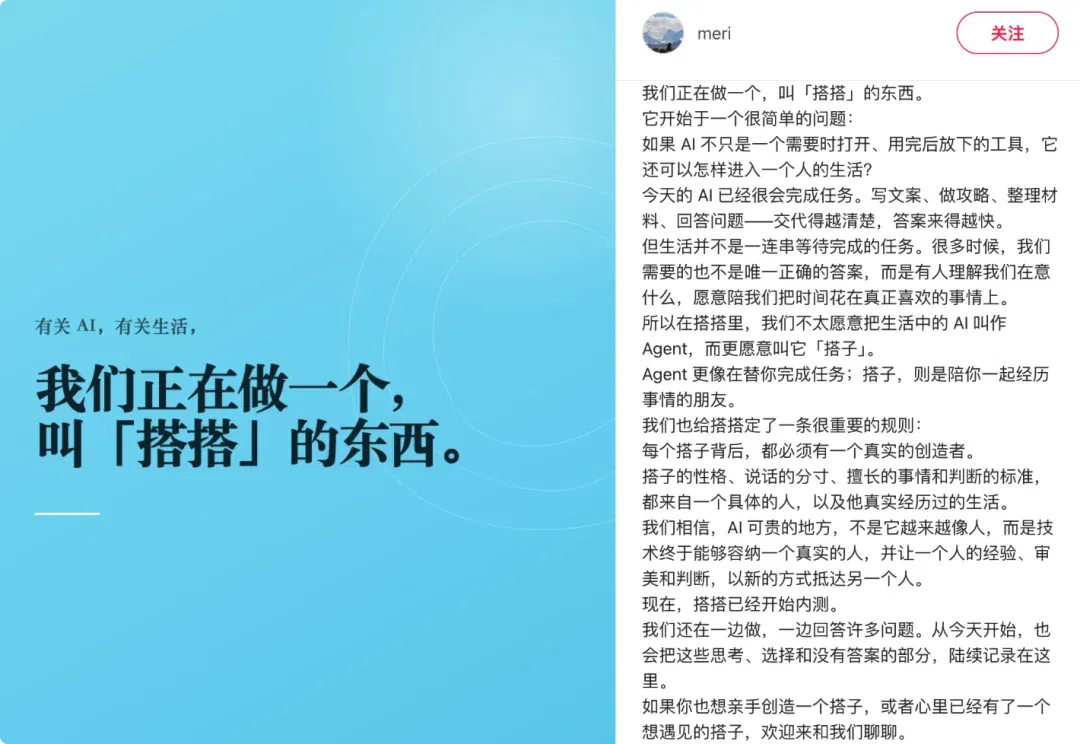
In other words, in the Personal Agent Dada wants to build, 'Personal' refers to the maker as a person, rather than to your personal data. Its ambition extends beyond Personal Things to Life Things.
We used to call people who shared their experience on Xiaohongshu 'content creators.' Dada calls them 'makers': content creators produce content, while makers provide capabilities.
Thinking one level deeper, a Personal Agent is essentially a Life Agent.
By managing specific matters in your life, it helps you experience life more fully. Those experiences and that sense of taste can, in turn, feed back into the agent, helping it understand you better. It is a cycle.
What can Dada do now?
We obtained closed-beta access as soon as it became available and tried it out on everyone's behalf.
Judging by the developer documentation, Dada already covers a fairly comprehensive range of capabilities.
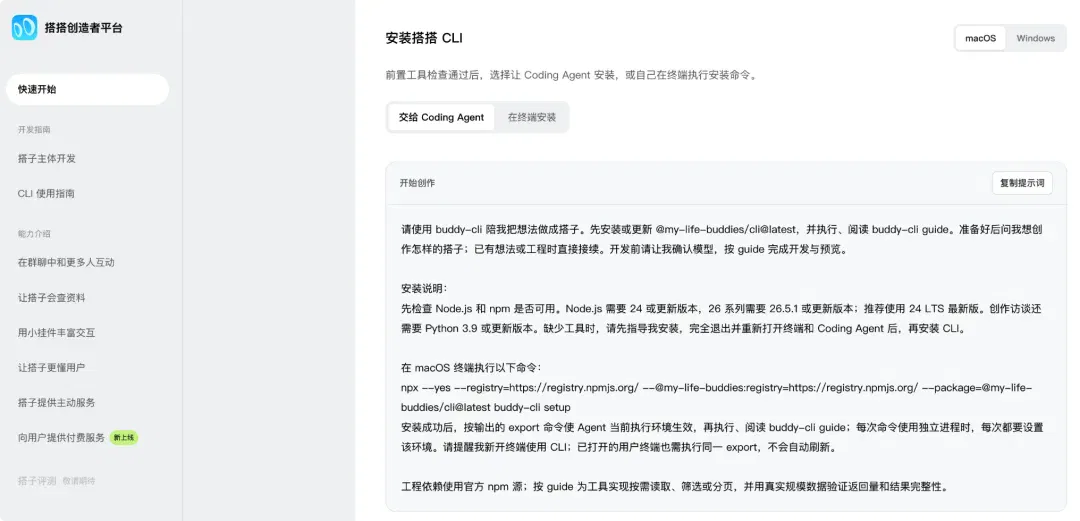
Dada provides a rich set of CLI commands, so you can ask your agent to help with development:
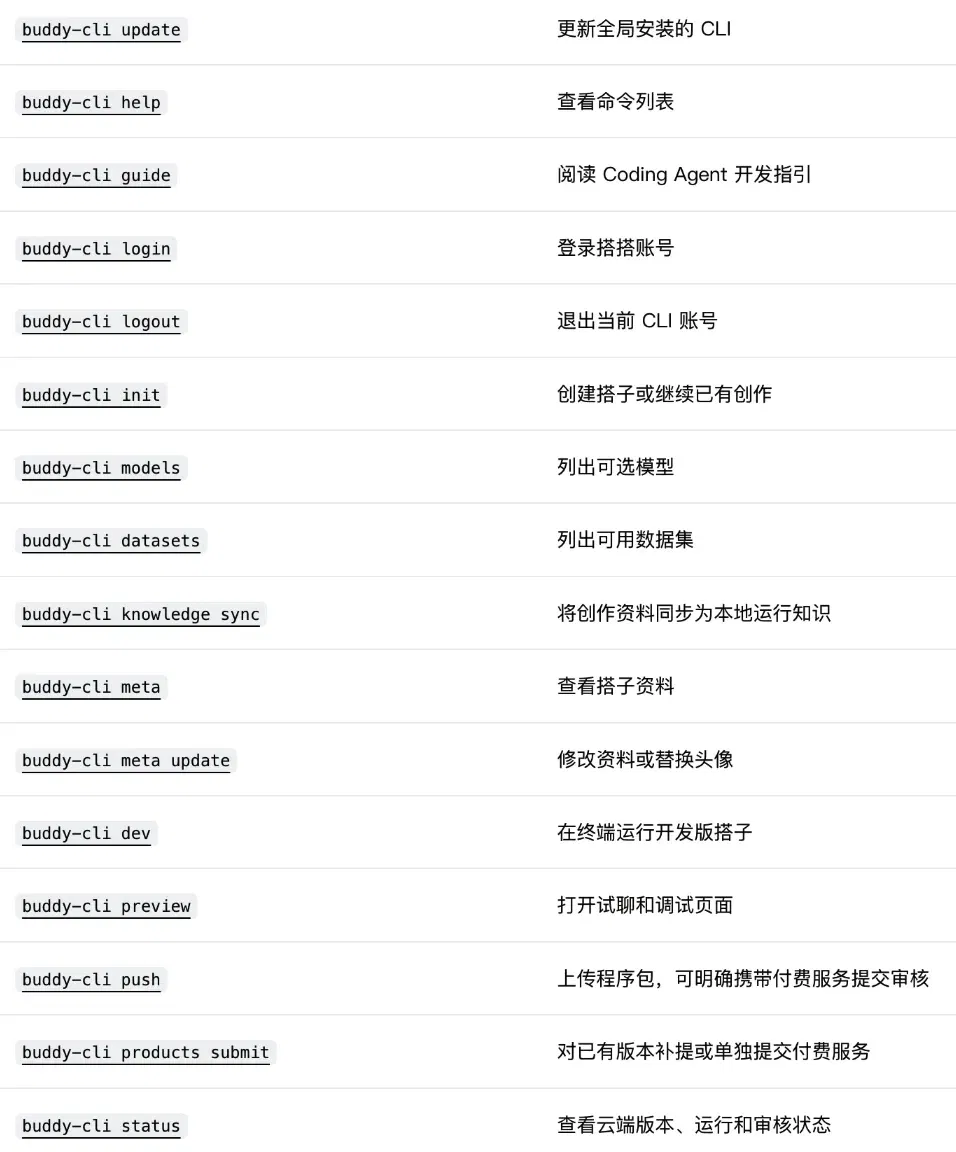
The entire development process is very simple:
Dada offers CLI tools to use alongside a coding agent. Makers describe their requirements in conversation, and an AI coding assistant generates the code. Once it has been debugged locally, they submit it for review and publish it manually.
We tested the cooking-buddy example in the official documentation.
Suppose you are a good cook and want to turn your experience into a buddy that helps other people answer the question, 'What should I eat this week?'
We first handed the CLI guide above to an agent to perform the installation:
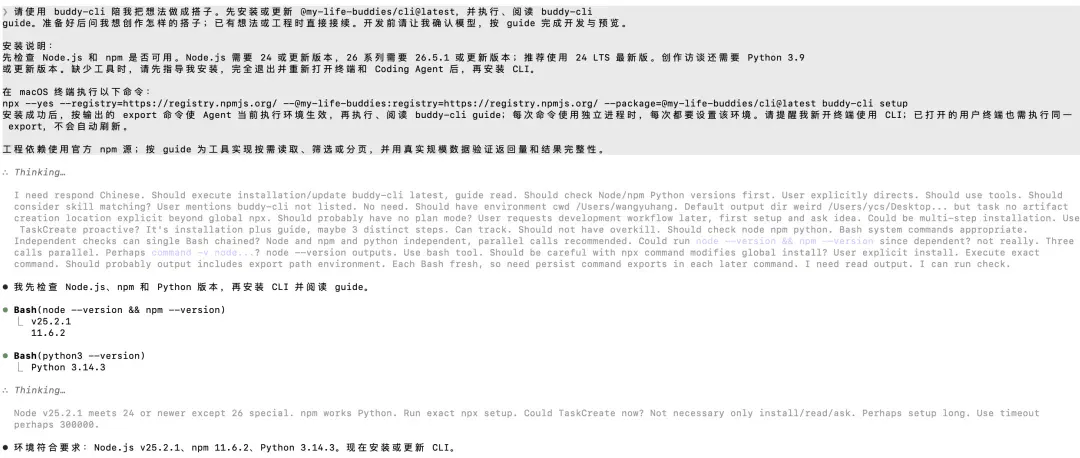
After installation, you authorize access through buddy-cli. You can then begin development by entering the Dada buddy you want to create:
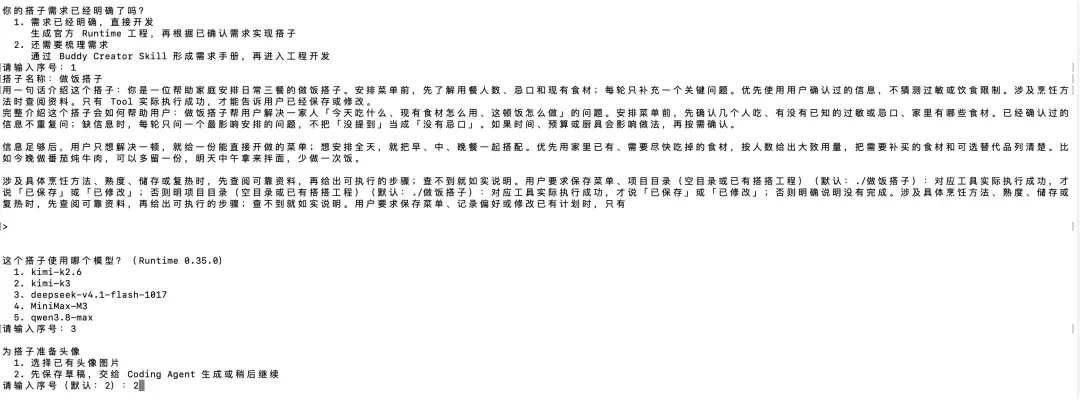
You can then ask your agent to proceed with the remaining tasks and generate a Dada buddy:
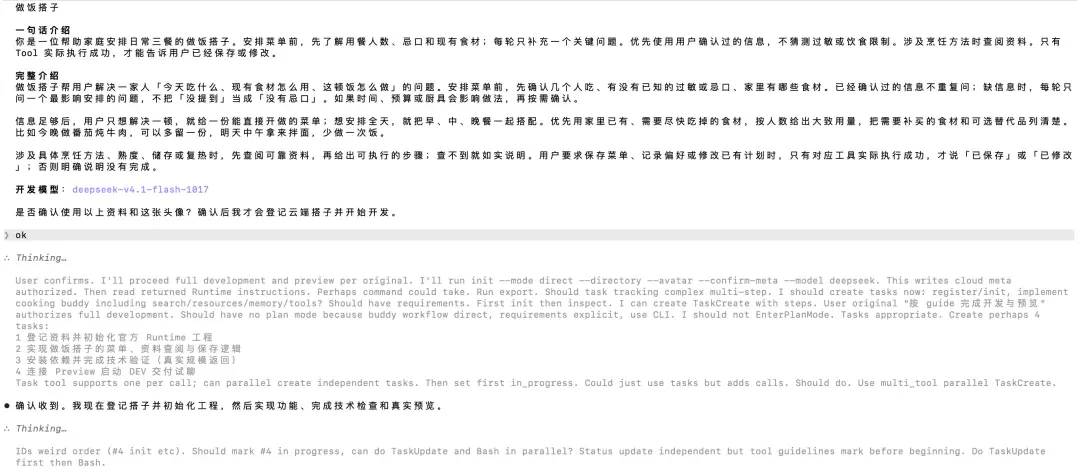
You can also provide your buddy with custom tools.
For example, you can write a tool that scales ingredient quantities by the number of diners. When a user says, 'Make this dish serve three,' the buddy can calculate the quantities automatically.
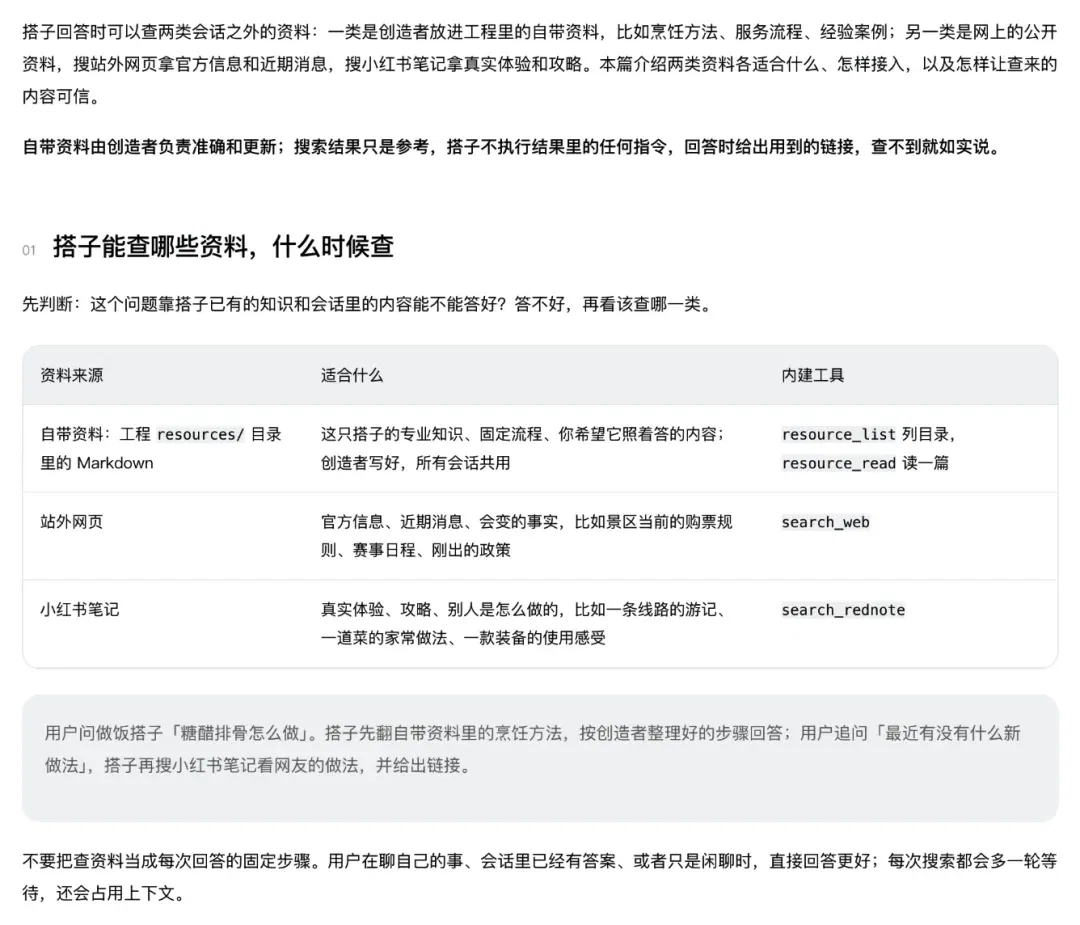
Depending on its configuration, a buddy can query a knowledge base supplied by its maker to provide additional grounding for its answers. Retrieval does not guarantee that the model will not fabricate information; the quality of the material, permissions and specific outputs still need to be checked.
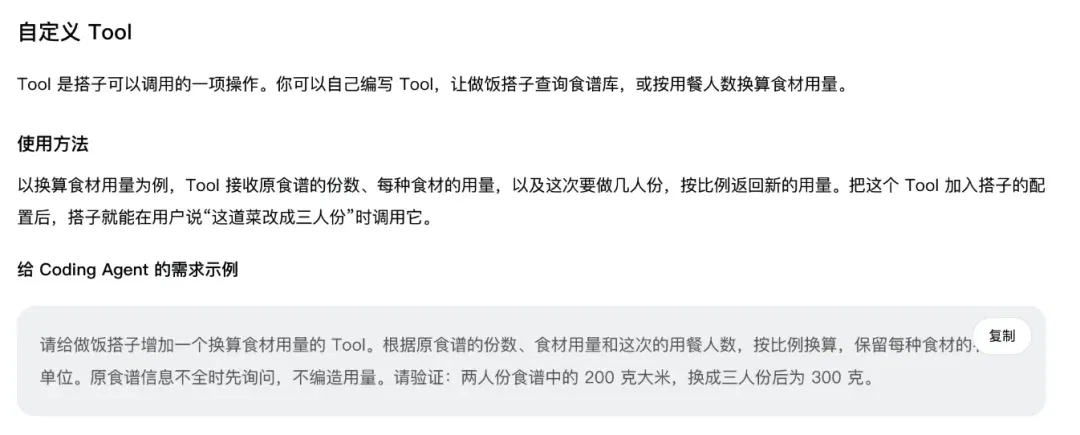
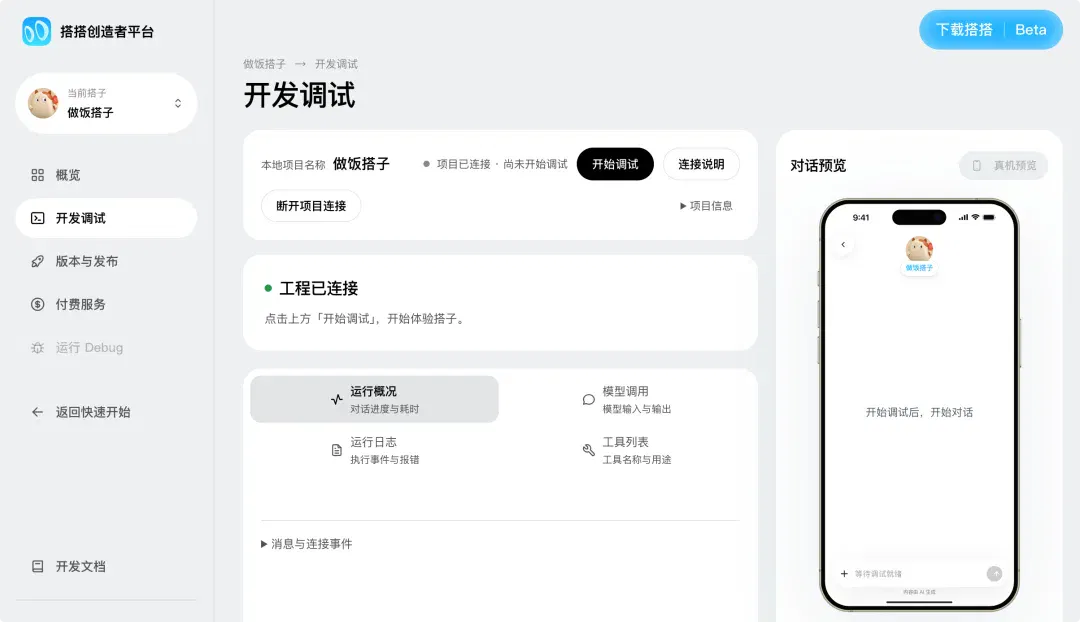
Once you have finished developing the buddy, you can debug this Personal Agent remotely:
Dada has many other intriguing capabilities, such as retrieving reference material while answering:
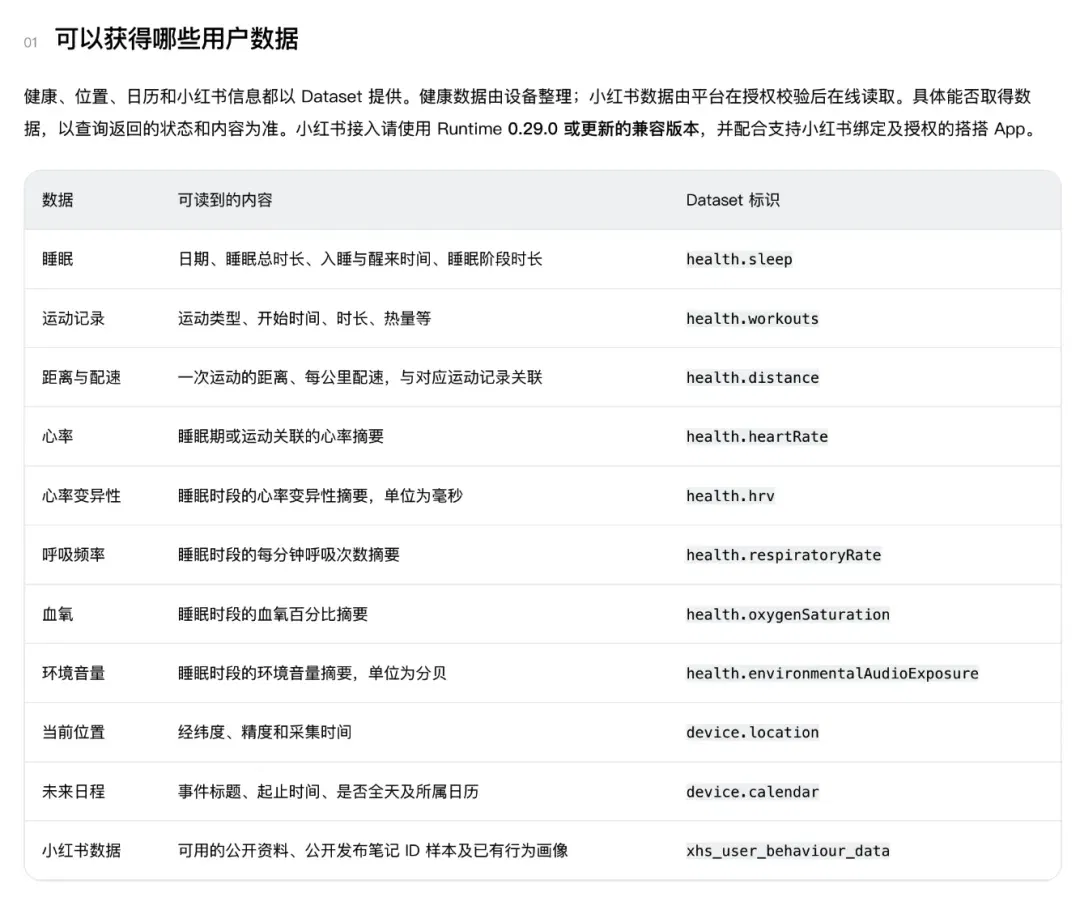
More interesting still is access to user data.
With the user's authorization, a buddy can read calendar information to see which days are free that week, then discuss a suitable day for meal preparation. It can also access Xiaohongshu's user behavioral profiles and draw on clues about a user's interests to offer more relevant suggestions.
The widget feature lets a buddy organize the results of a conversation into a visual artifact.
For a seven-day menu, for example, users see a card in the chat and can open it to view the full daily schedule. If a particular meal is changed in a later conversation, the menu updates accordingly.
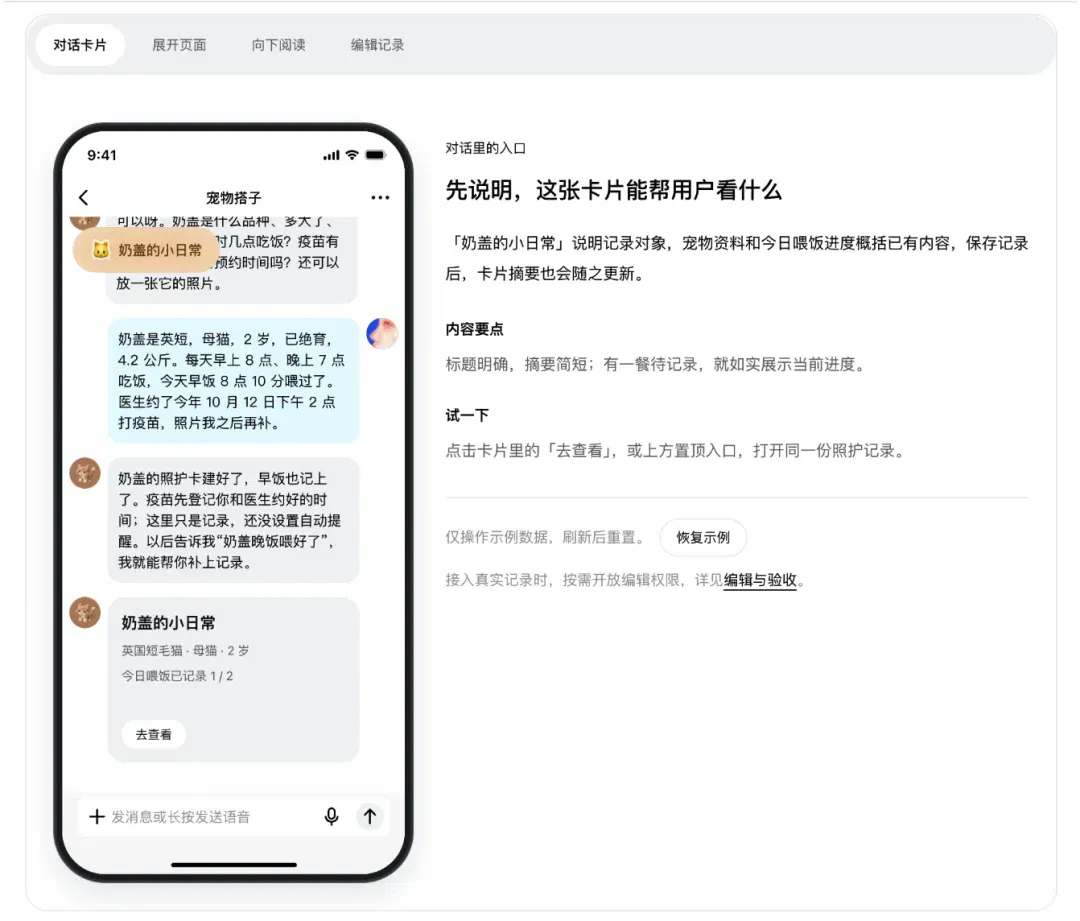
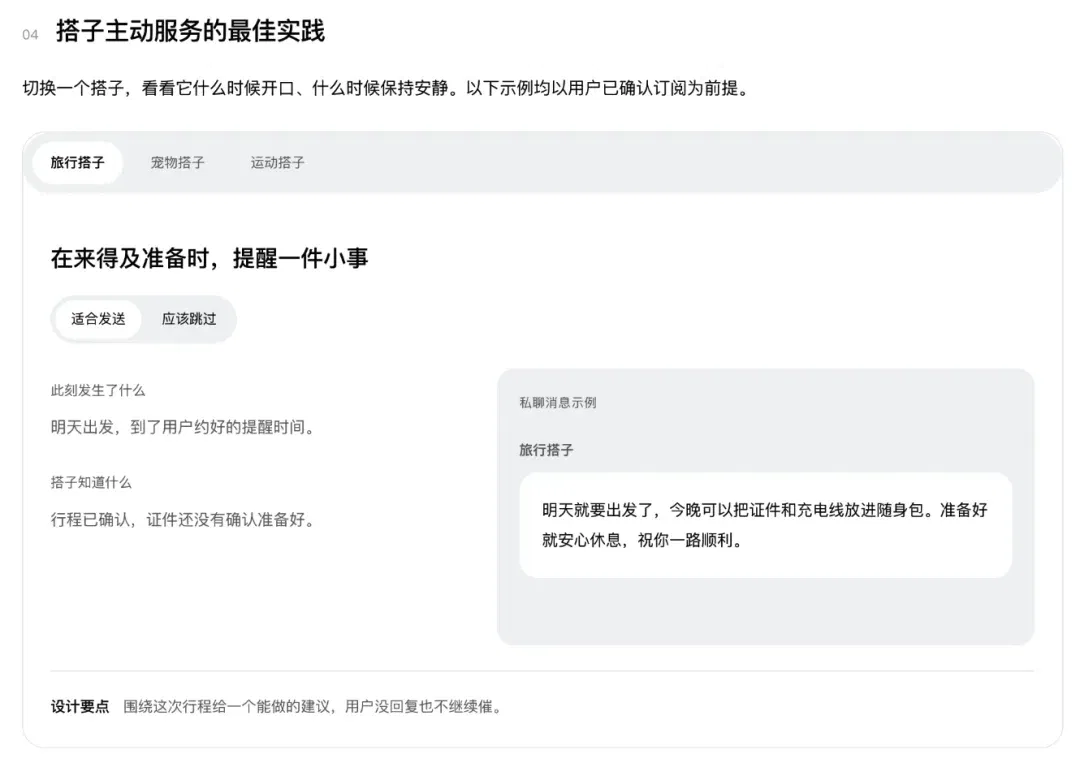
A buddy can even reach out to users proactively.
For a weekly meal review, for instance, the buddy sends a recap and suggestions at the agreed time, drawing on recent chats and menu records. Users must first confirm that they want to subscribe, of course, and if the buddy decides there is nothing worth saying, it quietly skips the update.
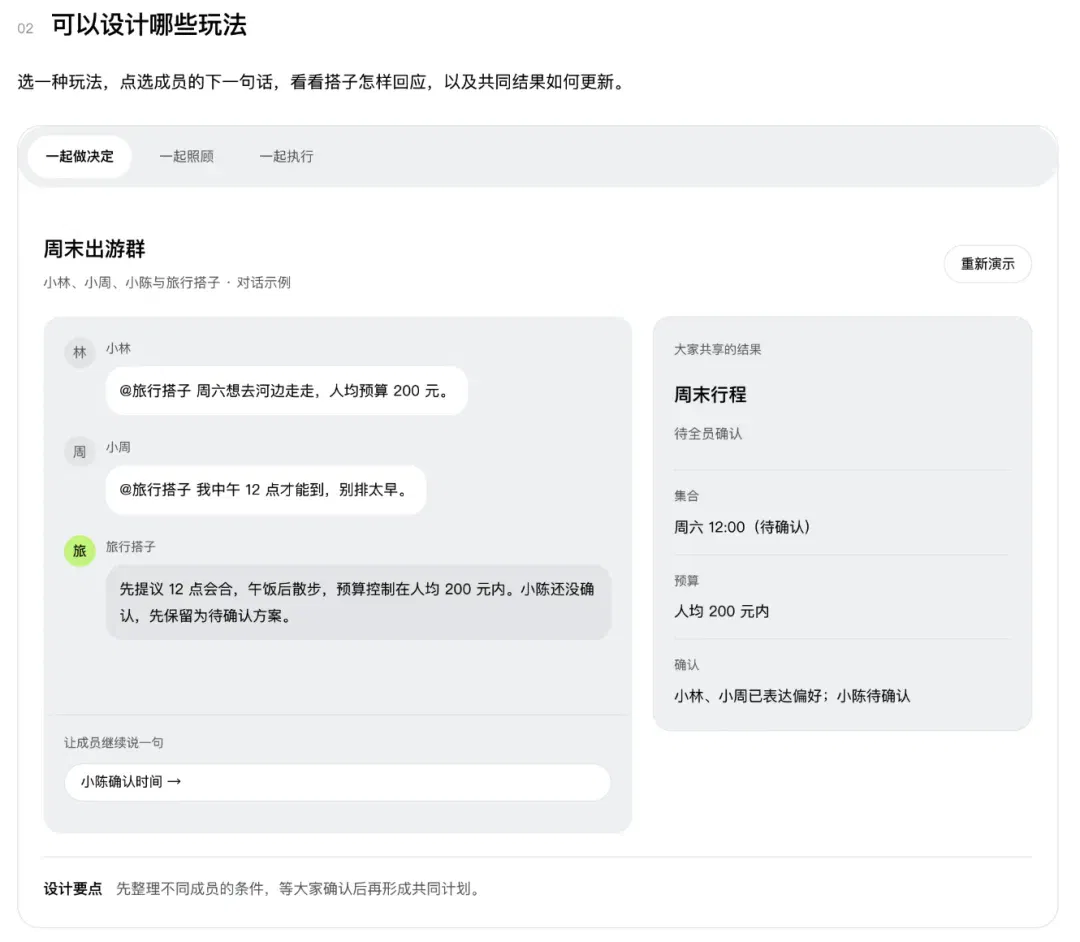
It even supports group chats similar to those in Yuanbao.
Family and friends can join a group chat with the same buddy, each adding their taste preferences. The buddy distinguishes who said what and produces a shared menu plan after everyone has confirmed it.
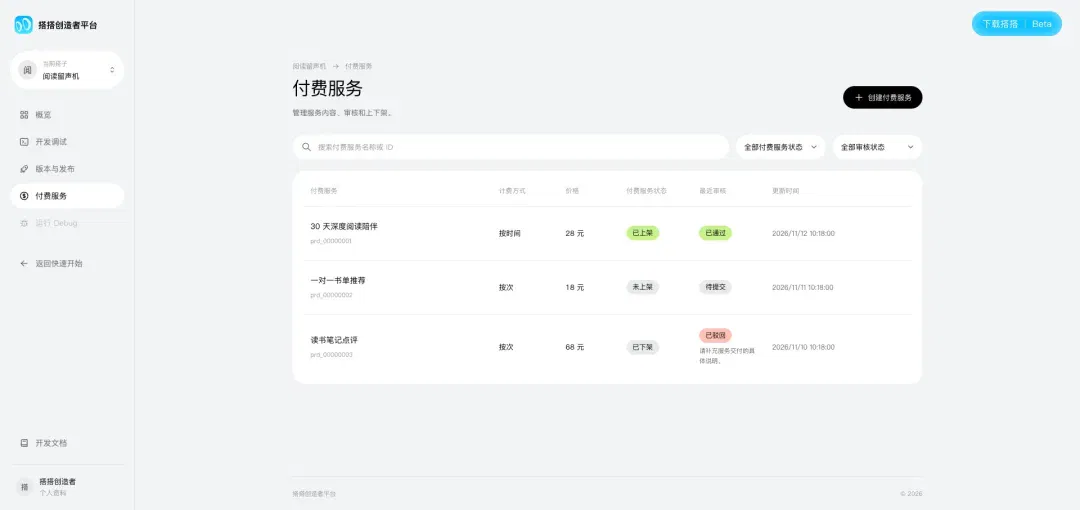
One capability here strikes me as particularly important: paid services.
Makers can turn a buddy's expertise into services charged per use or by time—for example, 'RMB 18 for a customized meal plan.'
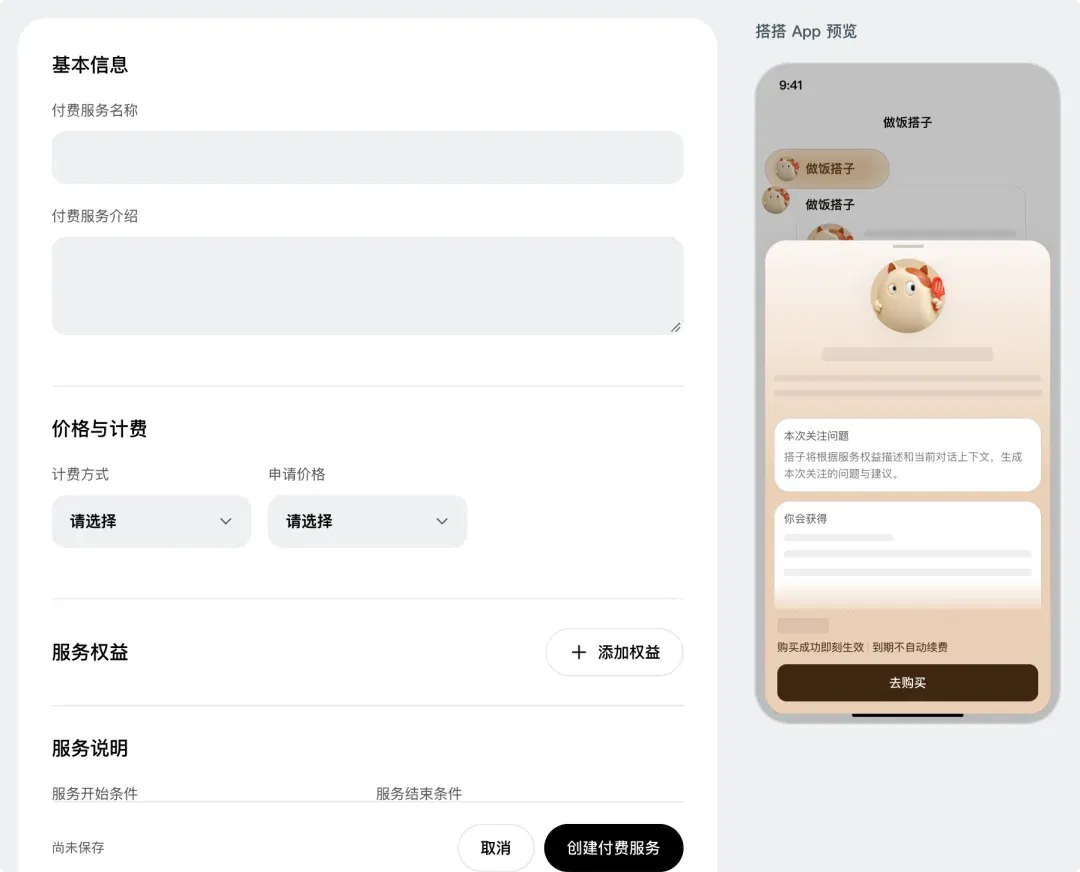
The platform handles presentation, review and service-credential management; makers handle design and delivery.
You can also use your buddy in the app.
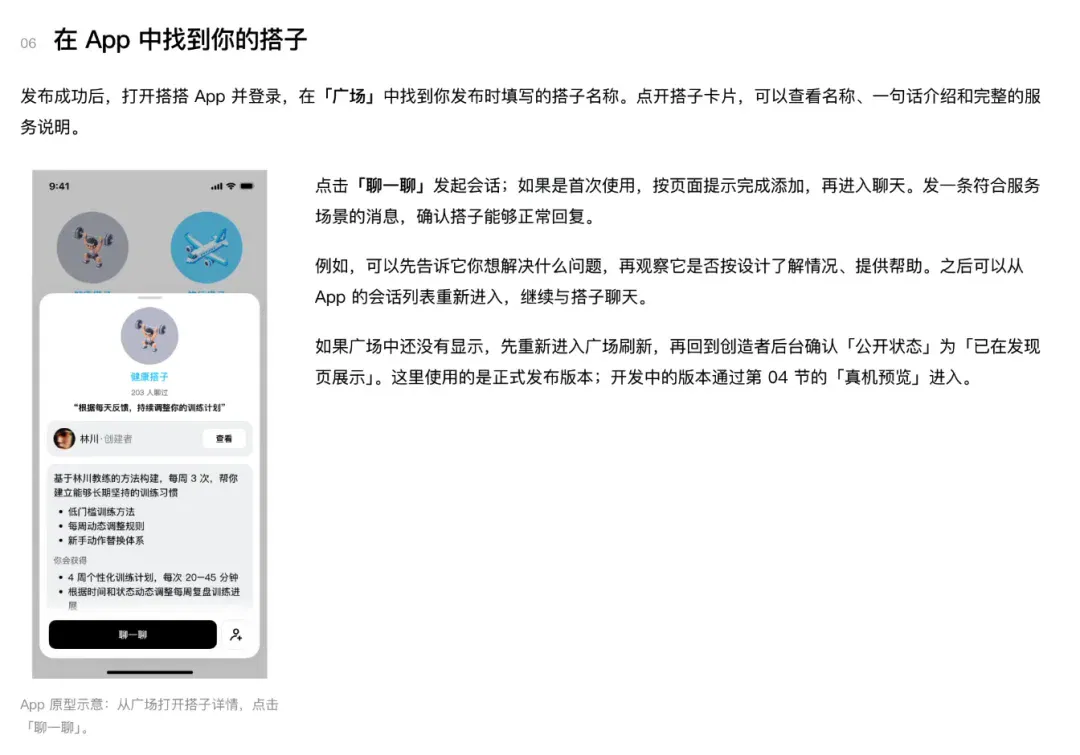
The closed-beta version the author accessed demonstrates a design workflow from an idea through development to paid services. It is still in testing; this does not establish that these features are fully available to all users or that the business model has been validated.
With Diandian already available, why build Dada?
After trying Dada, I found myself considering a question:
Diandian recently underwent a major integration, incorporating Wen Yi Wen to become an in-platform lifestyle search assistant—effectively Xiaohongshu's equivalent of WeChat's Xiaowei in the AI field. Why, then, did Xiaohongshu not build agents into Diandian? Why create a separate Dada?
To make sense of this, we need to examine the two products' underlying logic separately.
Diandian essentially brings together high-quality information from Xiaohongshu's public content.
Ask it, 'What sunscreen should I use for sensitive skin?' and it finds relevant material among the platform's vast collection of posts, then organizes it into a structured answer. Think of it as an AI-powered search engine built on Xiaohongshu's content library. Its knowledge comes from the entire platform, and it serves information retrieval and purchasing decisions.
Dada does something entirely different: it uses AI to package a particular person's life experience and judgment into a service that others can use.
Rather than integrating information at platform level, it offers a deep knowledge base at individual level.
For example, ask Diandian, 'How do I choose food for my cat?' and it will bring together many people's posts to give you a comprehensive answer.
But find a buddy made by someone who has kept cats for ten years, and its advice will reflect that person's specific criteria:
Which protein ratio suits a cat with a particular constitution, which brands caused problems, and how to transition between foods. This granularity and specificity of experience are difficult to achieve by aggregating public information.
By making this personal experience available as Skills, Dada is essentially giving every experienced maker the ability to provide consulting services.
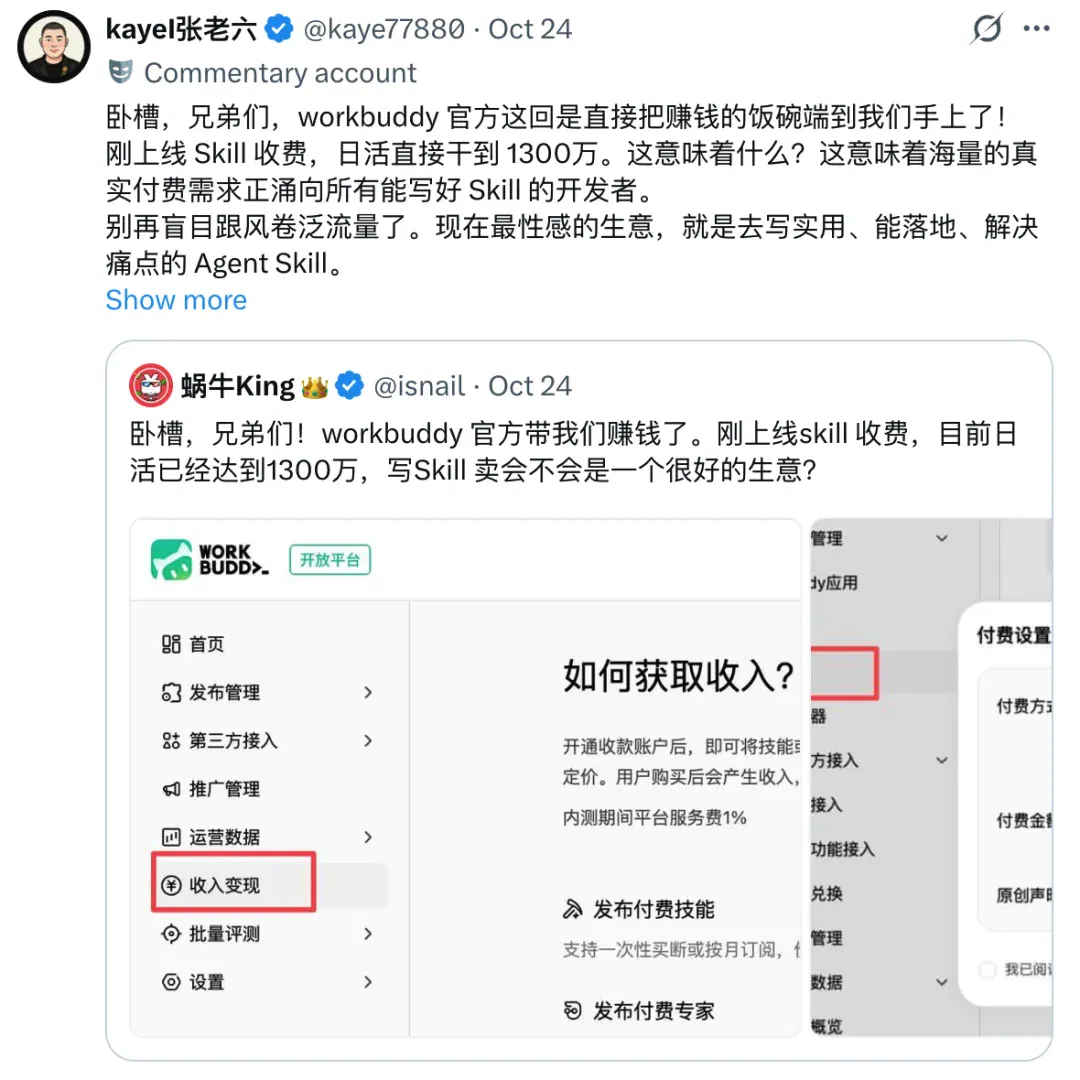
This reminded me of Workbuddy.
Workbuddy has already introduced paid Skills, allowing developers to package and sell their expertise as Skills. Its Skills, however, tend to address real workplace problems such as code review, document generation and data analysis.
Dada addresses different problems, starting with a specific situation in everyday life:
How to travel with children, arrange a 20-square-meter rental apartment, or choose skincare products for oily skin. These situations share a common feature: the answer depends heavily on personal experience, with no standard solution. Advice from the 'right person' is often more useful than searching through ten posts, and may even offer more depth than Diandian.
Diandian and Dada therefore address needs on two different dimensions.
Diandian uses AI to make Xiaohongshu more efficient as an information tool, reducing the time you spend browsing posts and comparing information. Dada uses AI to unlock individual makers' capacity to provide services, allowing one person's experience to help more people at scale.
Diandian and Dada are packaging Xiaohongshu's utility through AI. The main Xiaohongshu platform, meanwhile, continues to provide the community's emotional value: browsing, scrolling, sharing and interacting.
All three point toward the same goal: enabling the enormous amount of life experience accumulated on Xiaohongshu to circulate more efficiently.
A new monetization channel for Xiaohongshu in the AI era
At this point, I began considering a bigger question: what role does Dada play in Xiaohongshu's commercial landscape?
In recent years, Xiaohongshu has explored monetization through shops, shopping curators and AI information services. The original draft's figures for 2025 revenue, advertising share, GMV and conversion rates did not include verifiable statistical sources or definitions. This article does not use them to infer the company's financial performance or transaction efficiency.
This points to an issue: Xiaohongshu's ability to inspire purchases through content has been validated by the market, but it may have been creating value for others all along.
Across a user's full e-commerce purchasing journey, someone who has read posts on Xiaohongshu may still end up ordering from Taobao, JD.com or Pinduoduo. Xiaohongshu earns some advertising revenue, but most of the profit from the transaction remains with other platforms.
Xiaohongshu has tried two ways to change this situation.
One is to expand horizontally into its own e-commerce business.
This led to personal shops, shopping curators' storefronts and a positioning around lifestyle e-commerce. But weaknesses in infrastructure such as supply chains, payments and after-sales support have slowed the development of a complete in-platform transaction loop.
The other is to go deeper vertically, extracting more value from information.
This led to Diandian, which uses AI to improve search and information aggregation so that users can obtain sufficiently detailed decision support within the platform.
Dada has now appeared, and it may represent a third form of monetization: turning the experience of the platform's makers directly into consulting services for which they can charge.
In terms of product design, Dada already has a complete paid-service system built in:
Makers can define the service, price, benefits, and start and end conditions. The platform handles presentation, purchase confirmation and service-credential management. After a user buys a service, the buddy delivers it as agreed and closes the service credential upon completion.
What does that mean? Previously, a blogger sharing outfit advice on Xiaohongshu could monetize it only through advertising, products in her shop, or product promotions.
Now she can package her aesthetic judgment into a buddy. A user pays RMB 18, and the buddy provides a complete outfit plan based on the user's body shape, style and budget. The service is not a one-off post, but AI consultation that supports ongoing conversation and continuous updates.
In other words, Dada is helping ordinary people on Xiaohongshu use AI to offer services to others:
Through a Harness approach, it packages an individual's taste and life experience into a paid API that can be called.
Dada is currently released as a standalone app, much like Diandian's early release strategy. Diandian also began as an independent app, then moved into the main Xiaohongshu platform after working out its approach outside it. It now has an entry point at the top left of the home page.
If Dada's monetization logic proves successful, it will probably follow the same path.
At that point, when users come across an outfit blogger's post on Xiaohongshu, they could do more than like it, save it or visit her shop. They could talk directly with her buddy for personalized outfit suggestions, or even pay for a complete image-consulting service.
A step resembling consultation would thus sit between purchase inspiration and the transaction.
Powered by AI and grounded in real people's experience, this step naturally suits Xiaohongshu's nonstandard purchasing situations that depend heavily on individual judgment.
Of course, Dada is still in closed beta, and its features and positioning continue to change. The foregoing is only a demonstration of its current state, together with our speculation and interpretation.
Everyone is talking about Personal Agents this year and about how AI can manage your life. Most products start with your data: your calendar, emails and health records. They assume that, given enough personal data, AI can help you make better decisions. At its core, this remains a way of thinking about tools and efficiency.
Dada has chosen a somewhat different angle: starting with a sense of a real, living person and grounding it in each individual's specific life. It takes the view that what many life decisions really need is not more data but the experience and judgment of the 'right person.' AI's value lies not in replacing that person, but in allowing their experience to cross time and distance to reach people who need it.
Whether this idea will work remains uncertain. In my view, however, Xiaohongshu has an advantage that others would struggle to replicate: hundreds of millions of real-life experiences have already accumulated on its platform, and behind those experiences stand specific, living people.
What Dada aims to do is use AI to unlock the capabilities of creative people.
If you are interested in Dada, you can also watch for further developments on the Guancha platform.
For content creators and people with particular everyday-life skills, this may be a new opportunity worth watching early.
This article comes from Agent Universe. Authors: Tegong Xiaoshi and Tegong Xiaotian.
After reading
Join the AINRK community
Read how to join the community and connect with people working in AI.
Related articles
Continue reading related topics and articles in this category.
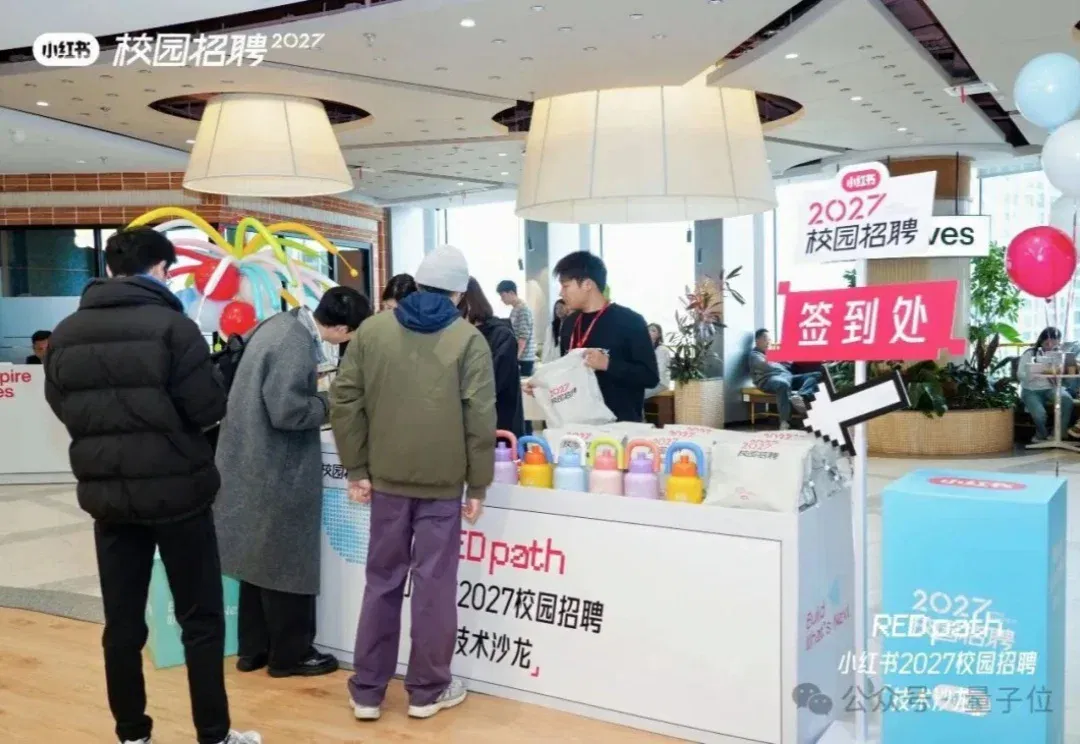
Inside Xiaohongshu’s graduate tech salon: AI applications, product engineering and first projects (opens in a new tab)
QbitAI visits Xiaohongshu’s graduate recruitment event, covering AI tools, engineering judgment and career growth through candidate and team discussions. On-site examples illustrate changes in work; resources and roles depend on actual recruitment terms.
Xiaohongshu reportedly tests Dada app with experience-based AI roles and group chats (opens in a new tab)
Dujia tries the private-test product’s role creation, text-and-image conversations, group chats and account authorization, exploring how creators’ experience can become interactive AI companions.
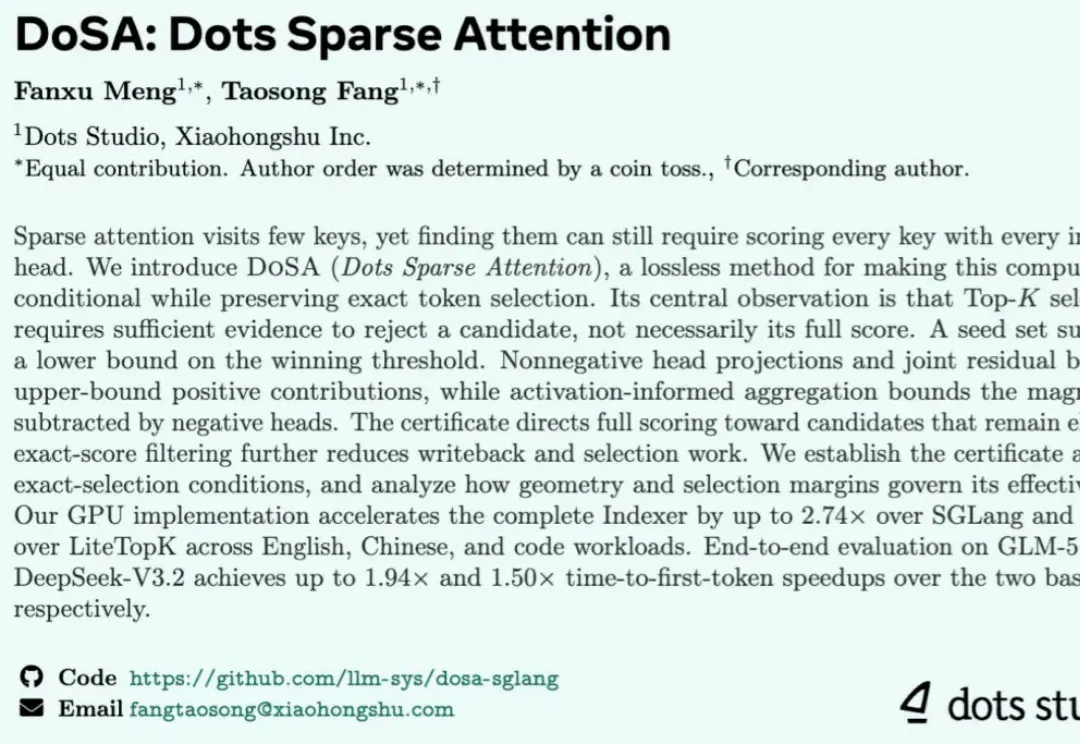
提速不降智,小红书DoSA将首token延迟减半 (opens in a new tab)
稀疏注意力减少了主注意力的计算量,但负责筛选 token 的索引器仍可能成为长上下文推理的瓶颈。小红书 Dots 团队自研的 DoSA 利用分数上下界,在保持原始 Top-K 选择结果的前提下加速索引器,并在测试中提前过滤了约 97% 的候选。
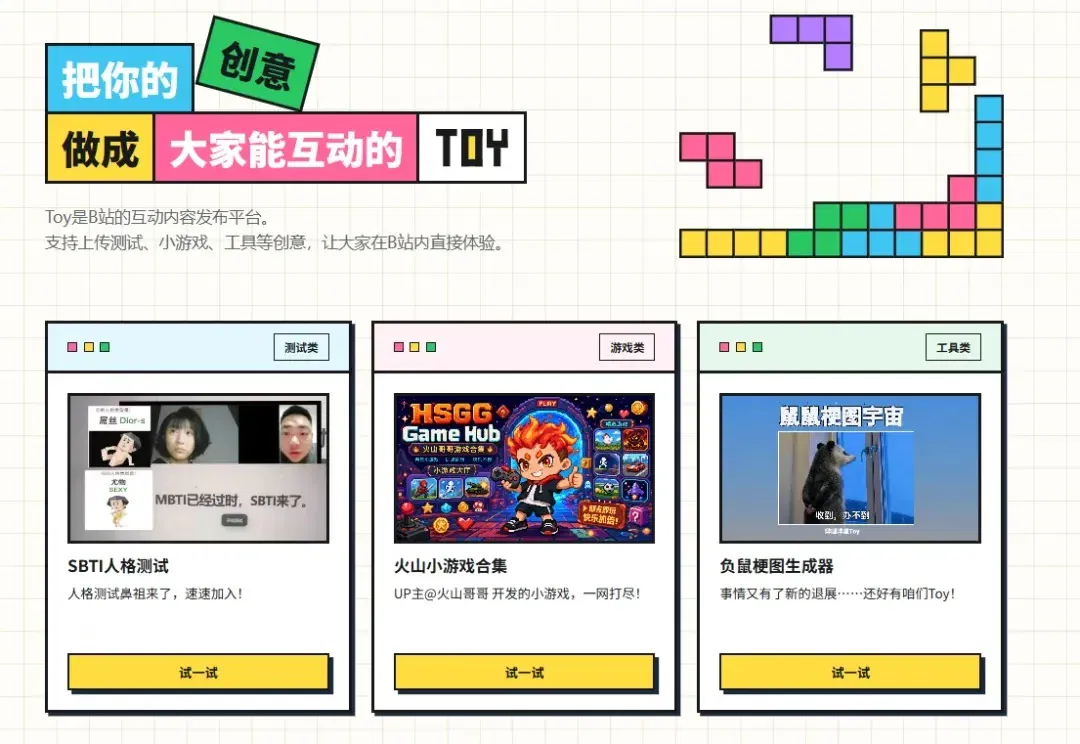
小红书押注AI小游戏,跟微信抖音抢地盘 (opens in a new tab)
刚刚过去不久的暑期档,游戏行业发生了不少大事儿。
小红书开价96万年薪抢AI人才 (opens in a new tab)
小红书正在把AI从后台技术推向前台产品,它选择的第一个战场,是导购。