Isomorphic Labs announces $5B Series C for drug design and clinical preparation
Isomorphic Labs says its November 17 Series C was co-led by Greenoaks and Sequoia Capital. Funds will support IsoDDE, drug candidates and R&D infrastructure. Reported positive results are largely preclinical; human safety and efficacy still need validation.
Total funding of 51.3 billion yuan.
Zhidx reported on November 17 that Isomorphic Labs, the British AI drug-development company founded by Nobel laureate and Google DeepMind co-founder Demis Hassabis, had just announced $5 billion in Series C funding, approximately 33.3 billion yuan, in an oversubscribed round.
Based on an incomplete tally of public data, this round surpassed the company's previous single-round fundraising record and may have set a new global record for a single funding round in AI drug development.
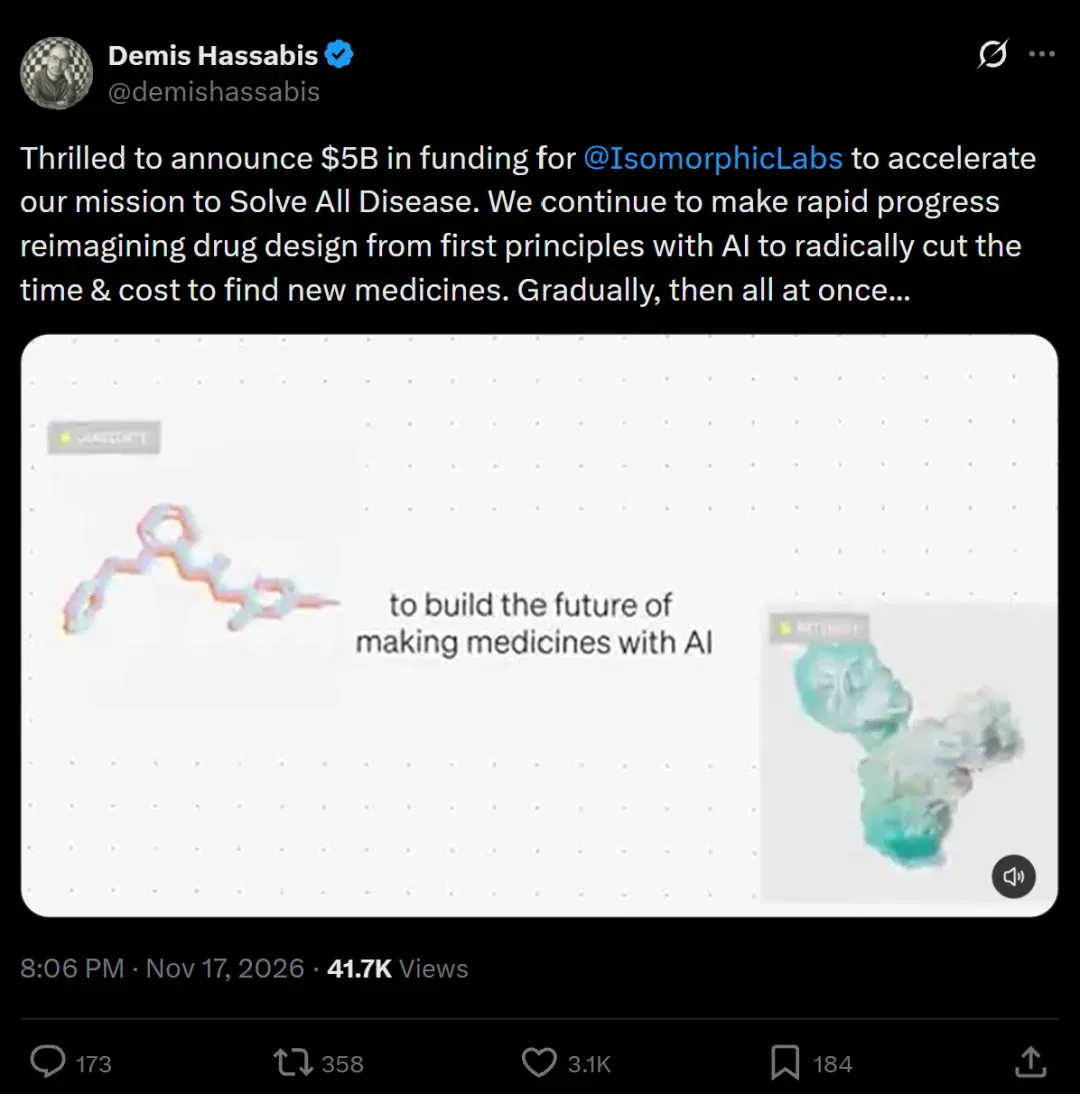
▲Hassabis announces Isomorphic Labs' Series C funding. Image: X.
In March 2025, Isomorphic Labs announced $600 million, approximately 4 billion yuan, in its first external funding round. This May, it raised another $2.1 billion, approximately 14 billion yuan in a Series B, then a global single-round fundraising record for the AI pharmaceutical industry. Including the latest Series C, Isomorphic Labs' publicly disclosed funding totals $7.7 billion, approximately 51.3 billion yuan.
The round was co-led by Greenoaks and Sequoia Capital, with participation from a16z and several new investors, while Alphabet continued to invest substantially. All existing investors also participated, including Thrive Capital, MGX, GV, CapitalG, Temasek and the UK's Sovereign AI Fund.
Founded in 2021 and headquartered in London, Isomorphic Labs focuses on using AI to design and develop new medicines. It plans to use the new capital to upgrade its proprietary drug-design engine, IsoDDE, expand its internal and partnered drug-candidate pipelines, and build global AI-driven bioengineering infrastructure. The company says its internal oncology and immunology programs, as well as partnered programs, have produced positive preclinical results and are being prepared for clinical trials.
01.
Founded by a Google DeepMind co-founder
Focused on AI drug design
Incubated by Google DeepMind, Isomorphic Labs is an AI drug-development company within Google's parent Alphabet, operating and raising external funding independently. It is led by founder and CEO Demis Hassabis and president Max Jaderberg.
Hassabis is a co-founder and chairman of Google DeepMind and Alphabet's chief scientist. He received the 2024 Nobel Prize in Chemistry for AlphaFold's work on protein-structure prediction.
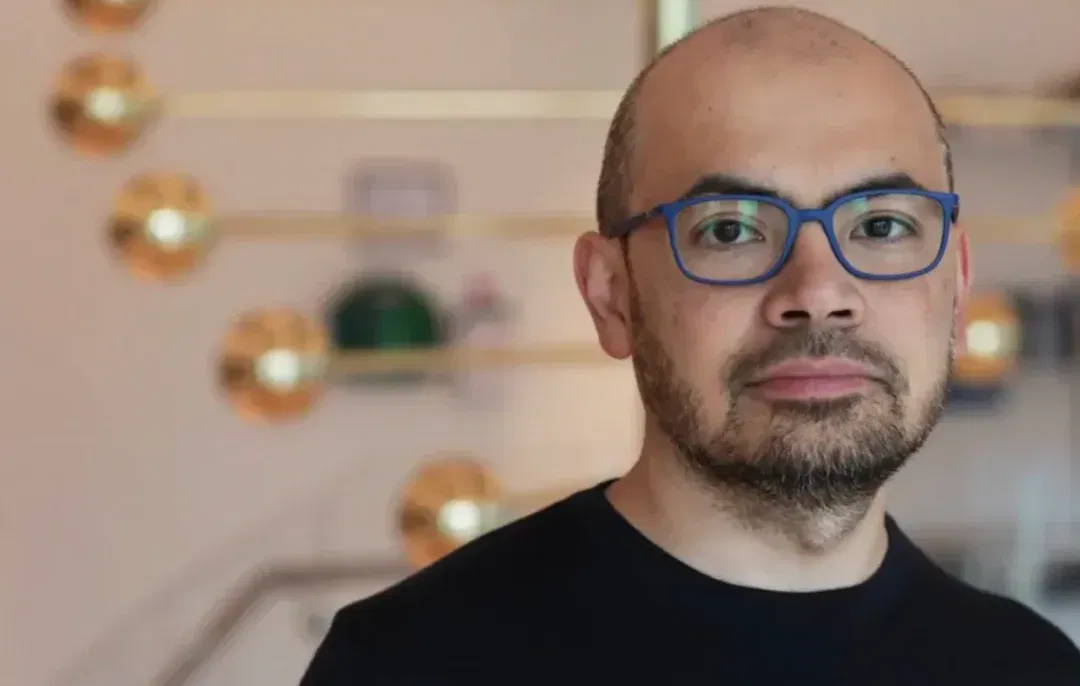
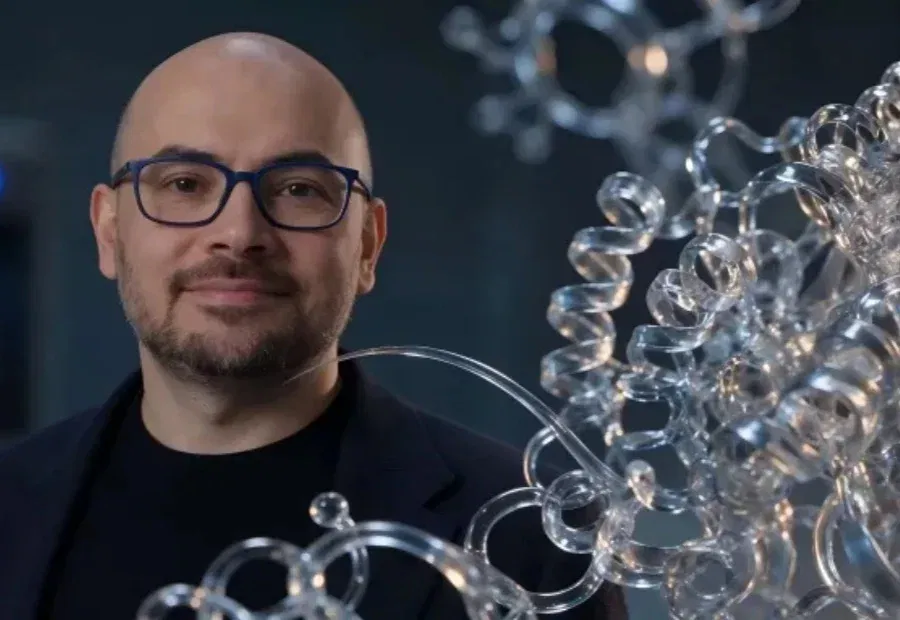
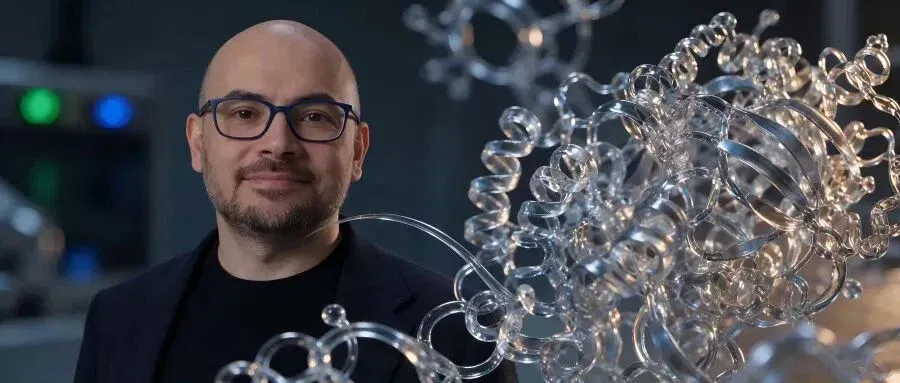
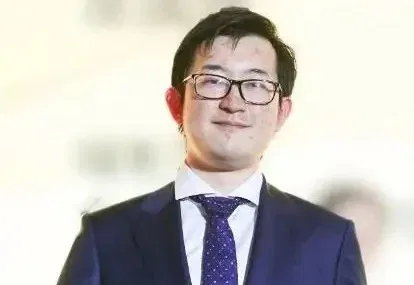
▲Isomorphic Labs founder and CEO Demis Hassabis.
Jaderberg holds a PhD from the University of Oxford and previously led DeepMind's open-ended learning research team. A founding team member of Isomorphic Labs, he served as chief AI officer, leading development of its drug-design engine and models such as AlphaFold 3, before becoming president in January 2026.
Hassabis said that when Isomorphic Labs was founded, the team believed biology could be understood and modeled at its most fundamental molecular level, and that AI could dramatically accelerate the process.
He also said Isomorphic Labs' drug-design engine was generating molecules with greater precision and speed. The new funding would help the team move faster in building foundational biology models, deepening understanding of systemic disease mechanisms and advancing its first therapeutic programs toward clinical trials.
02.
An AI drug-design engine spanning multiple therapeutic areas
Advancing different types of drug development
Isomorphic Labs' core technology is its proprietary drug-design engine, IsoDDE. The engine integrates a suite of foundational AI simulation models spanning multiple therapeutic areas and drug modalities.
IsoDDE can explore vast chemical spaces to help R&D teams design, optimize and select molecules with desirable drug-like properties. Isomorphic Labs says these simulation models are bringing predictions closer to experimental accuracy, providing additional capabilities for innovative drug development.
Beyond simulation models, Isomorphic Labs has developed proprietary agents to explore and reason about complex biological systems. The company says its combined models and agents have consistently advanced pipelines across multiple drug modalities. Its internal oncology and immunology programs and partnered programs have produced positive preclinical results, laying the groundwork for entering clinical development.
Isomorphic Labs president Jaderberg says the team makes reproducible scientific progress with its models every week and translates it into improved molecular properties, with the potential to develop those molecules into new drugs. Its interdisciplinary team brings together machine-learning researchers and drug-development specialists to tackle complex biological problems that have remained unresolved for decades.
Following the round, Isomorphic Labs will continue refining IsoDDE and use more advanced models to explore new areas of biology.
The company also plans to build a partner ecosystem and deepen understanding of disease mechanisms to support the development of new classes of therapeutics. Meanwhile, it will build global bioengineering infrastructure and scalable, AI-centered translational-research and clinical-development systems to support drug candidates entering clinical trials.
03.
After the major funding round:
Clinical validation becomes crucial
The intended uses of this funding extend beyond model research into drug pipelines, translational research and clinical-development infrastructure. For Isomorphic Labs, a major task in the next stage is turning computational prediction and molecular-design capabilities into drug candidates ready to enter the clinic.
Most of Isomorphic Labs' main results remain at the preclinical stage. As its first programs move toward clinical trials, the safety, efficacy and development progress of its drug candidates will become important evidence for assessing AI drug-design capabilities.
Sources: Isomorphic Labs, X.
This article was originally published by Zhidx. Author: Yang Jingli.
Related topics
After reading
Join the AINRK community
Read how to join the community and connect with people working in AI.
Related articles
Continue reading related topics and articles in this category.
据报 Isomorphic Labs 洽谈约 50 亿美元融资 (opens in a new tab)
彭博社援引知情人士称,Alphabet 旗下 AI 药物研发公司讨论以约 500 亿美元估值募资。交易条款仍可能变化,相关药物项目处于临床前阶段。
CataX explores Clinical-of-One, pairing a clinical lead with specialist agents (opens in a new tab)
Synced examines CataX's proposed clinical-development organization, with one lead coordinating specialist agents, external experts and quality review. The Mithril example remains preclinical; organizational efficiency is distinct from human efficacy and safety.
INFevo announces over RMB 100M in pre-A funding for cell models and research platforms (opens in a new tab)
INFevo discloses a pre-A round exceeding RMB 100 million for model R&D, research products and team development. The report describes OCOO-T's experimental metrics and platform plans; results apply to the stated datasets and tasks, not clinical efficacy.
优时比与 Cradle 合作,将 AI 蛋白质工程用于抗体研发 (opens in a new tab)
优时比将在部分药物发现项目中使用 Cradle 的 AI 蛋白质工程平台,覆盖候选分子发现、先导优化和临床前开发准备。双方公告未披露合作金额。
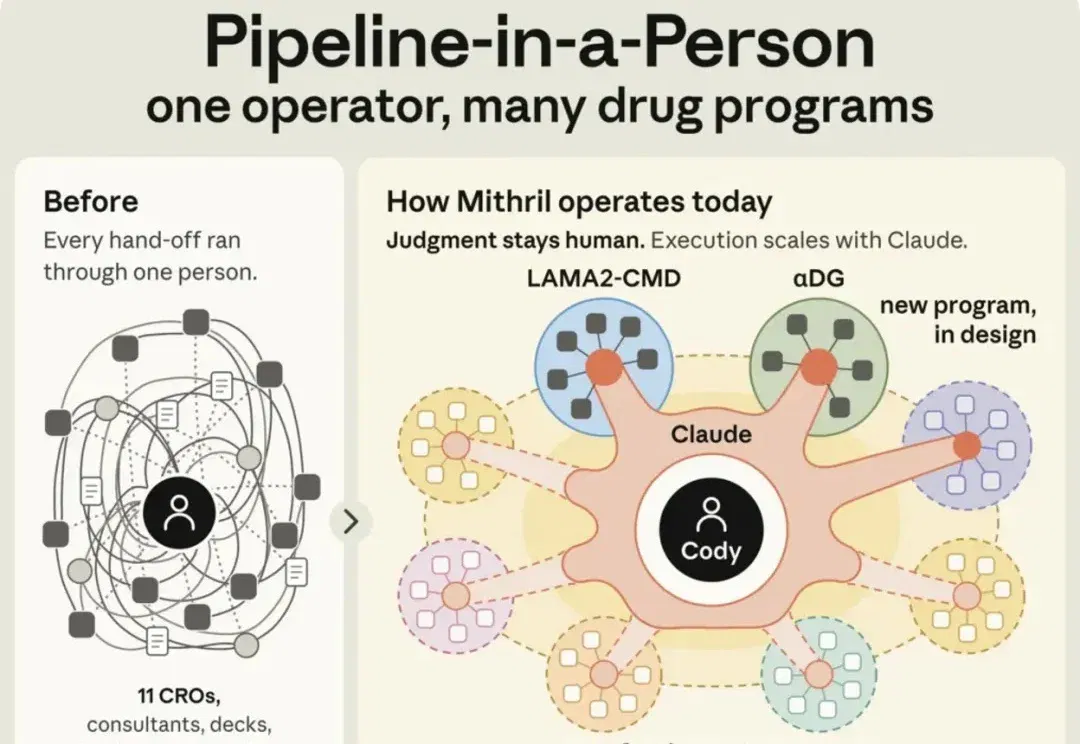
Anthropic 为什么买下一家「一人公司」 (opens in a new tab)
文章介绍 Anthropic 收购 Mithril Medicine 的研究背景:创始人借助 Claude 协调外部实验室,推进两项罕见病项目。已有结果仍处于早期动物实验阶段,尚不能证明对人体有效;案例也暴露出数据审核和跨机构沟通中需要人工复核的风险。