INFevo announces over RMB 100M in pre-A funding for cell models and research platforms
INFevo discloses a pre-A round exceeding RMB 100 million for model R&D, research products and team development. The report describes OCOO-T's experimental metrics and platform plans; results apply to the stated datasets and tasks, not clinical efficacy.
Editorial correction (November 17, 2026): The closing funding figure has been changed to over 100 million yuan, consistent with the body. Model metrics apply only to the described experimental tasks and do not establish clinical efficacy.
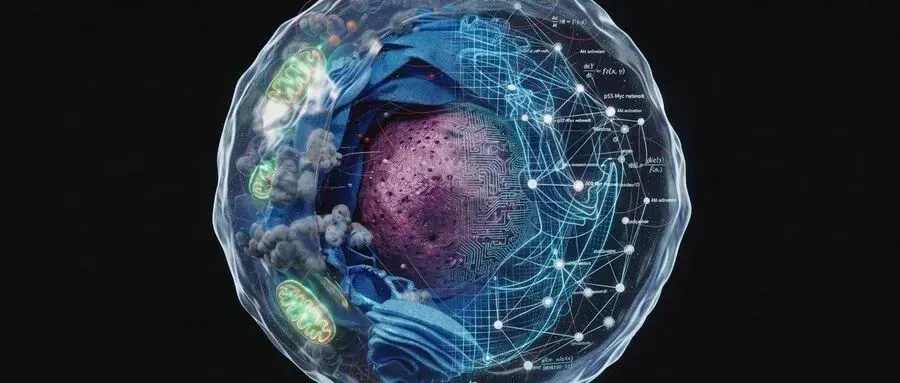
Focused on AI virtual-cell models and automated experimental technology.
Zhidx reported on November 16 that XtalPi-incubated Beijing AI drug-development startup INFevo had announced a pre-A round exceeding 100 million yuan. According to INFevo, the round set a Chinese virtual-cell company's single-round fundraising record.
This is INFevo's second funding round within five months. New investors including Xinglian Capital and Prosperity7 Ventures jointly invested, with follow-on funding from angel shareholders Shunwei Capital, HongShan and Songhe Capital.
The company plans to use the funds mainly for foundation-model R&D, expansion of high-throughput automated experimental systems and industry-ecosystem development. Its R&D platform addresses target discovery, drug screening and clinical-protocol optimization.
Founded in 2025, INFevo primarily researches AI virtual-cell models and automated experimental technologies. Combining the two, it helps researchers explore disease mechanisms, identify drug targets and screen candidate molecules.
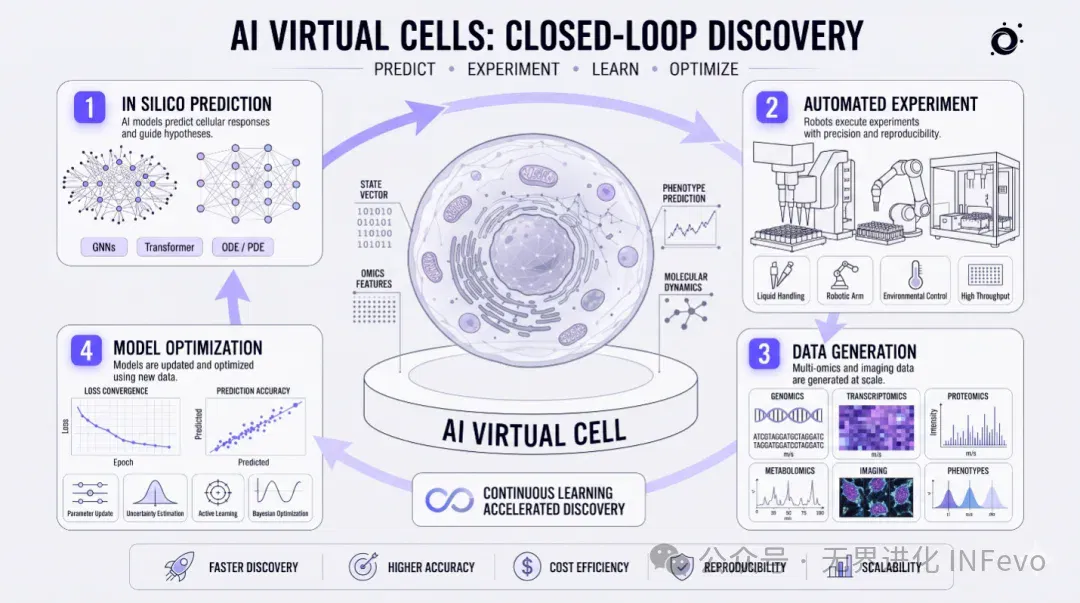
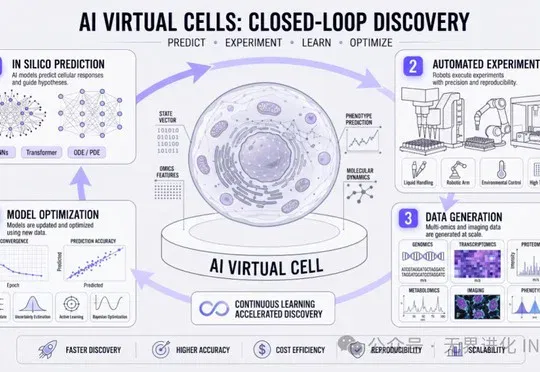
▲INFevo's AI virtual-cell development process. Image: INFevo.
Both co-founders worked at XtalPi before starting the company. Co-founder Dr. Lai Lipeng studied physics at the University of Chicago and also serves as XtalPi co-founder and chief innovation officer, overseeing its AI R&D center. The other co-founder, Zhao Yalong, previously led AI algorithms at XtalPi's innovation center.
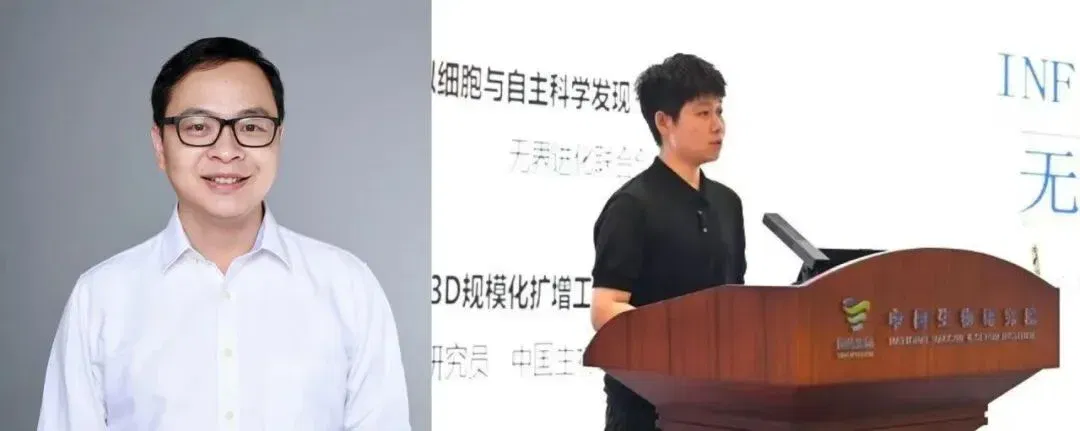
▲INFevo co-founders Lai Lipeng, left, and Zhao Yalong, right. Images: INFevo and Zhongsheng Research Institute.
INFevo previously completed an angel round of tens of millions of yuan in June 2026, with Shunwei Capital, HongShan and Songhe Capital participating.
XtalPi says its R&D experience, industry ecosystem and global partnership network supported INFevo's technology development. It hopes to combine its molecular-design and automated-synthesis capabilities with INFevo's cell-response prediction into a workflow of "molecule generation–cell-response prediction–wet-lab validation." XtalPi says INFevo's predictive models have targeted real drug-pipeline needs from the outset.
INFevo's OCOO models underpin its virtual-cell technology. OCOO-T uses transcriptomic data to predict gene-expression changes caused by drugs, genetic interventions, cytokines and other perturbations. The paper was first submitted to arXiv on June 11 this year.
In the paper's evaluations, OCOO-T achieved PDCorr prediction correlation of 0.952 on the Tahoe100M drug-perturbation benchmark, PDS_cos perturbation discrimination of 0.833 on the Replogle genetic-perturbation benchmark and DEOver differentially expressed gene overlap of 0.760 on the PBMC cytokine-perturbation benchmark. Among comparison methods in the paper, including STATE, PerturbDiff and CellFlow, OCOO-T scored highest on all three metrics.
In automated experimentation, INFevo has built a cell-experiment platform covering processes including cell culture, intervention treatments, measurement of results and quality control. According to disclosures by XtalPi, the team is advancing the automation of cell culture, single-cell processing and sequencing workflows.
This July, XtalPi disclosed that INFevo had introduced The Popper Project, or TPP, an engine for generating, challenging and refining testable scientific hypotheses. It follows a Recursive Scientific Discovery, or RSD, approach, improving subsequent research by preserving and reusing findings, analytical methods and failed experience. The company distinguishes RSD from recursive self-improvement, RSI: the former extends ongoing improvement across the scientific-discovery process, while the latter focuses only on AI systems' own capabilities.
This September, INFevo opened a private beta of Karl Workbench for biological research. Part of TPP, it lets researchers review analyses, continue existing tasks and retest hypotheses. According to INFevo, in an October rerun of the SciAgentArena scientific-agent benchmark, Karl Workbench with a DeepSeek foundation model achieved the highest overall scores in both single-cell and spatial omics, reaching state-of-the-art performance within that evaluation's scope.
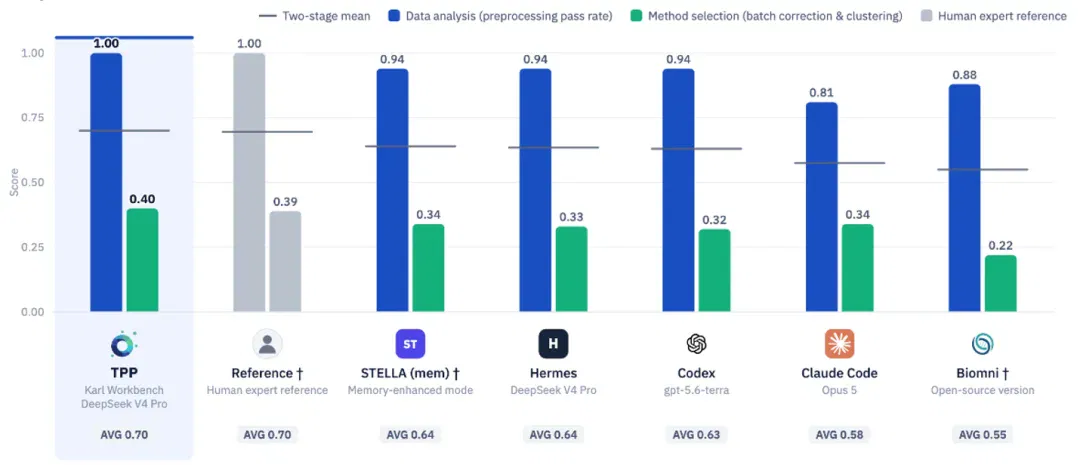
▲Karl Workbench ranks first overall in both single-cell and spatial omics. Image: INFevo.
INFevo has participated in building the Beijing Key Laboratory of Hepatobiliary and Pancreatic Tumor Organoid Culture and Intelligent Diagnosis and Treatment, led by Peking University First Hospital, with a launch meeting held in August. Also in August, INFevo and Angpu Biotechnology formed a strategic partnership to combine resources for an innovative genetic-disease R&D platform, exploring drug development based on human data and virtual computation in place of traditional animal experiments.
Conclusion: A Chinese startup announces over 100 million yuan in funding
Can virtual cells reduce drug-development detours?
Virtual cells are drawing joint investment from major technology companies and biological-research institutions. This October, Google DeepMind, Isomorphic Labs and Meta pledged a combined $300 million, approximately 2.014 billion yuan, to Biohub's virtual-biology initiative, supporting technology and multimodal-data development.
Chinese investors are also backing validation of virtual-cell applications. In August, Shendu Xibao, led by Tsinghua PhD Chen Xindong, raised nearly 100 million yuan in seed funding. In October, Yuanshi Technology, founded by Peking University alumni Wu Jiaqi and Dong Mingze, disclosed consecutive angel and angel-plus rounds totaling nearly 100 million yuan.
These investments correspond to specific needs in drug R&D: researchers need to select directions worth prioritizing for validation from a large number of candidate targets and molecules, while predictive models need a continuous supply of high-quality experimental data to test and improve their predictions. INFevo's ability to attract investment benefits both from its model-training results and automated experimental system, and from the industry resources accumulated by XtalPi. After the financing, INFevo needs to continue demonstrating that this system can help researchers reduce unproductive experiments and improve screening efficiency.
Sources: INFevo, XtalPi.
This article was originally published by the WeChat account Zhidx. Author: Zhidx.
Related topics
After reading
Join the AINRK community
Read how to join the community and connect with people working in AI.
Related articles
Continue reading related topics and articles in this category.
Isomorphic Labs announces $5B Series C for drug design and clinical preparation (opens in a new tab)
Isomorphic Labs says its November 17 Series C was co-led by Greenoaks and Sequoia Capital. Funds will support IsoDDE, drug candidates and R&D infrastructure. Reported positive results are largely preclinical; human safety and efficacy still need validation.
CataX explores Clinical-of-One, pairing a clinical lead with specialist agents (opens in a new tab)
Synced examines CataX's proposed clinical-development organization, with one lead coordinating specialist agents, external experts and quality review. The Mithril example remains preclinical; organizational efficiency is distinct from human efficacy and safety.

据报 Isomorphic Labs 洽谈约 50 亿美元融资 (opens in a new tab)
彭博社援引知情人士称,Alphabet 旗下 AI 药物研发公司讨论以约 500 亿美元估值募资。交易条款仍可能变化,相关药物项目处于临床前阶段。
优时比与 Cradle 合作,将 AI 蛋白质工程用于抗体研发 (opens in a new tab)
优时比将在部分药物发现项目中使用 Cradle 的 AI 蛋白质工程平台,覆盖候选分子发现、先导优化和临床前开发准备。双方公告未披露合作金额。
Anthropic 为什么买下一家「一人公司」 (opens in a new tab)
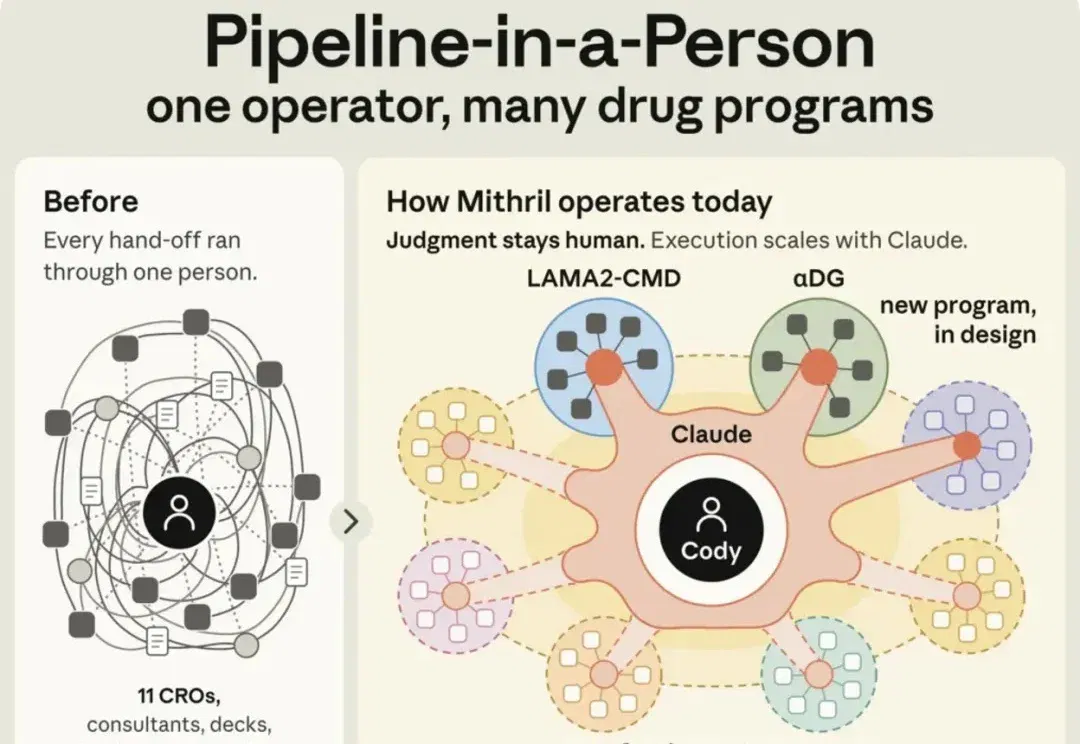
文章介绍 Anthropic 收购 Mithril Medicine 的研究背景:创始人借助 Claude 协调外部实验室,推进两项罕见病项目。已有结果仍处于早期动物实验阶段,尚不能证明对人体有效;案例也暴露出数据审核和跨机构沟通中需要人工复核的风险。