CataX explores Clinical-of-One, pairing a clinical lead with specialist agents

Synced examines CataX's proposed clinical-development organization, with one lead coordinating specialist agents, external experts and quality review. The Mithril example remains preclinical; organizational efficiency is distinct from human efficacy and safety.
Editorial correction (November 19, 2026): The stock of preclinical programs is distinguished from annual additions and cannot be used directly to infer waiting times. Plans for a clinical organization do not constitute validation of efficacy in humans.
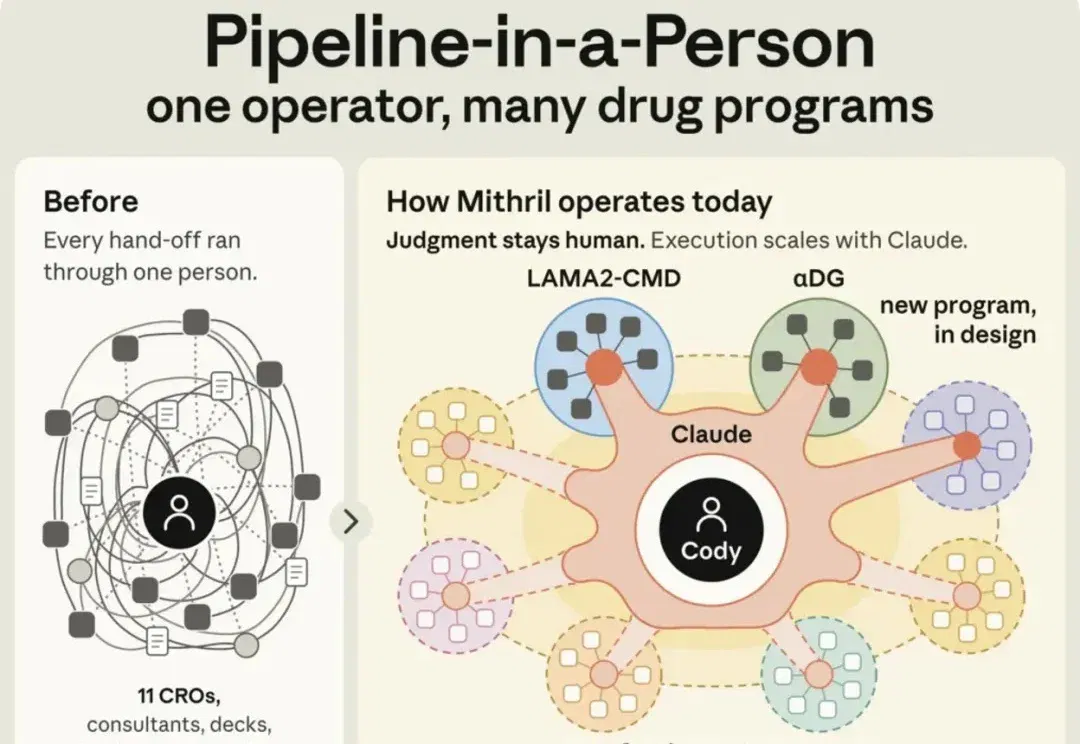
In late October, Anthropic disclosed an unusual acquisition: Mithril Medicine, a pharmaceutical company with only one full-time employee. Its founder used Claude to handle contracts, logistics and experimental coordination with 11 external laboratories. In less than 18 months, he advanced a candidate therapy for a rare muscular dystrophy from an idea to positive results in mice, calling the model 'Pipeline-in-a-Person.'
But that story stops at mice. According to Anthropic, even if the data continue to hold up, human trials might not begin before the end of 2028. This is not an isolated case. In recent years, AI has accelerated target discovery and molecule generation, bringing many drug candidates to the threshold of clinical trials, only for them to queue at the same gate. The journey from 'effective in mice' to 'answers in humans' is the most expensive and slowest part of drug development—and the hardest to accelerate with a single smarter model.
Previously operating in stealth, CataX AI is betting on this bottleneck. Founder and CEO Wang Zilong demonstrated strong interdisciplinary abilities early: a first prize in the national biology competition in his first year of high school qualified him for recommended university admission. Across high school, he won four first prizes in biology, physics and informatics competitions, before entering Fudan University's eight-year doctoral program in clinical medicine through recommended admission. After graduating, he led a prospective multicenter study covering 155 centers nationwide and more than 47,000 participants, and obtained some of China's earliest National Medical Products Administration (NMPA) Class III registrations for medical AI devices. He later became a senior researcher at Microsoft Research Asia (MSRA). An understanding of medicine and models, combined with direct experience of demanding regulatory registration, is a rare combination—and one in especially short supply in clinical development.

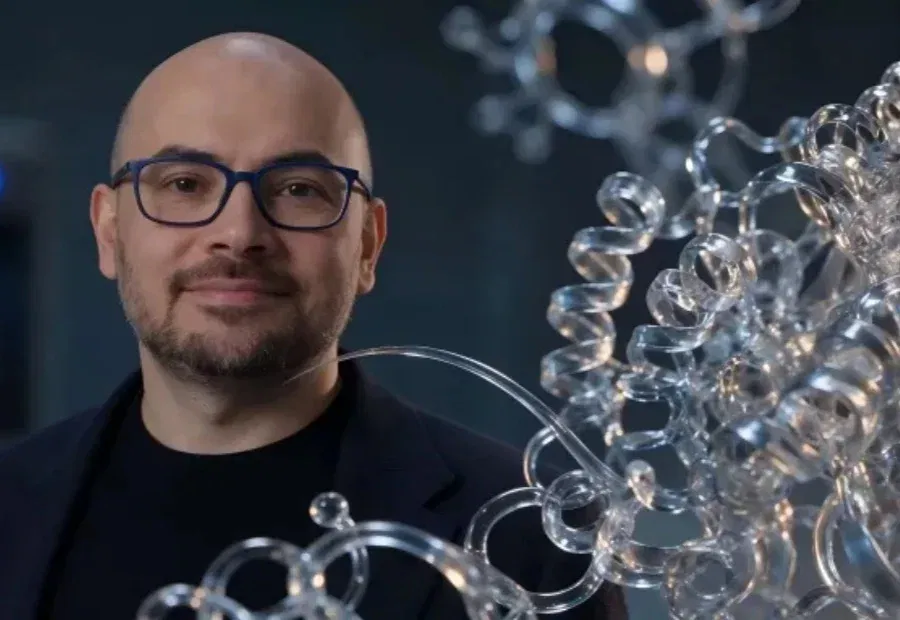
Wang Zilong. Image: CataX AI's official website.
Jointly incubated by its founding team and Qiming Venture Partners, this agent-native biotech takes the view that the molecular end of AI drug discovery is already crowded and the real bottleneck lies in clinical development. Its answer has three layers: a new organizational approach, Clinical-of-One, in which a full-stack clinical lead heads human clinical programs with specialist agents; Recursive Organization Improvement, turning experience from each project into capability for the next; and, ultimately, an agent-led clinical-development organization known as Virtual Pharma.
1. Molecules are queuing, but the gate has not widened
In recent years, the AI drug-discovery narrative has focused on molecule-generation speed, with tangible results: a generative-AI-discovered TNIK inhibitor had randomized Phase 2a results published in 2025, and antibodies designed from scratch using RFdiffusion have received structural confirmation.
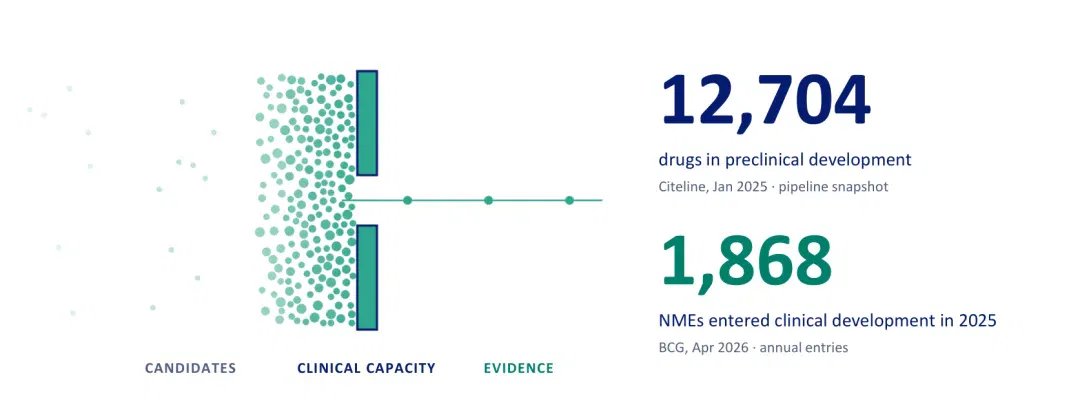
The original draft cited Citeline's stock of 12,704 drugs in preclinical development and a figure of 1,868 new molecular entities entering clinical development over a full year from DXY and BCG. These represent stock and annual flow measured on different bases; dividing them cannot directly establish candidate-drug waiting times or conversion rates. Chen Kan's suggestion that the stock might take ten years to work through is his judgment, not a conclusion directly established by those figures.
The performance of AI molecules after entering humans is even more revealing. An analysis published by BCG researchers in Drug Discovery Today found success rates of 80%–90% in early safety trials, falling back to the historical average of roughly 40% at the proof-of-concept (PoC) stage. Algorithms excel at optimizing molecules' physicochemical properties. From preparation of an investigational new drug application to early PoC, however, the core work is translational medicine and clinical strategy: detecting efficacy signals in humans using the right dose and endpoints in the right patients. Developing a new drug costs about $2.6 billion on average, with clinical stages accounting for roughly 70% of direct R&D expenditure. As more molecules move toward clinical development, the next efficiency advance must happen here.
2. Much of clinical development's slowness is organizational
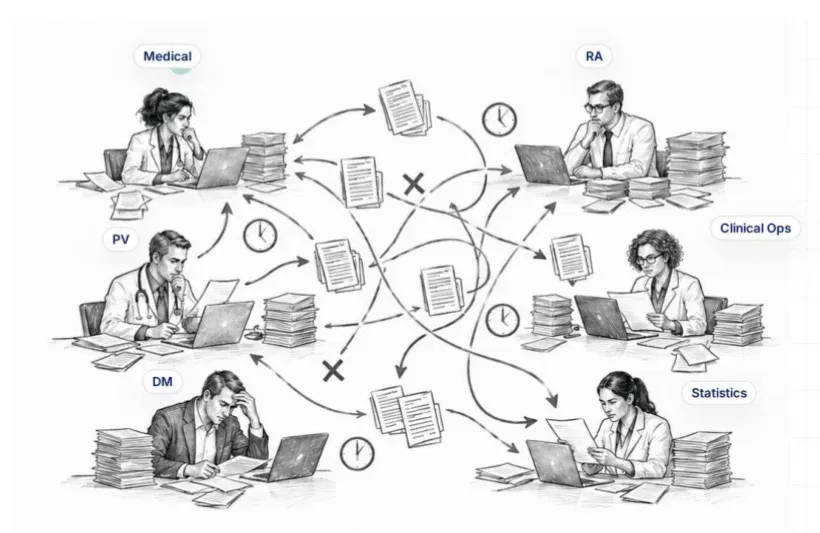
'Medicine determines why we begin, while AI determines how we should proceed.' Familiar with clinical R&D, Wang knows that beyond objective constraints such as observation periods, clinical development suffers delays created by the organization itself: the 'handoff tax'.
Medical, regulatory, biostatistics, clinical-operations and data-management functions each hold part of a project's facts. Every time a change crosses a functional boundary, it must be explained again and queued again. The most dangerous loss concerns the transmission of rationale: downstream teams receive a conclusion without knowing its assumptions. In designing a PoC study for an inflammatory-disease drug, for example, relaxing inclusion and exclusion criteria to accelerate recruitment may dilute the mechanistic signal, while changing sampling to reduce visit burden may disrupt interpretation of exposure. Each local decision may be reasonable, yet together they can leave the trial unable to answer its original scientific question.
Decision delays during execution can be equally damaging. CataX co-founder and Chief Development Officer Jiang Zhemin has more than 15 years of experience in clinical development and operations management, participating in and supporting over 50 clinical studies. He cites dose escalation in a Phase I oncology trial: after a dose cohort completes the observation required by the protocol, the study team must use the protocol and applicable review mechanisms to decide whether to proceed to the next dose, drawing on safety, pharmacokinetics and other available evidence. 'What really affects efficiency is sometimes not that data are unavailable, but that different functions cannot promptly reach a judgment based on the same information. By the time the decision is made and communicated to study sites, unnecessary waiting may already have occurred.'
Economic historian Paul David's research on factory electrification offers a parallel. When electric motors first replaced steam engines, workshops remained arranged around a central drive shaft, and productivity did not improve. The new power source's potential emerged only after the shaft was removed and production lines rearranged. Chen Kan likewise believes that using AI to break through layers of departmental barriers in a traditional drug company amounts to overturning the old system, making it preferable to build a native company from scratch. 'What should a biopharmaceutical company look like if agents are deeply involved from day one?' With that question, Wang left Microsoft Research Asia to start the company.
3. Clinical-of-One: one person leads, but does not do everything
CataX calls its solution Clinical-of-One. 'One' means unified development leadership: a full-stack clinical lead with solid clinical expertise and cross-functional judgment, like an orchestra conductor, continually maintaining a view of the entire project from mechanism to evidence.
In CataX's design, specialist agents for medical work, regulatory affairs, clinical operations and statistics draft documents, consolidate feedback and check consistency. All work shares the same context, including evidence sources, version history and audit trails. The platform is also progressively connecting clinical systems such as electronic trial master files (eTMF) and electronic data capture (EDC) through APIs and MCP. When the lead changes an inclusion or exclusion criterion, mechanistic enrichment, recruitment speed and sample-size assumptions are considered together, so everyone decides from the same evidence.
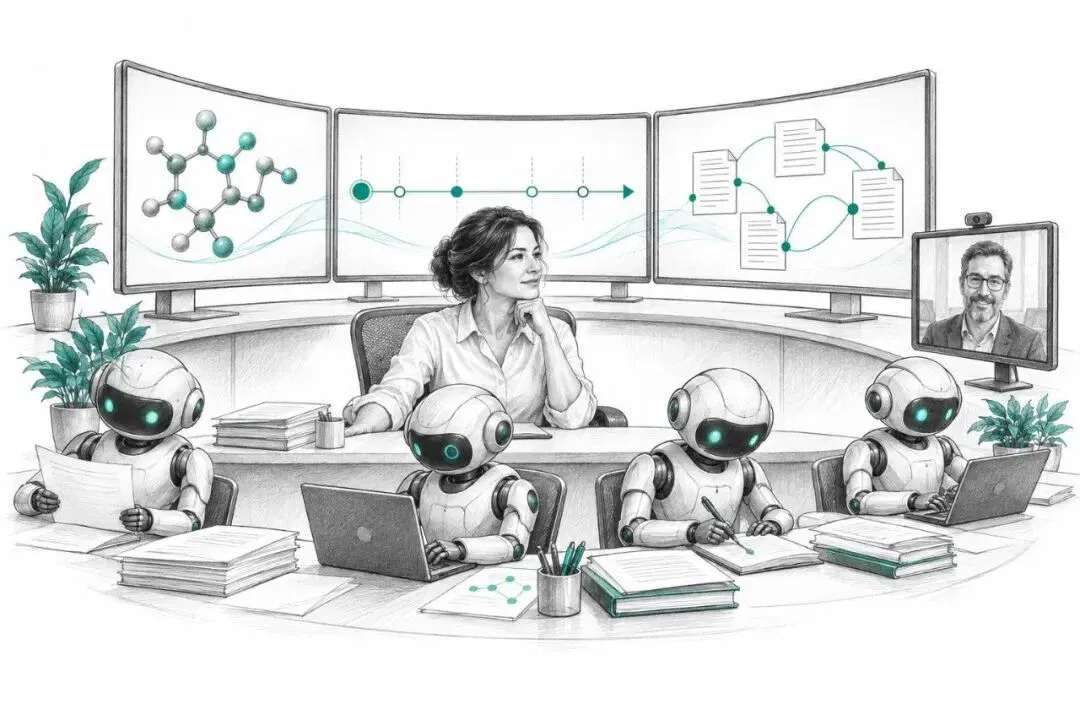
Clinical-of-One: a full-stack clinical lead directs specialist agents and connects with external experts.
'One person' identifies who has overall responsibility; qualified professionals still do the work. Statistical review, medical monitoring, blinding management, ethics review and quality assurance must remain independent. This also aligns with the explicit requirements for sponsors' ultimate responsibility in ICH E6 (R3).
Mithril's experience reinforces the need for independent review: its technical report disclosed factual errors in emails drafted by Claude. A mistaken email in a mouse experiment may be remedied, but a deviation in a human trial affects participant safety. Wang believes that one-person leadership actually demands stronger infrastructure: traceable evidence, clear permission and blinding boundaries, the ability to hear dissent and detect mistakes, and another qualified person ready to take over at any time. Jiang focuses on passing experience through project handoffs. 'An oncology trial can last several years, with team changes along the way. Even if key decisions are recorded, their underlying reasoning and discussion may not be passed on completely. We want to retain not only what was done but why, so people and agents taking over later can understand and reuse that experience.'
4. Developing assets rather than selling tools
The organizational form determines the business model. CataX does not sell software to pharmaceutical companies; it develops assets itself, obtaining interests through in-licensing or joint development. It aims to combine China's large patient population and efficient clinical recruitment with Clinical-of-One's coordination speed, advancing assets efficiently to early clinical PoC before increasing their value through global licensing or partnerships. The clinical evidence it produces itself is its most valuable product.
The core reasons for holding asset interests are development autonomy and experience in real projects. Having worked at both CROs and innovative-drug companies, Jiang has direct experience of this. 'Clinical development is not just about completing a protocol on time. More important is always knowing why the study is being conducted, what evidence it seeks, and whether that evidence can support the next development decision.' In his view, holding assets means both taking R&D risk and gaining the initiative to redesign development workflows. CataX wants to start with real drug assets, make continuing cross-functional judgments around asset value and key clinical evidence, have people and agents work together, and test and improve the entire work system through projects.
The first challenge in holding assets is choosing the right ones. For the many emerging AI molecule-design companies and translational projects upstream, CataX positions itself as a successor in the relay rather than a competitor. It seeks substantially ready preclinical and early-stage pipelines urgently needing human evidence: the molecule, existing data and conditions for advancement are largely in place, but the most important questions can be answered only in humans. Such assets are particularly suited to Clinical-of-One, as a well-designed early study could sharply increase their value. Screening is also divided between humans and agents. Research agents continuously scan the field and create a clearly sourced dossier for each candidate asset. Agent clusters use that same dossier to challenge it from scientific, clinical, patent and commercial perspectives. Neutral reviewers check sources and preserve disagreements; humans make final decisions and negotiate. CataX has built an agent-collaboration workbench covering core functions and systematically scanned dozens of early pipelines. In-licensing its first clinical asset has also entered a substantive advancement stage.
5. Recursive Organization Improvement: each project trains the next
Clinical-of-One cannot scale if it depends only on a few full-stack prodigies. CataX's second core mechanism is Recursive Organization Improvement: making the organization itself a model that is continually trained and iterated.
Clinical R&D inherently faces extremely sparse rewards: efficacy endpoints often take years, and an organization cannot wait until unblinding and readout to start learning. CataX therefore built agent-native infrastructure and a collaboration workbench around frequent process feedback from the outset. Everyday checks, rework and execution deviations become dense signals for evolution. Under the clinical lead's direction, Rationale Distillation encodes methods shown to work into reusable Skills and tools, while storing decision rationales, failure attribution and version evolution in structured organizational memory, with an evaluation loop running continuously on real tasks.
From the perspective of complex-system evolution, however, accumulating experience does not inherently equal organizational evolution. In its modeling study of human-agent organizations, Recursive Organization Improvement, the CataX team examines a more fundamental question: when humans and agents jointly form a learning system, under what conditions does the organization truly become smarter, and when does it deteriorate? The research identifies two internal sources of resistance in human-agent coevolution. The first is 'memory lag' in nonstationary environments: organizational memory has significant temporal limits. Once external clinical standards or the competitive landscape shifts, historical experience without explicit conditions can create path dependence and negative transfer. The second is the 'illusion of consensus' in sequential reviews: when downstream review agents in a multistage decision chain tend to agree with upstream conclusions, the apparent unanimous-pass rate rises sharply, at the cost of failed collective error correction and a surge in actual decision errors. An organization capable of continuous self-improvement therefore needs more than retained experience: it needs awareness of when that experience becomes invalid, and independent judgment and necessary disagreement during validation.
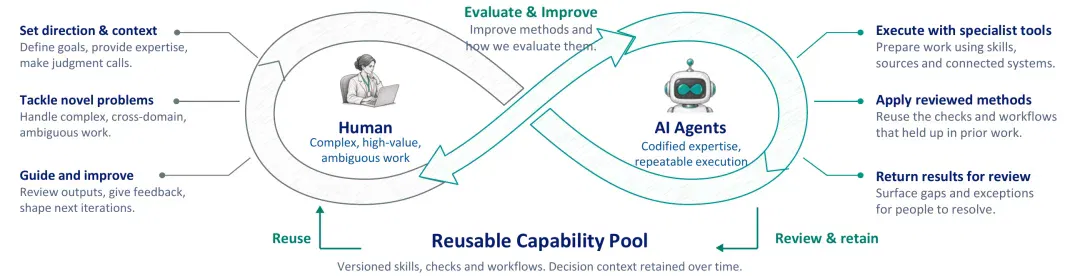
People and agents improve methods together, turning project experience into reusable organizational capabilities.
Wang often draws on the setting of Liu Cixin's The Village Teacher to consider the ultimate meaning of this transformation. Across the long evolution of life and civilization, the first growth curve is biological evolution, with genetic selection adapting life to its environment over tens of thousands of years. The second is human knowledge transmission. Yet, as The Village Teacher observes, human memory cannot be inherited directly: every novice must study for more than a decade to reach the understanding of predecessors. Agent-based 'external-brain evolution' is opening a third civilizational growth curve. For the first time, individuals' practical lessons and professional intuition can be compiled directly into organizational architecture and toolchains, 'inherited' across projects, and, with each underlying foundation-model upgrade, exponentially amplify the next project's capabilities.
6. The North Star: toward an agent-led Virtual Pharma
Following this flywheel, CataX maps three stages toward an agent-led Virtual Pharma. Initially, it works closely with senior external experts to co-create rigorous professional frameworks and quality baselines through real projects. As extensive preparation and routine checks become reliable agent capabilities, experts can move away from repetitive review and focus their scarce attention on the most consequential complex trade-offs. Ultimately, a 'clinical development lead agent' would coordinate specialist agents' daily work, leaving human experts to focus on irreplaceable decisions around scientific intent, regulatory submissions and participant safety.
Making this work requires depth in both AI and clinical development, and CataX's founding team combines the two. Wang holds a medical doctorate from Fudan and is a former senior researcher at Microsoft Research Asia. As CTO of a medical AI company, he led two AI software medical-device products from algorithm design and R&D through registration, obtaining NMPA Class III certificates. Co-founder and Chief Development Officer Jiang brings extensive clinical-development experience, contributing to the development and market-launch processes of multiple drugs. He built PPD China's decentralized-clinical-trial team from scratch, then advanced clinical-operations digitization and technology-enabled transformation at BeiGene. Through that work, he came to believe that meaningful efficiency gains require more than upgraded tools: the division of work between people and technology and the organization of clinical R&D must be redesigned. One founder has turned medicine and AI into products; the other has experienced digital transformation from clinical-development practice. Together, they are exploring an AI-native clinical R&D organization.
The company's name, CataX, reflects that intent: 'Cata' comes from catalyst, while 'X' represents exploration of unknown diseases and tenfold (10x) efficiency. One person using AI to advance a drug to mouse studies demonstrated that agents can substantially compress preclinical organizational costs. Next, CataX aims to take the baton in clinical development, where AI penetration remains limited and the value at stake is greatest, so effective drugs can reach patients sooner: More Hope. Sooner.
This article comes from Synced. Author: Synced.
After reading
Join the AINRK community
Read how to join the community and connect with people working in AI.
Related articles
Continue reading related topics and articles in this category.
Isomorphic Labs announces $5B Series C for drug design and clinical preparation (opens in a new tab)
Isomorphic Labs says its November 17 Series C was co-led by Greenoaks and Sequoia Capital. Funds will support IsoDDE, drug candidates and R&D infrastructure. Reported positive results are largely preclinical; human safety and efficacy still need validation.
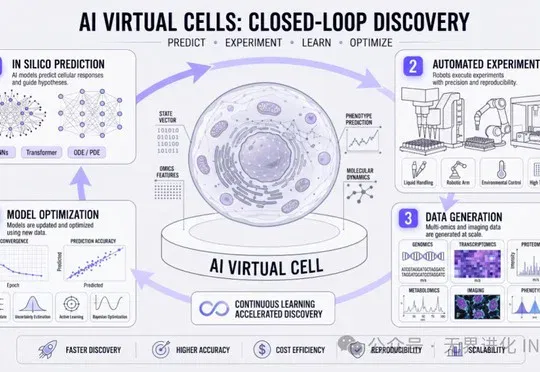
INFevo announces over RMB 100M in pre-A funding for cell models and research platforms (opens in a new tab)
INFevo discloses a pre-A round exceeding RMB 100 million for model R&D, research products and team development. The report describes OCOO-T's experimental metrics and platform plans; results apply to the stated datasets and tasks, not clinical efficacy.
据报 Isomorphic Labs 洽谈约 50 亿美元融资 (opens in a new tab)
彭博社援引知情人士称,Alphabet 旗下 AI 药物研发公司讨论以约 500 亿美元估值募资。交易条款仍可能变化,相关药物项目处于临床前阶段。
优时比与 Cradle 合作,将 AI 蛋白质工程用于抗体研发 (opens in a new tab)
优时比将在部分药物发现项目中使用 Cradle 的 AI 蛋白质工程平台,覆盖候选分子发现、先导优化和临床前开发准备。双方公告未披露合作金额。
Anthropic 为什么买下一家「一人公司」 (opens in a new tab)
文章介绍 Anthropic 收购 Mithril Medicine 的研究背景:创始人借助 Claude 协调外部实验室,推进两项罕见病项目。已有结果仍处于早期动物实验阶段,尚不能证明对人体有效;案例也暴露出数据审核和跨机构沟通中需要人工复核的风险。