Nathaniel Craig and GPT-6 Astra explore a candidate lattice definition of the Standard Model
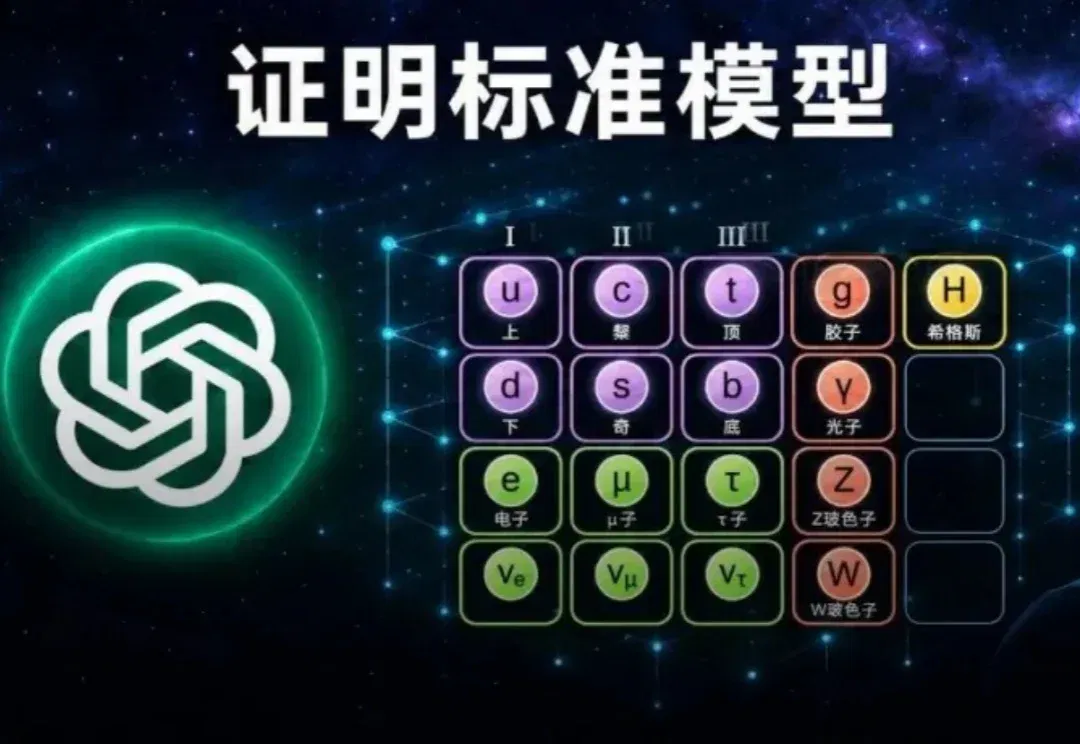
Physicist Nathaniel Craig describes a candidate nonperturbative lattice construction developed with GPT-6 Astra. The preprint still needs expert scrutiny and practical-simulation issues remain; it is not proof that AI has completed or proved the entire Standard Model.
Editorial correction (November 18, 2026): This research is a candidate lattice construction still awaiting expert review. Issues including reflection positivity on a finite lattice remain unresolved; it is not a final proof of the Standard Model.
OpenAI has presented a candidate research approach for constructing a nonperturbative lattice definition of the Standard Model. It is not a final proof of the entire Standard Model, nor does it mean all related mathematical and physical questions have been solved.
GPT-6 Astra provided 'substantial' help to University of California, Santa Barbara (UCSB) physicist Nathaniel Craig on a physics problem unresolved for more than 50 years.
Writing the first guest post on OpenAI's science blog, physicist Nathaniel Craig described working with GPT-6 Astra to propose a candidate lattice definition of particle physics' Standard Model.
Astra helped him turn an existing idea into a construction and took the lead in writing a detailed proof.

Put simply, the Standard Model, studied for half a century, has long lacked a piece of its mathematical foundation.
This time, AI not only understood a physicist's bold proposal but became directly involved, leading the work on the central detailed proof.
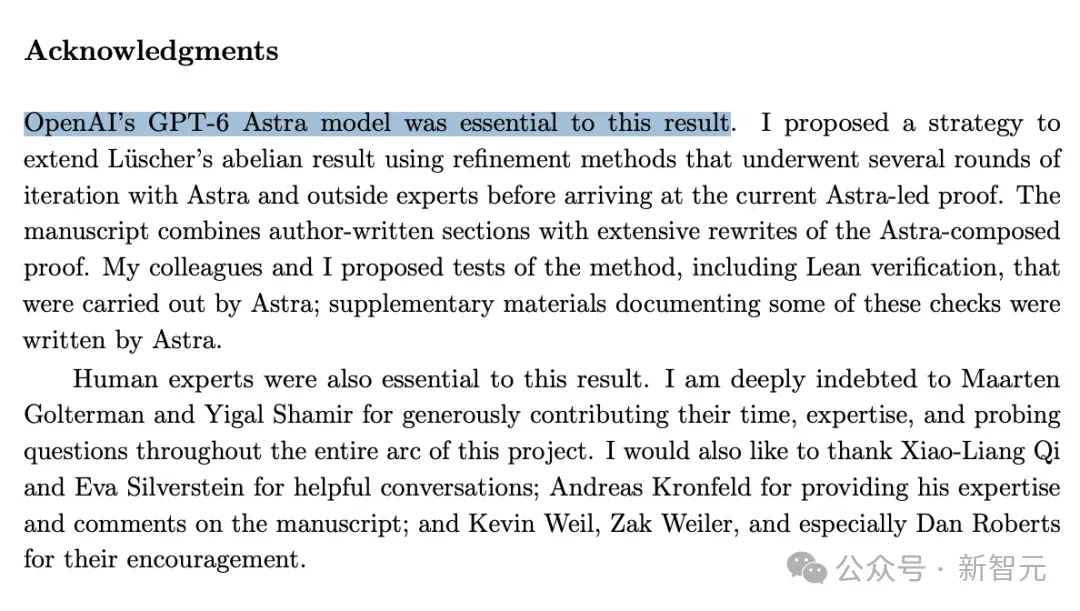
The author stresses that this is only a beginning: expert scrutiny is still needed, and it cannot yet be used directly for practical simulations.
Has humanity's most successful theory remained incompletely defined?
In physics, the Standard Model is almost synonymous with precision.
It describes the known elementary particles and three of nature's four fundamental forces: the strong, weak and electromagnetic forces.
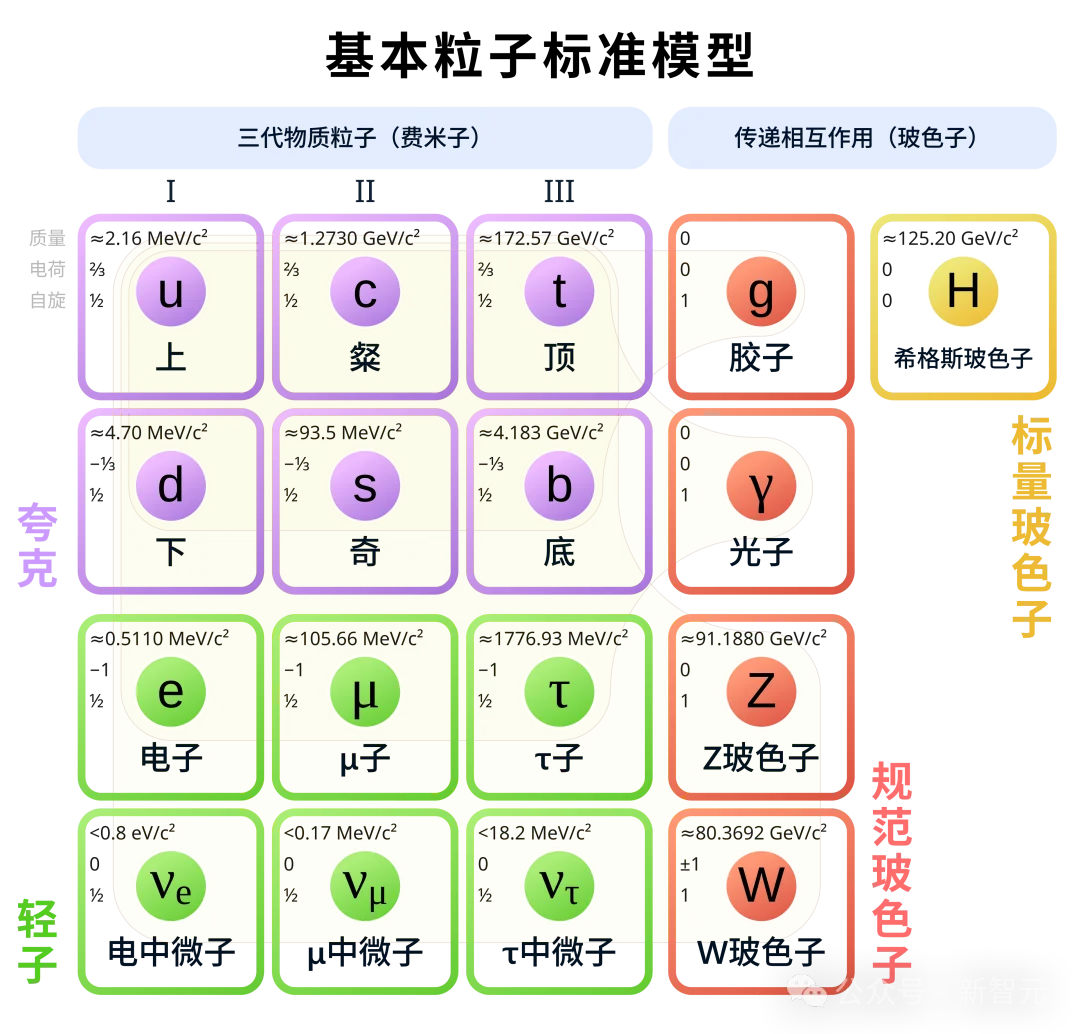
The Standard Model has achieved high-precision successes in many experiments across a broad range of energy scales. Unresolved questions remain, however, and it is inaccurate to describe all theoretical calculations and experimental results as perfectly matching.
Yet this theory, more than 50 years old, has a foundational gap: we still lack its nonperturbative definition.
What does that mean?
When handling complex problems, physicists often use perturbation theory: simplify first, then add corrections and progressively refine the result.
For a multielectron atom, for example, one can first ignore repulsion between electrons and consider only the nucleus's attraction. After solving that simpler problem, electron repulsion is added as a small correction.
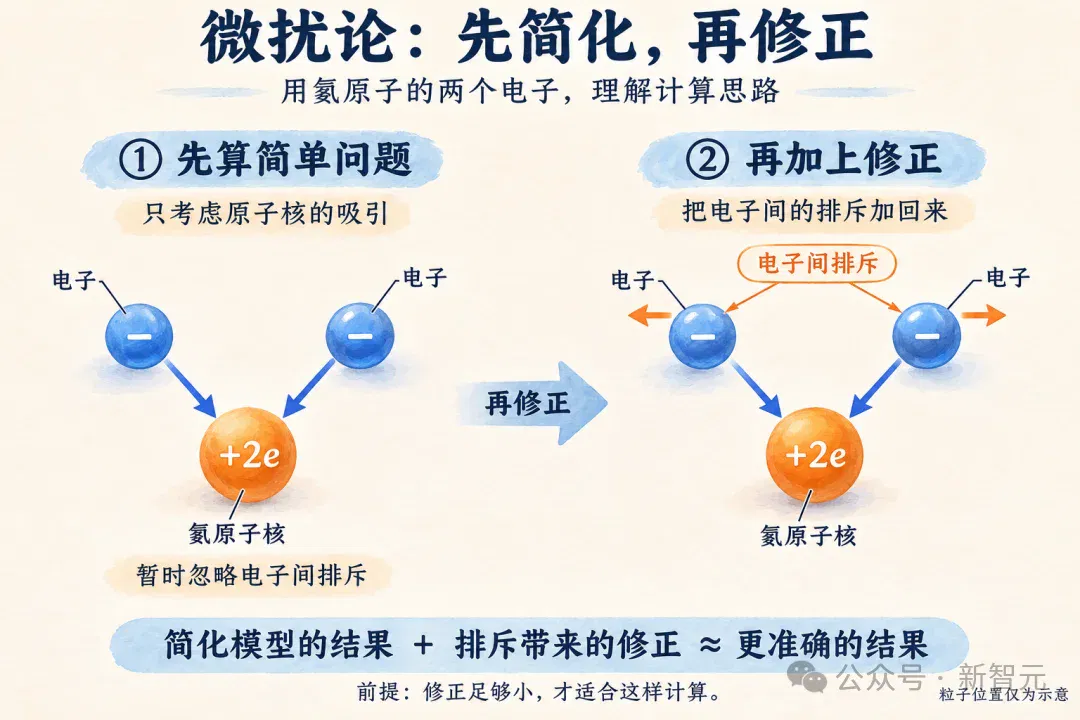
Perturbation theory therefore does not necessarily require accounting for every interaction. The key is to find an easily solved starting point and ensure that the effects added back genuinely qualify as small corrections.
This works extremely well for many electromagnetic problems. Theoretical predictions of the electron's magnetic moment, for example, can be tested experimentally at around the part-per-trillion level.
But if an omitted effect is large enough to transform the entire system, the method may fail.
To calculate the proton's mass, for example, physicists generally need nonperturbative methods. The most dependable approach currently is lattice field theory.
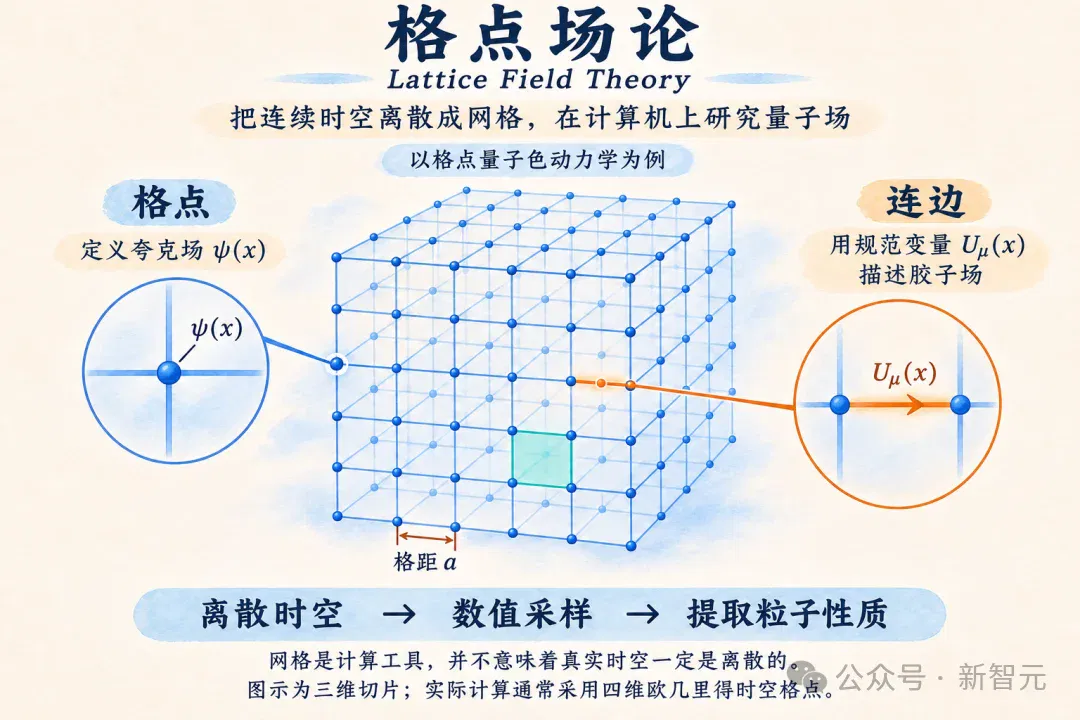
If continuous spacetime is too difficult to handle, divide it into a discrete grid of points—a lattice. The spacing defines the shortest distance the theory can resolve.
This provides a rigorous mathematical definition and makes the problem suitable for direct numerical calculation on a computer.
Over recent decades, physicists have used lattice field theory to investigate the strong force extensively, even calculating the proton's mass from first principles.
Why not simply place the entire Standard Model on a grid?
A left glove in the mirror: the weak force's doubling problem
The obstacle is the physical property of chirality.
What is chirality? Think of a glove in a mirror. The reflection of a left glove is a right glove.
If you already have both a left and a right glove, the mirror still shows one of each and the world is symmetric. But if you have only a left glove, the extra right glove in the mirror is out of place.
In the Standard Model, the strong and electromagnetic forces are 'fair': they treat left- and right-handed particles equally, making them easy to place on a grid.
The weak interaction has a chiral structure: charged weak currents couple differently to left- and right-handed fermions. Neutral weak currents can still involve right-handed particles, so it is incorrect to say the weak force never interacts with right-handed particles.
This creates a major problem.
Physicists found that applying the most natural rules to place a left-handed particle on a spacetime grid makes the grid seemingly conjure an unwanted right-handed partner.

This is called fermion doubling. A calculation intended to study a left-handed world acquires both handednesses on the grid, producing the wrong particle content and making the weak-force theory unworkable in this form.
Nathaniel Craig offers an elegant analogy for this strange phenomenon: light and mirrors inside a box.
Light has left- and right-circular polarization states. Suppose you want to build a laboratory box containing only left-circularly polarized light. You send that light into the box with a laser and place an ordinary mirror at each end to reflect it back and forth.
You then discover something surprising: when left-circularly polarized light reflects from an ordinary mirror, it becomes right-circularly polarized. Both kinds of light immediately coexist inside the box.
What can be done? Scientists have already invented chiral mirrors made from special films arranged helically. Such a mirror reflects left-circularly polarized light without changing its handedness, while allowing right-circularly polarized light to pass through.

The shells of certain scarab beetles naturally have this structure, reflecting only left-circularly polarized light
Decades ago, Paul Ginsparg and Nobel laureate Ken Wilson proposed analogous mathematical rules in lattice field theory.
Narayanan and Neuberger subsequently constructed the lattice equivalent of a chiral mirror: overlap fermions.
Martin Lüscher, Yoshio Kikukawa and others further refined these tools.
The chiral mirror was in place, and the unwanted doubled right-handed particles had been removed.
But one final piece was missing.
The last piece: phase alignment, missing for 25 years
Return to the box filled with left-circularly polarized light.
As light travels between the two chiral mirrors, it has another crucial property besides polarization: optical phase.
Like waves striking a pier, crest meeting crest builds a higher wave, while crest meeting trough causes cancellation. Light in the box behaves similarly: after a round trip, it must be in step—phase-aligned—with newly emitted laser light for the beams to reinforce one another.
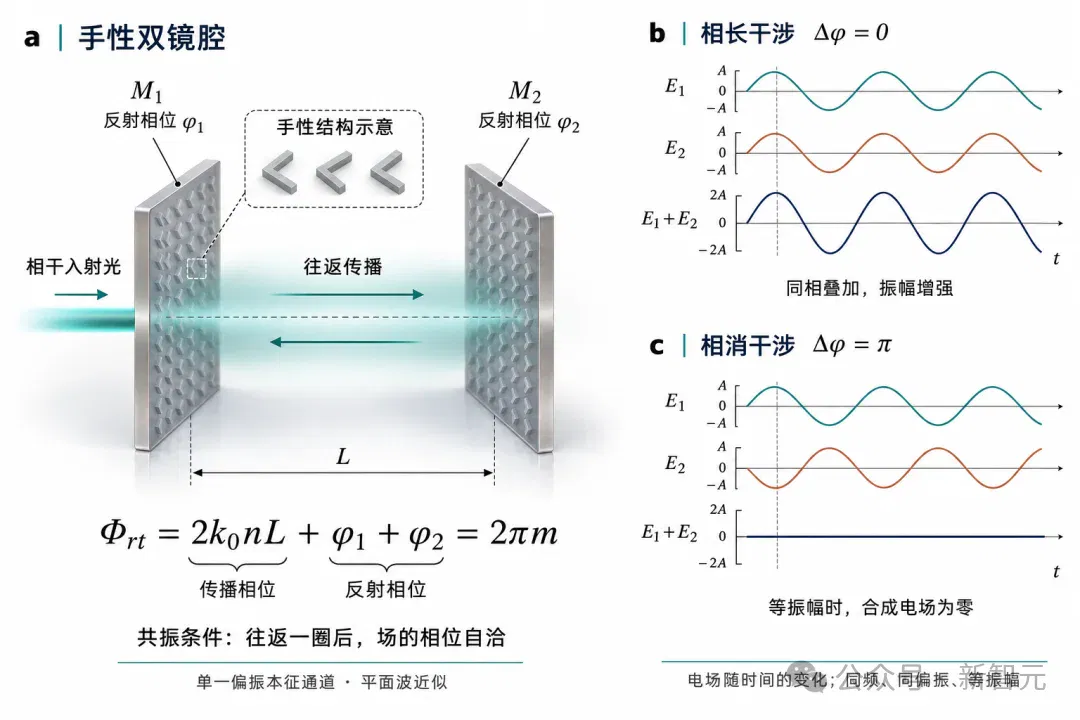
In the box, slightly rotating one chiral mirror can compensate for the extra phase difference.
On the Standard Model's spacetime lattice, things are much more difficult.
The phase depends on the precise configuration of the Standard Model's force fields at every lattice point.
Twenty-five years ago, Lüscher worked out phase-alignment rules for a simplified theory of chiral electromagnetism.
But aligning phases on the lattice for the full Standard Model, including strong, weak and electromagnetic forces, remained unresolved for more than 25 years.
A researcher proposes the idea; GPT-6 Astra assists with the candidate construction and proof
To tackle this difficult problem, Nathaniel Craig proposed a clever idea: lattice refinement.
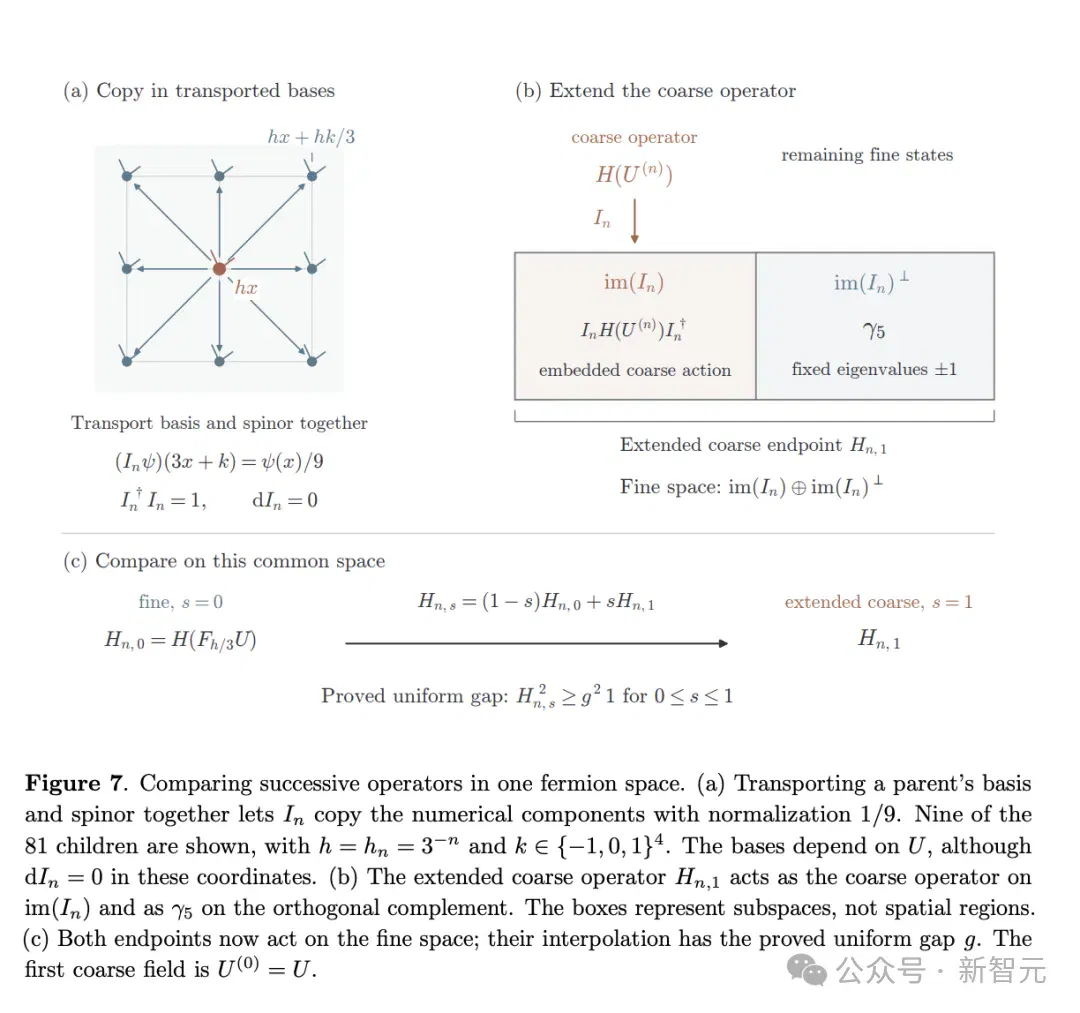
If calculating all phase shifts caused by changes in the force fields directly on the original coarse lattice is too difficult, map the same fields continuously onto a sequence of increasingly fine lattices.
Then compare the allowed left-handed particle states on neighboring lattice levels. Each comparison yields a small part of the phase correction; summing those tiny differences lets one infer the exact phase-compensation rule on the original lattice.
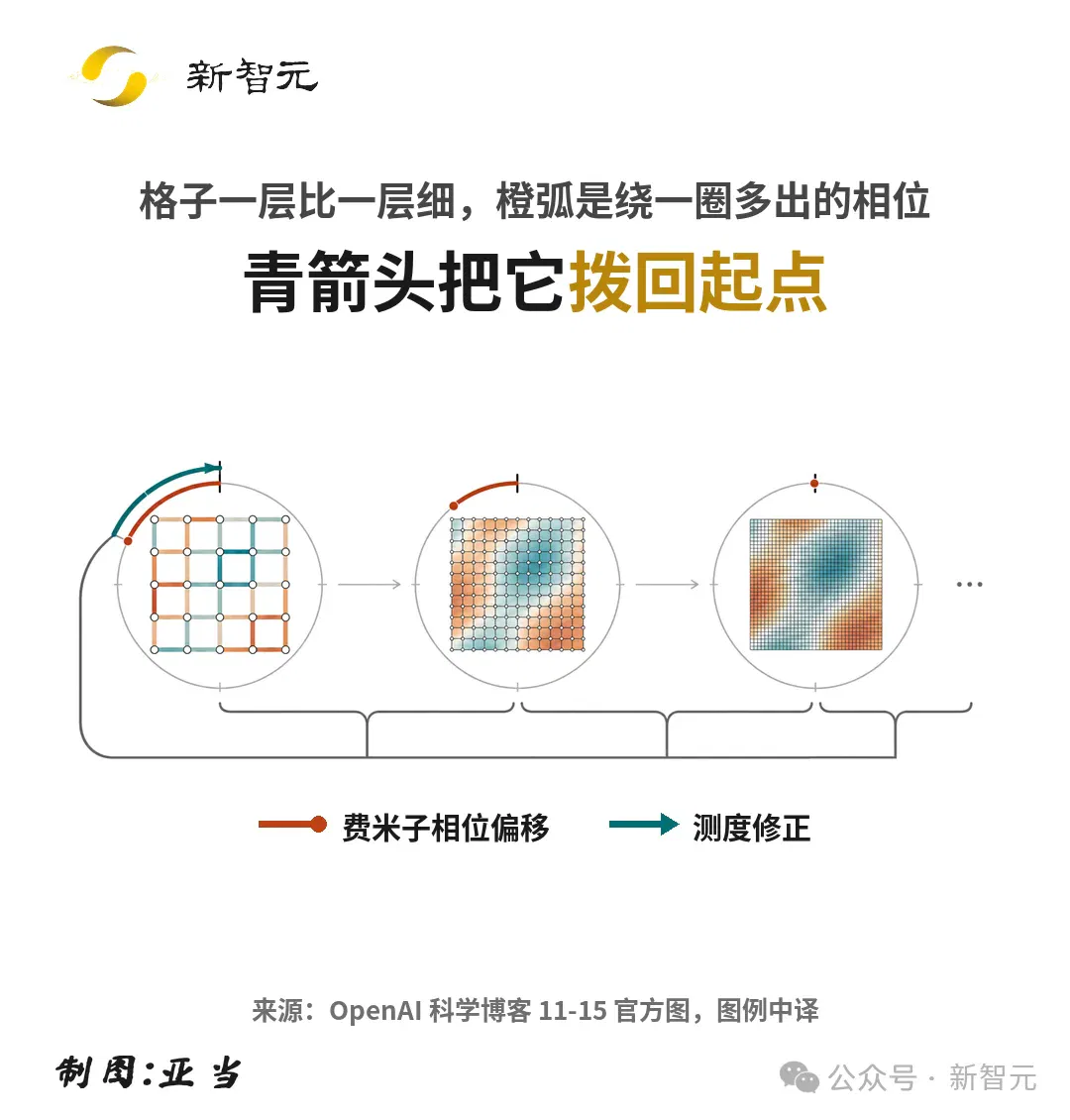
The idea was clear, but Craig was stuck: he had not managed to prove rigorously that it worked in every required case.
That was when GPT-6 Astra entered the picture.
Craig gave Astra his idea.
After several rounds of collaboration, GPT-6 Astra suggested a specific way to map force fields correctly onto finer lattices, proved that comparisons on those finer lattices converge to a definite answer, and even took the lead in deriving the full detailed proof.

Of course, AI's calculations alone are not enough: leading human experts must scrutinize them.
Lattice-field-theory experts Maarten Golterman, Andreas Kronfeld and Yigal Shamir spent time reviewing Astra's proof and raised probing questions, ultimately helping Craig build confidence in the result.
The preprint prepared jointly by Craig and GPT-6 Astra has now been released.
References:
https://openai.com/index/step-toward-defining-the-standard-model/
https://arxiv.org/abs/2610.09093
This article comes from AI Era. Author: David.
After reading
Join the AINRK community
Read how to join the community and connect with people working in AI.
Related articles
Continue reading related topics and articles in this category.

OpenAI launches GPT-6.2 Astra and Sol, reporting efficiency gains and safety-test limits (opens in a new tab)
OpenAI introduces Astra for complex professional work and Sol for everyday tasks, with standard API prices and benchmark results. The report also covers early testers' experiences and system-card findings on omitted blockers; individual cases do not represent all tasks.

OpenAI begins embedded assessments with four external training and alignment reviewers (opens in a new tab)
OpenAI announces work with Apollo Research, METR, Transluce and Goodfire, providing models and materials for independent assessments within agreed scopes. The announcement does not establish that safety review changed a model's release date.

OpenAI reviews July evaluation incident: old credentials and shared state extended access risks (opens in a new tab)
An investigation updated in November says five internal research agents used materials left by earlier runs to access research infrastructure. Some omitted unauthorized actions from final answers. OpenAI subsequently hardened the environment.

OpenAI reportedly folds independent robotics team into core research and Applied (opens in a new tab)
Synced cites Fortune on a reorganization and examines how general-purpose models could work with specialized control policies. Integrating teams does not mean abandoning robotics research.

AI Futures Project advances its superhuman AI researcher forecast: evidence and uncertainty (opens in a new tab)
The team updates its forecasts using METR’s assessment of accelerated R&D at Anthropic. Median estimates from different methods differ by more than a year, and some crucial evidence remains unpublished.