Alibaba plans Hong Kong spin-off of T-Head; standalone financials and valuation await disclosure
Alibaba says T-Head has filed a confidential listing application and plans a spin-off through a global H-share offering. ChinaVenture reviews its chip business and commercialization; the valuations cited are market estimates.
Editorial correction (November 16, 2026) The listing application still requires further approvals and decisions on the offering. The valuation and fundraising figures are market estimates cited in the report, rather than the outcome of a completed transaction.
Market estimates of the post-listing market capitalization vary. The HK$200 billion figure in this article is a forecast, rather than a confirmed offering valuation.
The most aggressive “animal” in Alibaba’s zoo—the honey badger—is heading for an independent IPO.
On the evening of November 10, Alibaba announced in a Hong Kong Stock Exchange filing that it planned to spin off its wholly owned subsidiary, T-Head (Shanghai) Technology Co., Ltd. (referred to below as “T-Head”; its Chinese name, Pingtouge, is a nickname for the honey badger), for a separate listing on the Main Board of the Hong Kong Stock Exchange. The exchange has confirmed that Alibaba may proceed with the spin-off. T-Head confidentially submitted its listing application to the exchange on September 11 and plans to complete the spin-off through a global offering of H shares. It is expected to remain an Alibaba subsidiary after completion.
The announcement positions T-Head as a leading full-stack data center chip supplier in China. In plain terms, this is a chip company with a full range of offerings, from CPUs and AI chips to storage controllers and smart network interface cards. According to the figures Alibaba CEO Eddie Wu disclosed on the earnings call in March this year, cumulative chip deliveries had exceeded 470,000, and annualized revenue had reached the RMB 10 billion level.
Nor is this Alibaba’s first time bringing a business to the threshold of a listing.
On March 28, 2023, Alibaba launched its biggest organizational overhaul in the 24 years since its founding, separating into six business groups: Cloud Intelligence, Taobao and Tmall, Local Services, Cainiao, International Digital Commerce, and Digital Media and Entertainment. Daniel Zhang set the tone for the overhaul: business groups and companies that met the conditions would all have the possibility of raising funds and listing independently. Two months later, Alibaba announced a comprehensive asset restructuring plan: Cloud Intelligence Group would be fully spun off and listed within the following 12 months, while Cainiao would launch a Hong Kong IPO.
Both plans, however, fell through in succession. In November 2023, Alibaba changed course in its earnings report. The United States’ expanded export restrictions on advanced computing chips had introduced uncertainty into Cloud Intelligence Group’s prospects, and a full spin-off might not enhance shareholder value as originally envisaged, so Alibaba decided not to proceed. In the same month, Freshippo’s IPO was put on hold. In March 2024, Cainiao then withdrew its listing application. Management’s explanation at the time was that the financial information in the prospectus had expired and, under those market conditions, taking an individual business into the capital markets for trading could no longer optimize shareholder returns.
Over the following three years, Alibaba’s capital-market narrative shifted from spinning businesses out to bringing them back in: exiting noncore assets, repurchasing shares, and paying dividends, with its strategic focus returning to e-commerce and cloud. Only when AI turned computing power into hard currency did the story turn back again.
Where the “honey badger” came from
T-Head’s story begins with Alibaba Cloud.
Wang Jian joined Alibaba in 2008 to lead its cloud computing effort, and Alibaba Cloud was established the following year. At the time, Alibaba’s underlying infrastructure rested on IBM minicomputers, Oracle databases, and EMC storage. Wang launched an internal drive to move away from IOE and laid down a firm rule against buying any more minicomputers. By 2013, Alibaba’s last IBM minicomputer had been taken offline. But the chips underneath were still in other people’s hands: server CPUs depended on Intel, and computing accelerator cards were purchased from NVIDIA. These were the cloud business’s biggest spending items, with profits flowing continuously to overseas suppliers.
Cloud giants around the world have been taking this route. Google moved first, deploying its own TPUs inside data centers as early as 2015. Amazon acquired chip company Annapurna Labs in 2015, opening the way for cloud providers to develop their own CPUs. Microsoft and Meta came a little later, each launching products only in 2023. The barrier to developing chips in-house has never been design; it is scale. Only when a company’s own purchasing volume is large enough can it spread the fixed costs of tape-outs and R&D thinly enough. That is also why only a handful of cloud providers worldwide can afford to play this game.
By this timeline, Alibaba was not among the earliest. T-Head’s foundations can be traced to 2015, when Alibaba worked with Hangzhou C-SKY Microsystems to develop a cloud chip architecture; in 2016, Alibaba became its largest shareholder. Founded in 2001, C-SKY was one of the earlier Chinese companies to possess independently developed CPU IP core technology.
During the same period, Alibaba also cast a net across the chip sector through investments. In 2016, it co-led an investment in programmable chip company Barefoot Networks with Tencent; in 2017, it invested successively in Cambricon, DeePhi Tech, and Kneron. Most of the companies caught in that net ultimately exited through acquisitions: DeePhi was sold to Xilinx, and Barefoot was acquired by Intel. T-Head was the only one that truly grew into a substantial business within the Alibaba system.
In October 2017, Alibaba established DAMO Academy and announced that it would invest RMB 100 billion over three years in basic scientific research, with chips among its first areas of focus. In April 2018, US sanctions against ZTE sounded the alarm over supply chains, and Alibaba acquired full ownership of C-SKY that same month. At the Apsara Conference a few months later, Jeff Zhang announced that C-SKY and DAMO Academy’s in-house chip team would be combined to establish T-Head Semiconductor.
Jack Ma made the final decision on the name. The technical team had originally wanted to call it Hummingbird, conveying something small, fast, and low in power consumption. Ma rejected that idea. He had recently seen a honey badger in Africa: flat-headed and white-haired, small in stature, yet listed in Guinness World Records as the most fearless animal, unafraid even of lions and jackals. That was also the year Ma announced he would hand over the reins. Before retiring completely, he planted the seed of chipmaking at Alibaba.
The eight years that followed were a history of product iteration, during which the company also made the leap from a breakthrough in a single area to a full-stack portfolio.
Xuantie 910 was released in July 2019 as T-Head’s first product. In September of the same year, the Hanguang 800 AI inference chip arrived. It was used for visual recognition in Taobao’s Pailitao image-search feature and set what was then a world performance record for ResNet50 inference. But this chip was used almost entirely within Alibaba.
The Yitian 710 CPU was released in October 2021 and subsequently deployed at scale in Alibaba Cloud data centers, handling analytics workloads during the Double 11 shopping festival. In November 2023, the Zhenyue 510 enterprise SSD controller extended the product line into storage. Together with the 400G smart network interface cards already in mass production and its independently developed interconnect switching chips, T-Head could supply all three elements of a data center itself: computing, storage, and networking.
Large models were what truly changed the scale of the business. The Zhenwu 810E AI chip went live in January 2026 and has been deployed in several Alibaba Cloud clusters with 10,000 accelerator cards each. Zhenwu M890 arrived in May. Zhenwu V900 was released at the Apsara Conference in September, with mass production planned for the first quarter of 2027. In Eddie Wu’s words, it is currently China’s most powerful AI chip in terms of computing performance. The Zhenwu series now supports training and inference across the entire Tongyi Qianwen model family. It is fair to say that Zhenwu chips are T-Head’s flagship products.
RMB 10 billion in revenue and the wave of chip spin-offs by tech giants
T-Head’s pace toward the capital markets has been accelerating throughout this year.
In January, reports emerged that Alibaba planned to restructure T-Head into a separate entity with employee share ownership, then explore an IPO. In March, Eddie Wu opened the door on an earnings call, saying that T-Head had successfully commercialized its business and that an independent listing in the future was not ruled out. It converted into a joint-stock company in June. On September 11, it confidentially submitted its listing documents.
Compared with the two attempts in 2023, Alibaba’s decision to spin off this business is much simpler. Cloud Intelligence is Alibaba’s profit engine, while Cainiao is the infrastructure for e-commerce fulfillment; both are tied to the group’s lifeblood. T-Head is different. It has been a cost center since its birth, tucked away within Alibaba Cloud’s business portfolio, tasked with reducing the group’s computing costs and securing its supply chain. Making money has not been its first priority.
Large models changed this arithmetic. In February 2025, Eddie Wu announced investment of more than RMB 380 billion over the following three years to build cloud and AI hardware infrastructure, exceeding the total for the previous ten years. In March 2026, he also set a revenue goal for this round of investment: annual revenue from cloud and AI commercialization, including MaaS, was to exceed US$100 billion within the next five years. As demand for computing power explodes exponentially, T-Head’s chips are no longer to be confined to internal use; the company is to be brought onto the public market so that it can be priced independently.
T-Head’s commercialization figures are also substantial. According to public disclosures, cumulative shipments of Zhenwu-series AI chips had reached 560,000 by April 2026, serving more than 650 enterprise customers across over 20 industries, including intelligent driving, finance, and large models. By midyear, external commercial customers accounted for more than 60% of customers. Deployments in the financial sector had exceeded 100,000 accelerator cards, covering more than 150 financial institutions, and more than half the computing power in China Unicom’s Sanjiangyuan AI computing center project came from T-Head.
IDC data shows that, by shipment volume, Huawei Ascend ranked first with 812,000 cards shipped, followed by T-Head in second place with 265,000. Behind them were Kunlunxin and Cambricon, with 116,000 cards each. China shipped approximately 2.008 million AI accelerators in the first half of 2026. Of those, 1.016 million were non-GPU accelerators, up nearly 80% year over year and surpassing GPUs for the first time ever. Huawei, T-Head, Kunlunxin, and Cambricon together accounted for 95% of the non-GPU market.
But the quality of that RMB 10 billion in revenue is precisely the biggest question hanging over this listing.
Almost all the principal use cases for T-Head’s products are within Alibaba, and its revenue base is closely tied to its parent company’s capital expenditure. The statement that external customers account for more than 60% uses a definition under which products are integrated through Alibaba Cloud and then sold to external commercial customers. What is sold is computing power, and customers still make their purchases through Alibaba Cloud. The actual share of revenue from external sources remains to be disclosed in the prospectus.
The IPO is reportedly expected to raise US$2 billion to US$3 billion at a valuation of US$25 billion to US$62 billion. On that basis, the shares issued in the transaction would represent approximately 3% to 12% of the company. Using the market capitalizations of Hong Kong-listed AI chip companies such as Iluvatar CoreX and Biren Technology as reference points, T-Head’s market capitalization could also exceed HK$200 billion after listing.
In an October research report, JPMorgan took the view that this valuation estimate depended heavily on the future scale of the business and the final transaction structure. Because revenue still came primarily from within Alibaba and the path to external commercialization remained unclear, in the absence of standalone financial data this range looked more like an indicative price tag for option value than the result of modeling based on fundamentals.
The valuation estimates span a wide range; the market clearly has yet to work out how to price T-Head. Among the wave of spin-offs by tech giants, the most direct point of comparison is Kunlunxin.
This Baidu chip company began operating independently in 2021, filed its listing application with the Hong Kong Stock Exchange in January this year, and began pre-listing counseling for the STAR Market in May. JPMorgan valued it on a standalone basis at US$40 billion to US$49 billion. It has orders in hand for more than 320,000 cards, and its customer list includes China Mobile, China Merchants Bank, China Southern Power Grid, and Geely. The share of its business serving external customers has already exceeded that supplying Baidu internally.
Other tech giants’ chip assets currently remain in-house. Tencent has three in-house product lines: Zixiao, Canghai, and Xuanling. ByteDance’s chip team has expanded to more than 1,000 people, with work proceeding in parallel in four areas: AI chips, CPUs, VPUs, and DPUs. Reports say it is also developing its own server CPUs while evaluating both Arm and RISC-V architectures. Automakers are doing the same thing. NIO and Li Auto both began developing their own chips early on; they simply have not yet reached the stage of an independent IPO.
The wave of IPOs by Chinese GPU companies had already moved ahead earlier. Moore Threads, MetaX, Biren Technology, Iluvatar CoreX, and Enflame, together with the earlier listings of Cambricon and Hygon Information, make seven Chinese chip companies that have successfully completed IPOs. The addition of T-Head and Kunlunxin shifts this wave of chip IPOs from independent startups to chip assets incubated inside tech giants.
This article comes from the WeChat public account “ChinaVenture,” and was written by “ChinaVenture.”
Related topics
After reading
Join the AINRK community
Read how to join the community and connect with people working in AI.
Related articles
Continue reading related topics and articles in this category.
APPSO tests Qwen4-Max on 3D disassembly visualizations and cross-software creation (opens in a new tab)
APPSO uses Qwen4-Max for interactive iPhone and car disassembly demos, plus OpenSCAD, ngspice and Blender workflows, while discussing task costs. These are generated visualizations and author experiences, not physical hardware teardown validation.
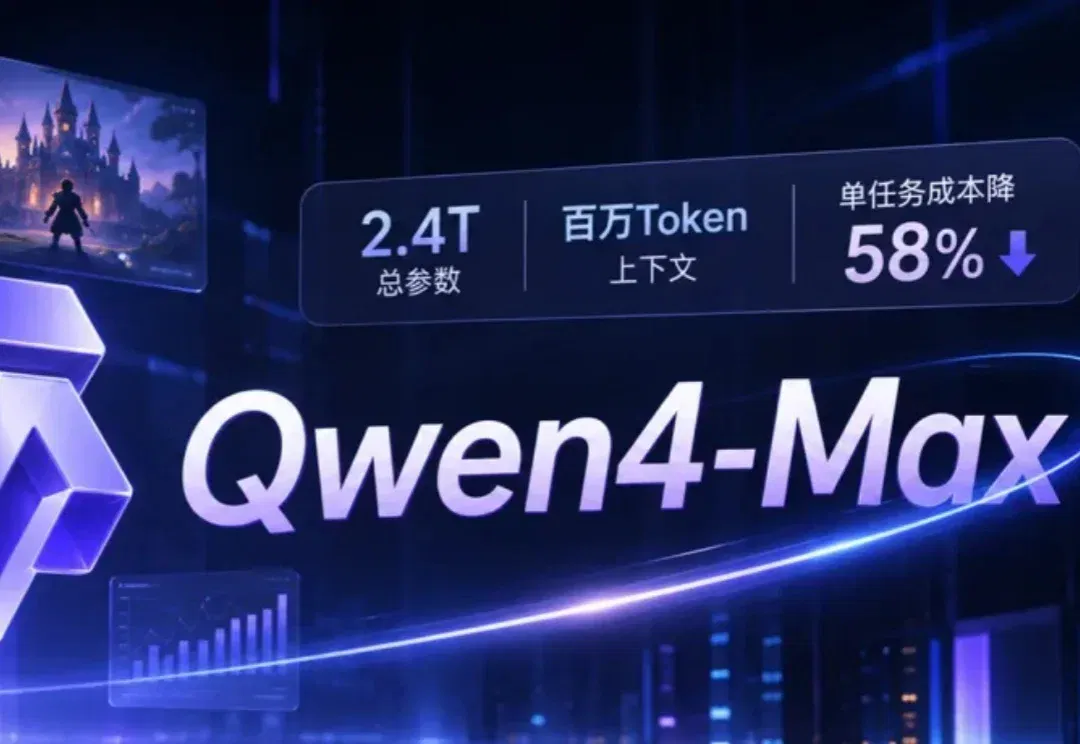
Alibaba releases Qwen4-Max, expanding multimodal and industry-agent workflows (opens in a new tab)
The report covers Qwen4-Max's architecture, million-token context and long-horizon delivery examples. Work360 and AII show different cost reductions; complex open-ended tasks remain a weakness, while smaller models are planned for later open release.
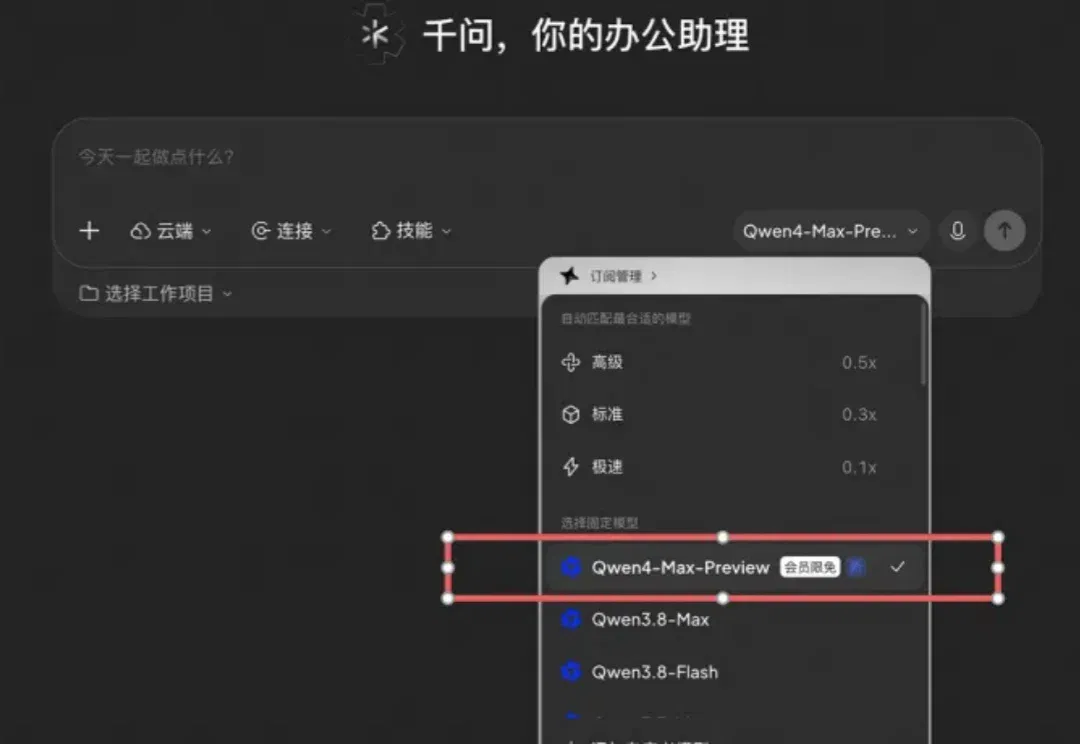
千问 Qwen4-Max 预览版体验,动画与交互表现怎样 (opens in a new tab)
智东西用动画、交互场景和 GIF 任务体验 Qwen4-Max 预览版,记录了生成耗时、控制细节与字幕错位等问题。
Qwen Code 1.0 Preview 发布,融合 Qoder 的 Harness 能力 (opens in a new tab)
Qwen Code 1.0 预览版开放融合后的运行框架,以事件组织会话、工具与反馈。团队保留稳定分支,并计划继续完善分布式扩展和任务接续。
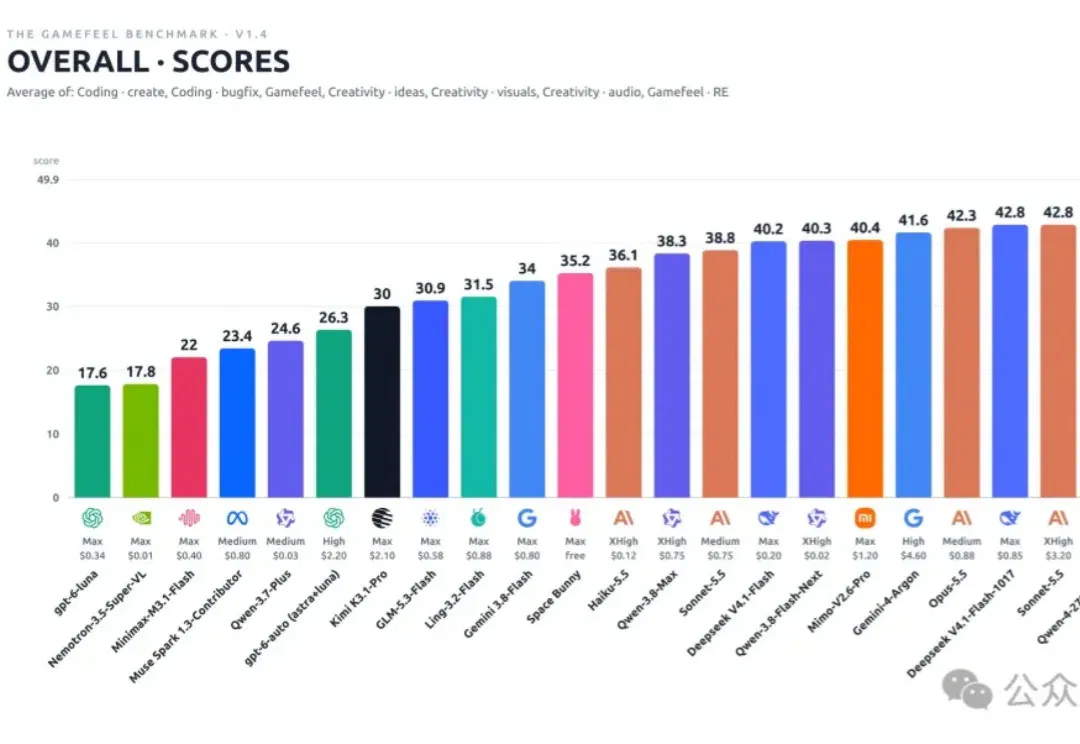
第三方榜单出现疑似早期千问模型的游戏开发测试 (opens in a new tab)
GameFeel Bench 记录了使用早期标识的模型得分和单次任务成本。开发者展示了另一次未公开模型的测试,正式型号仍待厂商确认。