Claude Code desktop opens theme mods for colors and animated customization
The article describes natural-language creation of visual mods and official theme examples, alongside comparisons with other coding tools. Support varies by version and plugin; appearance and comfort differ across people and devices.
Editorial correction (November 16, 2026): Appearance and comfort vary by person and device, and customization changes with versions. This is not a uniform conclusion about all competitors or users.
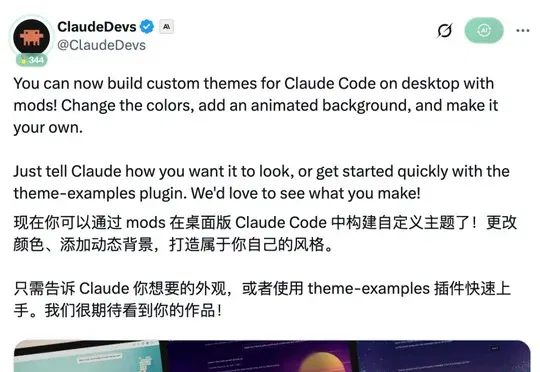
Anthropic’s @ClaudeDevs developer account has just announced: Claude Code desktop can now change skins!
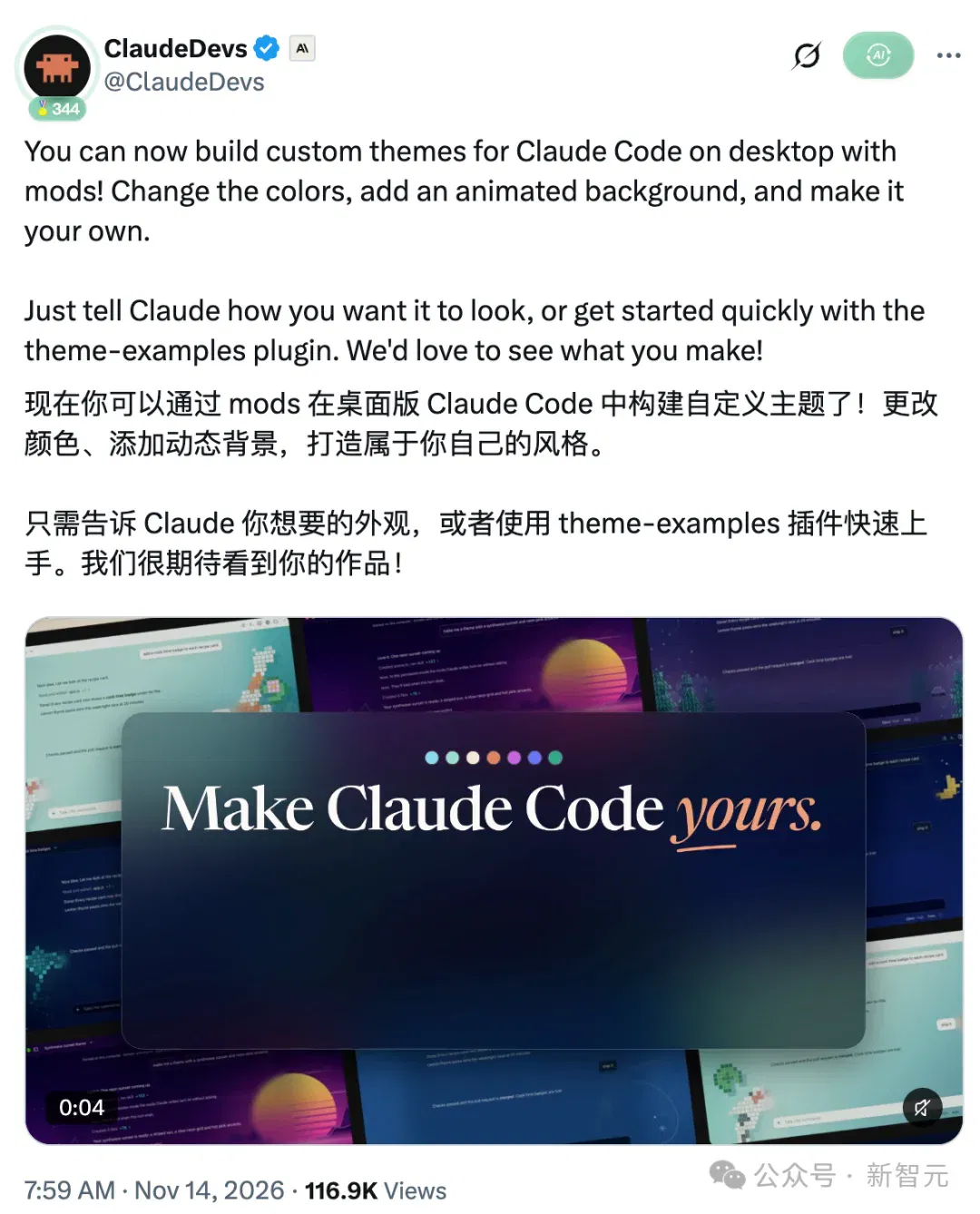
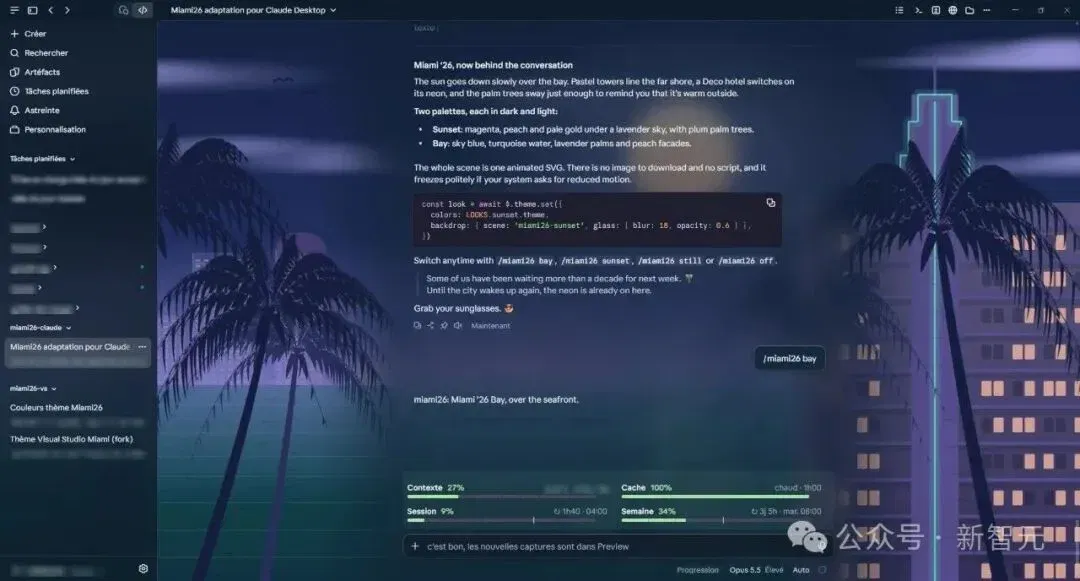
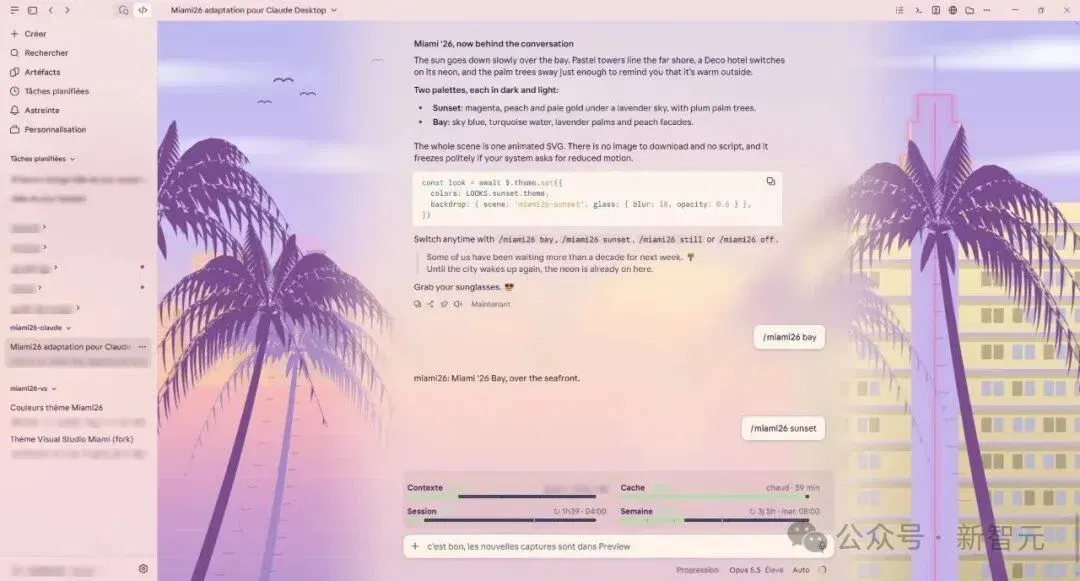
Tell Claude, “I want a cyberpunk neon interface,” and it writes code to change its own appearance—
colors, typography and even animated backgrounds.

One person went for a Bloomberg-terminal look for Claude Code: green text on a black background, with an overwhelming wall of densely packed data. As soon as the screen opens, it feels like you are a Wall Street trader.
Someone else went straight for the green code rain from The Matrix as an animated background. A waterfall of characters streams down behind the chat box, making you feel like Neo while you write code.
A commenter summarized it: Claude is becoming Discord.
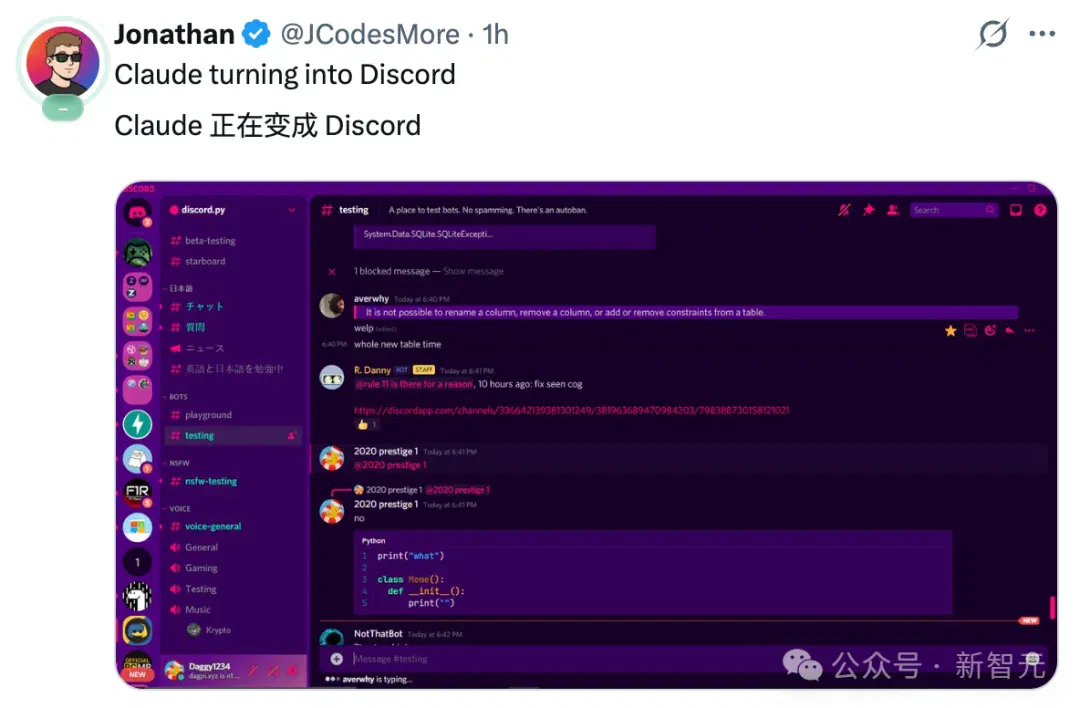
Another popular reply revived memories for people born in the eighties and nineties—
This reminds me of WinAmp skins.

Over twenty years ago, browsing for Star Wars, Final Fantasy and Diablo skins was a pleasure alongside listening to pirated MP3s in WinAmp.
It was the wild-growth era of internet personalization.
That energy is returning in AI coding tools.

A 210-day wait
Claude Code desktop’s former theme system offered only light and dark.
The terminal version was slightly better: Anthropic added custom JSON themes in April.
Desktop users were left with black or white.
Community requests for customization date back to April 2026.
Some found pure black harsh; others wanted Dracula colors or consistency with VS Code.
All those requests boiled down to: why can my editor be colorful while my AI tool stays black and white?
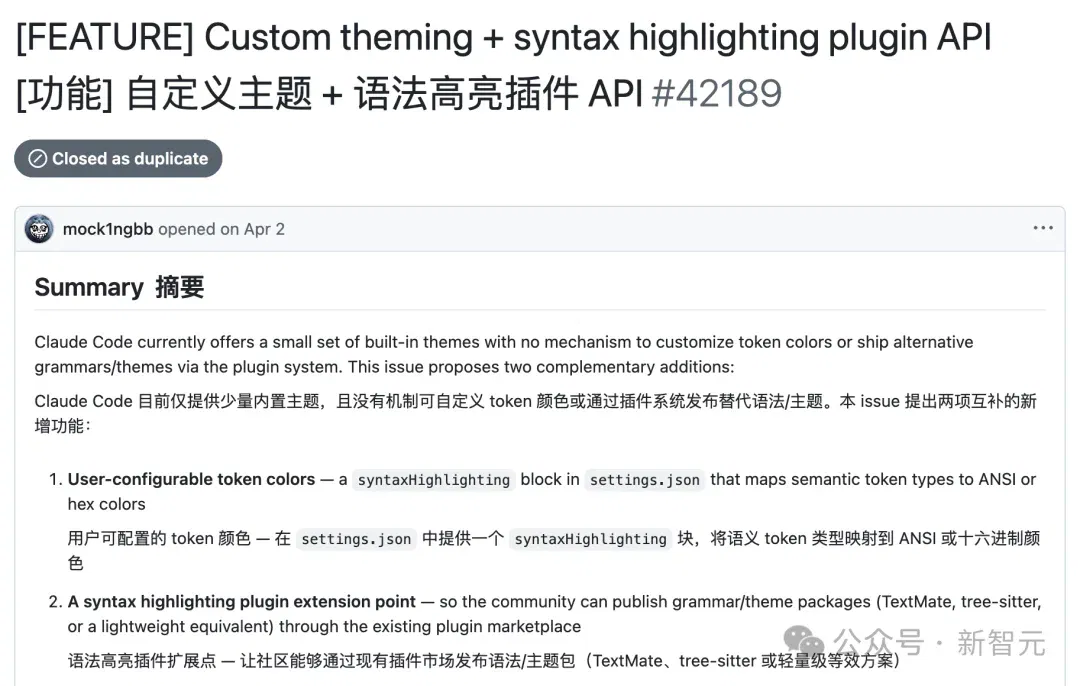
April to November: roughly 210 days.
But interestingly, the answer Anthropic ultimately provided was not an "appearance settings page". It did not build a theme picker, a color palette panel, or a row of preset options for you to choose from at all.
It handed the brush to Claude.
Through the mods system launched in October, it opened deep visual-layer customization.
There are two routes:
First, ask Claude directly. You type 'Make me a deep-sea blue theme with an animated particle background' into the chat box, and Claude writes a piece of TypeScript code itself and generates a mod plugin, calling $.theme.set to change the background and using the ui.render hook to recolor message bubbles, responses, loading animations and the sidebar.
Second, begin with official theme-examples. Anthropic’s ready-made templates can be installed or cloned and modified.
The process requires no TypeScript knowledge, handwritten JSON or research into color tokens.
Open the desktop app and conversationally describe the desired effect; Claude handles the rest.
Beyond skins: an aesthetic awakening for AI coding tools
You might say: is this not just changing colors and adding an animated background? It does not make the model smarter, so what is the point of all this flashy stuff?
Two years ago, that would have been a fair question.
In late 2026’s coding-tool market, appearance matters more than one might think.
Heavy users commonly spend eight to ten hours daily in the interface, according to the article’s observation.
Themes can suit preferences, but low contrast and continuous animation are not necessarily comfortable. Readability, visual sensitivity and reduced-motion requirements need separate consideration.
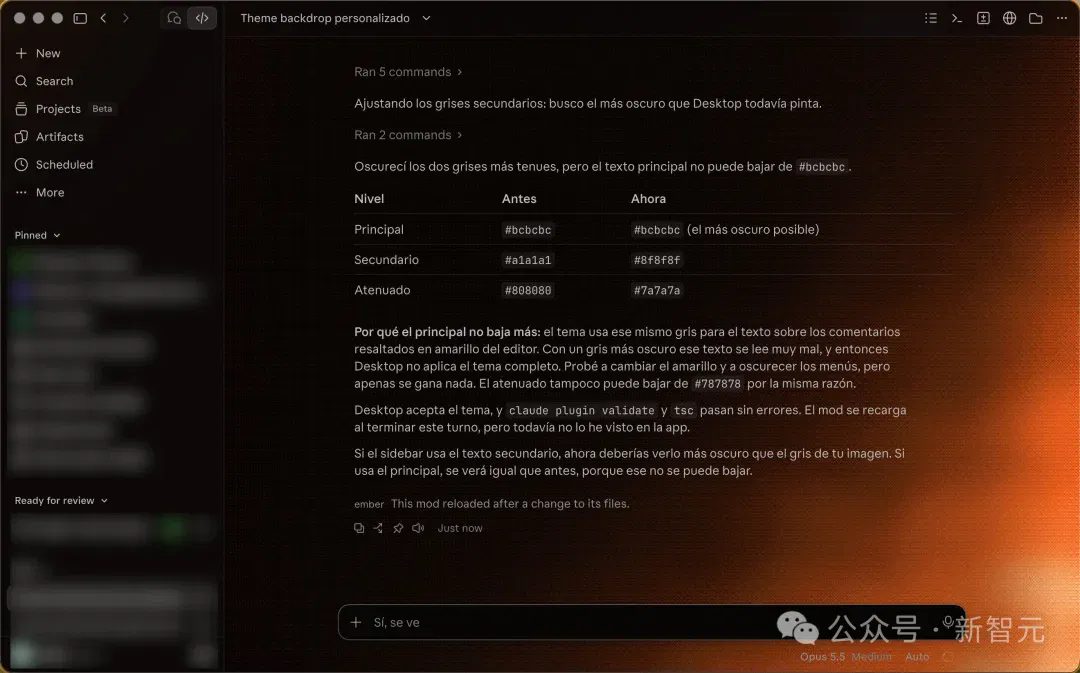
The broader industry signal is worth considering.
Competition is shifting from smarter models toward understanding developers. Differences in the experience layer are widening.
As a VS Code-derived product, Cursor theoretically inherits thousands of community themes.
But Cursor 3’s agent window has its own theme engine rather than inheriting the editor theme. Users have complained for months, with the issue still not fully resolved in the report.
The theme and interface capabilities of different programming tools vary with their versions, platforms and plugins. They should be checked against current settings and official documentation; one cannot make a blanket assumption that competing products have no customization capabilities at all.
DeepSeek Harness is notable: since its August open-source release, its everything-is-a-plugin approach has produced extensive theme customization.
Within three months, a whole host of skin-changing plugins emerged from the community: dsh-theme-kit provides 32 preset themes with seven paper-texture backgrounds; dsh-ui-customizer created a visual "DIY theme panel" that lets you drag to adjust colors directly; dsh-gif-background even supports uploading animated GIFs as backgrounds; and someone also made a theme pack of "traditional Chinese colors".
Claude Code takes a different, AI-native approach: Claude itself becomes the theme editor.
Customization becomes conversation rather than configuration.
October’s mods initially emphasized behavioral changes—the skeleton.
Themes and animation now open the skin.
Together, they move Claude Code from a coding tool toward a deeply modifiable platform.
Developers care about tool aesthetics more than outsiders imagine.
Look at the color schemes in the VS Code theme marketplace that routinely rack up millions of downloads. Look at the carefully tuned terminal configurations in the iTerm2 community. And look at the people who spend three hours tinkering with dotfiles just to make the tmux status bar look a little better—
developers will invest in appearance if it is not excessively difficult.
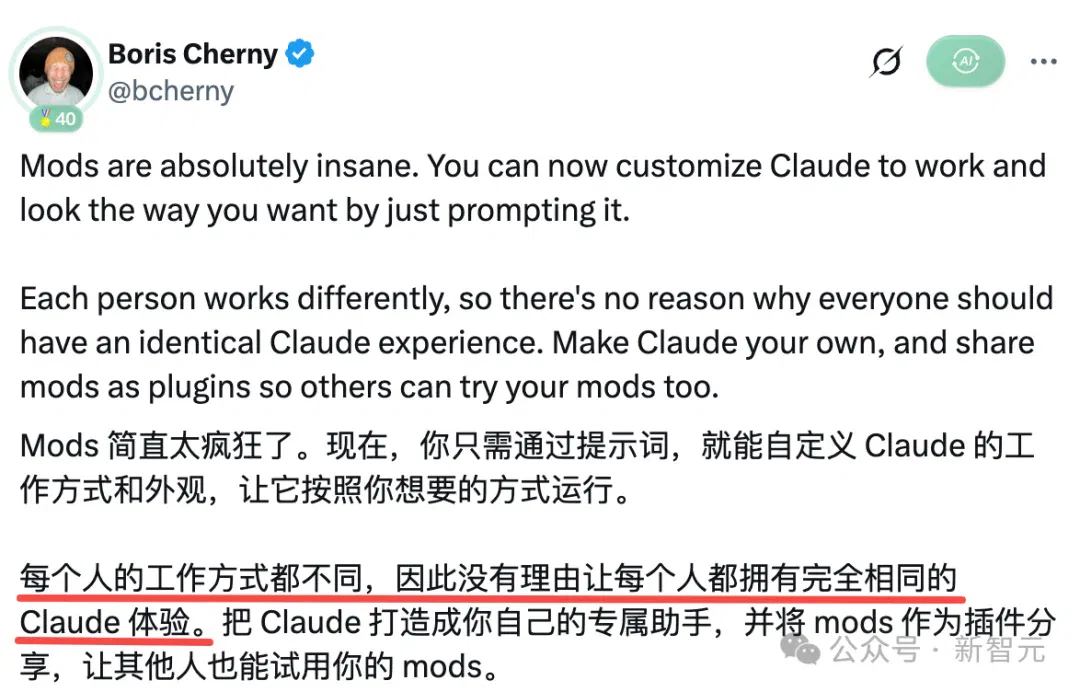
Boris Cherny’s comment at the mods launch fits: “Everyone works differently; there is no reason everyone should have exactly the same Claude experience.”

Epilogue
The most affecting comment seemed like a joke—
The world seems to be ending, but at least I can give Claude Code a makeover.
We once skinned WinAmp, decorated Qzone with background music and changed MySpace layouts through clumsy HTML.
In that rough but lively era, everyone awkwardly declared: this digital space is mine, and it should look the way I want.
Twenty years later, the impulse returns in AI tools.
References:
http://x.com/ClaudeDevs/status/2121392666244186327
code.claude.com/docs/en/plugins/mods/interface
This article was originally published by the Xinzhiyuan WeChat Official Account. Author: Xinzhiyuan.
Related topics
After reading
Join the AINRK community
Read how to join the community and connect with people working in AI.
Related articles
Continue reading related topics and articles in this category.

Mollick on agent collaboration: why improving 3D worlds turned into lengthy approvals (opens in a new tab)
Ethan Mollick describes repeated themes, expanding rules and subsequent adjustments in Fable 5.2 multi-team creation. He argues long-running execution still needs human judgment about work quality, purpose and when to stop.

Anthropic updates supported-region terms, clarifying entity control and usage restrictions (opens in a new tab)
The terms restrict users’ locations, entities’ incorporation or headquarters, and majority ownership or control. Their specific application depends on the terms and product documentation.

Claude 推出表格与白板工具,更新数据分析和应用连接 (opens in a new tab)
Anthropic 公布 Claude Sheets、Whiteboards 及 Data 更新,覆盖表格编辑、团队构思和数据解读。部分能力分批推出,连接器及账号条件各有不同。

Anthropic 启动 IPO 路演,拟发行 8.25 亿股 (opens in a new tab)
Anthropic 公告披露拟以每股 70 至 78 美元发行 8.25 亿股,并安排约 260 亿美元私募配售。最终发行价格和规模仍待确定。

Claude Code 用户报告账号邮箱被写入外部请求 (opens in a new tab)
用户在公开工单中提供了请求头和上下文案例。Anthropic 的发布记录提到为含账号邮箱的网络调用加入检查,报道也梳理了脚本调用的边界。